

Living in a home with limited square footage often means battling the “tiny closet syndrome.” Whether you’re dealing with a shallow reach-in, a cramped walk-in, or a single wardrobe unit, the struggle to fit a full lifestyle into a small footprint is real. However, a tiny closet isn’t a life sentence to clutter. By utilizing clever spatial hacks, specialized hardware, and strategic editing, you can transform even the most claustrophobic closet into a functional, boutique-style sanctuary. Here are 25 tiny closet organization tips you’ll wish you knew sooner.
1. Slim Hangers
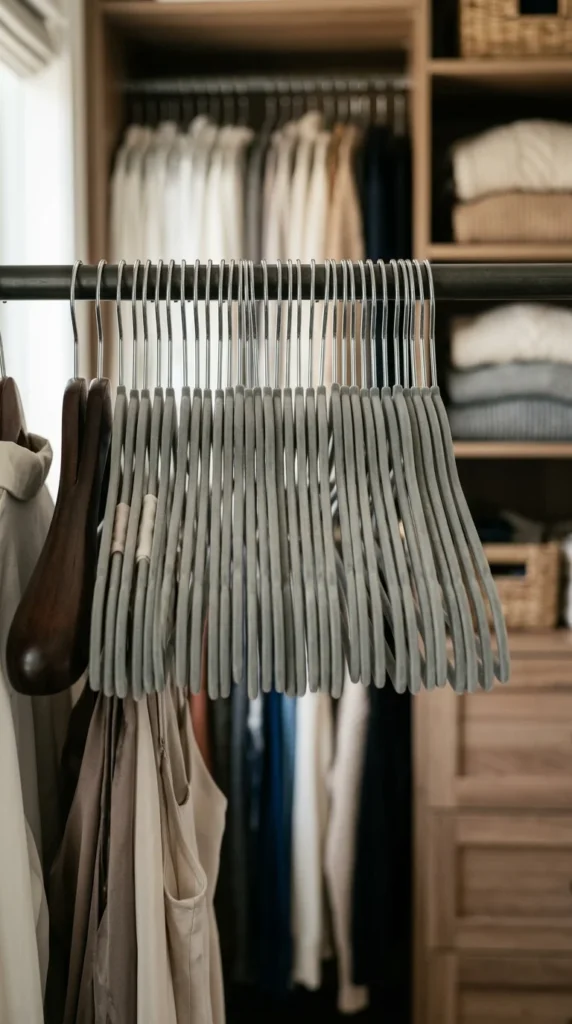
The single most effective way to instantly double your hanging space is to swap out bulky plastic or wooden hangers for ultra-slim velvet ones. These hangers are only a fraction of an inch thick, allowing you to fit significantly more garments on the same rod. Beyond their space-saving profile, the velvet texture provides a non-slip surface that prevents silk blouses and wide-neck sweaters from sliding off onto the floor.
2. Vertical Space
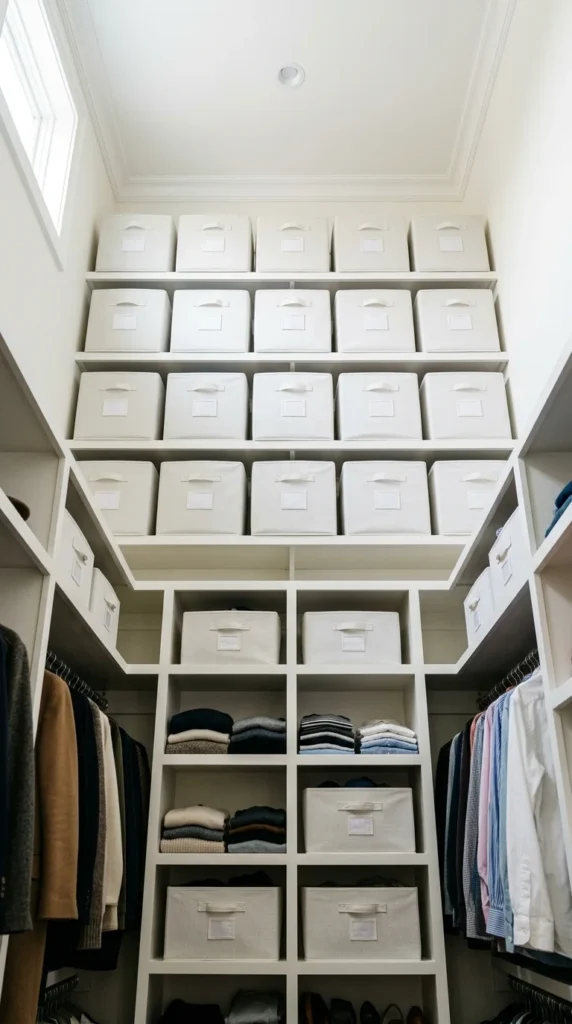
Most closets have wasted space at the very top. By installing extra shelves that reach all the way to the ceiling, you capture “dead space” for items you don’t use daily. Use this high-altitude area for off-season clothing, extra linens, or sentimental items. Keep a small, foldable step stool nearby so you can access these items without a struggle.
3. Door Organizers
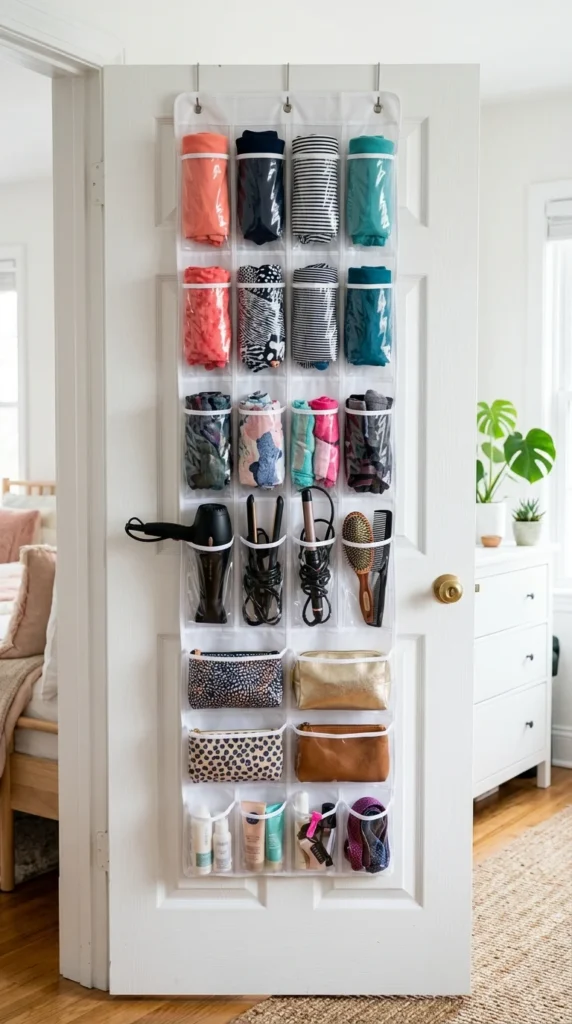
The back of your closet door is prime real estate that is frequently overlooked. Over-the-door organizers aren’t just for shoes; they are perfect for storing rolled-up leggings, scarves, belts, or even cleaning supplies. If you prefer a more streamlined look, install a rack-and-basket system directly onto the door to hold heavier items like handbags or boxed shoes.
4. Shelf Dividers
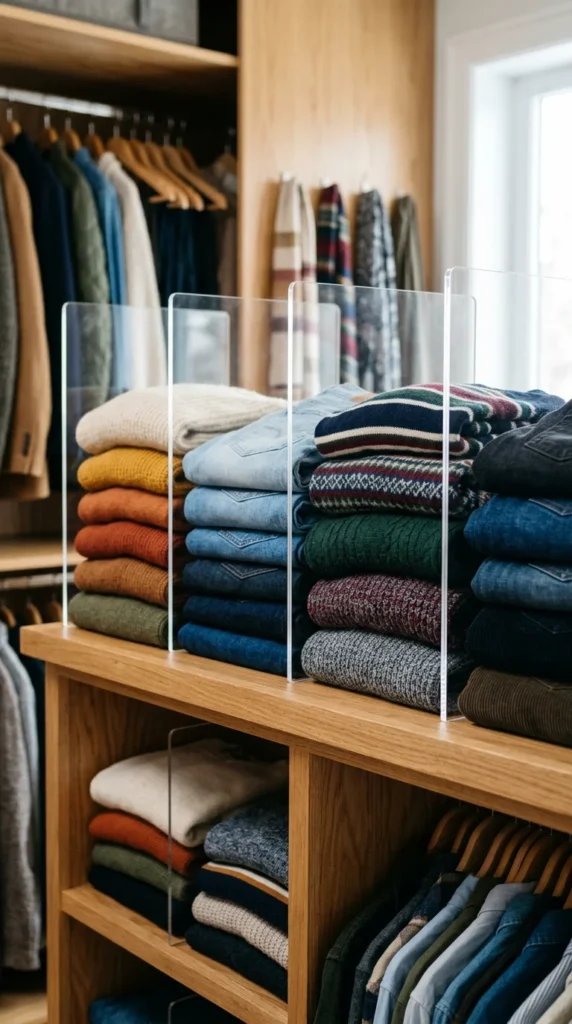
Stacks of sweaters and jeans have a tendency to lean and eventually collapse into a messy heap. Shelf dividers—specifically clear acrylic ones—keep your stacks standing perfectly upright. They create boundaries that force you to maintain the organization, making it easy to pull one item from the middle of the stack without ruining the rest.
5. Double Rods
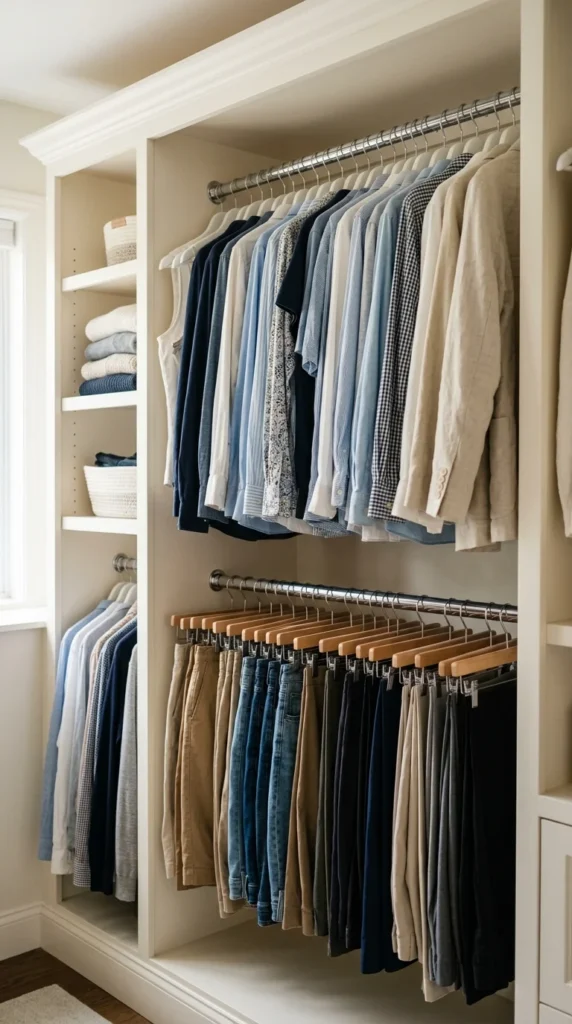
If your closet features one high rod with a lot of empty space beneath it, you are wasting half your closet. Installing a second, lower rod allows you to hang shirts on top and pants or skirts on the bottom. This effectively doubles your hanging capacity without requiring any extra floor space.
6. Cascading Hooks
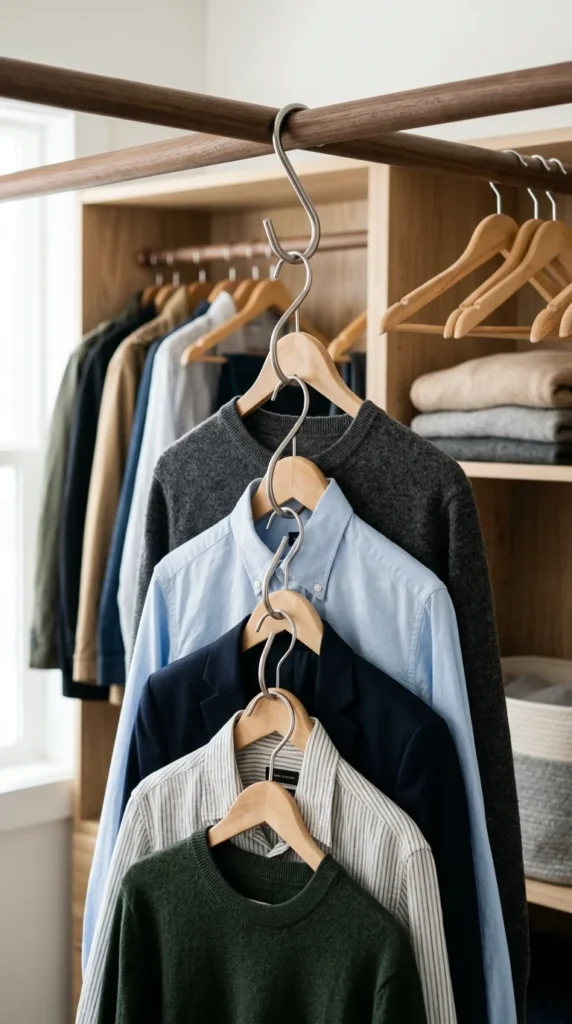
Cascading hooks (or even simple soda tab hacks) allow you to hang multiple hangers from one another in a vertical chain. This is ideal for button-down shirts or light jackets. By staggering the clothes vertically, you free up horizontal inches on the main rod, which is essential for cramped wardrobes.
7. Drawer Inserts
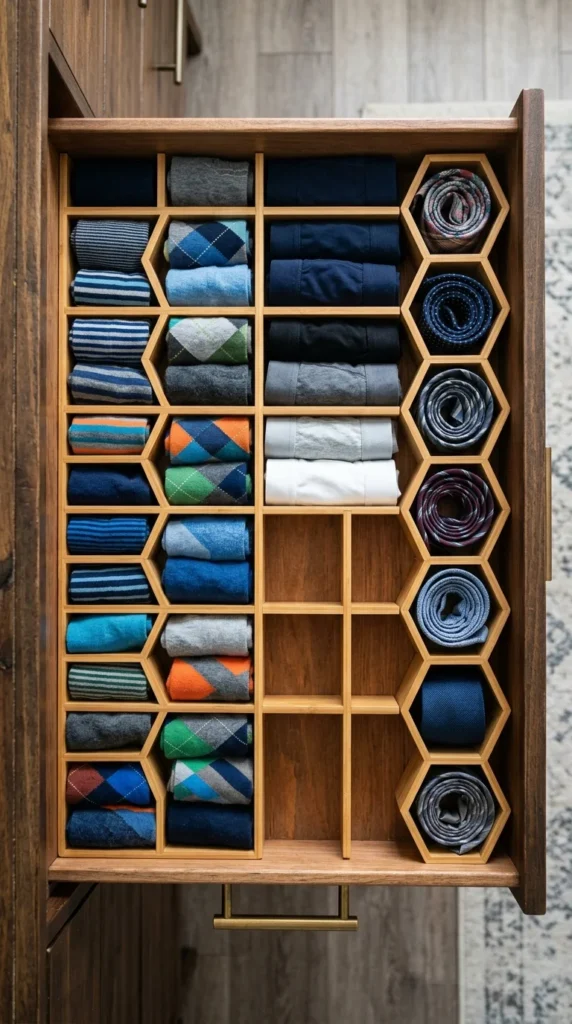
If your tiny closet includes a small built-in dresser or if you use a chest of drawers, inserts are mandatory. Without them, small items like socks and underwear become a jumbled mess. Use honeycomb or grid dividers to give every small item a specific home, making it easy to see everything at a glance.
8. Shoe Racks
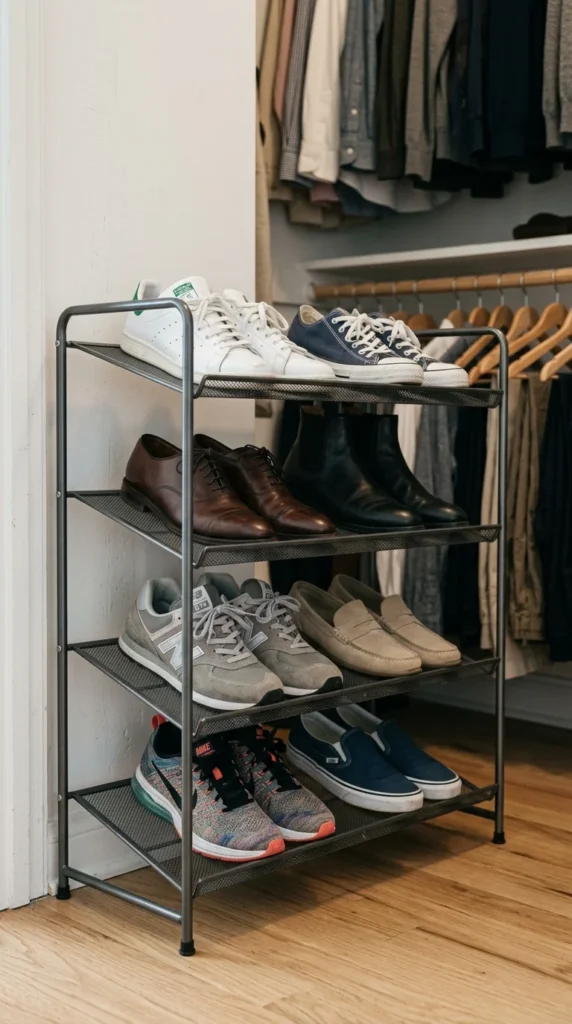
Don’t let your shoes end up in a “shoe mountain” on the floor. A tiered rack or a stackable cubby system keeps footwear organized and prevents damage. For exceptionally tight spaces, consider “shoe slot” organizers that allow you to stack one shoe directly on top of its pair, effectively halving the footprint of your footwear collection.
9. Clear Bins
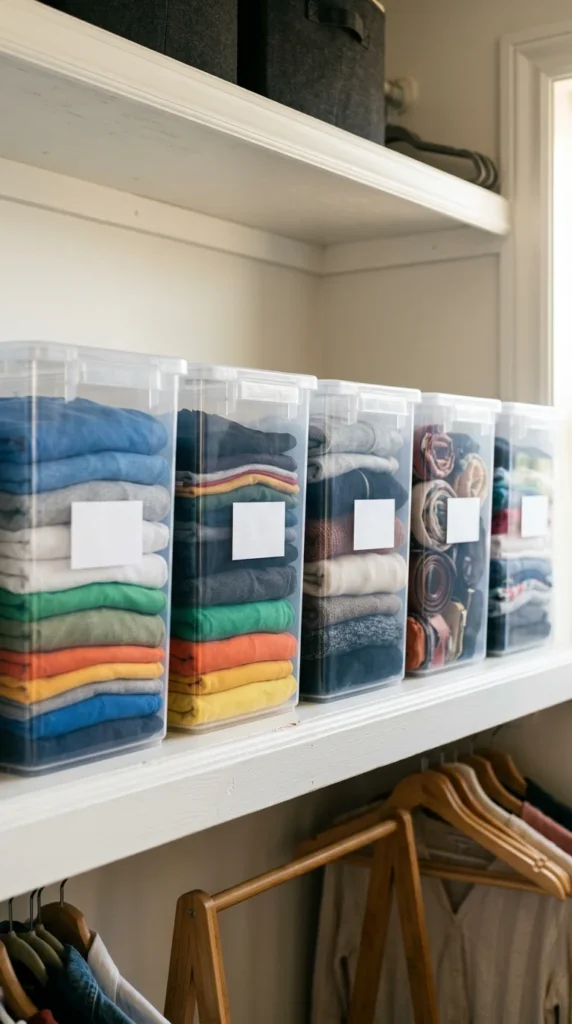
Visibility is the key to maintaining organization in a small space. Clear plastic bins allow you to see exactly what is stored inside without having to pull the bin down and rummage through it. This is particularly helpful for accessories, swimwear, or gym gear that can easily get lost in opaque containers.
10. Lighting Solutions
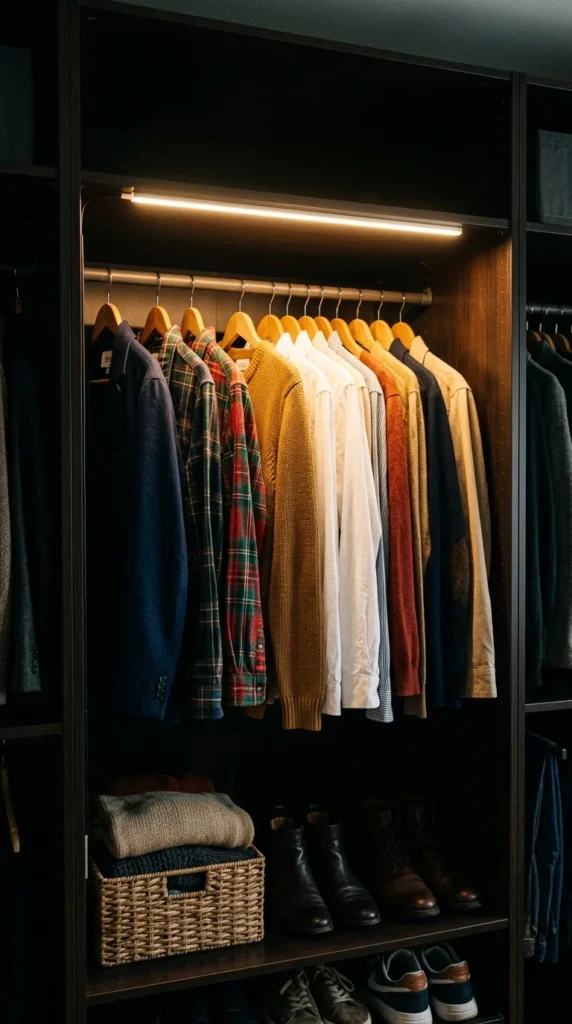
Tiny closets are often dark, making it hard to find what you need and leading to messy searching. Battery-operated, motion-sensor LED strips are an easy, wire-free way to illuminate your wardrobe. When you can see every corner of your closet, you’re less likely to lose items in the “dark abyss” of the back corners.
11. Seasonal Rotation
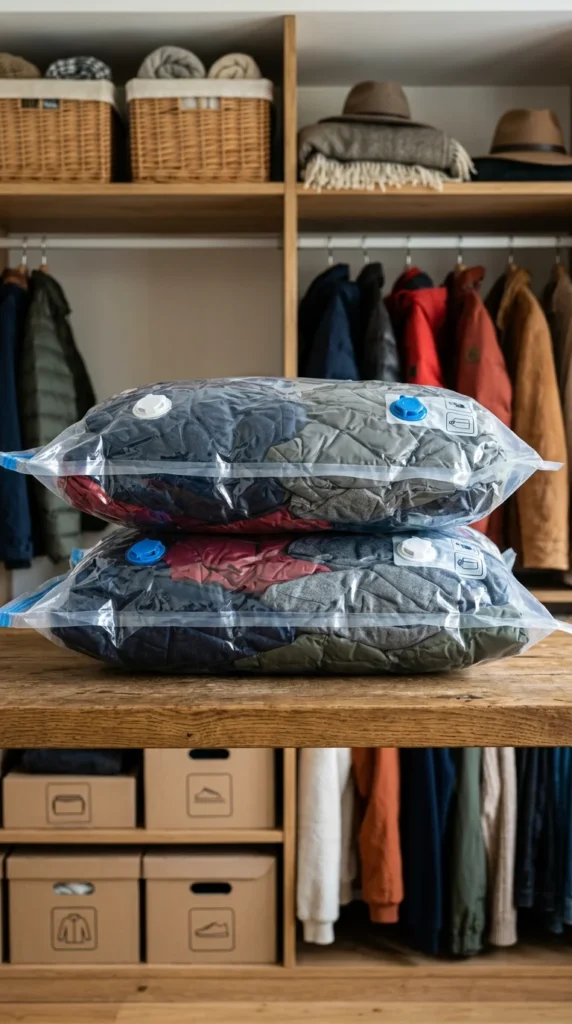
In a small closet, you cannot afford to have your entire year’s wardrobe out at once. Move off-season clothes—like heavy parkas in summer or sundresses in winter—into under-bed storage or vacuum-sealed bags. This clears out physical and visual clutter, leaving only what you can actually wear right now.
12. Scarf Hangers
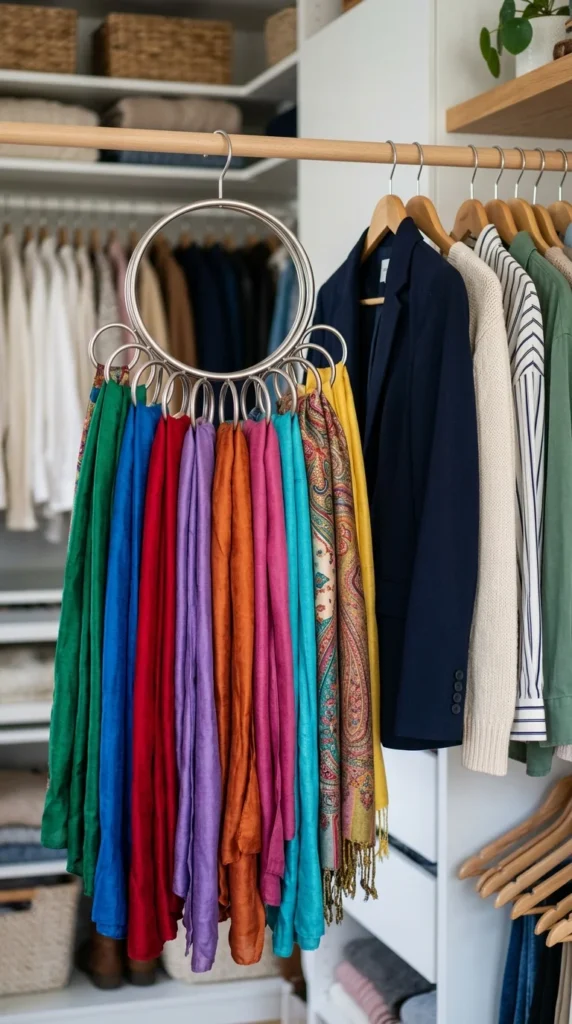
Scarves are notoriously difficult to store because they slip and slide. A specialized multi-loop scarf hanger allows you to display dozens of scarves in the space of a single coat. This prevents wrinkles and ensures you can see all your color options when finishing an outfit.
13. S-Hooks
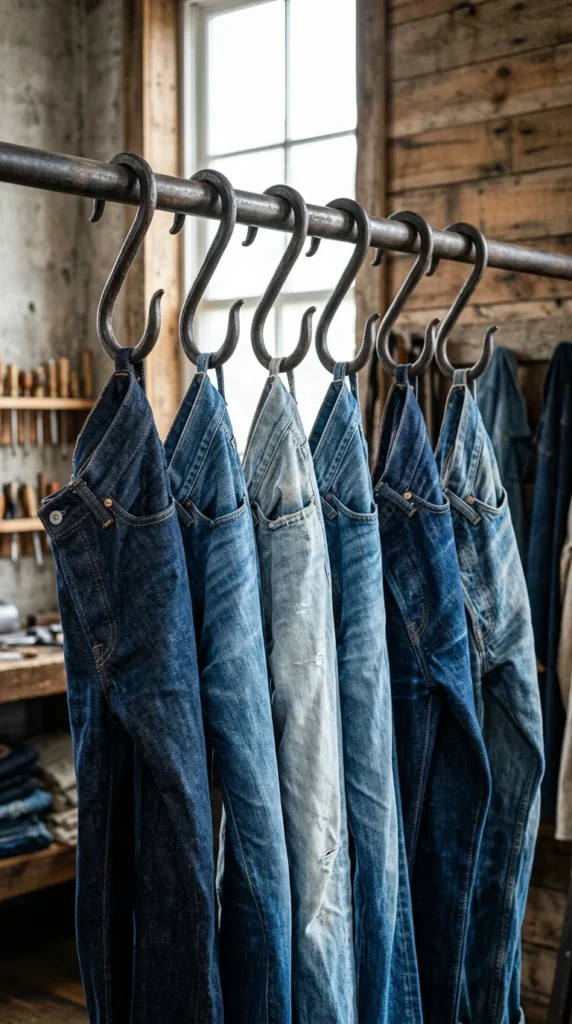
S-hooks are a game-changer for denim. Instead of folding jeans (which takes up shelf space) or hanging them over a bar (which takes up rod space), hang them by their belt loops on S-hooks. This boutique-style look is space-efficient and makes it incredibly easy to grab the pair you want.
14. Valet Rods
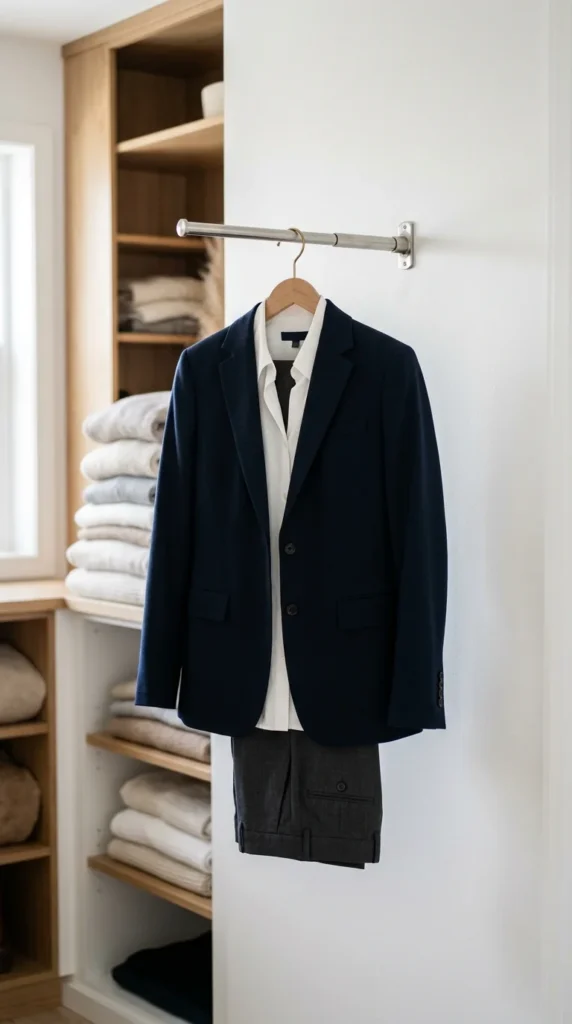
A valet rod is a small, retractable bar that mounts to the side wall of your closet. It’s perfect for setting out your outfit for the next day or holding dry cleaning before it’s put away. When not in use, it slides back, taking up virtually zero space.
15. Labeling Systems
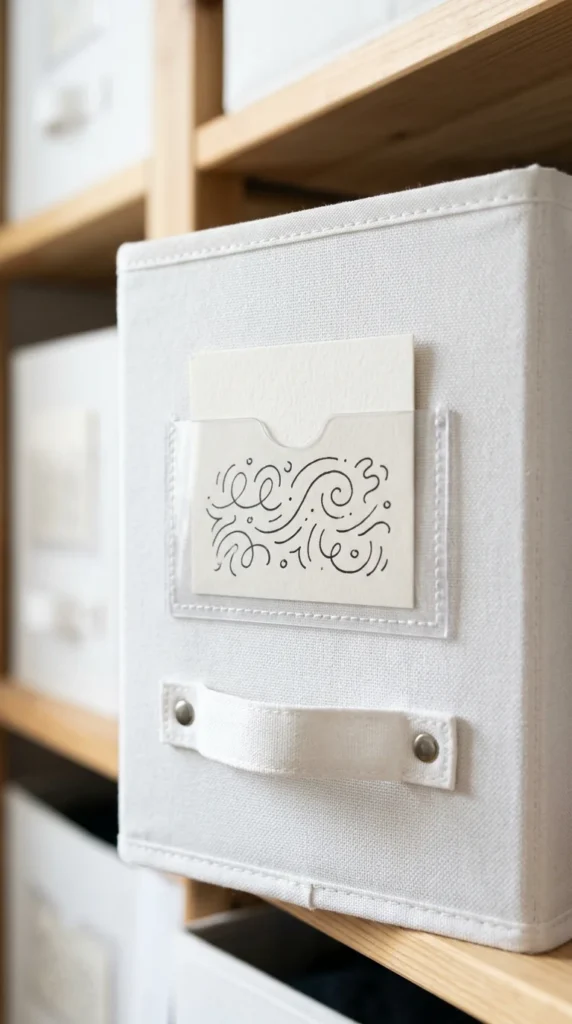
When items are tucked away in bins or on high shelves, it’s easy to forget where things are. Use a label maker or stylish hang-tags to identify the contents of every basket. This is especially helpful for households where multiple people share a small storage space.
16. Corner Shelves
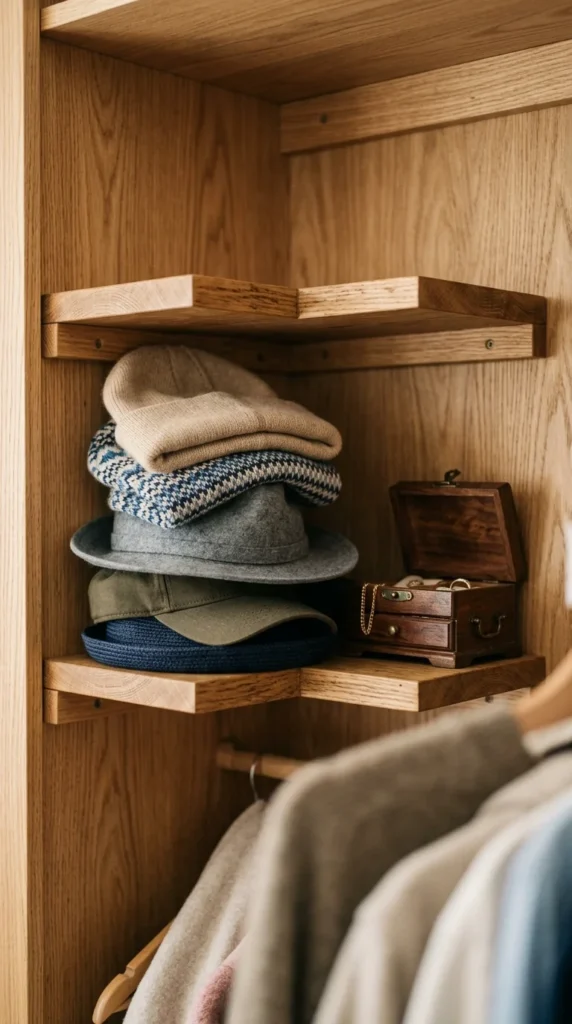
Corners are often the most underutilized parts of a closet. Custom-cut corner shelves can turn these awkward angles into a place for small items like handbags, hats, or jewelry boxes. It utilizes the “dead” depth that standard straight shelves often miss.
17. Folded Stacking
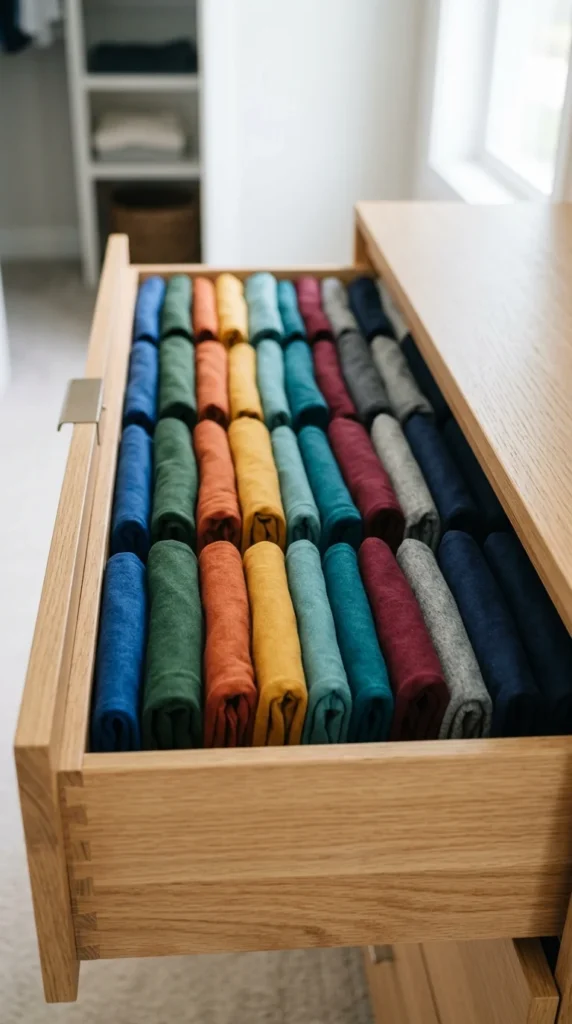
If you store clothes in drawers or bins, stop stacking them vertically. Use the “file folding” method (pioneered by Marie Kondo), where clothes are folded into small rectangles and stood up on edge. This allows you to see every shirt in the drawer at once and prevents the bottom of the stack from being forgotten.
18. Accessory Trays

Small accessories like watches, rings, and sunglasses can easily clutter up flat surfaces. A dedicated accessory tray—either on a shelf or inside a drawer—keeps these items contained and protected. It adds a touch of luxury to a small closet while keeping the clutter at bay.
19. Hanging Cubbies
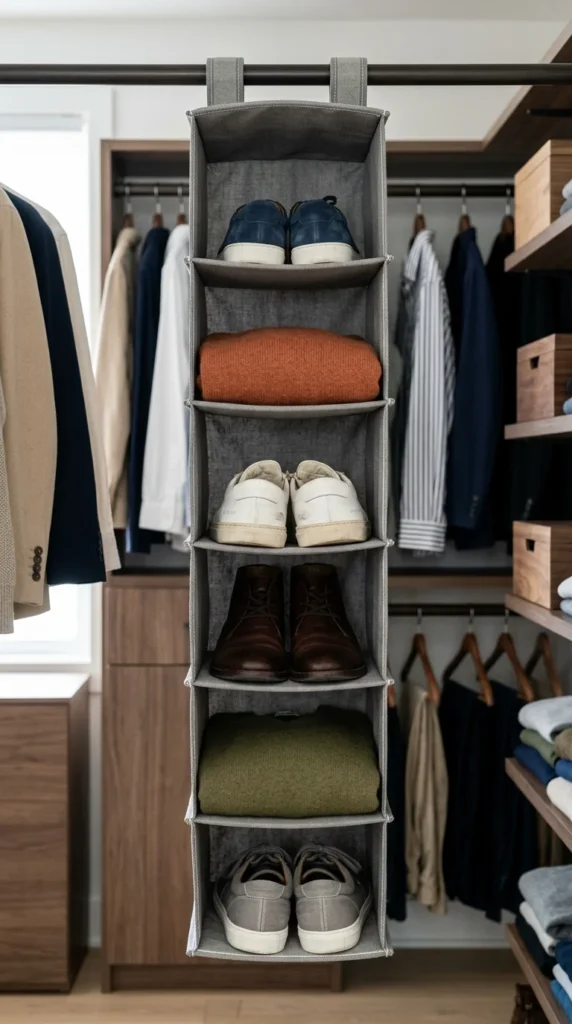
If you have more rod space than shelf space, a hanging fabric cubby organizer is the perfect solution. It adds instant “shelving” for sweaters, shoes, or handbags without the need for a hammer and nails. These are especially great for renters who can’t install permanent hardware.
20. Boot Shapers
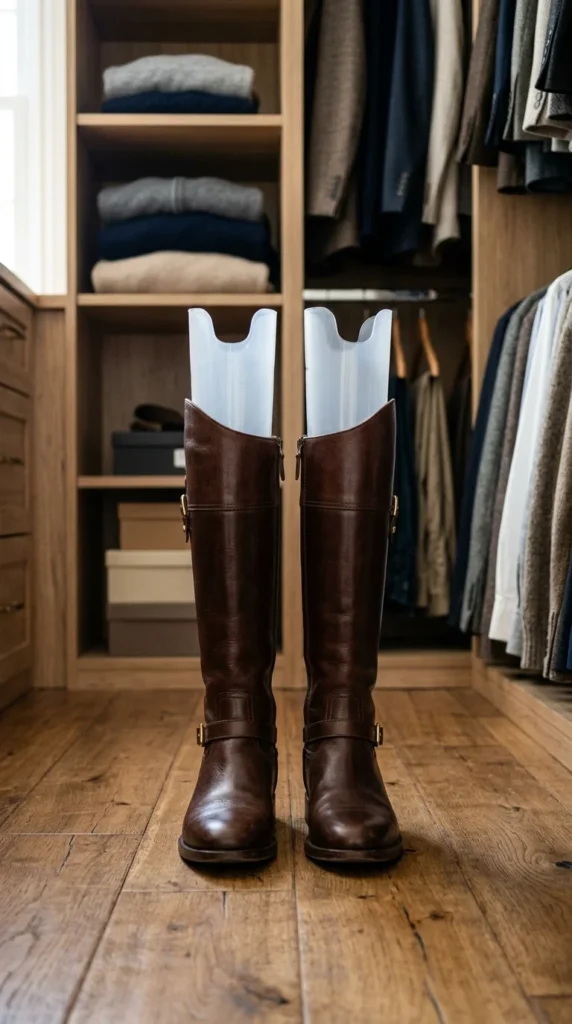
Tall boots have a habit of flopping over, which takes up more floor space and damages the material. Use boot shapers (or even rolled-up magazines) to keep them standing tall. This keeps your floor space tidy and ensures your boots last longer.
21. Belt Racks
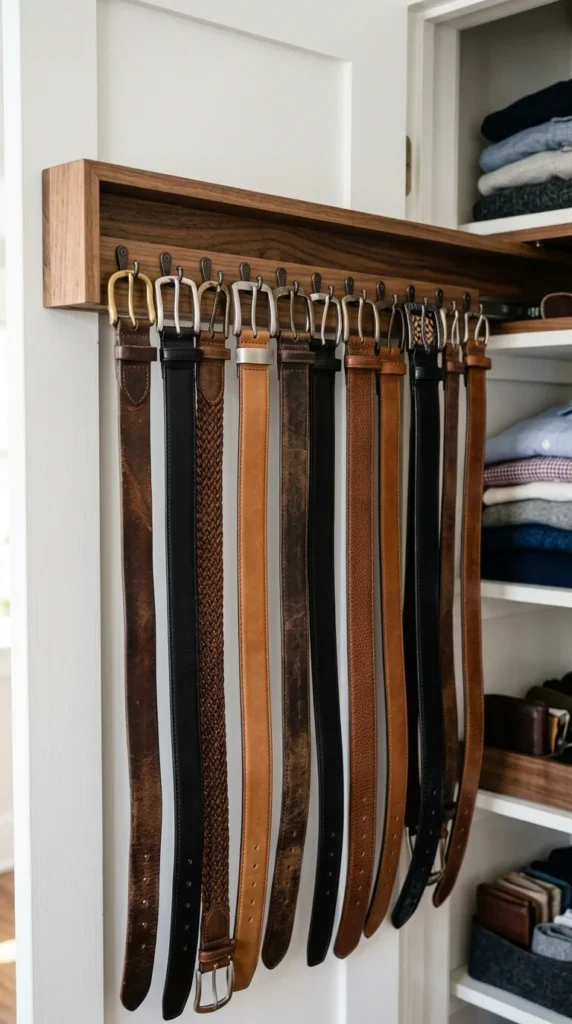
Don’t coil belts in a drawer; they take up too much room. A dedicated belt rack—either a wall-mounted strip of hooks or a specialized hanger—keeps them organized by color and style. It utilizes the narrow side walls of the closet that would otherwise go unused.
22. Luggage Storage
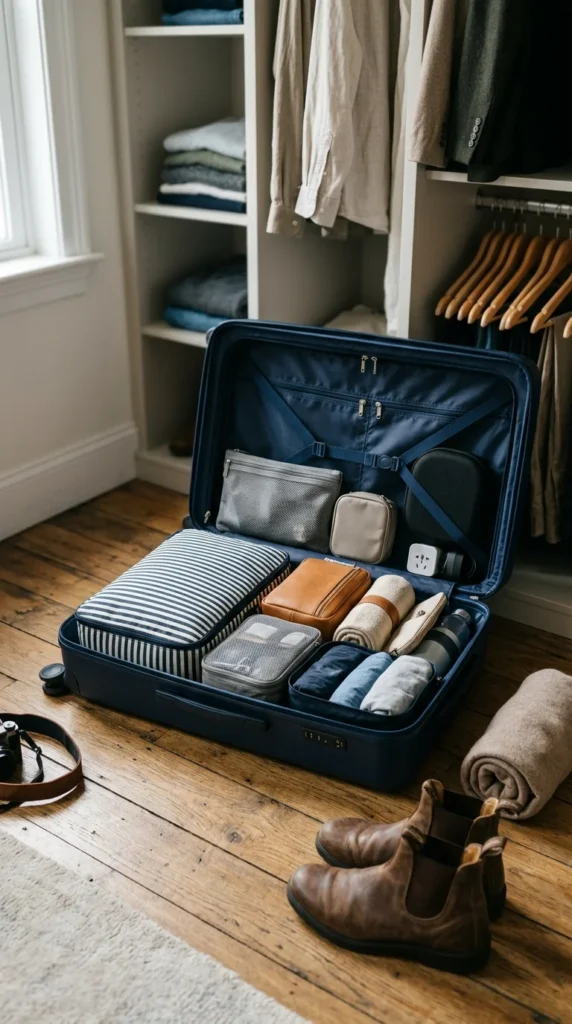
Luggage is bulky and takes up a lot of room. Make your suitcases work for you by using them as “storage containers within storage.” Use your carry-on to store travel-sized toiletries, neck pillows, or even off-season gear like snow pants or beach towels.
23. Floor Space
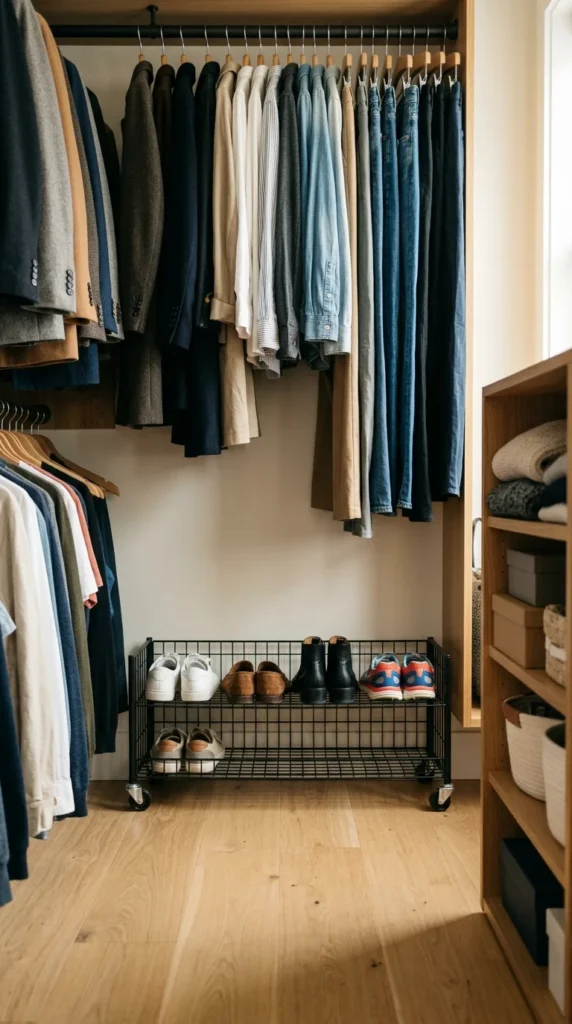
Keeping the floor clear makes a tiny closet feel significantly larger. If you must use the floor, use low-profile rolling bins or drawers that can easily be pulled out. Avoid letting items sit directly on the carpet, as this creates a “clutter magnet” effect.
24. Uniform Hangers
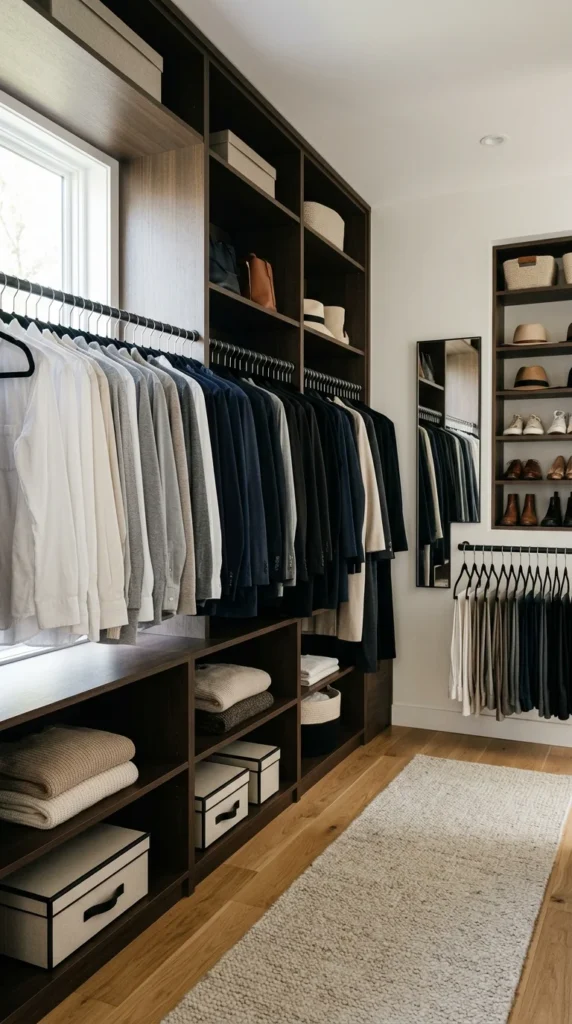
While the slimness of the hanger matters for space, the uniformity matters for your mental clarity. Using identical hangers throughout the closet eliminates visual noise. When the hangers match, your eyes focus on the clothes rather than the chaotic mix of plastic, wire, and wood.
25. Regular Decluttering

No amount of organization can save a closet that simply has too much stuff. The “one-in, one-out” rule is essential for tiny closets. Every time you buy a new piece of clothing, find something to donate or sell. A regular seasonal purge ensures that your organization system continues to function effectively year-round.