

Living in a small apartment or an older home often means grappling with the “tiny closet” dilemma. When your wardrobe exceeds your square footage, it’s easy for your bedroom to devolve into a chaotic mess of laundry piles and overflowing drawers. However, the secret to a functional closet isn’t necessarily more space—it’s more strategy. By maximizing vertical real estate, utilizing hidden surfaces, and choosing the right hardware, you can transform even the most cramped cubby into a high-capacity dressing station.
Here are ten genius ideas to reclaim your space and organize your tiny closet like a pro.
1. Slim Hangers
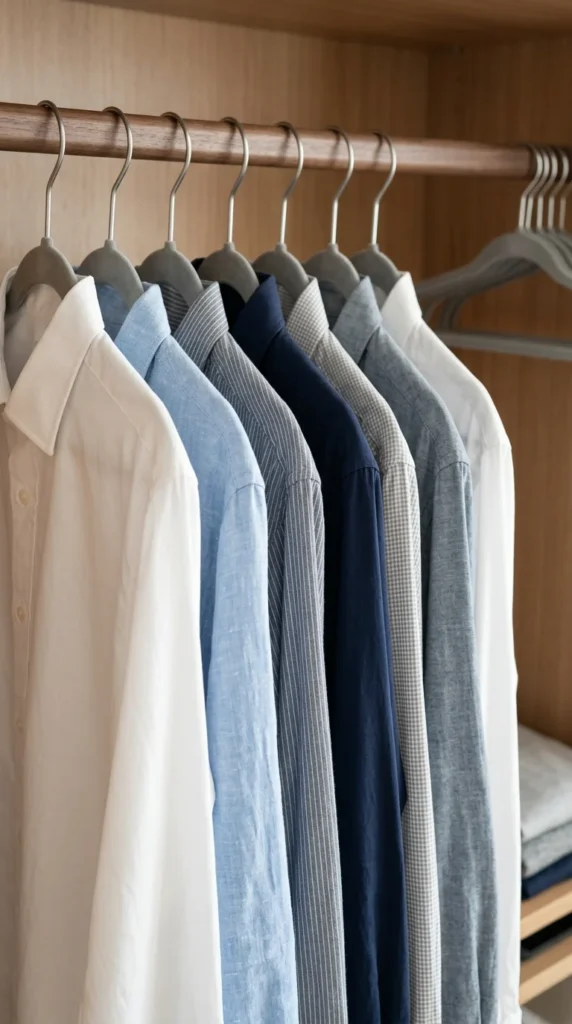
The most immediate way to gain space in a closet is to swap out bulky wooden or plastic hangers for ultra-slim velvet versions. Standard plastic hangers are thick and slippery, often taking up twice as much room as necessary. Slim-profile hangers allow you to fit up to 30% more clothing on the same rod.
The velvet texture provides a non-slip grip, ensuring that silk blouses and wide-neck sweaters stay in place rather than ending up on the floor. For an even more streamlined look, choose a single color for all your hangers. This reduces visual clutter and makes it easier to focus on your clothing choices rather than the mismatched hardware.
2. Double Rods
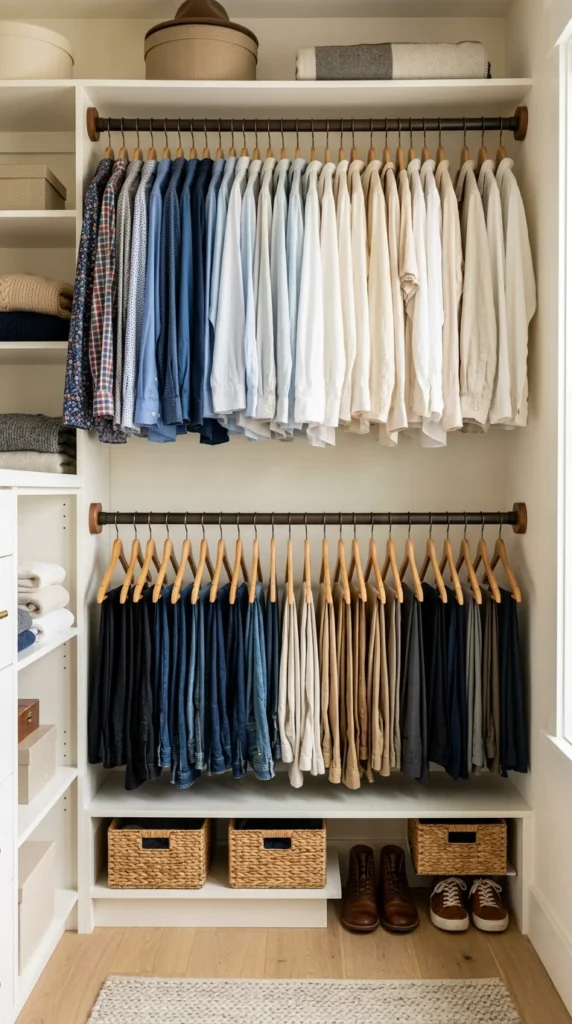
If your closet has a single rod with a vast amount of empty space beneath your hanging shirts, you are wasting valuable real estate. Installing a second, lower rod is a game-changer for small spaces. This “double-hang” system allows you to separate your wardrobe into zones: tops on the top rod and folded pants or skirts on the bottom rod.
For renters who cannot drill into walls, tension-based double-hang rods are available. these simply hook onto your existing rod and provide a second tier of hanging space without any permanent modifications. This simple addition can effectively double the capacity of a standard reach-in closet.
3. Door Storage
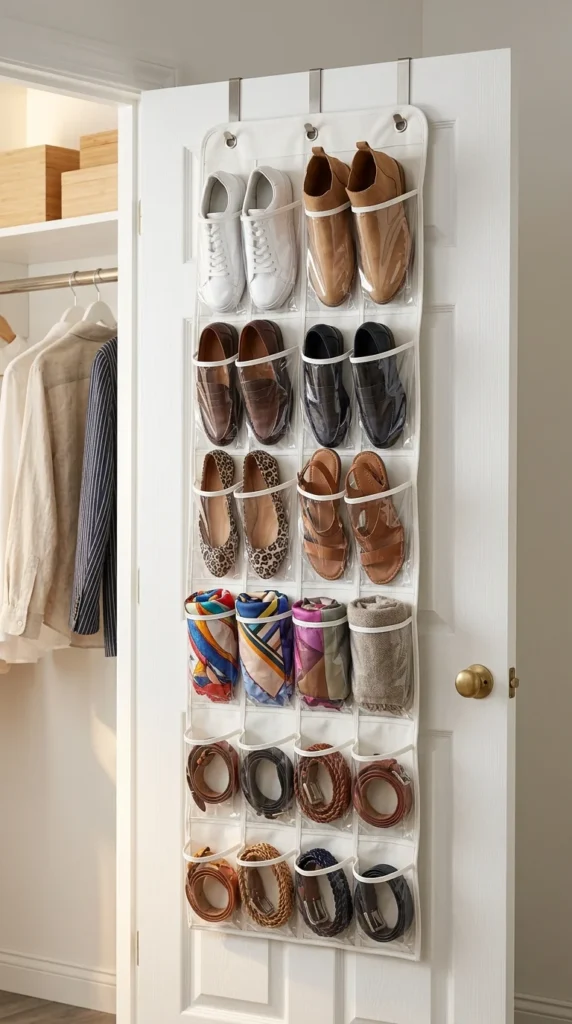
The back of your closet door is often an ignored “fifth wall” that holds immense storage potential. Over-the-door organizers are not just for shoes; they can be used to store everything from rolled-up leggings and hosiery to clutches and jewelry.
For a more sophisticated look, consider a track-based wall-mounted system on the back of the door. These systems allow you to customize the layout with baskets, hooks, and trays. By moving small accessories and footwear to the door, you free up the floor and shelves for larger items like boots and storage bins.
4. Vertical Organizers
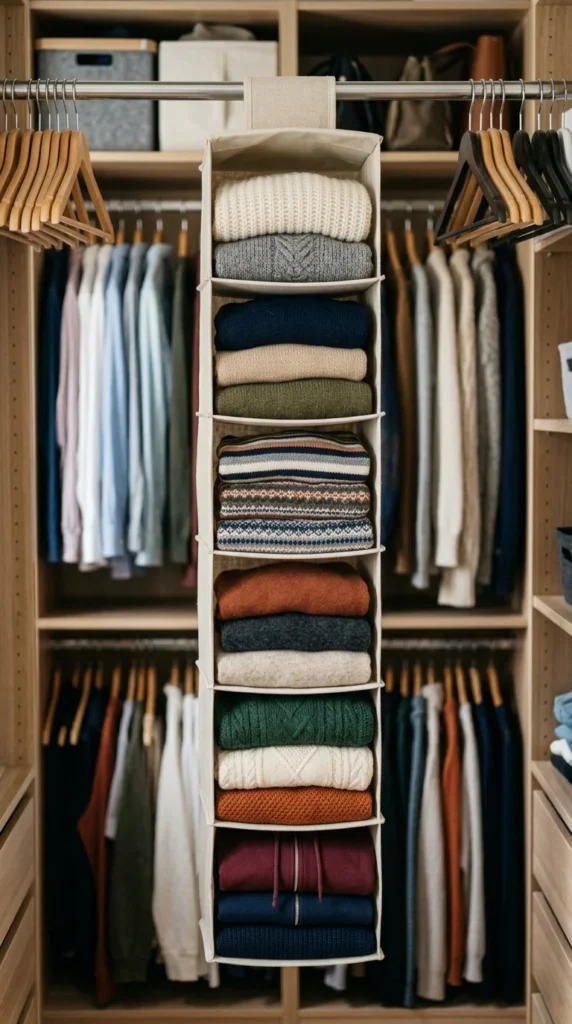
When you lack built-in shelving, hanging vertical organizers are the perfect solution for items that shouldn’t be hung, such as heavy sweaters, jeans, or delicate knits. These fabric cubbies hang directly from the closet rod and provide instant “drawers” for folded items.
To keep these organizers from looking messy, use small fabric bins inside the cubbies to hide loose items like socks or underwear. This method utilizes the vertical drop of the closet while preventing the “leaning tower of sweaters” that often occurs on high, open shelves.
5. Shelf Dividers
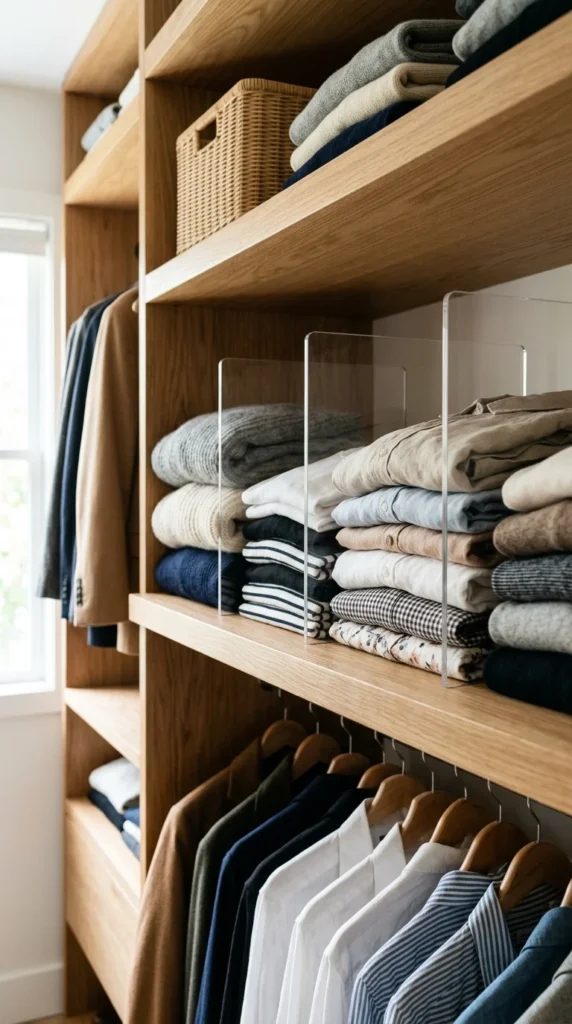
Deep top shelves are notorious for becoming “black holes” where clothes get lost or tumble over into disorganized heaps. Shelf dividers are a simple but effective tool to maintain order. By creating rigid boundaries between stacks of clothes, you ensure that your t-shirts don’t mingle with your sweatshirts.
Clear acrylic dividers are particularly popular because they provide a high-end, boutique-like aesthetic while remaining invisible. They allow you to stack items higher than you otherwise could, making full use of the space between the shelf and the ceiling.
6. Rolling Carts
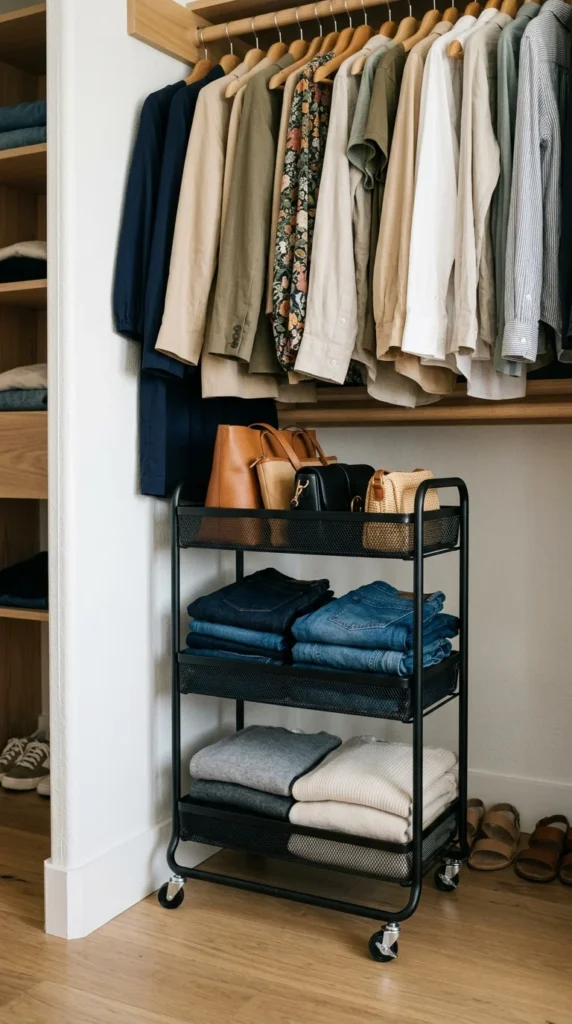
The floor of a tiny closet is often a graveyard for mismatched shoes and discarded bags. A small, multi-tiered rolling cart can turn this wasted floor space into an organized system. Because the cart is on wheels, you can easily pull it out to access items in the back and tuck it away when not in use.
Rolling carts are ideal for items you use frequently but don’t want taking up eye-level shelf space. Use the bottom tier for heavy shoes, the middle for handbags, and the top for everyday accessories like sunglasses or watches.
7. S-Hooks
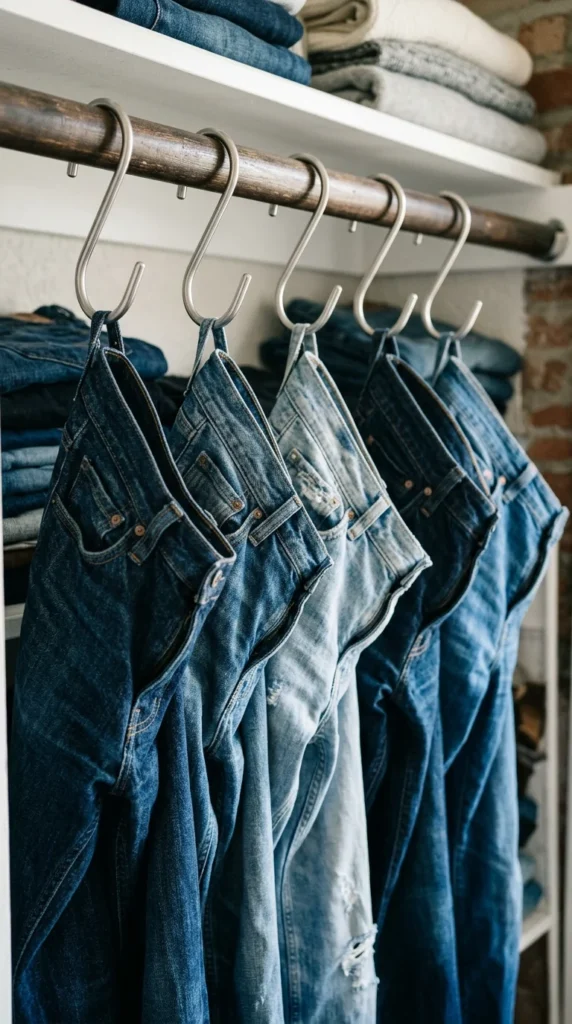
Standard hangers aren’t always the best way to store bulky items like denim or heavy winter coats. S-hooks, traditionally used in kitchens for pots and pans, are a genius hack for closets. By hanging jeans by their belt loops on S-hooks, you save the width that a traditional hanger would take up and prevent the “crease mark” that occurs when folding pants over a bar.
S-hooks are also excellent for organizing a collection of handbags or belts. They allow these items to hang flat against each other, taking up minimal horizontal rod space while keeping everything visible and accessible.
8. Lighting Upgrades

One of the biggest frustrations with a tiny closet is not being able to see what you actually own. Dark corners lead to forgotten clothes and disorganized piles. Since many small closets lack built-in wiring, battery-operated LED motion-sensor lights are a perfect upgrade.
Stick-on LED strips can be placed under shelves or along the door frame. When you open the door, the closet is instantly flooded with light, making it easier to distinguish between black and navy blue. Good lighting creates the illusion of more space and makes the closet feel like a curated boutique rather than a storage locker.
9. Uniform Containers
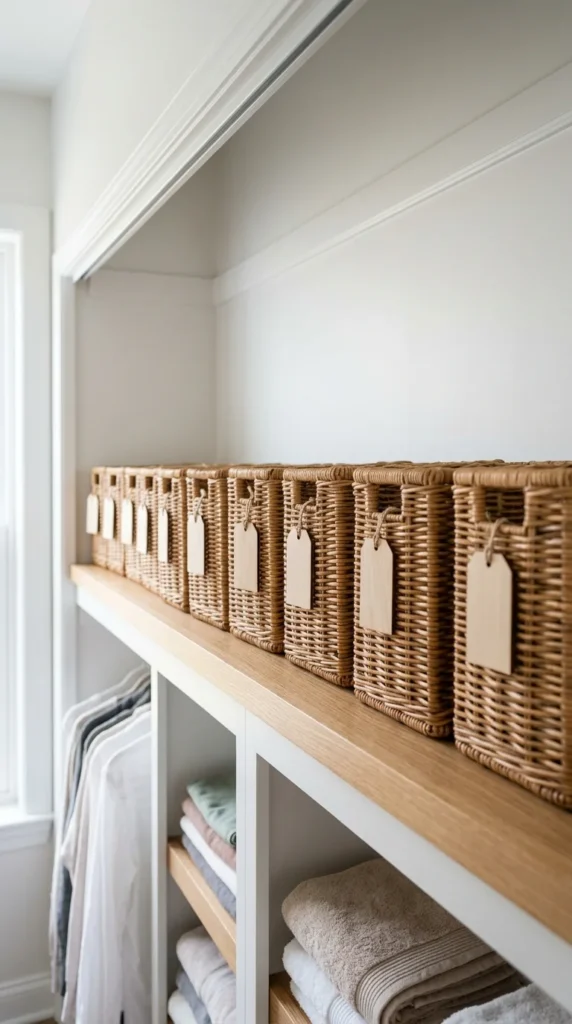
Visual clutter makes a small space feel even smaller. If your top shelf is filled with a mismatched collection of cardboard boxes and plastic bins, it will always look messy. Investing in a set of uniform containers—whether they are woven baskets, clear plastic bins, or fabric boxes—instantly streamlines the look of the closet.
Using containers also helps you implement a “category” system. Label each bin (e.g., “Winter Gear,” “Swimwear,” “Travel Accessories”) so you know exactly where to look. This prevents you from rummaging through multiple boxes and disrupting the organization.
10. Off-Season Rotation
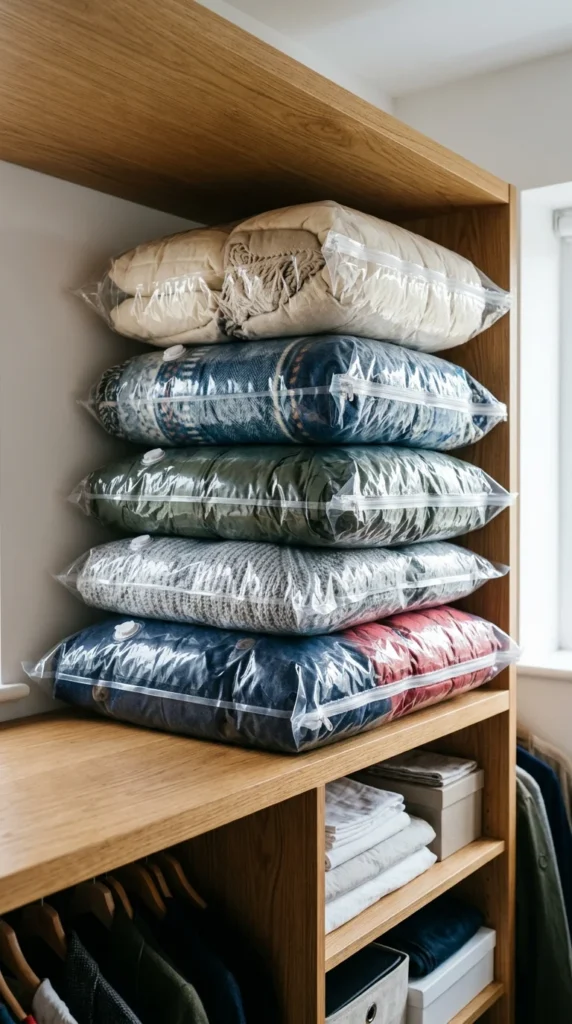
The most effective way to manage a tiny closet is to only keep what you are currently wearing inside it. Off-season rotation is the practice of moving clothes that aren’t weather-appropriate to another storage area.
During the summer, pack your heavy wool sweaters and coats into vacuum-sealed bags or under-bed storage containers. This frees up significant rod and shelf space for your current wardrobe. When the seasons change, swap the items. This “edit” ensures that your tiny closet never feels overwhelmed and that every item you see is something you can actually wear today.