
Hallways are often the most neglected spaces in a home, frequently reduced to mere transitional zones that lack personality or purpose. However, in smaller homes and urban apartments, every square inch counts. A narrow hallway presents a unique design challenge: how do you add style and functionality without making the space feel cramped or cluttered? By utilizing vertical space, strategic lighting, and clever furniture choices, you can transform a dark corridor into a stunning gallery or a practical storage hub. Here are 25 expert-approved ideas to maximize your narrow hallway.
1. Floating Shelves
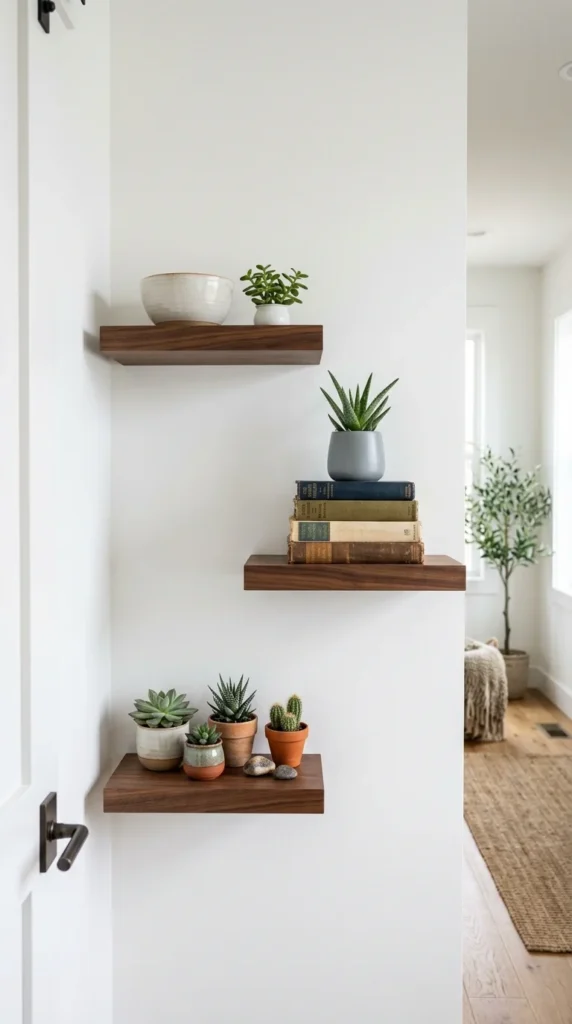
Floating shelves are a game-changer for narrow hallways because they provide storage and display space without consuming any floor real estate. By mounting them at eye level or higher, you keep the walkway clear while adding visual interest. Use them to display curated collections of ceramics, small plants, or books. To keep the look cohesive, choose shelves that match your wall color for a “built-in” look, or go for contrasting wood tones to add warmth to a sterile corridor.
2. Oversized Mirrors
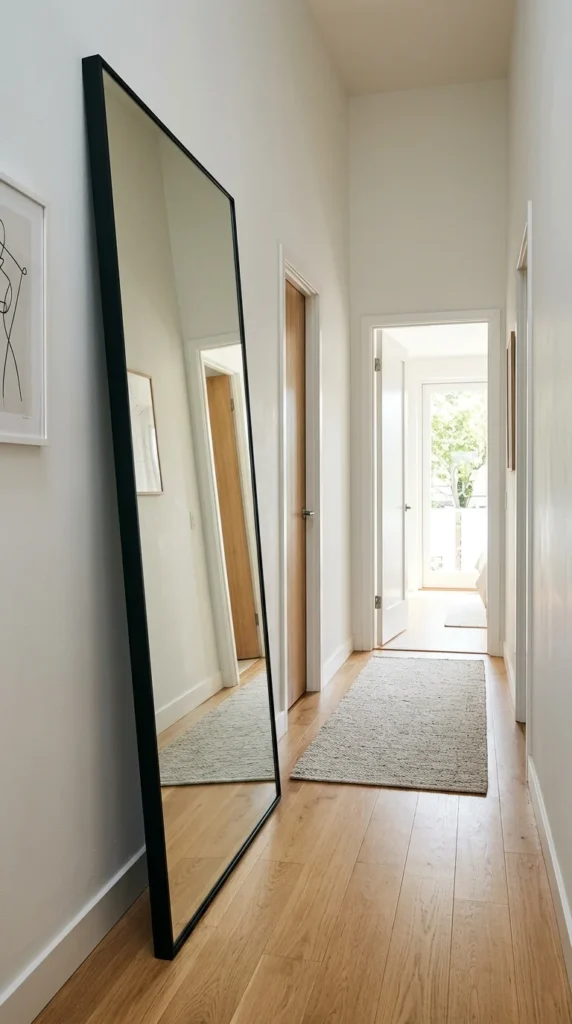
The oldest trick in the interior design book is still one of the most effective. A large mirror reflects light and creates the illusion of depth, instantly making a narrow hallway feel twice as wide. For the best results, place a mirror opposite a doorway or window to bounce natural light into the darkest corners. A floor-to-ceiling mirror adds a touch of luxury, while a series of smaller, decorative mirrors can act as a functional art installation.
3. Vibrant Runners
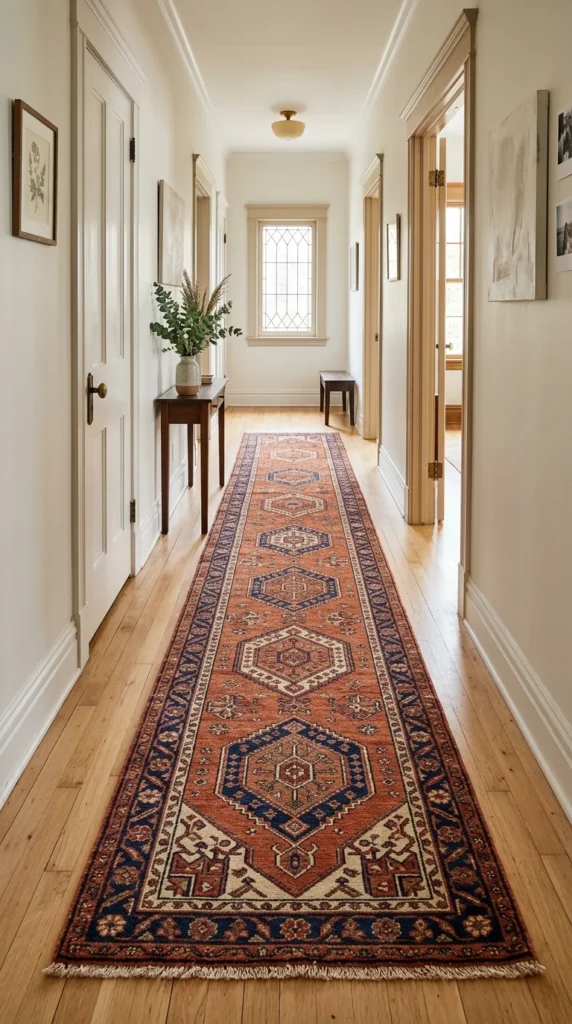
A runner rug serves two purposes: it protects your flooring in high-traffic areas and defines the path of the hallway. In a narrow space, a rug with horizontal stripes can visually widen the floor, while a long, patterned runner can draw the eye toward the end of the hall, emphasizing length. Opt for low-pile materials like jute or synthetic blends that are easy to clean and won’t trip up passersby.
4. Vertical Art
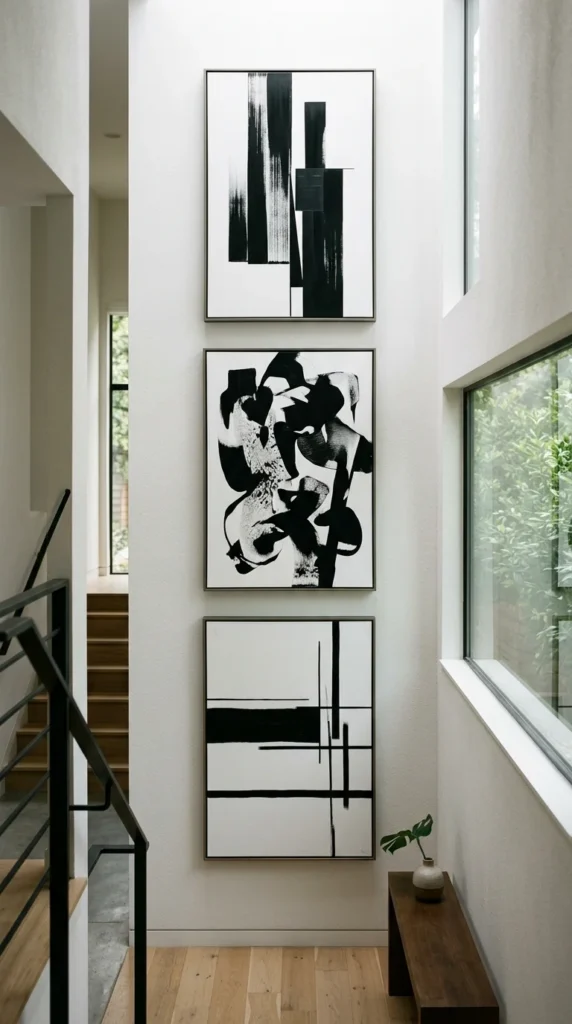
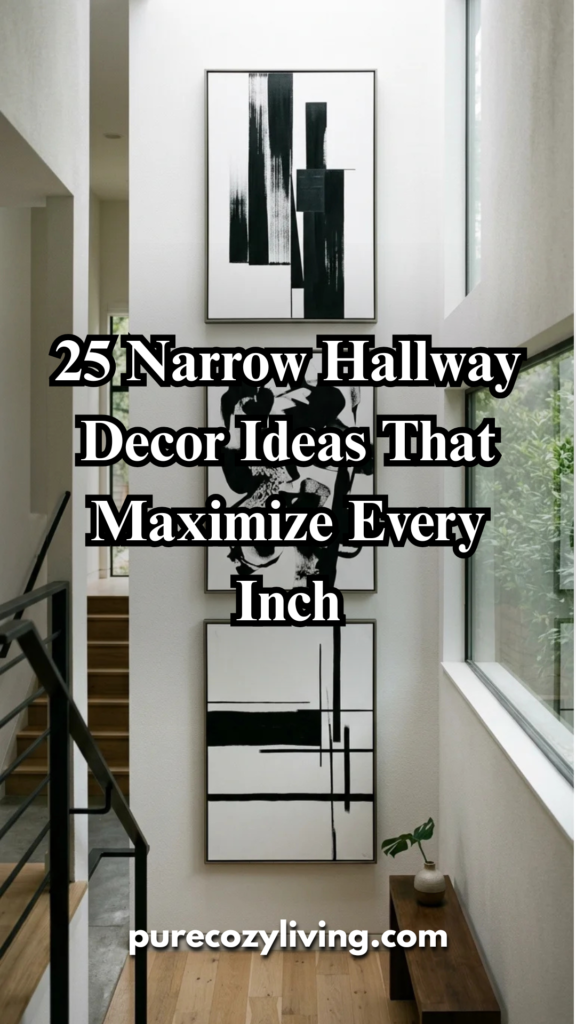
When floor space is limited, the walls are your best friend. Instead of wide landscape paintings, opt for vertical art pieces. This draws the eye upward, highlighting the height of the ceiling rather than the narrowness of the walls. A single, tall statement piece can serve as a focal point, or you can stack smaller frames to create a vertical gallery.
5. Light Colors
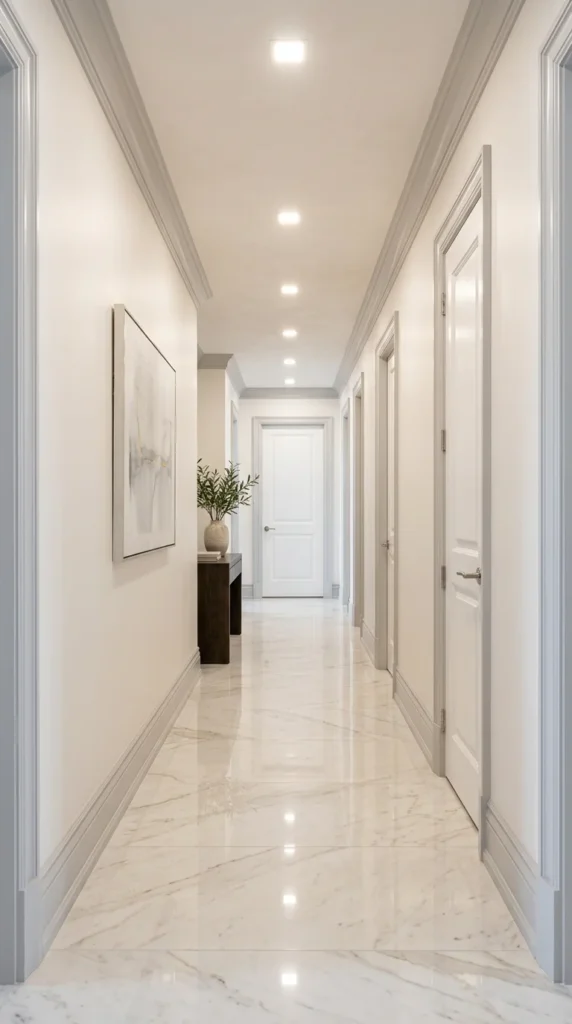
Color psychology plays a massive role in how we perceive space. Dark colors tend to absorb light, making walls feel like they are closing in. To counteract this, stick to a palette of whites, creams, soft grays, or pastels. These shades reflect both natural and artificial light, creating an open, breezy feel. If you want a pop of color, save it for the ceiling or the far end of the hallway to create a “destination” effect.
6. Statement Lighting
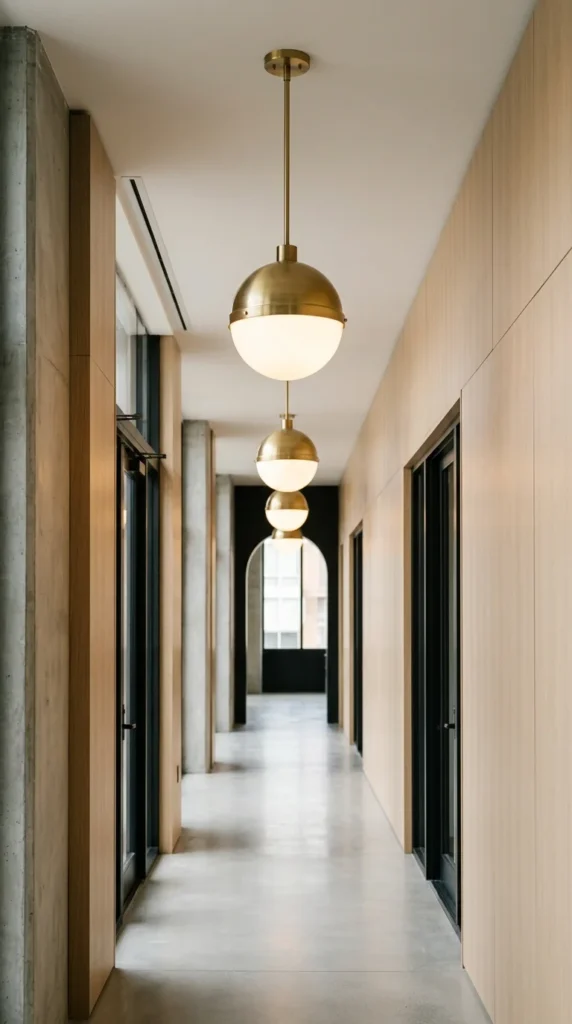
Lighting is often the most overlooked element in hallway design. Standard flush-mount lights can be dull; instead, install a series of pendant lights or a stunning chandelier to add character. If your ceilings are low, consider sleek track lighting or recessed “can” lights that provide ample illumination without physical bulk. Good lighting ensures the space feels safe and welcoming rather than cavernous.
7. Built-in Benches
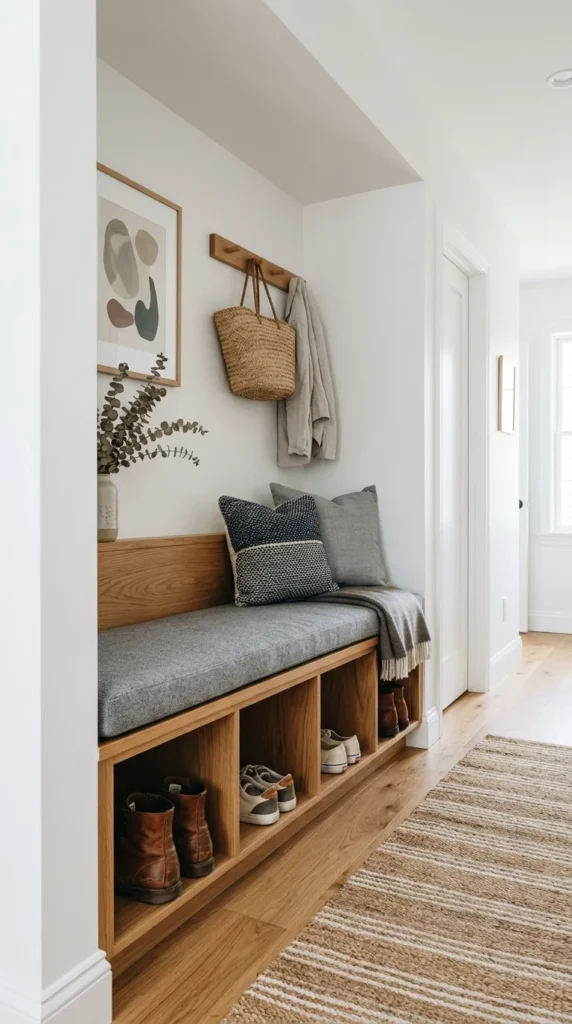
If your hallway is just wide enough, a built-in bench can provide a functional spot to sit and put on shoes while offering hidden storage. A “floating” bench design—where the bench is attached to the wall without legs—is particularly effective because seeing the floor underneath creates a sense of spaciousness. Pair it with a few decorative pillows to add texture and comfort.
8. Wall Hooks
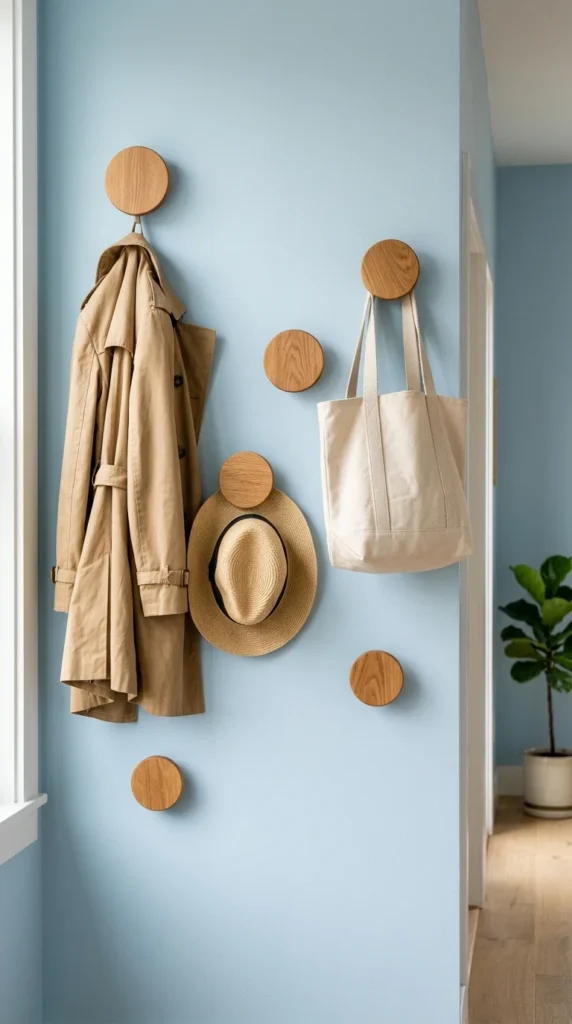
Traditional coat racks are often too bulky for narrow corridors. Individual wall hooks offer a customizable alternative. You can stagger them at different heights to accommodate everything from long coats to children’s backpacks and umbrellas. Opt for sculptural hooks that look like art even when they aren’t holding anything.
9. Slim Consoles
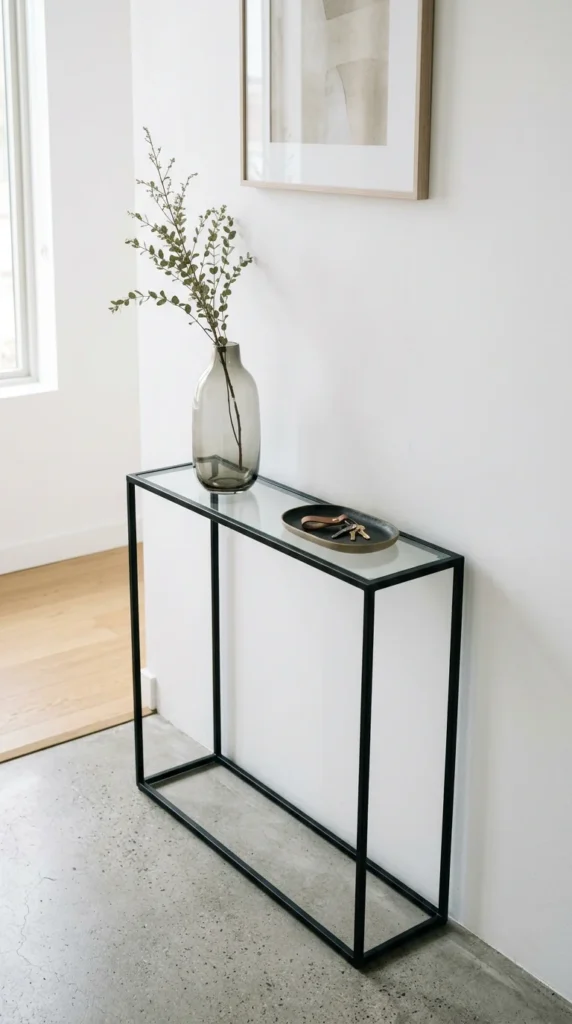
Furniture manufacturers now offer “extra-slim” or “hallway” console tables specifically designed for tight spaces. These tables are often only 8 to 10 inches deep. They provide a surface for essential items like keys, mail, and a table lamp without obstructing the flow of traffic. Look for designs with open legs to maintain a sense of visual “airiness.”
10. Gallery Walls
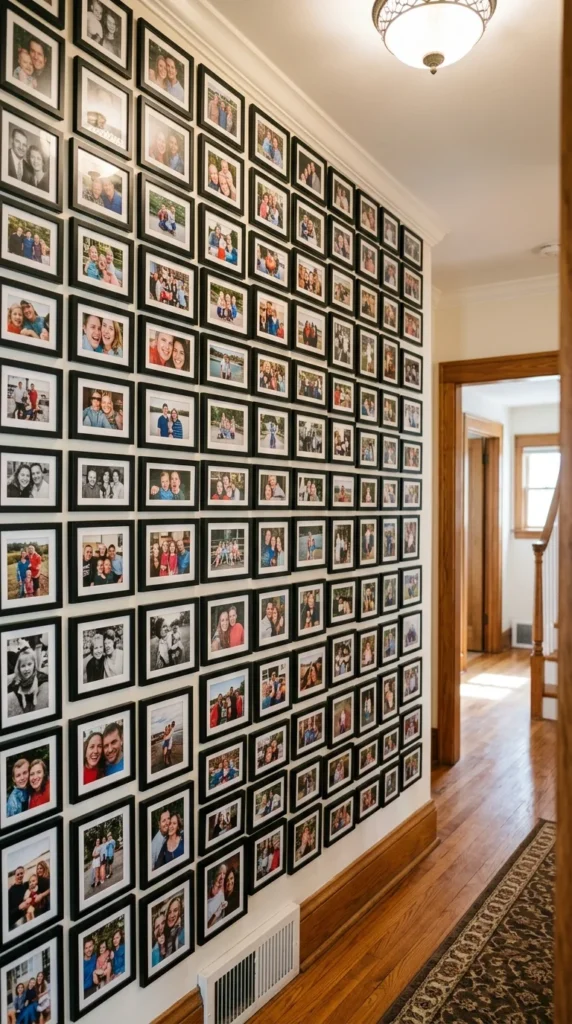
A narrow hallway is the perfect location for a gallery wall. Because people move through the space slowly or stand close to the walls, they have the opportunity to look at small details. Use uniform frames for a clean, modern look, or mix and match vintage frames for a more eclectic, “collected” vibe. Keep the frames relatively thin so they don’t protrude too far into the walking path.
11. Window Treatments
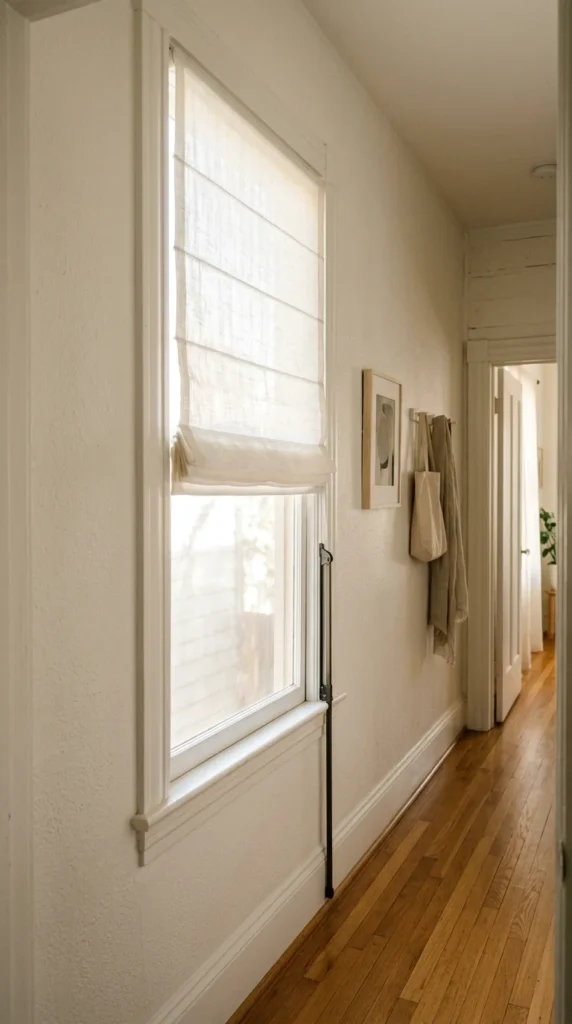
If your hallway is lucky enough to have a window, don’t block it with heavy curtains. Use sheer fabrics or light-filtering Roman shades. This allows maximum light to enter the space while providing privacy. If the view isn’t great, consider frosted glass film or a decorative window screen that adds pattern without sacrificing brightness.
12. Metallic Accents
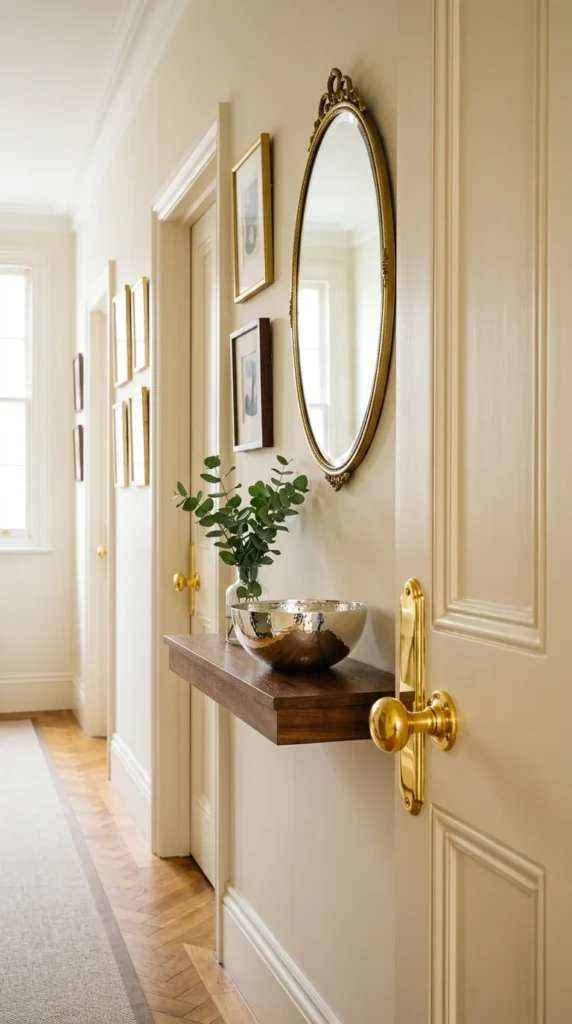
Metallics act like mini-mirrors. Incorporating gold, silver, or brass through hardware, picture frames, or light fixtures adds a layer of sophistication and helps bounce light around the room. In a narrow space, these small reflections contribute to a brighter, more polished aesthetic.
13. Glass Doors
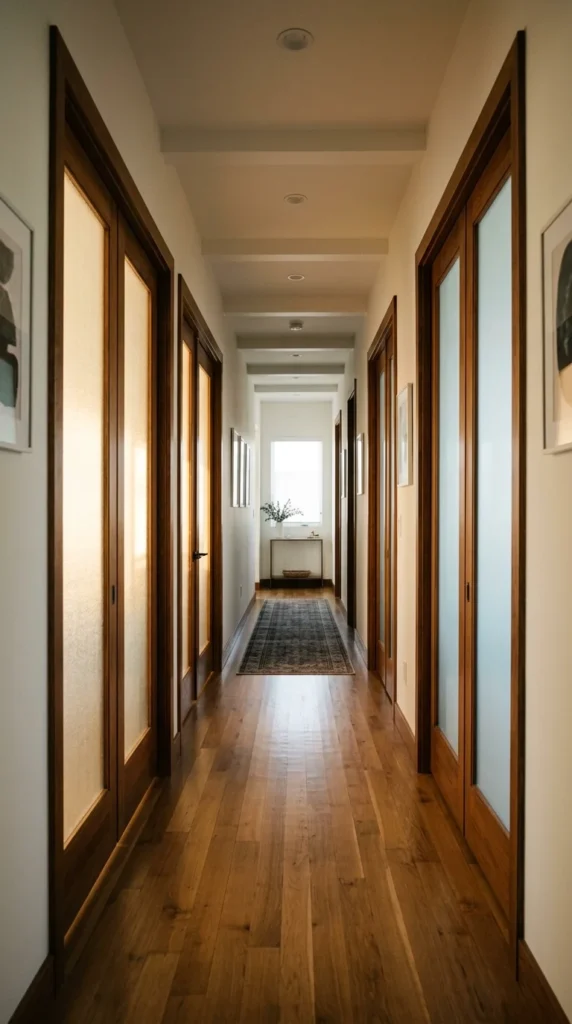
Solid doors can make a narrow hallway feel like a series of boxes. Replacing them with glass-paneled doors (frosted for privacy) allows light to “borrow” from adjacent rooms. This makes the hallway feel like part of a larger, interconnected space rather than an isolated tunnel.
14. Striped Patterns
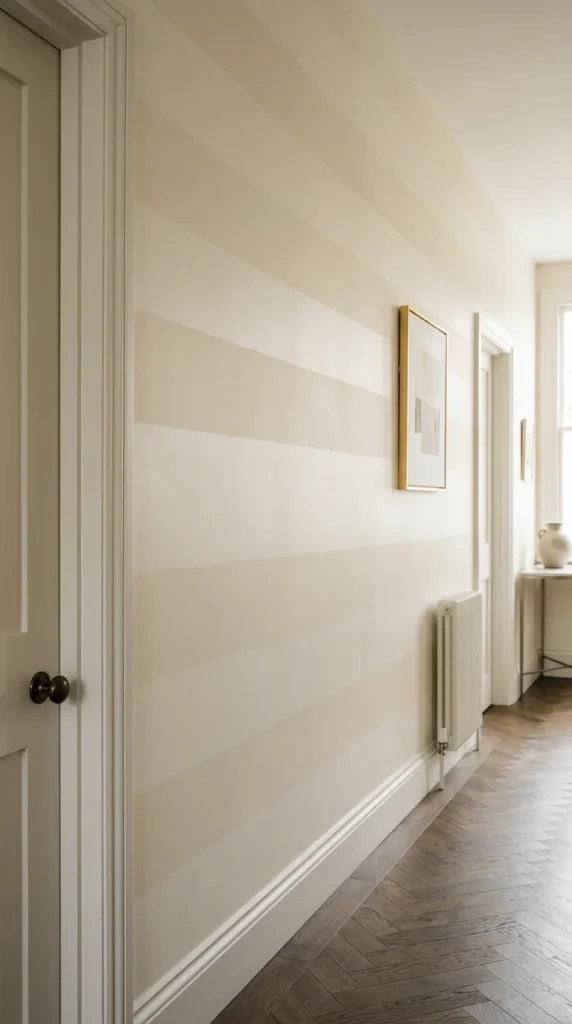
Patterns can be used to manipulate the perception of size. Horizontal stripes on the walls can make a hallway feel longer or wider depending on their orientation. If painting stripes feels too permanent, a striped wallpaper or even a striped runner rug can achieve a similar effect. Keep the contrast between colors low to avoid an overwhelming or dizzying sensation.
15. Hidden Storage
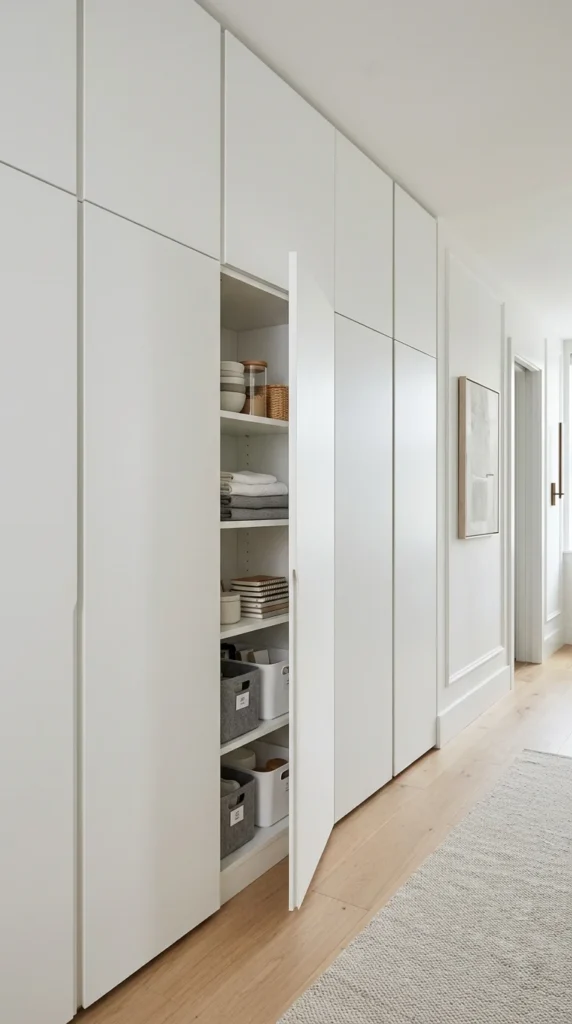
Maximize every inch of a “dead” end of a hallway by installing floor-to-ceiling cabinetry that matches the wall color. By removing handles and using “push-to-open” mechanisms, the storage becomes almost invisible. This is an ideal spot for linens, seasonal clothing, or cleaning supplies that don’t have a home elsewhere.
16. Plant Life
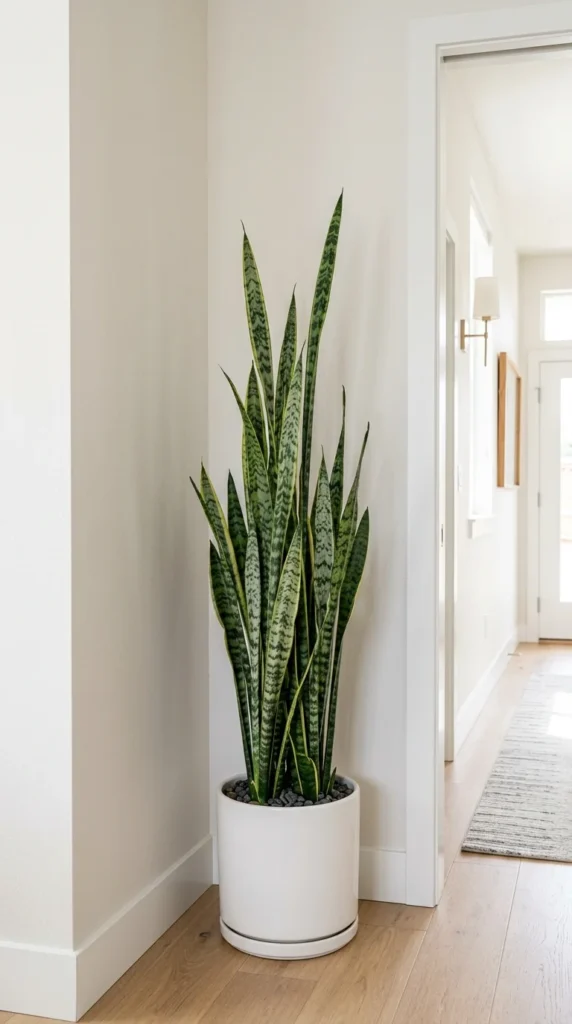
Plants bring life and color to a hallway. In narrow spaces, choose plants with a vertical growth habit, such as Snake Plants (Sansevieria) or a slim Fiddle Leaf Fig. If there is no natural light, high-quality silk plants or “low-light” varieties like ZZ plants are excellent options. Hanging planters are another great way to add greenery without taking up floor space.
17. Bold Ceiling
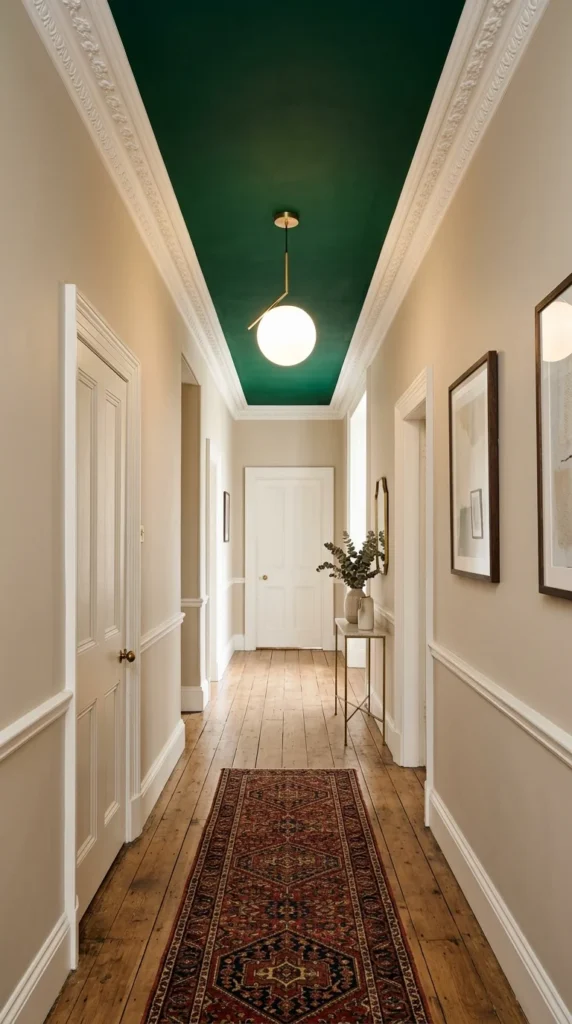
If you want to add drama without making the walls feel like they are closing in, look up. Painting the ceiling a bold color or applying a patterned wallpaper draws the eye upward. This emphasizes the height of the hallway and adds a surprise design element that doesn’t occupy any physical space in the corridor.
18. Wainscoting
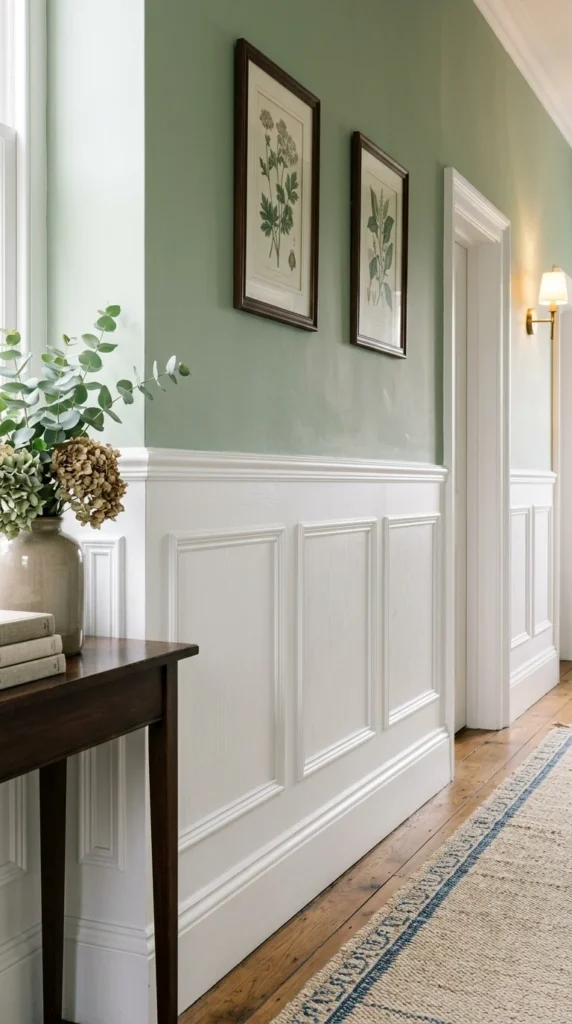
Wainscoting or wall paneling adds architectural interest and texture. By dividing the wall horizontally, you break up the large expanse of flat surface, which can make a long hallway feel less daunting. It also provides a durable surface that is easier to clean than paint—a major plus in a narrow, high-traffic area where shoulders and bags frequently brush against the walls.
19. Sconces
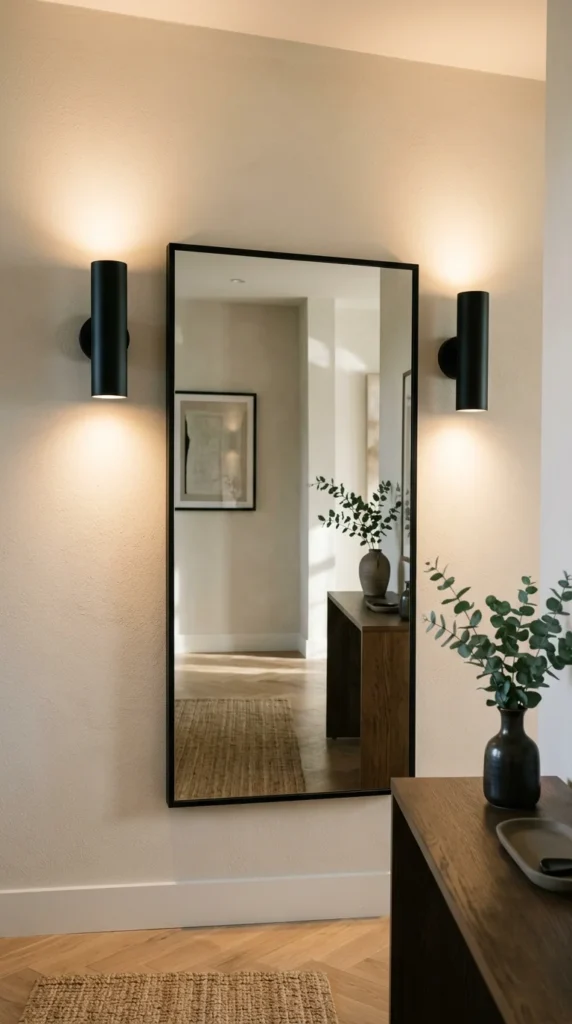
Floor lamps are usually out of the question in a narrow hallway. Wall sconces provide excellent ambient and task lighting while remaining flush or near-flush to the wall. They can be used to highlight artwork or simply to provide a warm, layered lighting effect that makes the space feel more high-end.
20. Minimalist Furniture
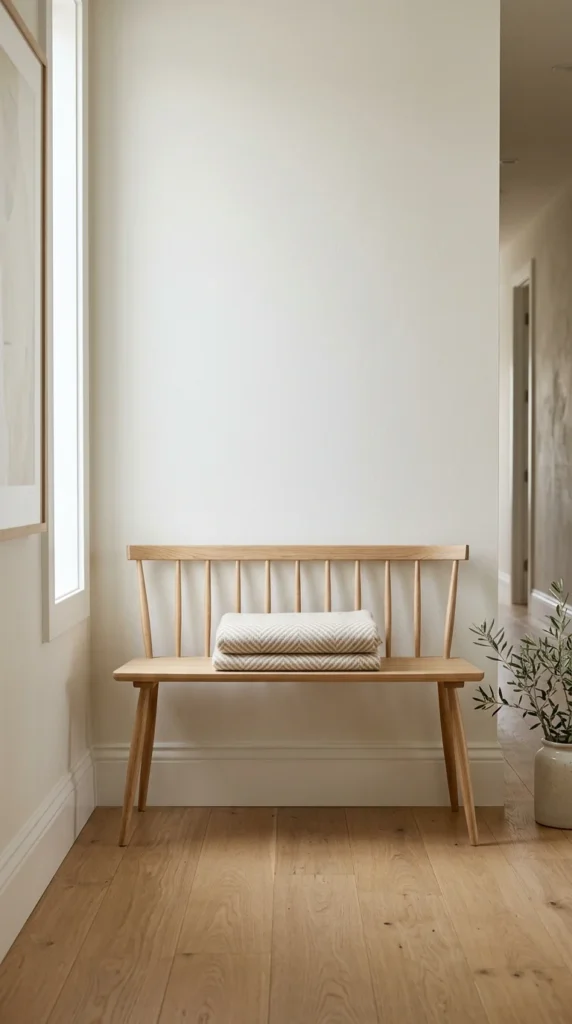
When selecting furniture for a narrow hall, less is always more. Choose pieces with “leggy” designs—furniture that sits high off the floor on thin legs. Being able to see the floor underneath the furniture tricks the brain into thinking the room is larger than it actually is. Avoid bulky, solid-to-the-floor pieces that act as visual roadblocks.
21. Sliding Barn Doors
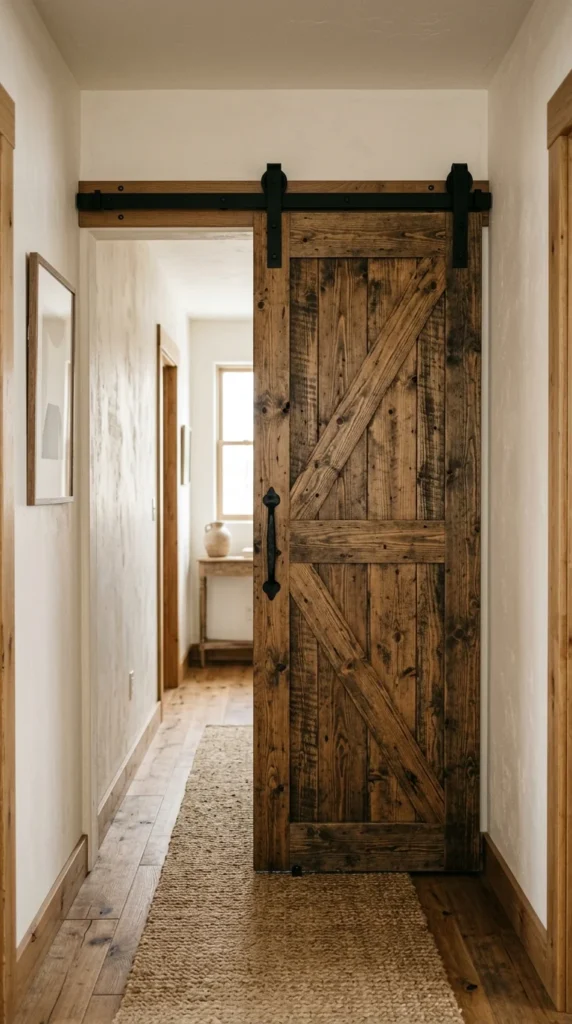
Standard doors require a “swing zone” that can completely block a narrow hallway when open. Sliding barn doors or pocket doors eliminate this problem. They stay parallel to the wall, saving valuable clearance space and adding a touch of farmhouse or industrial style to your home.
22. Cohesive Color Palette
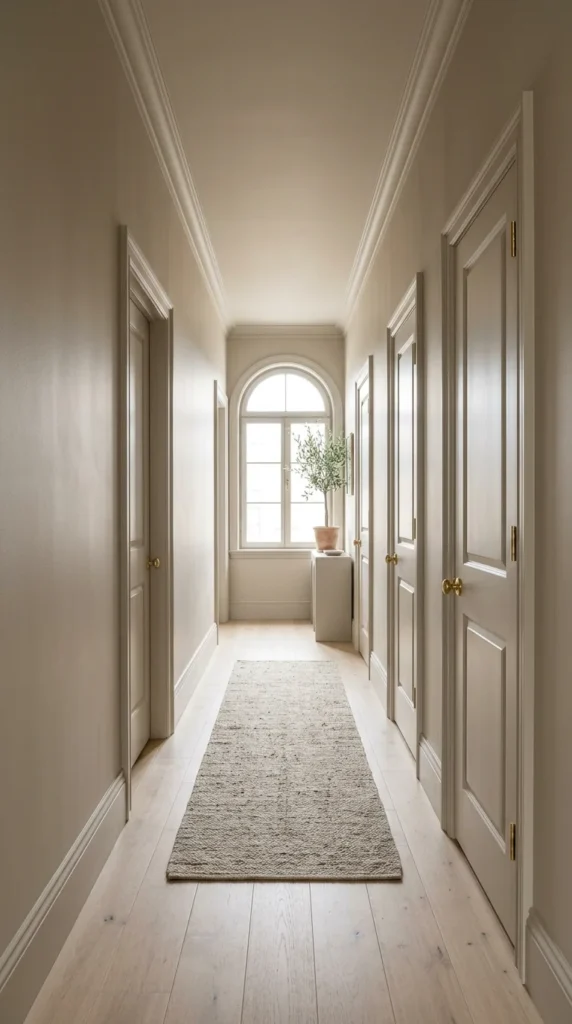
Painting the baseboards, doors, and walls the same color creates a seamless look that prevents the eye from stopping at every transition. This lack of visual breaks makes the space feel much larger and more unified. If you want variety, use different finishes—flat for the walls and semi-gloss for the trim and doors.
23. Fold-down Desks
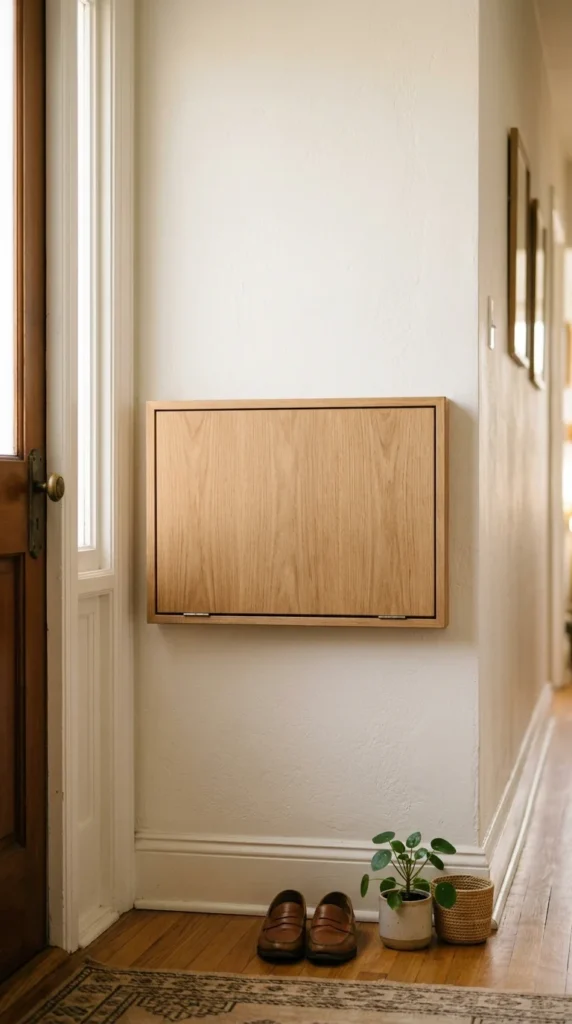
For those who need a home office but lack the room, a narrow hallway can serve as a temporary workspace. Fold-down “murphy” desks can be mounted to the wall and tucked away when not in use. Pair it with a folding chair that can be hung on a hook, and you’ve created a functional office out of thin air.
24. Textured Wallpaper
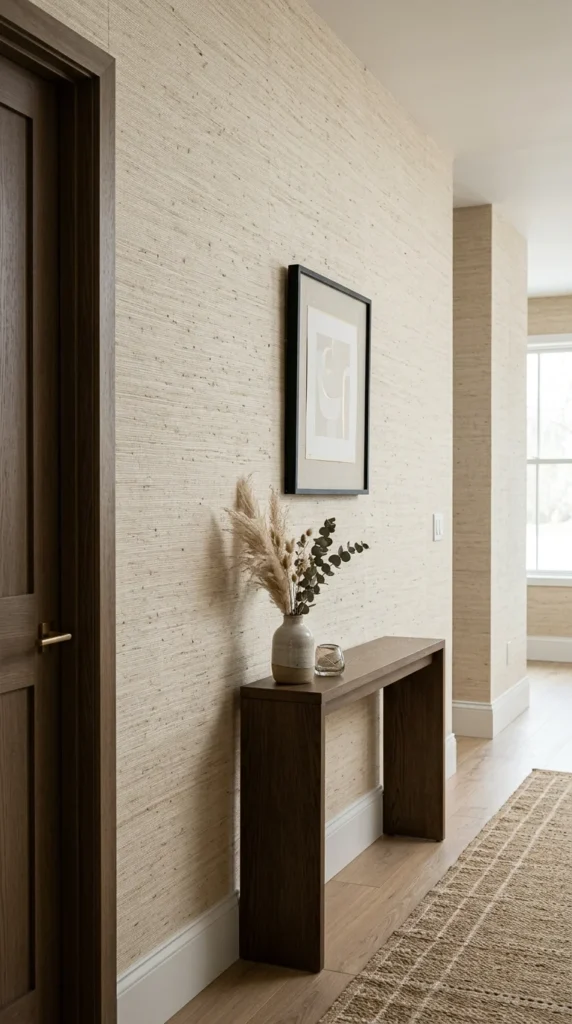
If you prefer a neutral palette but find it boring, add texture. Grasscloth, embossed patterns, or even “brick” effect wallpaper adds depth and character without the need for bulky decor. Texture makes the walls feel intentional and designed rather than just a necessary structural element.
25. Layered Lighting
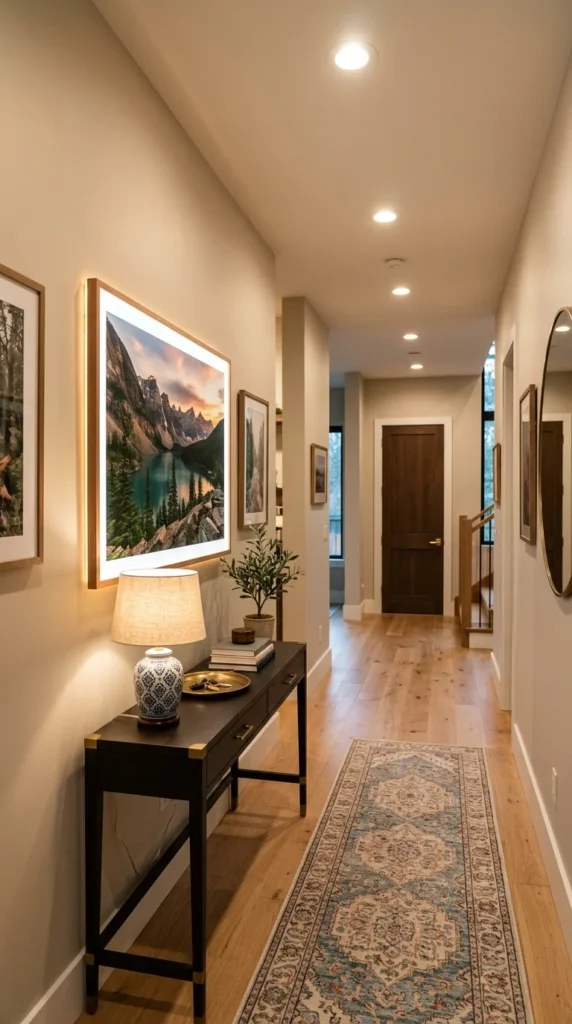
The key to a well-designed space is variety. Don’t rely on a single overhead light. Combine ceiling fixtures with sconces, battery-operated LED strips under shelves, or a small lamp on a console table. Layering your light sources allows you to adjust the mood and ensures that every inch of the hallway is illuminated, eliminating dark shadows that make a space feel small.