
Narrow hallways are often the most neglected spaces in a home. Frequently dismissed as mere “thoroughfares” or “dead zones,” these transitional areas actually hold immense potential to set the tone for your entire interior design. Because they are the arteries of the house, connecting one room to another, the way you style them influences the flow and mood of your living space.
The challenge with narrow hallways lies in the limited floor real estate. You cannot clutter them with bulky furniture, yet leaving them bare can make them feel cold and institutional. The secret to a stylish narrow hallway is a combination of strategic lighting, vertical interest, and clever use of color and texture. By treating the walls, floors, and ceiling as a canvas, you can transform a cramped corridor into a breathtaking design feature.
1. Large Mirrors
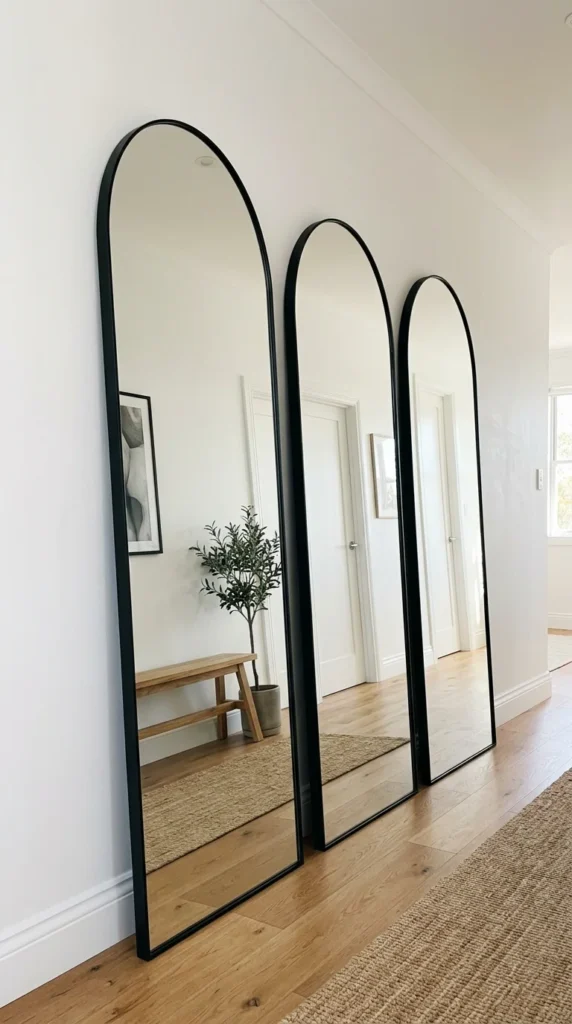
Mirrors are the oldest trick in the interior design book for a reason: they work. In a narrow hallway, a large mirror—or a series of mirrors—serves two primary purposes. First, it reflects both natural and artificial light, instantly brightening a space that might otherwise feel dark and cavernous. Second, it creates the optical illusion of depth, making the walls feel further apart than they actually are.
For a modern look, consider a large round mirror to break up the long, straight lines of the hallway. If you prefer a more classic aesthetic, a floor-to-ceiling leaner mirror at the end of the hall can create a “portal” effect, making the hallway appear to continue indefinitely.
2. Runner Rugs
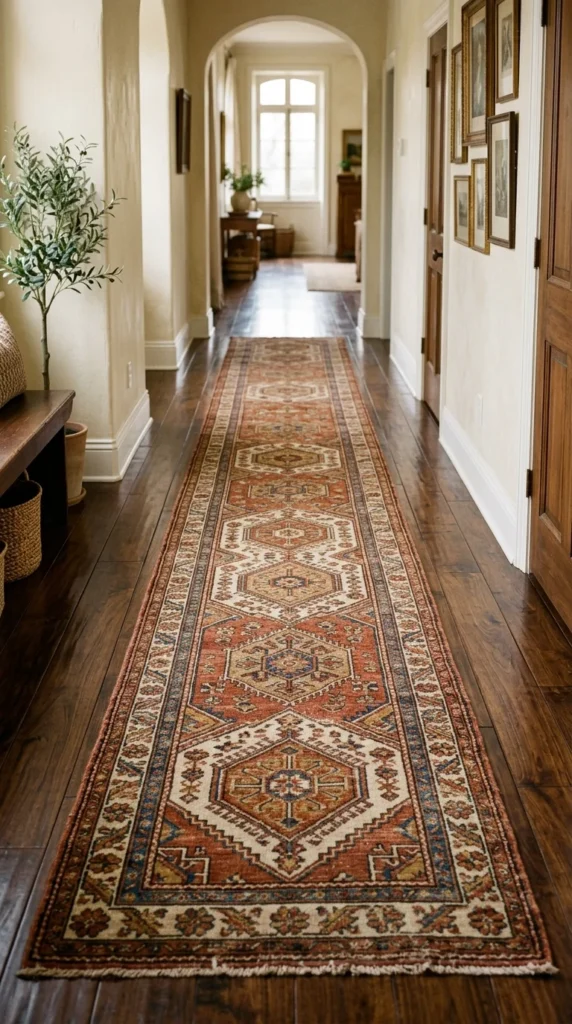
The floor is often the largest uninterrupted surface in a hallway, making it the perfect place to add texture and color. A runner rug acts as a visual guide, drawing the eye toward the end of the passage and emphasizing its length in a positive way.
Beyond aesthetics, runners provide much-needed sound dampening in high-traffic areas, softening the echo of footsteps on hard floors. When choosing a runner for a narrow space, ensure there is a few inches of floor visible on either side to prevent the space from feeling “carpeted over.” Durable materials like jute, sisal, or low-pile wool are ideal for these high-use zones.
3. Gallery Walls
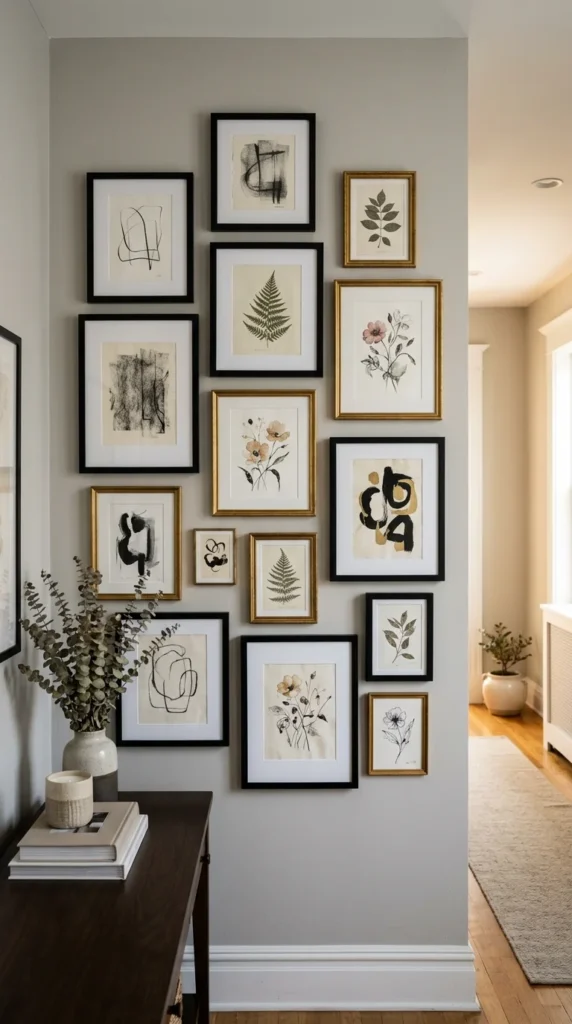
If you lack the floor space for furniture, use your walls to tell a story. A gallery wall is an excellent way to personalize a narrow hallway without encroaching on walking space. By hanging a collection of family photos, travel souvenirs, or fine art, you turn a functional transition zone into a private museum.
To keep the hallway from feeling cluttered, maintain a sense of cohesion. You can achieve this by using identical frames for a “grid” look, which feels orderly and architectural, or by sticking to a specific color palette for a “salon” style arrangement. Lighting each piece with dedicated picture lights can add a sophisticated, high-end feel.
4. Vertical Storage
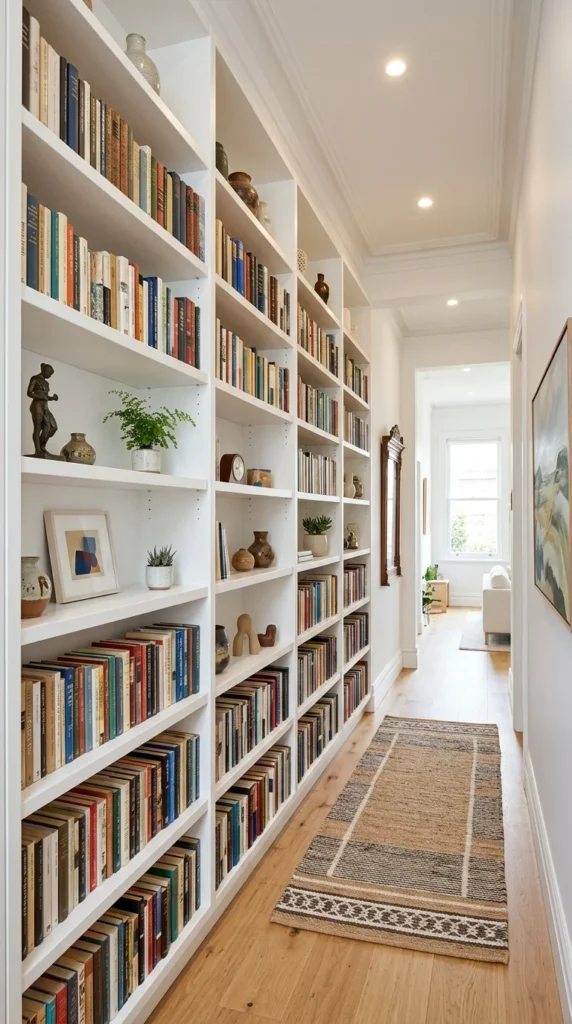
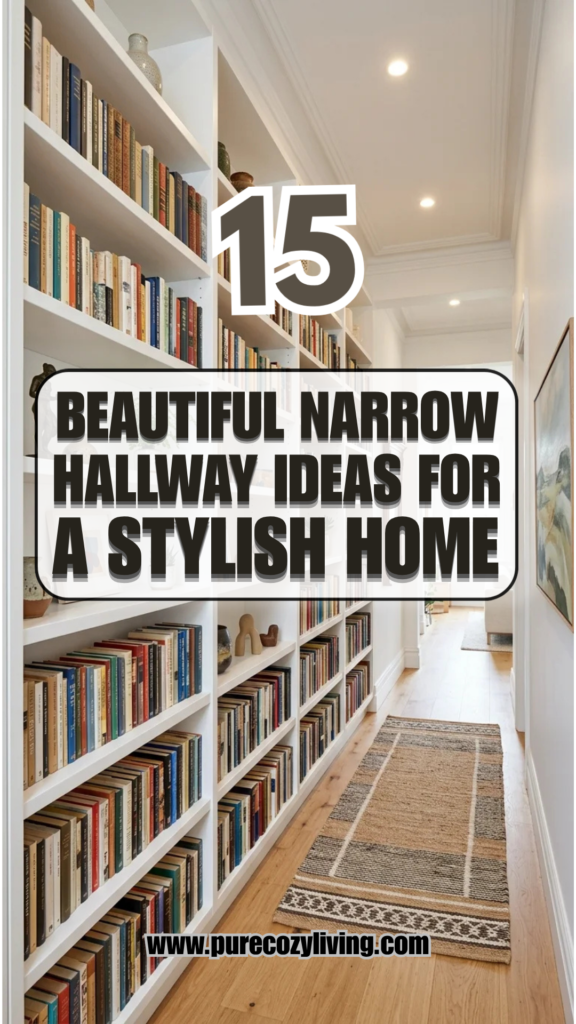
When horizontal space is at a premium, look up. Vertical storage solutions allow you to maximize functionality without narrowing the walkway. Custom-built recessed shelving is the gold standard, as it sits flush with the wall, but even shallow wall-mounted units can provide a home for books, keys, and mail.
For a minimalist approach, consider a pegboard system or a series of high-quality wall hooks. These can hold coats, hats, and bags, keeping them off the floor and organized. The key is to keep the items curated; a hallway is too small to serve as a dumping ground for clutter.
5. Statement Lighting
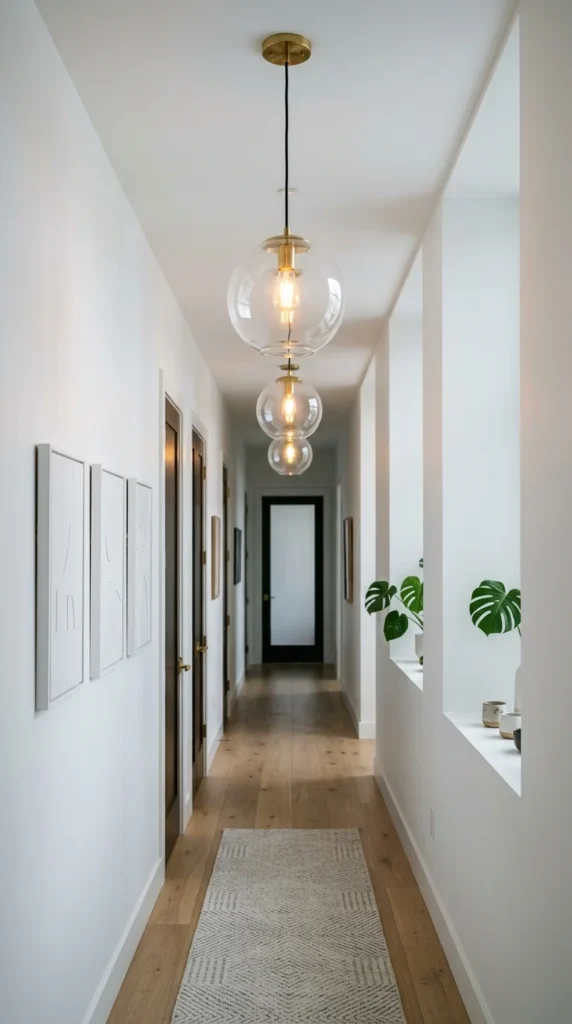
Lighting can make or break a narrow hallway. Avoid a single, weak flush-mount light in the center, which often creates long shadows and makes the space feel oppressive. Instead, opt for statement lighting that draws the eye upward.
A row of identical pendant lights creates a sense of rhythm and architectural intent. If your ceilings are low, consider high-quality recessed “wash” lighting that aims toward the walls, or sleek wall sconces. Sconces provide a warm, lateral glow that softens the “tunnel” effect often found in long hallways.
6. Bold Wallpaper
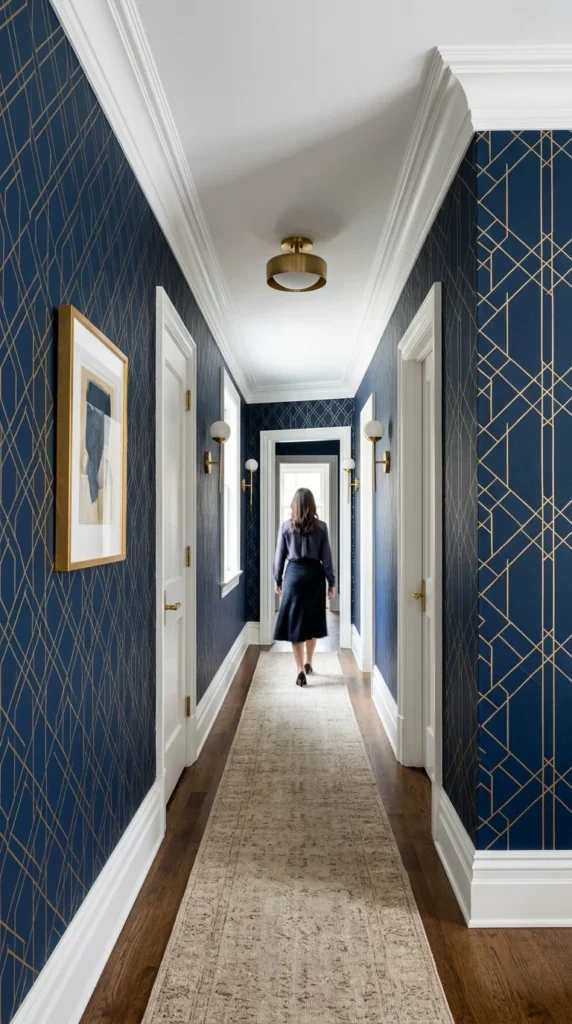
Don’t be afraid to go bold in a small space. Because you only spend a few seconds at a time in a hallway, it is the perfect place to experiment with daring patterns or deep colors that might feel overwhelming in a living room.
A high-contrast wallpaper can add incredible depth and character. Large-scale floral prints can make the walls feel like they are “receding,” while vertical stripes can make the ceiling feel higher. If you are worried about the space feeling too busy, apply the wallpaper only to the top half of the wall and use neutral wainscoting on the bottom.
7. Floating Shelves
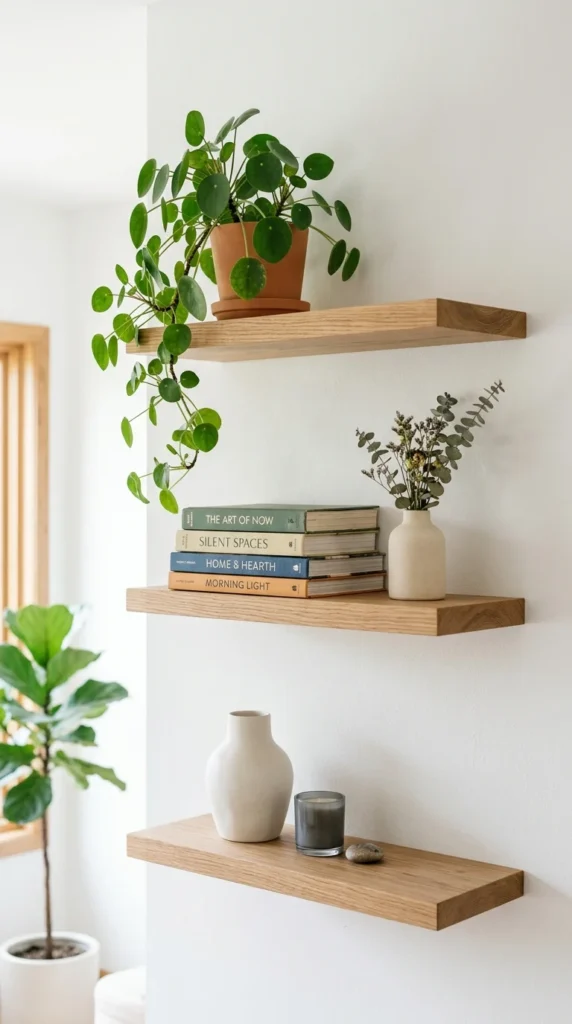
Floating shelves are a designer’s secret weapon for narrow hallways. They provide a surface for decor—such as candles, small plants, or sculptures—without the visual weight of a traditional table with legs.
By staggering the shelves at different heights, you create a dynamic visual flow that encourages the eye to move through the space. Keep the depth of the shelves under 6 inches to ensure they don’t interfere with shoulder room as people walk by. This is an ideal solution for displaying small treasures that would otherwise get lost in larger rooms.
8. Classic Wainscoting
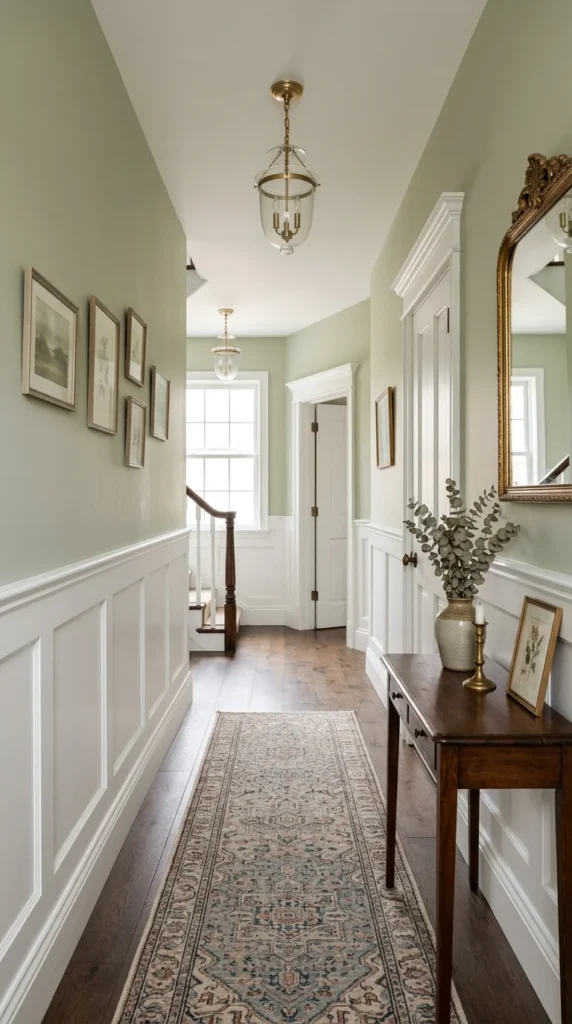
Wainscoting or wall paneling adds an instant layer of architectural sophistication to a plain hallway. It breaks up the vertical expanse of the wall, preventing it from looking like a flat, boring box.
White or light-colored paneling on the bottom half of the wall reflects light where it’s needed most, while the top half can be painted in a contrasting color or decorated with art. Beyond the aesthetic benefits, wainscoting is practical; it protects the walls from the scuffs and bumps that are inevitable in narrow, high-traffic passages.
9. Slim Consoles
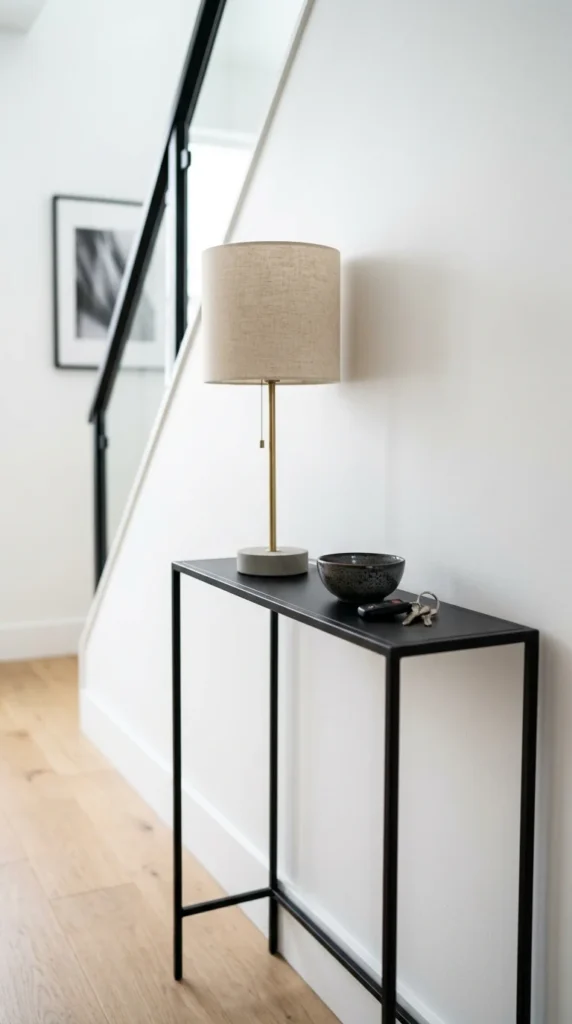
If your hallway is just wide enough, a “slim” or “skinny” console table can provide a much-needed focal point and a place to drop your essentials. Look for tables that are specifically designed for entryways, usually measuring between 8 and 12 inches in depth.
A console table provides an opportunity to create a “vignette.” Place a lamp on one end for ambient lighting, a small tray for keys, and perhaps a tall vase to add height. Choosing a table with an open base or legs (rather than a solid block) helps maintain a sense of floor space, making the hallway feel less obstructed.
10. Lush Greenery
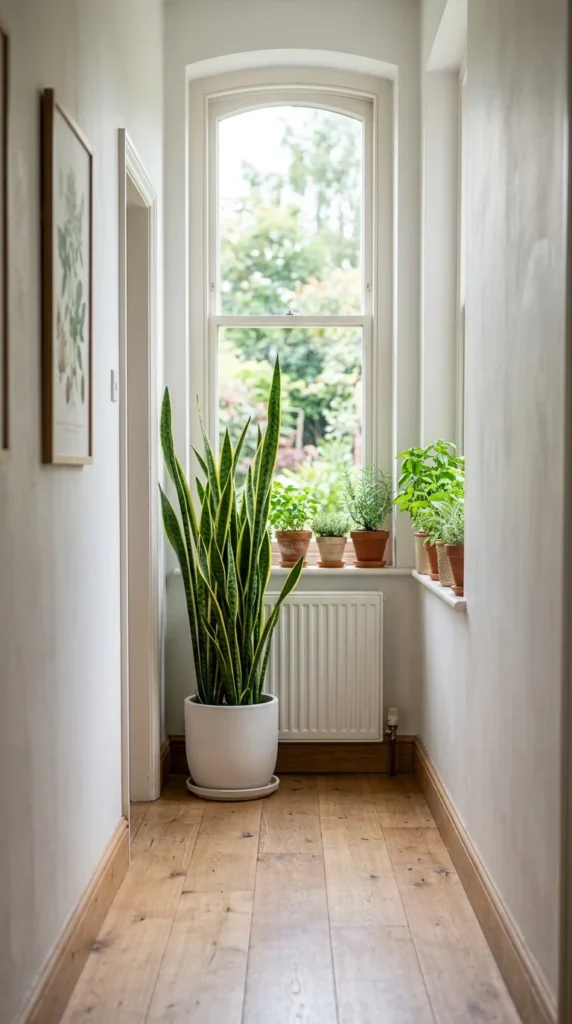
Bringing nature indoors is an effective way to breathe life into a sterile hallway. Plants add organic shapes that contrast beautifully with the sharp angles of a corridor. In a narrow space, choose plants with vertical growth habits rather than wide, spreading foliage.
Snake plants, Fiddle Leaf Figs (if there is enough light), and Sansevieria are excellent choices because they grow upward and occupy minimal horizontal space. If your hallway lacks natural light, high-quality silk plants or “low-light” varieties like ZZ plants can provide that essential splash of green without the maintenance struggle.
11. Color Drenching
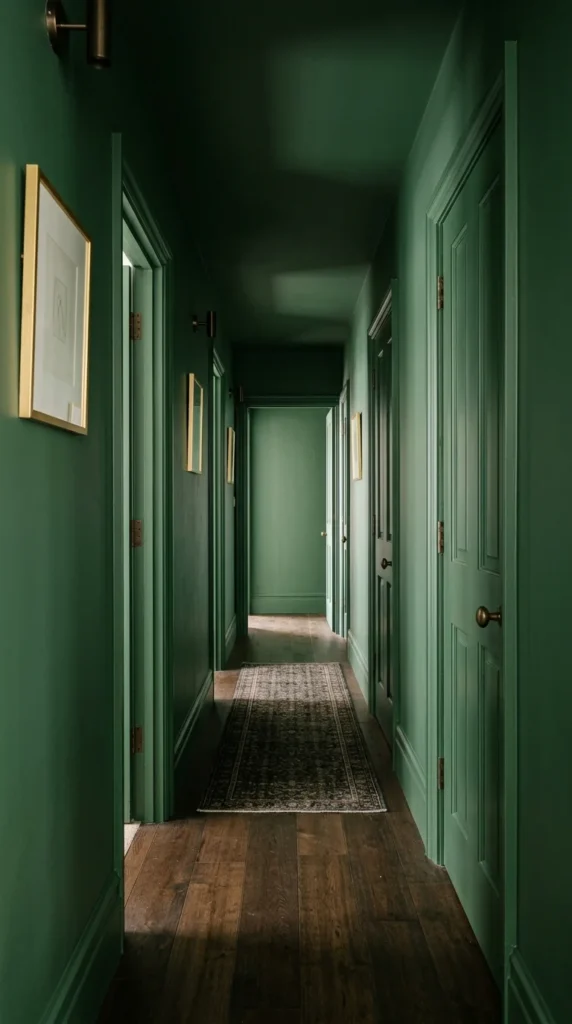
Color drenching is the practice of painting everything in a space—walls, trim, doors, and sometimes even the ceiling—the same color. In a narrow hallway, this technique can be transformative. By removing the visual “interruptions” of white baseboards or contrasting door frames, the boundaries of the room become blurred.
This creates a cohesive, cocoon-like effect that feels incredibly intentional and high-end. Light colors like soft beige or “greige” can make the space feel airy and ethereal, while dark colors like charcoal or navy create a moody, dramatic “jewel box” effect that makes the rooms leading off the hallway feel even brighter by comparison.
12. Built-in Seating
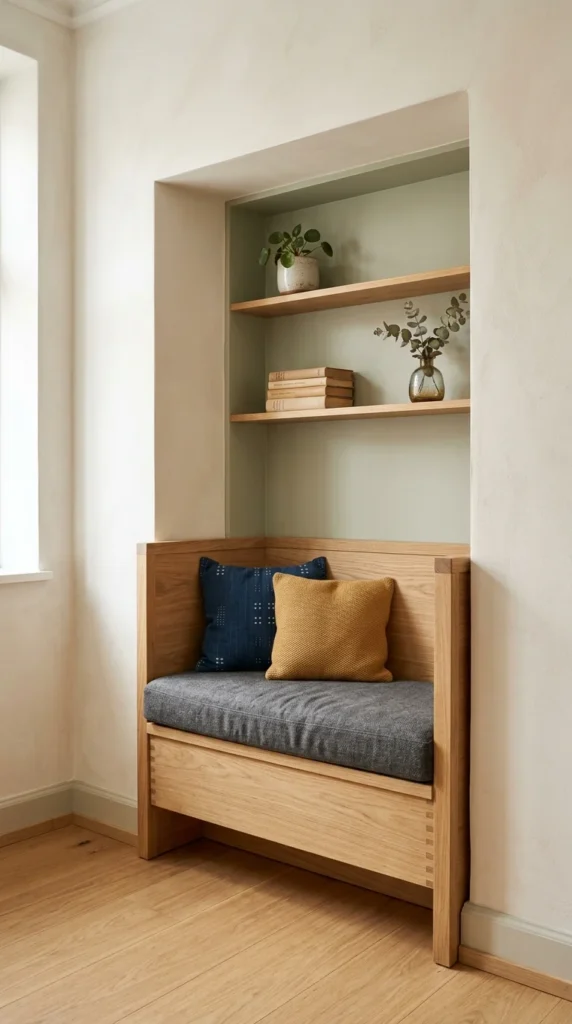
If you have a slight indentation or a dead end in your hallway, a built-in bench can turn a passage into a functional room. This is particularly useful near the entrance of the home, providing a place to sit while putting on shoes.
To maximize the utility, include drawers or cubbies beneath the seat for shoe storage. Decorate the bench with a few cushions to add softness and texture. This turns a “transit” area into a “destination,” adding a sense of luxury and thoughtfulness to the home’s layout.
13. Oversized Art
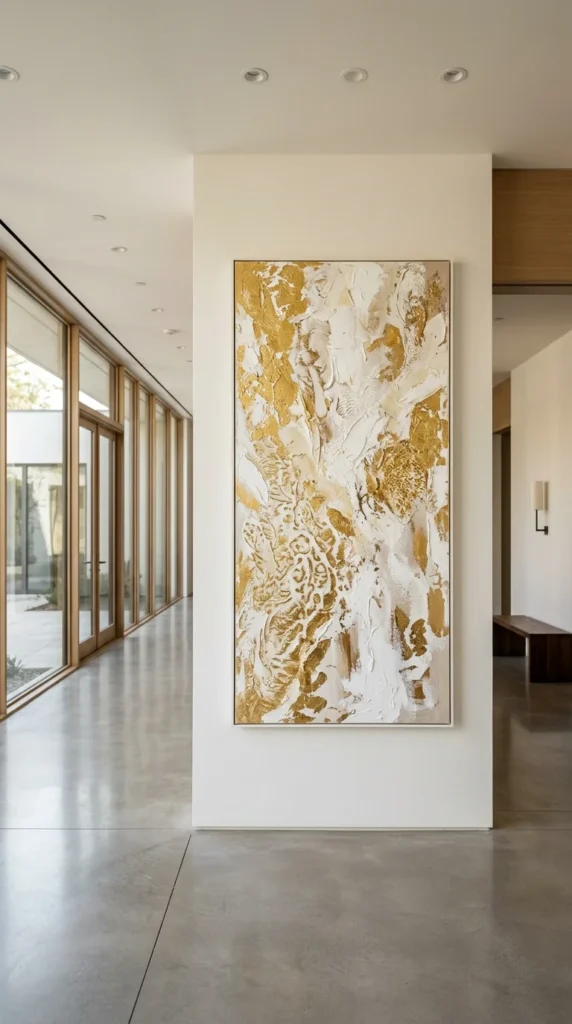
While gallery walls are popular, a single piece of oversized art can have an even more significant impact in a narrow space. A large canvas creates a powerful focal point that anchors the hallway and prevents it from feeling like an endless tunnel.
When choosing a large piece, consider abstract works or landscapes that provide a sense of “vista.” Avoid pieces with too much tiny detail, as you won’t have the distance required to step back and appreciate them. Instead, look for bold colors and broad strokes that can be enjoyed from up close or from the other end of the hall.
14. Architectural Details
Sometimes the best way to style a hallway is to change its physical structure. Adding architectural details like arches, corbels, or crown molding can give a plain hallway a sense of history and grandeur.
Arches, in particular, are excellent for “framing” the view as you walk through the house. They soften the harsh rectangular shape of a standard corridor and add a sense of rhythm. Even simple additions like a more substantial baseboard or a decorative “chair rail” can elevate the space from basic to bespoke.
15. Glass Doors
One of the biggest issues with narrow hallways is the lack of natural light. If the hallway ends at a solid door, consider replacing it with a glass-paneled version. This allows light from the adjacent rooms or the outdoors to spill into the corridor.
Internal glass doors—such as French doors or modern steel-framed Crittall doors—maintain the “open” feel of a floor plan while still providing sound separation. If privacy is a concern, frosted or ribbed glass can let the light through while obscuring the view, ensuring your narrow hallway feels bright, breezy, and connected to the rest of the home.