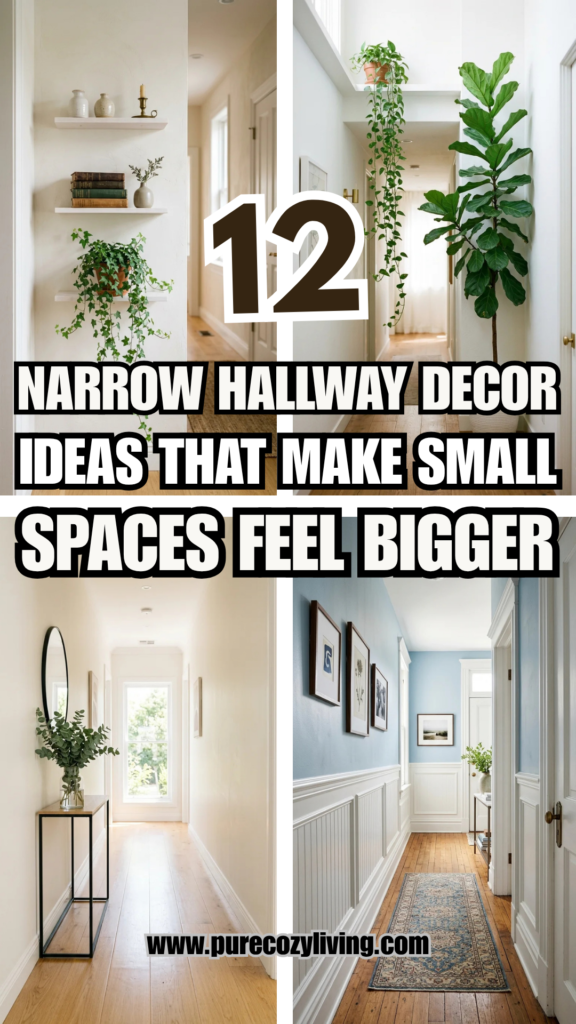

Narrow hallways are often the most neglected areas of a home. Frequently dismissed as mere transition zones, these tight corridors can feel cramped, dark, and uninviting. however, with the right design strategy, a narrow hallway can become a stunning architectural feature that enhances the flow and perceived size of your entire living space. By utilizing light, color, and clever furniture choices, you can transform a “tunnel” into a spacious-feeling gallery.
Here are 12 expert-approved decor ideas to breathe life into your narrow hallway and make it feel significantly larger.
1. Oversized Mirrors
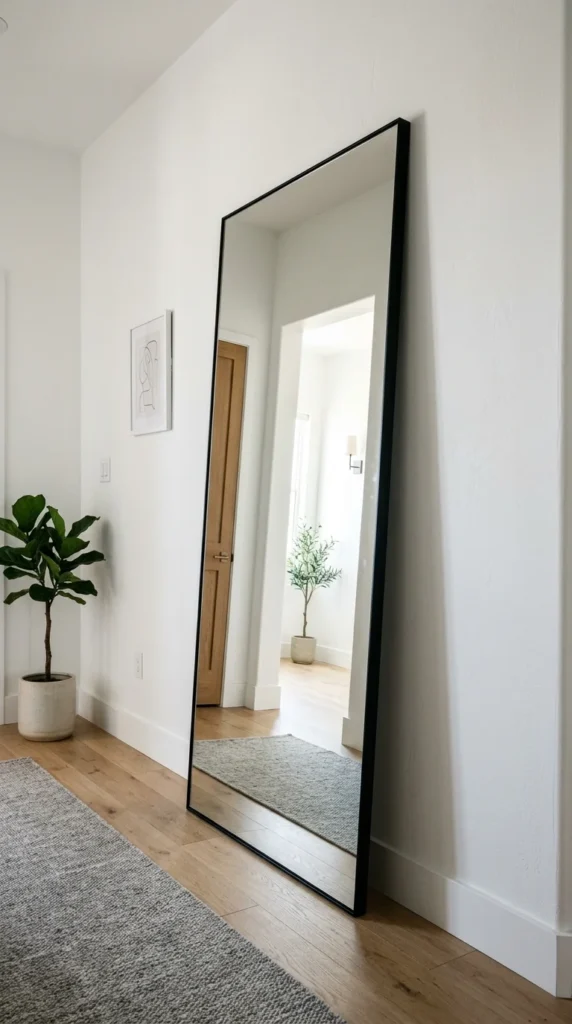
The oldest trick in the interior design book is also the most effective: mirrors. In a narrow hallway, mirrors serve a dual purpose. First, they reflect light—both natural and artificial—which instantly brightens a windowless corridor. Second, they create a “window” effect, tricking the eye into believing there is more depth to the room than actually exists.
To maximize this effect, consider a single oversized floor mirror or a series of identical wall-mounted mirrors. Placing a mirror directly across from a doorway to a bright room will pull that light and view into the hallway, effectively breaking down the walls that make the space feel restrictive.
2. Statement Lighting
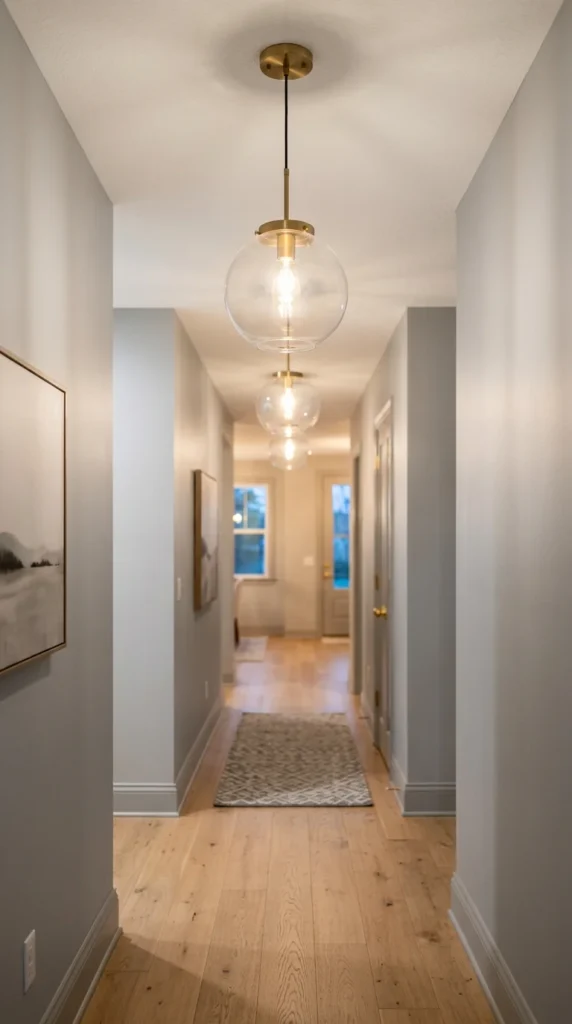
Darkness is the enemy of small spaces. If your hallway is dimly lit, it will inevitably feel smaller and more enclosed. Replacing a single, dated flush-mount light with multiple light sources can change the entire vibe.
Consider installing a series of pendant lights or high-end recessed lighting to draw the eye upward, emphasizing the height of the ceiling rather than the proximity of the walls. Wall sconces are also an excellent choice, as they provide “wash” lighting across the walls, which softens the boundaries of the corridor and adds a layer of sophisticated warmth.
3. Long Runners
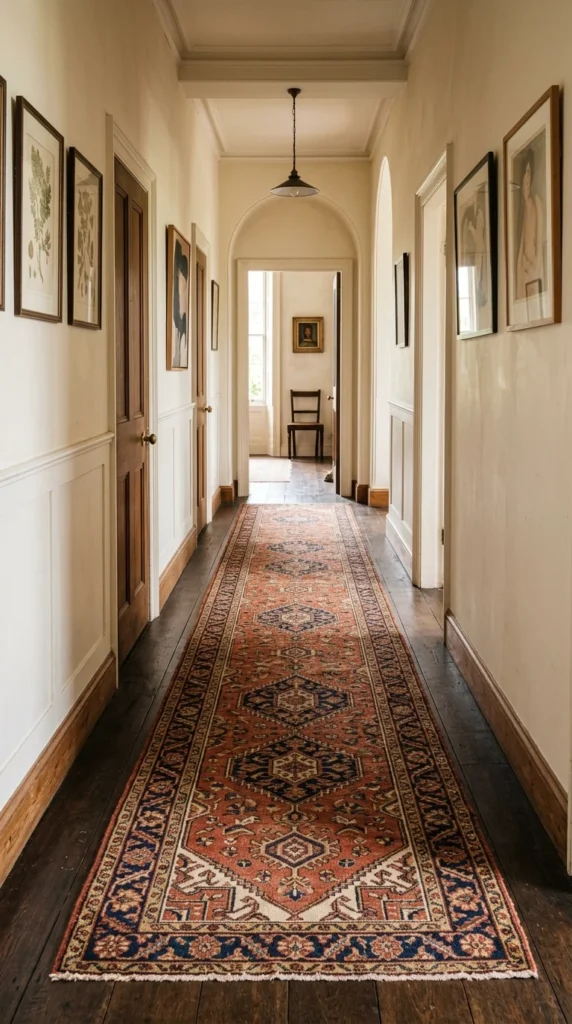
Floor coverings play a massive role in how we perceive the dimensions of a room. In a narrow hallway, a long rug or “runner” acts as a visual guide, drawing the eye forward and emphasizing the length of the space rather than its narrowness.
Opt for a runner that leaves a few inches of flooring visible on either side. This “border” prevents the rug from feeling like wall-to-wall carpeting, which can sometimes feel heavy. Light-colored rugs with subtle horizontal stripes can also help visually “push” the walls apart, while bold patterns create a focal point that distracts from the tight dimensions.
4. Floating Shelves
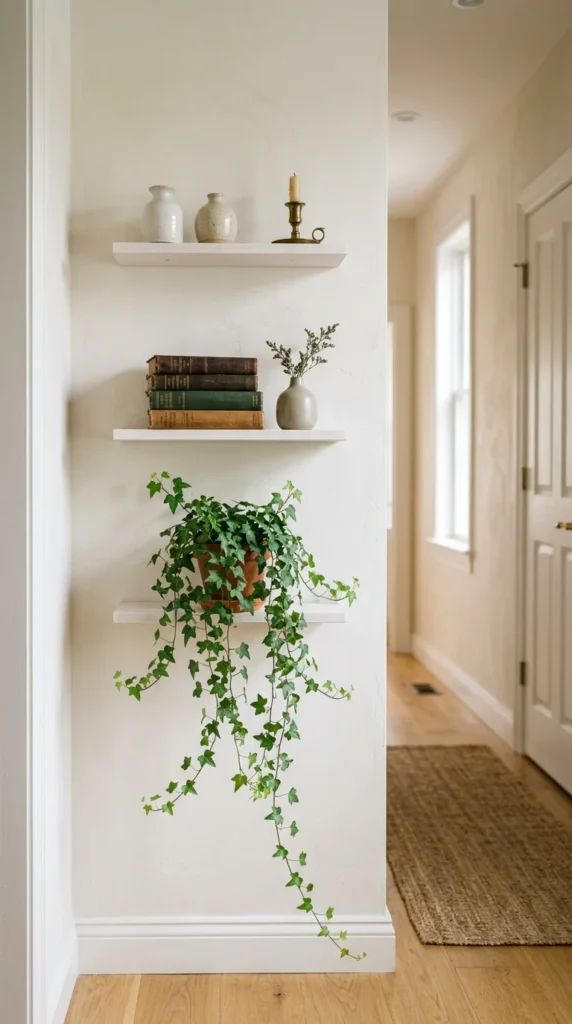
When floor space is at a premium, the only way to go is up. Traditional bookcases or bulky cabinets are often too wide for narrow halls, obstructing the walking path and making the space feel cluttered.
Floating shelves offer a streamlined alternative. By keeping the floor clear, you maintain a “visual lightness” that keeps the hallway feeling open. Use these shelves to display curated decor, such as small sculptures, books, or photographs. The key is to keep the styling minimal—overcrowding the shelves will have the opposite effect and make the walls feel like they are closing in.
5. Light Paint
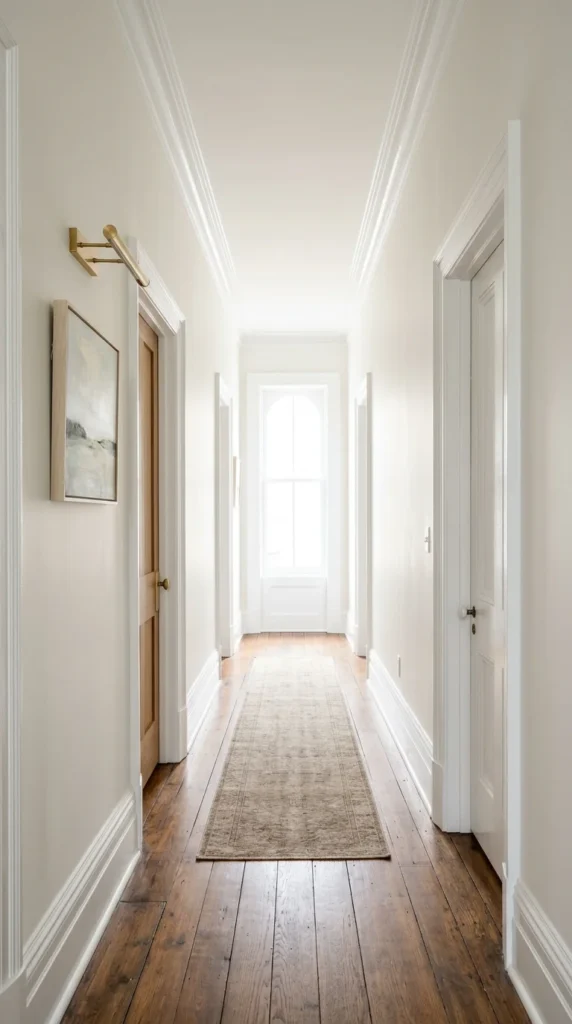
It is no secret that light colors make a room feel larger. Whites, creams, light grays, and soft pastels reflect the most light, which is crucial in a space that lacks windows. However, the finish of the paint matters just as much as the color.
Using a satin or semi-gloss finish on the walls can help bounce light around more effectively than a flat or matte finish. If you want to add a bit of drama without shrinking the space, consider painting the “end” wall of the hallway a slightly darker or bolder color. This creates a “focal point” that draws the eye through the space, making the journey down the hall feel more intentional and spacious.
6. Minimalist Consoles
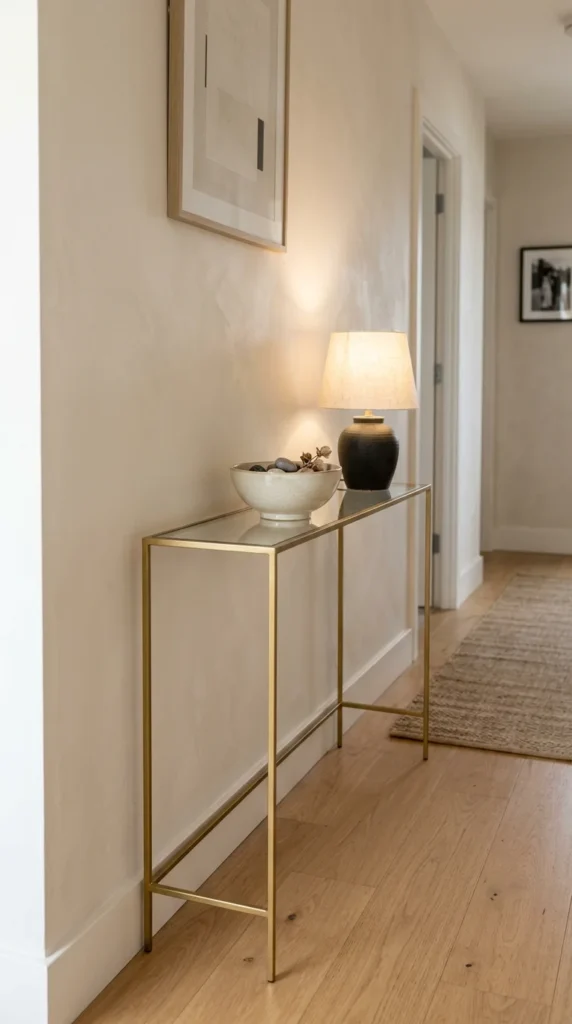
If you need a surface for keys, mail, or decor, look for “leggy” furniture. A console table with thin metal legs and a glass or acrylic top provides functionality without the visual weight of solid wood furniture.
The “see-through” nature of glass or acrylic furniture allows the eye to travel right through the piece to the wall and floor behind it. This maintains the continuity of the space, preventing the furniture from acting as a visual block. Choose the narrowest depth possible—many brands now design “hallway consoles” specifically for tight 10-to-12-inch clearances.
7. Vertical Gallery
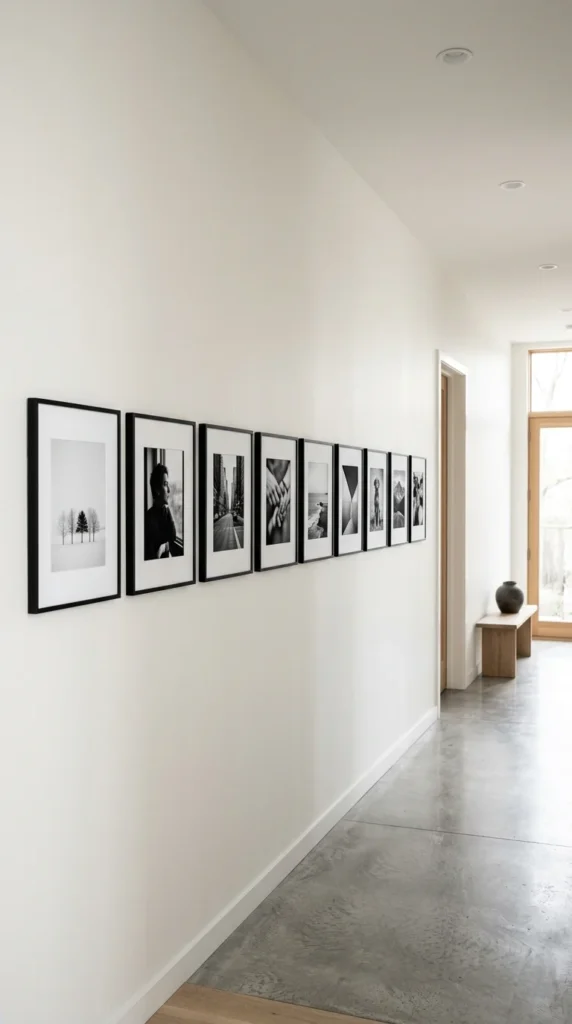
Art can transform a hallway from a transit point into a destination. However, in a narrow space, it’s important to be strategic with placement. A “gallery wall” that features many small, mismatched frames can feel chaotic and claustrophobic in a tight area.
Instead, try a linear arrangement of similarly sized frames. Aligning the centers of the frames creates a clean, horizontal line that leads the eye down the hallway. Alternatively, use large-scale art pieces that take up a significant portion of the wall. One or two large pieces feel less “busy” than ten small ones and give the walls a grander, more expansive feel.
8. Glass Doors
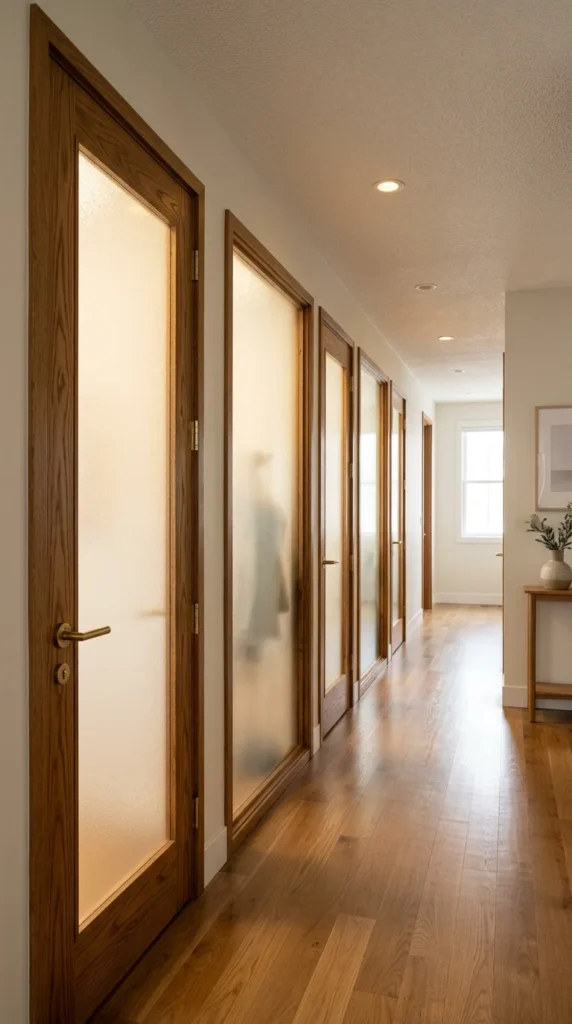
Standard solid doors create a hard “stop” for the eye and block out light from surrounding rooms. If your budget allows for architectural changes, replacing solid interior doors with glass-paneled versions (often called French doors or lite doors) can be a game-changer.
Even frosted or reeded glass provides privacy while still allowing light to permeate the hallway. This connects the hallway to the rest of the home visually, making it feel like an extension of the larger rooms rather than a separate, enclosed box.
9. Cohesive Flooring
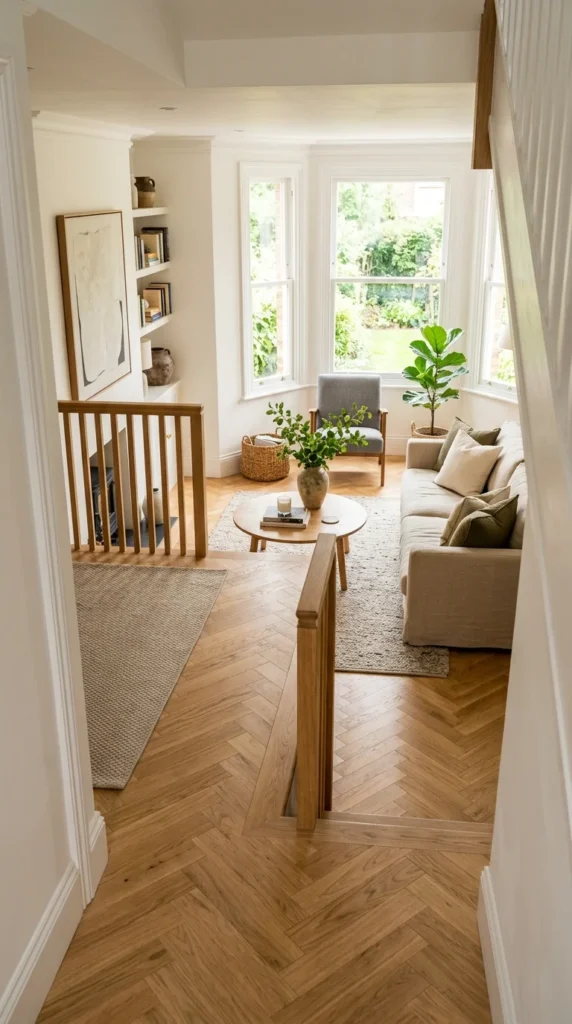
Visual breaks on the floor act like speed bumps for the eye, making a house feel chopped up and small. To make a narrow hallway feel like part of a larger, more open floor plan, ensure the flooring is consistent with the rooms it connects to.
If you have hardwood in the living room, carry that same hardwood into the hallway. If you are using tile, choose large-format tiles with minimal grout lines. The fewer the transitions, the more the space will appear to flow, creating an illusion of boundless square footage.
10. High-Mounted Curtains
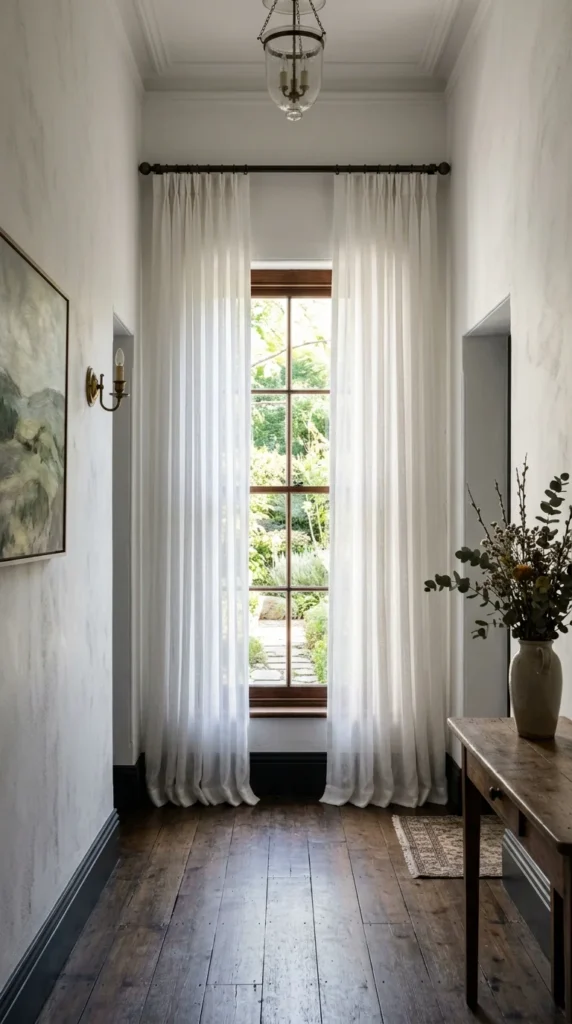
If your hallway is lucky enough to have a window at the end or along the side, capitalize on it. Windows are natural “space-expanders.” To make the most of them, mount your curtain rods as high as possible—ideally just a few inches below the ceiling.
Hanging long, floor-length sheer curtains will draw the eye upward, emphasizing the height of the hallway. Using sheers allows natural light to enter while providing a soft, airy texture that prevents the walls from feeling too “hard” or cold.
11. Integrated Greenery
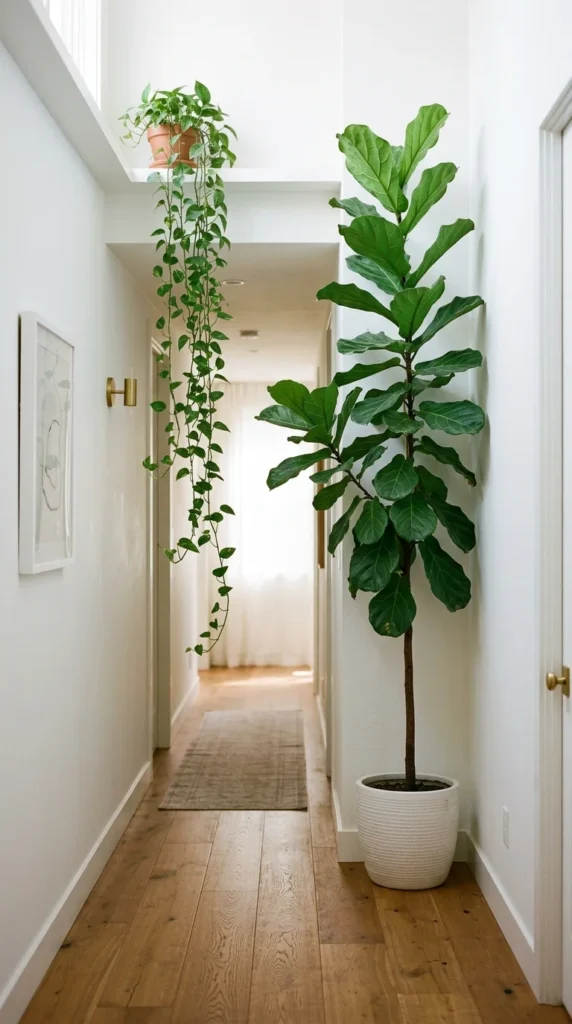
Bringing the outdoors in is a foolproof way to make any space feel more “breathable.” In a hallway, plants add organic shapes that break up the long, straight lines of the walls and floor.
Since floor space is limited, look for tall, slender plants like a Snake Plant or a Pencil Cactus. These grow vertically rather than horizontally. Alternatively, use wall-mounted planters or “living walls” to add greenery at eye level. The presence of living things makes a space feel more vibrant and less like a cramped utility area.
12. Decorative Moldings
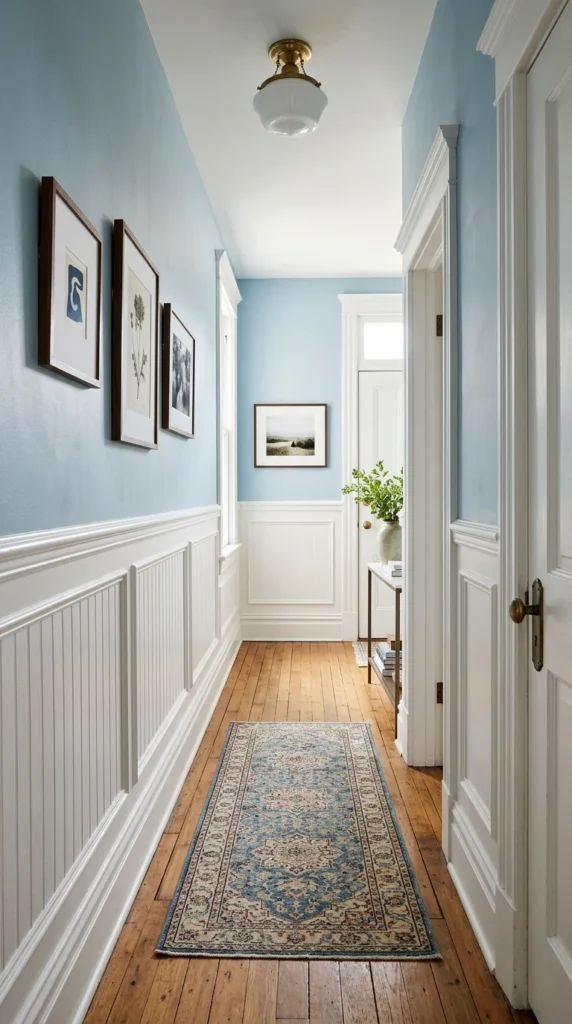
It might seem counterintuitive to add more to the walls of a narrow space, but architectural details like wainscoting, picture rail molding, or shiplap can actually make a hallway feel wider.
By adding a horizontal element—like a chair rail or the top edge of wainscoting—you create a visual divide that breaks up the height of the wall. This horizontal line encourages the eye to move along the length of the hall, providing a sense of structure and “purpose” to the space. When painted in a bright, crisp white, these details catch the light and add a three-dimensional quality that flat walls simply cannot achieve