

Living in a home with limited square footage often means making peace with tiny closets. However, a small closet doesn’t have to be a source of daily frustration. With the right strategy, even the most cramped reach-in or walk-in can become a functional, aesthetically pleasing space. Maximizing a tiny closet is less about the physical space you have and more about how you utilize every cubic inch. By thinking vertically, optimizing the door space, and choosing the right accessories, you can double your storage capacity and maintain a clutter-free environment.
1. Vertical Shelving
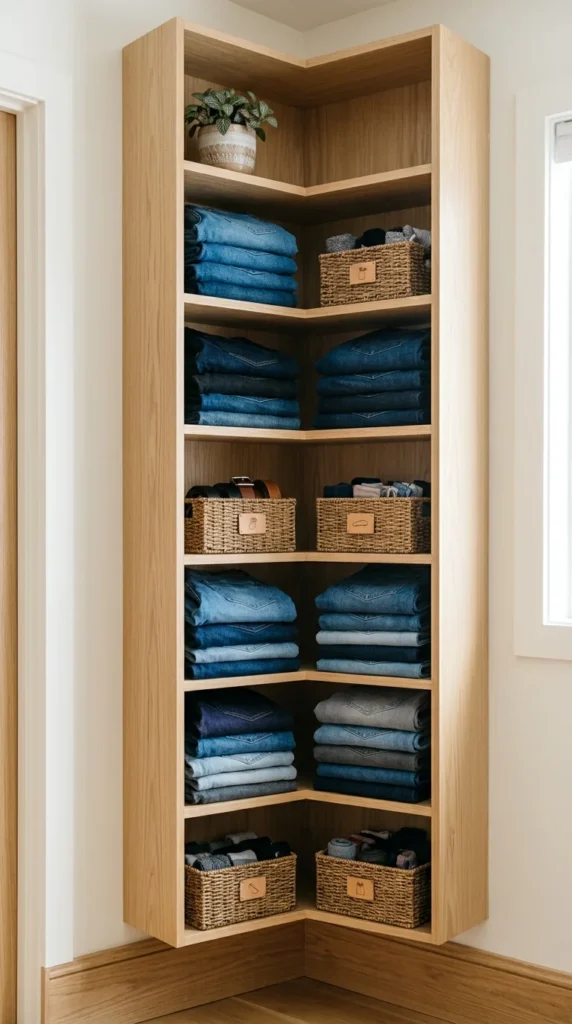
When floor space is at a premium, the only way to go is up. Vertical shelving units take advantage of the unused height in your closet, turning a single rod setup into a multi-layered storage powerhouse. By installing shelves that reach all the way to the ceiling, you create a dedicated home for items that usually end up in a heap on the floor, such as shoes, handbags, and folded knitwear.
Adjustable shelving is particularly effective because it allows you to customize the height of each compartment based on what you are storing. For instance, boots require more vertical space than flats, and bulky winter sweaters need more room than summer tees. Utilizing the very top shelf for seasonal items or things you rarely use ensures that your daily essentials remain at eye level and within easy reach.
2. Slim Hangers
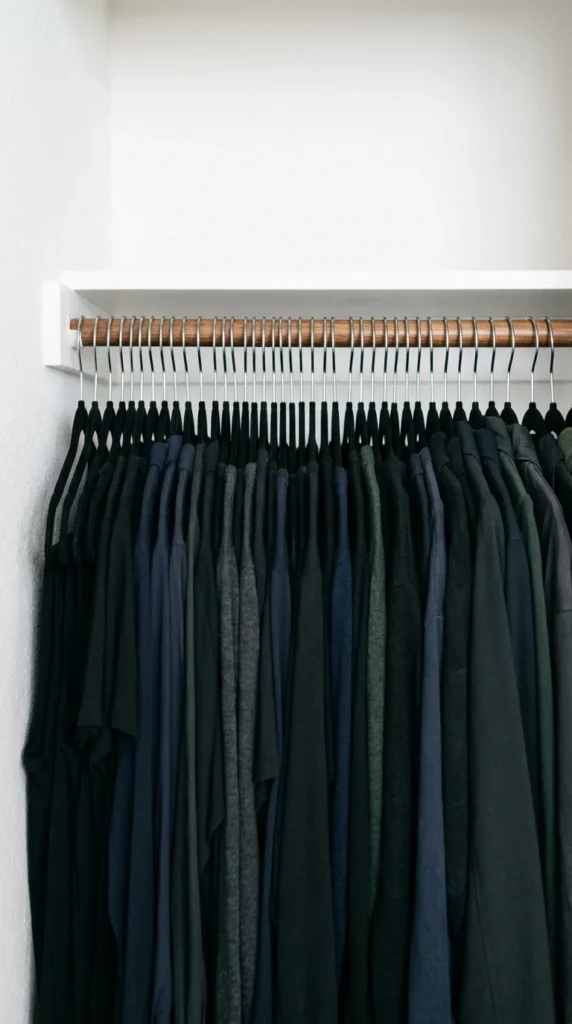
One of the most overlooked aspects of closet organization is the type of hanger being used. Traditional plastic or bulky wooden hangers can take up a significant amount of horizontal rod space. Switching to ultra-slim velvet hangers can increase your hanging capacity by up to 50 percent.
Beyond their space-saving profile, velvet hangers offer a non-slip surface that prevents delicate fabrics from sliding off and ending up on the floor. This uniformity also creates a visually cohesive look, which immediately makes a small closet feel more organized and less chaotic. For an even more streamlined approach, try color-coding your garments so you can find exactly what you need in seconds.
3. Door Organizers
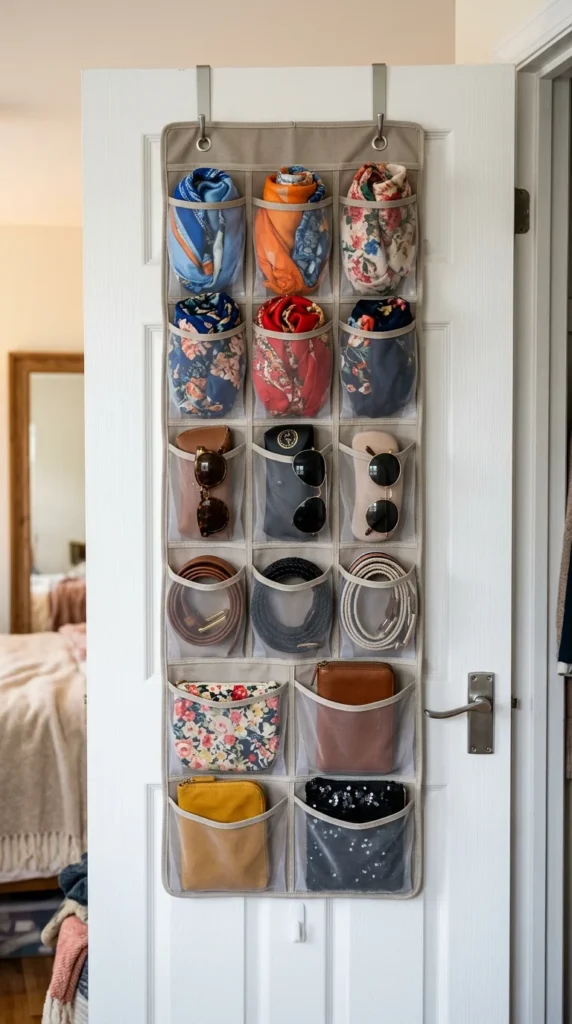
The back of the closet door is often “dead space” that holds immense storage potential. Over-the-door organizers are versatile tools that can hold far more than just shoes. These pocketed systems are perfect for storing small accessories, beauty products, or even rolled-up leggings and t-shirts.
For a more sophisticated look, you can install a metal rack system or a series of hooks directly onto the door. This is an ideal spot for planning your outfit for the next day or hanging bulky items like robes and heavy coats that would otherwise take up too much room on the main rod. By moving these items to the door, you free up the interior of the closet for your primary wardrobe.
4. Drawer Dividers
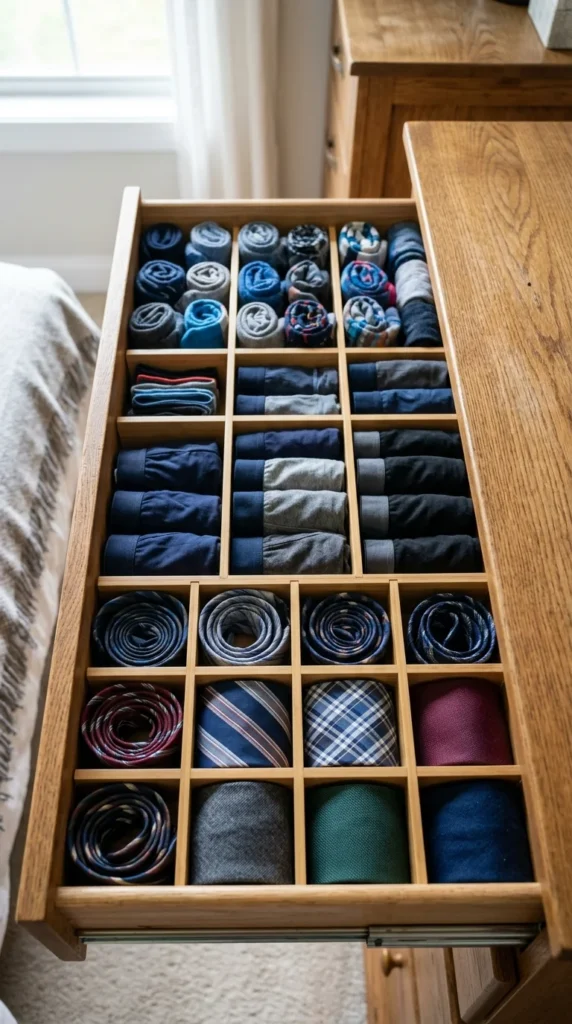
If your closet includes a built-in chest of drawers or if you use a small dresser inside the space, drawer dividers are essential. Without them, drawers quickly become “junk drawers” for clothing, where items are buried and forgotten. Dividers allow you to categorize your belongings, ensuring that every pair of socks and every belt has a designated home.
The “file folding” method—where clothes are folded into small rectangles and stood upright—works perfectly with dividers. This technique allows you to see every item in the drawer at a glance, preventing you from digging through stacks and creating a mess. It also maximizes the depth of the drawer, allowing you to fit more items into a smaller footprint.
5. Double Rods
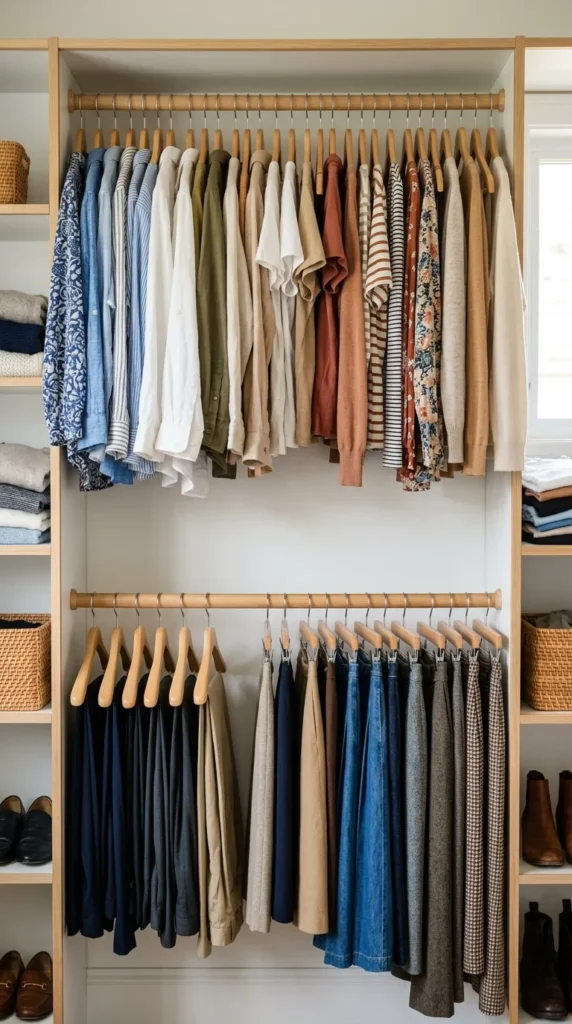
In many standard closets, there is a large gap between the bottom of the hanging clothes and the floor. This is wasted space that can be easily reclaimed by installing a second, lower hanging rod. Double-rod systems effectively double your hanging space instantly.
You can use the top rod for shorter items like shirts, blouses, and jackets, and the bottom rod for skirts, shorts, and folded trousers. This setup works best if you have a separate area for long dresses or coats. If you’re a renter and can’t install permanent hardware, there are many “hang-from-rod” expanders available that hook onto your existing rod and provide a second tier of hanging space without the need for tools.
6. Shelf Dividers
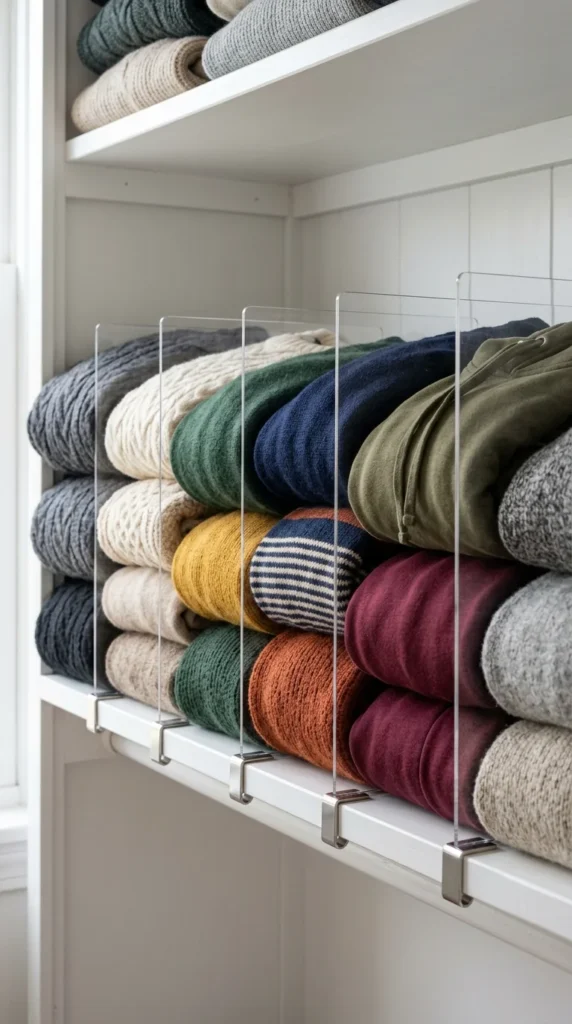
High shelves are notorious for becoming messy piles of clothes that eventually tumble over. Shelf dividers are the solution to this common problem. These simple tools clip onto your existing shelves to create “cubby-like” sections, keeping your folded stacks straight and organized.
Acrylic or wire dividers are excellent choices because they provide structure without adding visual bulk. They are particularly useful for separating different types of clothing—keeping your gym gear separate from your pajamas, for example. By maintaining neat stacks, you can utilize the full height of the shelf space, which is often left underutilized in tiny closets.
7. Clear Bins
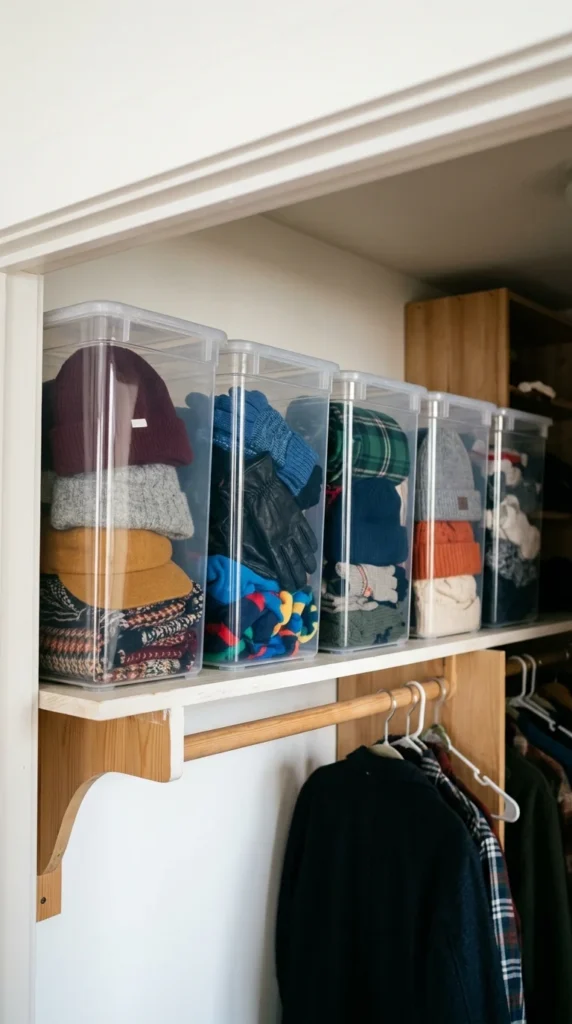
When it comes to storage bins, transparency is your best friend. Clear plastic bins allow you to see exactly what is stored inside without having to pull them down and rummage through them. This is especially helpful for top-shelf storage where visibility is limited.
Using uniform bins creates a clean, modular look that maximizes every inch of shelf space. For items that aren’t used daily—like swimsuits in the winter or heavy scarves in the summer—clear bins keep them dust-free and organized. Labeling the bins adds an extra layer of efficiency, ensuring that you always know where to find (and where to return) your belongings.
8. Vacuum Bags
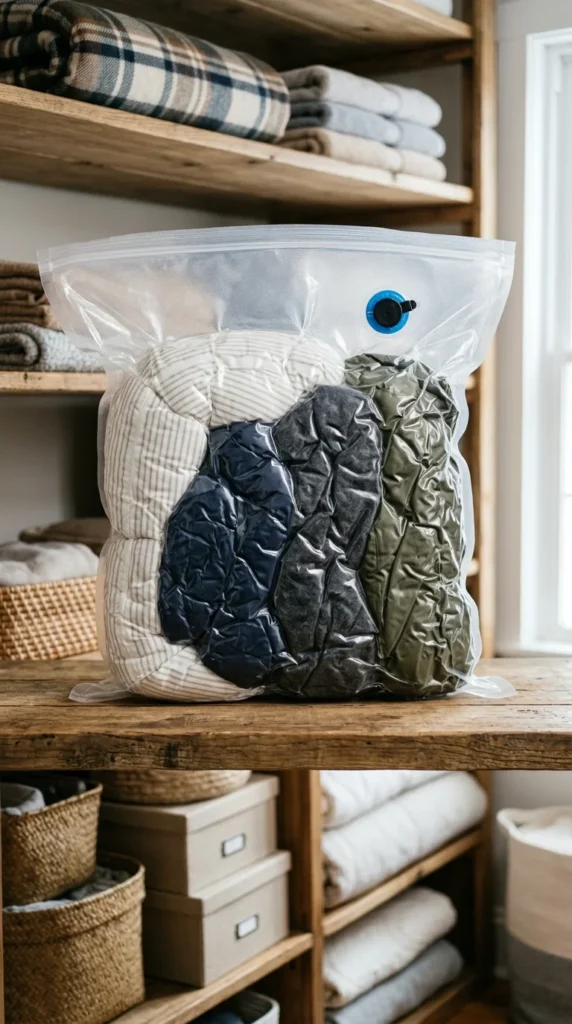
One of the biggest challenges in a tiny closet is managing seasonal transitions. Bulky items like winter coats, puffer vests, and heavy blankets can take up an enormous amount of room. Vacuum-sealed storage bags are a game-changer for these items.
By removing the air from the bags, you can compress bulky textiles into flat, stackable packages. These can then be tucked away on the highest shelf, under a bed, or in the back of the closet until they are needed again. This rotation strategy ensures that your tiny closet only holds the items you are currently wearing, creating a much more breathable and manageable space.
9. S-Hooks
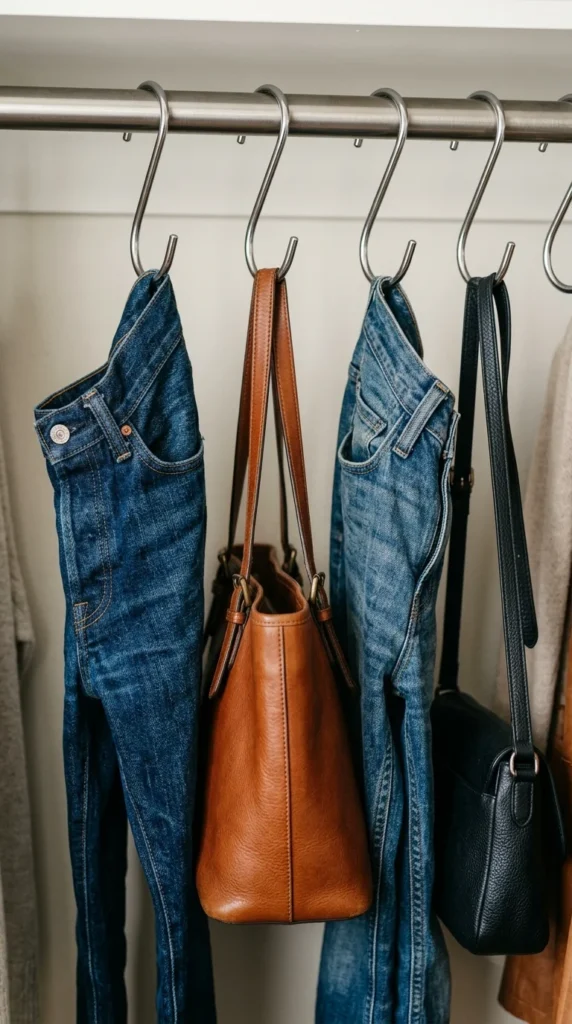
S-hooks are a low-cost, high-impact storage solution that can be used in a variety of ways. Instead of folding your jeans, which can be bulky, try hanging them by their belt loops on S-hooks. This keeps them accessible and prevents creases.
S-hooks are also perfect for organizing handbags, belts, and even necklaces. By hanging these items from the rod, you free up valuable shelf and drawer space. This method also makes it easier to see your accessories, encouraging you to rotate through your collection rather than just grabbing the item on top.
10. Pull-Out Baskets
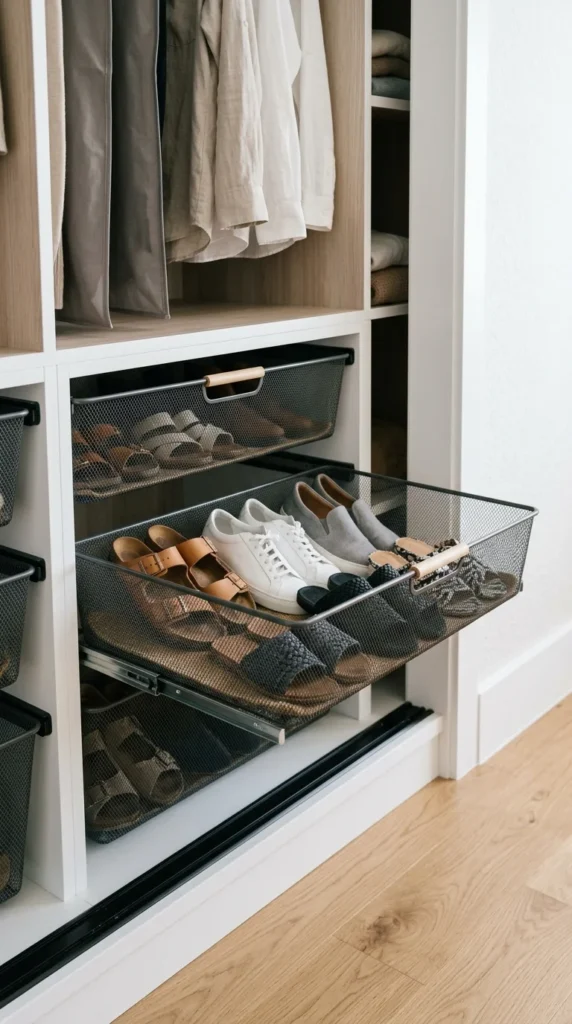
The bottom of the closet is often a dark, disorganized zone where shoes and miscellaneous items go to be forgotten. Installing pull-out baskets or sliding drawers can transform this area into a highly functional storage zone.
Wire baskets are ideal because they allow for airflow and make it easy to see the contents. These are perfect for storing items that don’t hang well, such as bulky sweatshirts, gym bags, or even a collection of shoes. The sliding mechanism ensures that you can access items at the very back of the closet without having to get on your hands and knees.
11. Shoe Racks
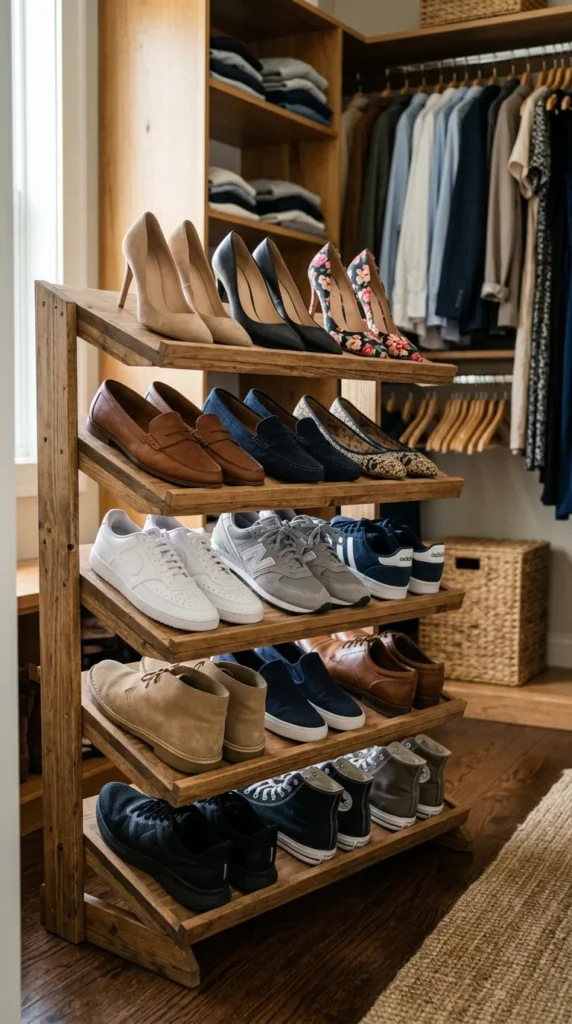
A pile of shoes on the closet floor is the quickest way to make a space feel cluttered. A dedicated shoe rack is essential for keeping your footwear organized and protected. For tiny closets, look for tiered racks that maximize vertical space or expandable racks that can fit the exact width of your closet floor.
If floor space is non-existent, consider a “head-to-toe” arrangement on your shelves, where one shoe of a pair faces forward and the other faces backward. This allows you to fit more pairs across the width of the shelf. Alternatively, use clear shoe boxes that can be stacked high, keeping your collection visible and orderly.
12. Lighting Solutions
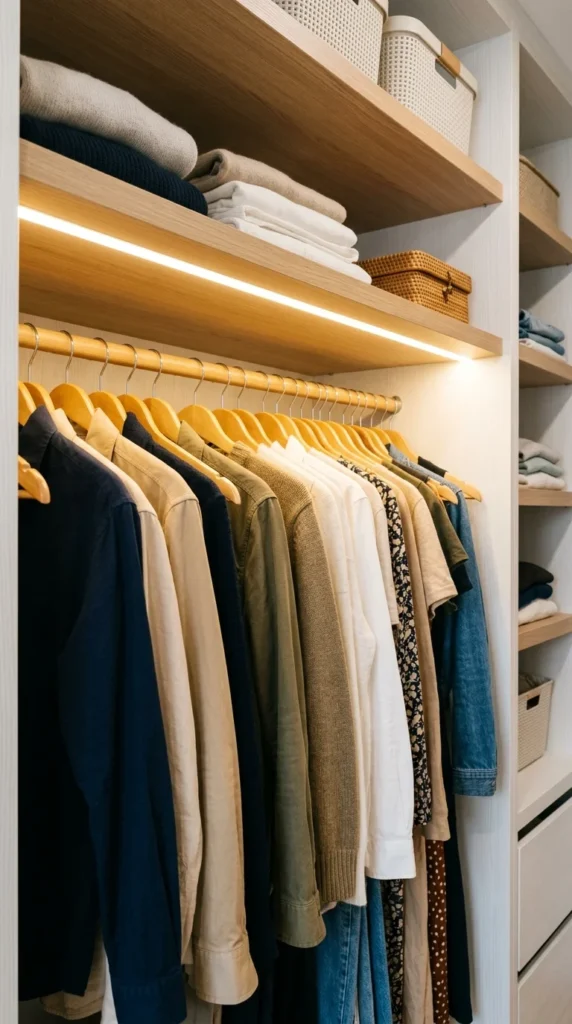
Good lighting is the finishing touch on any organized closet. In small spaces, shadows can make the area feel cramped and make it difficult to find what you’re looking for. If your closet doesn’t have a built-in light, battery-operated LED strips or motion-sensor puck lights are an easy and effective upgrade.
Placing lights under shelves or along the door frame can instantly brighten the space, making it feel larger and more premium. When you can see everything clearly, you’re more likely to maintain the organization system you’ve put in place. A well-lit closet turns the daily task of getting dressed into a much more pleasant experience.