
The kitchen is often called the heart of the home, but for many, it is also the source of the most significant clutter. Between gadgets we rarely use, mismatched food containers, and a mountain of spices, the kitchen can quickly become overwhelming. Embracing a minimalist approach to organization isn’t just about aesthetics; it’s about creating a functional, peaceful environment where cooking feels like a joy rather than a chore.
Minimalism in the kitchen focuses on the “less is more” philosophy. By removing the unnecessary and organizing the essential, you reclaim your counter space and your peace of mind. Here are 20 minimal kitchen organization hacks that actually work to transform your space.
1. Decanting
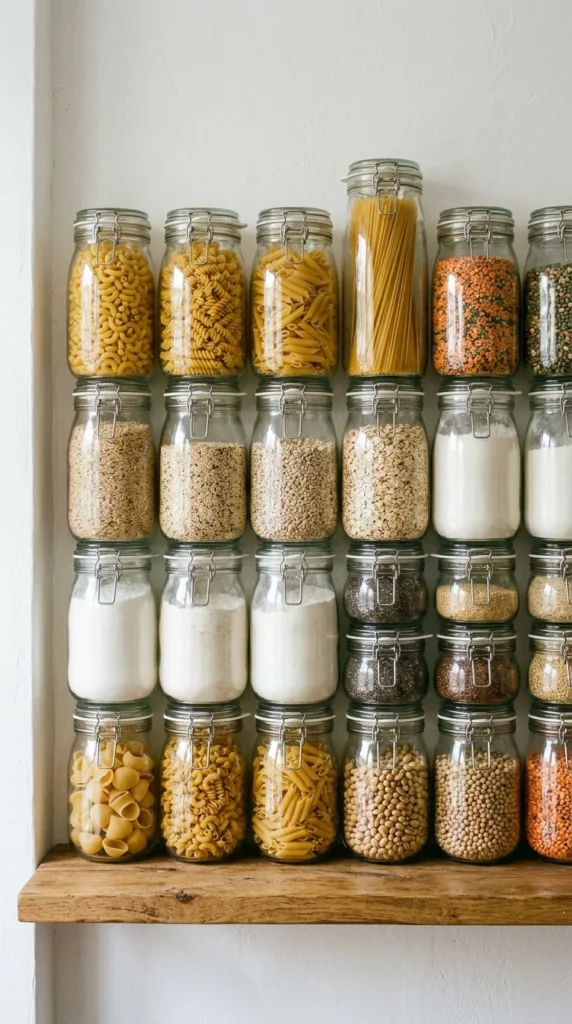
Decanting is the process of removing food from its original, often bulky and colorful packaging and placing it into uniform glass or BPA-free plastic jars. This serves two purposes. First, it eliminates “visual noise”—the chaotic clash of different brands and colors. Second, it allows you to see exactly how much of a staple you have left. Choose airtight jars to keep grains, pasta, and baking supplies fresh for longer.
2. Tension Rods
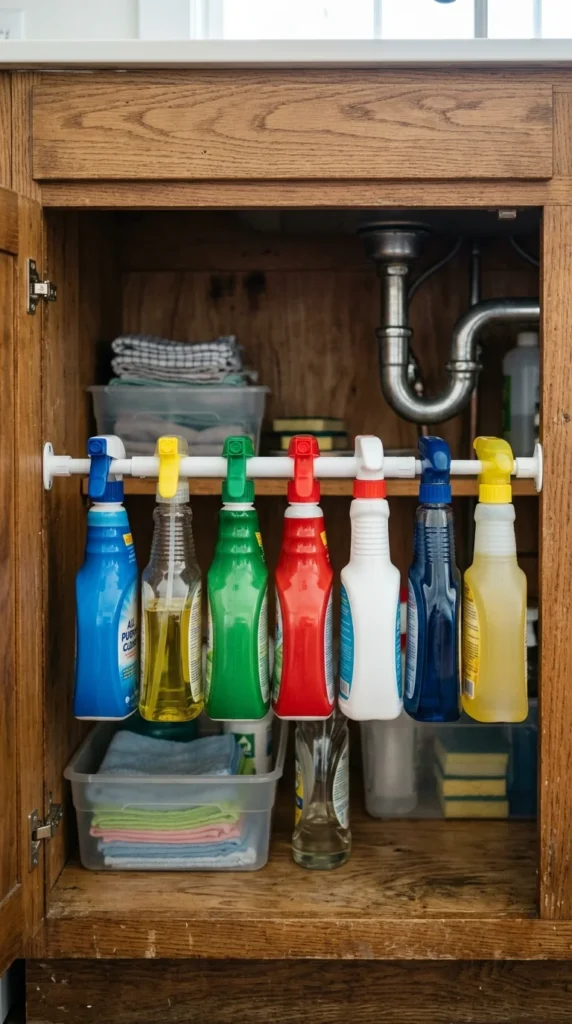
Tension rods are one of the most versatile and inexpensive tools for a minimal kitchen. Place one under your sink to hang spray bottles, freeing up the floor of the cabinet for bins. You can also use them vertically in a cabinet to create “slots” for baking sheets and cutting boards, keeping them upright and easy to grab without digging through a heavy stack.
3. Magnetic Strips
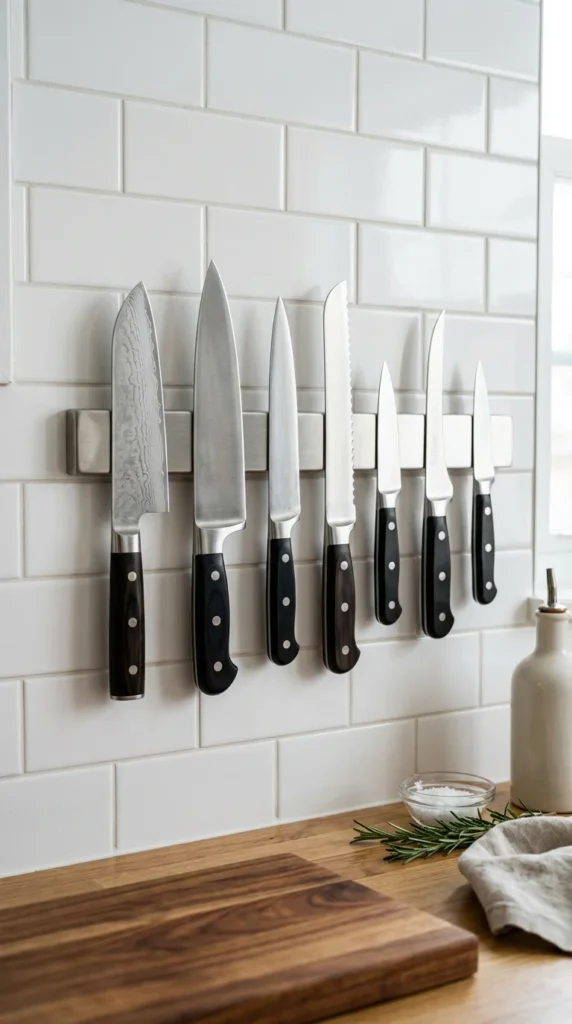
A knife block takes up valuable real estate on your countertop and can be a magnet for dust and crumbs. Replace it with a sleek magnetic knife strip mounted on the wall. Not only does this keep your most-used tools within arm’s reach, but it also creates a professional, clean look that highlights the beauty of your cutlery.
4. Vertical Dividers
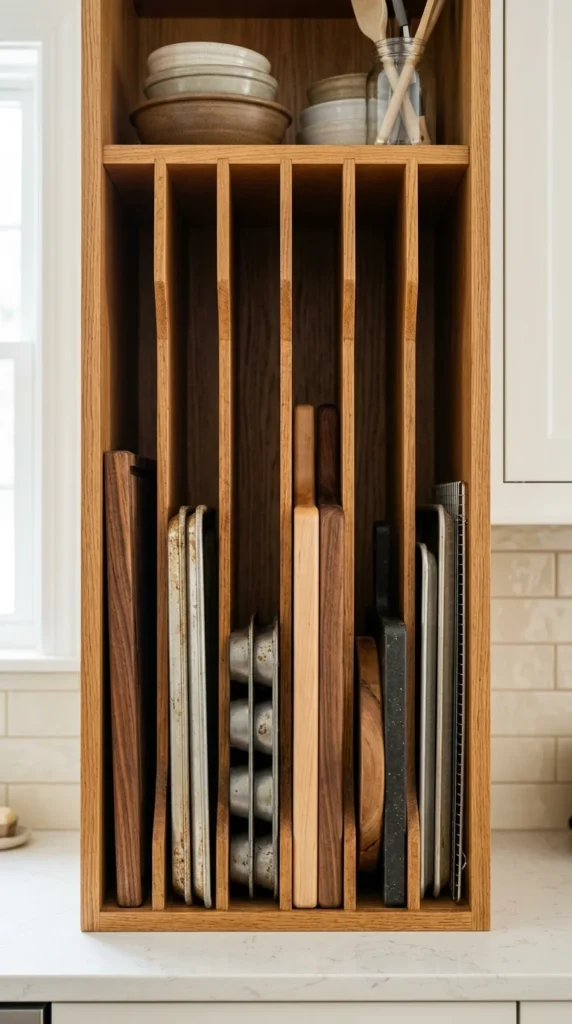
Stacking pans and trays is a recipe for loud clanging and frustration. Install vertical dividers in a deep drawer or a narrow cabinet. By storing items like cooling racks, pizza stones, and cutting boards vertically, you can slide one out without disturbing the rest. It utilizes the height of your cabinets, which is often wasted space.
5. Turntables
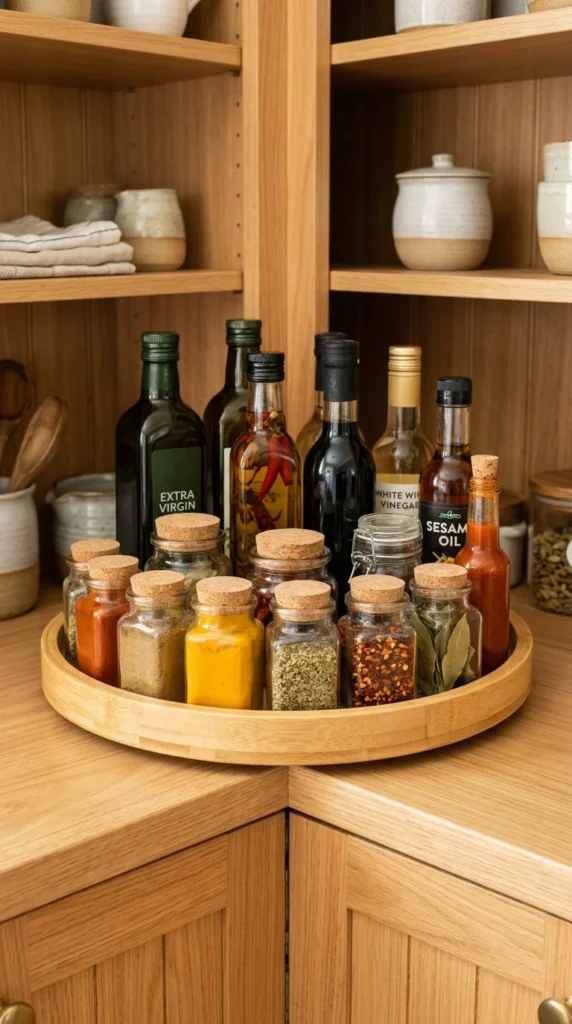
Commonly known as Lazy Susans, turntables are essential for deep cabinets or corner pantries. Instead of reaching into the dark recesses of a shelf and knocking things over, you simply spin the tray to find your olive oil or honey. They are particularly effective for condiments, spices, or even cleaning supplies under the sink.
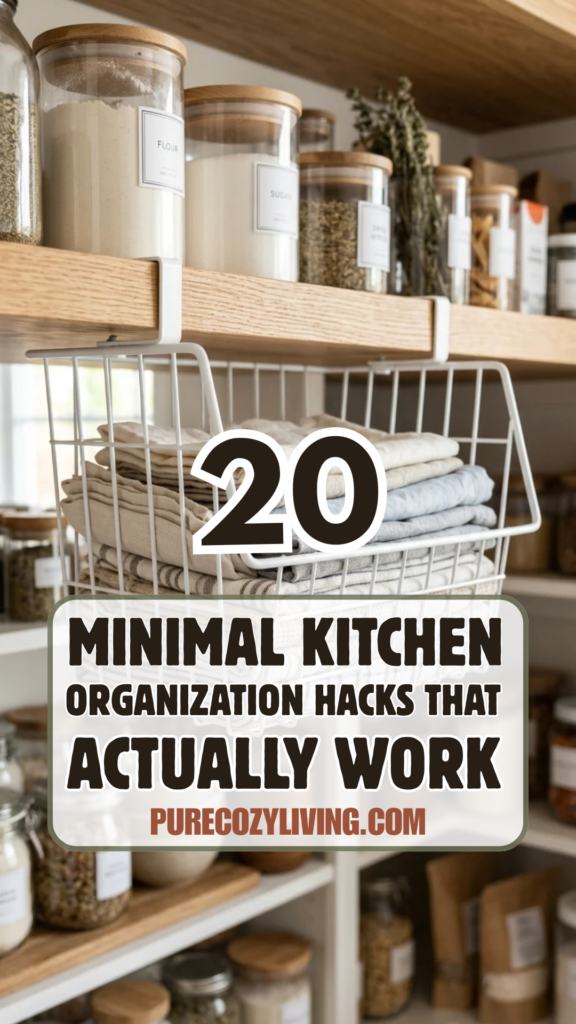
6. Under-Shelf Baskets
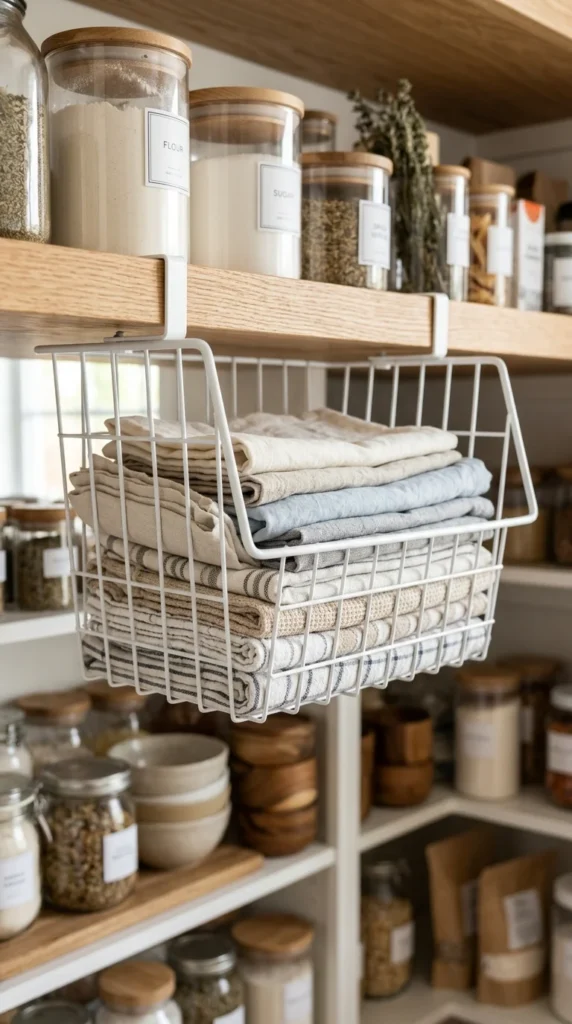
In many kitchens, there is a significant amount of “dead air” between the top of your items and the shelf above them. Under-shelf baskets slide onto existing shelves to create an extra layer of storage. This is the perfect spot for flat items like wrap boxes, napkins, or even a collection of tea bags, keeping the main shelf surface clear for heavier items.
7. Uniform Bins
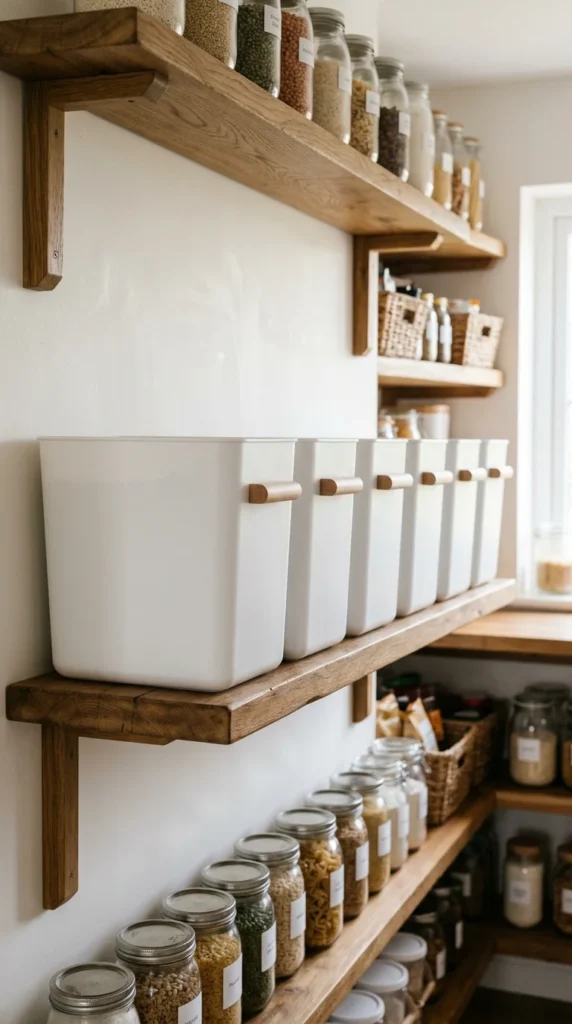
If you have a pantry, the “bin method” is a game-changer. Group similar items together—such as snacks, baking ingredients, or pasta—into uniform bins. Opaque bins are excellent for minimalism because they hide the varied shapes of packaged goods, creating a clean, streamlined look on your shelves. Label them subtly for easy navigation.
8. Drawer Inserts
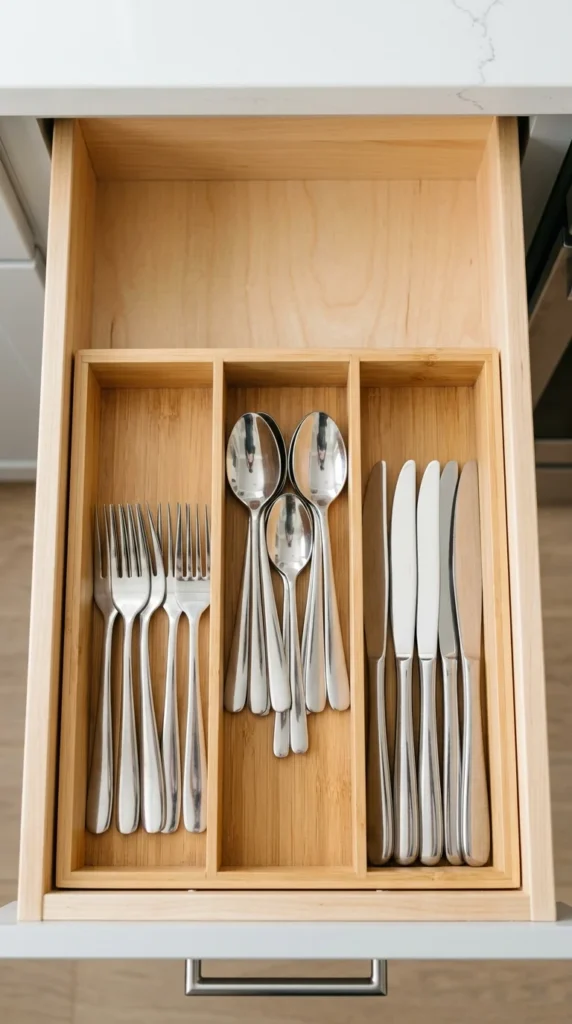
A “junk drawer” is the enemy of a minimal kitchen. Use adjustable or modular drawer dividers to give every utensil a specific home. When everything has a place, you are less likely to toss random items into the drawer. For a truly minimal look, choose inserts that match the interior color of your drawers so they blend in seamlessly.
9. Wall Rails
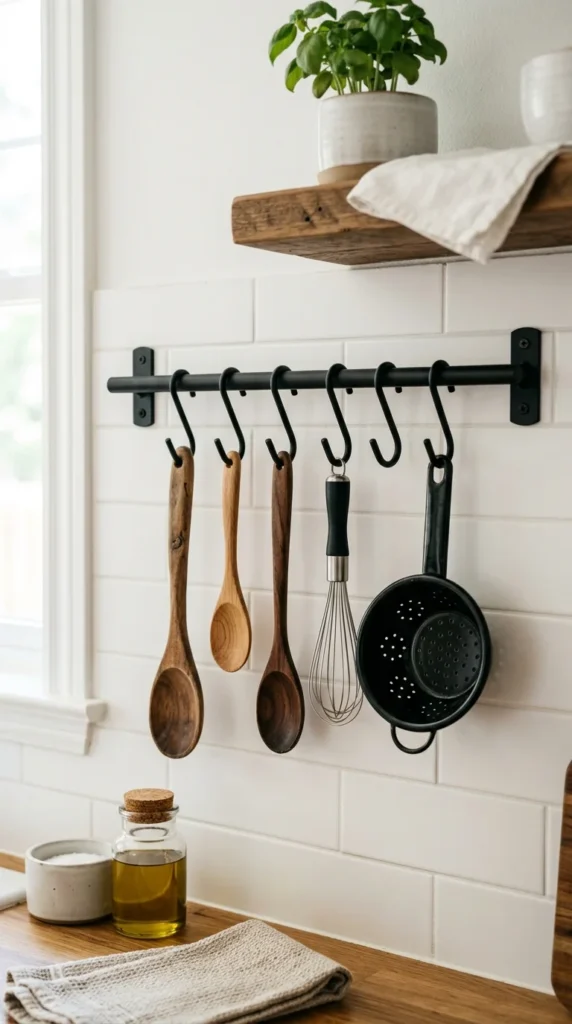
Wall-mounted rails are a staple of European minimalist kitchens. They allow you to clear out your utensil crocks and drawers by hanging frequently used items. By using a rail, you turn your most beautiful tools—like copper measuring cups or wooden spoons—into a functional piece of wall art, keeping your countertops completely clear.
10. Clear Risers
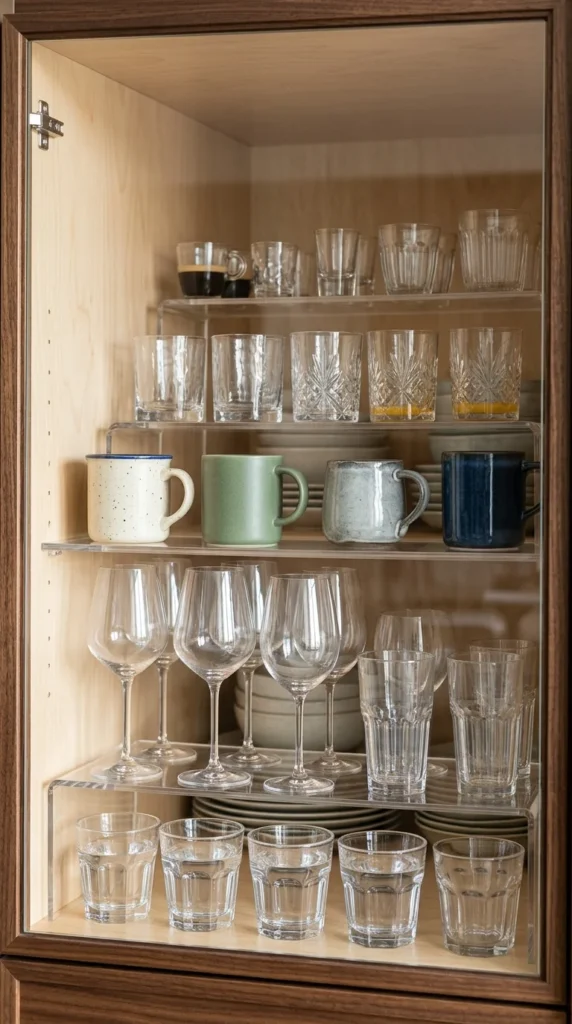
Shelf risers act like “stadium seating” for your cabinets. They are particularly useful for glassware or canned goods. By lifting the back row of items, you can see everything you own at a glance. Acrylic or clear plastic risers are preferred in minimal designs as they virtually disappear, making the items look like they are floating.
11. Door Organizers
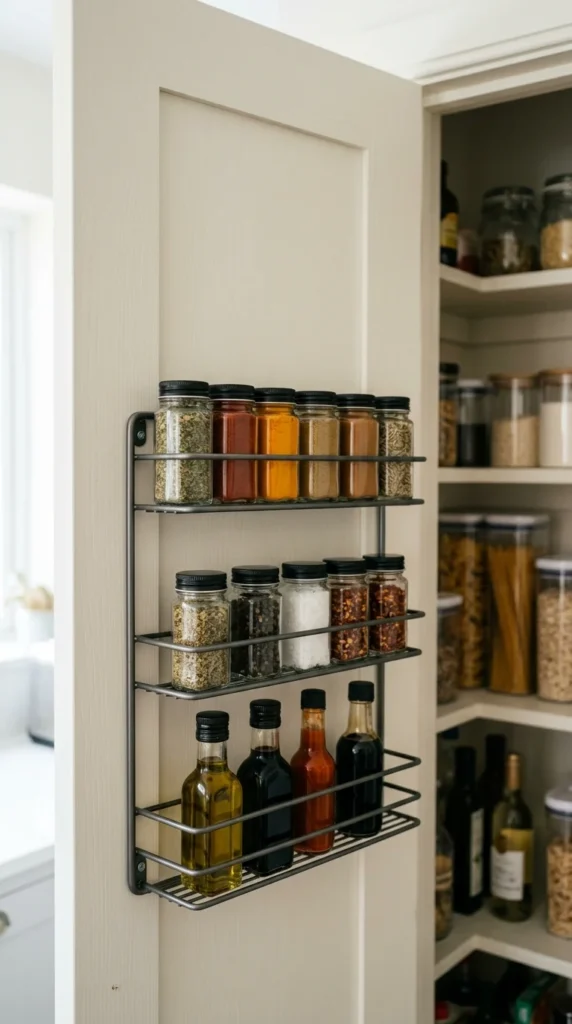
The back of a cabinet or pantry door is often overlooked. Installing slim racks or adhesive containers on the inside of the door can house small items that usually get lost, such as spices, packets of seasoning, or rolls of aluminum foil. This keeps the interior shelves uncluttered and puts items right at eye level when you open the door.
12. Stackable Bins
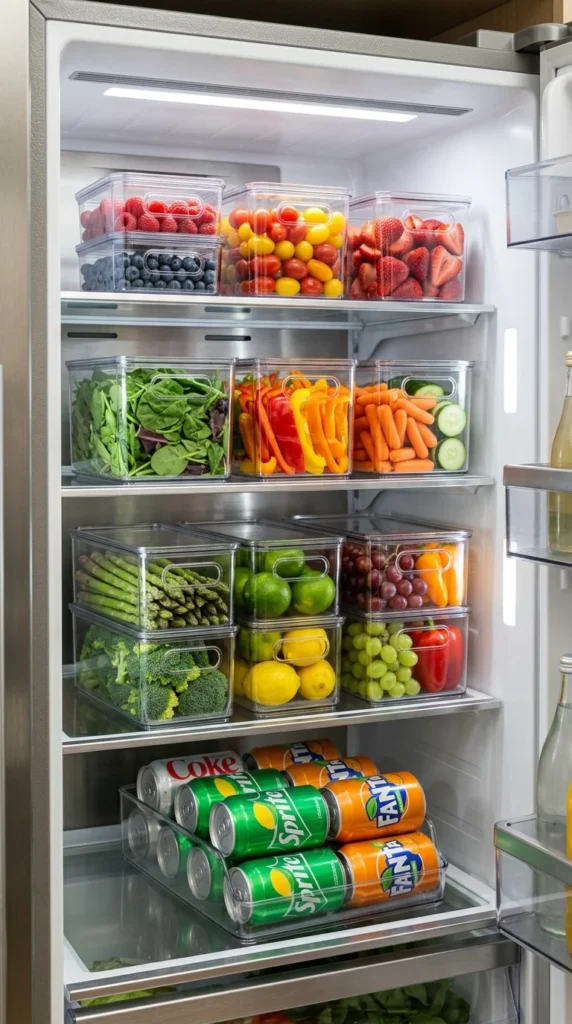
Minimalism extends to the refrigerator. Using stackable, clear bins allows you to categorize your food (dairy, produce, meats) and prevents items from being pushed to the back to rot. Because they are stackable, you can utilize the full height of your fridge shelves, which are often spaced quite far apart.
13. Pegboards
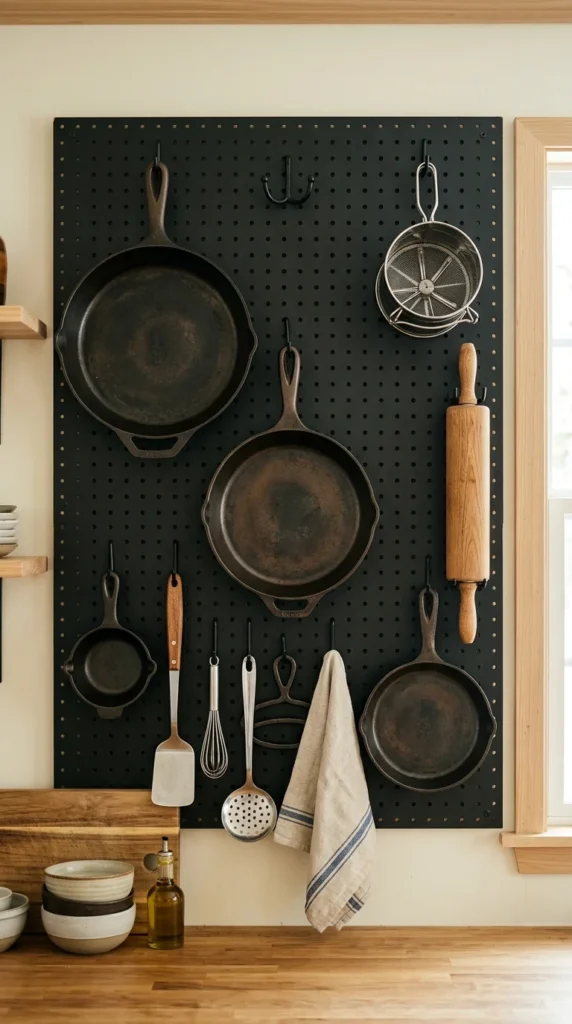
Inspired by Julia Child’s famous kitchen, a pegboard is the ultimate flexible storage solution. You can move hooks and shelves around as your collection changes. Painting the pegboard the same color as your wall creates a subtle, integrated look while keeping your heavy pots and pans off the counter and out of difficult-to-reach lower cabinets.
14. Pull-out Trays
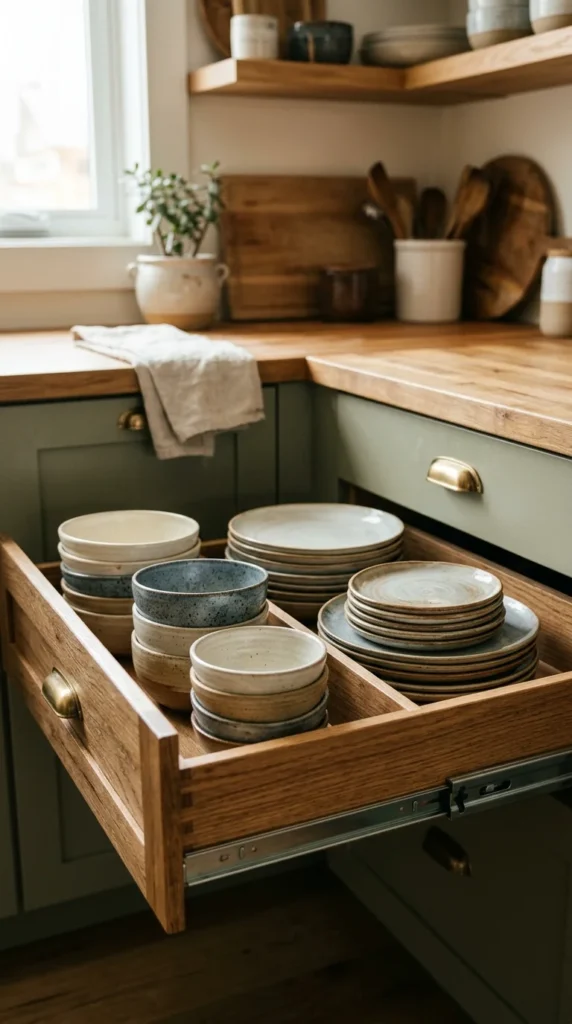
Lower cabinets can be a “black hole” where Tupperware goes to die. Installing pull-out trays or sliding drawers allows you to bring the contents of the cabinet to you. This is a highly ergonomic hack that ensures you utilize every inch of depth in your cabinetry without having to get on your hands and knees to find a pot lid.
15. Corner Solutions
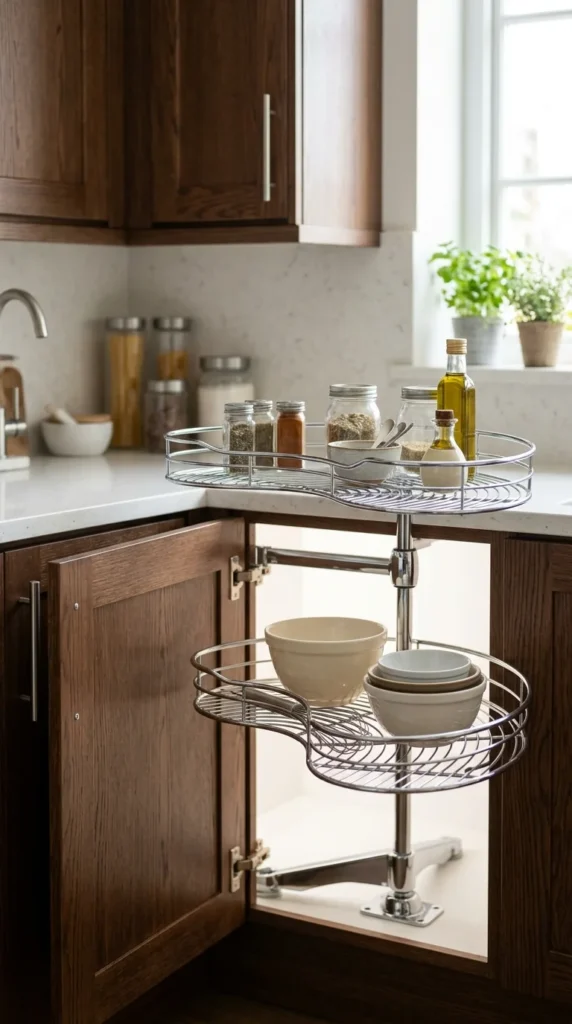
Corner cabinets are notoriously difficult to organize. A “LeMans” or kidney-shaped pull-out shelf is a sleek, minimal way to solve this. These shelves swing entirely out of the cabinet, providing easy access to heavy items like stand mixers or Dutch ovens that usually take up too much space on the counter.
16. Appliance Garages
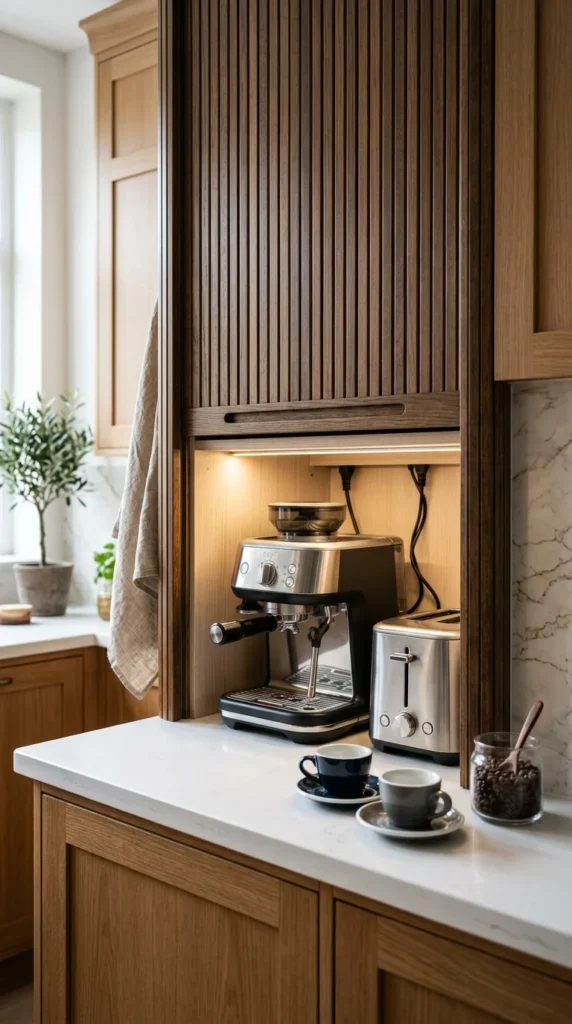
The biggest contributor to kitchen clutter is the “appliance graveyard” on the counter. An appliance garage is a dedicated cabinet at counter level with a lift-up or sliding door. You can keep your toaster, blender, and coffee maker plugged in and ready to use, but hide them behind a clean facade when you’re finished.
17. Adhesive Hooks
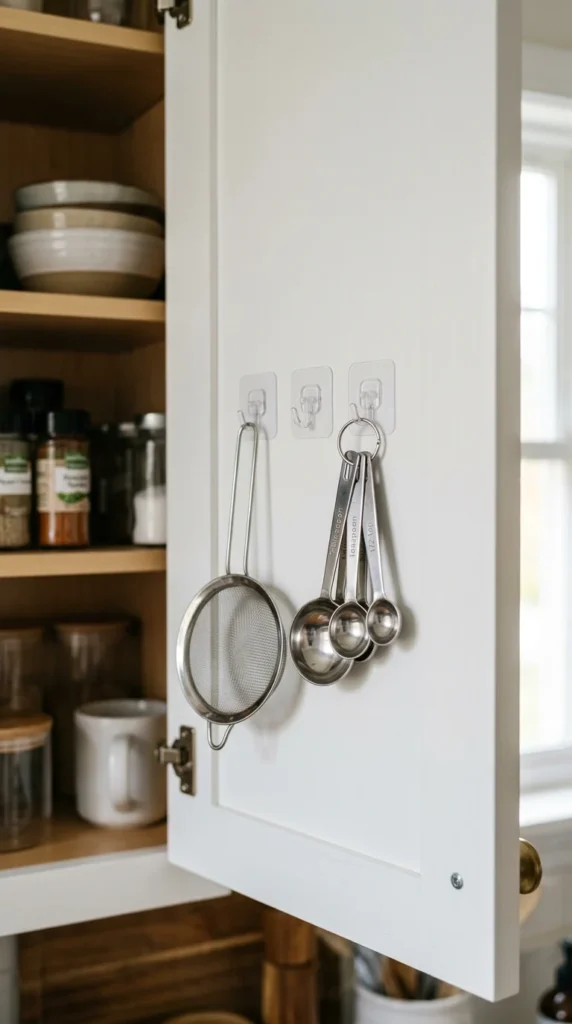
For items that are too small for a drawer but too frequent to hide, adhesive hooks are a minimal savior. Use them on the inside of cabinet doors to hang measuring cups, oven mitts, or even the lid to your trash can. It’s a zero-drill solution that keeps the exterior of your kitchen looking pristine.
18. Lid Organizers
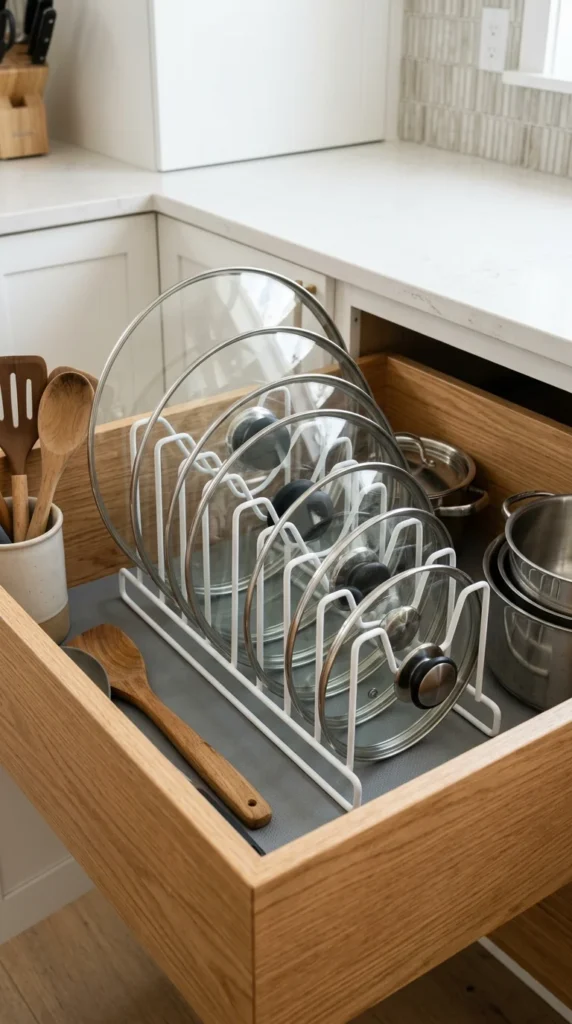
Pot lids are the most awkward items to store. They don’t stack well and the knobs make them bulky. A dedicated lid organizer—essentially a small rack with slots—keeps them upright and separated. This prevents the “avalanche” effect when you try to grab a pot and allows you to stack your pots nested inside one another to save space.
19. Work Zones
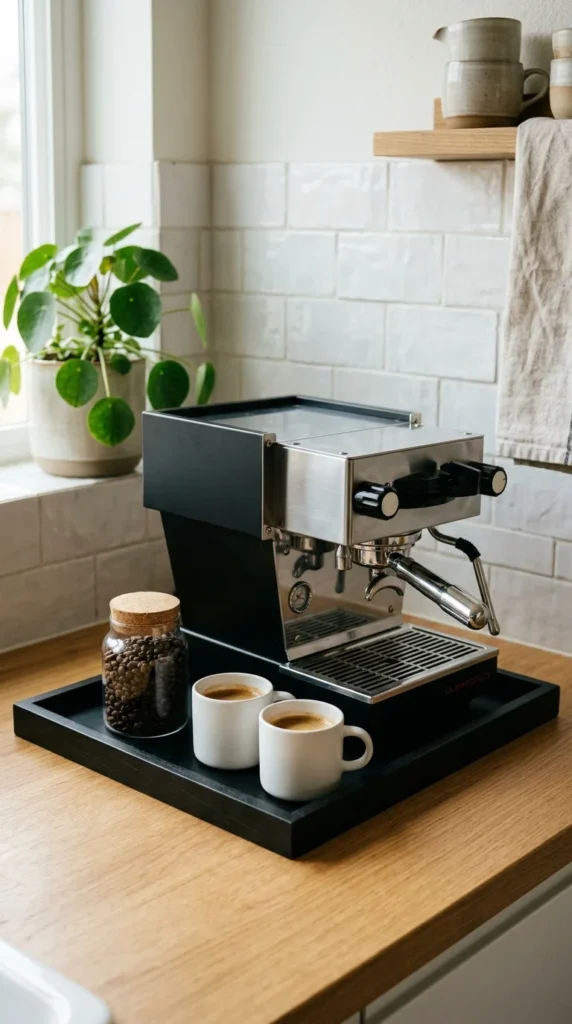
Organize your kitchen by “zones” rather than by object type. Create a coffee zone, a prep zone (knives and boards), and a baking zone. By keeping all the items needed for a specific task in one location, you minimize movement across the kitchen and keep the clutter contained to one small area rather than spreading it across all your surfaces.
20. Empty Surfaces
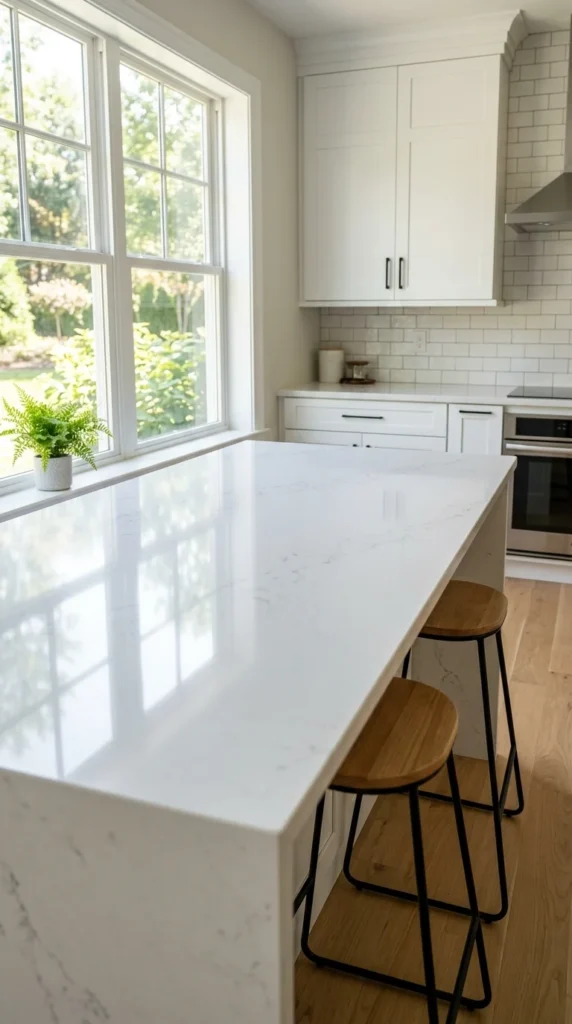
The most effective “hack” for a minimal kitchen is the commitment to empty surfaces. Aim to keep your countertops as clear as possible. If an item isn’t used daily, it should probably be stored in a cabinet. Clear surfaces reflect more light, make the room feel larger, and provide a literal “clean slate” for your next culinary creation.