
The kitchen is often described as the heart of the home, but for many, it is also the hub of chaos. Between sprawling gadget collections, mismatched food containers, and a mountain of utensils, the dream of a sleek, functional culinary space can feel out of reach. However, the minimalist movement offers a solution that transcends mere aesthetics. Minimalist kitchen organization is about prioritizing function, reducing visual noise, and creating a workspace that fosters calm rather than stress.
Achieving a clutter-free kitchen doesn’t require a total renovation. Instead, it involves intentional choices and clever storage solutions that keep essentials within reach while hiding the “visual clutter” that distracts the eye. By following these ten minimalist organization ideas, you can transform your kitchen into a streamlined sanctuary.
1. Clear Canisters
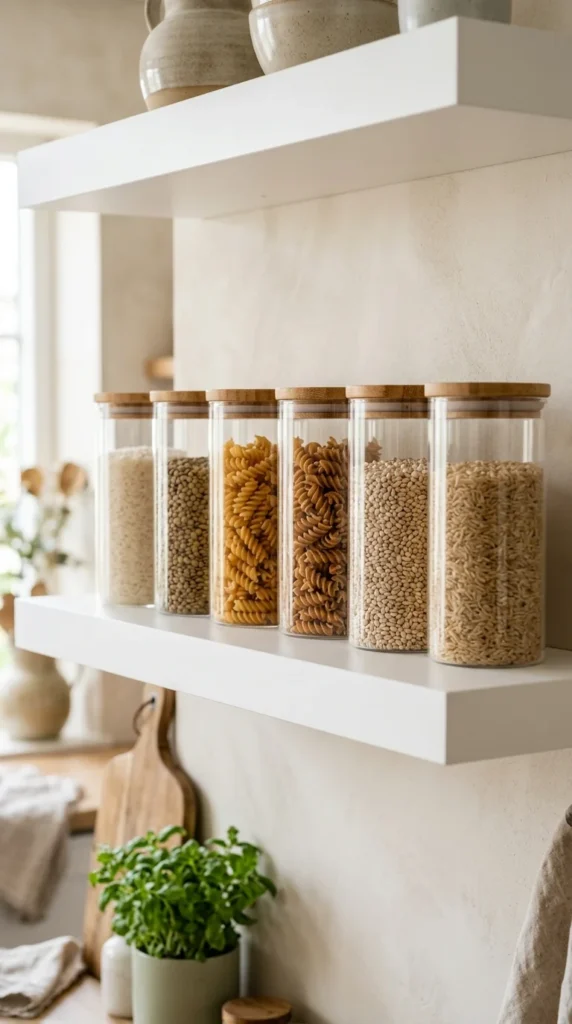
One of the primary sources of visual clutter in a kitchen is original food packaging. Cardboard boxes and plastic bags come in varying shapes, sizes, and loud colors that compete for your attention. To achieve a minimalist look, decant your dry goods into clear canisters.
Using glass or high-quality BPA-free plastic jars creates immediate visual harmony. When everything—from flour and sugar to pasta and snacks—is stored in uniform containers, the pantry or countertop feels cohesive. Beyond the aesthetics, clear canisters allow you to see exactly how much of an ingredient you have left, preventing over-purchasing and reducing food waste. To maintain the minimalist vibe, opt for lids made of natural materials like wood or cork.
2. Appliance Garages
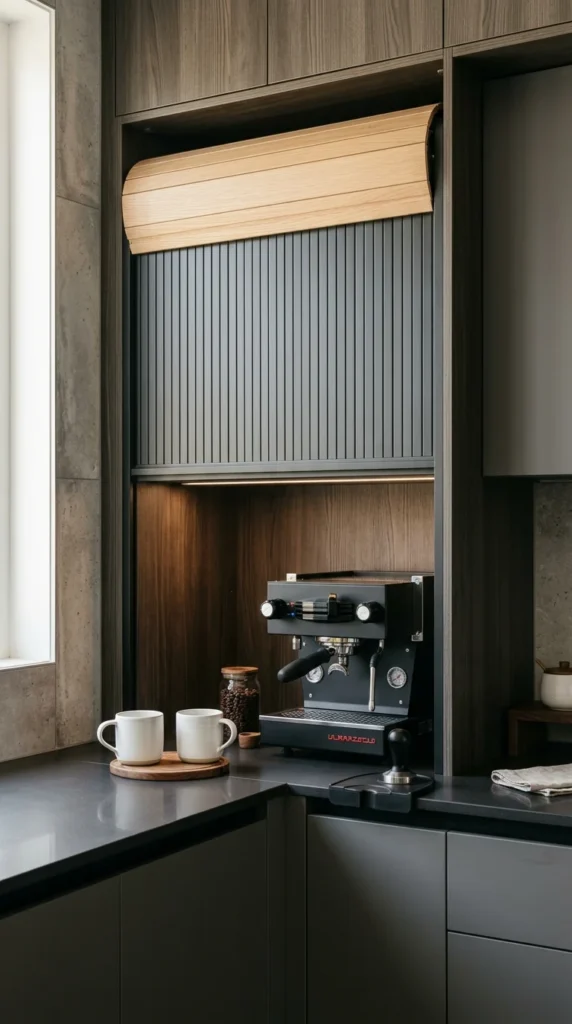
Small appliances are the greatest enemies of the “clear counter” philosophy. Toasters, blenders, and air fryers take up valuable real estate and disrupt the clean lines of a kitchen. The “appliance garage” is a dedicated cabinet space designed to house these items when they aren’t in use.
A well-designed appliance garage often features a fold-up or sliding door and internal power outlets. This allows you to use your coffee maker or toaster right where it sits, then simply close the door to hide it away. By moving these bulky items off the main countertop, you reclaim space for food preparation and create a much more open, airy atmosphere.
3. Magnetic Strips
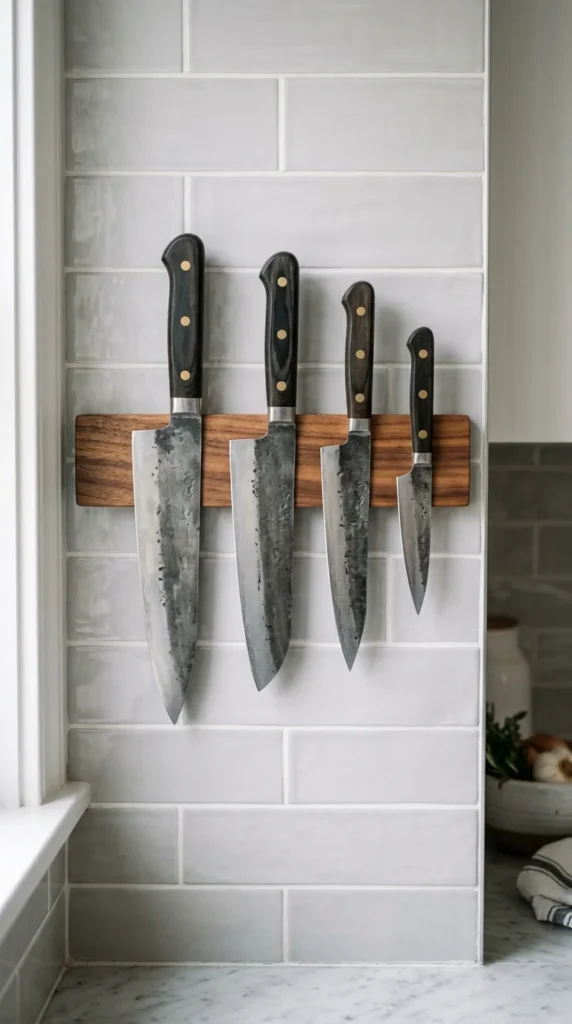
Knives are essential tools, but bulky wooden knife blocks consume significant counter space and can be difficult to clean. A minimalist alternative is the magnetic knife strip. Usually made of stainless steel or wood with hidden magnets, these strips mount directly to the wall or the side of a cabinet.
This solution utilizes vertical space, which is often underused in kitchens. It keeps your most-used knives visible and accessible while freeing up the countertop. From a design perspective, it adds a professional, industrial-chic touch to the room. When choosing a strip, look for a wooden finish that matches your cabinetry to help it blend seamlessly into the environment.
4. Drawer Dividers
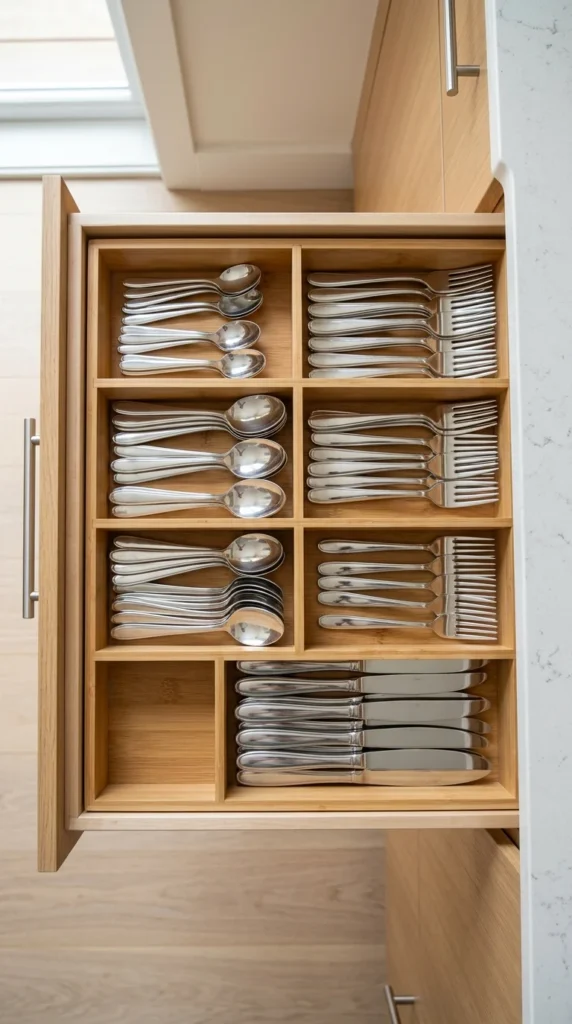
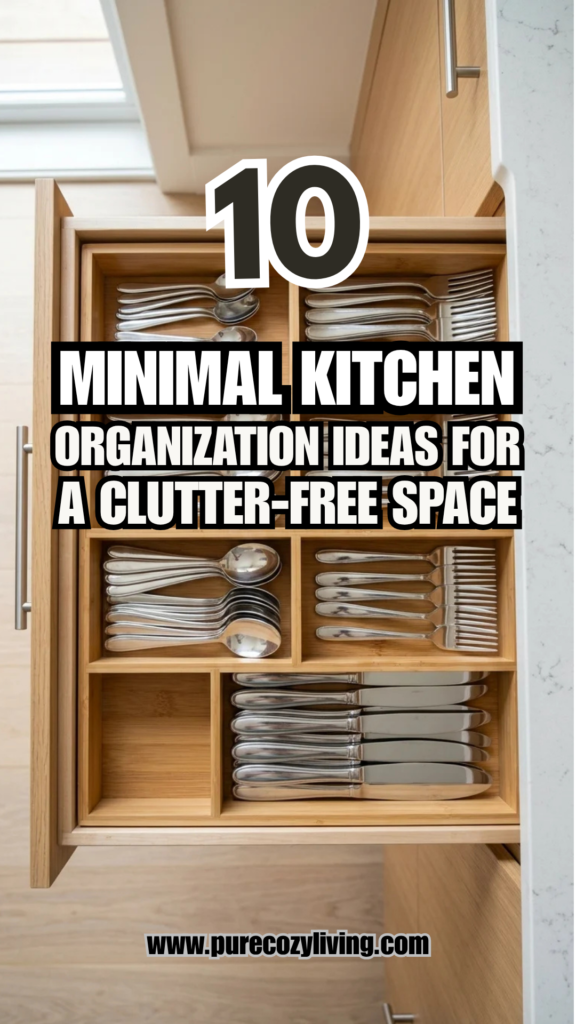
The “junk drawer” is a common kitchen ailment, but even utensil drawers can become messy without a system. Minimalist organization relies heavily on internal structure. Adjustable drawer dividers allow you to customize your storage based on the specific dimensions of your tools.
Instead of a single plastic tray that might not fit your drawer perfectly, individual dividers create a “built-in” look. When every spatula, whisk, and measuring spoon has a designated home, you spend less time rummaging and more time cooking. The key to the minimalist approach here is “less is more”—only keep the utensils you use regularly, and store specialized tools elsewhere or donate them if they are redundant.
5. Floating Shelves
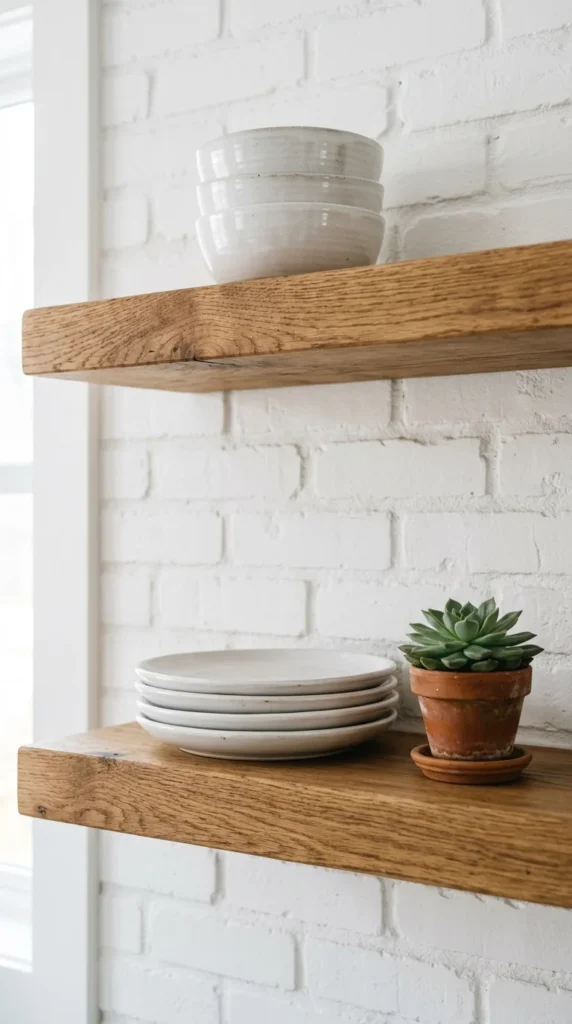
Upper cabinets can sometimes make a small kitchen feel cramped and dark. Many minimalists opt to replace some or all of their upper cabinetry with floating shelves. This opens up the visual field and encourages you to curate your collection of dishware.
Floating shelves force a level of discipline; you cannot hide clutter on an open shelf. This encourages you to keep only your most beautiful and frequently used items on display—think matching ceramic plates, glass carafes, or a favorite teapot. By limiting the number of items on the shelves, you create a gallery-like feel that emphasizes quality over quantity.
6. Tiered Organizers
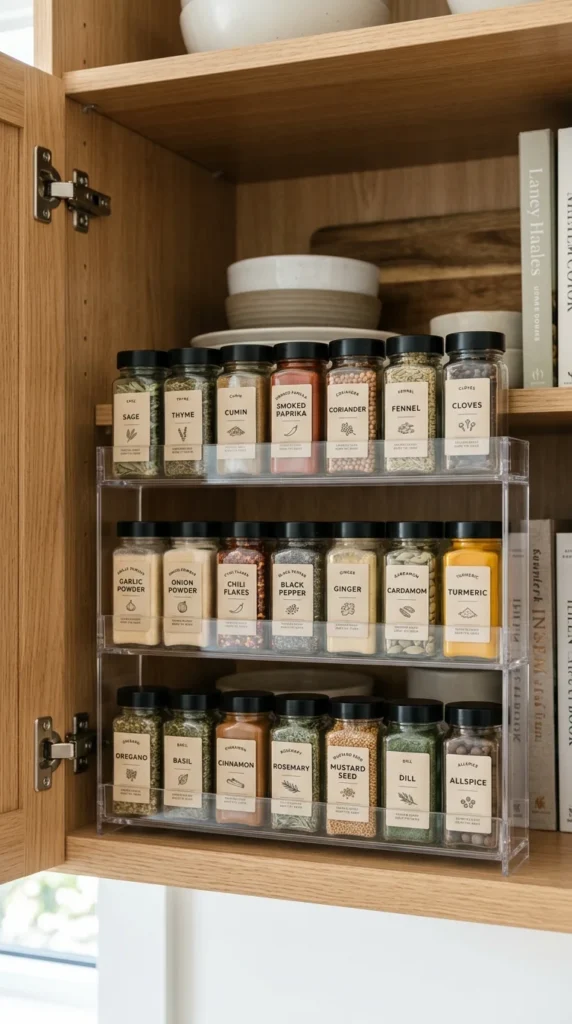
Pantries and spice cabinets are notorious for “lost” items at the back of the shelf. Tiered organizers, also known as stadium seating for your jars, elevate the items in the back so they are just as visible as the ones in the front.
This is a cornerstone of minimalist organization because it prevents “clutter through invisibility.” When you can’t see what you have, you buy duplicates. Using tiered racks for spices, canned goods, or condiments ensures that everything is accounted for. For a truly minimalist look, choose transparent acrylic or simple white wire racks that disappear into the background.
7. Pull-out Baskets
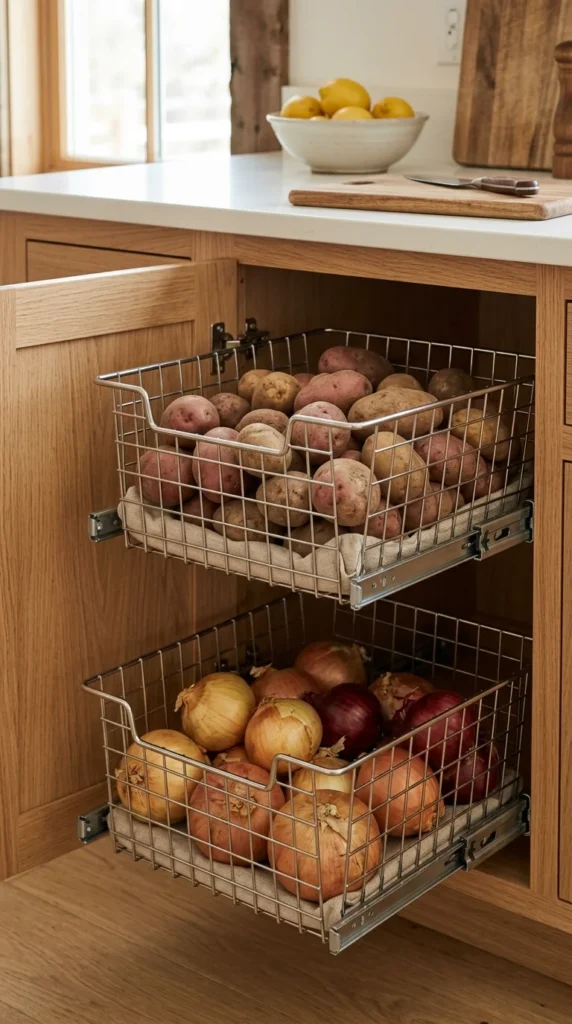
Deep lower cabinets are often where organization goes to die. It is difficult to reach items stored at the very back, leading to a disorganized pile of pots, pans, or pantry staples. Pull-out baskets or sliding shelves solve this by bringing the contents of the cabinet to you.
In a minimalist kitchen, these baskets allow you to group similar items together—such as baking supplies or root vegetables—and keep them tucked away behind closed doors. The smooth gliding motion and easy access reduce the friction of daily kitchen tasks. Opt for high-quality metal or wooden pull-outs that can handle the weight of heavy cast iron or bulk goods.
8. Hanging Bars
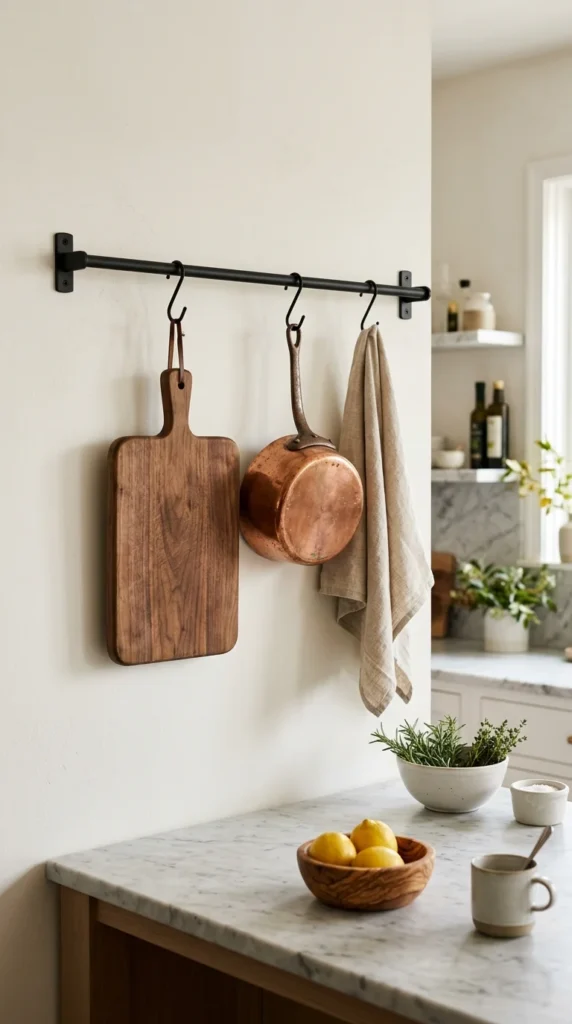
If you have limited cabinet space, look to the walls or even the ceiling. A simple hanging bar with S-hooks is a classic minimalist solution for storing items that are used daily. This works particularly well for pots, pans, and large ladles.
The beauty of a hanging bar lies in its simplicity. It keeps items off the counters and out of crowded drawers while adding a layer of functional texture to the kitchen walls. To keep it looking minimalist rather than cluttered, only hang a few select items and ensure they are within a similar color palette or material, like all stainless steel or all copper.
9. Under-Sink Trays
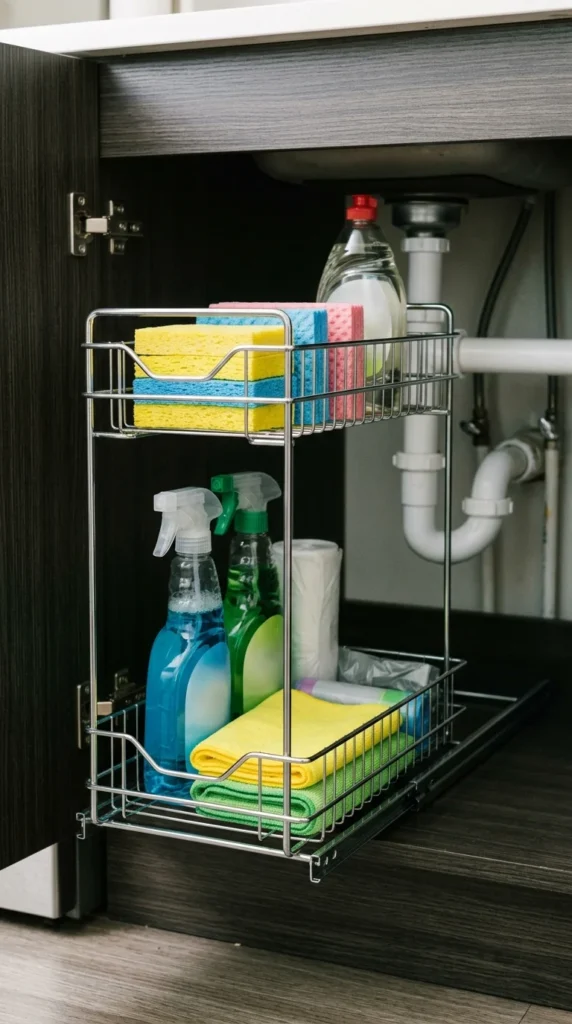
The space under the kitchen sink is often a graveyard for half-empty cleaning bottles and damp sponges. Because of the plumbing, this area is notoriously difficult to organize. A minimalist approach involves using specialized under-sink trays or expandable organizers designed to fit around pipes.
By using two-tier sliding drawers, you can maximize the vertical space and keep cleaning supplies neatly categorized. Use small bins to hold sponges and brushes, and try to stick to a few multi-purpose cleaners rather than a dozen specific ones. This turns a traditionally messy spot into a clean, functional zone that supports the rest of your kitchen maintenance.
10. Bamboo Trays
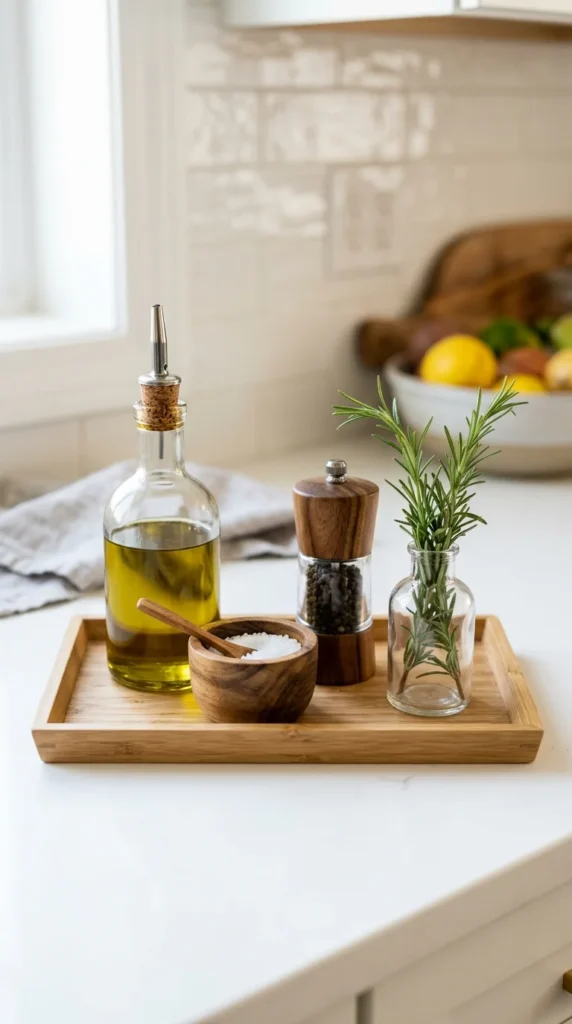
“Coralling” is a secret weapon of minimalist designers. When you have several small items on a counter, they look like clutter. When you place those same items on a tray, they look like a “moment” or a curated collection.
A bamboo tray provides a warm, natural texture that breaks up the cold surfaces of a kitchen. Use a small tray to hold your most-used cooking oils and seasonings near the stove. This keeps the items grouped together, making it easier to wipe down the counters and providing a designated “home” for items that might otherwise wander across the workspace. It is the perfect finishing touch for a kitchen that is both organized and inviting.