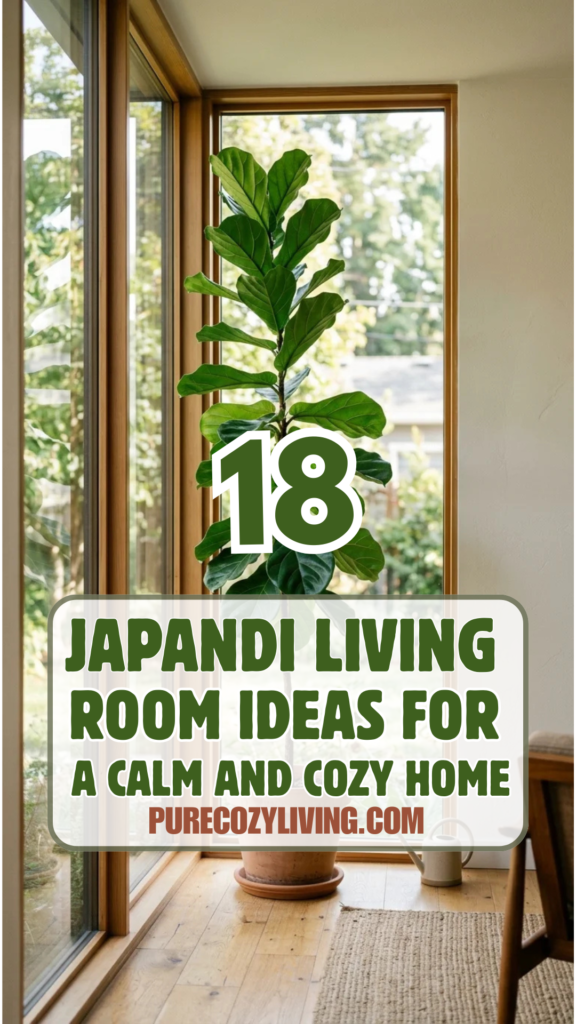

The interior design world has fallen in love with “Japandi”—a seamless fusion of Japanese minimalism and Scandinavian functionality. While these two cultures are geographically distant, they share a deep-rooted appreciation for simplicity, natural elements, and craftsmanship. Japandi style takes the “hygge” (coziness) of Nordic design and marries it with the “wabi-sabi” (finding beauty in imperfection) philosophy of Japan.
The result is a living space that feels intentional, uncluttered, and deeply restorative. If you are looking to transform your living room into a sanctuary of peace, here are 18 Japandi-inspired ideas to guide your journey.
1. Neutral Palettes
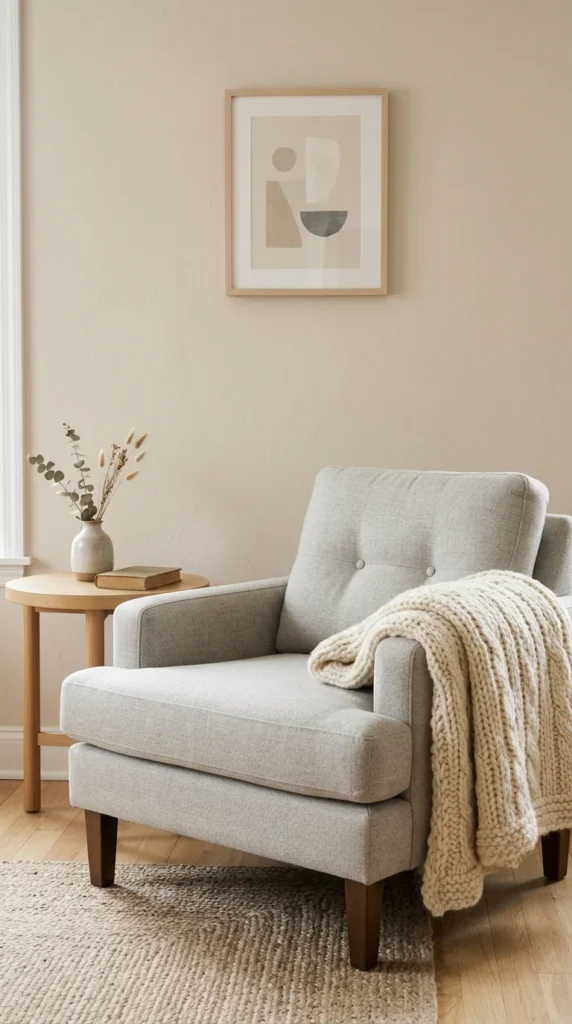
The foundation of any Japandi room is its color palette. Unlike the stark white often associated with pure modernism, Japandi favors “warm neutrals.” Think oatmeal, biscuit, stone, and muted taupe. These colors create a soft, breathable atmosphere that reflects natural light without feeling cold. By layering different shades of the same neutral family, you add depth and interest to the room without relying on loud colors that might disrupt the sense of calm.
2. Natural Wood
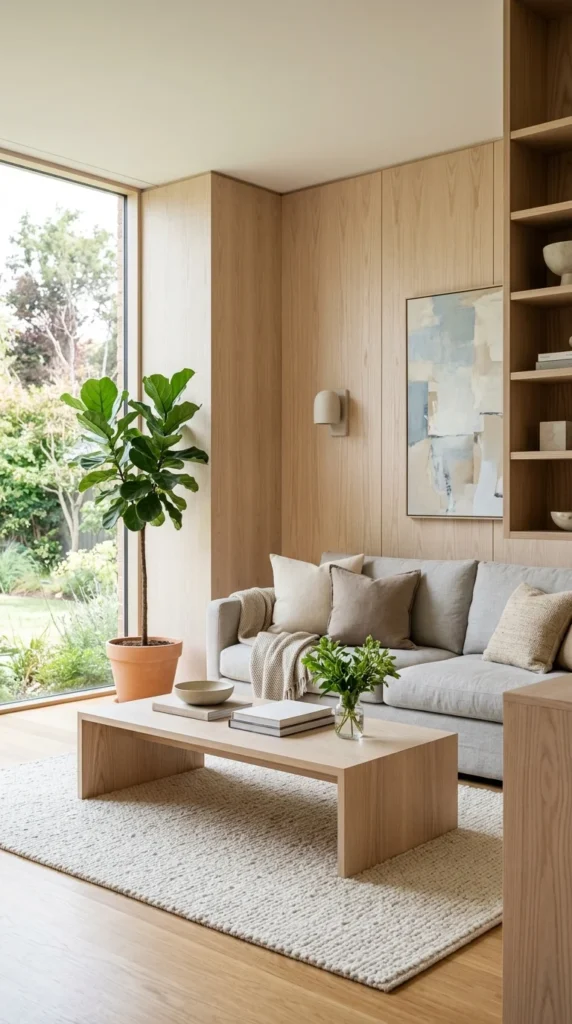
Wood is the soul of Japandi design. The Scandinavian influence brings light-toned woods like oak, ash, and pine, while the Japanese influence might introduce darker, richer tones like walnut or charred cedar (shou sugi ban). The key is to use wood in its most natural-looking state—matte finishes are preferred over high-gloss lacquers. Whether it’s through flooring, ceiling beams, or furniture, the presence of wood connects the indoors to the natural world.
3. Low Furniture
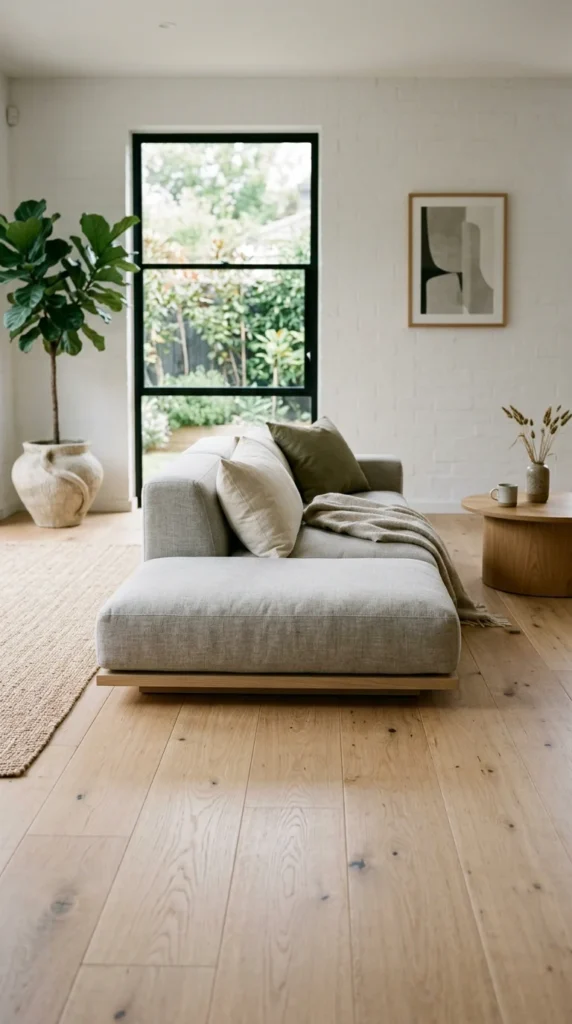
In Japanese culture, there is a long-standing tradition of living close to the floor. Incorporating low-profile furniture is a hallmark of the Japandi aesthetic. Look for sofas that sit low to the ground, platform-style coffee tables, and floor cushions. This lower center of gravity creates a sense of openness and makes the ceilings feel higher, contributing to an airy, spacious vibe even in smaller rooms.
4. Wabi-Sabi Decor
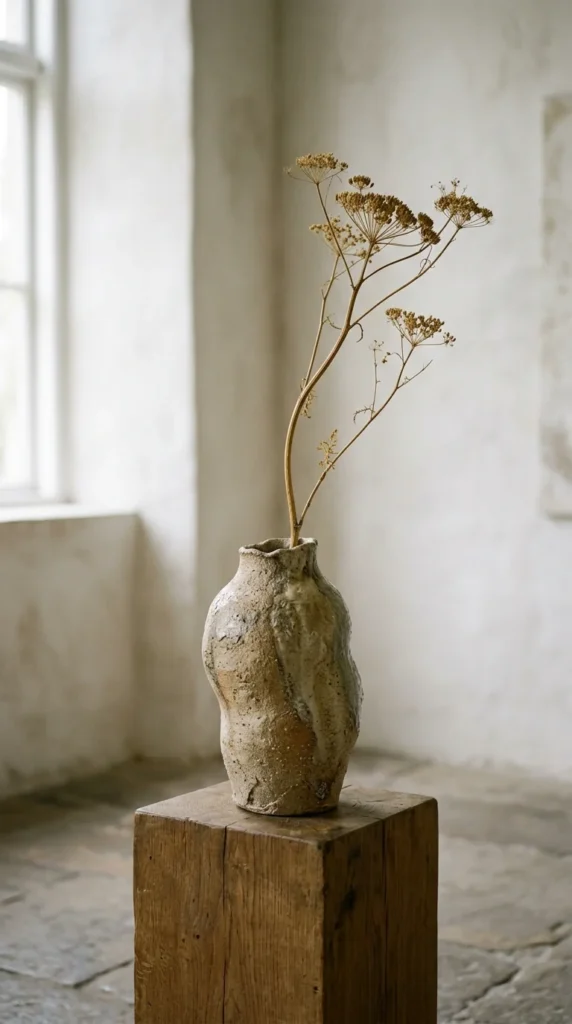
Wabi-sabi is the Japanese art of finding beauty in the imperfect and the ephemeral. In a Japandi living room, this translates to decor that looks handmade rather than mass-produced. Choose ceramics with visible thumbprints, irregular edges, or crackled glazes. These pieces tell a story of craftsmanship and remind us that perfection is not a requirement for beauty.
5. Indoor Greenery
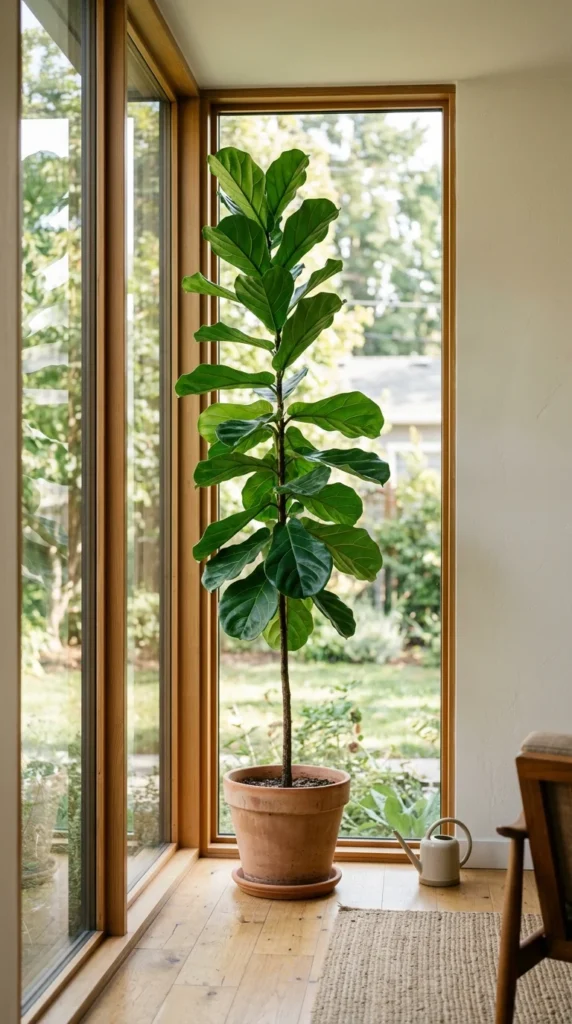
Both Scandi and Japanese styles lean heavily into “biophilic design”—the practice of bringing nature indoors. However, Japandi greenery is curated and intentional. Instead of a “jungle” look, opt for one or two statement plants. A tall olive tree, a delicate Japanese maple, or a sculptural bonsai can serve as a living piece of art. The green leaves provide a necessary pop of organic color against a neutral backdrop.
6. Soft Textiles
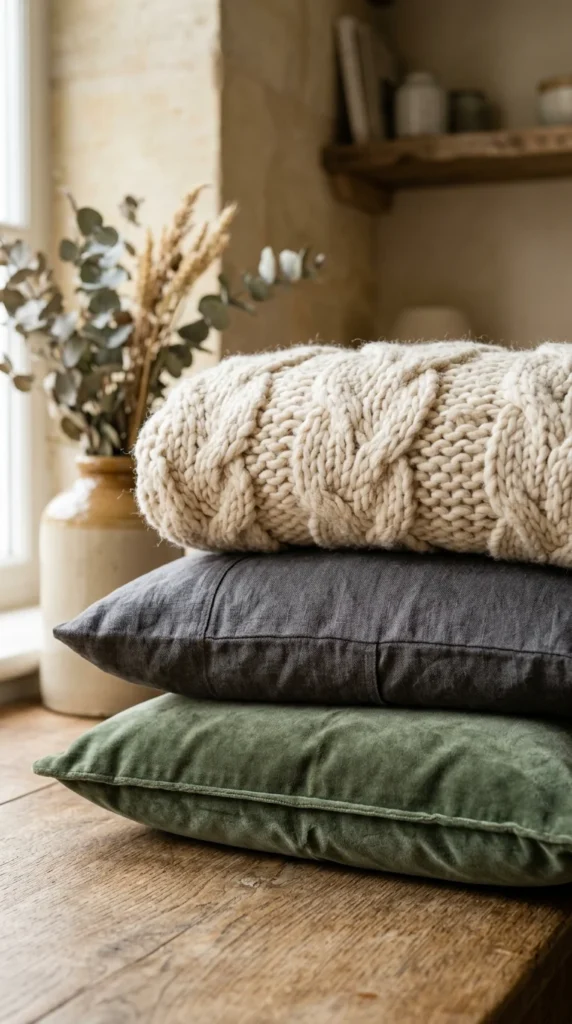
To achieve the “hygge” side of the Japandi equation, textiles are essential. The goal is to create a tactile experience that invites you to relax. Use natural fibers like linen, organic cotton, wool, and hemp. Mix textures to keep the room from feeling flat—pair a smooth linen sofa with a chunky wool throw and a jute or sisal rug. Stick to earthy tones to maintain the cohesive, calm look.
7. Minimalist Lighting
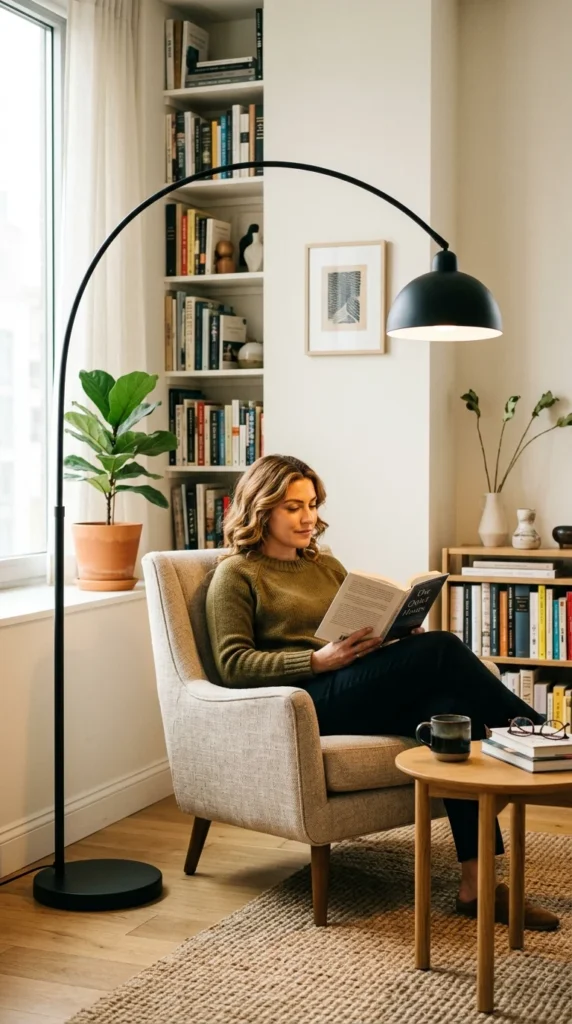
Lighting in a Japandi home should be functional yet sculptural. Avoid ornate chandeliers or overly industrial fixtures. Instead, look for clean lines and matte finishes. A slim, black metal floor lamp provides a modern Scandi touch, while a large, airy paper pendant provides a Japanese feel. The quality of light is also important; aim for warm, diffused light that mimics the soft glow of sunset.
8. Functional Layout
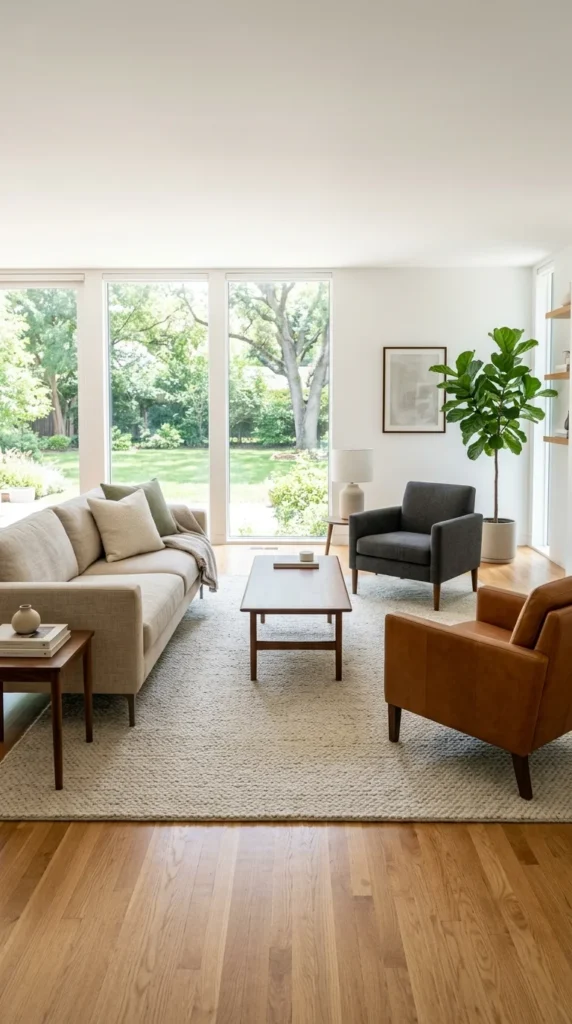
One of the core tenets of Japandi style is intentionality. Every piece of furniture should serve a purpose and have enough “room to breathe.” Avoid the temptation to push all your furniture against the walls. Instead, create functional zones and leave plenty of negative space. This “empty” space is just as important as the furniture itself, as it allows the mind to rest and the eye to focus on the beauty of individual items.
9. Earthy Accents
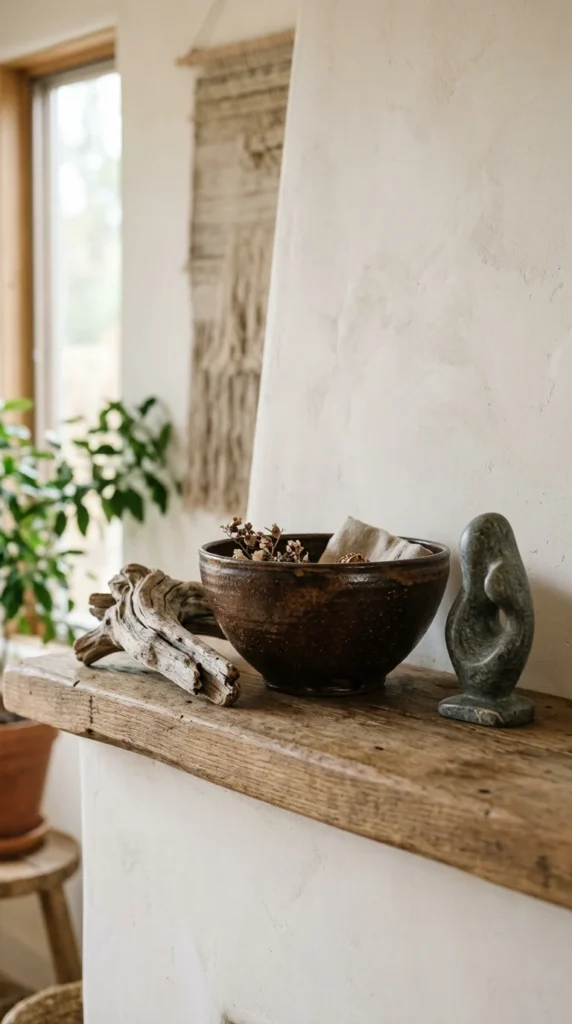
While the base of the room is neutral, earthy accents can ground the space. Terracotta, ochre, deep forest green, and charcoal grey are excellent choices for accent pieces. These colors are found in nature and help to bridge the gap between the light Scandi woods and the darker Japanese elements. Use these colors sparingly in pillows, art, or small decorative objects.
10. Textured Walls
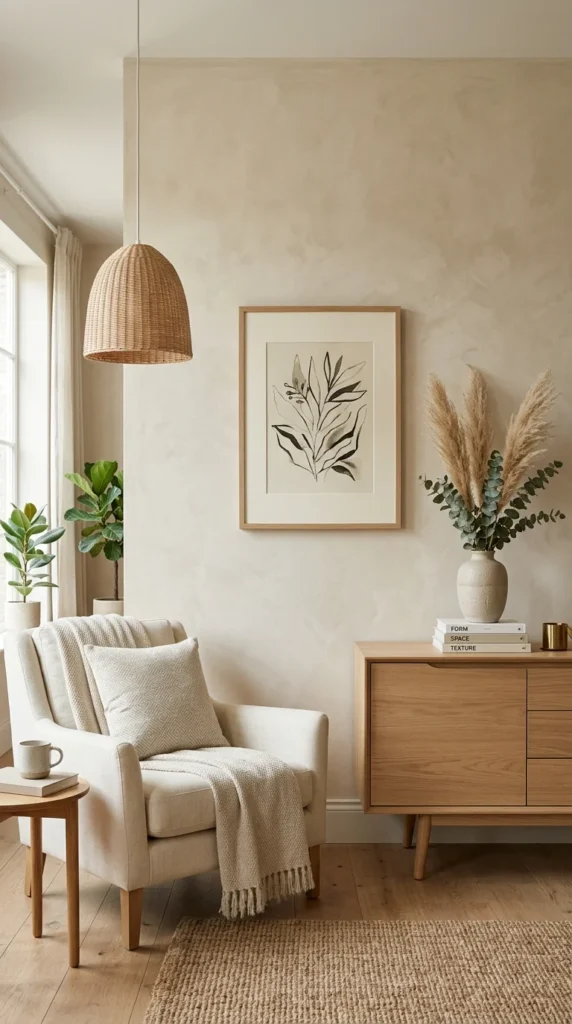
Flat, white drywall can sometimes feel a bit clinical. To add warmth and character, consider textured wall finishes. Lime-wash paint, Venetian plaster, or even clay-based paints can give your walls a soft, organic look that changes beautifully with the shifting light throughout the day. This subtle texture adds depth without the need for busy wallpaper or heavy artwork.
11. Statement Stone
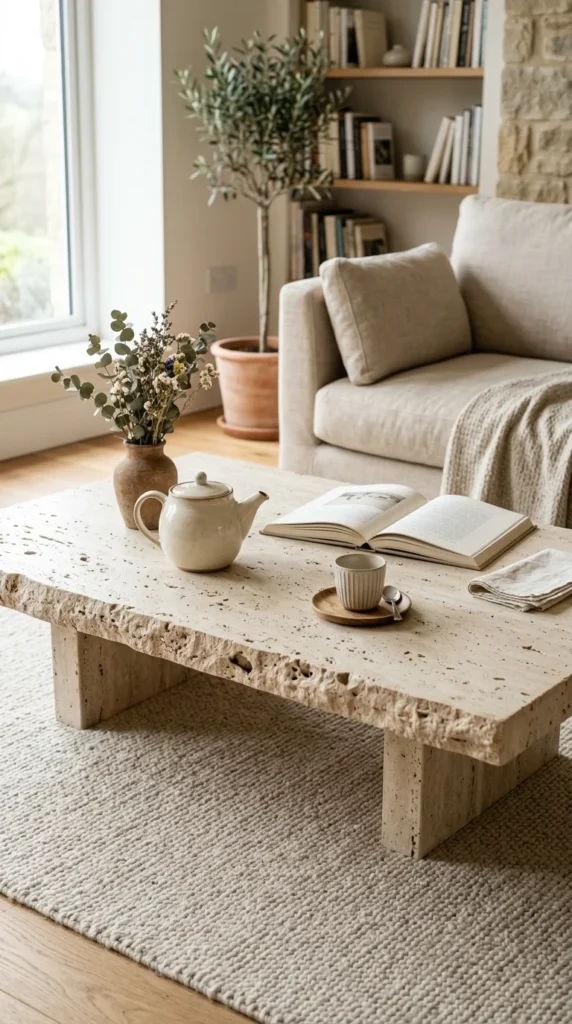
Incorporating stone elements adds a sense of permanence and “groundedness” to a living room. A travertine coffee table, a marble side table, or even a fireplace hearth made of slate can introduce a cool, smooth texture that contrasts beautifully with warm wood. Stick to stones with natural, honed finishes rather than high-shine polished surfaces to keep the look organic.
12. Paper Lanterns
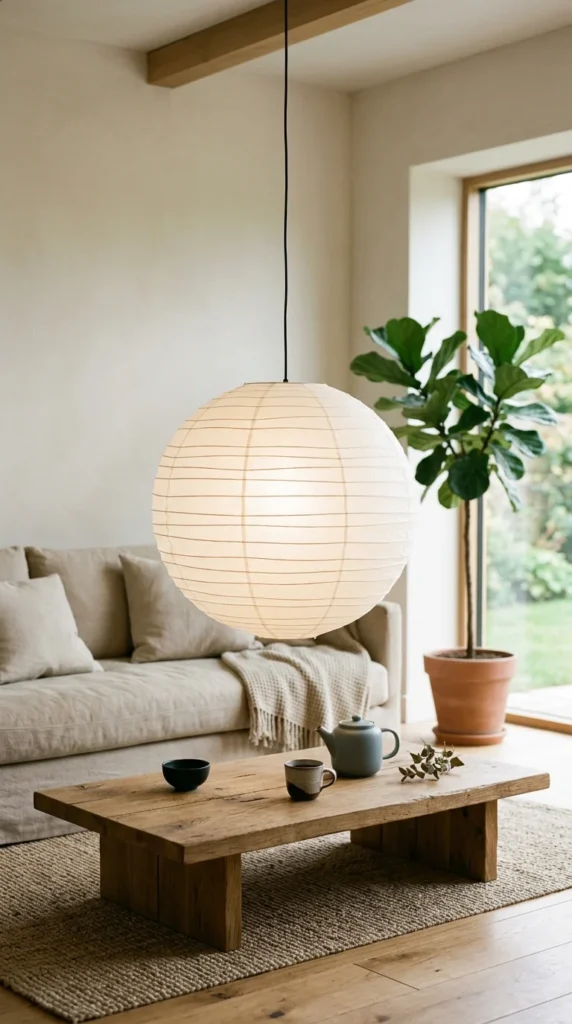
Nothing says Japanese influence quite like the Akari-style paper lantern. These iconic fixtures are made from washi paper and bamboo ribs, emitting a soft, ethereal glow. They are lightweight and visually “quiet,” making them perfect for a Japandi space. Whether you choose a large pendant or a small table lamp, the paper lantern adds a touch of traditional Japanese craft to a modern room.
13. Black Accents
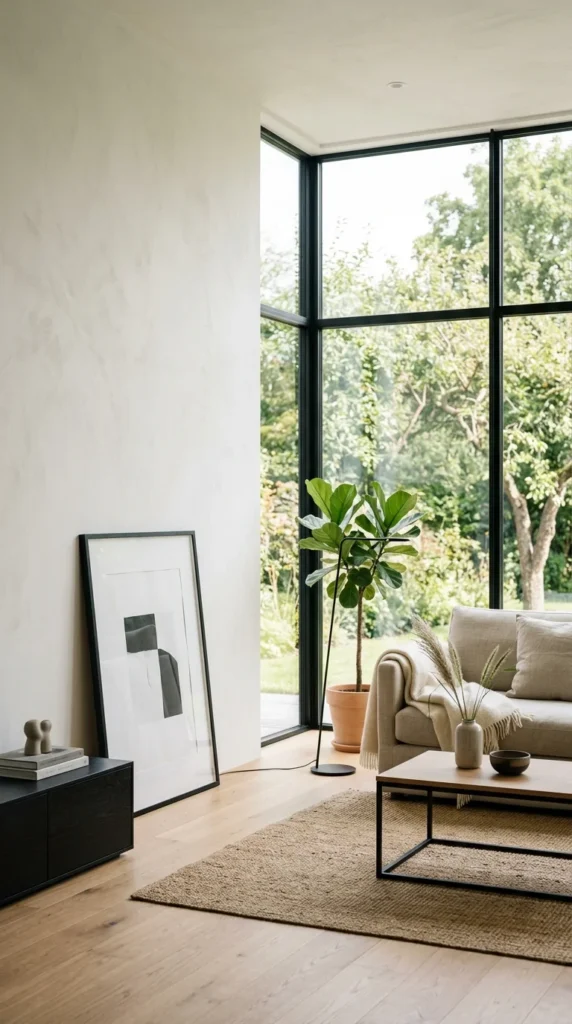
To prevent a neutral room from looking washed out, Japandi designers often use black as an “anchor” color. This is the “Japanese” influence coming through, providing a sharp contrast to the light Scandinavian woods. Thin black lines—found in chair legs, picture frames, or light fixtures—help to define the space and add a modern, sophisticated edge.
14. Woven Elements
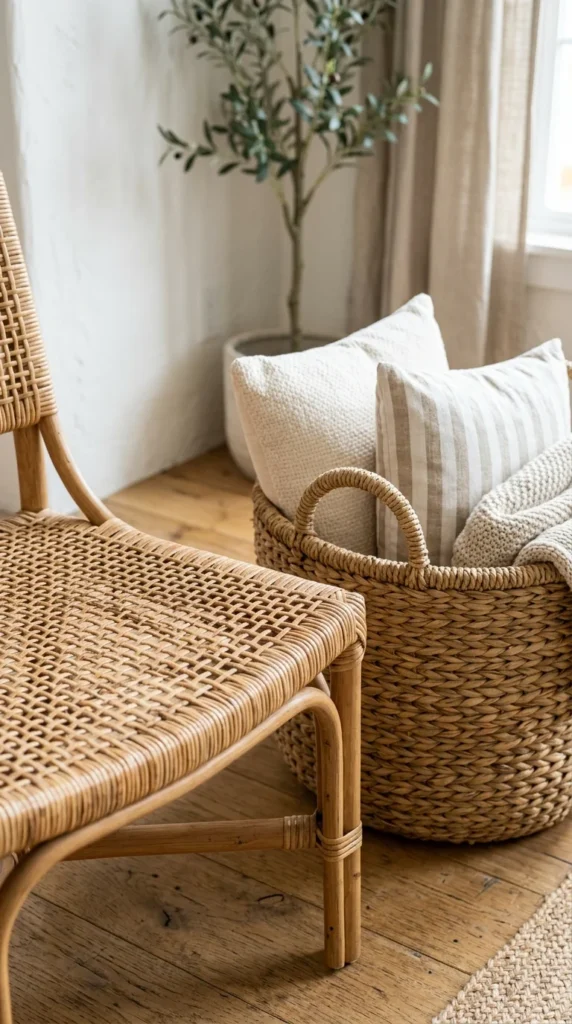
Natural fibers like rattan, cane, seagrass, and bamboo add a layer of warmth and traditional craftsmanship. A cane-back chair or a set of woven storage baskets can introduce a delicate pattern and texture. These materials are sustainable and lightweight, fitting perfectly into the Japandi philosophy of living simply and in harmony with the environment.
15. Hidden Storage
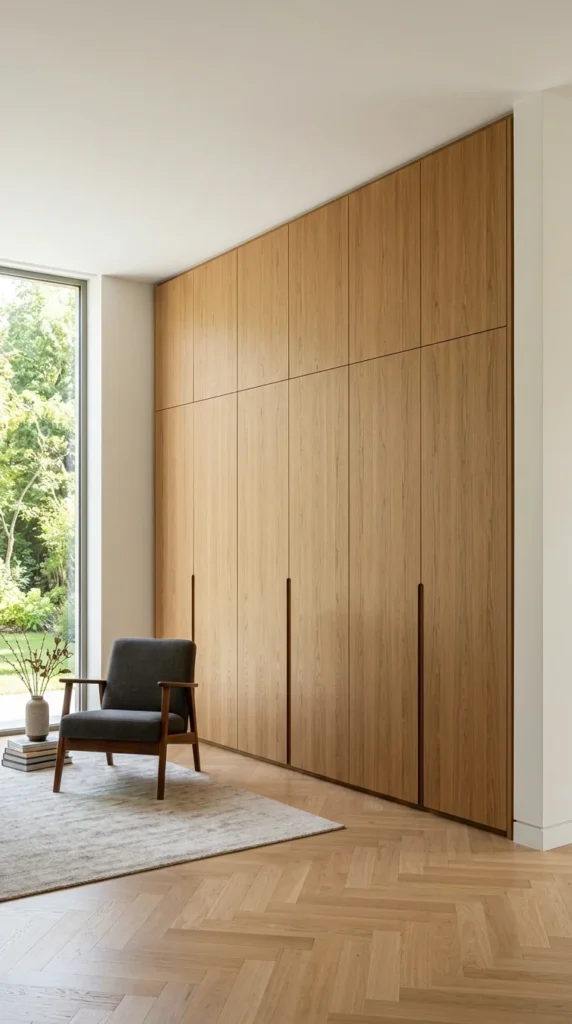
Clutter is the enemy of calm. To maintain a minimalist Japandi aesthetic, smart storage is a must. Invest in furniture with hidden compartments or built-in cabinetry that blends into the architecture of the room. By keeping everyday items out of sight, you allow the design of the room to take center stage, creating a peaceful environment free from visual “noise.”
16. Organic Shapes
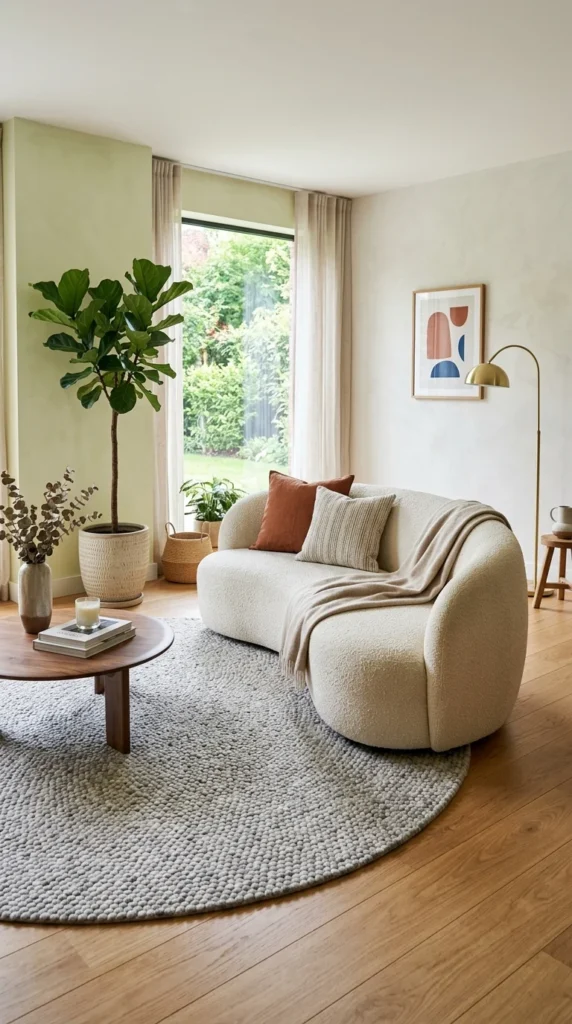
While Scandi design often features straight, functional lines, the Japanese influence introduces more organic, flowing shapes. Look for furniture with soft curves, rounded edges, and asymmetrical forms. A curved sofa or a “pebble” shaped coffee table can break up the rigidity of a room, making it feel more inviting and natural.
17. Slatted Panels
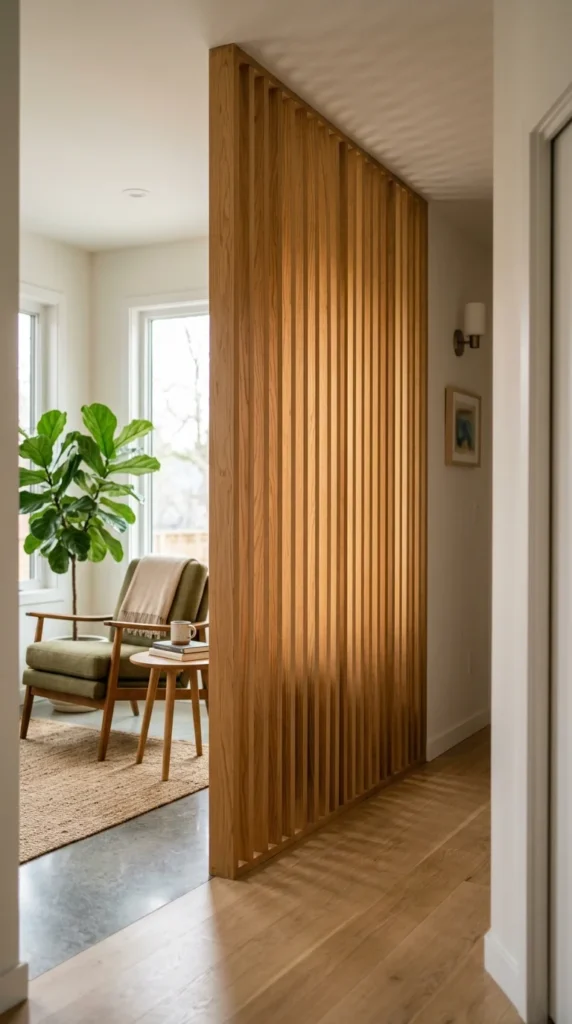
Wooden slats (or “louvers”) are a common architectural feature in both Japanese and Scandinavian homes. They can be used as room dividers, wall treatments, or even as decorative elements on furniture. Slatted panels provide privacy and texture while still allowing light and air to flow through the space. They create a beautiful play of light and shadow that adds a rhythmic, calming quality to the room.
18. Cozy Nooks
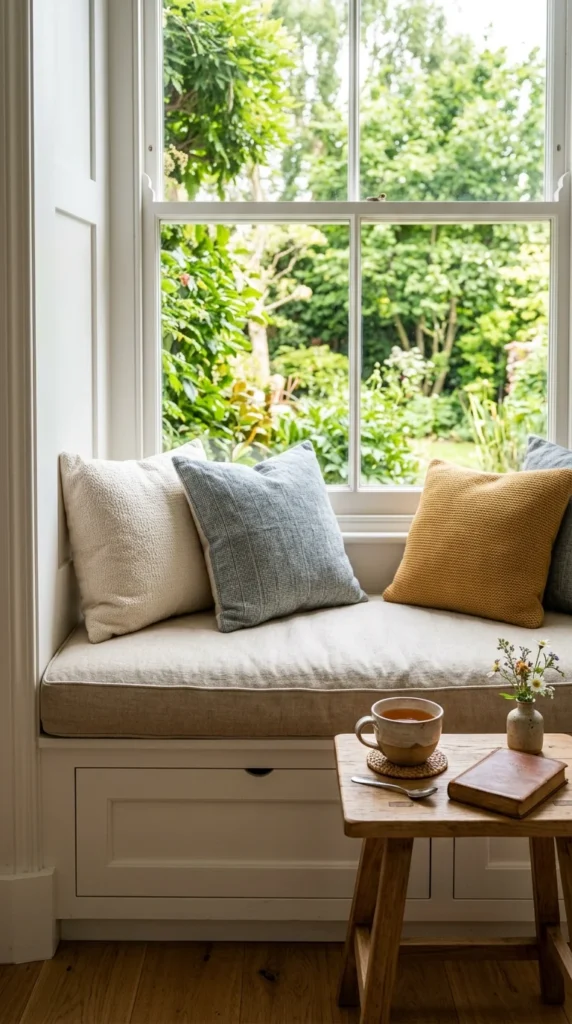
Finally, a Japandi living room should always have a place for quiet reflection. Create a small “cozy nook” near a window or in a quiet corner. All you need is a comfortable chair or a floor cushion, a soft throw, and a small surface for a book or a cup of tea. This dedicated space for relaxation embodies the very heart of Japandi: creating a home that supports both the body and the spirit.