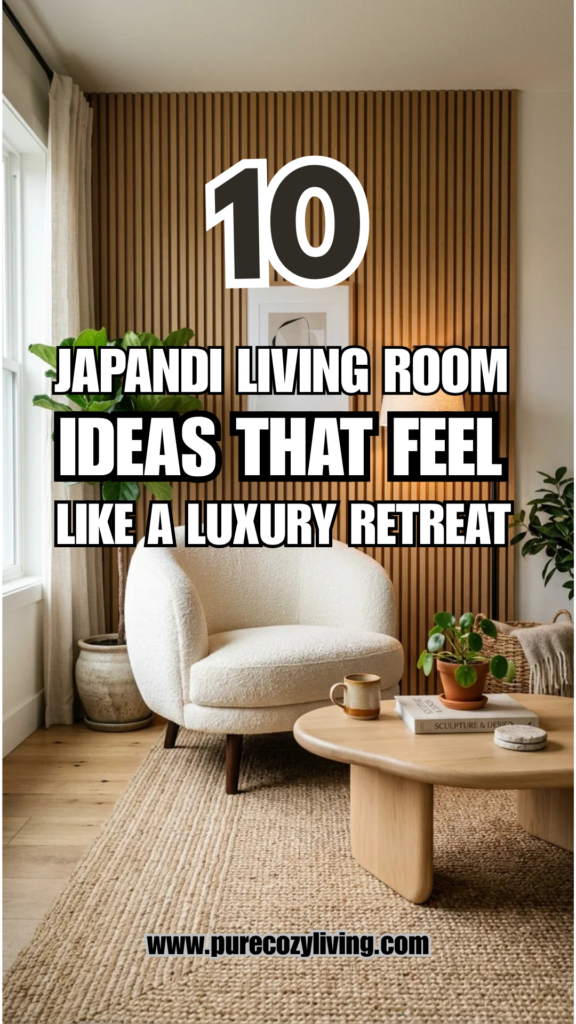

The fusion of Japanese minimalism and Scandinavian functionality—affectionately known as “Japandi”—has transcended being a mere interior design trend to become a definitive lifestyle choice. It is the architectural equivalent of a deep exhale. By marrying the rustic, warm hygge of the North with the refined, zen-like wabi-sabi of the East, Japandi creates spaces that are not just beautiful, but soul-soothing. When executed with a focus on high-quality materials and thoughtful curation, a Japandi living room feels less like a residential space and more like an exclusive, five-star luxury retreat.
Here are 10 Japandi living room ideas to transform your home into a sanctuary of high-end tranquility.
1. Neutral Palette
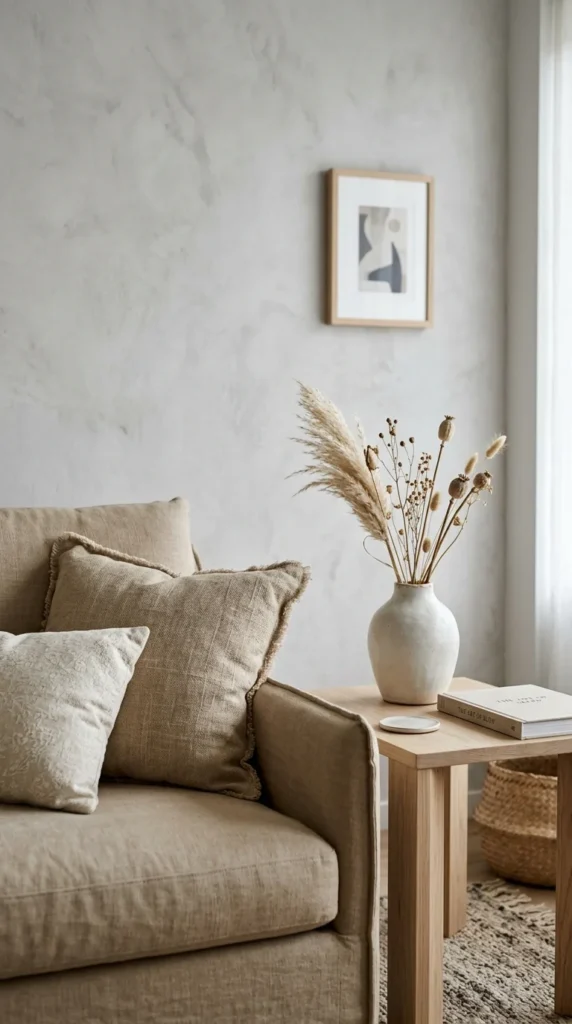
The foundation of any luxury Japandi space is a sophisticated, muted color palette. While Scandinavian design often leans toward cool whites and greys, the Japanese influence introduces warmer, earthy tones. To achieve a high-end look, avoid stark contrasts. Instead, layer “greige,” oatmeal, sand, and charcoal.
A luxury retreat feel comes from the depth of these neutrals. Rather than flat paint, consider lime-wash walls or plaster finishes that catch the light and provide a subtle, stone-like texture. This monochromatic approach creates a visual “quiet” that allows the mind to rest.
2. Low Furniture
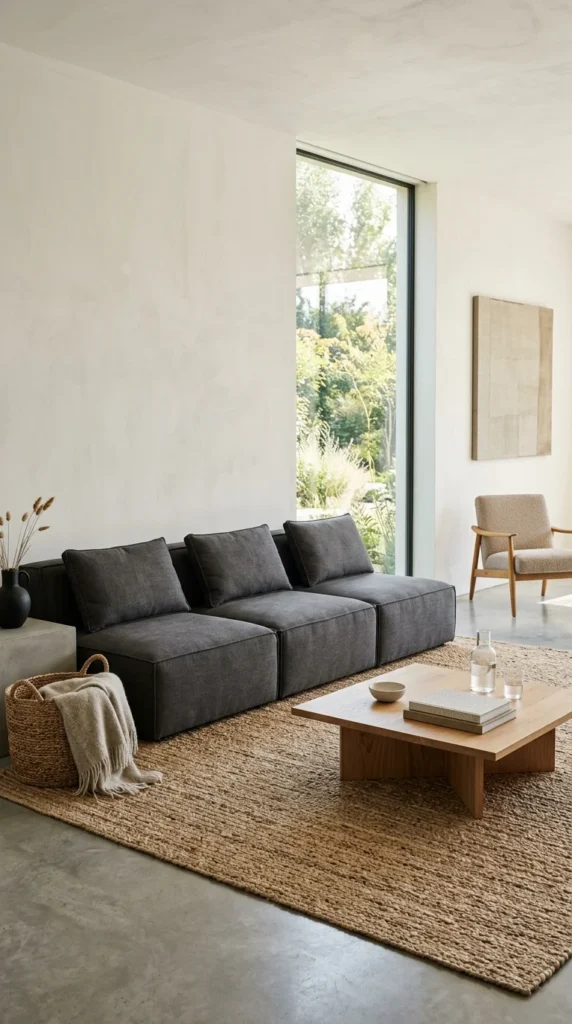
In Japanese interior philosophy, living closer to the floor encourages a sense of grounding and connection to the earth. To elevate this concept to a luxury level, invest in low-profile, “legless” modular sofas or platform seating. These pieces create a sense of height in the room, making even modest ceilings feel soaring and airy.
A low-slung aesthetic also shifts the perspective of the room, drawing the eye toward the floor textures and low-level lighting. Choose furniture with deep seats and high-quality upholstery, such as heavy-weight linen or soft wool, to ensure the minimalism doesn’t compromise on comfort.
3. Natural Materials
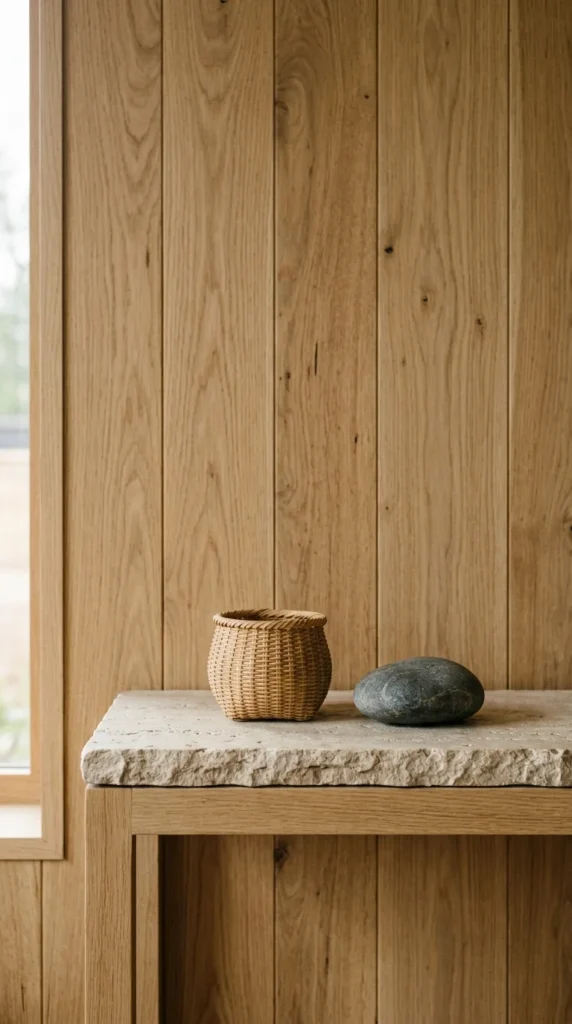
Luxury in the Japandi world isn’t about gold leaf or velvet; it’s about the raw beauty of the natural world. The interplay of wood, stone, and organic fibers is essential. Light woods like oak, ash, and larch (common in Scandi design) should be balanced with darker accents or the refined craftsmanship of cedar and bamboo.
To make the space feel like a retreat, focus on the tactile experience. A honed marble coffee table, a solid white-oak sideboard, and hand-woven rattan accents provide a sensory richness that synthetic materials simply cannot replicate. The goal is to bring the outdoors in, creating a seamless transition between the home and nature.
4. Functional Minimalism
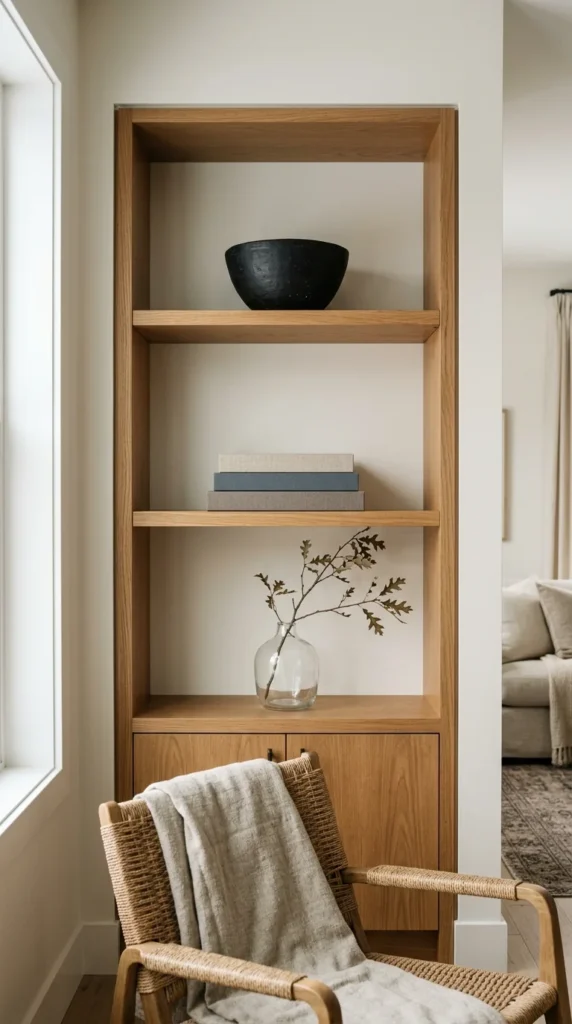
The “retreat” feel is often synonymous with a lack of clutter. However, Japandi minimalism isn’t about living in an empty box; it’s about “functional minimalism.” Every piece in the living room should serve a purpose or bring profound joy.
In a luxury setting, this means investing in bespoke storage solutions that hide the chaos of daily life. Built-in cabinetry with “push-to-open” doors and hidden handles maintains clean lines. When surfaces are clear, the few objects that remain—perhaps a single high-end ceramic vase or a curated art book—take on the significance of gallery pieces.
5. Indoor Greenery
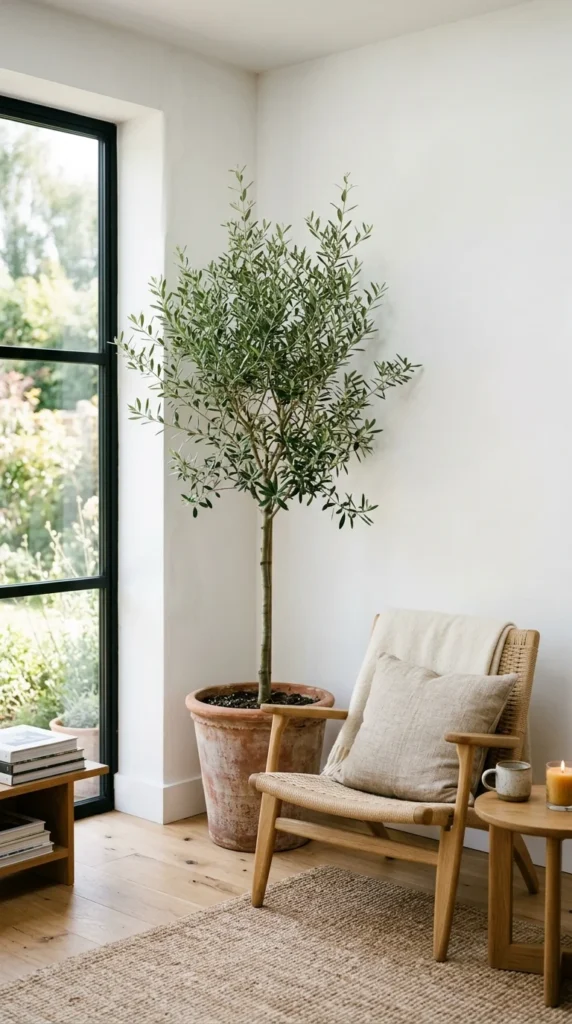
While Scandinavian homes often feature lush, leafy plants, the Japanese approach is more architectural and restrained. To achieve a luxury retreat vibe, choose one or two “statement” plants rather than a crowded indoor jungle.
A single, tall olive tree, a meticulously pruned Bonsai, or a dramatic Japanese Maple in a large, unglazed clay pot acts as living sculpture. The greenery provides a pop of color against the neutral backdrop and improves air quality, contributing to the overall sense of well-being and health that defines a high-end sanctuary.
6. Curved Silhouettes
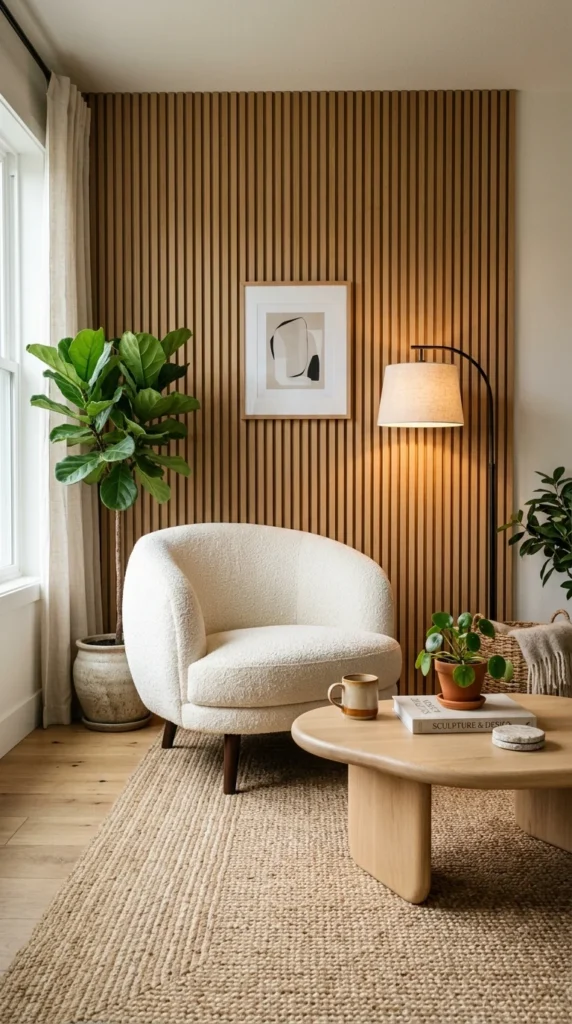
While the Scandi-Japanese aesthetic is known for its clean, straight lines, the most modern luxury interpretations incorporate soft curves to break the rigidity. This “soft minimalism” makes a living room feel more welcoming and “hug-like.”
Look for sofas with rounded backs, circular coffee tables, or arched doorways. The curve mimics the organic shapes found in nature and offsets the sharp angles of cabinetry and floorboards. This balance of “hard” and “soft” is a hallmark of sophisticated Japandi design.
7. Statement Lighting
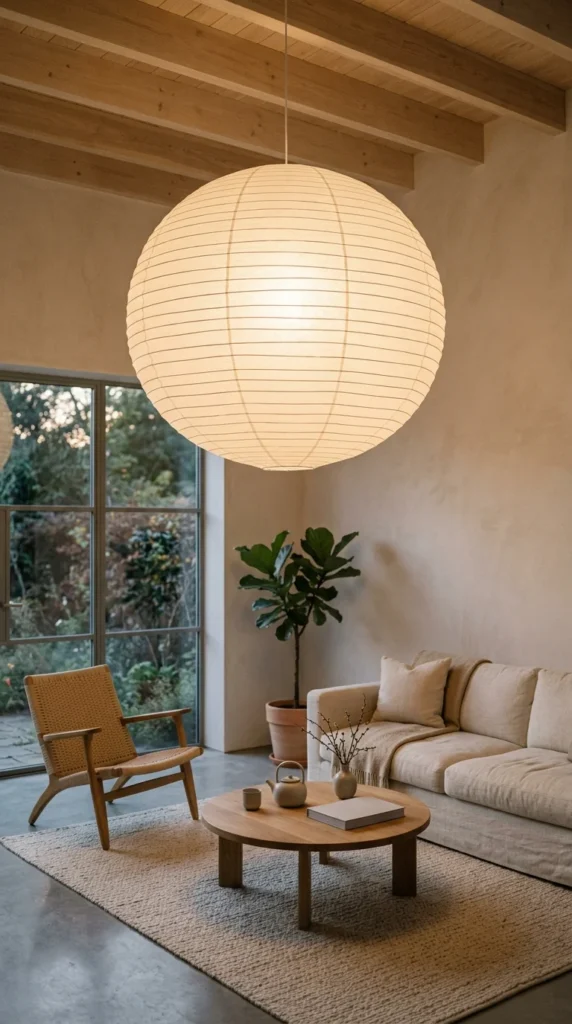
Lighting is the secret ingredient that transforms a room from a daytime living space into a night-time retreat. Japandi lighting often focuses on “shoji” inspired elements—translucent materials that diffuse light softly.
Large-scale paper lanterns (reminiscent of Isamu Noguchi’s designs) serve as a focal point, providing a warm, ambient glow that mimics candlelight. To enhance the luxury feel, layer your lighting. Avoid harsh overhead LEDs; instead, use floor lamps with wooden bases and wall sconces made of brass or matte ceramic to create “pools” of light that define different zones of the room.
8. Textural Layers
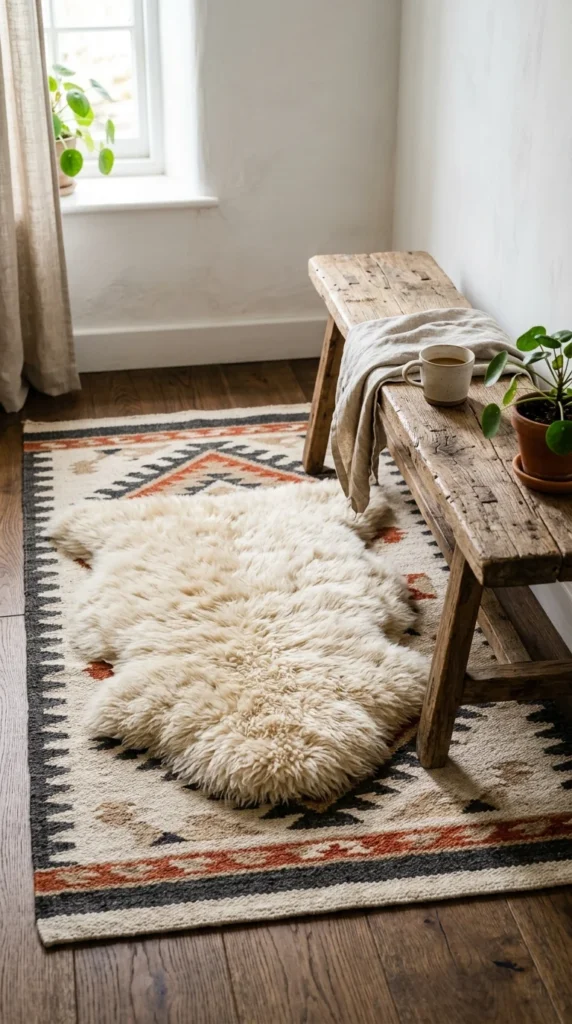
Because the color palette is restrained, texture must do the heavy lifting to prevent the room from feeling cold. A luxury Japandi living room should be a masterclass in haptics.
Combine a flat-weave sisal rug with a plush wool throw. Mix a smooth leather chair with a chunky knit cushion. This “high-low” texture strategy adds visual weight and physical comfort. The contrast between a rough, hand-carved wooden stool and a soft, bouclé sofa creates an environment that feels rich and expensive without being flashy.
9. Wabi-Sabi Elements
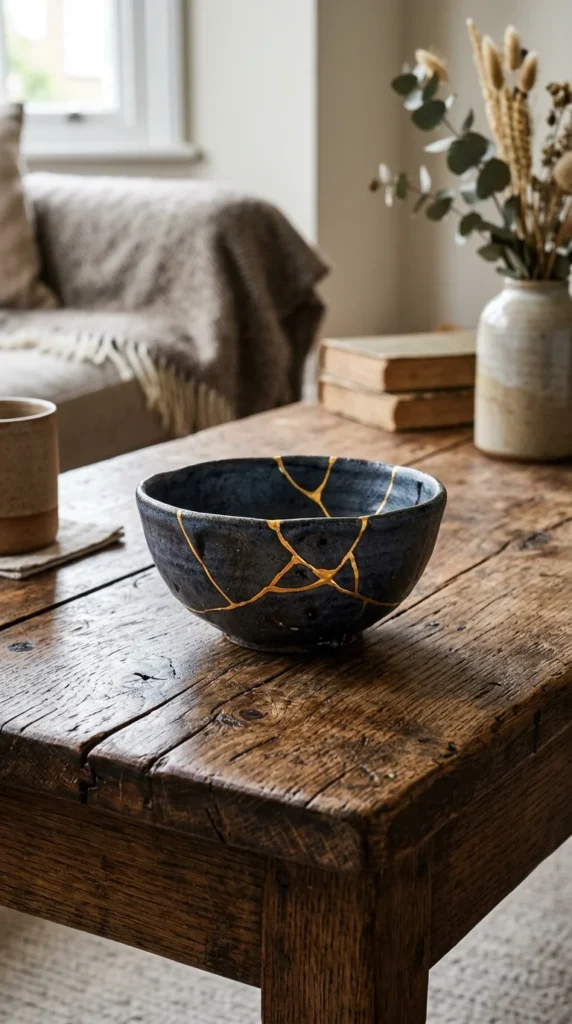
The Japanese philosophy of Wabi-Sabi—finding beauty in imperfection and the passage of time—is what gives Japandi its “soul.” In a luxury retreat, this translates to choosing items that have a story and a sense of permanence.
This could be a reclaimed wood coffee table where the grain is deeply weathered, or a piece of pottery with a slightly asymmetrical shape. These “perfectly imperfect” elements act as a counterpoint to the clean, modern lines of the furniture. They remind the inhabitants to slow down and appreciate the raw, unpolished beauty of life, which is the ultimate luxury in a fast-paced world.
10. Seamless Flow
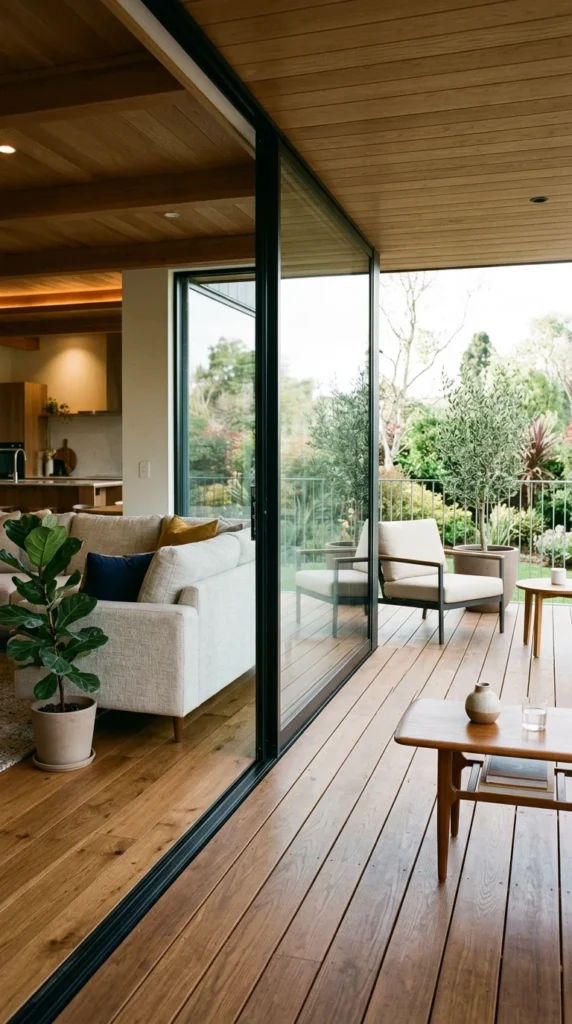
The final element of a luxury Japandi retreat is the sense of space and flow. This design style thrives on “Ma”—the Japanese concept of negative space or the “gap” between things. Do not feel the need to fill every corner.
Ensure there is plenty of walking space around furniture. If possible, align your living room layout to face a window or an outdoor view, blurring the lines between the interior and exterior. Using the same flooring material for the living room and an adjacent terrace creates a visual continuation that makes the space feel vast and interconnected with the environment.