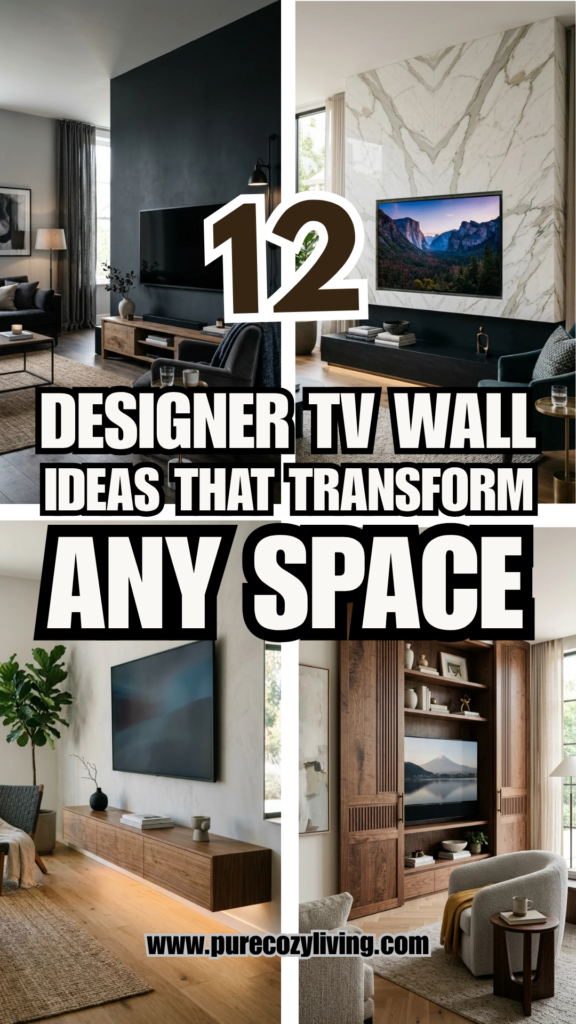

The television is often the focal point of the modern living room, yet it is frequently treated as an afterthought in interior design. A “black hole” on the wall can disrupt the flow of a beautifully curated space. However, with the right design strategy, your TV wall can become a stunning architectural feature that enhances the aesthetic of your entire home. From sleek minimalism to opulent textures, here are 12 designer-approved ideas to elevate your entertainment zone.
1. Wood Slats
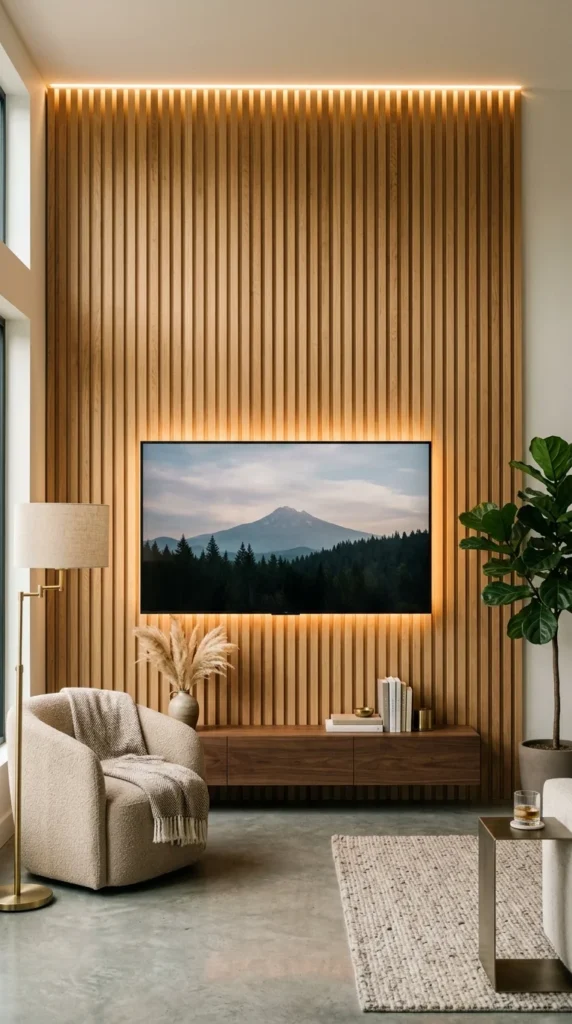
Vertical wood slats, often referred to as tambour or fluted paneling, have become a staple in high-end modern design. This approach adds rhythmic texture and organic warmth to a room, breaking up the flat surface of a traditional wall.
By using thin strips of oak, walnut, or charred wood (Shou Sugi Ban), you create a backdrop that feels both architectural and cozy. Designers often incorporate “hidden” storage within these slats, allowing media consoles and wires to vanish behind the seamless wooden lines. The verticality also helps draw the eye upward, making the ceiling appear higher than it actually is.
2. Marble Slabs
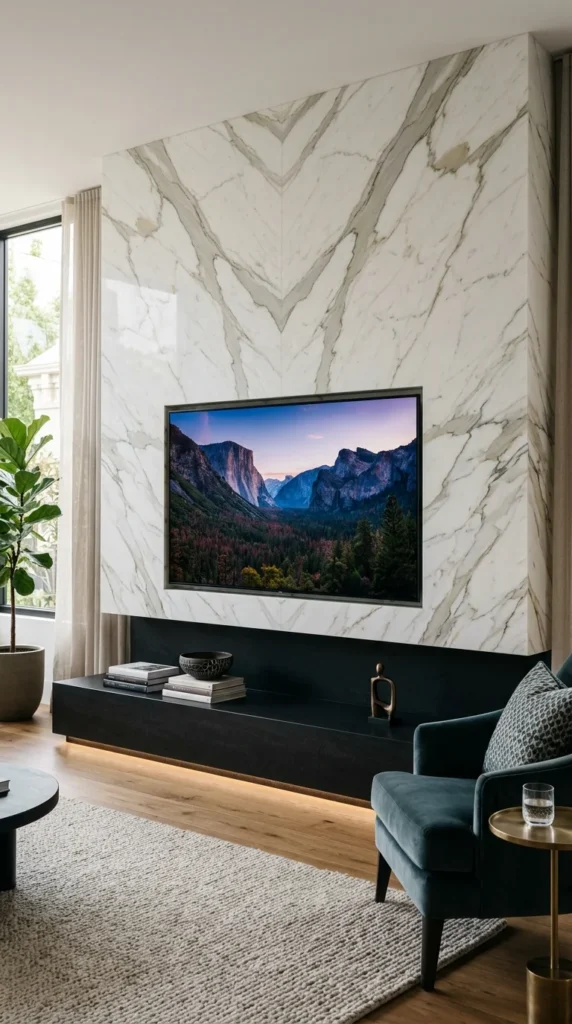
For those seeking ultimate luxury, nothing compares to the grandeur of a floor-to-ceiling stone slab. Whether it is real marble, granite, or a high-quality porcelain look-alike, a continuous stone surface provides a dramatic, gallery-like backdrop for a television.
When using marble, the goal is to let the natural veining do the work. Book-matched slabs, where two pieces of stone are joined to mirror each other, create a mesmerizing Rorschach-like pattern that serves as art even when the TV is turned off. To keep the look clean, mount the TV directly onto the stone using specialized drill bits and hide all cabling within a recessed conduit behind the slab.
3. Built-in Library
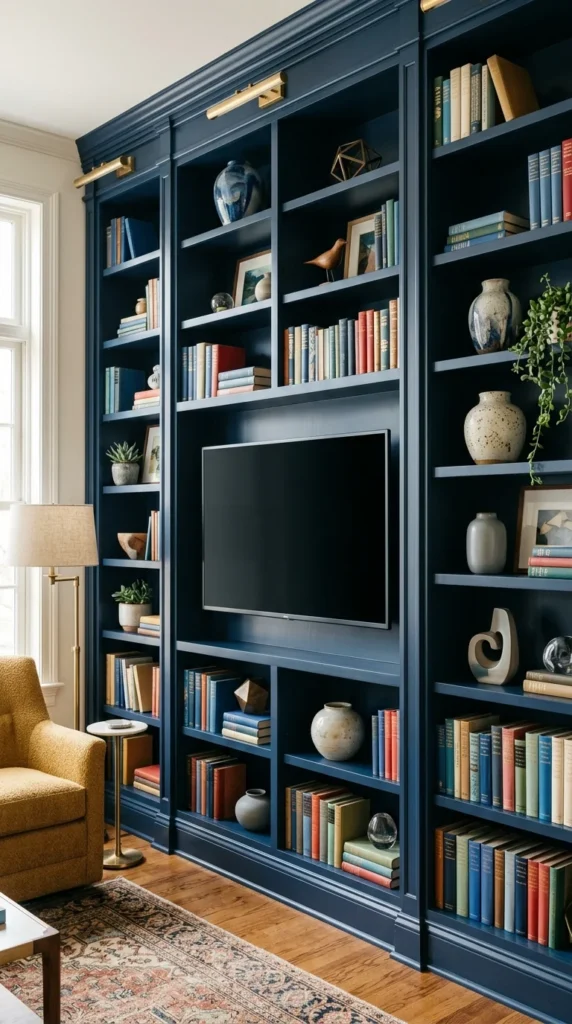
Integrating your television into a custom-built library or shelving unit is the perfect way to blend technology with traditional charm. This “maximalist” approach surrounds the screen with books, collectibles, and personal artifacts, making the TV feel like a natural part of the room’s narrative rather than a lone appliance.
To achieve a balanced look, ensure the TV is positioned at eye level and leave enough “breathing room” around the screen so it doesn’t look cramped. Using dark-colored shelving behind the TV can also help the screen blend in when it’s powered off, reducing the visual impact of the black rectangle.
4. Minimalist Niche
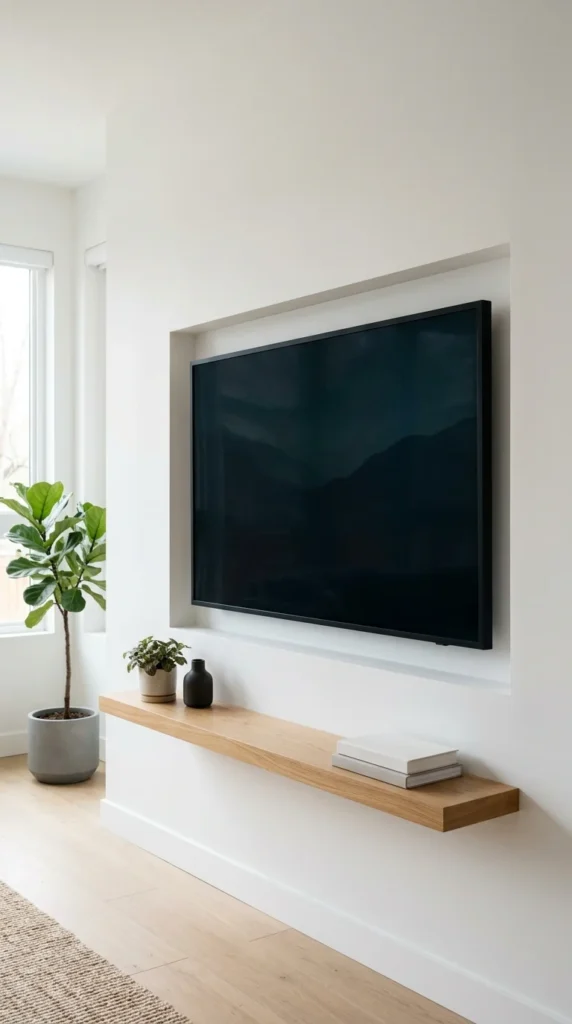
The recessed niche is a favorite among minimalist designers. By creating a hollow in the wall specifically sized for the television, you allow the screen to sit flush with the surrounding surface. This eliminates the awkward profile view of brackets and cables.
This design works best in new constructions or major renovations where the wall can be framed specifically for the TV’s dimensions. For an extra touch of sophistication, paint the inside of the niche a slightly darker shade than the outer wall to create a sense of depth, or line the interior with a contrasting material like metallic leaf or dark felt.
5. Gallery Wall
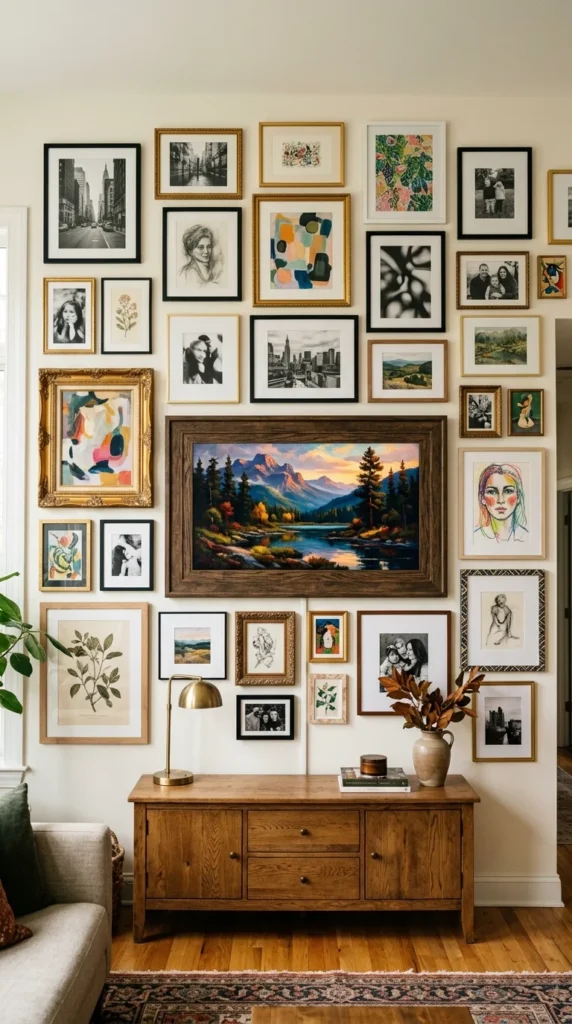
The gallery wall approach is ideal for those who want their TV to disappear into a sea of art. By surrounding the screen with framed prints, photographs, and mirrors of various sizes, you camoflauge the television as just another “frame” on the wall.
This technique is especially effective when paired with “Art TVs” (like the Samsung Frame), which display high-resolution artwork when not in use. When curating your gallery, maintain a consistent theme—such as all-black frames or a specific color palette—to ensure the arrangement feels intentional rather than cluttered.
6. Industrial Concrete
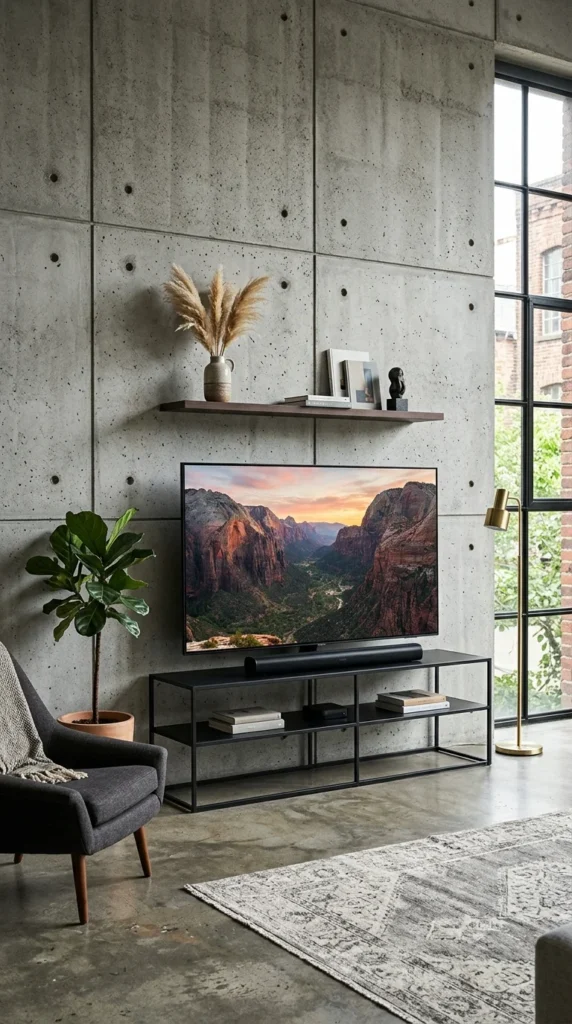
For a modern, urban aesthetic, a concrete feature wall provides a cool, neutral backdrop that contrasts beautifully with the glow of a high-definition screen. You don’t need to pour real concrete to get this look; many designers use micro-cement, large-format concrete tiles, or even high-end textured wallpaper to mimic the effect.
The matte, porous texture of concrete absorbs light, which helps reduce glare on the television screen. Complement this look with industrial elements like exposed conduit (painted black), metal shelving, and warm “Edison” style lighting to prevent the space from feeling too cold.
7. Sliding Panels
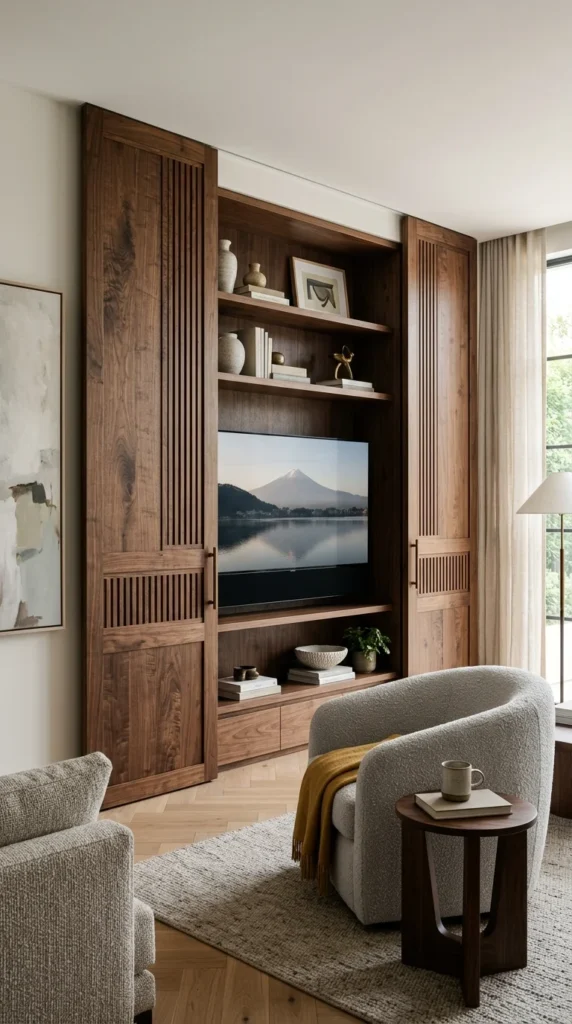
If you prefer a room that focuses on conversation rather than screen time, hidden motorized or sliding panels are the ultimate solution. These panels can be made of wood, upholstered fabric, or even large-scale artwork.
When the TV is not in use, the panels slide together to completely conceal the tech, leaving behind a clean, decorative surface. This is a popular choice for formal sitting rooms or multipurpose spaces where the television is only needed occasionally. Motorized systems add a “wow” factor, while manual sliding barn-style doors offer a more rustic or transitional appeal.
8. Dark Accent Wall
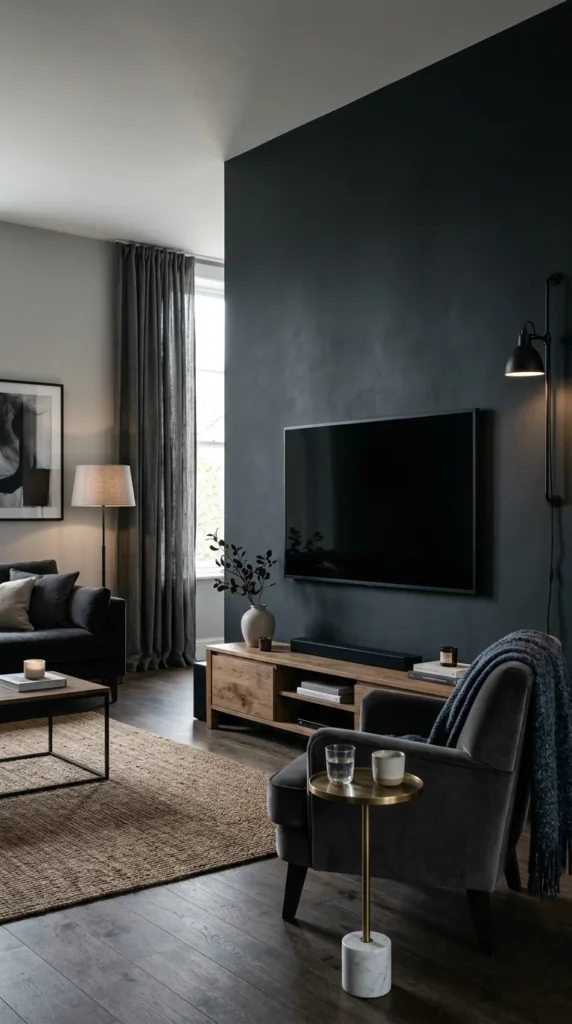
One of the simplest yet most effective ways to treat a TV wall is to paint it a very dark color. Shades like charcoal, navy, forest green, or “true black” allow the television to recede into the background.
When the screen is off, the black glass of the TV matches the dark wall, making it virtually invisible. This technique also enhances the viewing experience by providing a high-contrast backdrop that makes the colors on the screen pop. Pair a dark wall with light-colored furniture and warm wood accents to keep the room from feeling too dim.
9. Textured Fabric
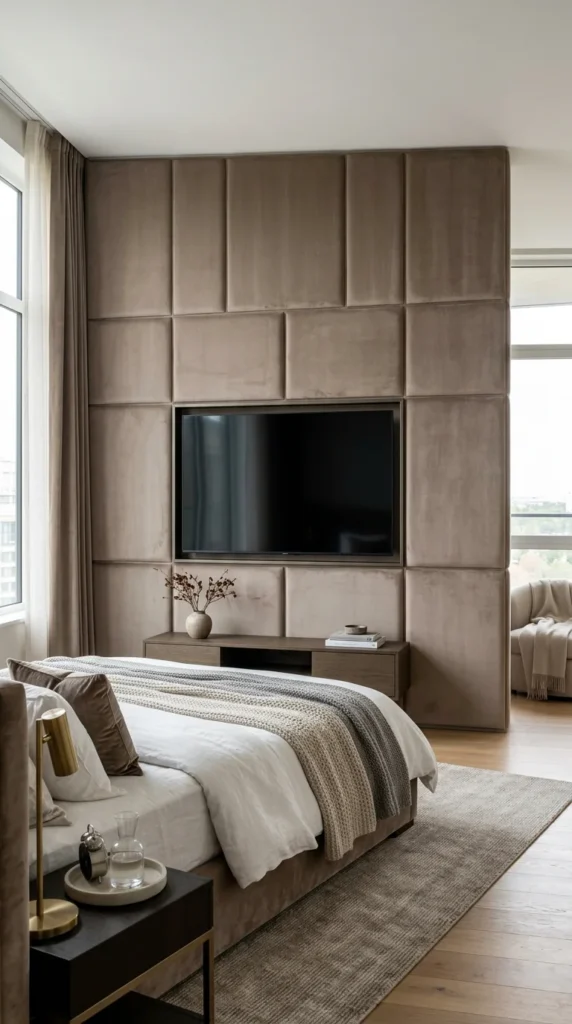
Upholstered wall panels bring a sense of softness and acoustic benefit to a media room. Fabric panels made of velvet, linen, or suede can be arranged in a grid or a bespoke geometric pattern to create a plush, high-end look.
Beyond the visual appeal, fabric walls are excellent for sound dampening, reducing echoes and improving the audio quality of your home theater system. This approach is particularly effective in bedrooms or dedicated cinema rooms where comfort and sound are top priorities.
10. Geometric Molding
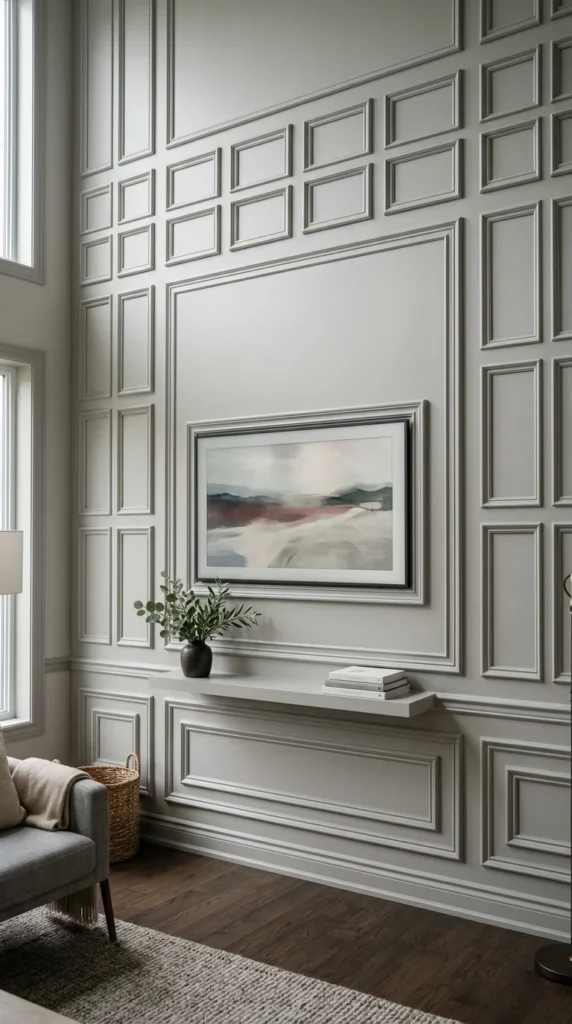
Traditional crown molding and wainscoting can be reimagined for a modern TV wall. By creating a custom layout of “picture frame” molding, you can create a dedicated space for the television that feels integrated into the home’s architecture.
For a contemporary twist, try an asymmetrical geometric pattern using thin wooden strips painted the same color as the wall. This adds subtle shadows and lines that provide visual interest without distracting from the content on the screen. It is a cost-effective way to add a “designer” touch to a standard drywall surface.
11. Room Divider
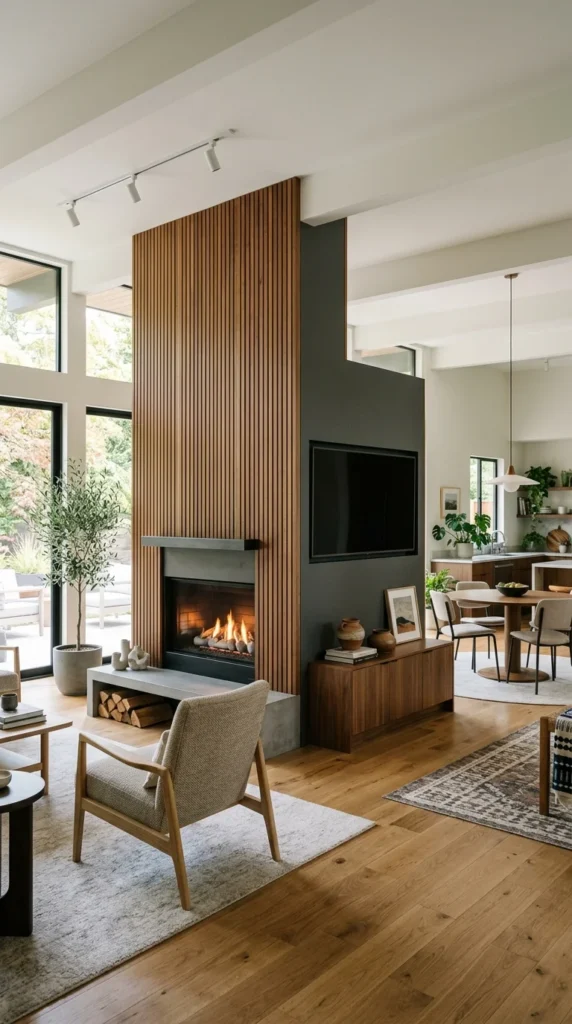
In open-concept homes, a TV wall doesn’t necessarily have to be a perimeter wall. A custom-built room divider can house the television while defining separate zones, such as the living area and the dining room.
Some designers take this a step further by installing a 360-degree swivel mount within the divider, allowing the TV to be rotated to face either the living room or the kitchen. This functional “island” approach keeps the main walls of the home free for large windows or art galleries.
12. Floating Console
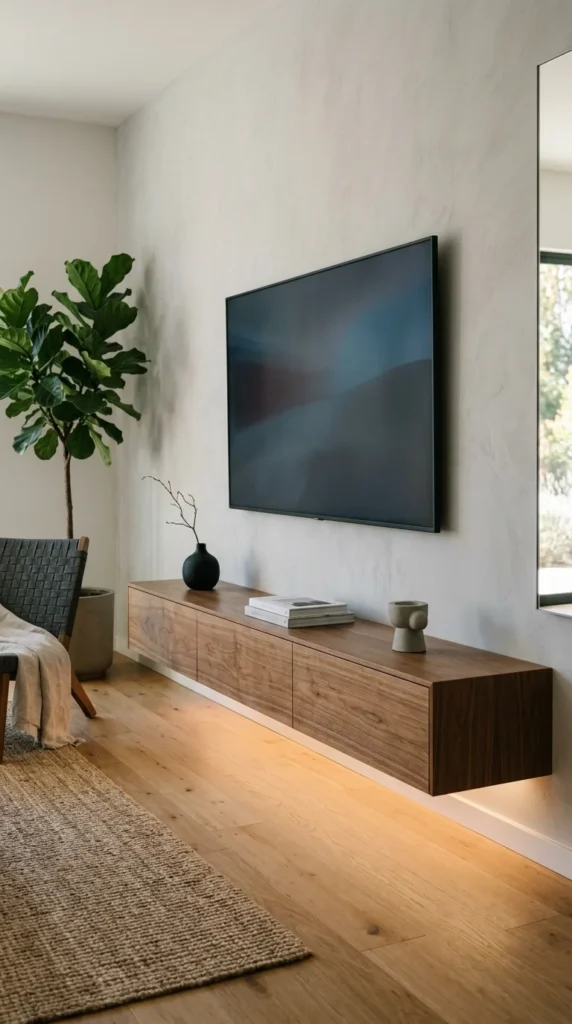
To achieve a clean, airy look, pair your wall-mounted TV with a floating media console. By lifting the cabinetry off the floor, you create an uninterrupted view of the floorboards, which makes the room feel larger and less cluttered.
The floating console serves as an anchor for the TV, providing a place for soundbars and decorative items while hiding the messy reality of wires and cable boxes. For a cohesive look, match the material of the console to other wood elements in the room, or choose a high-gloss finish to reflect light and add a modern edge.