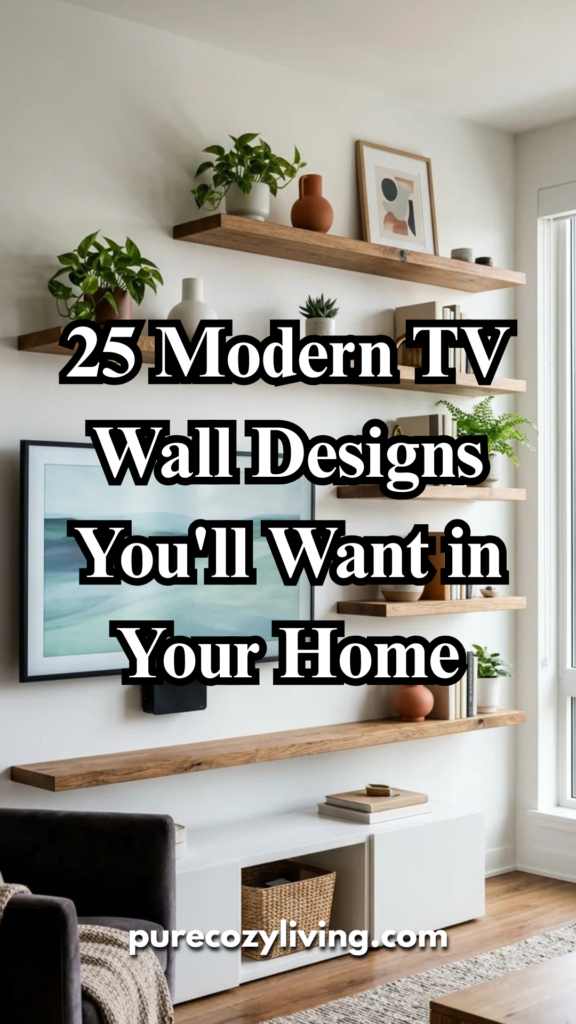

The television has evolved from a bulky box hidden in a corner to the centerpiece of the modern living room. Today, the “TV wall” is a design statement in its own right, blending technology with interior aesthetics. Whether you prefer a minimalist look that hides the screen when not in use or a bold, textured feature wall that commands attention, there is a design solution for every home. Here are 25 modern TV wall designs to inspire your next home renovation.
1. Floating Console
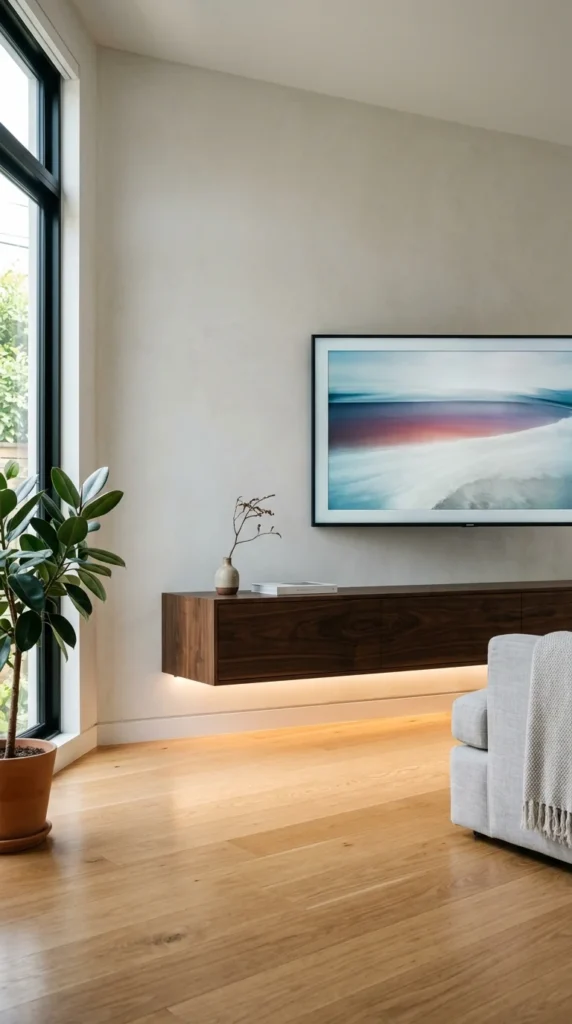
The floating console is the hallmark of modern minimalism. By mounting the cabinetry directly to the wall and leaving the floor space beneath it clear, you create an illusion of more square footage. This design is particularly effective in smaller apartments where floor space is at a premium. Modern floating consoles often feature “push-to-open” doors to eliminate the need for handles, maintaining a sleek, uninterrupted silhouette.
2. Marble Slabs
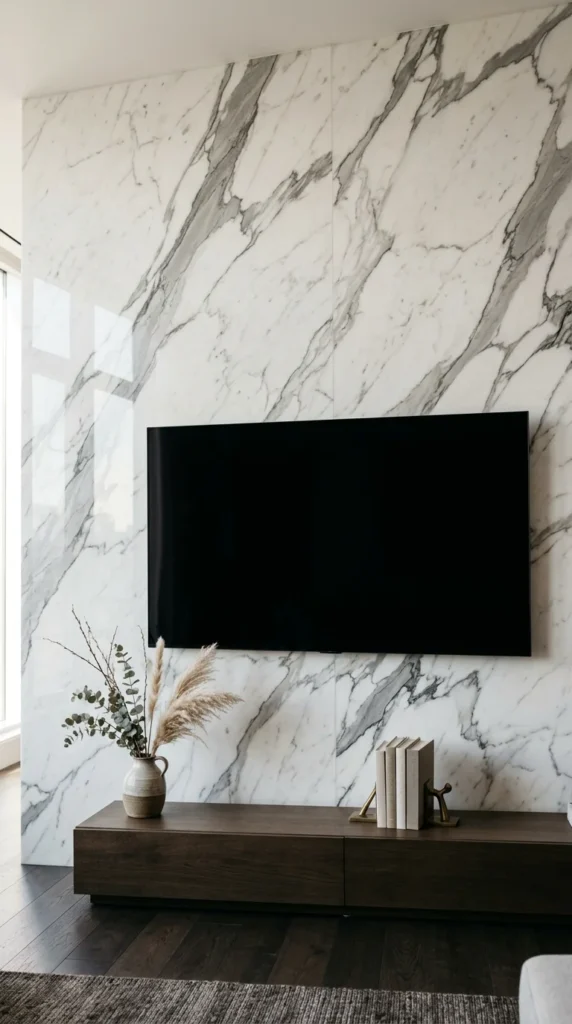
For a look of pure luxury, nothing beats a floor-to-ceiling marble slab. Using a single large piece of stone (or high-quality porcelain look-alikes) creates a sophisticated focal point. The natural veining of the marble provides a “living” texture that contrasts beautifully with the cold, dark glass of the TV screen. This design works best in open-plan living areas where the wall can be viewed from multiple angles.
3. Wood Slats
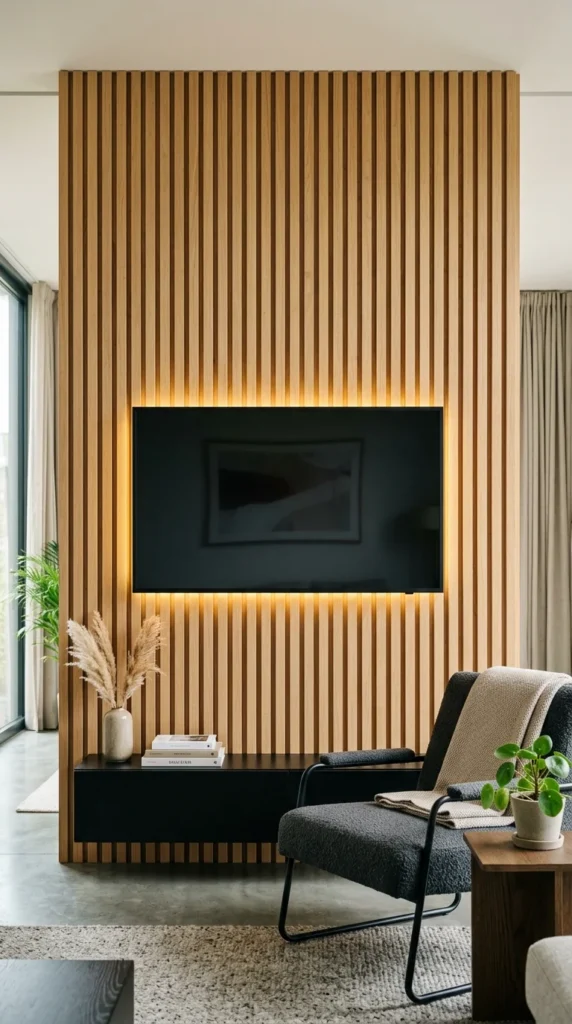
Vertical wood slats, often referred to as “tambour” or “acoustic panels,” add warmth and organic texture to a room. This design is highly popular in Scandi-style and mid-century modern interiors. Beyond the visual appeal, wood slats can help improve the acoustics of the room, reducing echoes—a functional bonus for your home theater experience.
4. Built-in Shelving
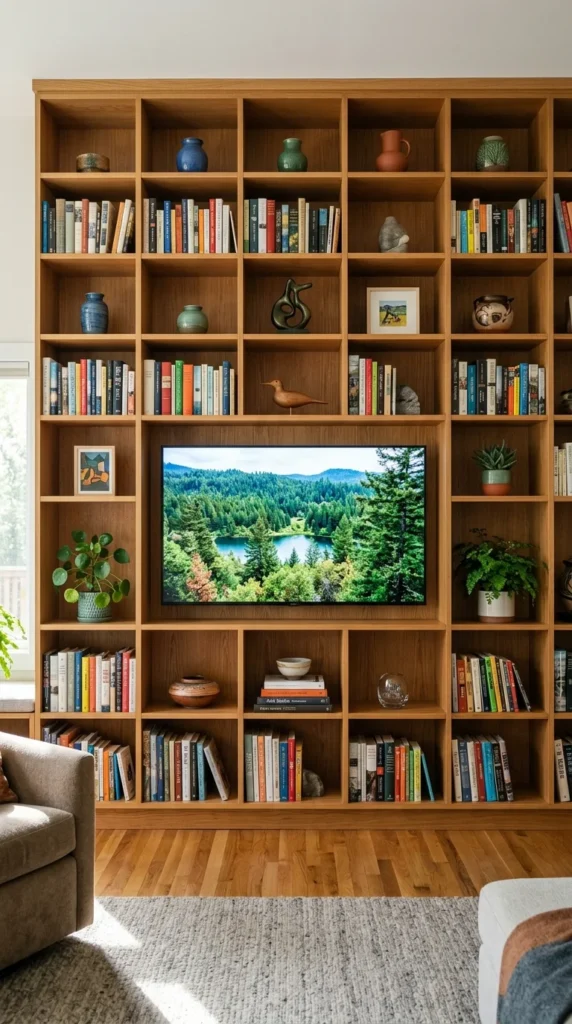
The built-in shelving unit treats the TV as part of a larger composition. By surrounding the screen with books, art, and personal mementos, the TV becomes less of a “black hole” and more of a curated element of the room. This design offers immense storage potential and allows homeowners to change the look of the wall seasonally by swapping out the decor.
5. Concrete Finish
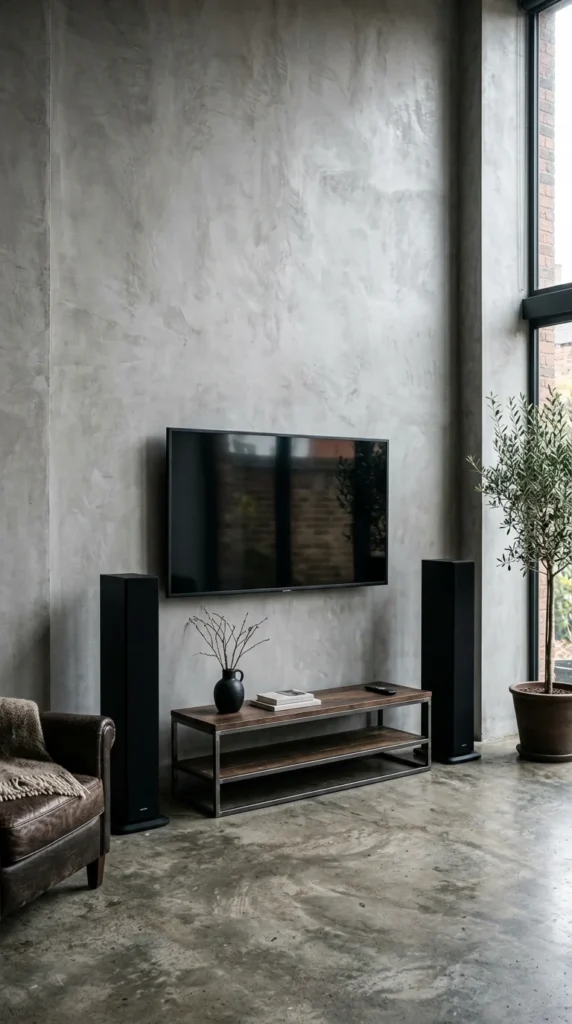
Industrial chic remains a dominant trend, and a concrete-effect wall is the perfect backdrop for a high-tech television. You can achieve this look using real concrete panels, micro-cement, or even specialized textured wallpaper. The cool grey tones of the concrete highlight the vibrant colors of the screen when it’s turned on.
6. Hidden Cabinetry
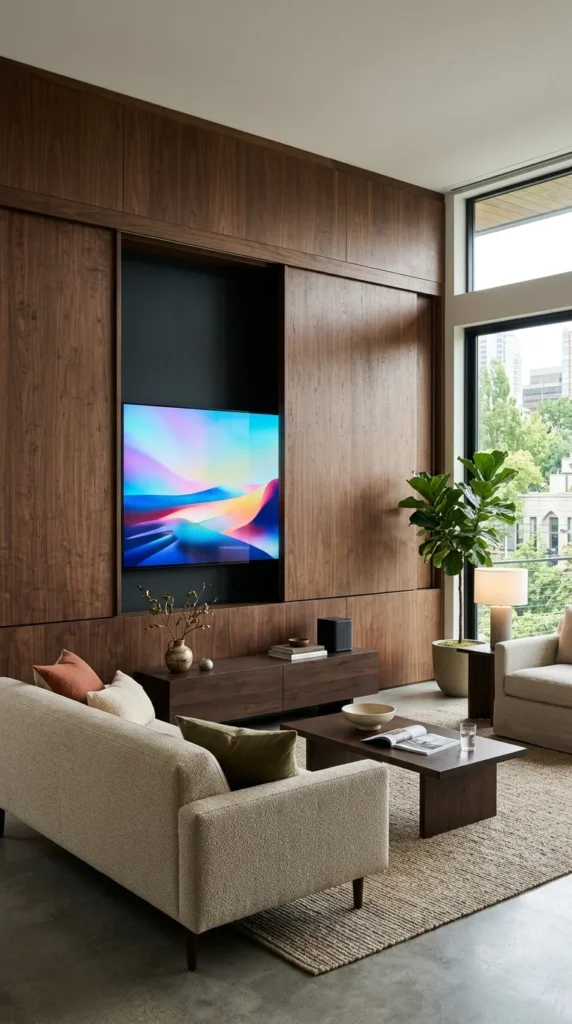
For those who don’t want the television to be the center of attention 24/7, hidden cabinetry is the ultimate solution. This design utilizes sliding doors, bifold panels, or even motorized “flip-up” mechanisms to conceal the screen when it’s not in use. It allows the living room to function as a formal conversation space without the distraction of a screen.
7. Framed Art
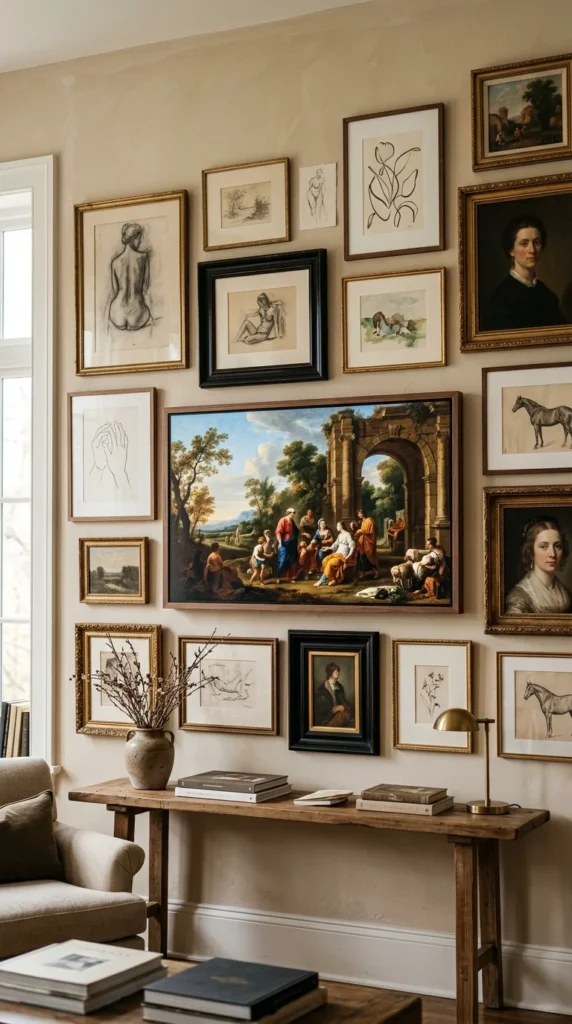
Modern “Art” televisions have revolutionized TV wall design. These screens feature matte finishes and ultra-thin frames that mimic actual picture frames. When paired with a gallery wall of real artwork, the TV disappears into the collection. It’s an ideal choice for traditional or transitional homes where a modern screen might otherwise clash with the decor.
8. Backlit Panels
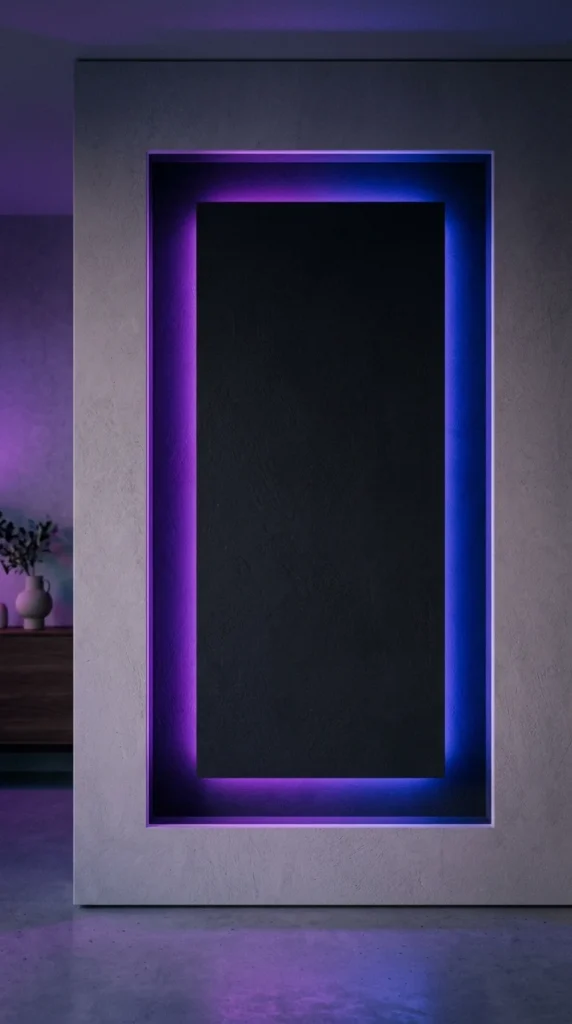
Lighting plays a crucial role in modern design. By installing LED strips behind a floating wall panel or the TV itself, you create a “halo” effect. This not only looks futuristic but also serves a functional purpose: “bias lighting” can reduce eye strain by providing a soft light source behind the screen in a dark room.
9. Stone Veneer
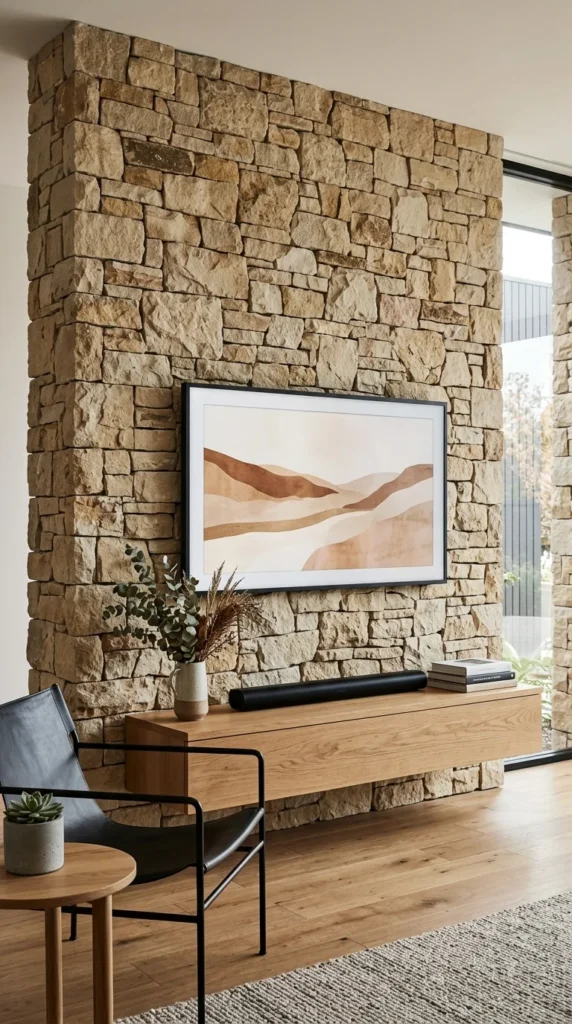
Stone veneer brings an earthy, grounded feel to a living room. Whether it’s stacked slate, fieldstone, or ledger stone, the three-dimensional texture creates a dramatic backdrop. To make this look work, ensure you have overhead spotlights (wash lighting) to highlight the crags and shadows of the stone.
10. Minimalist White
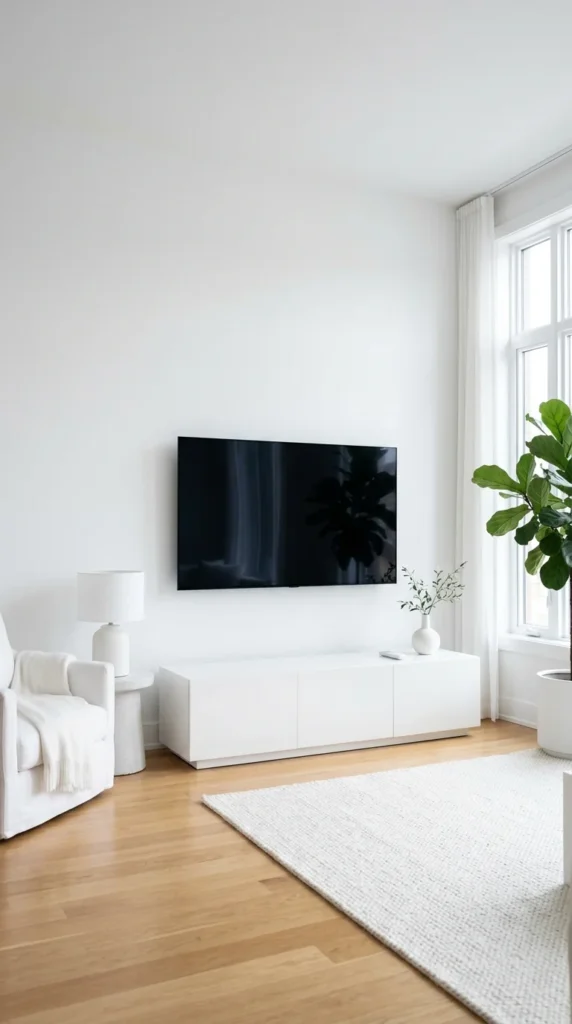
The “invisible” look is achieved through a monochromatic palette. By mounting a black TV on a stark white wall with a white console, you emphasize the geometry of the space. This design relies heavily on “cable management”—hiding all wires behind the wall to maintain a pristine, clutter-free environment.
11. Dark Charcoal
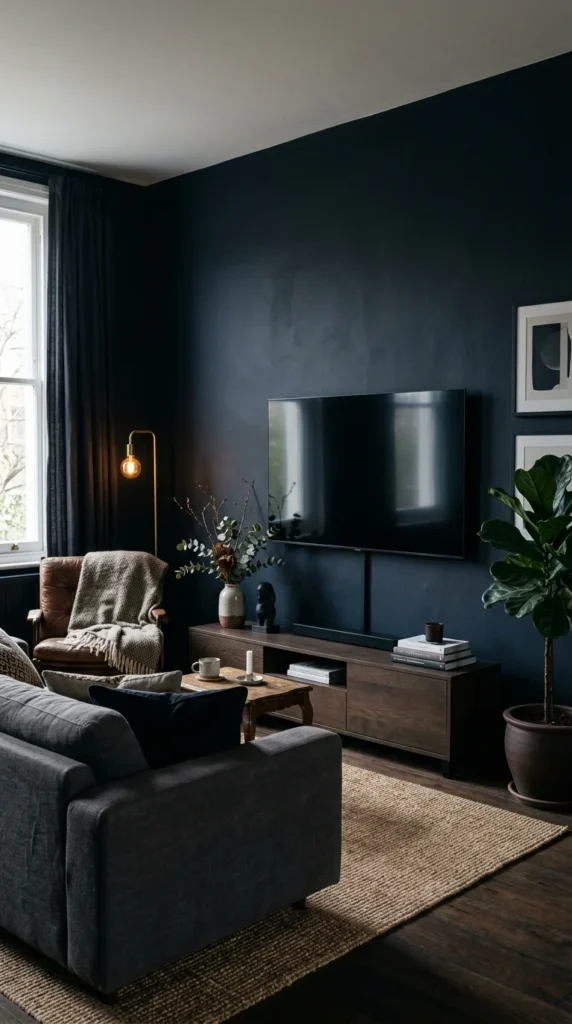
Painting the TV wall a dark, moody color like charcoal, navy, or forest green is a clever design trick. When the TV is off, the black screen blends into the dark paint, making the room feel more cohesive. When the TV is on, the dark background makes the colors on the screen pop with incredible vibrancy.
12. Vertical Garden
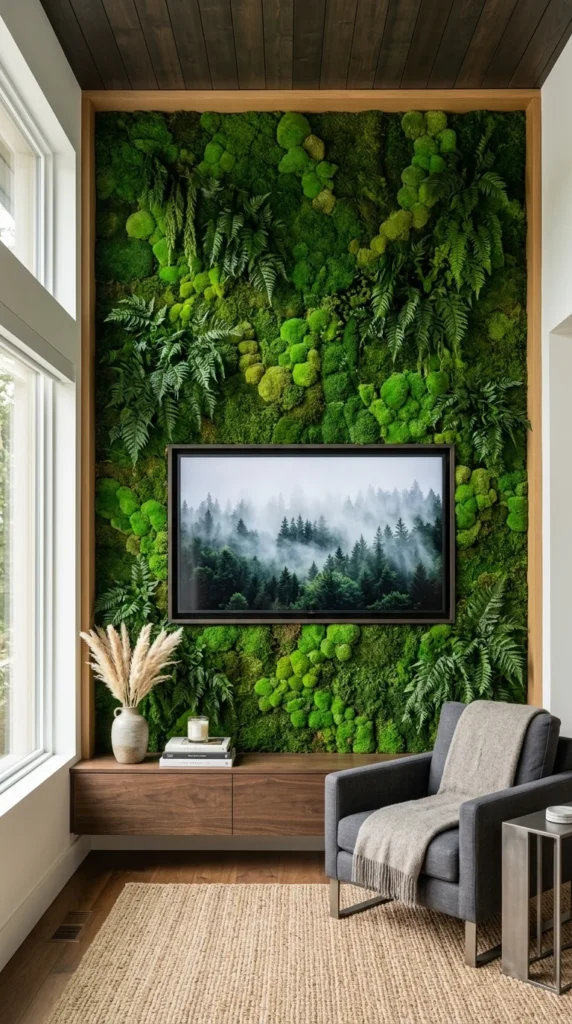
Bringing the outdoors in is a major trend in “Biophilic” design. A vertical garden—using either live plants with an irrigation system or preserved moss—creates a stunning, oxygen-rich environment. The contrast between the organic, soft green leaves and the sharp, digital screen is a unique way to soften a modern home.
13. Mirrored Surfaces
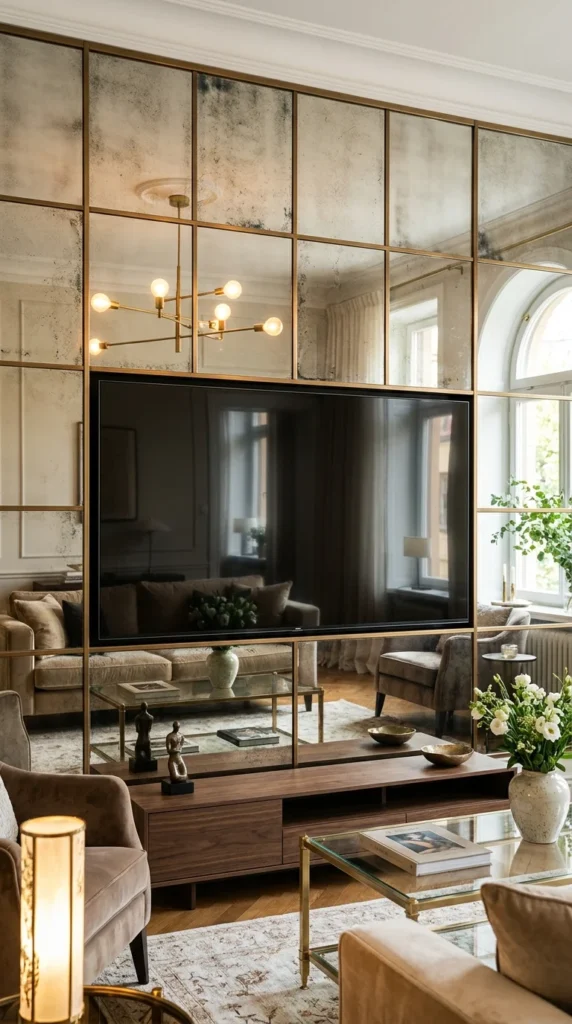
Mirrors are a classic designer’s tool for making a room feel larger and brighter. Using mirrored panels behind a TV adds a layer of glamour and sophistication. Antiqued or smoked mirrors are often preferred over clear mirrors, as they provide a more subtle reflection that isn’t distracting while watching a show.
14. Industrial Brick
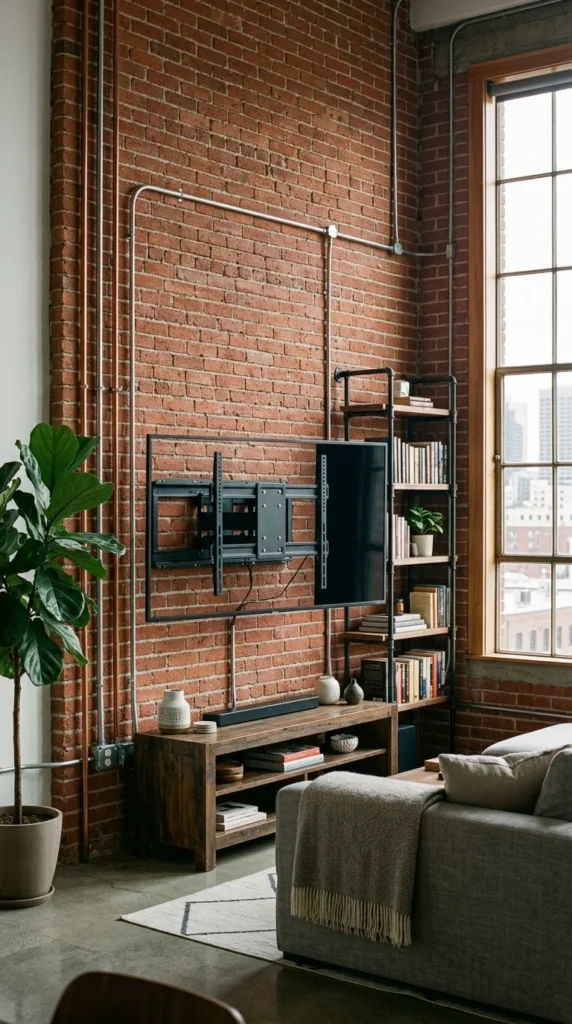
The exposed brick wall is a staple of urban loft living. It provides a sense of history and “soul” to a room. To modernize this look, keep the surrounding furniture sleek and use black metal accents to tie in the TV’s frame with the industrial vibe of the brickwork.
15. Geometric Panels
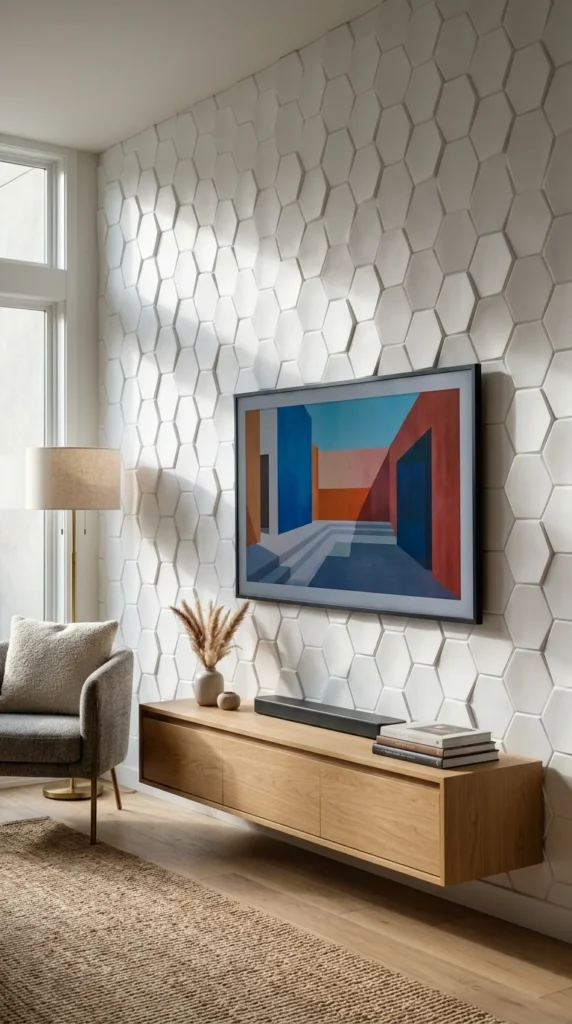
3D wall panels are an affordable and high-impact way to create a modern TV wall. Available in patterns ranging from waves to geometric honeycombs, these panels add a futuristic architectural element. When combined with smart lighting, the shadows created by the 3D shapes can be changed to suit the mood of the evening.
16. Recessed Niche
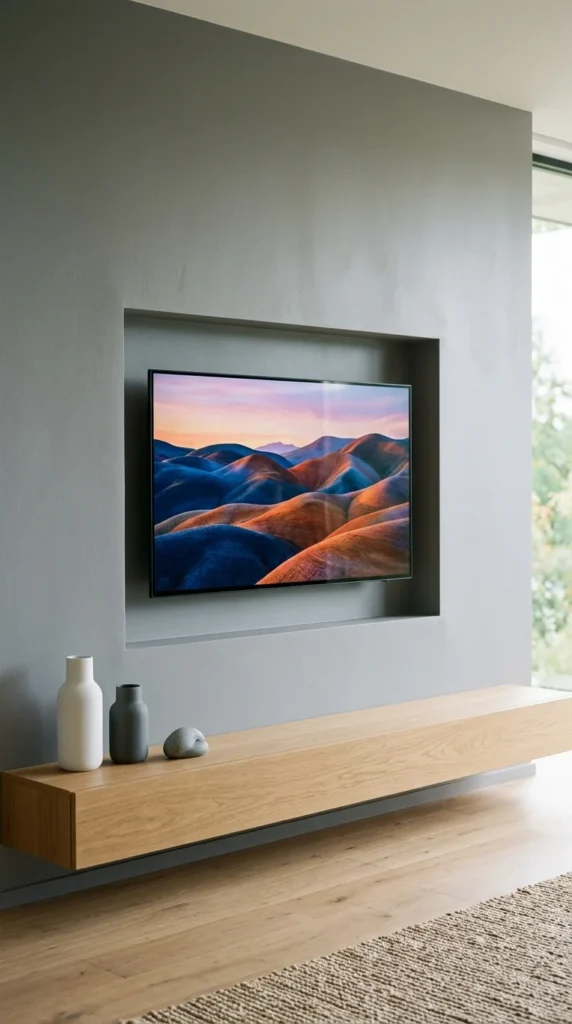
A recessed niche is the ultimate clean look. By building a faux wall or “bump-out,” you can create a pocket specifically for the TV. This allows the screen to sit perfectly flush with the wall surface, mimicking a built-in monitor. It’s a favorite among high-end interior designers for its streamlined appearance.
17. Slatted Sliding Doors
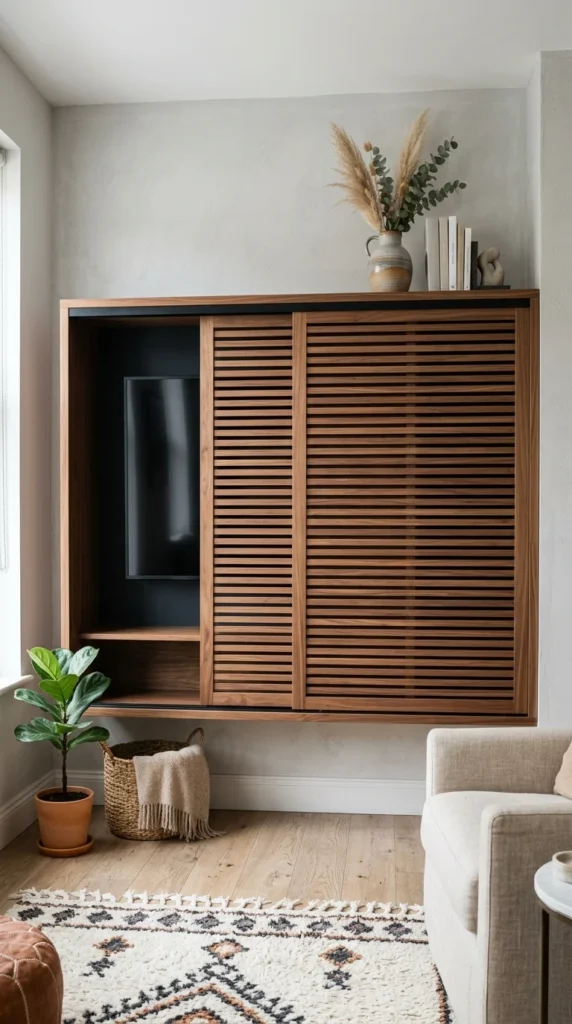
A variation of the wood slat design, this version uses the slats as a functional screen. The gaps between the slats allow remote control signals (IR) to pass through, meaning you can hide your cable boxes and game consoles inside the cabinet while still being able to operate them.
18. Terrazzo Accents
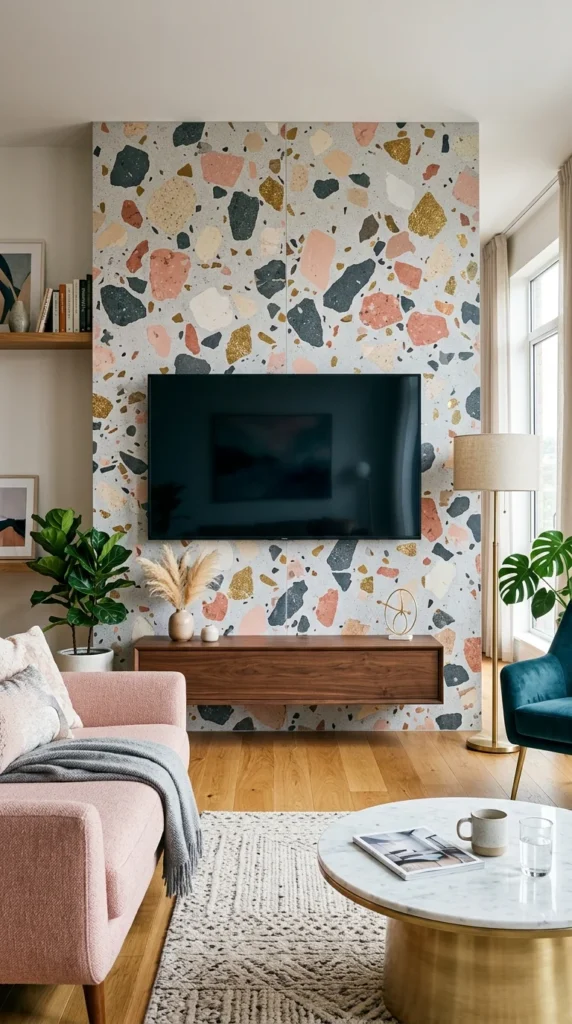
Terrazzo is making a massive comeback. While traditionally used for flooring, it is now being applied to feature walls. The speckled, playful nature of terrazzo adds color and personality without the overwhelming busyness of a traditional wallpaper pattern.
19. Floor-to-Ceiling Wood
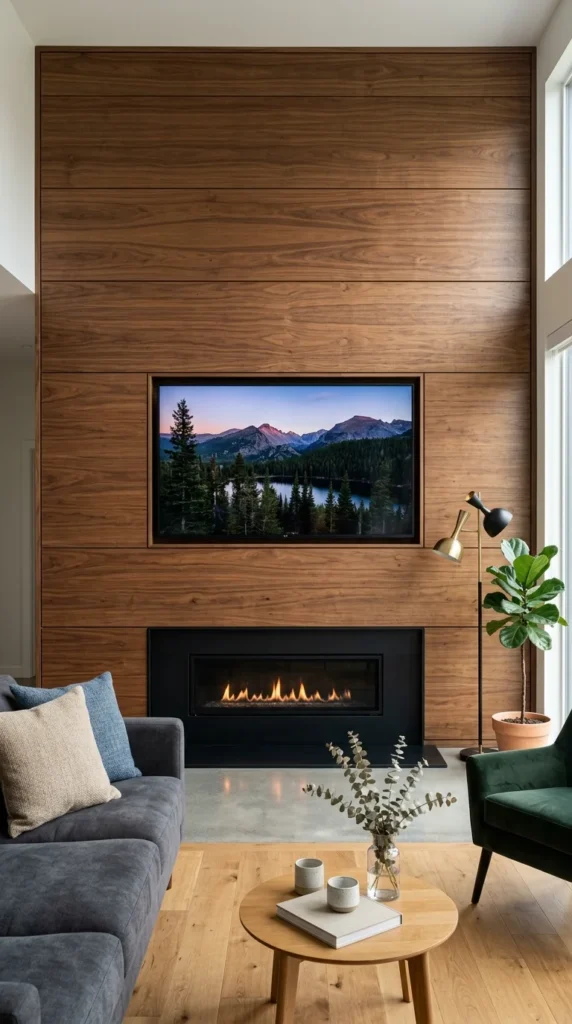
Using wood panels that stretch from the floor all the way to the ceiling creates a “wrapped” feeling in a room. This design often incorporates hidden “jib” doors that lead to other rooms or closets, allowing the TV wall to double as a secret entryway. It is warm, inviting, and architecturally significant.
20. Metallic Accents
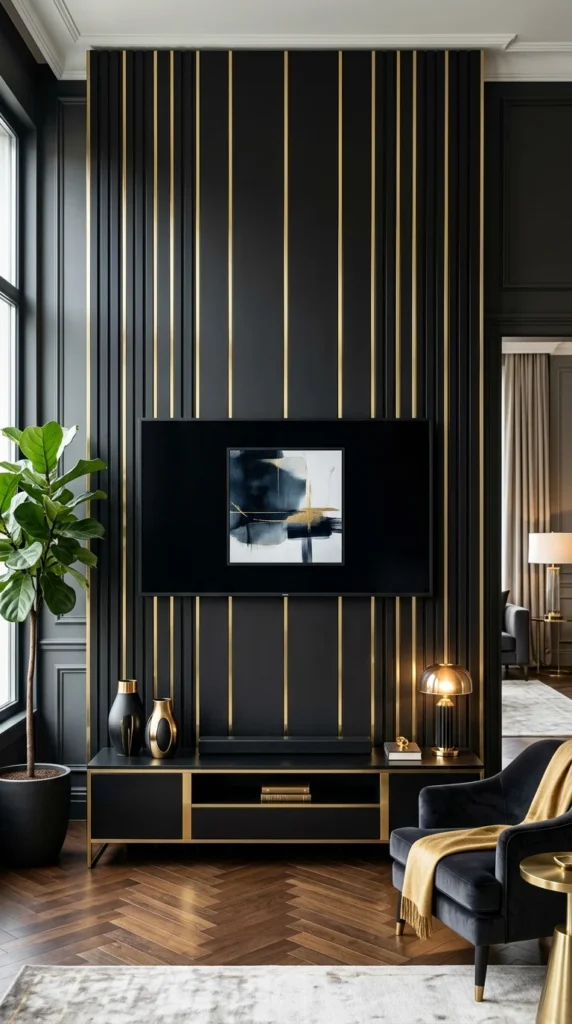
Metal inlays add a touch of “jewelry” to your walls. Whether you use brass, copper, or stainless steel, these thin strips can be arranged in linear or geometric patterns to break up a solid-colored wall. They provide a reflective quality that changes throughout the day as the sunlight moves through the room.
21. Velvet Padding
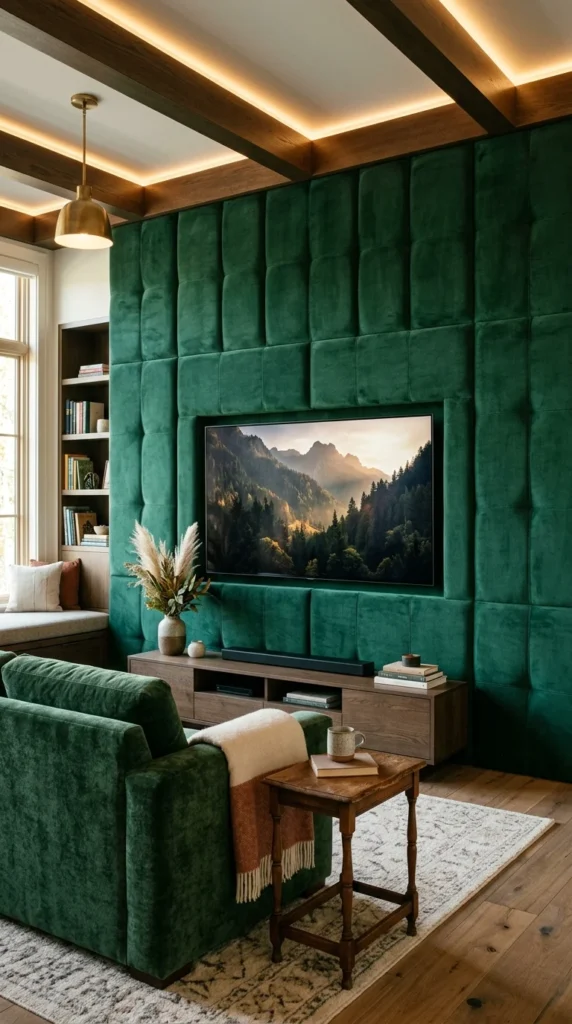
For the ultimate home cinema experience, upholstered wall panels are both luxurious and functional. The fabric absorbs sound, preventing echoes and making the audio from your TV sound crisper. Velvet, in particular, adds a rich, tactile quality that makes the living room feel incredibly cozy.
22. Glass Partitions
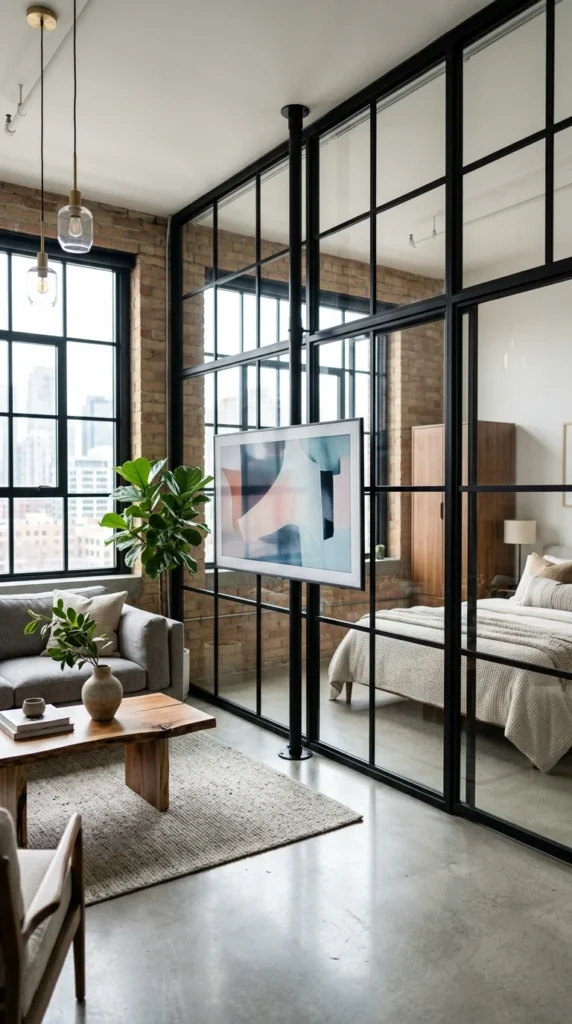
In modern open-plan homes, sometimes the TV wall isn’t a solid wall at all. Mounting a TV on a glass partition or a rotating pole allows you to define a space without blocking light. Some designs even allow the TV to rotate 180 degrees so you can watch it from the living room or the kitchen.
23. Asymmetrical Shelving
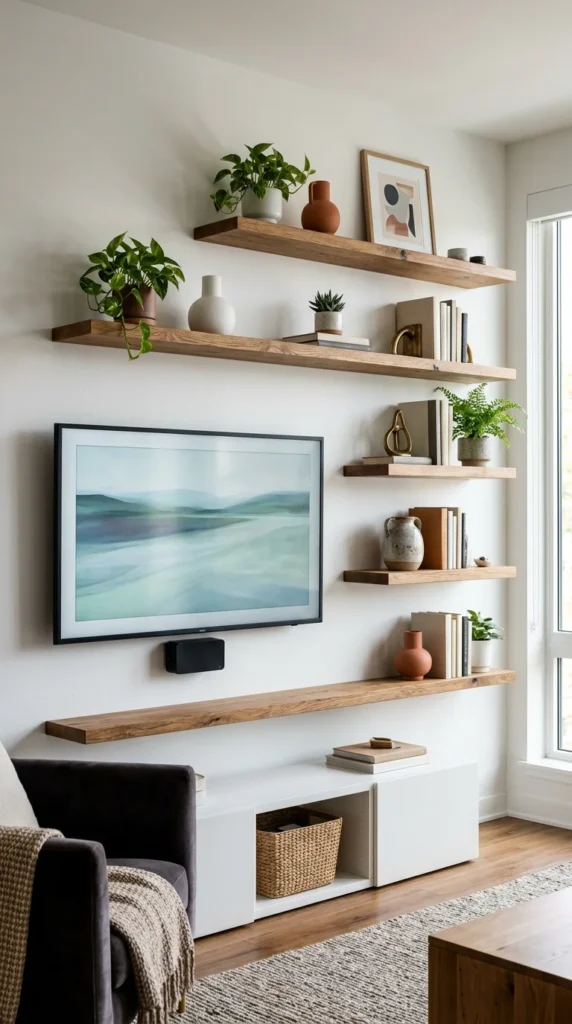
Perfect for the “organized chaos” lover, asymmetrical shelving breaks the rules of traditional symmetry. By placing the TV off-center or surrounding it with shelves of different heights and lengths, you create a dynamic visual energy. It’s a great way to display a rotating collection of art and books.
24. Textured Wallpaper
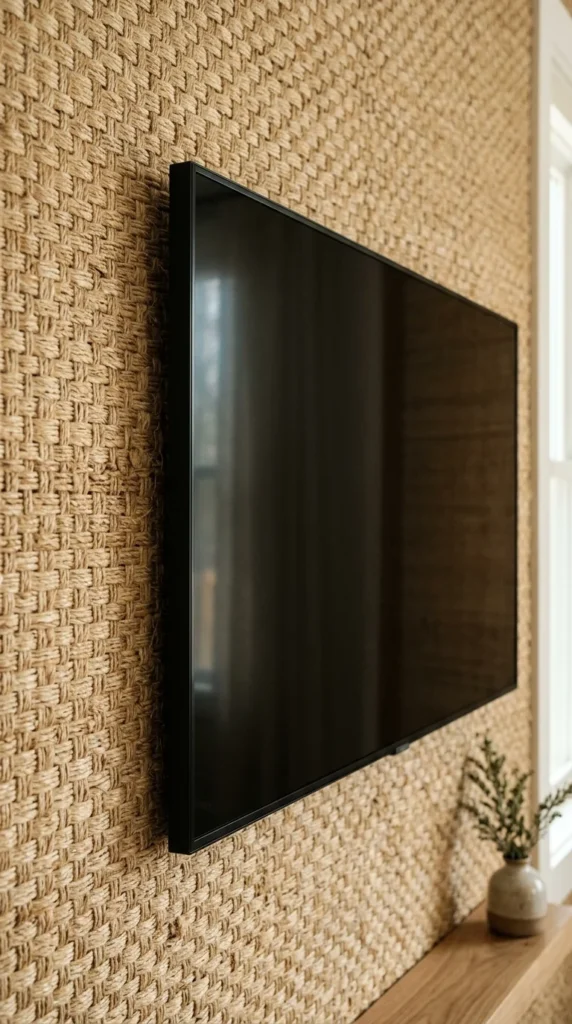
If you want to add texture without the construction work of stone or wood, textured wallpaper is the answer. From grasscloth and linen-look to embossed vinyl that mimics leather or silk, wallpaper can add a layer of sophistication to a TV wall in just a few hours.
25. Double-Sided Unit
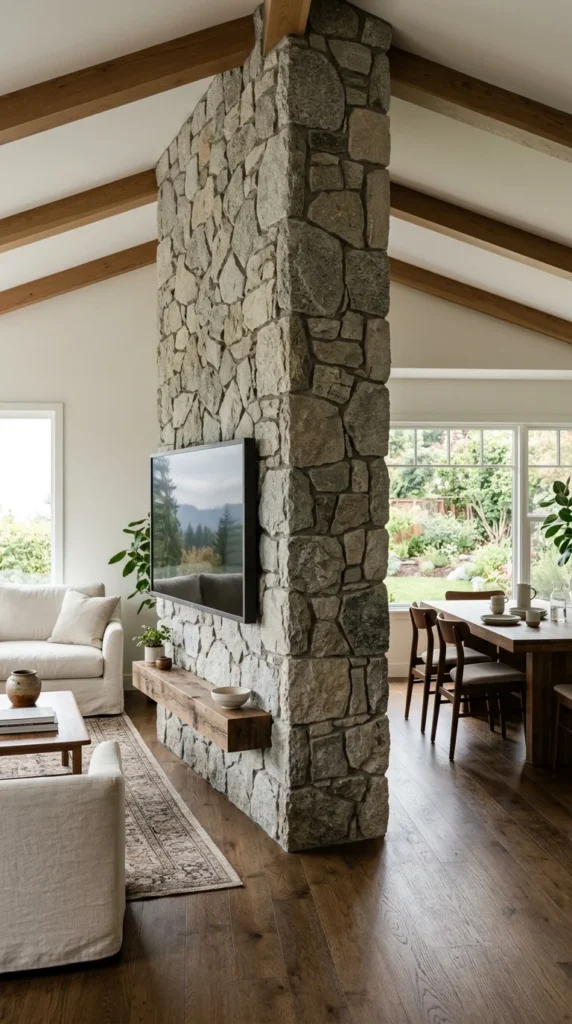
A double-sided TV unit serves as a functional room divider. In large, open spaces, a central “island” wall can house the TV on one side and a fireplace, art, or shelving on the other. This helps to zone the home into distinct areas while maintaining the open, airy flow of the architecture.