
Creating a functional workspace in a small home requires a blend of creativity, strategic furniture selection, and a keen eye for underutilized corners. Whether you are living in a studio apartment or a compact house, you don’t need a dedicated room to have a professional and inspiring office. The following fifteen ideas demonstrate how to maximize every square inch of your living space to build a productive haven.
1. Closet Office
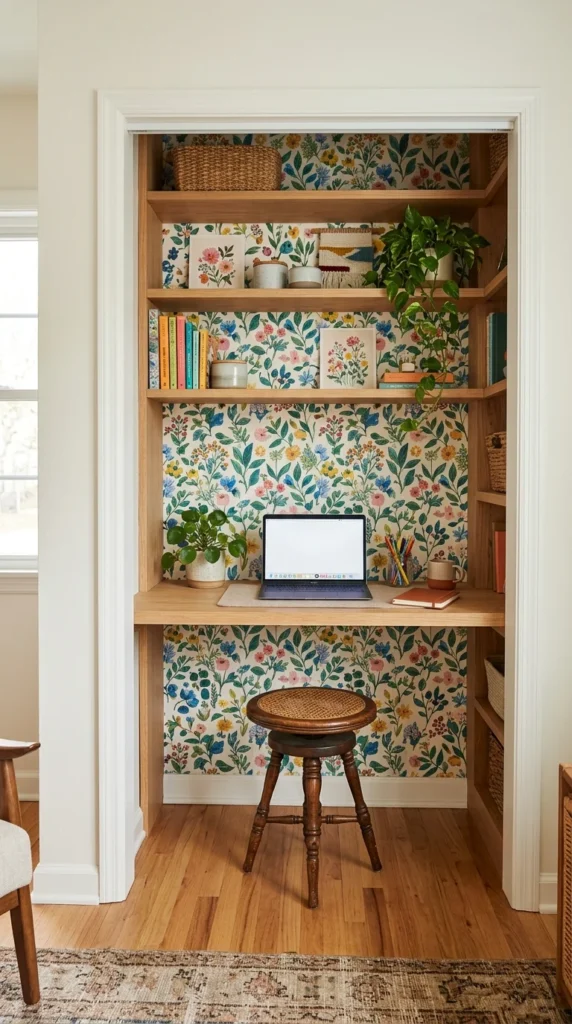
The “cloffice” (closet-office) is one of the most popular solutions for small-space living. By removing the doors of a standard reach-in closet, you create a recessed architectural niche that feels like a separate room. To make this work, install a sturdy desktop that spans the width of the closet. Utilize the vertical space above for floating shelves to store books and office supplies. Adding a bold wallpaper or a pop of paint to the back wall can help define the area and give it a distinct personality from the rest of the room.
2. Floating Desk
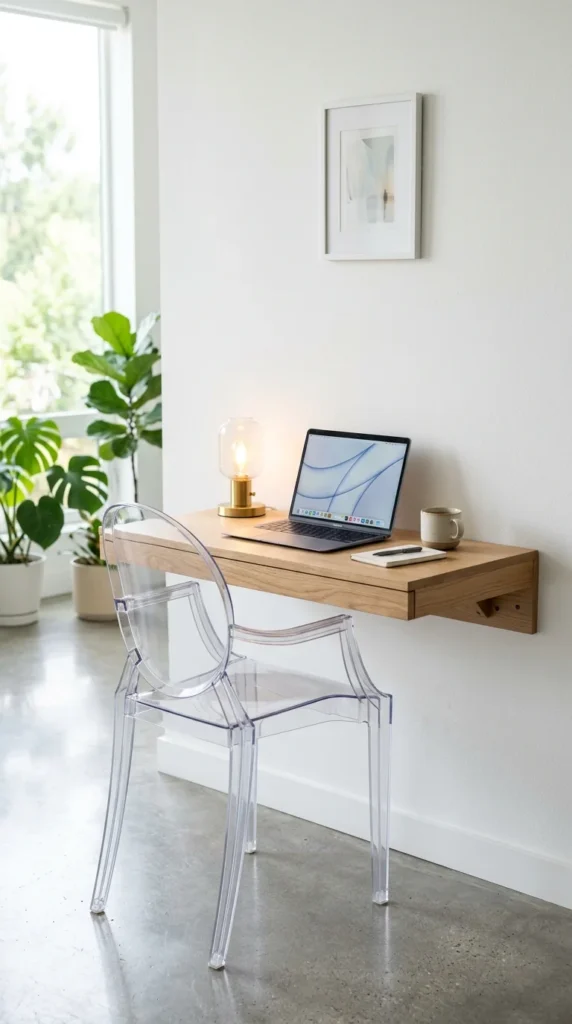
When floor space is at a premium, look to the walls. A floating desk eliminates the need for legs, which keeps the floor visible and makes the room appear larger. This is an excellent choice for narrow hallways or the side of a bedroom. Pair it with a transparent “ghost chair” to further reduce visual clutter. The lack of bulky furniture legs makes it easier to vacuum and provides a clean, modern aesthetic that fits perfectly into minimalist decor.
3. Under-Stair Nook
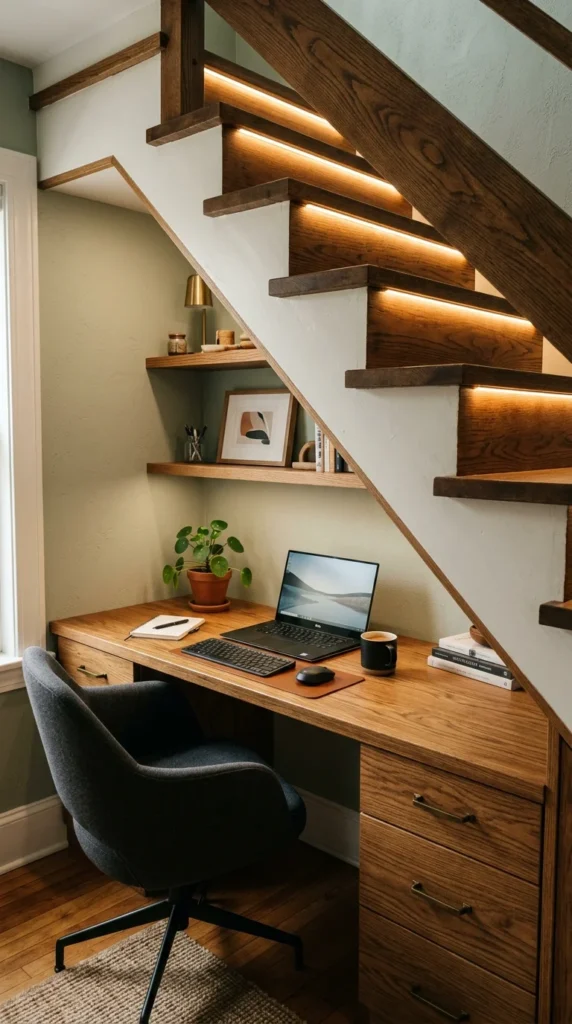
The space beneath a staircase is often wasted or used for cluttered storage. However, with a little custom carpentry, it can be transformed into a cozy and efficient office. Because the ceiling height varies in this area, it is best to place the desk at the highest point and use the lower, tapering end for storage cabinets or a printer stand. Proper lighting is crucial here, as these nooks can be dark; consider recessed puck lights or a slim desk lamp.
4. Fold-Down Desk
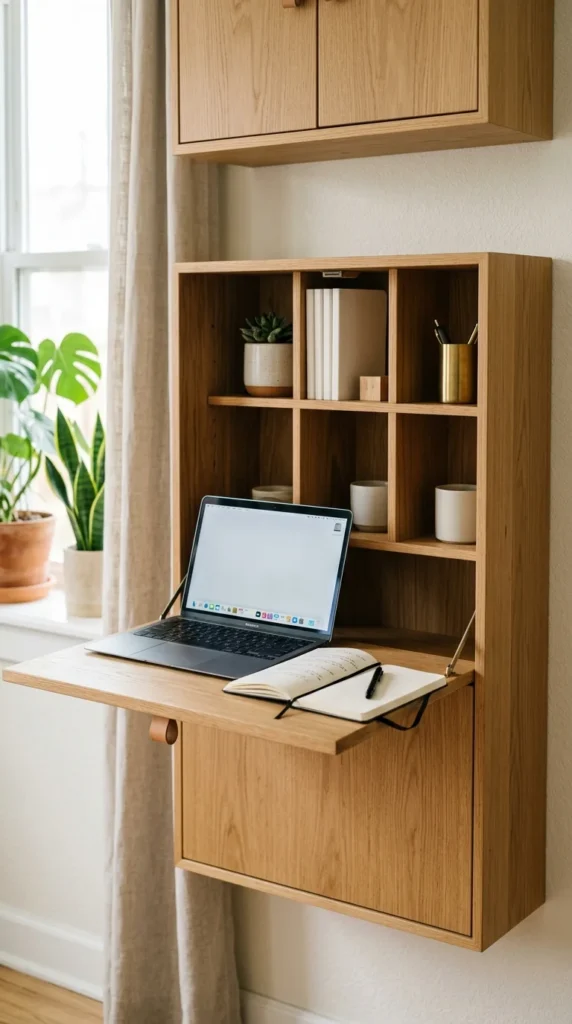
Also known as a Murphy desk, this solution is the ultimate space-saver. When you are finished with your workday, the desk surface folds up against the wall, looking like a simple cabinet or even a piece of art. This is ideal for multi-functional rooms, such as a living room or a bedroom, where you don’t want a permanent reminder of work during your off-hours. Many fold-down desks also include small interior cubbies for pens, chargers, and stationery.
5. Corner Station
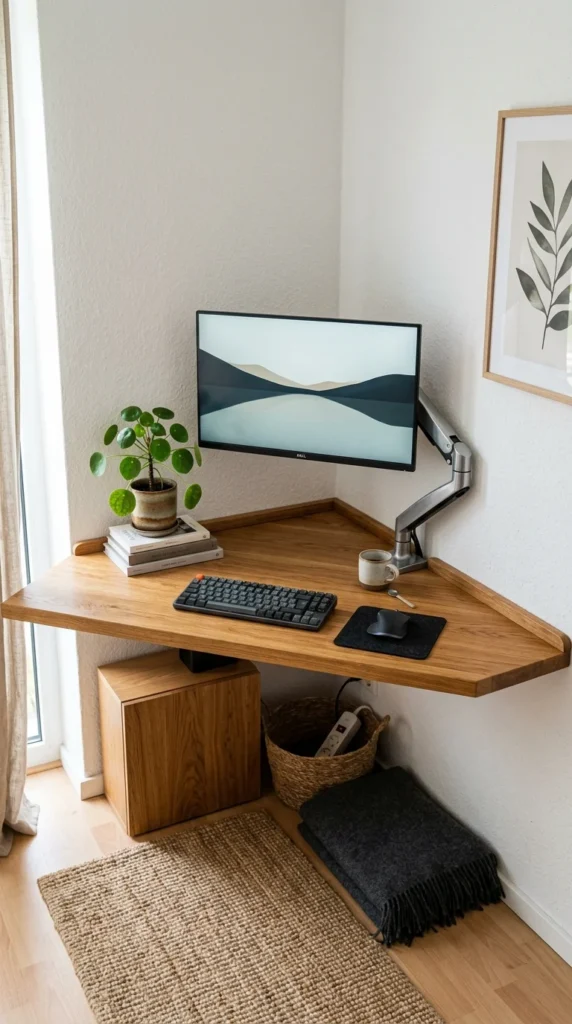
Corners are frequently overlooked, but a triangular or L-shaped desk can turn an awkward angle into a command center. A corner desk provides a surprising amount of surface area while taking up very little “useful” space in the center of the room. By facing the corner, you also reduce peripheral distractions, which can help increase focus during deep work sessions. Use wall-mounted organizers on both sides of the corner to keep the desktop clear.
6. Room Divider Office
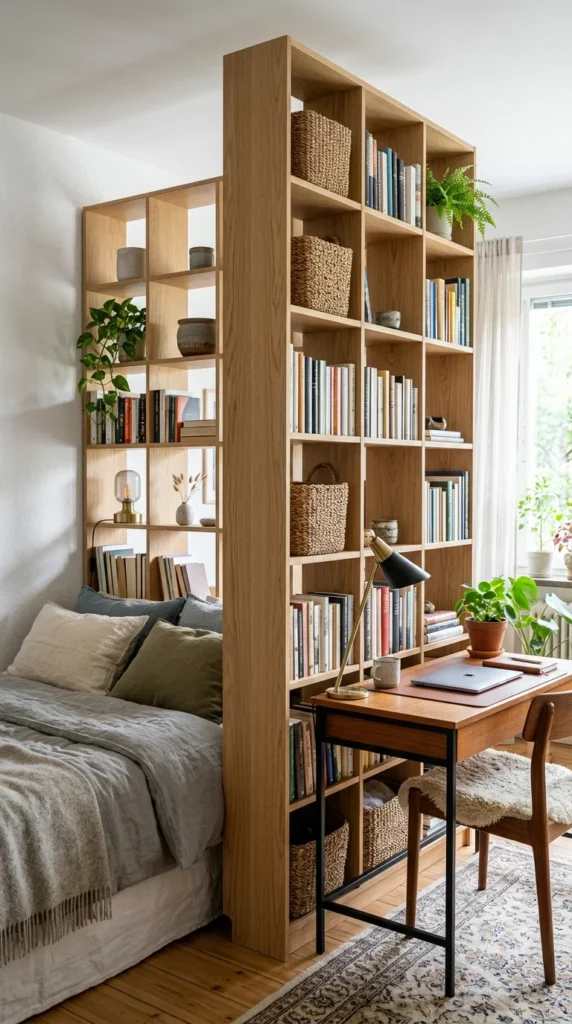
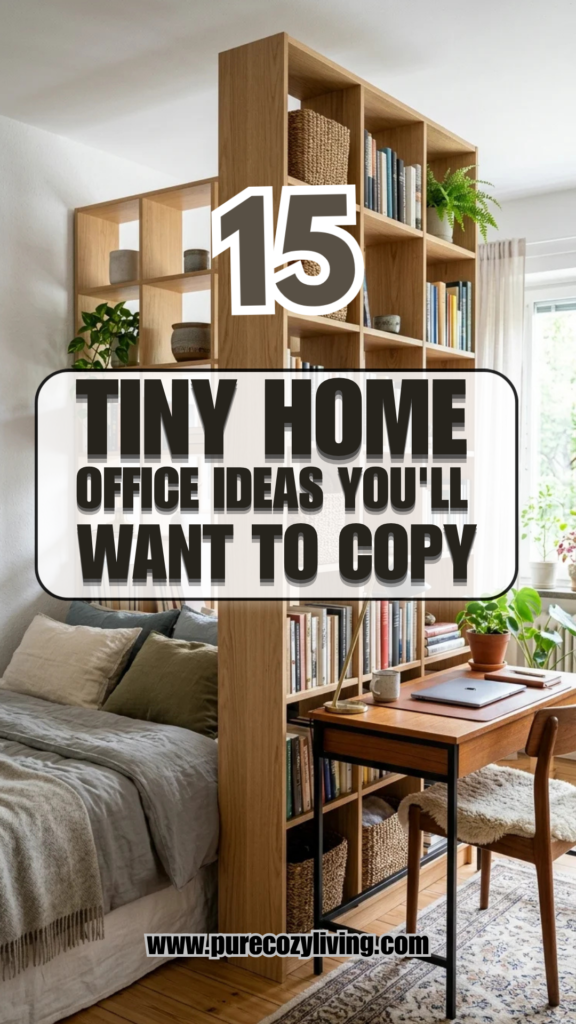
In an open-concept studio, creating a “zone” for work is essential for mental separation. Using a tall, open-backed bookshelf as a room divider allows you to carve out a workspace without blocking natural light. Place your desk against the back of the shelf or use one of the shelf levels as your desktop if it’s the right height. This setup provides ample storage for both office materials and home decor, serving two purposes simultaneously.
7. Window Sill Desk
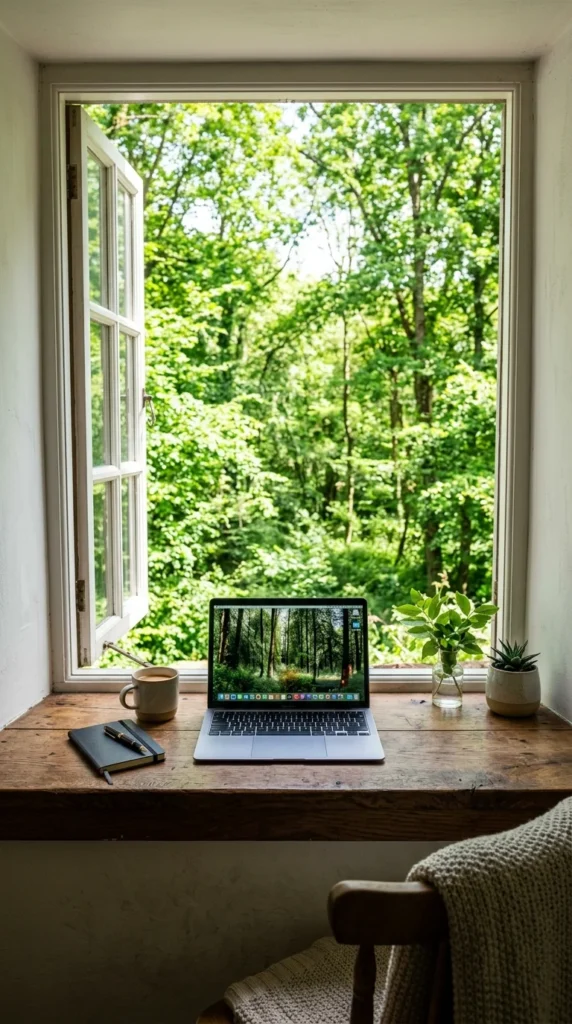
If you have deep window sills, you already have the foundation for a desk. If not, you can install a wide plank of wood directly over a radiator or just below a window frame. Working with a view and plenty of natural light is proven to boost mood and productivity. Ensure you have proper window treatments, like solar shades, to prevent glare on your computer screen during peak sunlight hours.
8. Ladder Desk
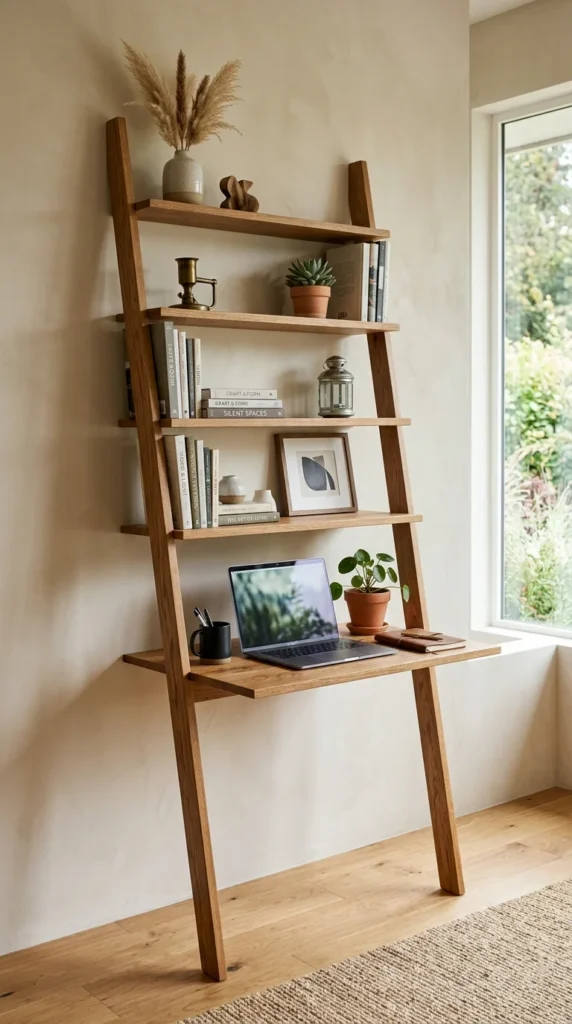
A ladder desk is a stylish, vertical solution that offers a small footprint. These units lean against the wall and typically feature a deeper shelf at waist height for your laptop, with several smaller shelves above for storage or display. Because they are lightweight and easy to move, they are perfect for renters. The open design prevents the piece of furniture from feeling heavy or overbearing in a small room.
9. Behind-the-Sofa Console
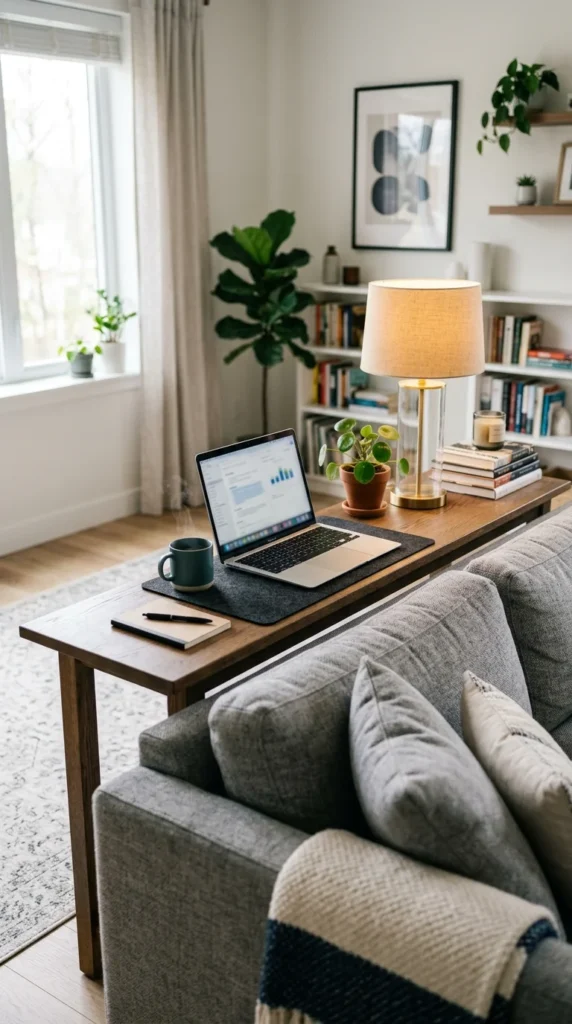
If your sofa is placed in the middle of a room rather than against a wall, the space behind it is prime real estate. A long, thin console table can serve as a stylish desk. This keeps your workspace integrated into the living area while maintaining a clear boundary. It’s a great way to watch TV or interact with family while finishing up light tasks, though it may require a dedicated chair that can be tucked completely underneath when not in use.
10. Multi-Functional Vanity
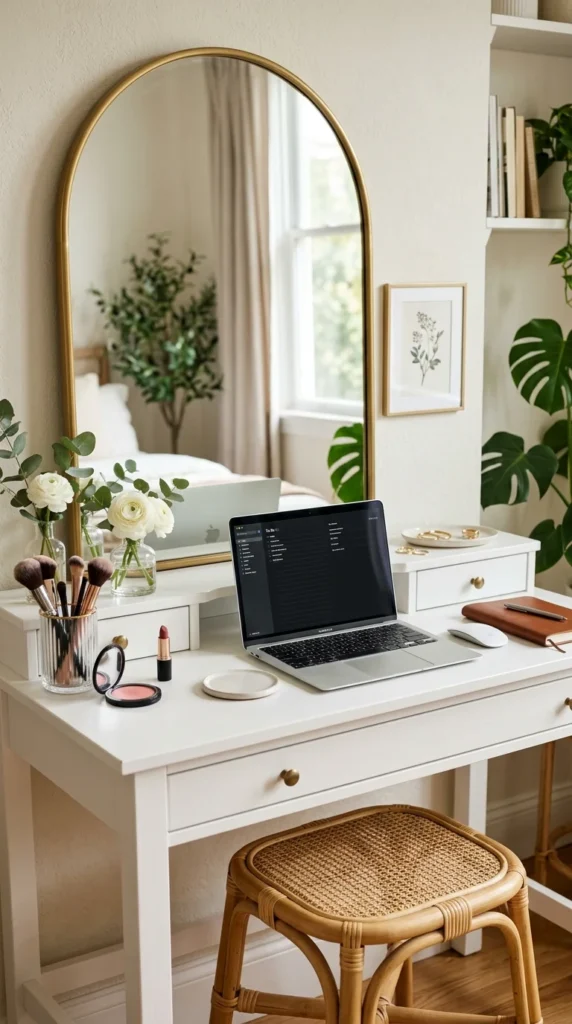
For those with limited space in the bedroom, a desk that doubles as a vanity is a smart move. Choose a desk with drawers to keep office supplies and cosmetics separate. A stylish mirror above the desk serves your morning routine, while the flat surface is perfect for a laptop during the day. This dual-purpose approach ensures that every piece of furniture in your home is earning its keep.
11. Rolling Cart Office
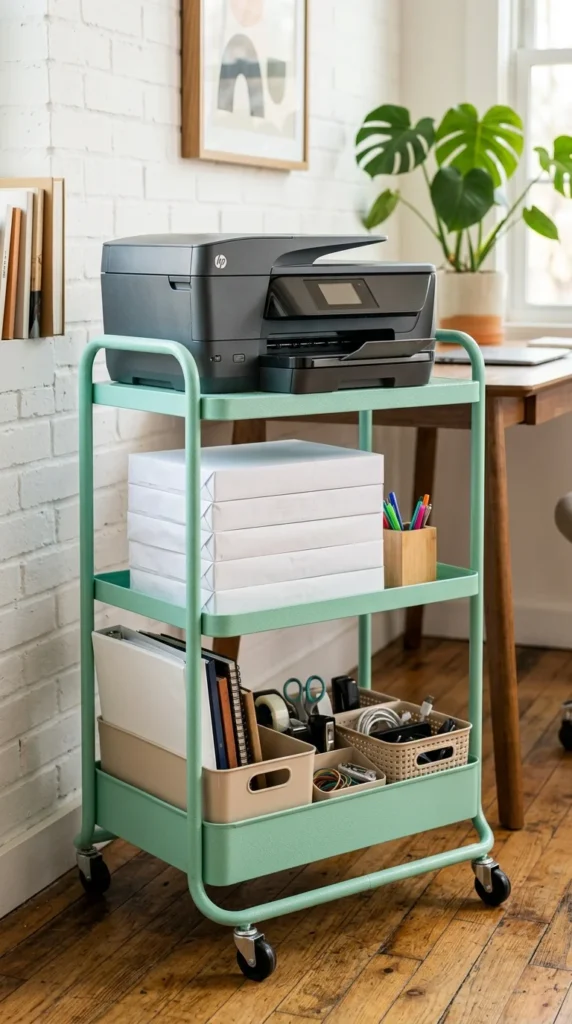
If you don’t have a permanent spot for a desk, a rolling “office on wheels” is a game-changer. Use a tiered utility cart to store your laptop, files, and peripherals. You can wheel it to the kitchen table or the sofa when it’s time to work, and tuck it away into a closet or corner when you’re done. This mobility is perfect for people who like to change their environment throughout the day to stay inspired.
12. Narrow Hallway Desk
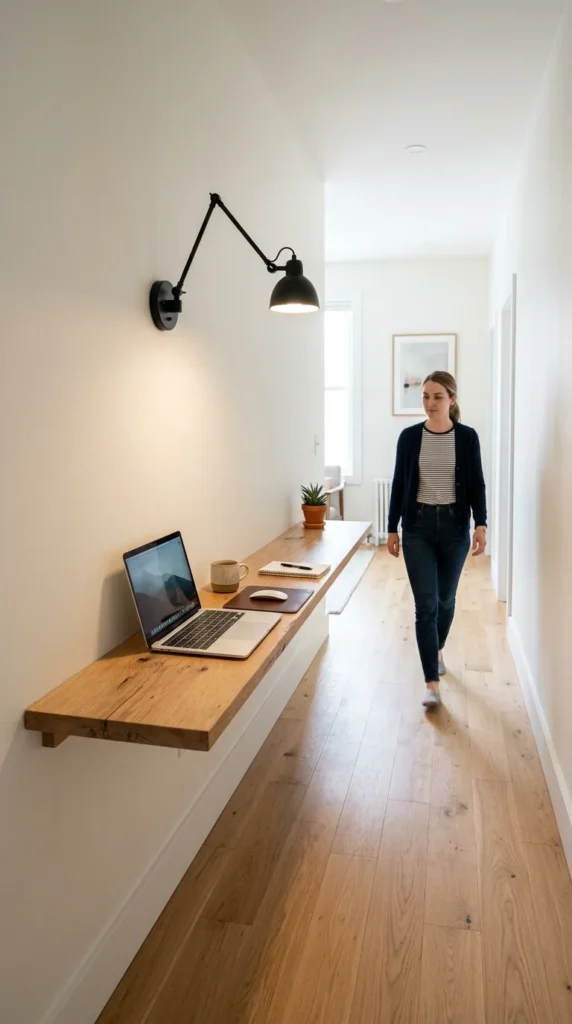
Hallways are often treated as transition spaces, but a wide corridor can easily accommodate a slim-profile desk. By choosing a desk with a depth of only 12 to 15 inches, you can create a functional work zone without obstructing the flow of traffic. Wall-mounted lighting is essential here to save surface space, and a stool that slides completely under the desk will keep the walkway clear.
13. Attic Nook
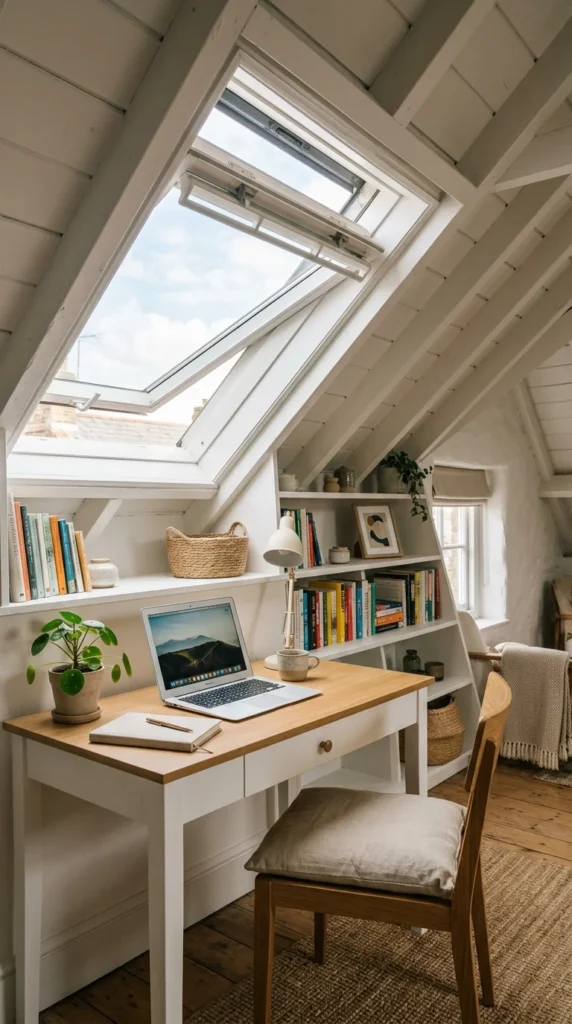
The slanted ceilings of an attic or loft space can be difficult to furnish with standard pieces, but they are ideal for a seated workspace. Placing a desk under the lowest part of the eave allows you to use space where you couldn’t otherwise stand. If your attic has a skylight, placing the desk directly beneath it provides excellent “task lighting” and a connection to the outdoors, making the small space feel airy.
14. Bedside Desk
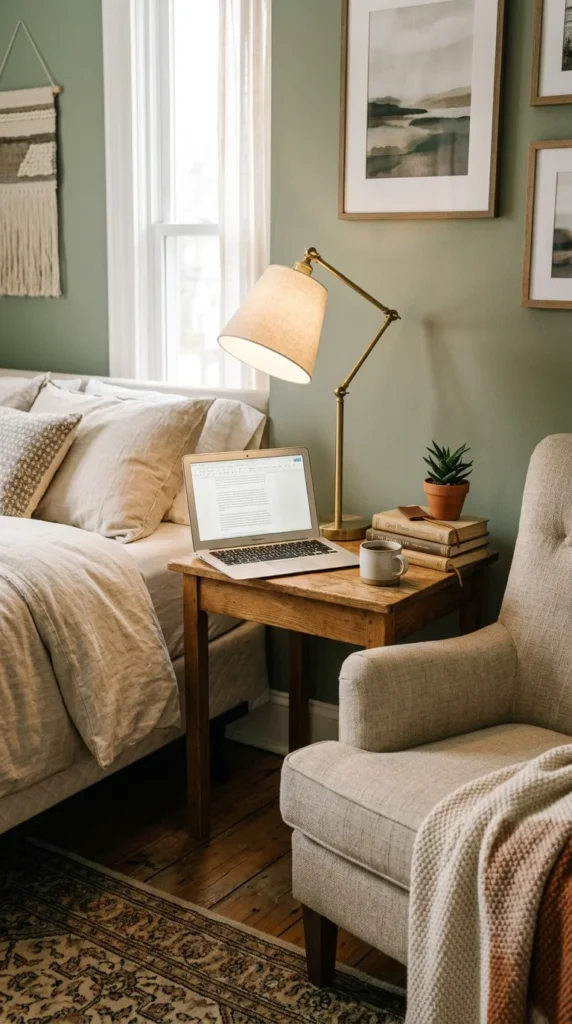
In many small bedrooms, there isn’t enough room for both a nightstand and a desk. The solution is to replace the nightstand with a small desk. This allows you to have a surface for your phone and water at night, and a dedicated workspace during the day. Look for a desk that is roughly the same height as your mattress to maintain a cohesive look, and use a chair that can double as an accent chair for the room.
15. Armoire Office
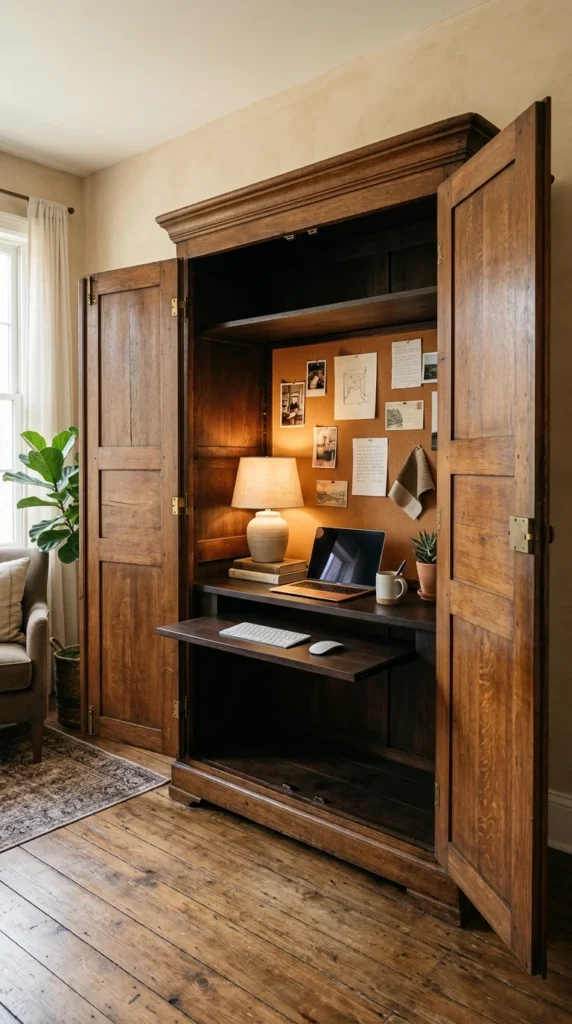
An armoire office, or “hidden desk,” is the ultimate way to maintain a work-life balance in a small home. This involves using a large cabinet or wardrobe to house your entire office setup. When the doors are open, you have a fully functional workspace; when they are closed, the “office” disappears completely, leaving you with a beautiful piece of furniture. This is particularly effective in traditional or eclectic interiors where modern office equipment might clash with the decor.