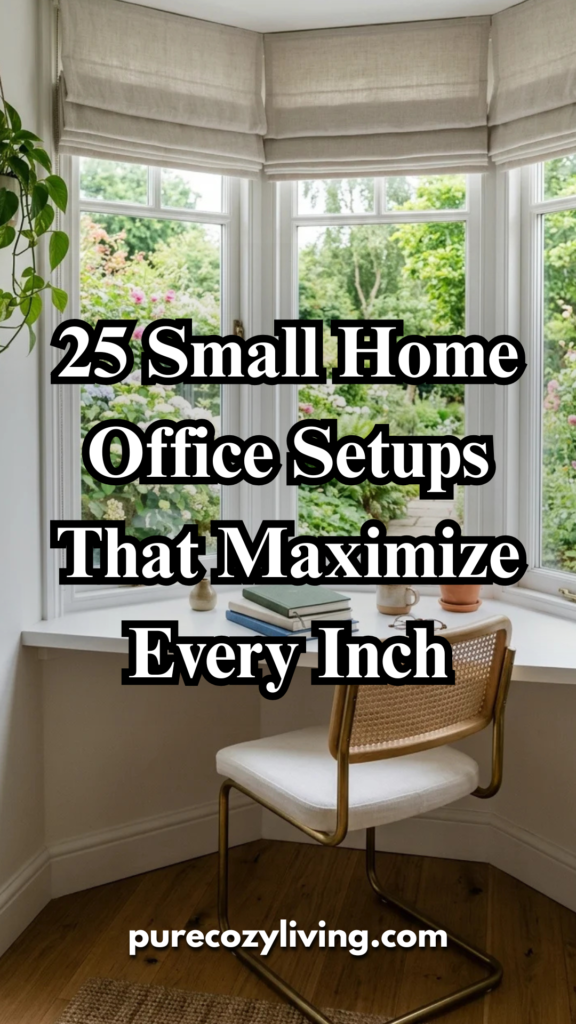

In an era where remote work has become the standard for many, the challenge of carving out a productive workspace in a limited environment is a common hurdle. You don’t need a spare room to create a functional and inspiring office; you simply need a strategic approach to the square footage you already have. Whether you are living in a studio apartment or a compact townhouse, these twenty-five setups demonstrate how to turn neglected corners and vertical spaces into professional hubs.
1. Closet Office
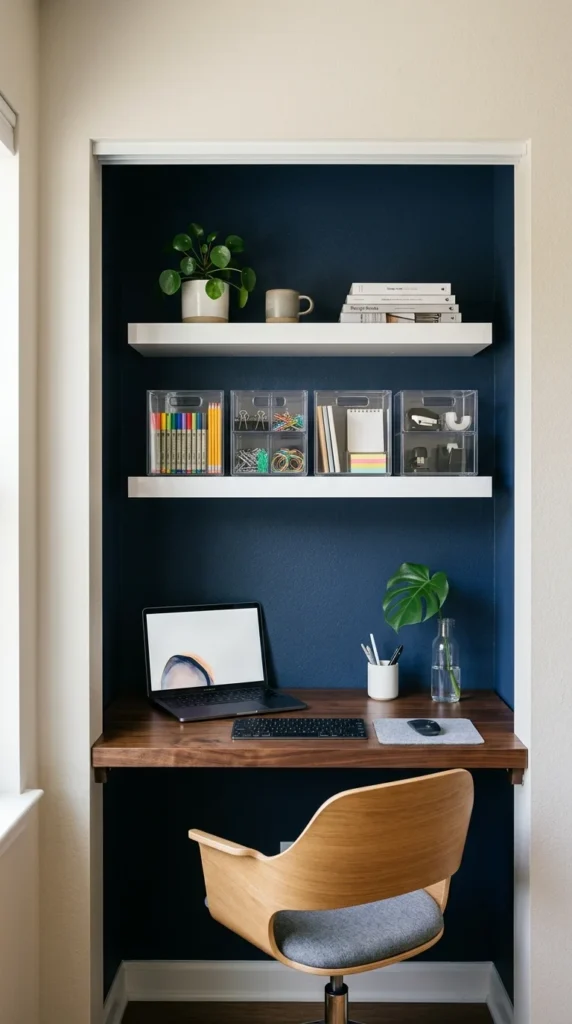
The “cloffice” is the ultimate space-saver. By removing the doors of a standard reach-in closet, you create a recessed alcove that doesn’t bleed into the main floor area of the room. This setup allows you to utilize the vertical height for shelving while keeping the desk surface deep enough for a monitor and keyboard. To make it feel like a destination rather than a storage unit, use wallpaper or a bold paint color on the interior walls.
2. Ladder Desk
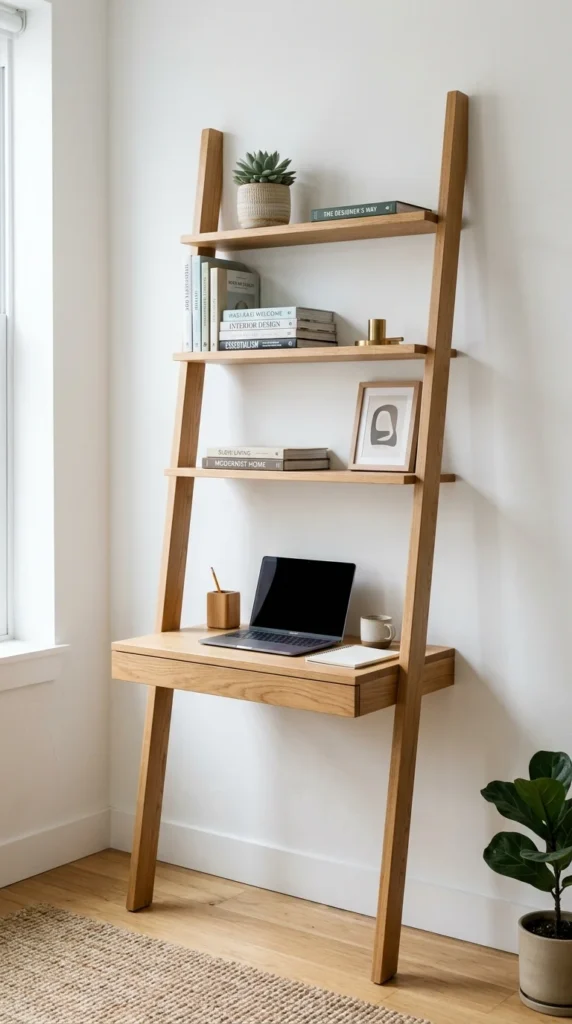
Ladder desks are ideal for narrow rooms because they have a small footprint and a visually light profile. They lean against the wall, using vertical space for storage without the bulk of a traditional bookcase. These are particularly effective in bedrooms or hallways where you need a workspace that blends seamlessly with residential decor.
3. Window Nook
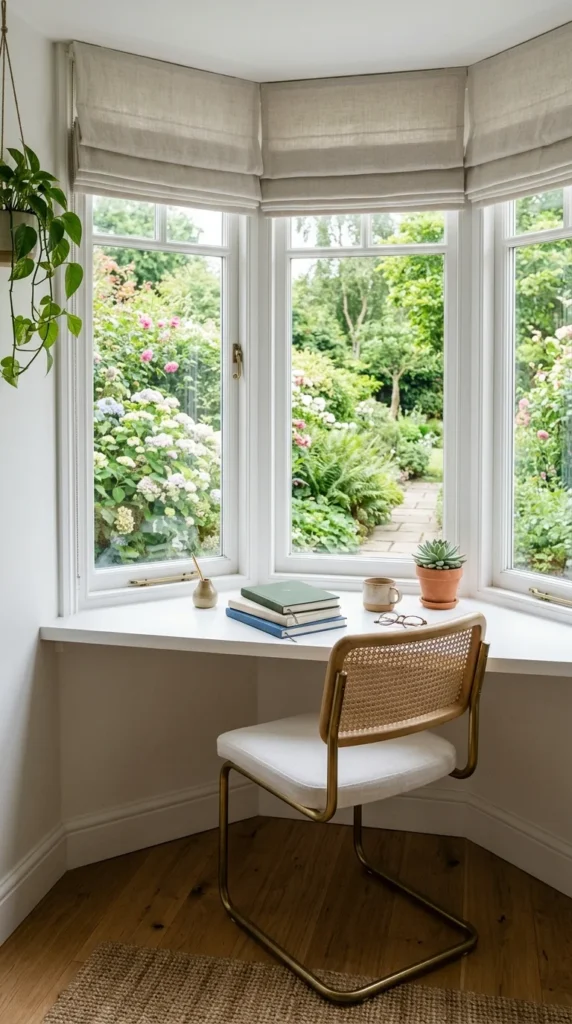
Placing your desk directly in front of a window provides the best source of light: natural sun. A window nook setup helps reduce eye strain and boosts mood by offering a view of the outside world. If your windows are low, a custom-cut piece of wood can serve as a “floating” sill that doubles as a workspace.
4. Floating Desk
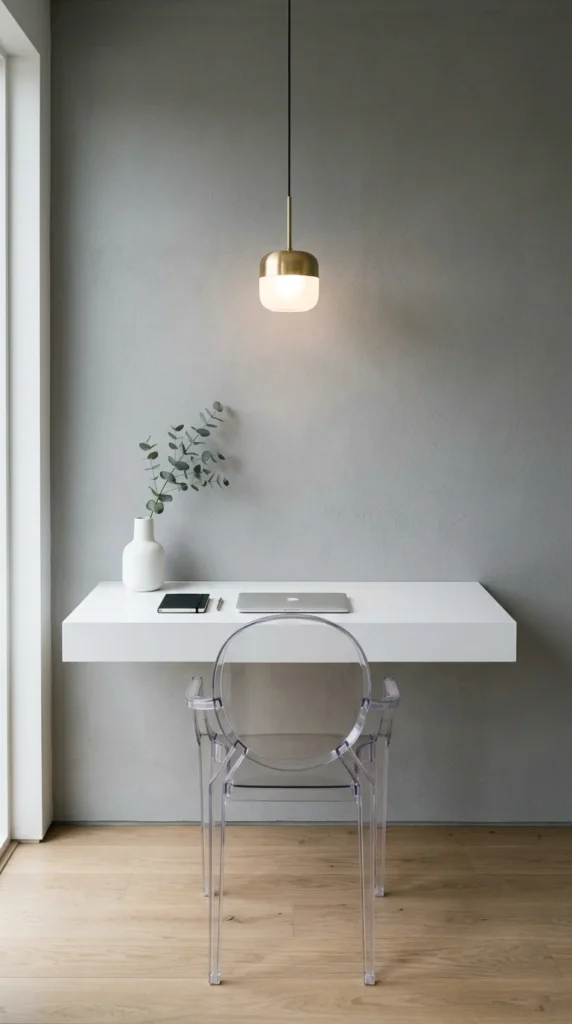
Floating desks are a godsend for tiny rooms. By eliminating desk legs, you open up the floor space underneath, which makes the room feel larger and less cluttered. This also provides extra space for a small rolling filing cabinet or a wastebasket that can be tucked away when not in use.
5. Corner Station
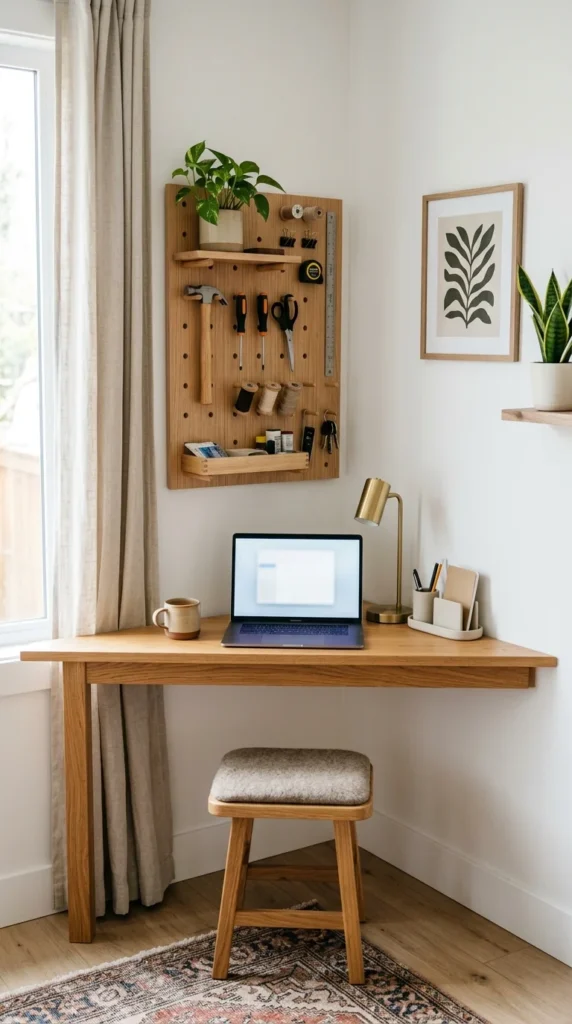
Corners are often wasted space. A dedicated corner desk maximizes the intersection of two walls, providing a surprisingly large amount of surface area for a computer and peripherals. It also creates a “cockpit” feel that helps with focus, as you are physically enclosed by your workspace.
6. Under-Stairs Alcove
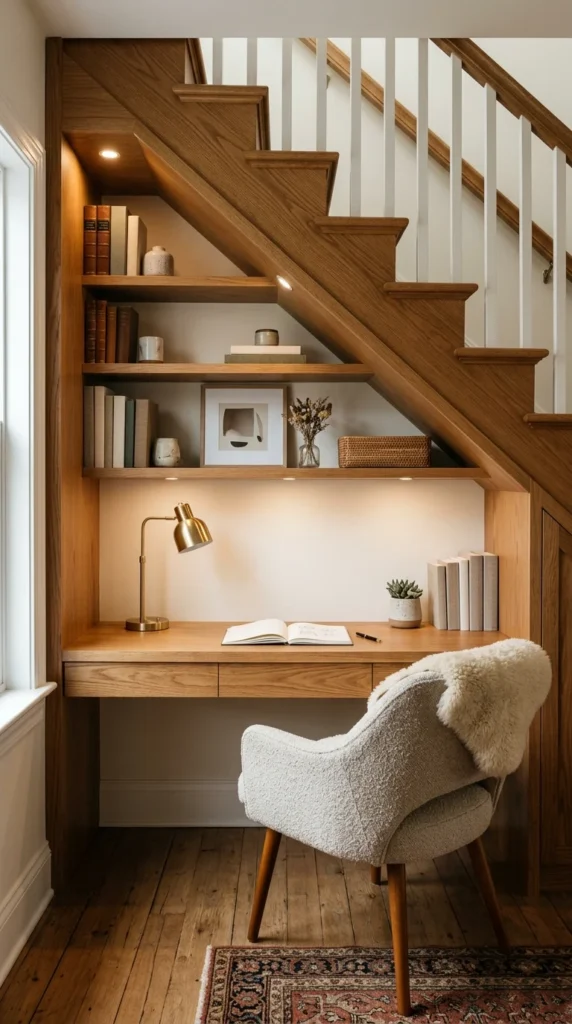
The awkward space under a staircase is frequently ignored. By installing a custom-built desk or a simple table into this slope, you can create a private office that feels tucked away from the rest of the house. This is a perfect example of “found” space that doesn’t take away from the home’s primary living areas.
7. Fold-Down Desk
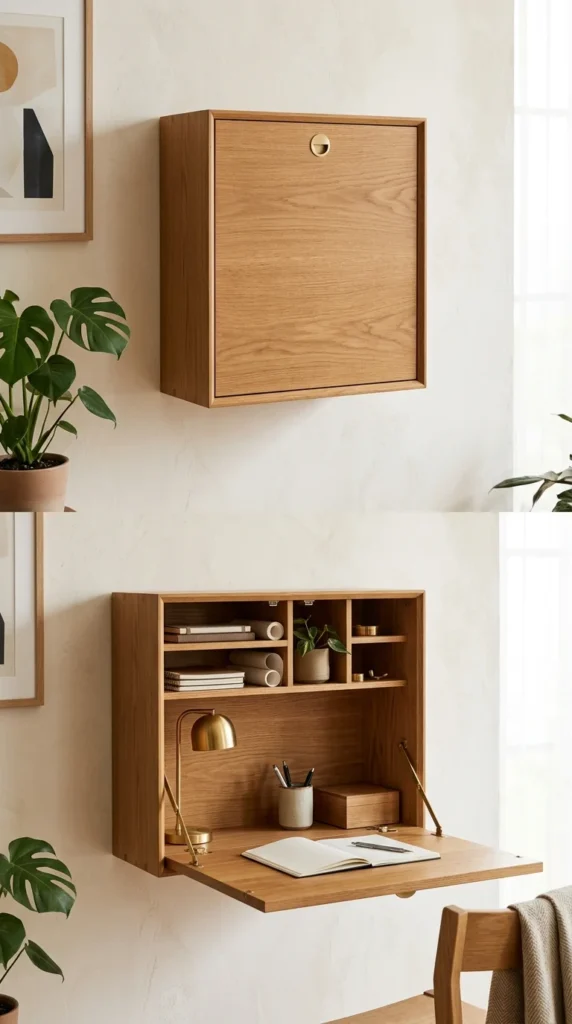
For those who need their office to disappear at the end of the day, a fold-down (or “murphy”) desk is the solution. Mounted to the wall, it looks like a simple cabinet or mirror when closed. When flipped down, it provides a sturdy surface for a laptop and folds away to reclaim the room’s floor space for evening relaxation.
8. Behind-the-Sofa Console
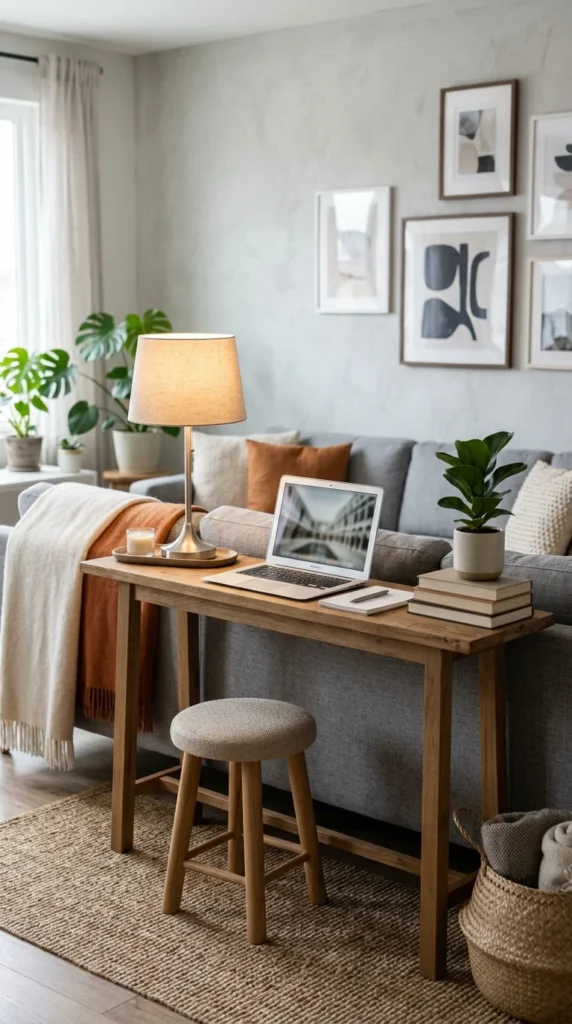
If your living room is your only option, look to the back of your sofa. A long, narrow console table can serve as a desk during the day and a decorative surface in the evening. This setup is excellent for open-concept homes where you want to maintain a social atmosphere while working.
9. Wardrobe Integration
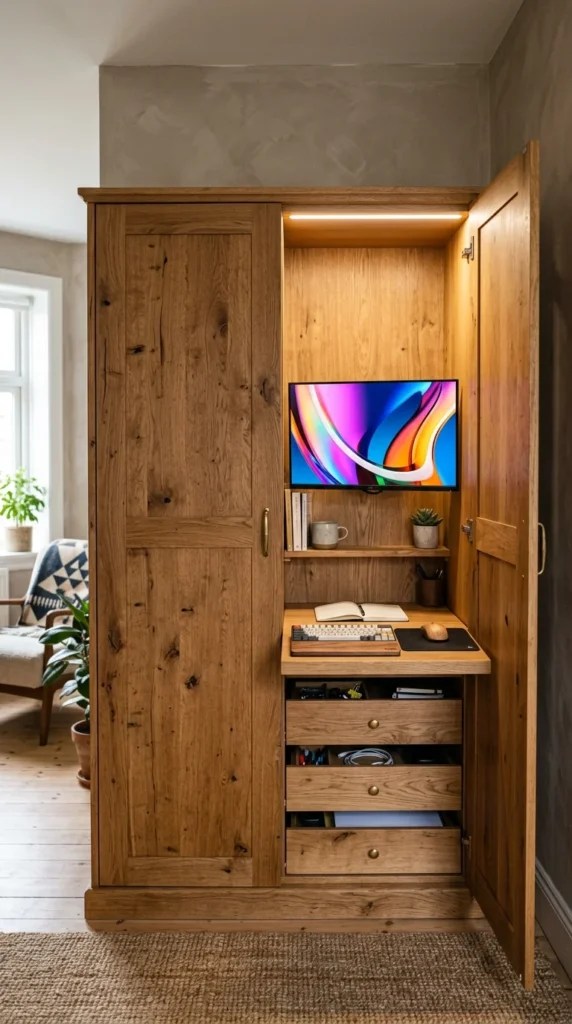
Similar to a closet office, this involves integrating a desk directly into a piece of cabinetry. It allows you to close the doors on your work life literally. This is especially helpful in studio apartments where the bed is in the same room as the office, helping to maintain a psychological boundary between “work” and “sleep.”
10. Landing Zone
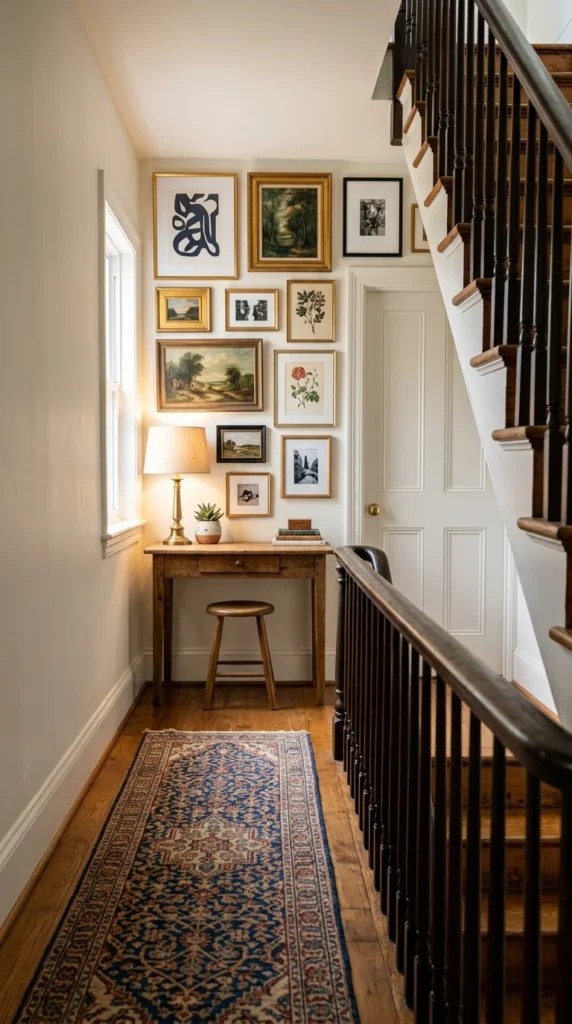
A wide hallway or a landing at the top of the stairs can easily accommodate a shallow desk. These areas are usually transit zones, but with the right lighting and a slim chair, they become highly functional satellite offices that keep work out of the bedrooms and living areas.
11. Bedroom Vanity
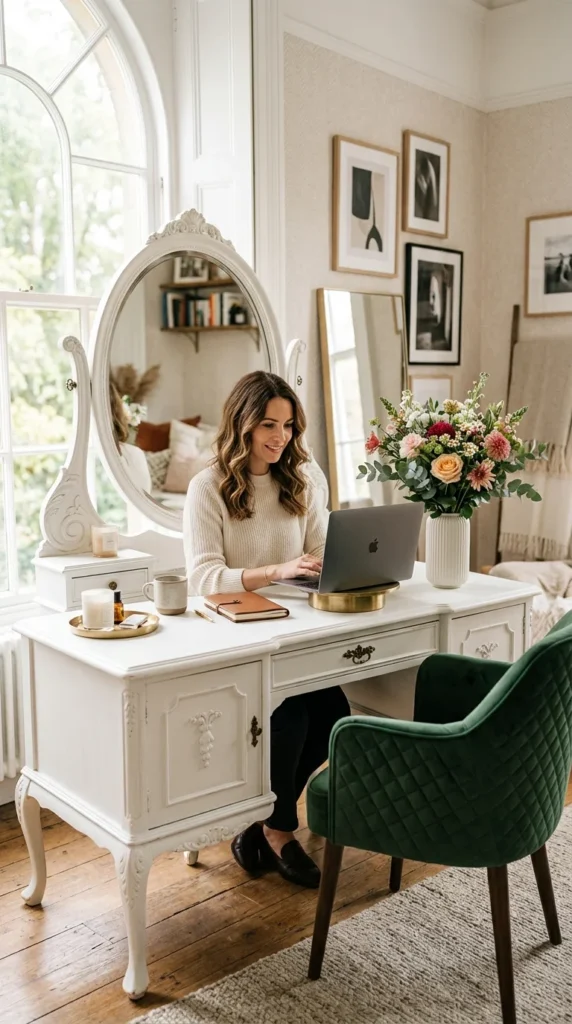
Many bedrooms already have a vanity or dressing table. By choosing a model with a flat surface and enough depth for a computer, you can make this piece of furniture do double duty. During the day it’s an office; in the evening, it’s a place for your morning or nightly routine.
12. Kitchen Command Center
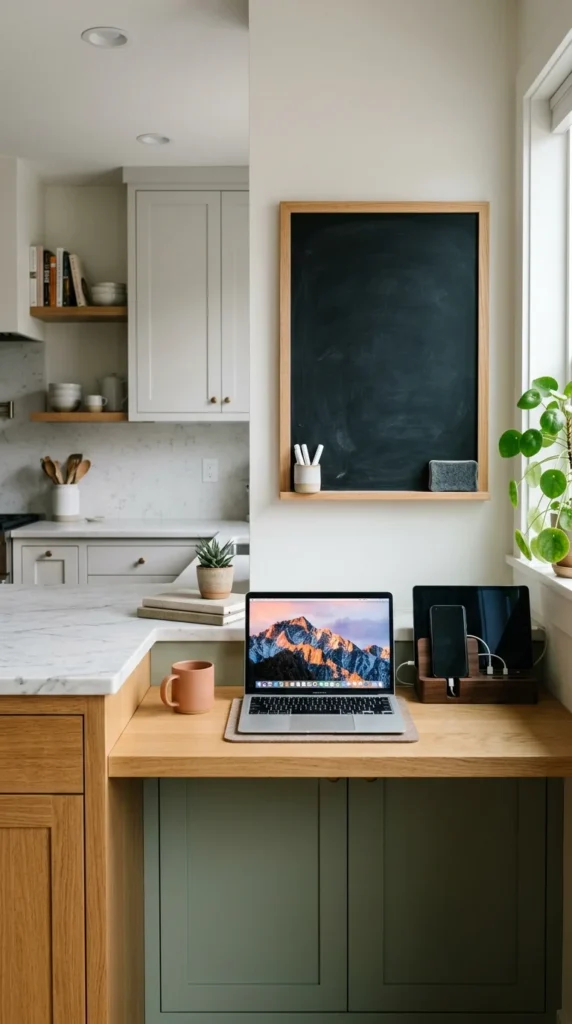
The kitchen is the heart of the home, and a “command center” desk allows you to manage household tasks and professional work simultaneously. This setup often works best as a “landing strip” for quick emails and administrative tasks rather than deep, eight-hour work sessions.
13. Room Divider Office
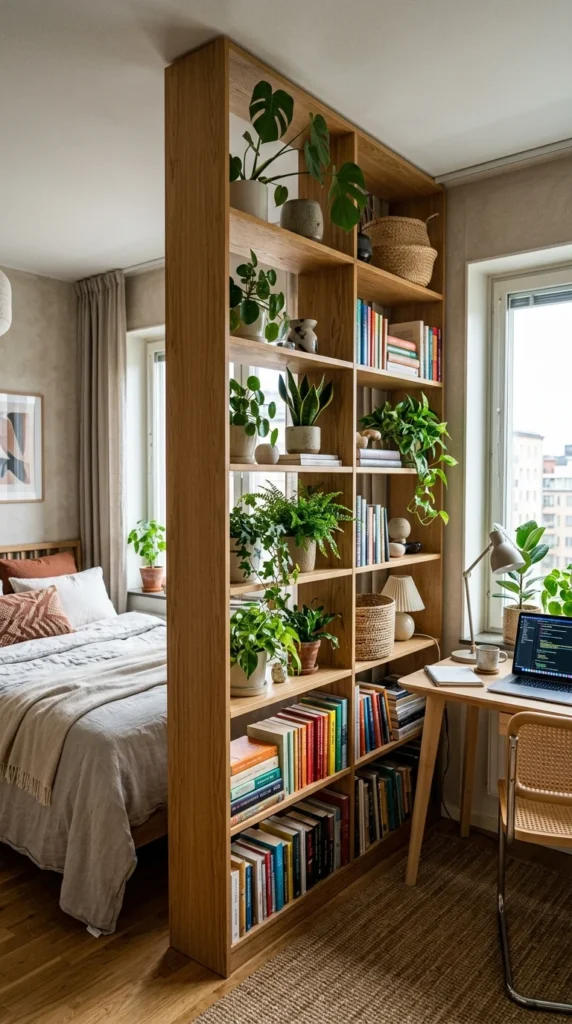
In an open-plan space, you can use furniture to create a “room within a room.” A tall bookshelf placed perpendicular to the wall creates a physical barrier that defines the office zone. This provides privacy and storage without the need for permanent walls.
14. Attic Nook
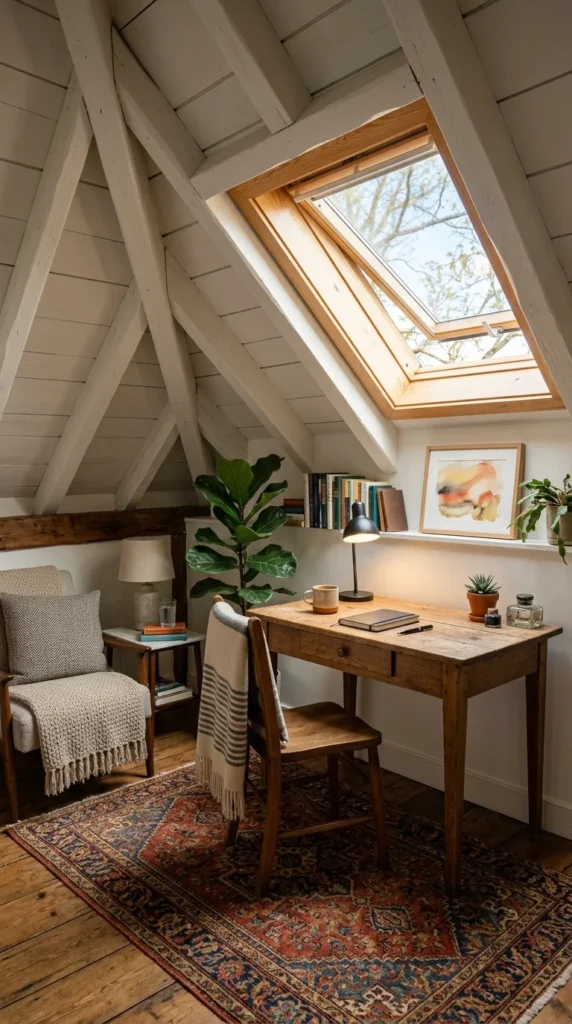
Attics often have “dead” space under the eaves where the ceiling is too low for standing. However, these spots are perfect for a seated desk. The sloped architecture creates a “nest” feeling that can be very conducive to deep focus and creative thinking.
15. Mobile Office Cart
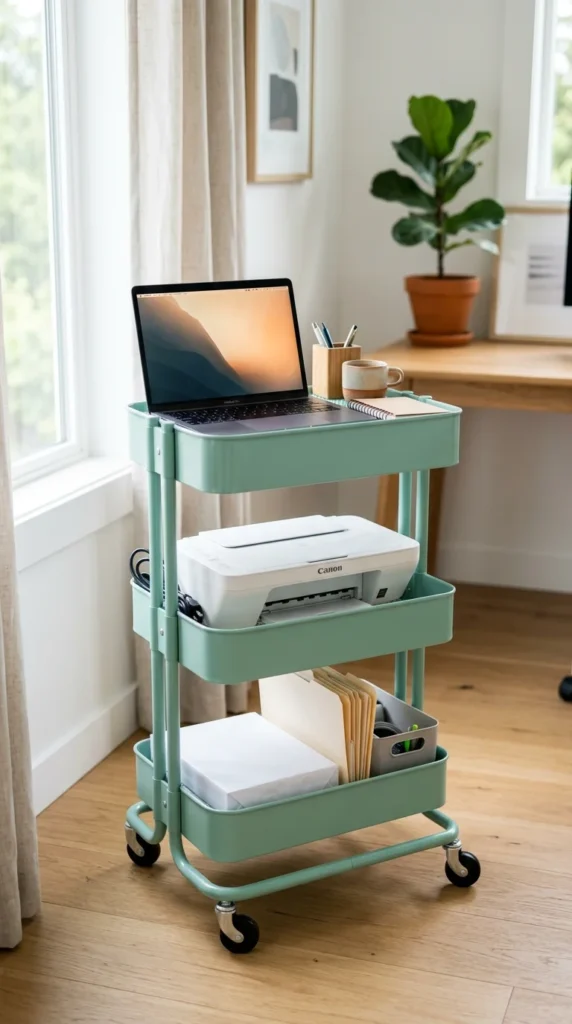
If you truly have no space for a permanent desk, a mobile cart allows you to take your office wherever you go. You can wheel it to the dining table during work hours and tuck it into a corner or a closet when the day is done. It’s the ultimate flexible solution for small-scale living.
16. Wall-Mounted Rails
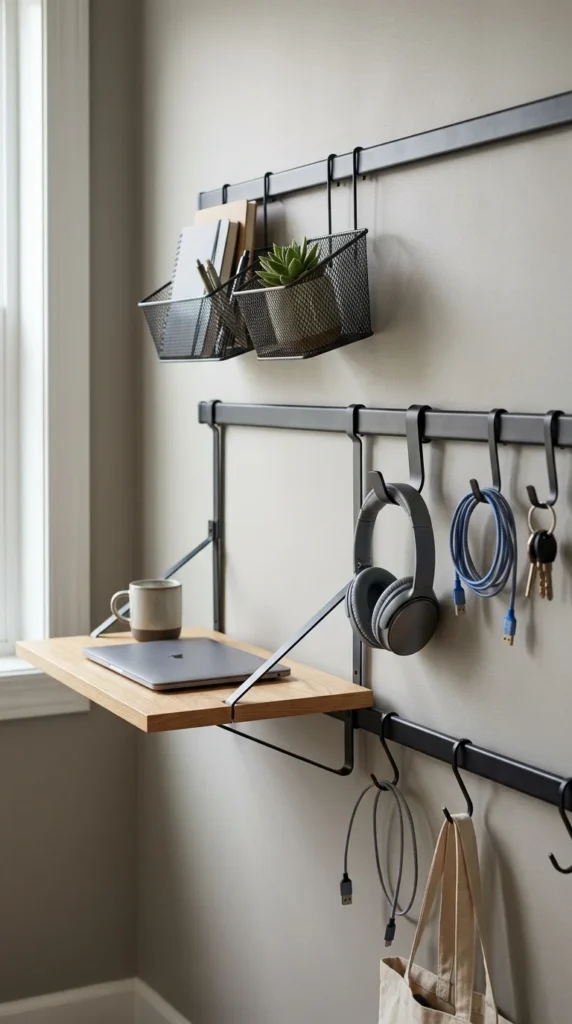
Using wall-mounted rail systems (often found in kitchens) can help clear desk clutter. By hanging your pens, scissors, and even your monitor from a rail, you leave the entire desk surface free for your computer and hands, making a tiny desk feel much larger.
17. Bedside Desk
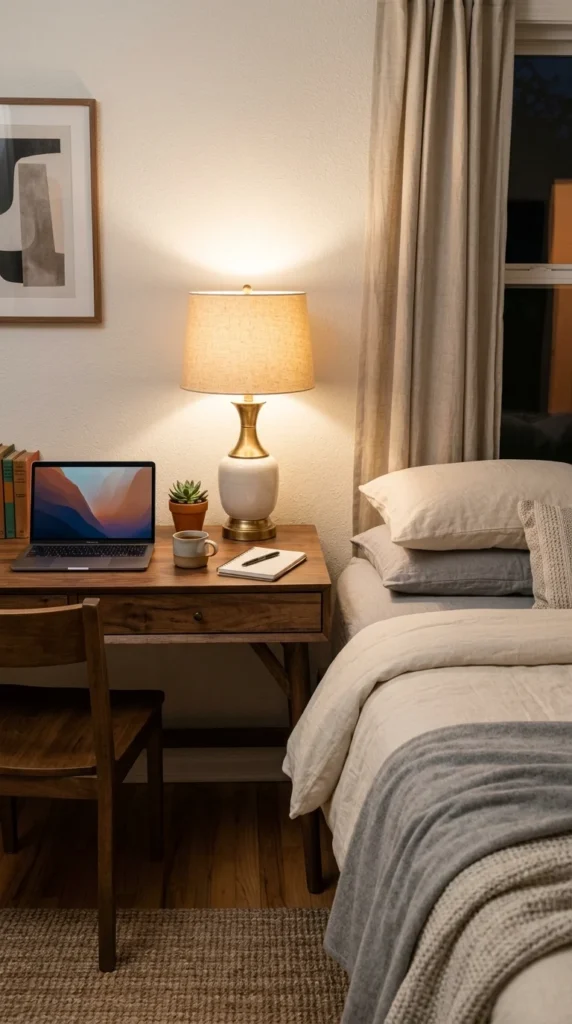
In a small bedroom, you can replace one nightstand with a small desk. This serves both functions: a place for your phone and water at night, and a workstation during the day. Look for a desk with drawers to keep your work materials hidden when you’re trying to sleep.
18. Floating Shelving Units
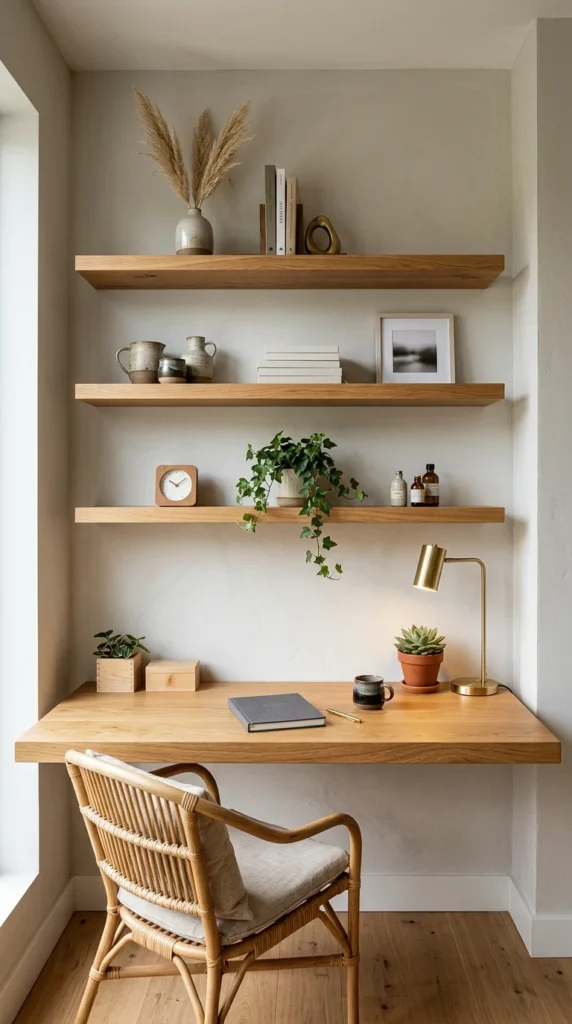
Instead of buying a piece of furniture, you can create a customized office using only floating shelves. Install one deep shelf at desk height and several narrower shelves above it for storage. This keeps the design cohesive and utilizes every inch of vertical wall space.
19. Partitioned Living Room
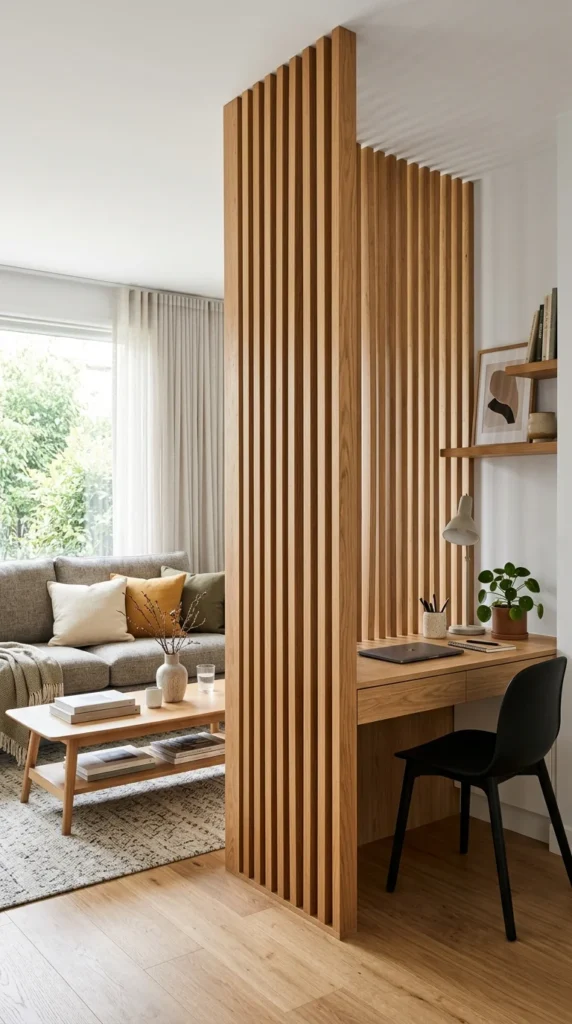
A slat wall or a decorative screen can provide a visual break in a multi-purpose room. This allows you to have a dedicated office area that feels separate from your relaxation zone, which is crucial for mental health when working from home.
20. Radiator Cover Desk
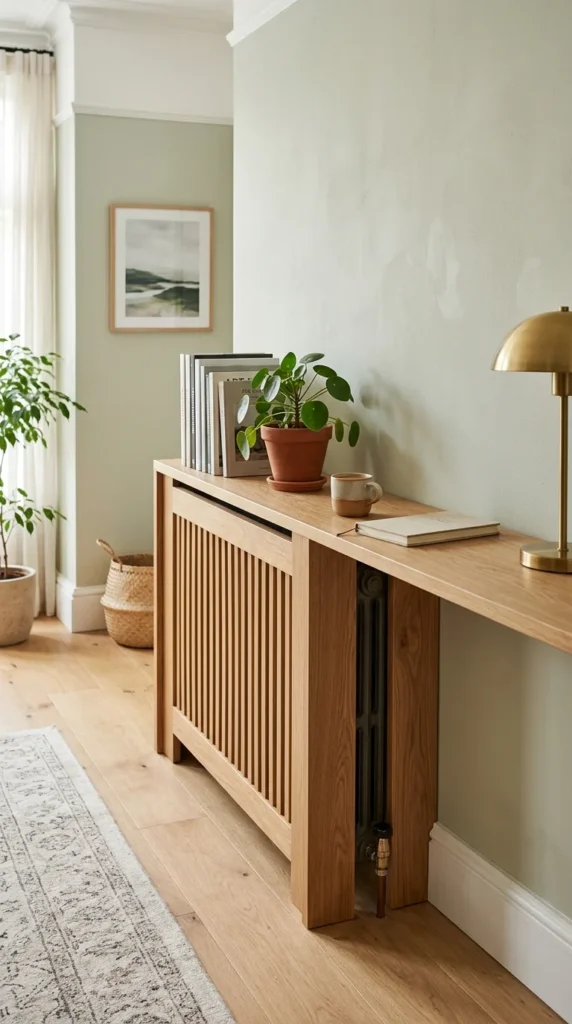
In older apartments, radiators take up valuable wall space. A custom radiator cover can be designed with a deep top that extends into a desk. This turns a functional heating element into a piece of multi-purpose furniture.
21. Transitional Hallway
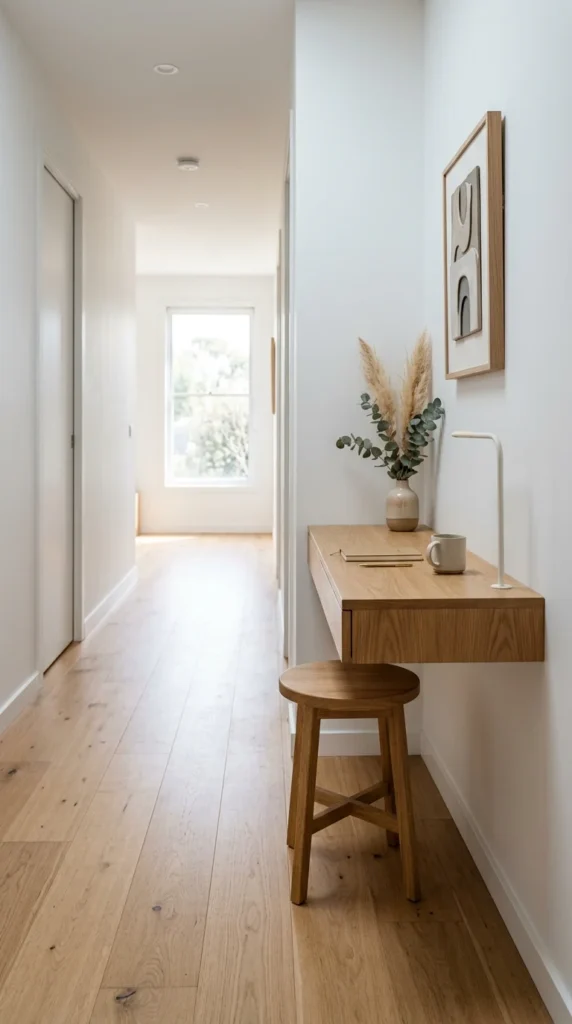
If you have a wide corridor, don’t let it be just a walkway. A “transitional” office utilizes the length of the hall. Use a very slim desk (15-18 inches deep) to ensure there is still plenty of room for foot traffic to pass by.
22. Murphy Bed Combo
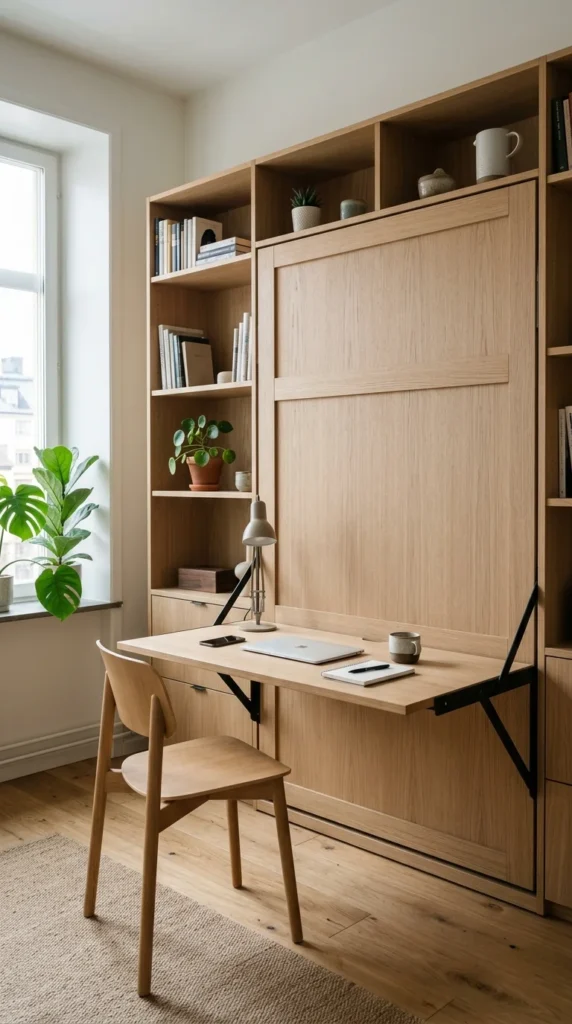
For the ultimate studio apartment hack, look for Murphy beds that include integrated desks. These systems are engineered so that when the bed is tucked away, a full-sized desk appears. Some designs even allow you to leave items on the desk while the bed is down.
23. Balcony Office
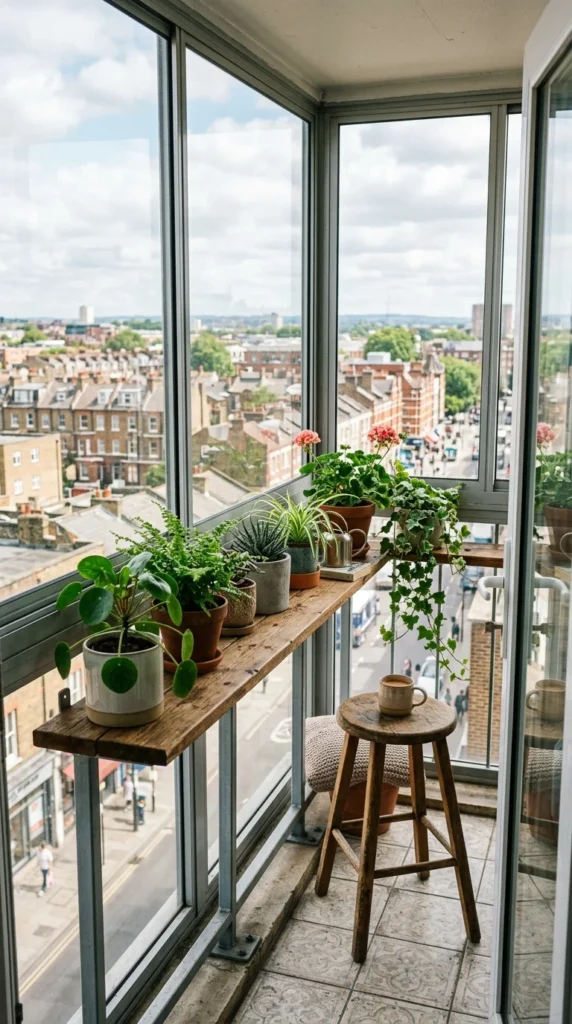
If you have a sunroom or an enclosed balcony, this can be the perfect “outdoor” office. The separation from the main living area provides a distinct “commute” and the abundance of natural light is excellent for productivity.
24. Corner Bookshelf Desk
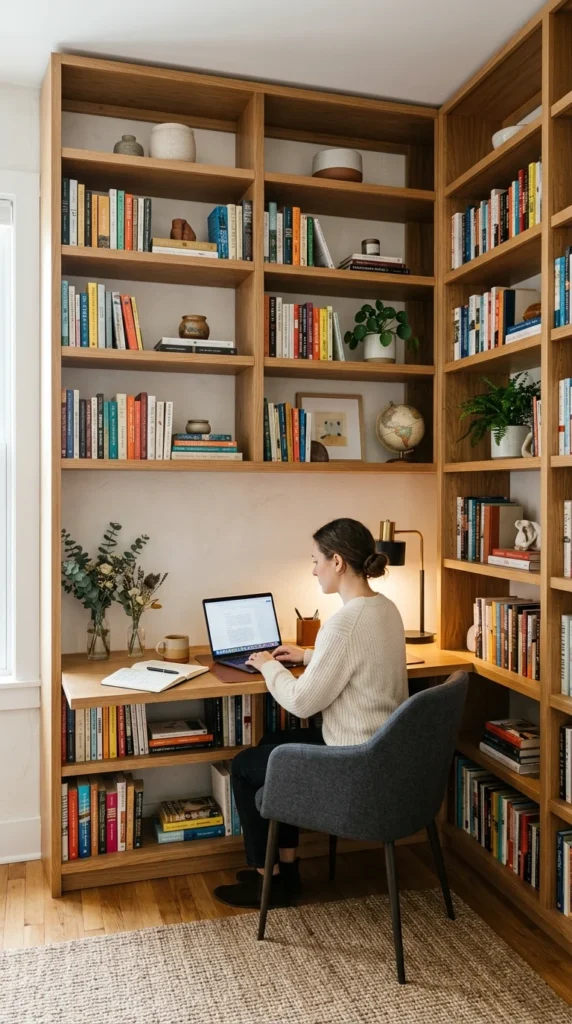
Integrating a desk into a larger shelving unit makes the workspace feel like a natural part of the room’s architecture. This is an excellent way to house a large library and a workstation in a single footprint.
25. Minimalist Glass Desk
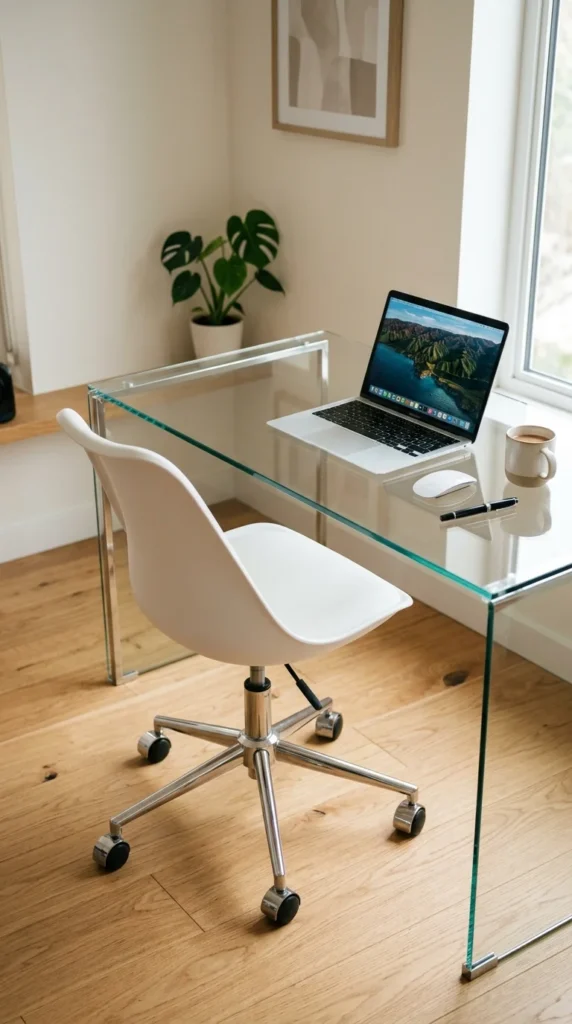
When all else fails, use transparency. A glass or acrylic desk takes up “zero” visual space. Because you can see through it to the floor and walls, it doesn’t clutter the room’s sightlines, making even the smallest corner feel airy and open while still providing a solid place to work.