
Creating a sense of opulence in a confined space requires a strategic blend of high-end materials, clever architectural choices, and an uncompromising eye for detail. Luxury is not about square footage; it is about the quality of the experience. By utilizing light-reflecting surfaces, streamlining fixtures, and emphasizing verticality, even the smallest powder room or ensuite can be transformed into a five-star sanctuary.
1. Floating Vanities
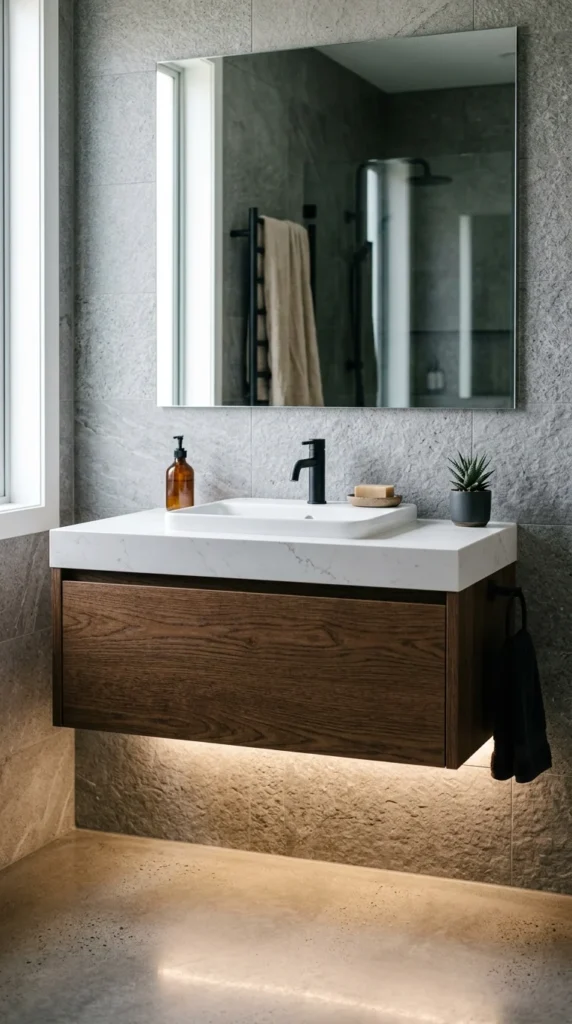
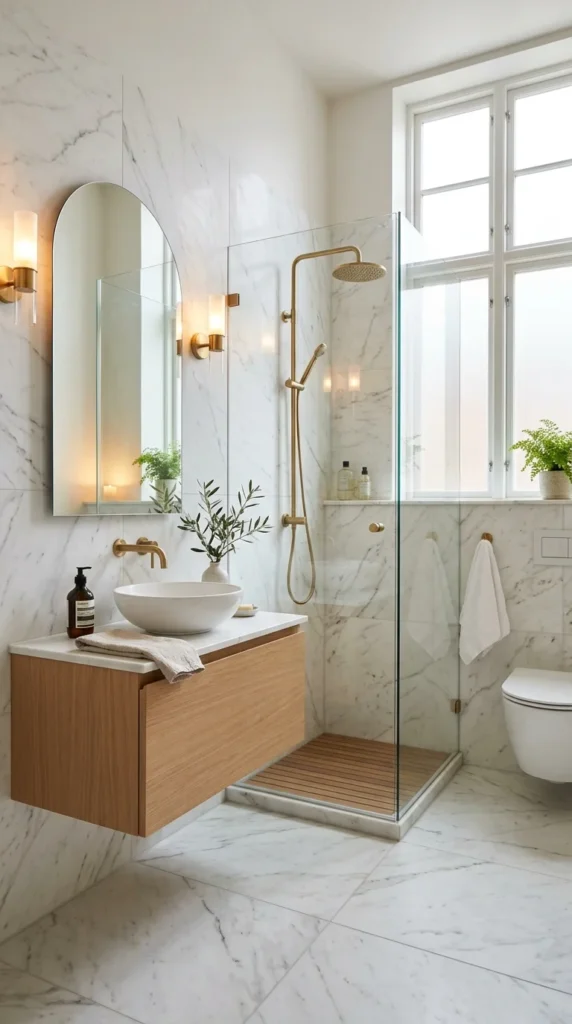
A floating vanity is perhaps the most effective tool for making a small bathroom feel larger. By exposing the floorboards all the way to the wall, the eye perceives more square footage. Modern luxury designs often feature wall-hung units in rich woods like walnut or sleek lacquered finishes, topped with a thick slab of quartz or marble. This “hovering” effect reduces visual clutter and provides a perfect spot for discreet accent lighting.
2. Wall-Mounted Toilets
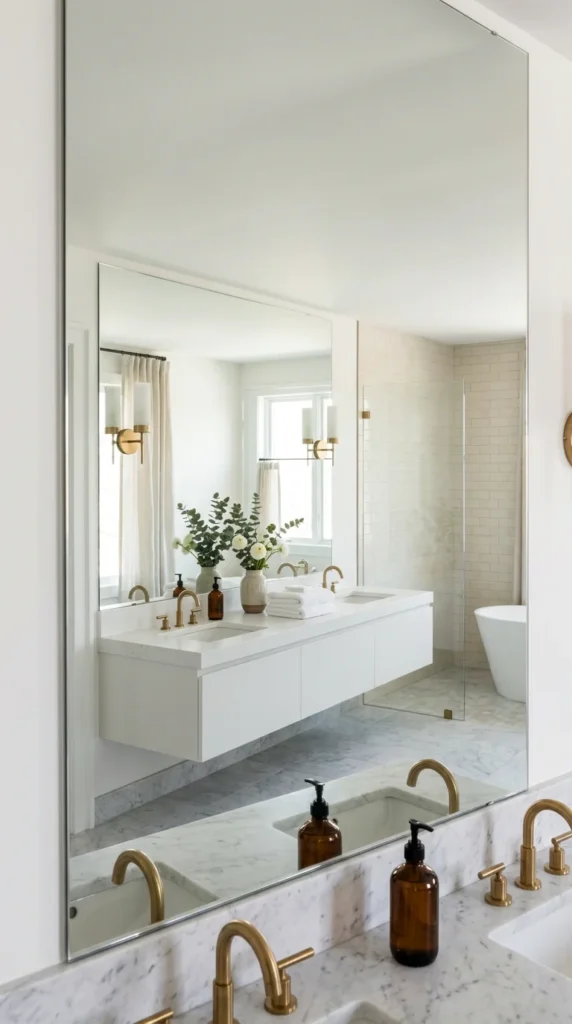
Standard floor-mounted toilets take up significant physical and visual space. A wall-mounted version hides the bulky tank inside the wall, saving up to ten inches of room. In a luxury setting, these fixtures often feature minimalist flush plates in brushed nickel or champagne gold, contributing to a clean, architectural aesthetic that makes the bathroom feel custom-designed.
3. Large-Format Tiles
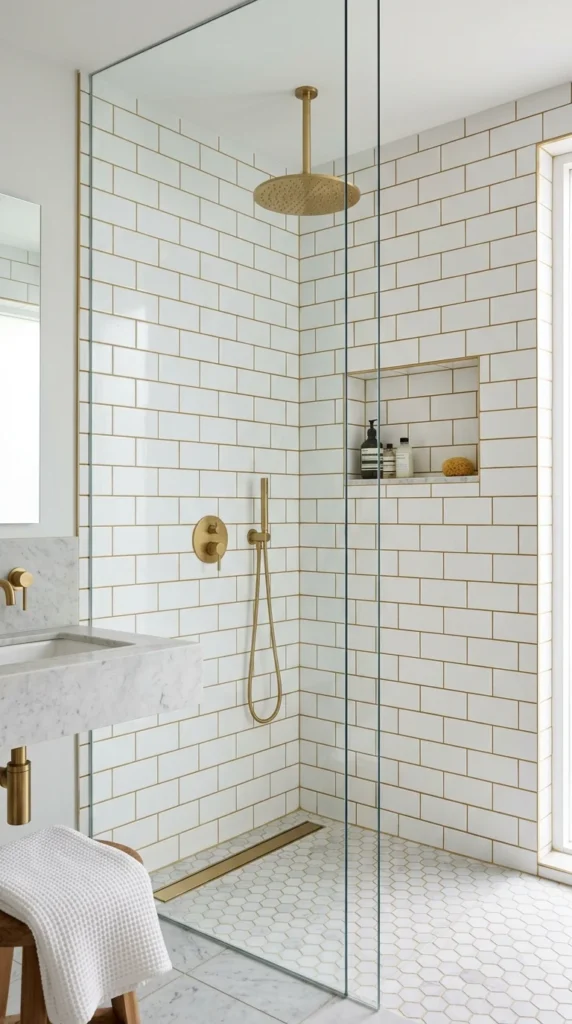
Small tiles with numerous grout lines can make a room feel busy and cramped. Conversely, large-format tiles—some measuring up to 48 inches—create a continuous surface that expands the room’s boundaries. Using the same tile for both the floor and the walls blurs the transitions, tricking the brain into seeing a much larger, cohesive space.
4. Frameless Glass
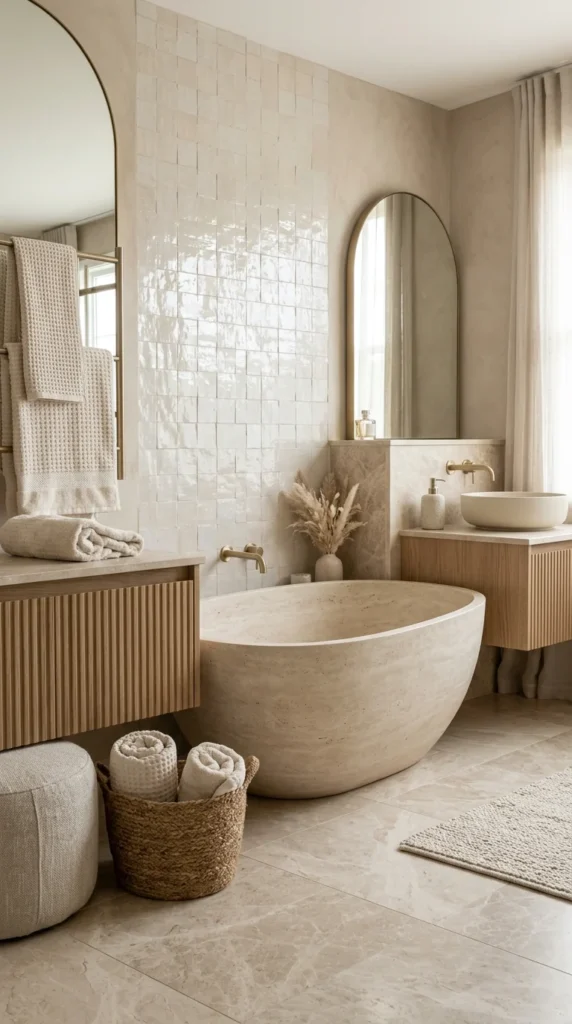
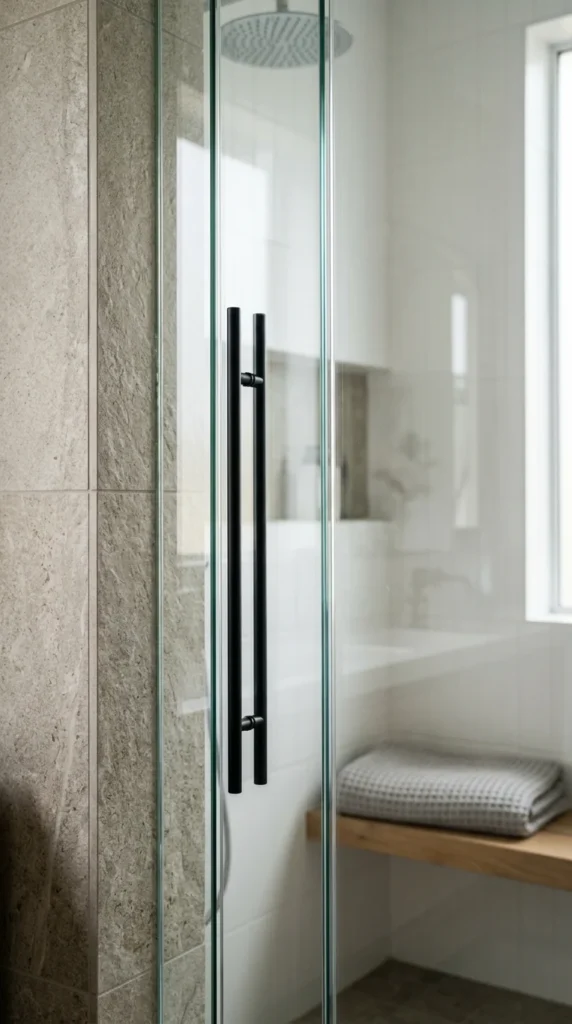
Visual barriers are the enemy of small spaces. Traditional shower curtains or framed glass doors chop up the room into tiny boxes. A frameless glass enclosure provides a high-end, “spa-like” feel while allowing the eye to travel through the entire room unobstructed. Opt for “low-iron” glass to avoid the green tint often found in standard glass panels.
5. Recessed Niches
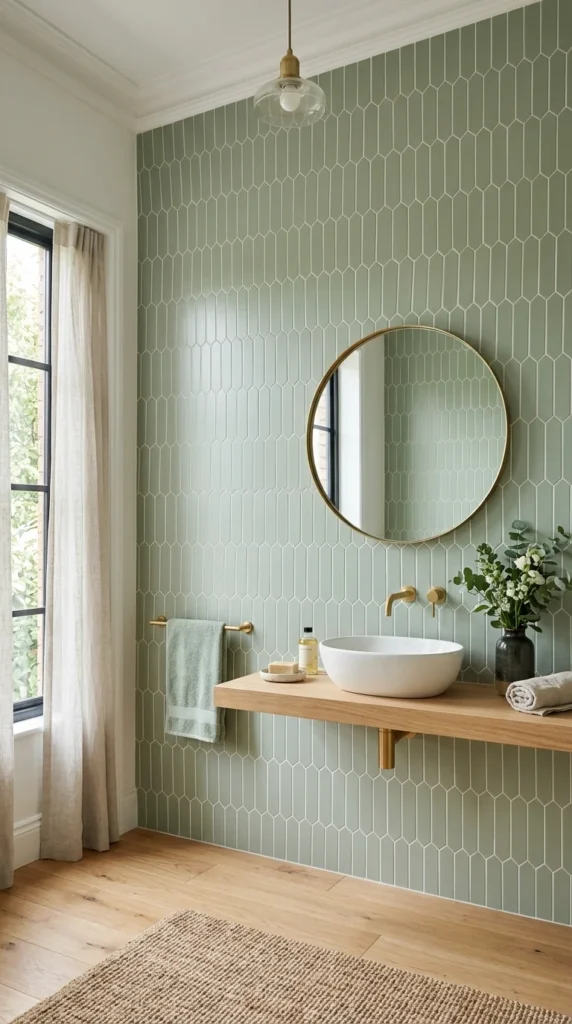
Protruding shelves and shower caddies consume valuable real estate and look cluttered. Luxury small bathrooms utilize recessed wall niches for storage. By carving space out of the wall studs, you gain storage without losing an inch of floor or wall space. Lighting these niches adds a layer of depth and sophistication that elevates the entire design.
6. Monochromatic Palettes
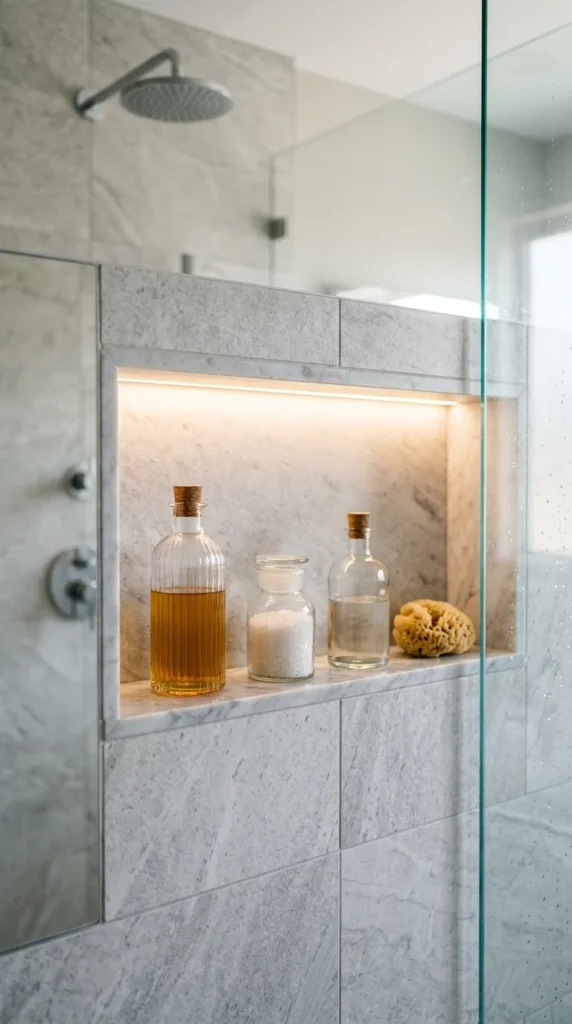
A unified color palette prevents the eye from stopping at different “zones,” which creates a sense of endlessness. Luxury doesn’t always mean white; a monochromatic deep navy or forest green can create a “jewel box” effect. However, lighter tones like cream, soft grey, or crisp white are the gold standard for maximizing the perception of space and reflecting light.
7. Statement Mirrors
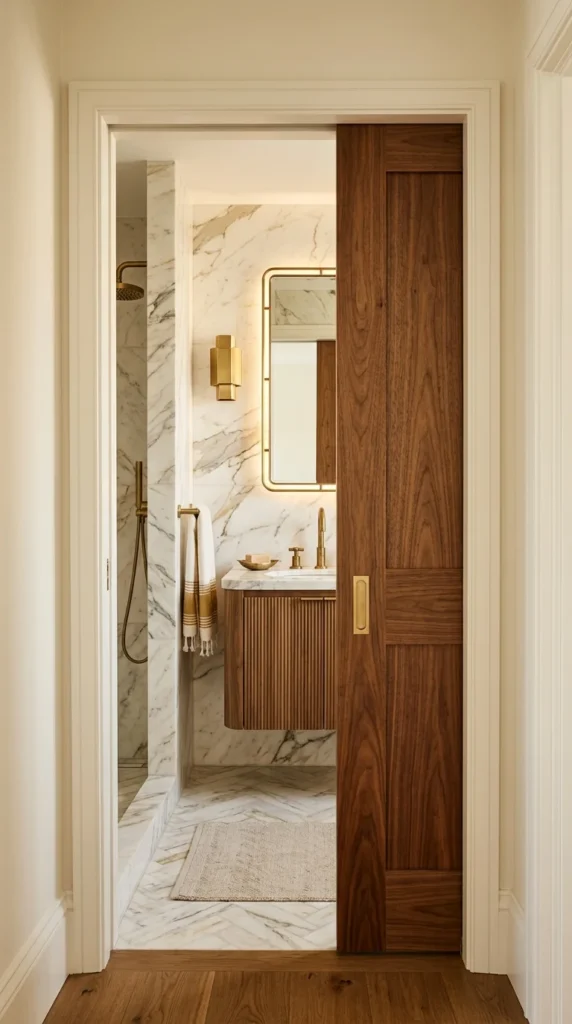
The oldest trick in the designer’s handbook is also the most effective. A large, high-quality mirror reflects light and views, effectively “doubling” the size of the bathroom. To achieve a luxury look, go for custom-sized mirrors that stretch from the vanity to the ceiling or wall-to-wall mirrors that make the boundaries of the room disappear.
8. Continuous Flooring
Creating a “curbless” or “wet room” entry for the shower removes a physical trip hazard and a visual break. When the floor material flows uninterrupted into the shower area, the floor plane appears larger. This requires professional waterproofing and a linear drain, both of which are hallmarks of high-end bathroom architecture.
9. Skylights
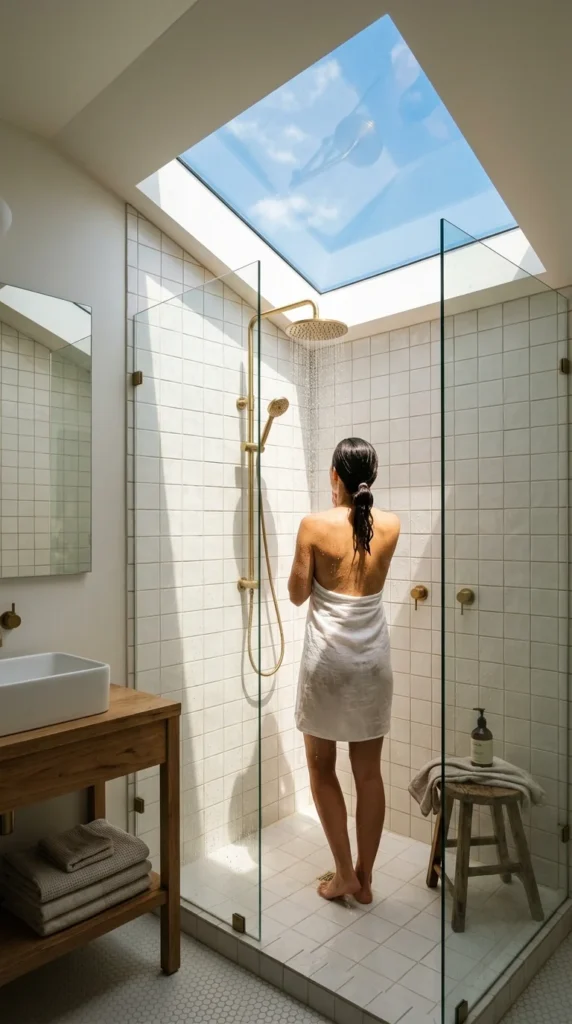
If wall space is at a premium and privacy is an issue, look to the ceiling. A skylight introduces natural light and a view of the sky, which eliminates the “boxed-in” feeling common in small bathrooms. The upward view draws the eye toward the ceiling, emphasizing the height of the room rather than the narrowness of the walls.
10. Vertical Patterns
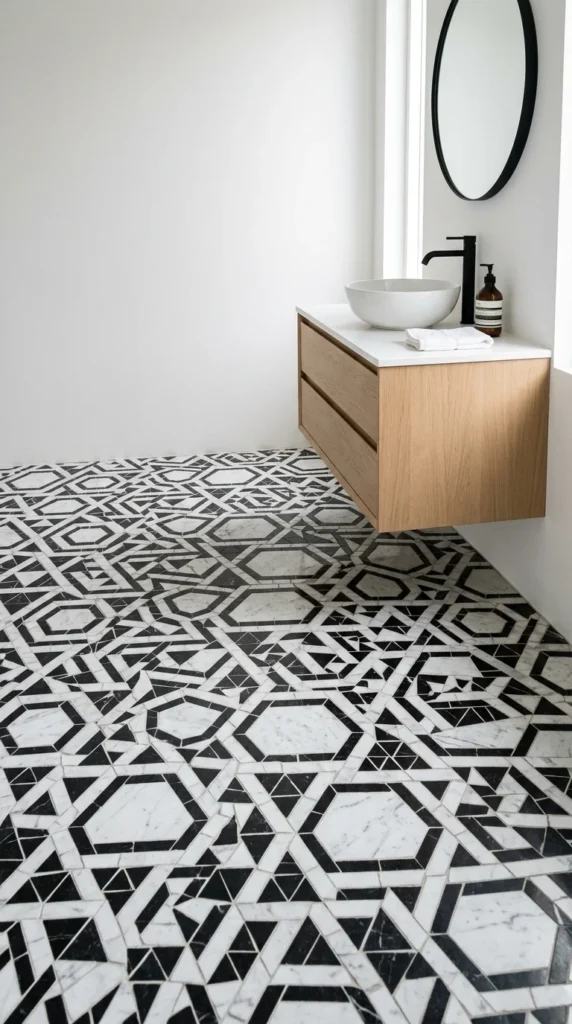
Just as vertical stripes on clothing make a person look taller, vertical patterns in a bathroom make the ceiling feel higher. This can be achieved with vertically stacked subway tiles, fluted cabinetry, or even pinstriped wallpaper. By drawing the gaze upward, you emphasize the volume of the space rather than the footprint.
11. Metallic Accents
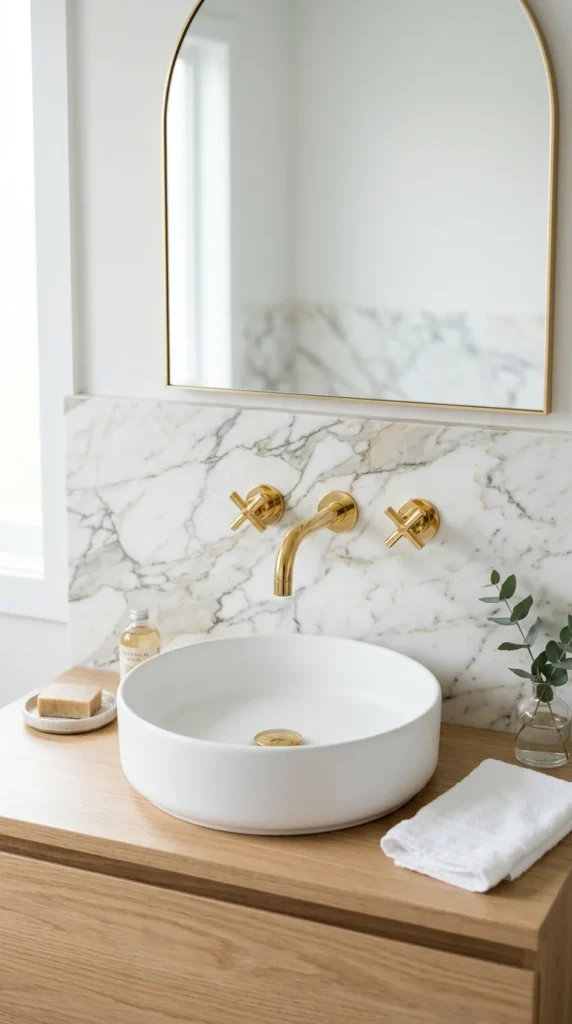
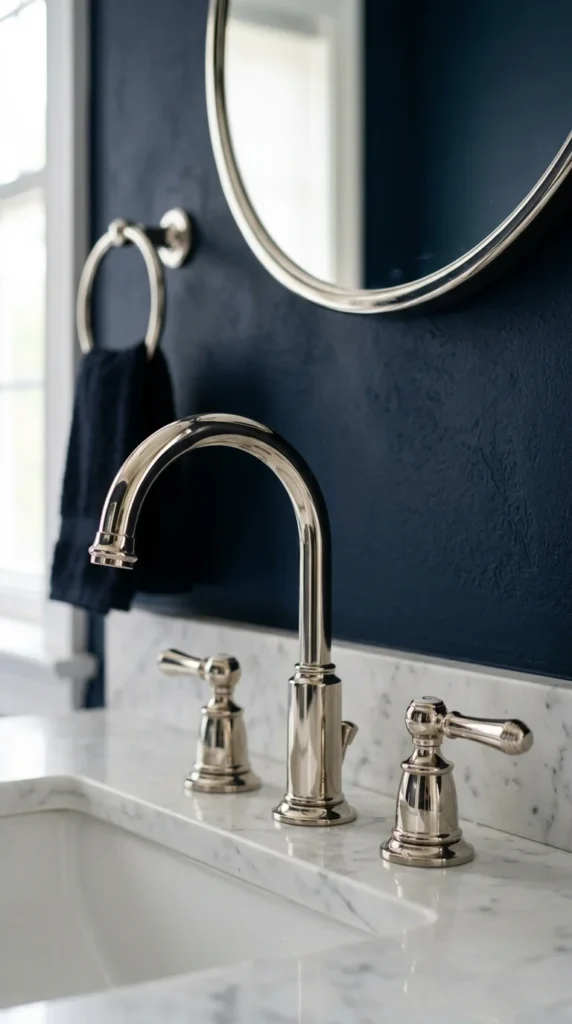
Luxury is found in the details. High-quality metallic finishes—like unlacquered brass, brushed bronze, or polished nickel—act as jewelry for the room. Their reflective properties help bounce light around, while their materiality adds a sense of “weight” and quality that plastic or cheap chrome fixtures lack.
12. Pocket Doors
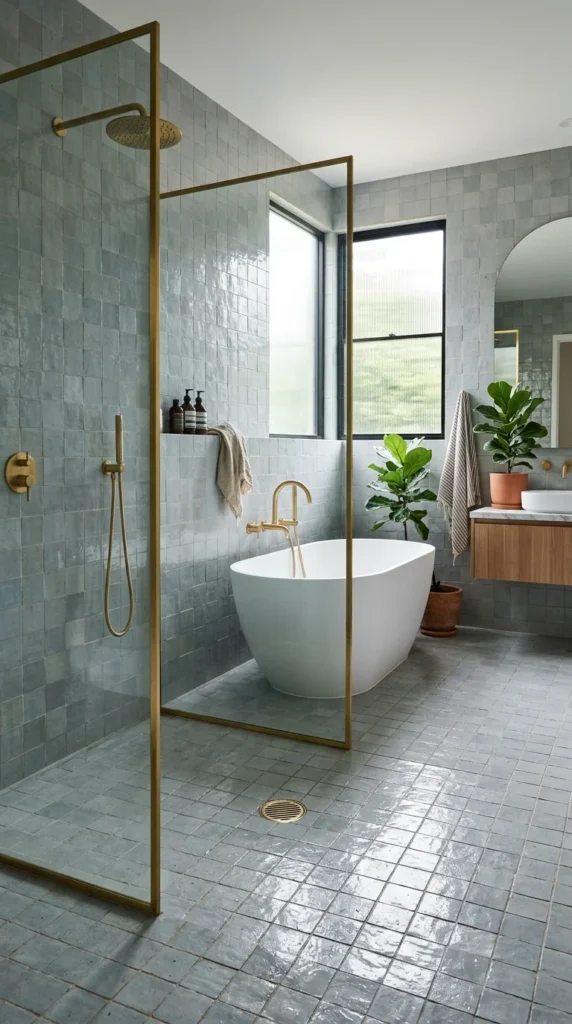
Traditional swinging doors require a “clearance arc” that can waste up to 10 square feet of usable space. A pocket door slides directly into the wall, freeing up that area for a larger vanity or a more comfortable toilet placement. It is a sophisticated architectural solution that streamlines the entry and exit.
13. Integrated Sinks
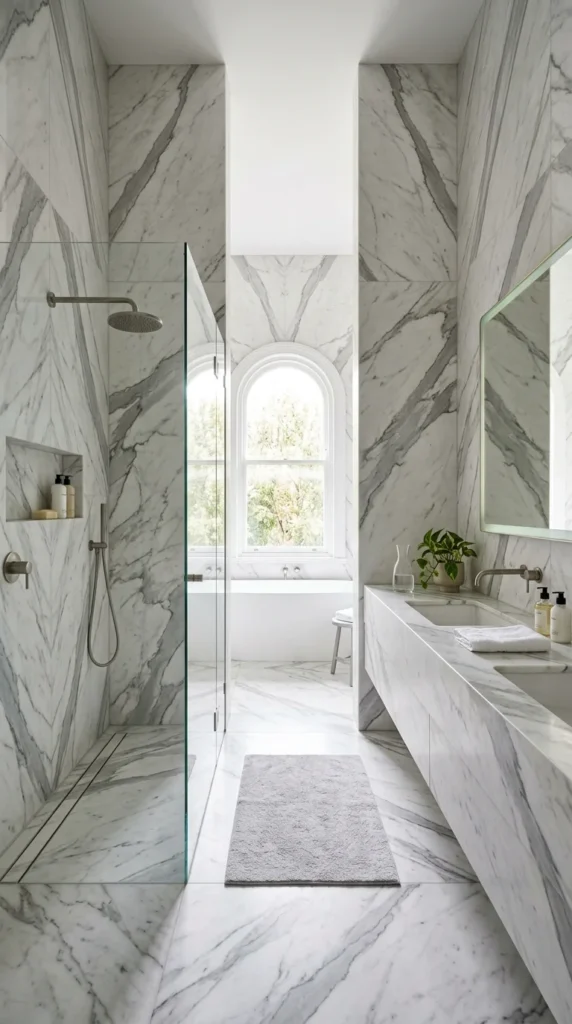
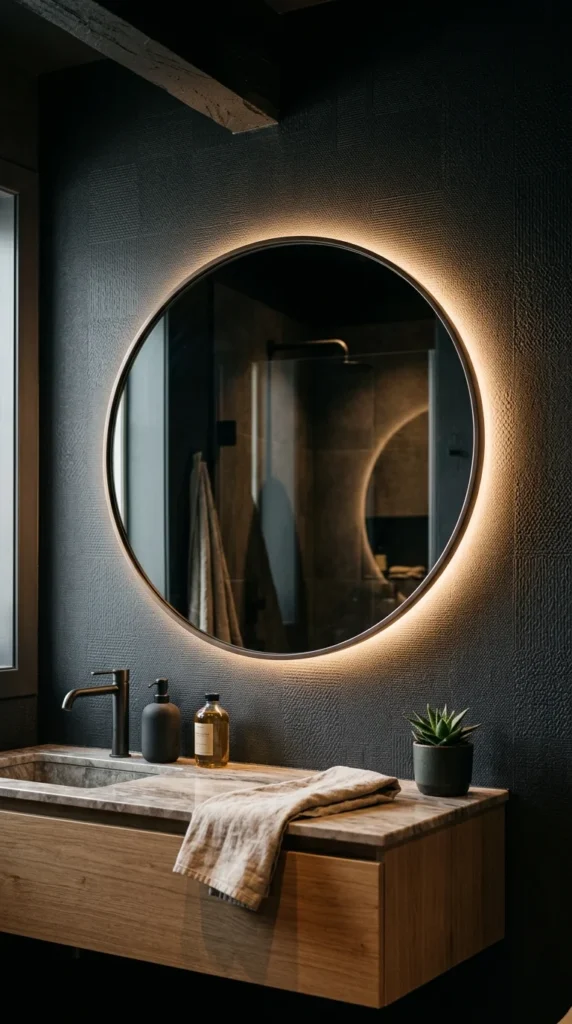
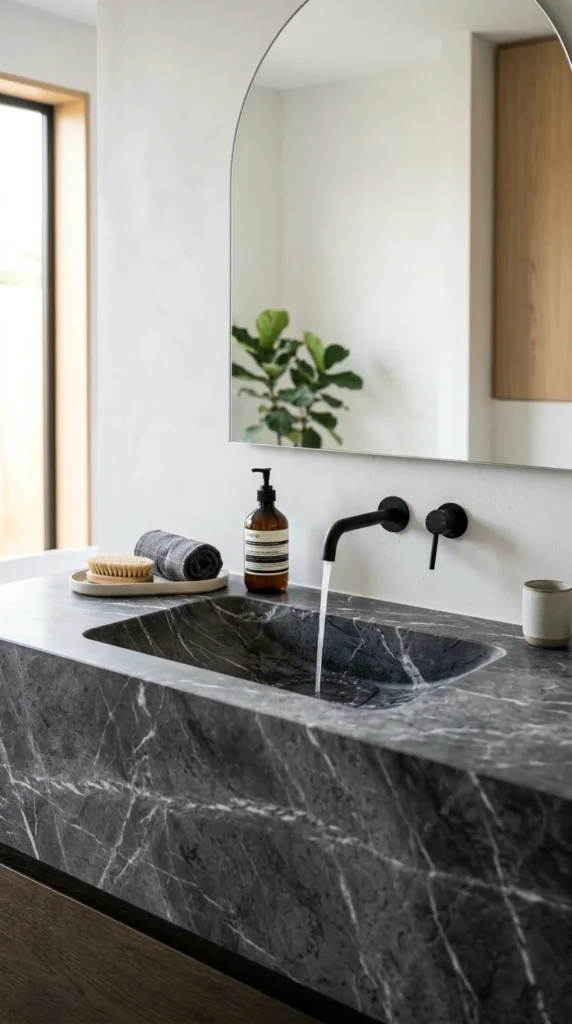
An integrated sink, where the basin is made of the same material as the countertop, creates a clean, continuous line. This lack of visual breaks makes the vanity surface look larger and more expansive. In a luxury context, stone or concrete integrated sinks provide a custom, high-end feel that standard drop-in sinks cannot match.
14. Backlit Mirrors
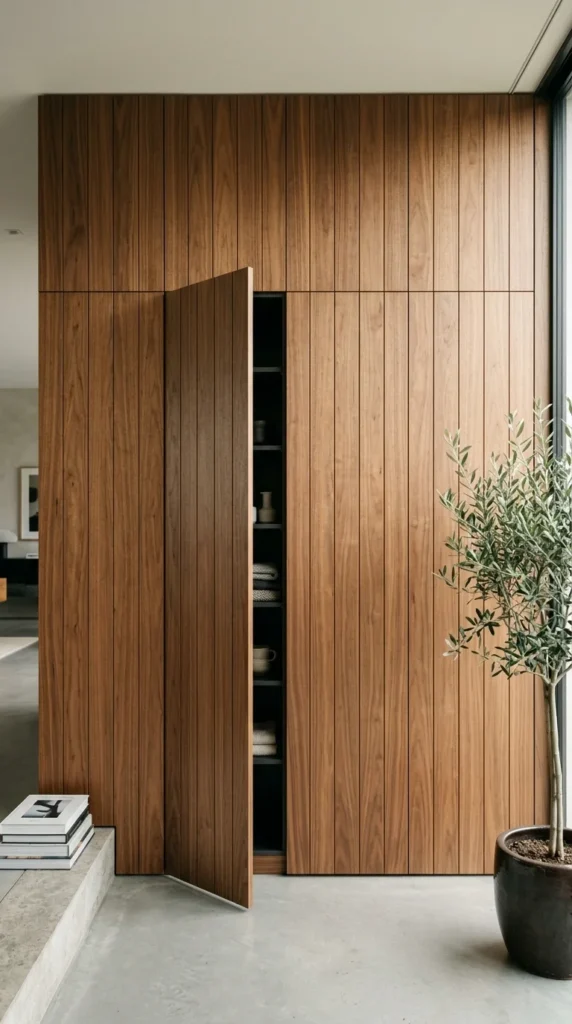
Proper lighting is essential in small spaces. A backlit mirror provides functional task lighting without the need for bulky sconces that might clutter the wall. The “halo” effect also creates a sense of depth, making the wall behind the mirror appear to recede, which adds to the feeling of spaciousness.
15. Minimalist Hardware
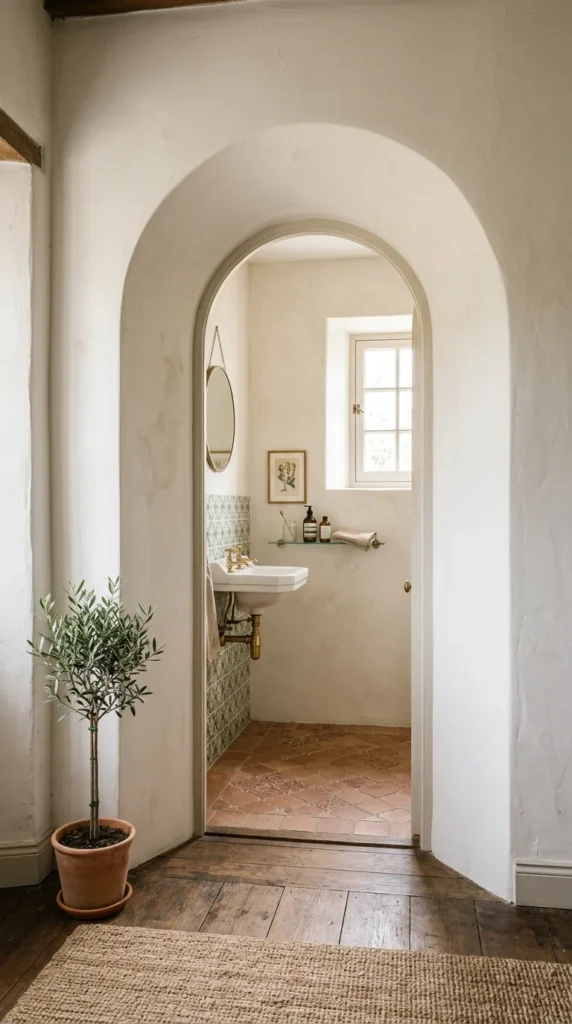
In a small bathroom, every protrusion matters. Opting for minimalist, low-profile hardware prevents the space from feeling “spiky” or overcrowded. Ceiling-mounted rain showerheads and slim, single-lever faucets keep the lines of the room clean and modern, allowing the high-end materials to take center stage.
16. Natural Wood
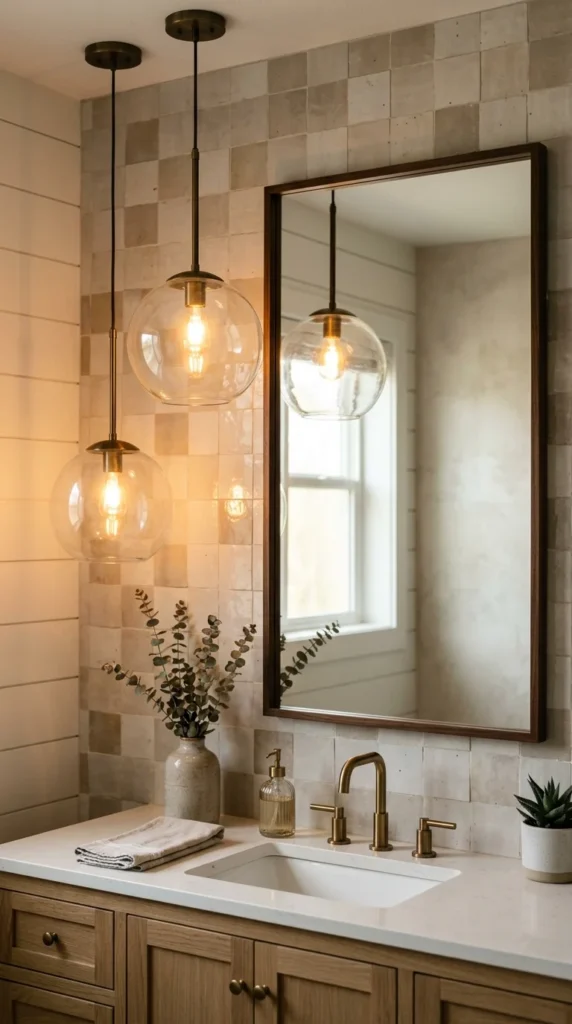
Bringing natural elements into a small space adds warmth and luxury. Wood provides an organic texture that balances the hard surfaces of tile and stone. Using wood in unexpected places—like a slatted shower floor or a ceiling treatment—adds a spa-like dimension that makes the room feel like a destination rather than a utility closet.
17. Mirrored Cabinets
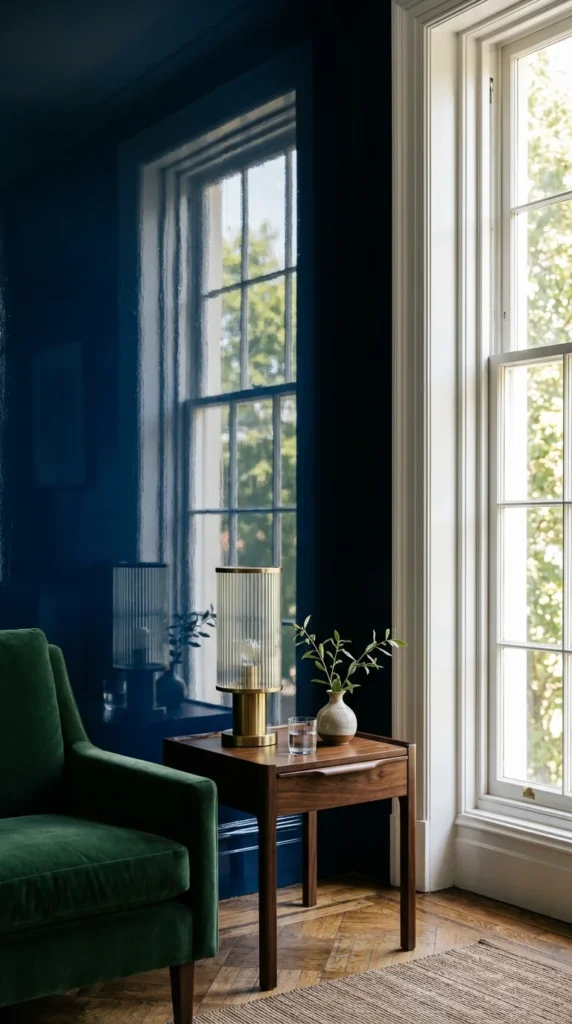
Storage is the biggest challenge in small bathrooms. Recessed mirrored cabinets offer a “two-for-one” solution: they provide deep storage for toiletries while acting as a large reflective surface to open up the room. By recessing them into the wall, they remain flush with the surface, maintaining a sleek profile.
18. Glossy Finishes
While matte finishes are trendy, glossy surfaces are better for small spaces. High-gloss paint, polished stone, or glazed tiles act like mirrors, reflecting light and surroundings. This reflectivity blurs the corners of the room, making the boundaries less defined and the atmosphere more vibrant.
19. Transparent Furniture
If your luxury bathroom is large enough for a seating area or a small stool, choose pieces made of transparent materials like acrylic or glass. “Ghost” furniture provides the function you need without occupying any visual space, allowing the floor and wall patterns to remain visible through the object.
20. Terrazzo Flooring
Terrazzo is a luxury material that offers a sense of playfulness and scale. Because it is a poured surface (or large tiles), it minimizes grout lines. The flecks of stone within the terrazzo create a sense of depth and movement, drawing the eye across the floor and making the footprint feel more expansive through visual interest.
21. Open Shelving
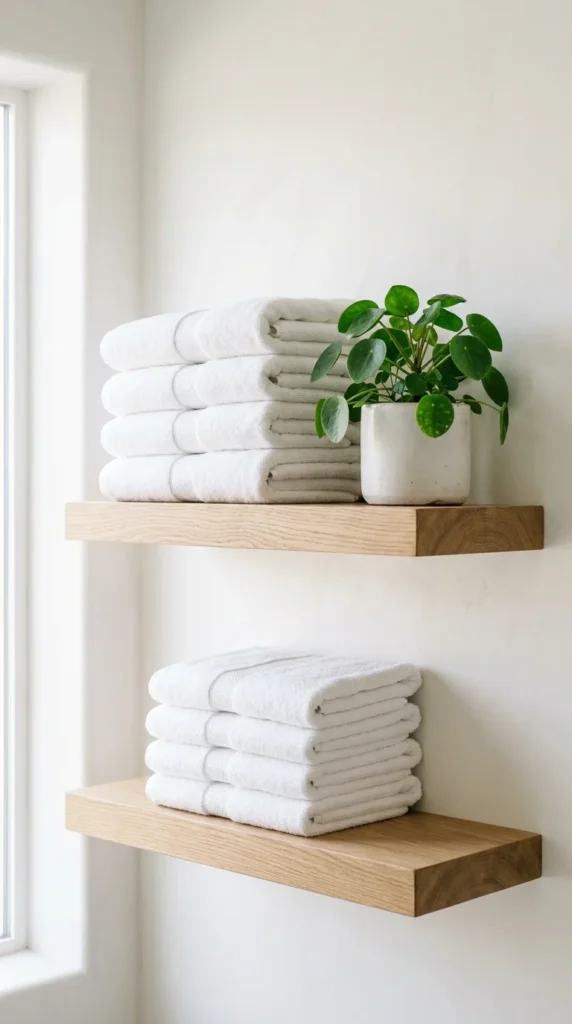
Bulky cabinets can “close in” a small room. Replacing upper cabinets with thick, high-quality open shelving maintains an airy feel. The key to keeping this luxury is curation: use only matching towels, high-end apothecary jars, and minimal decor to ensure the shelves don’t become a source of clutter.
22. Compact Tubs
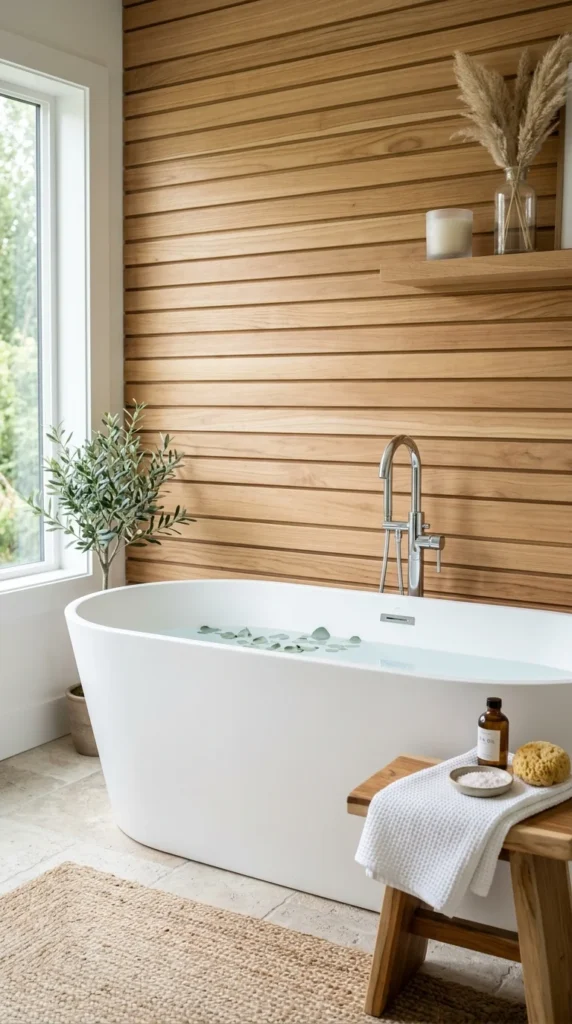
You don’t need a massive tub for a luxury experience. A “soaking tub” with a smaller footprint but greater depth allows for a full-body submerged experience in half the space. Often made of high-end composites or stone, these tubs become a sculptural focal point that screams luxury without demanding excessive square footage.
23. Layered Lighting
A single overhead light creates harsh shadows that make a room feel small and dingy. Luxury spaces use “layered” lighting to fill in the shadows. Combining ambient (ceiling), task (vanity), and accent (niche or floor) lighting adds dimension and makes the walls feel further away.
24. Statement Wallpaper
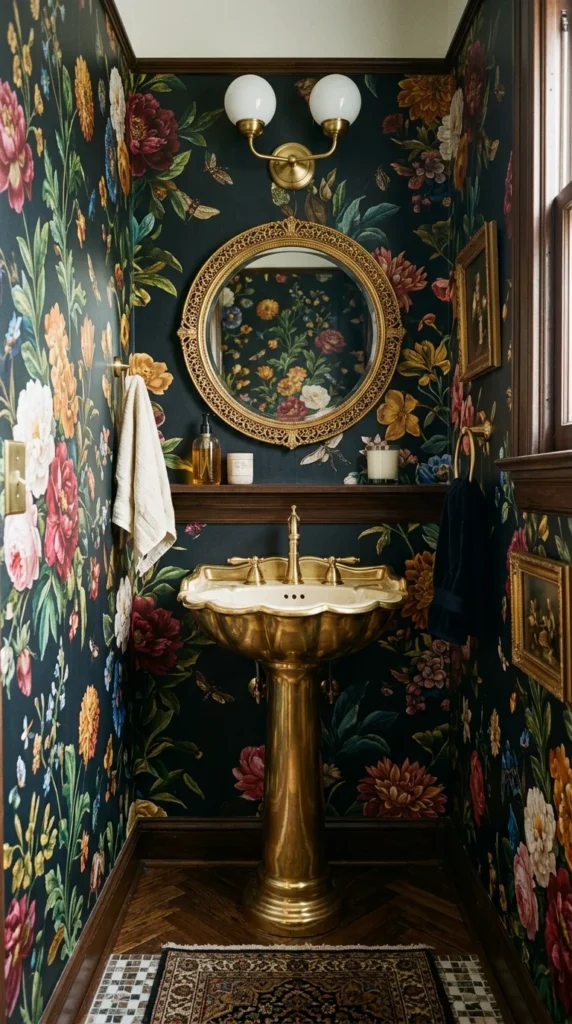
In a small bathroom, you can afford to use more expensive materials because you need less of them. A bold, high-end wallpaper with a large-scale pattern can actually make a small room feel bigger by providing a sense of “grandeur.” It turns a cramped space into a deliberate, stylized “jewel box.”
25. Symmetry
Symmetry is a hallmark of classical luxury. A balanced layout is pleasing to the eye and creates a sense of order. In a small space, order equals roominess. By aligning the vanity, mirror, and lighting perfectly, you eliminate visual “noise,” making the room feel more spacious, composed, and high-end.