
The rise of remote work has transformed the modern home, turning spare corners and neglected nooks into productive hubs. However, when square footage is at a premium, finding room for a dedicated workspace requires creativity and strategic design. You don’t need a spare bedroom to create an efficient office; you simply need to rethink the “dead” spaces within your existing layout. From “cloffices” to multi-functional furniture, here are 20 ingenious ideas to maximize your tiny home office.
1. Closet Offices
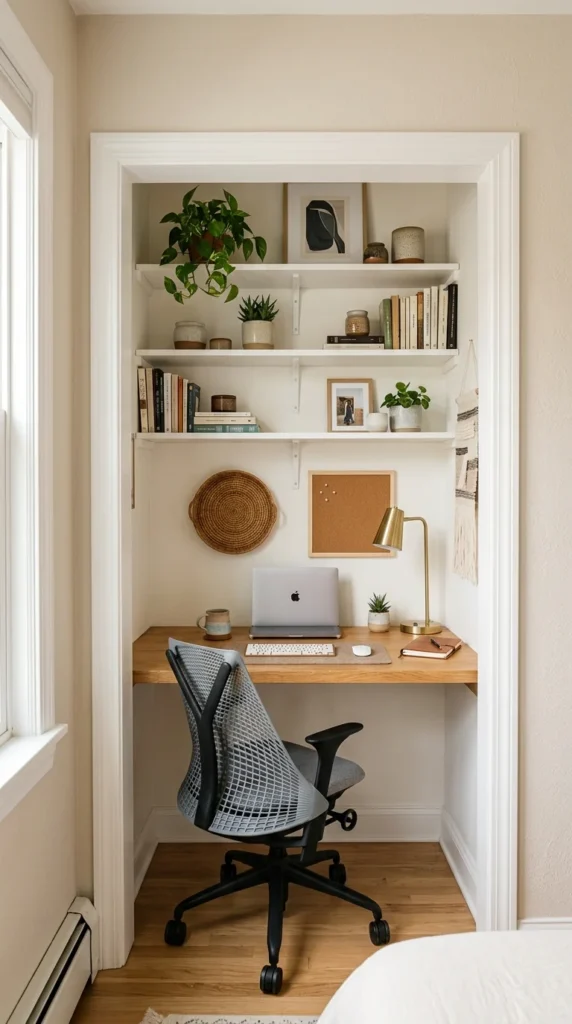
The “cloffice” (closet-office) is a classic small-space solution. By removing the doors of a standard reach-in closet, you can fit a desk and shelving directly into the recessed wall. This keeps the workspace out of the main flow of the room. If you prefer to hide your work at the end of the day, keep the doors—sliding or bi-fold versions work best—allowing you to literally “close the office” when you are done.
2. Corner Desks
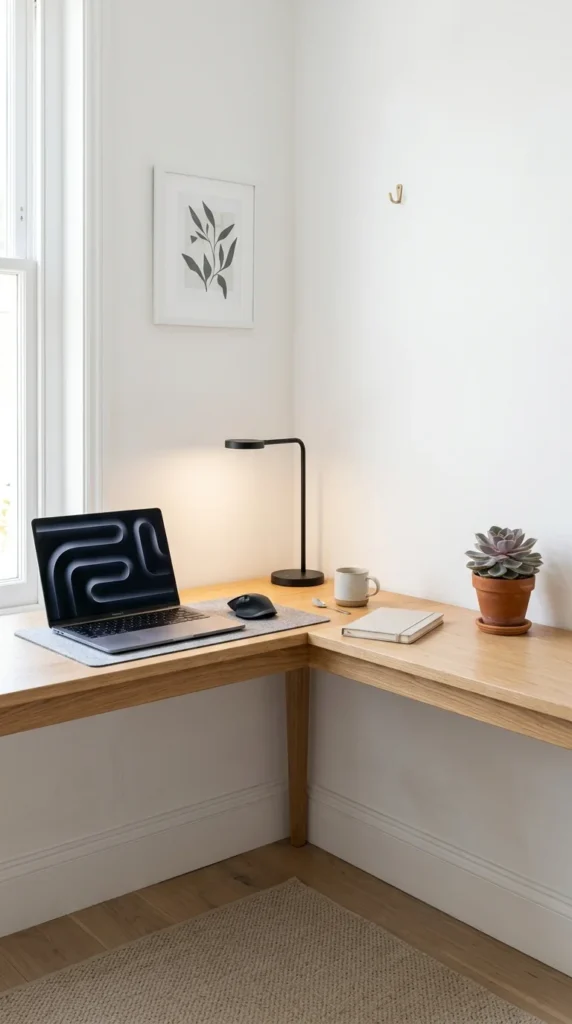
Corners are often underutilized in interior design. A dedicated corner desk—whether triangular or L-shaped—wraps around the architecture of the room to provide a surprisingly large amount of surface area without protruding into the center of the floor. This setup works exceptionally well in bedrooms or living areas where you want to maintain an open walkway.
3. Under-Stairs Nooks
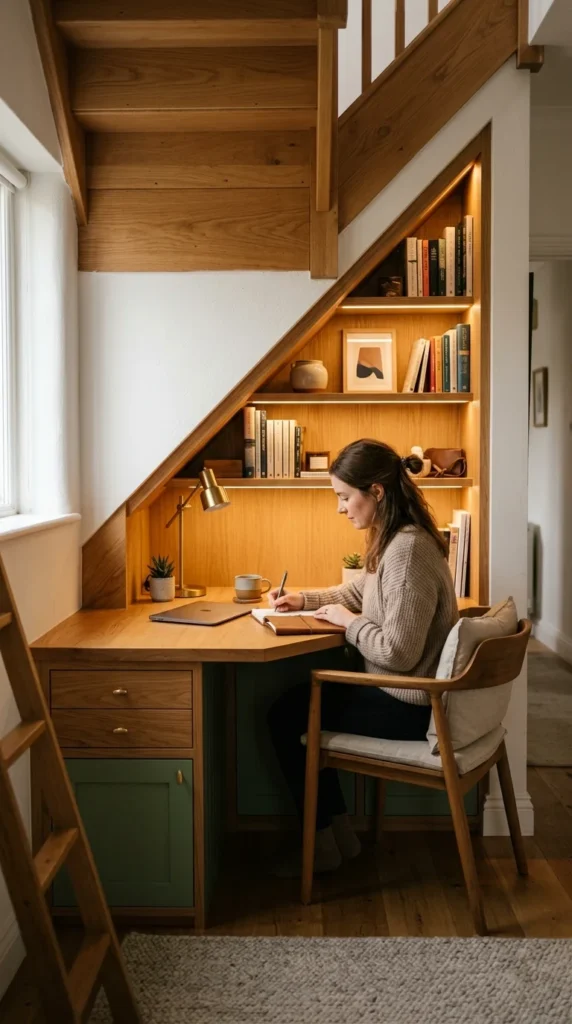
The hollow space beneath a staircase is frequently wasted. By installing a custom-built desk and some overhead lighting, this awkward architectural feature becomes a secluded, quiet zone for deep work. It creates a natural boundary between your professional and personal life without requiring an extra room.
4. Floating Desks
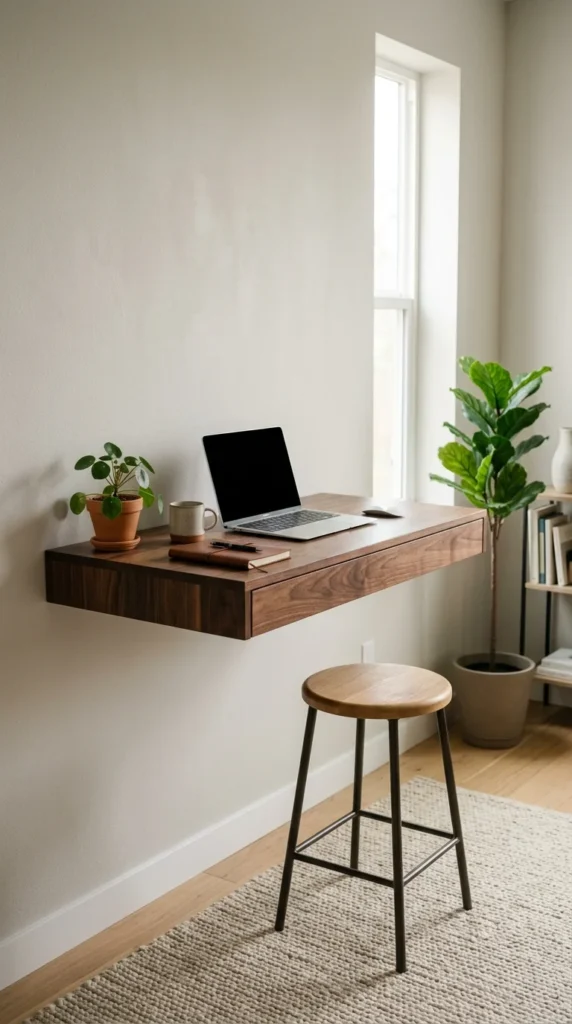
Floating desks are the ultimate space-savers because they eliminate bulky legs, making the floor appear more spacious. Mounted directly to the wall studs, these desks can be placed at any height, allowing for a customized ergonomic setup. They are ideal for narrow hallways or the side of a living room where a traditional desk would feel too heavy.
5. Fold-Down Desks
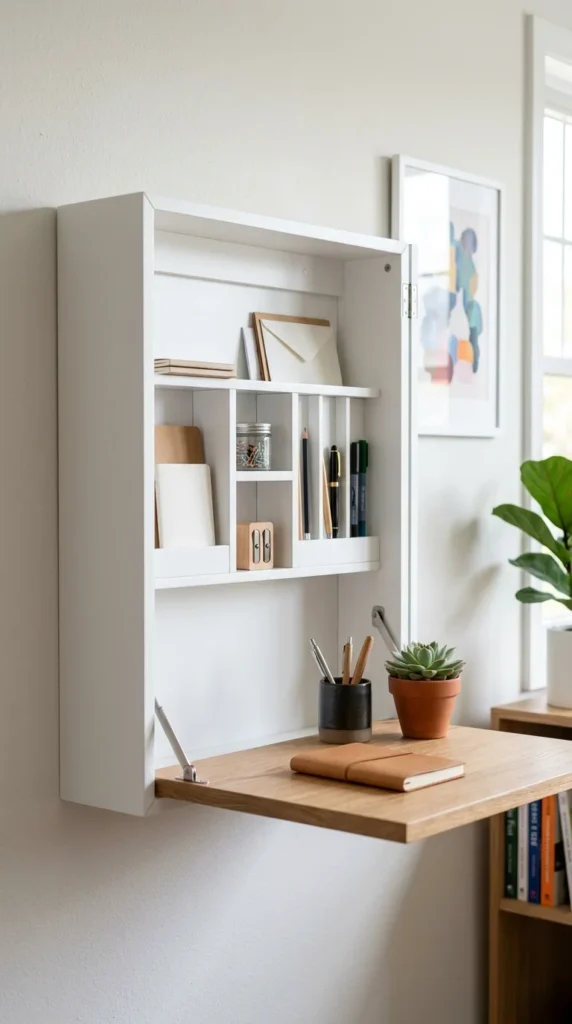
Also known as “drop-leaf” or “secretary” style wall units, fold-down desks are perfect for those who only need a computer surface for a few hours a day. When folded up, they look like a slim cabinet or even a piece of wall art. When folded down, they provide a sturdy surface for a laptop. This is the best option for high-traffic areas like kitchens or studios.
6. Behind-the-Couch
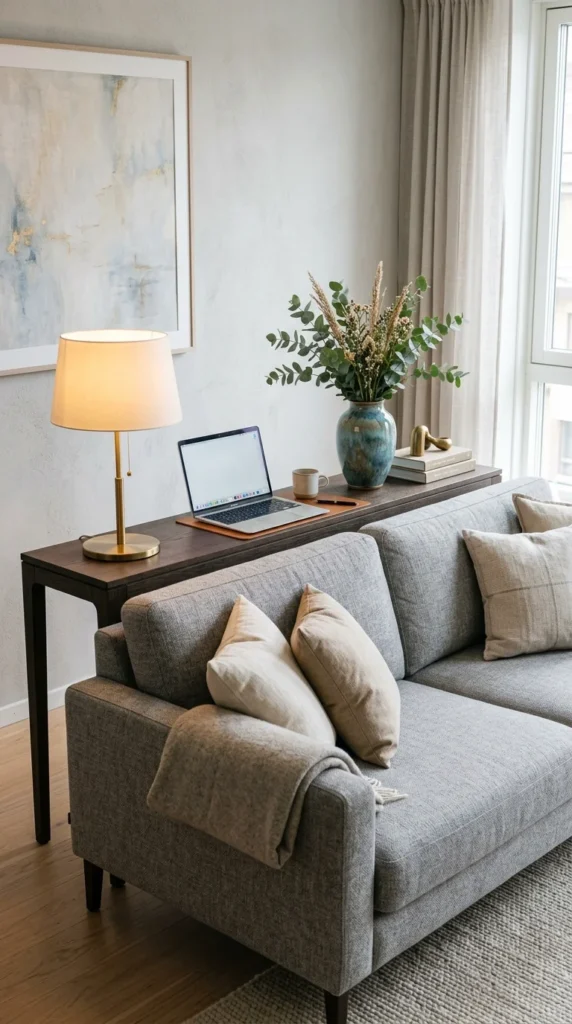
If your living room is open-plan, try placing a long, narrow console table behind your sofa. This acts as a divider between the seating area and the rest of the room while serving as a functional desk. It allows you to face the room (or the TV) while working, preventing that feeling of being “stowed away” in a corner.
7. Bedside Workspaces
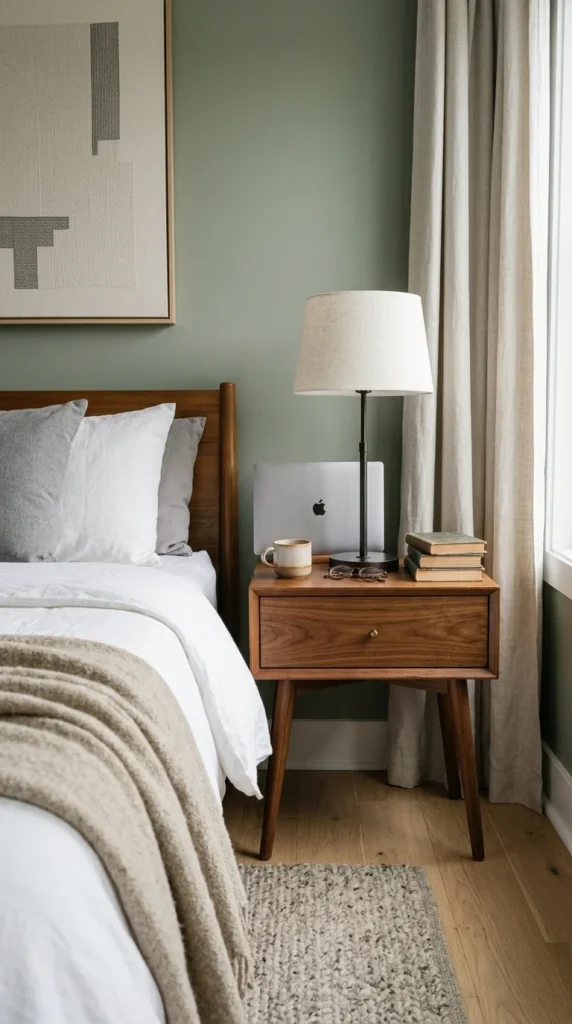
In a tiny bedroom, you can replace one nightstand with a small writing desk. This dual-purpose furniture serves as a place for your phone and lamp at night and a dedicated workstation during the day. Choose a chair that can be tucked completely under the desk to keep the bedside clear for movement.
8. Window Sills
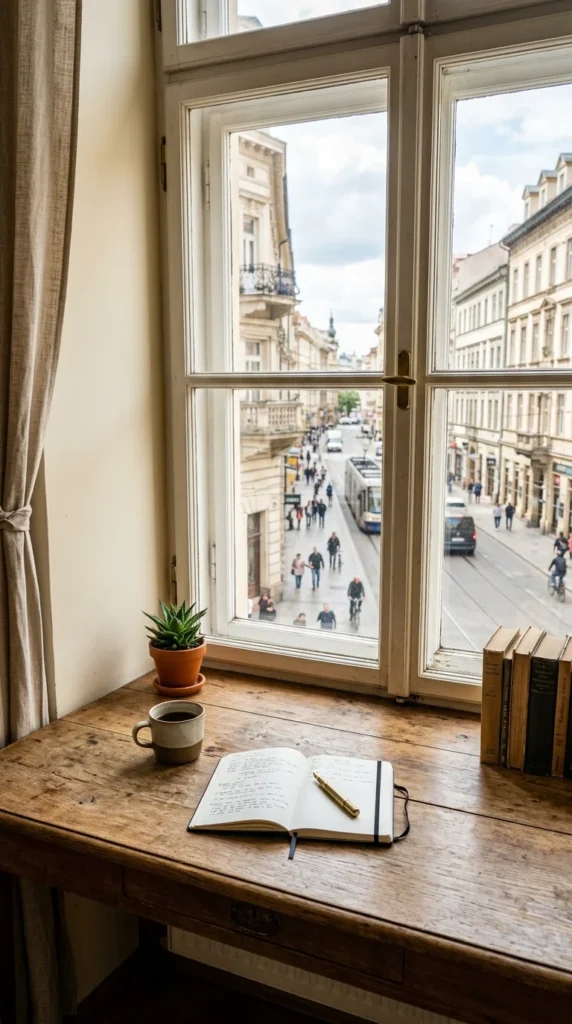
If you have deep window sills, especially in older buildings, you can extend the ledge to create a “view with a room.” Working in front of a window provides natural light, which is proven to boost productivity and mood. If your sills aren’t deep enough, a slim desk placed directly against the window achieves the same effect.
9. Ladder Desks
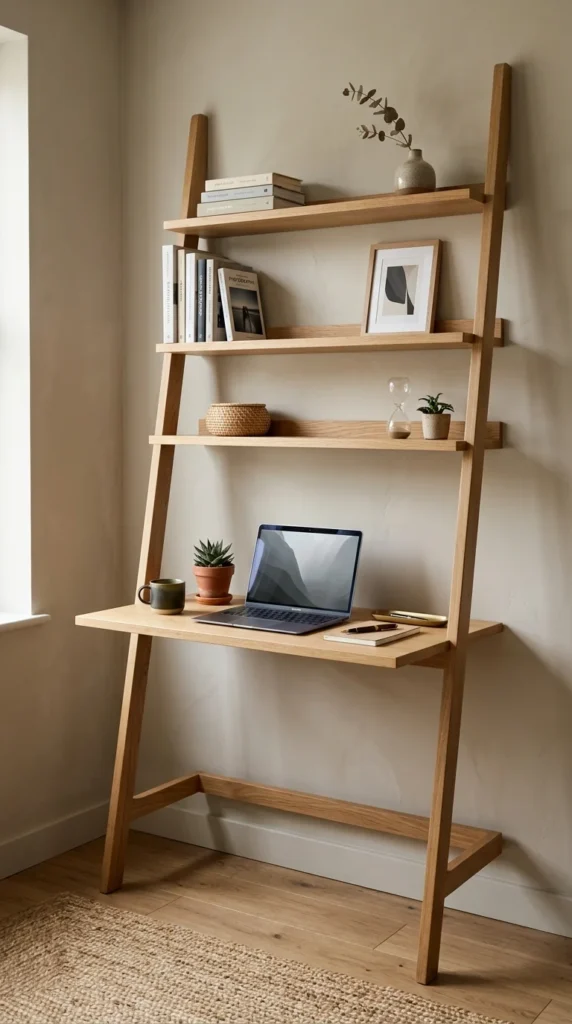
Ladder desks are excellent for renters because they often don’t require heavy wall mounting. They utilize vertical space, providing shelves for storage above the primary work surface. Their footprint is incredibly small, making them a favorite for studio apartments and narrow walls.
10. Room Dividers
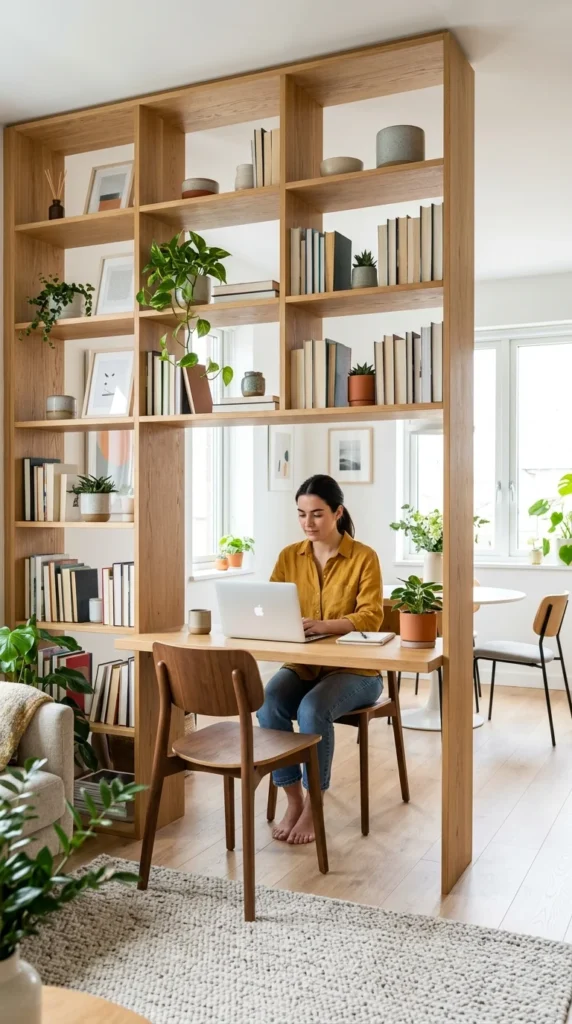
You can use a large, open-backed bookshelf (like the IKEA Kallax) to create a “wall” that separates your sleeping or living area from your office. One of the shelves can be used as the desk surface, or you can push a small desk up against the shelving unit. This provides a sense of privacy and plenty of storage for office supplies.
11. Kitchen Islands
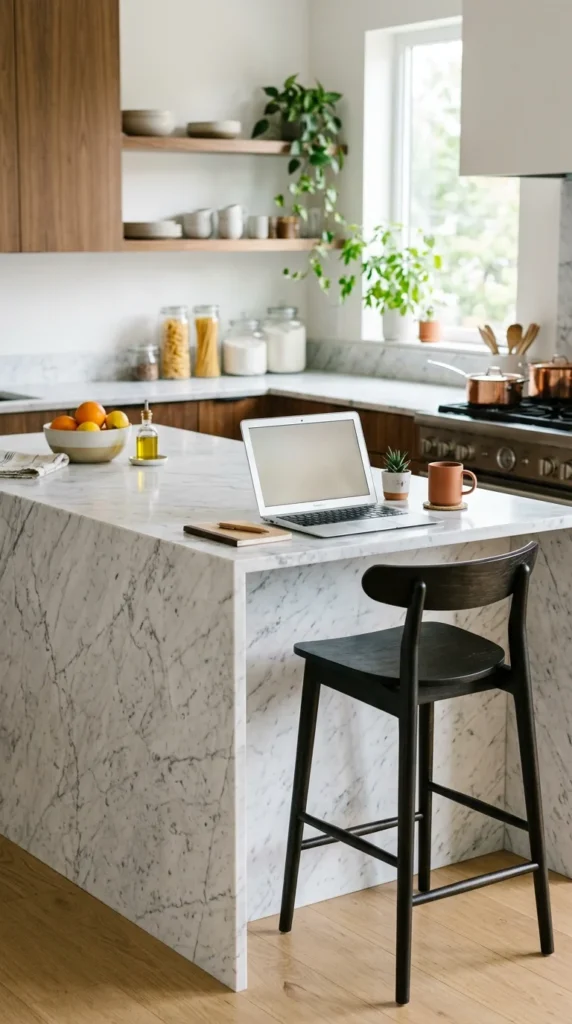
The kitchen is often the heart of the home, and for many, the kitchen island is the most convenient place to work. To make this feel like a real “office,” designate one specific end of the island for work and invest in a comfortable, counter-height stool with back support. Use portable organizers to clear your work gear away quickly before dinner.
12. Hallway Desks
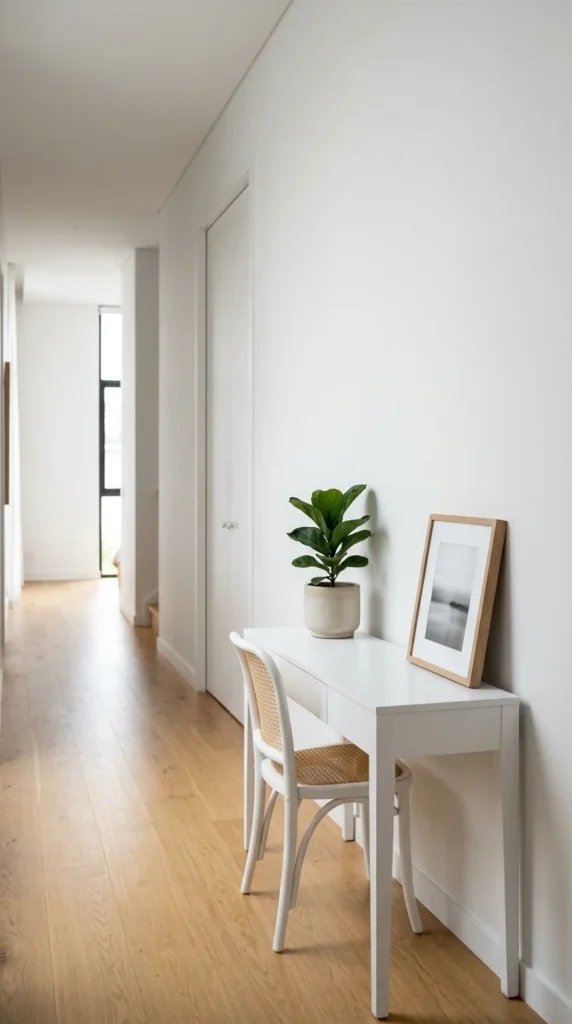
Wide hallways or landings are often overlooked. A very slim “laptop desk”—usually no more than 12 to 15 inches deep—can fit into these transitional spaces without blocking the path. This is a great way to utilize “dead” square footage that usually serves no purpose other than as a walkway.
13. Attic Corners
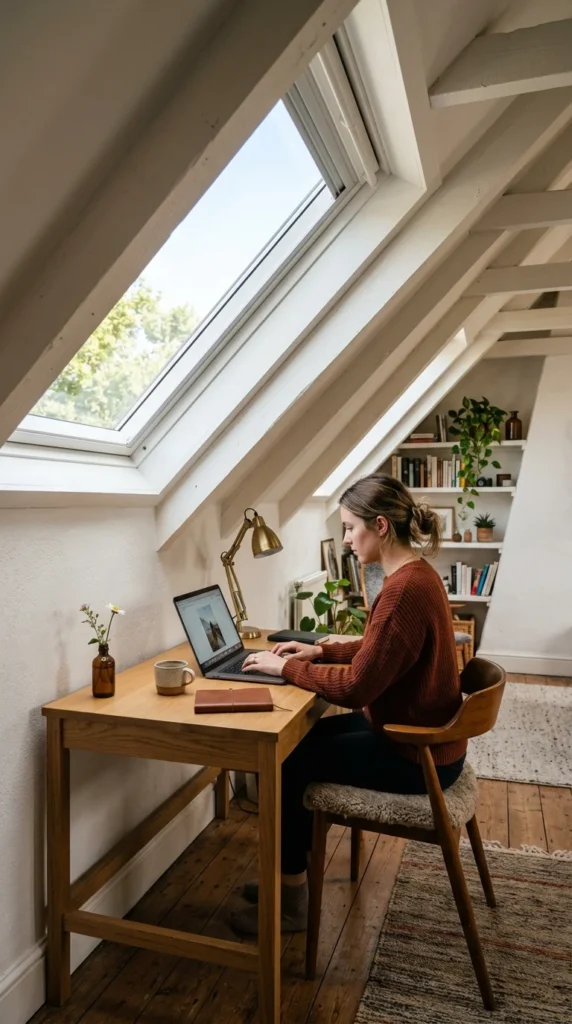
If you have a finished attic, the areas where the ceiling slopes down are often too low for standing but perfect for sitting. A desk tucked into the eaves feels incredibly cozy and private. Skylights in these spaces provide excellent top-down lighting for tasks and video calls.
14. Rolling Carts
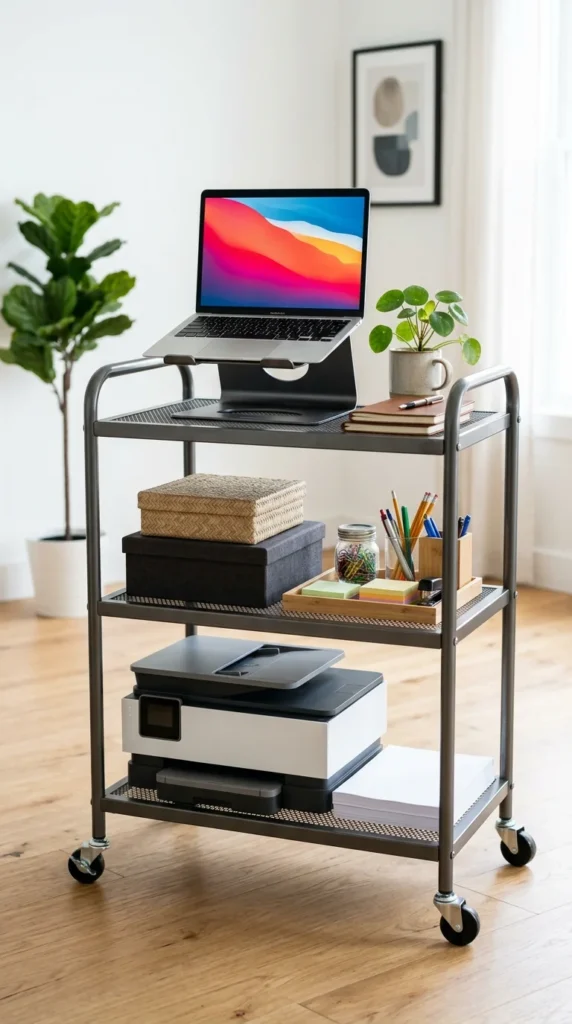
For those who don’t have a permanent spot, a rolling office cart is a game-changer. You can keep your laptop, chargers, files, and stationery on the cart and wheel it to the dining table, the couch, or even the bed. When you’re done, wheel it into a closet or a corner to reclaim your living space.
15. Wall-Mounted Units
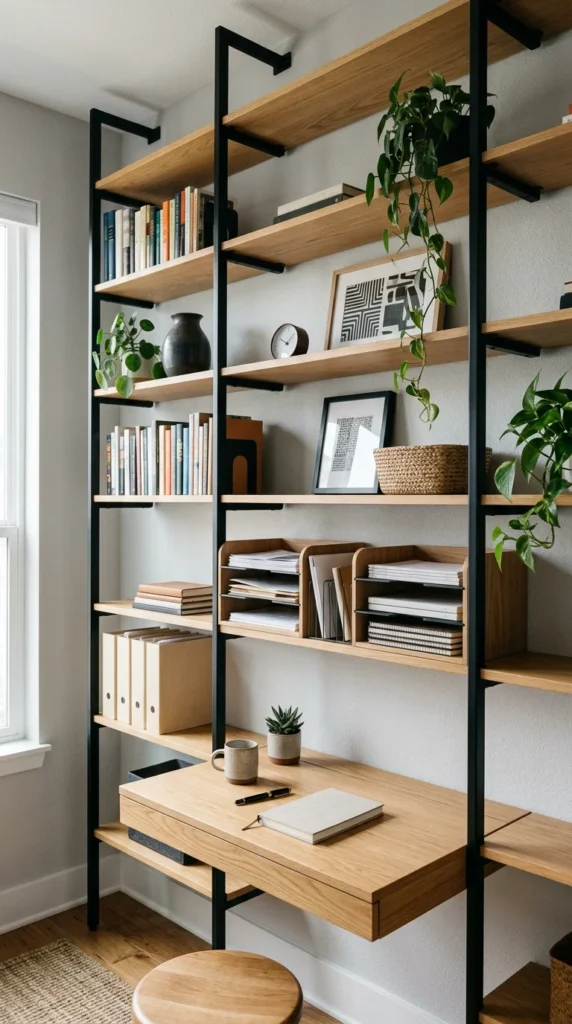
Modular wall units (like the String system) allow you to build a custom office that scales with your needs. You can start with just a desk shelf and add more storage shelves or cabinets as needed. Because these systems are off the floor, they maintain a light, airy feel in small rooms.
16. Murphy Desks
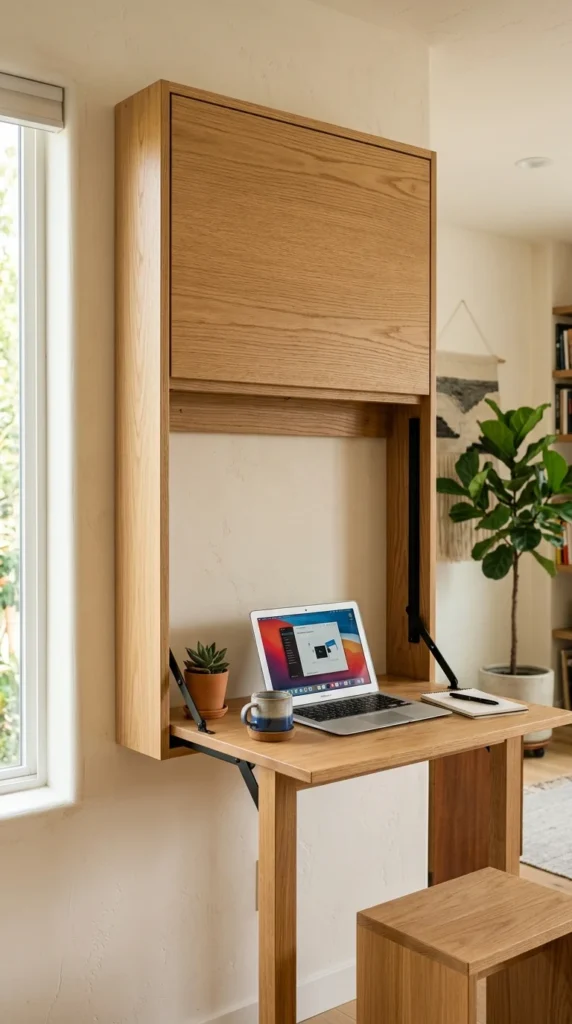
Similar to a fold-down desk but usually larger and more robust, a Murphy desk is designed to handle a full desktop setup. Some versions even have “legs” that fold out for extra stability. This is the ultimate “now you see it, now you don’t” solution for multi-purpose rooms.
17. Multipurpose Tables
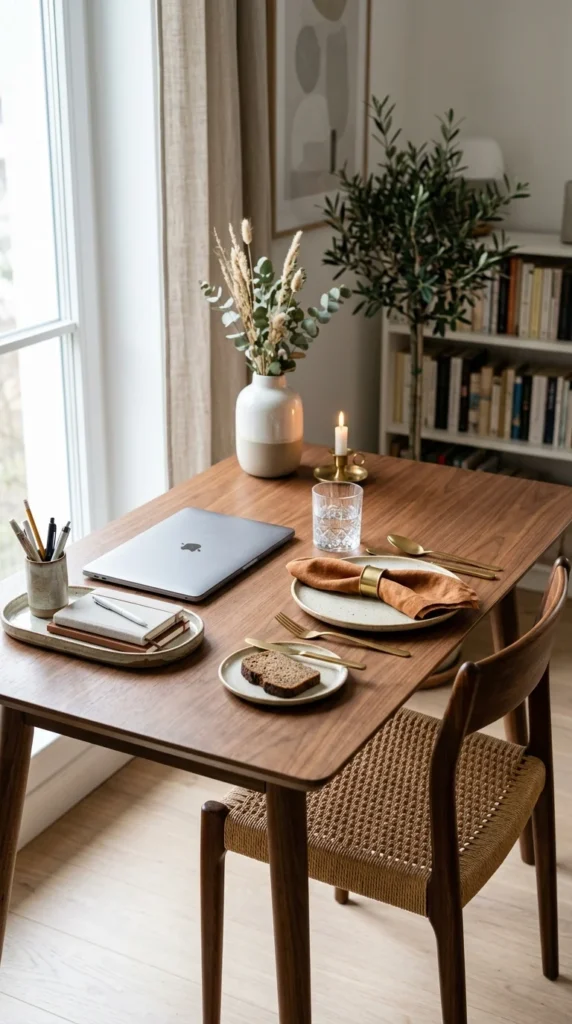
If you don’t have room for two tables, invest in one high-quality dining table that doubles as a desk. The key is cable management. Use adhesive clips under the table to hide cords, and use a decorative basket nearby to stash your laptop and mouse when it’s time to eat.
18. Vertical Storage
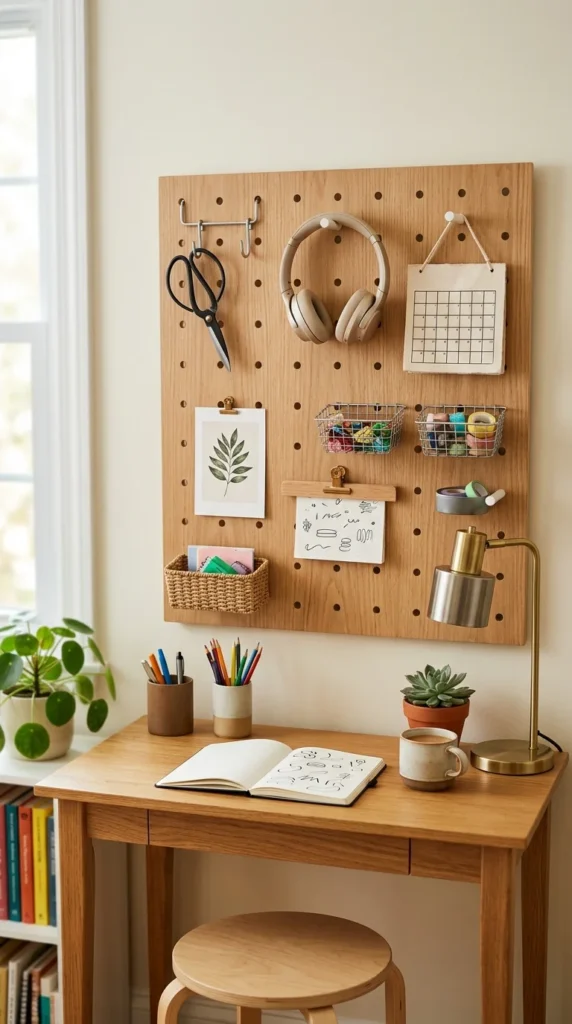
In a tiny office, your walls are your best friend. Instead of a large desk with drawers, use a small, simple table and move all your storage to the wall. Pegboards, grid panels, and floating shelves allow you to keep your desk surface completely clear for your computer and notebook.
19. Loft Beds
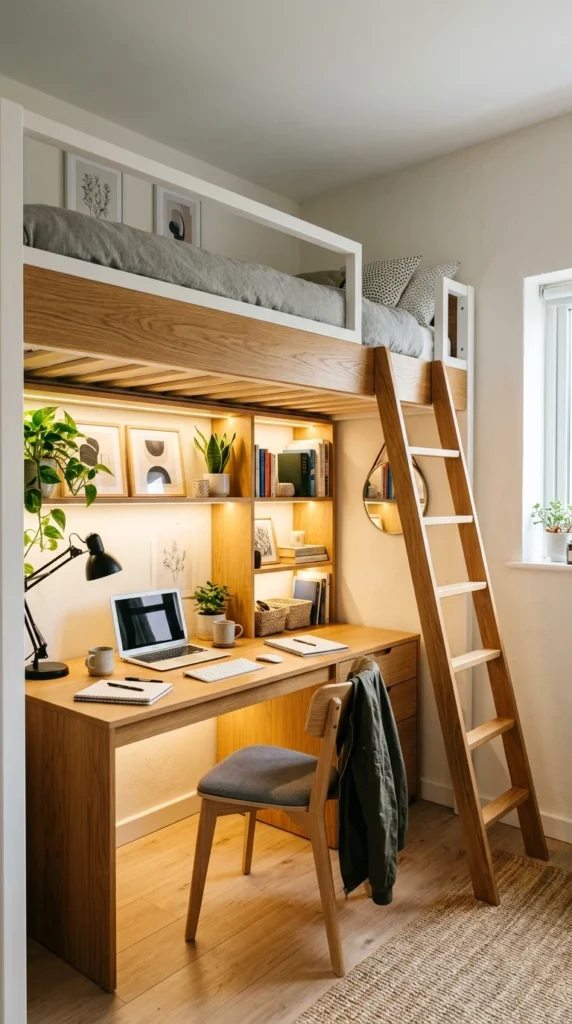
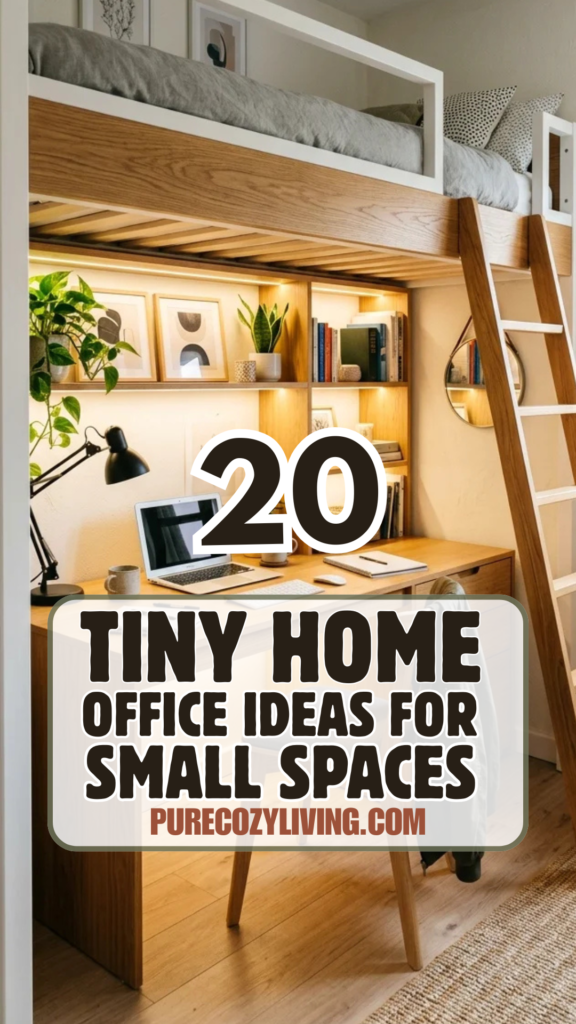
For children’s rooms or very small studio apartments with high ceilings, a loft bed is the ultimate space-saver. By elevating the sleeping area, you free up the entire footprint of the bed for a full-sized desk, a filing cabinet, and even a small bookshelf.
20. Sunroom Nooks
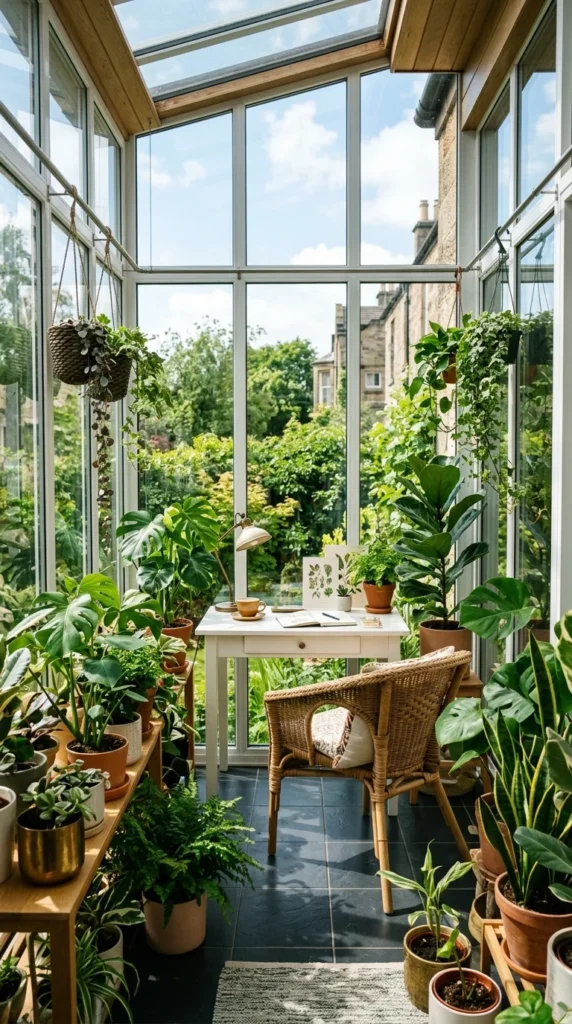
If you have a small sunroom or an enclosed balcony, it can make for an inspiring office. The abundance of glass provides a connection to the outdoors, which can reduce the “cabin fever” often felt in small apartments. Just ensure you have proper climate control and a screen with anti-glare coating to handle the direct sunlight.