
The entryway is more than just a transition zone; it is the first impression your home makes on guests and the final space you see before heading out into the world. In the world of interior design, minimalism isn’t just about having “less”—it is about ensuring that every piece serves a purpose, whether functional or aesthetic. A minimalist entryway creates a sense of calm and order, stripping away the chaos of daily life to provide a serene welcome.
By focusing on clean lines, neutral color palettes, and high-quality materials, you can transform a cluttered foyer into a sophisticated gallery of modern living. Here are 20 minimalist entryway decor ideas to inspire your next home makeover.
1. Floating Shelves
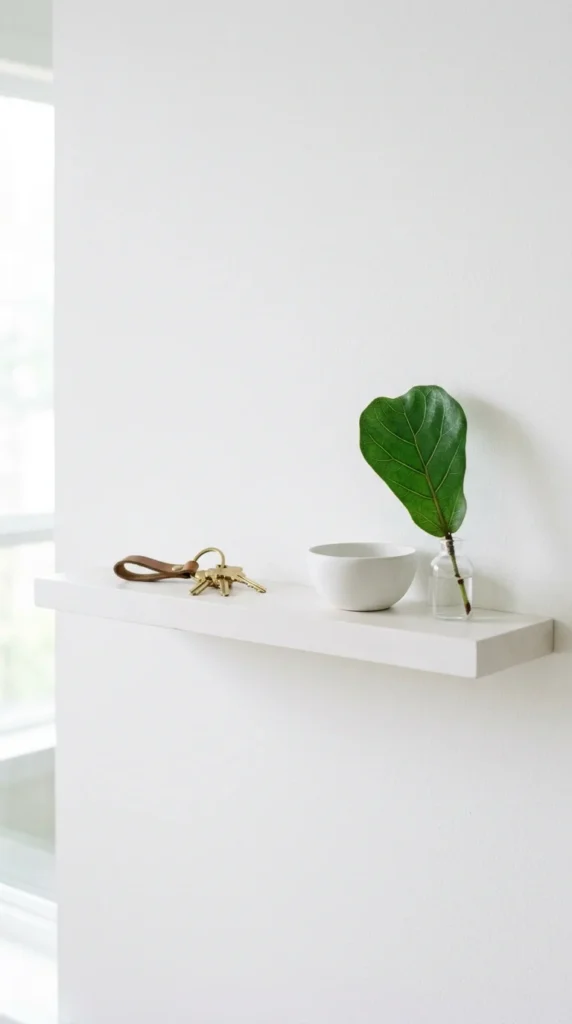
Floating shelves are the ultimate tool for the minimalist decorator. By removing the legs of a traditional console table, you free up floor space, making even the smallest entryway feel expansive and light. These shelves provide a designated spot for essentials like keys and mail without the visual weight of heavy furniture. To maintain the look, keep the styling sparse; choose one or two high-quality items rather than a collection of trinkets.
2. Circular Mirrors
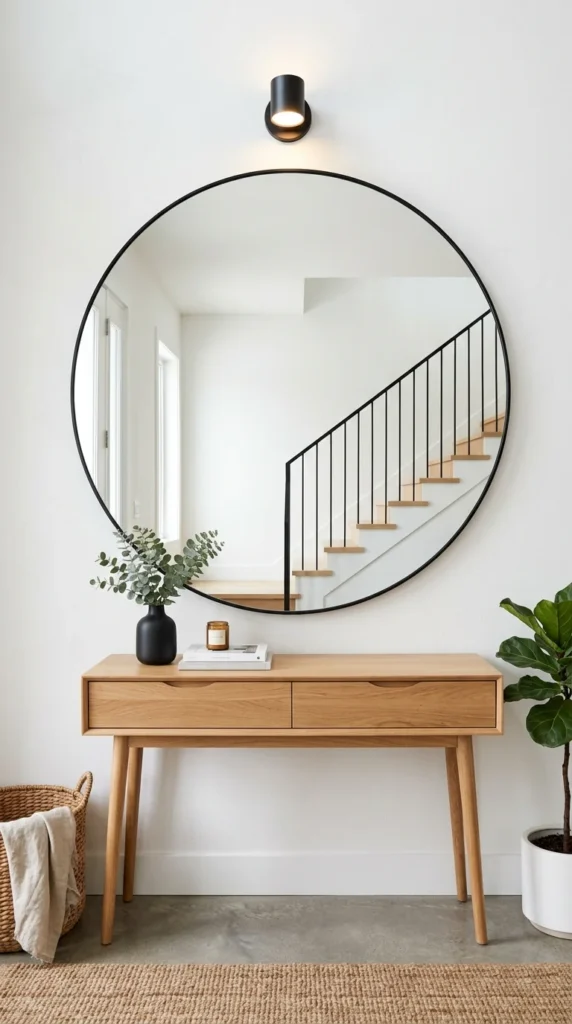
Mirrors are essential for last-minute appearance checks, but they also serve to bounce light around a room. A circular mirror breaks up the rigid vertical and horizontal lines often found in hallways and doors. The soft curves provide a visual “rest” for the eyes. Opt for a thin frame in black, gold, or natural wood to keep the focus on the reflection and the shape itself.
3. Simple Benches
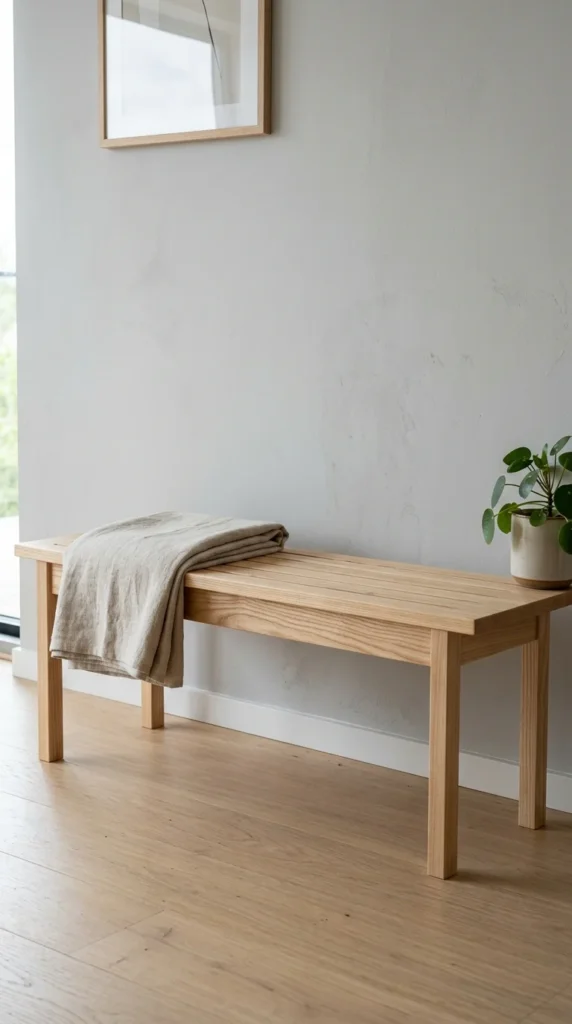
A minimalist bench offers a practical place to sit while putting on shoes without overwhelming the space. Look for designs with “leggy” silhouettes—thin, tapered legs allow you to see more of the floor, which creates the illusion of more space. Natural wood finishes add warmth to an otherwise cool or neutral entryway, providing a touch of organic texture.
4. Monochromatic Palettes
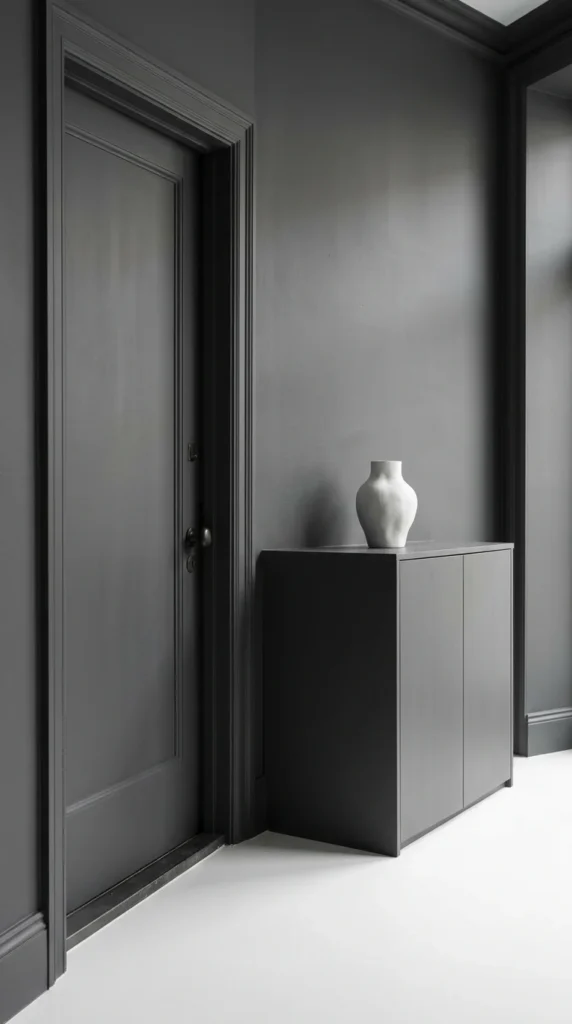
Using a single color for your walls, furniture, and even the door can create a high-end, architectural feel. This monochromatic approach eliminates visual “noise,” allowing the architecture of the space to shine. If you feel a single color is too bold, try “tonal” minimalism—using varying shades of the same hue, such as cream, beige, and sand, to create depth without clutter.
5. Botanical Accents
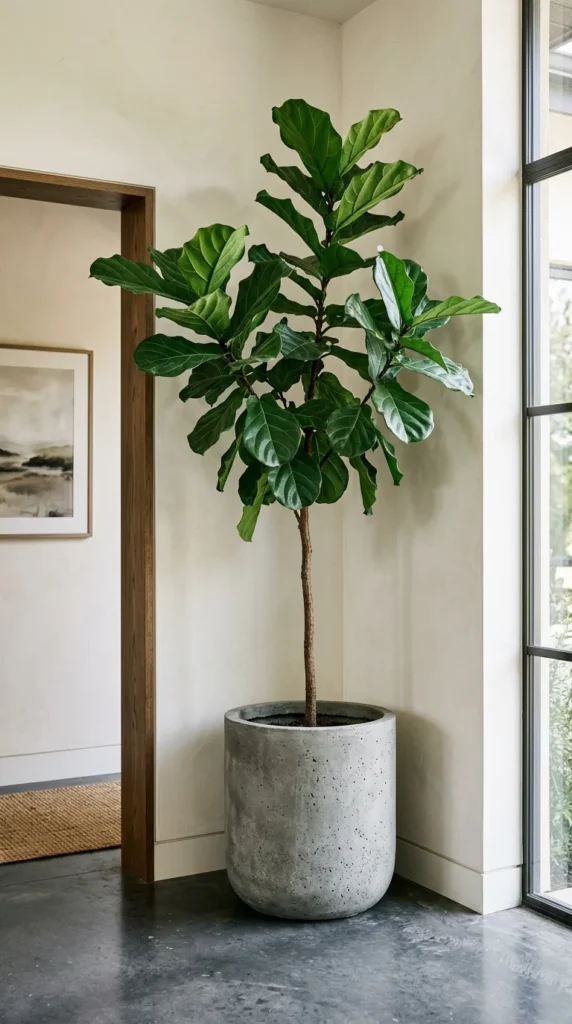
Minimalism can sometimes feel cold, but the addition of a single living plant brings immediate life and vibrancy. Instead of many small pots, choose one large statement plant. A snake plant, a fiddle leaf fig, or a simple olive tree in a neutral pot provides a pop of color and an organic shape that contrasts beautifully with sharp modern lines.
6. Hidden Storage
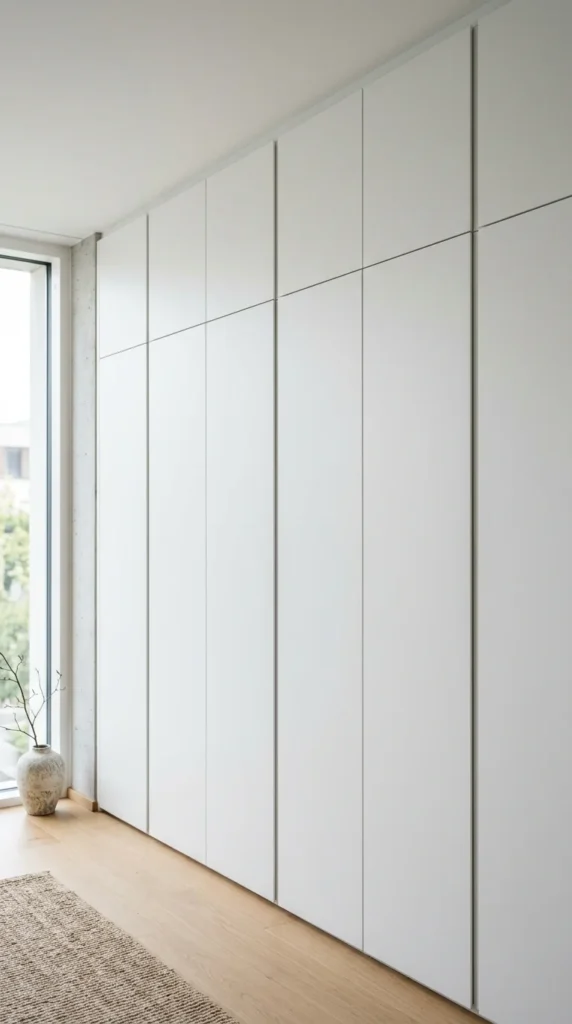
The secret to a successful minimalist entryway is effective storage. If you have the space, built-in cabinets that blend into the wall are ideal. By hiding coats, shoes, and umbrellas behind closed doors, you maintain the clean aesthetic of the room. Look for “push-to-open” mechanisms to eliminate the need for handles, keeping the surface perfectly flat and undisturbed.
7. Slim Consoles
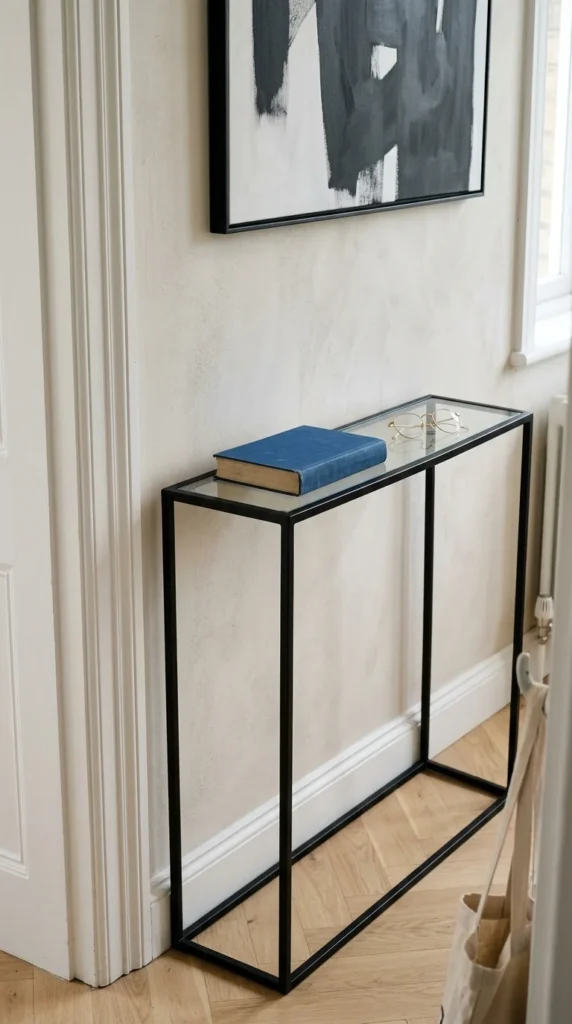
In narrow hallways, every inch counts. A slim console table provides a surface for decor without obstructing the walkway. Metal frames—especially in matte black—are popular in minimalist design because they are incredibly strong while remaining visually light. A glass or marble top can add a touch of luxury without adding bulk.
8. Wall Hooks
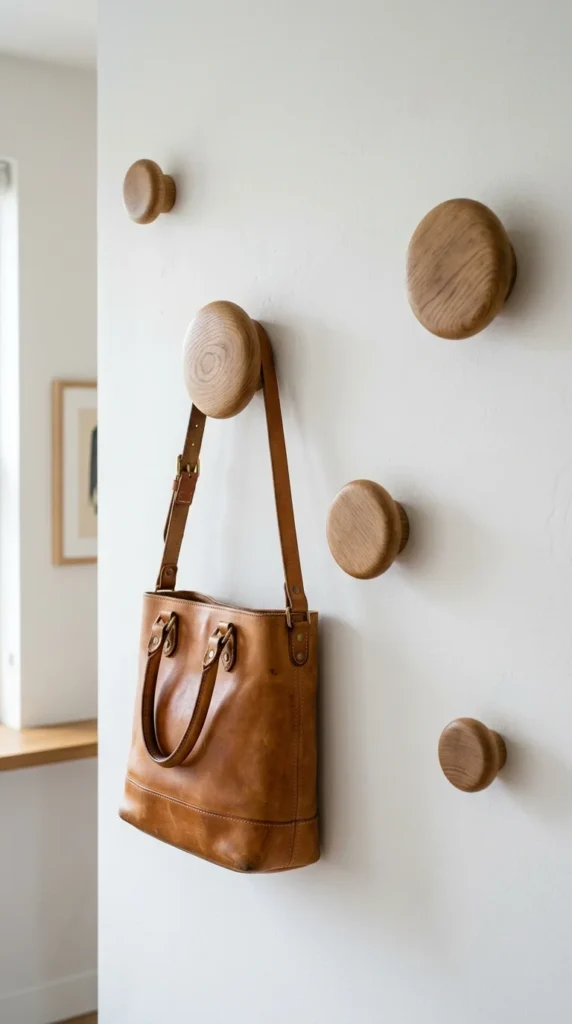
When you don’t have room for a wardrobe, wall hooks are your best friend. Instead of a traditional coat rack, use individual pegs. These can be arranged in a geometric pattern to act as functional wall art when they aren’t in use. Choose high-quality materials like oak, walnut, or brushed brass to ensure they look intentional and stylish.
9. Natural Rugs
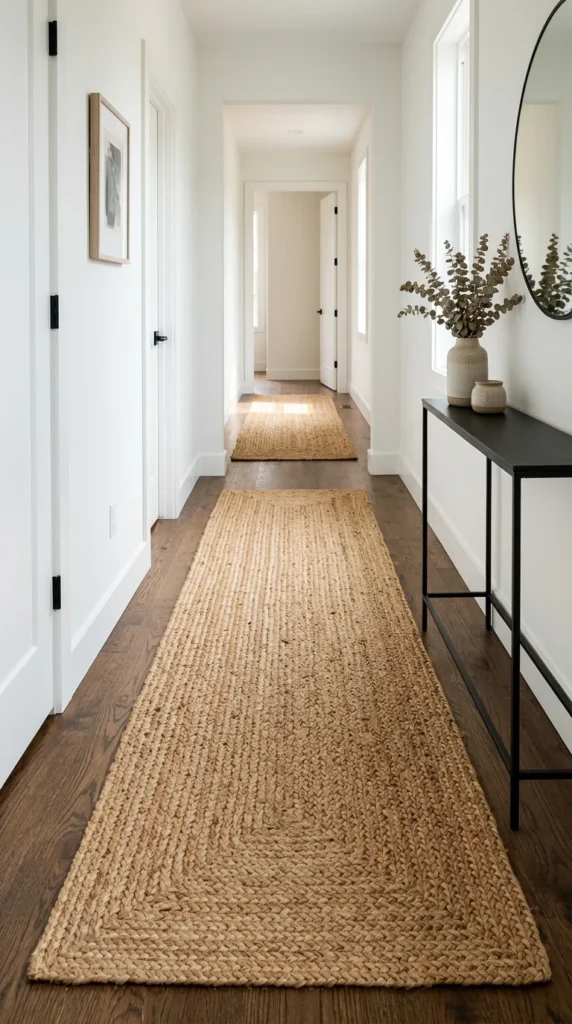
Minimalism doesn’t mean you have to skip the rug. A runner can define the entryway space and add much-needed texture. Stick to natural fibers like jute, sisal, or wool in neutral tones. Avoid busy patterns; instead, let the weave of the fabric provide the visual interest. A low-pile rug is best for entryways as it is easier to clean and won’t catch on the bottom of the door.
10. Glass Elements
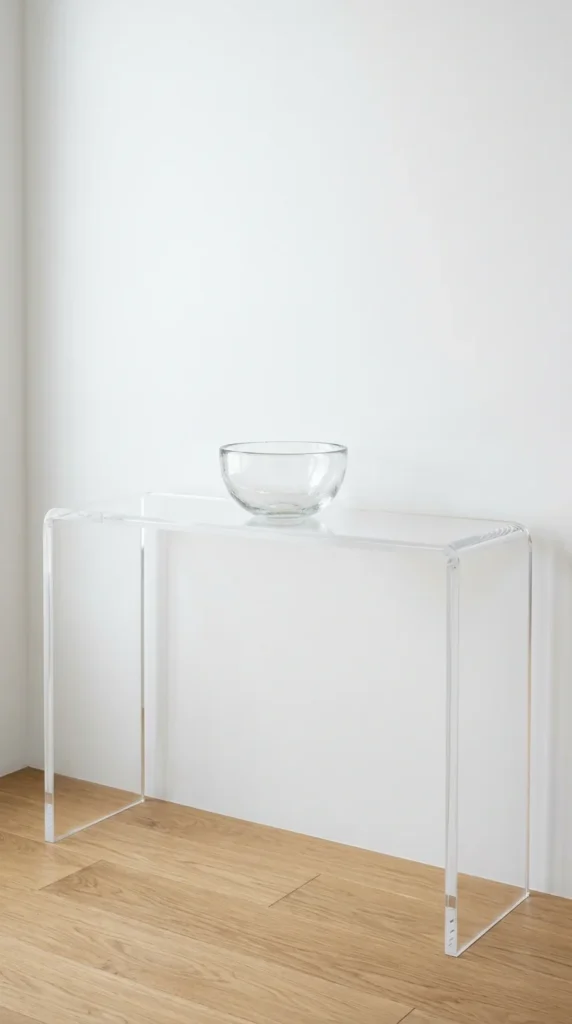
Transparency is a powerful tool in minimalist design. Acrylic or glass furniture “disappears” into the room, making it perfect for small or dark entryways. It allows light to pass through unobstructed, maintaining an airy feel while still providing the functionality of a tabletop.
11. Statement Art
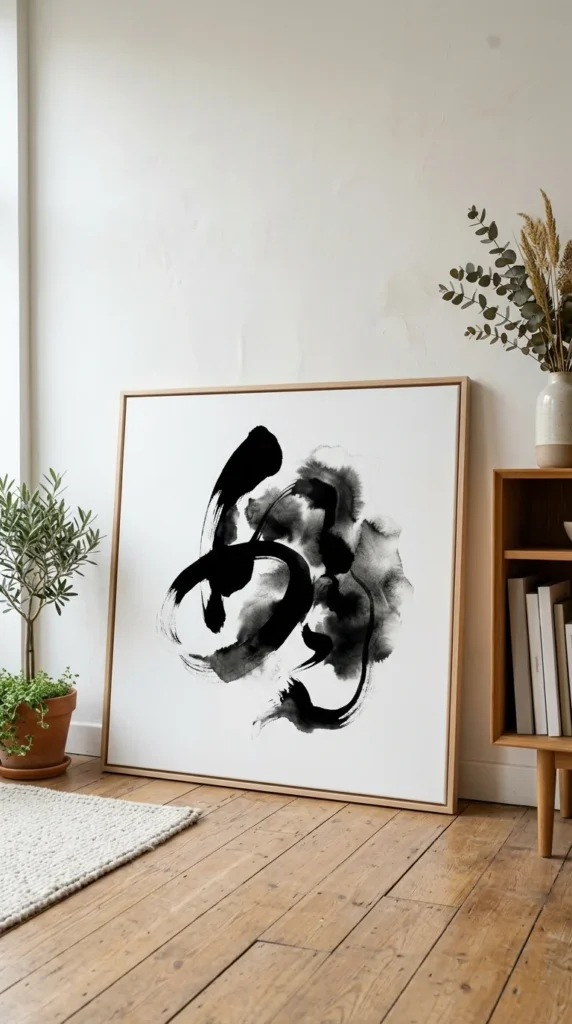
Rather than a gallery wall of many small pictures, choose one large, impactful piece of art. Abstract prints with plenty of white space (negative space) work best in minimalist settings. Leaning the art against the wall on a console or the floor provides a relaxed, contemporary vibe that feels less formal than traditional hanging.
12. Woven Baskets
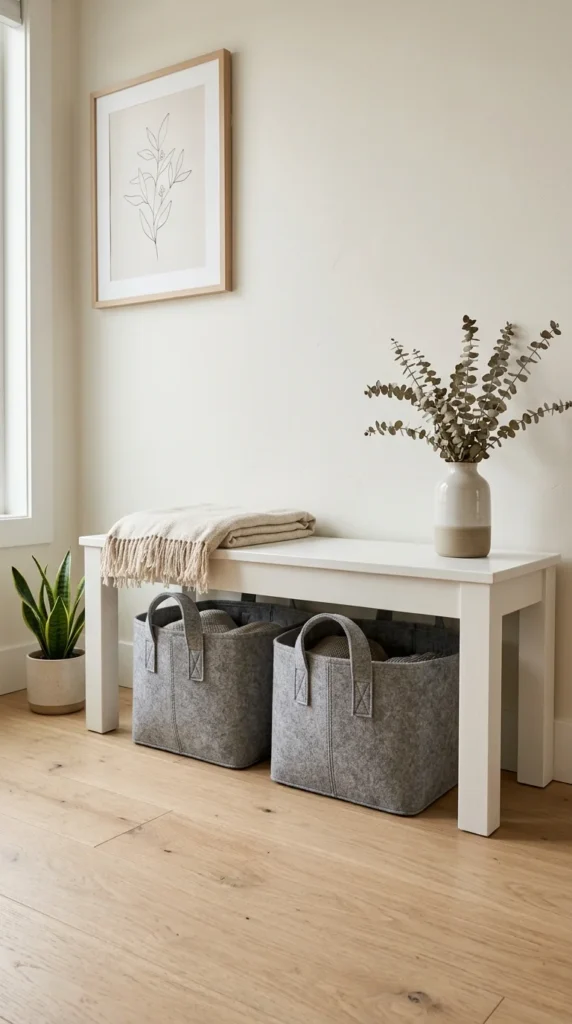
Baskets are the minimalist’s answer to “the junk drawer.” Use them to corral shoes, winter accessories, or dog leashes. By choosing baskets made from natural materials like seagrass, felt, or wicker, you add a layer of soft texture to the room. Keep them tucked under a bench or console to maintain a clear floor.
13. Minimal Lighting
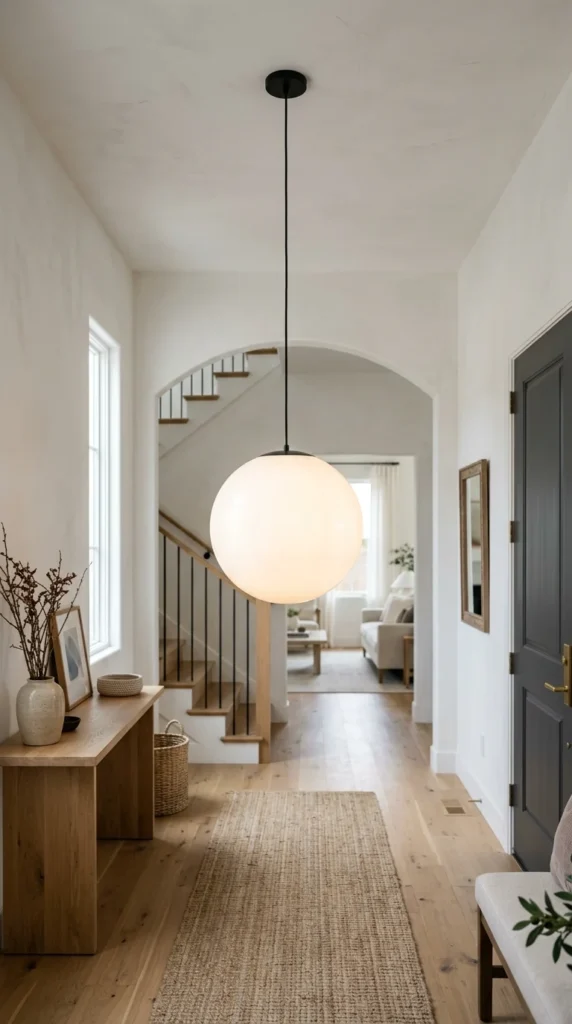
Lighting should be both functional and sculptural. A single pendant light with a clean geometric shape—like a sphere or a disc—can act as the focal point of the ceiling. Avoid overly ornate chandeliers. If you prefer a table lamp, look for designs with a solid base and a simple linen shade to keep the light soft and inviting.
14. Metal Finishes
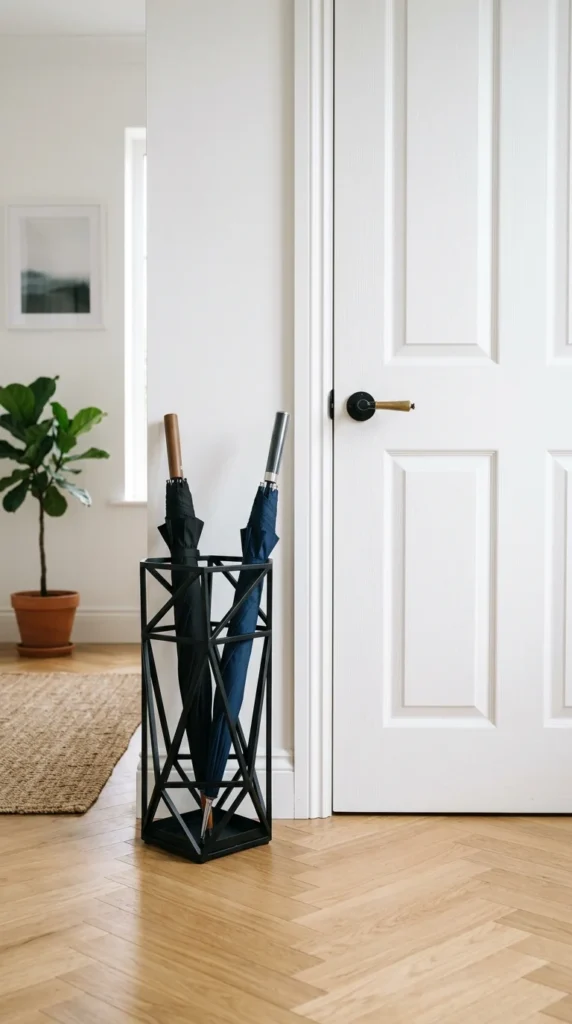
Adding small touches of metal can elevate a minimalist space. Matte black, brushed gold, or polished chrome provide a “finished” look to the room. Use these finishes for your door hardware, coat hooks, or the legs of your furniture. Consistency is key; try to stick to one metal finish throughout the entryway to maintain a cohesive look.
15. Low Profile
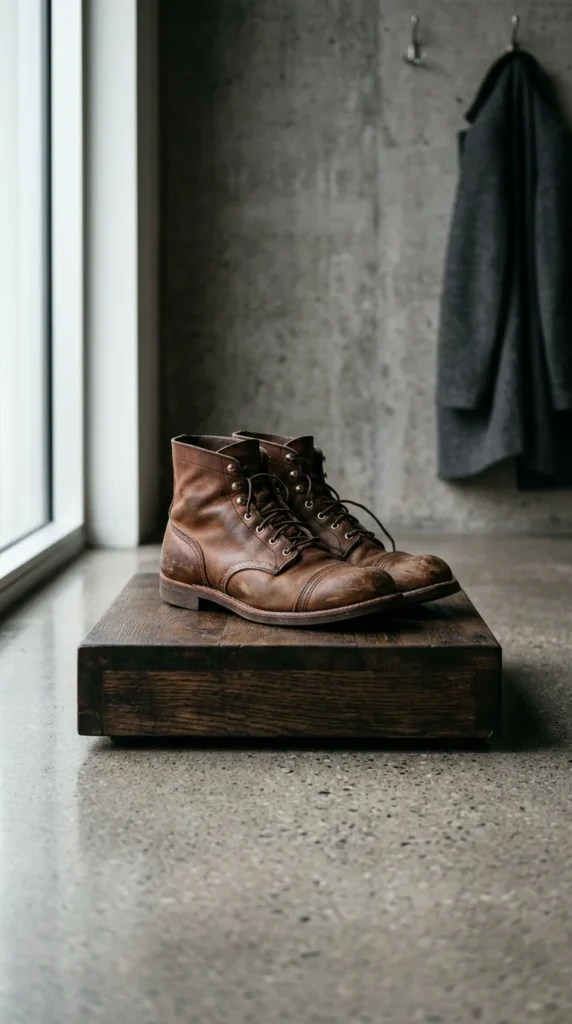
In minimalism, keeping items close to the ground can make the ceilings feel higher and the room feel more open. A low-profile shoe rack or a simple platform for boots keeps the entryway organized without taking up vertical wall space. This approach works particularly well in homes with an industrial or “Zen” aesthetic.
16. Coordinated Colors
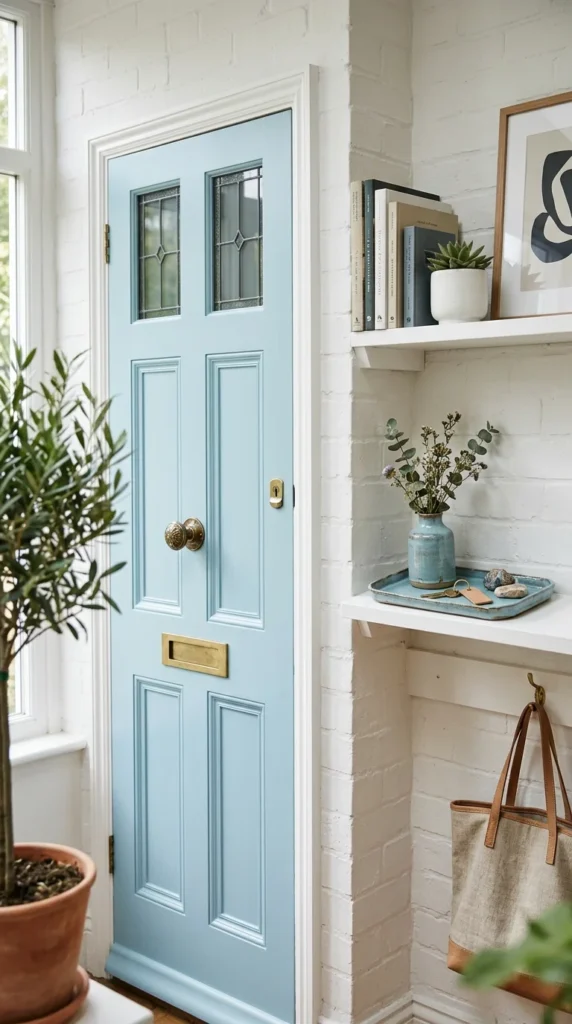
To make a minimalist entryway feel “designed” rather than just empty, coordinate a few key colors. If your front door is a specific color, try to find one or two small accents—like a tray or a piece of art—that mirror that hue. This creates a visual “loop” that ties the entire space together.
17. Bare Windows
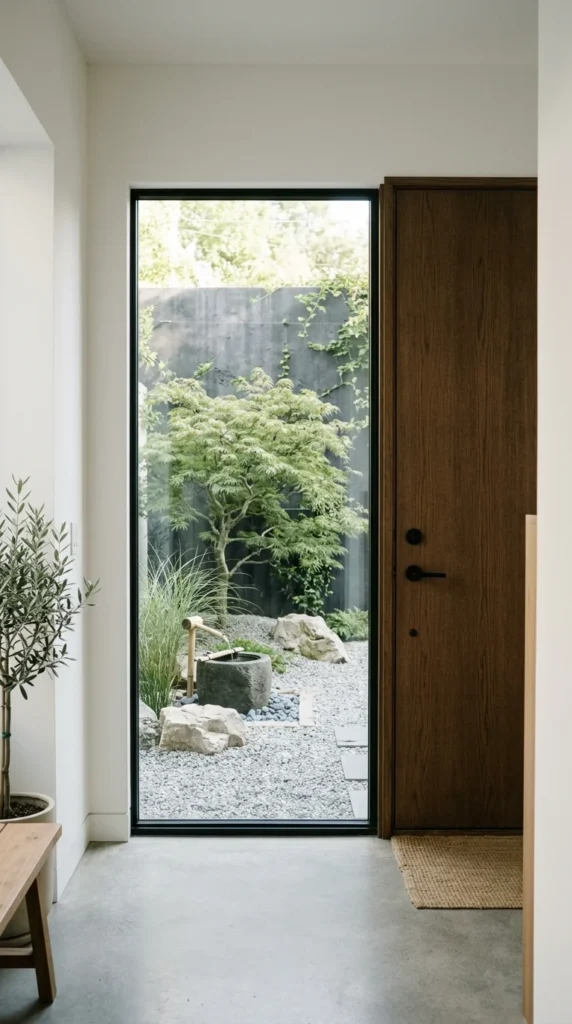
If privacy isn’t a concern, leave entryway windows bare. Natural light is a core component of minimalist design, as it highlights clean surfaces and makes spaces feel larger. If you do need coverage, opt for simple sheer linen curtains or a recessed roller shade that disappears when not in use.
18. Marble Surfaces
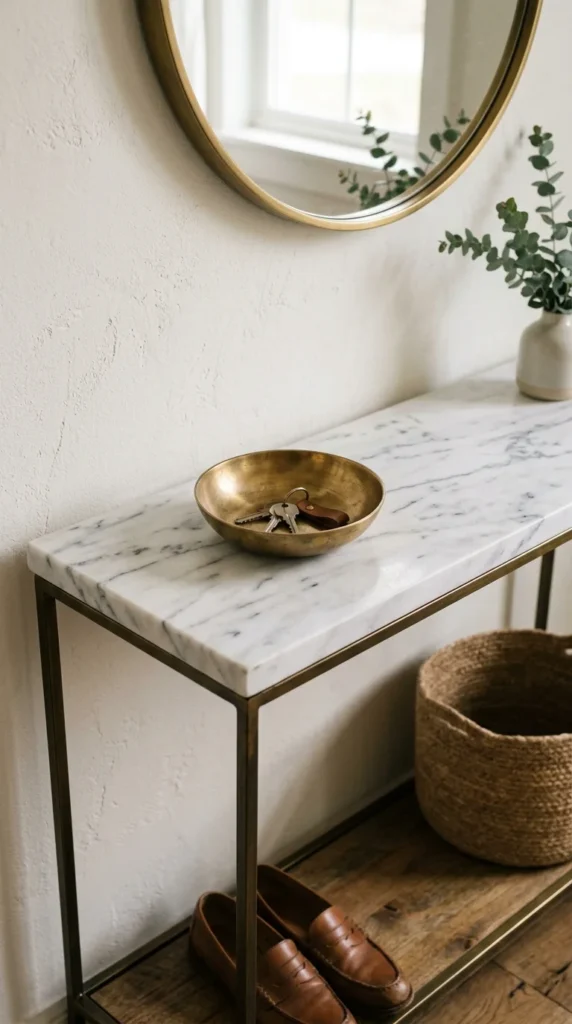
Minimalism relies heavily on the quality of materials. A marble-topped console or a small marble pedestal adds a sense of luxury and permanence. The natural veining in the stone provides all the pattern you need, removing the requirement for extra decor items.
19. Vertical Paneling
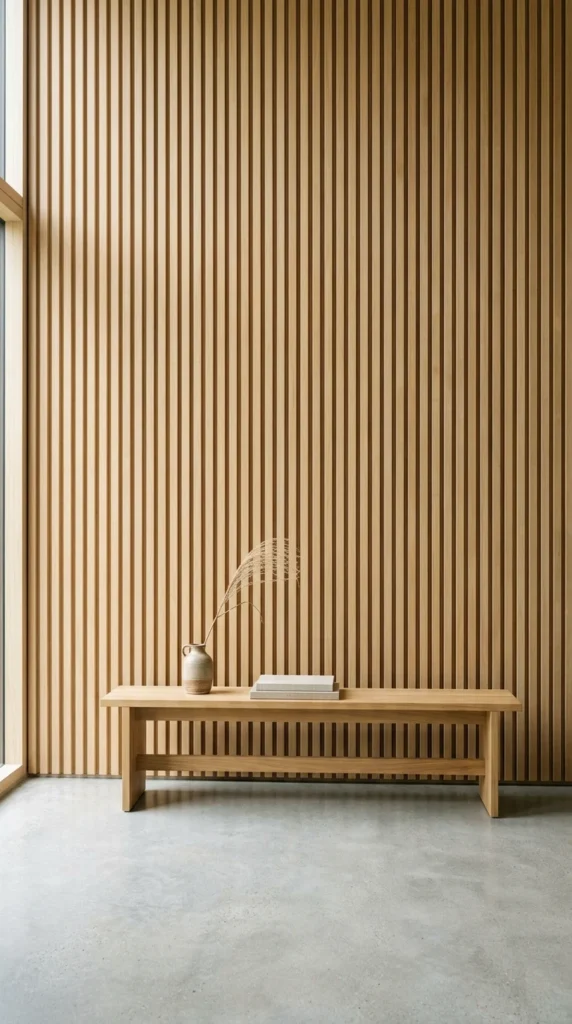
If your entryway feels a bit flat, add architectural interest with vertical wood slats. This “slat wall” trend provides texture and height without the need for paint or wallpaper. It also offers a warm, organic backdrop for minimalist furniture pieces.
20. Negative Space
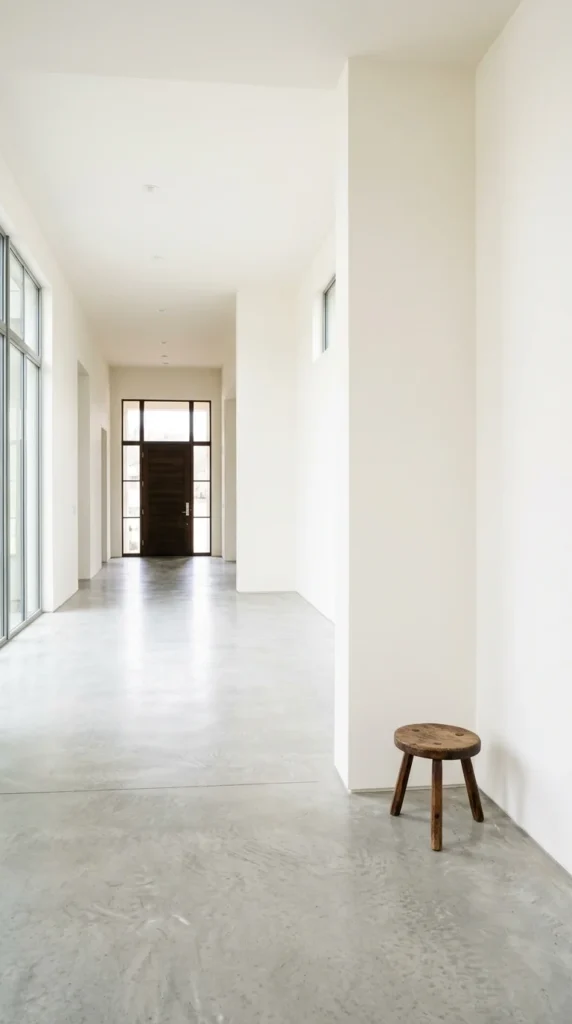
The most important concept in minimalist decor is the “breathable” space. You don’t need to fill every corner. Leaving a wall blank or a corner empty is a deliberate design choice that emphasizes the pieces you have chosen to include. Negative space allows the eye to rest and creates the ultimate feeling of peace as you enter your home.