
The entryway is more than just a transition zone; it is the prologue to your home’s story. In the realm of interior design, minimalism serves as a powerful tool to strip away the chaos of daily life, offering a sense of immediate calm the moment you cross the threshold. A minimalist entryway focuses on intentionality, where every piece of furniture and every decorative element serves a purpose or sparks joy without overcomplicating the visual landscape. By embracing clean lines, a neutral palette, and functional simplicity, you can transform even the smallest foyer into a sophisticated gallery that makes an unforgettable first impression.
1. Floating Consoles
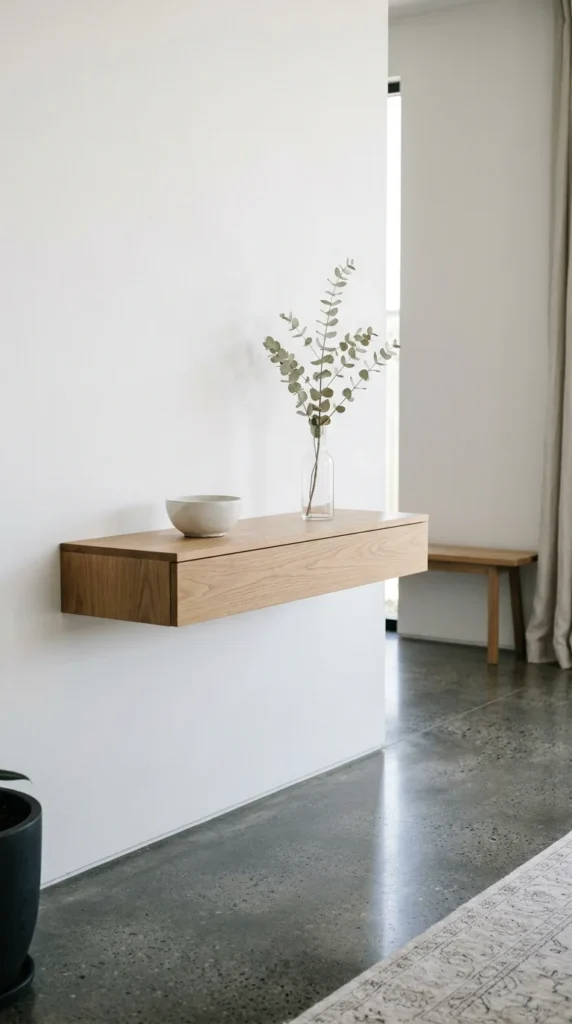
Floating consoles are the epitome of minimalist efficiency. By removing the legs of a traditional table, you create an illusion of more floor space, which is particularly beneficial in narrow hallways. This design choice emphasizes horizontal lines and keeps the area looking “light.” When selecting a floating console, look for materials like light oak, walnut, or matte-finished metal. To maintain the minimalist aesthetic, keep the surface nearly clear—perhaps a dedicated tray for keys and a single decorative object to anchor the look.
2. Statement Mirrors
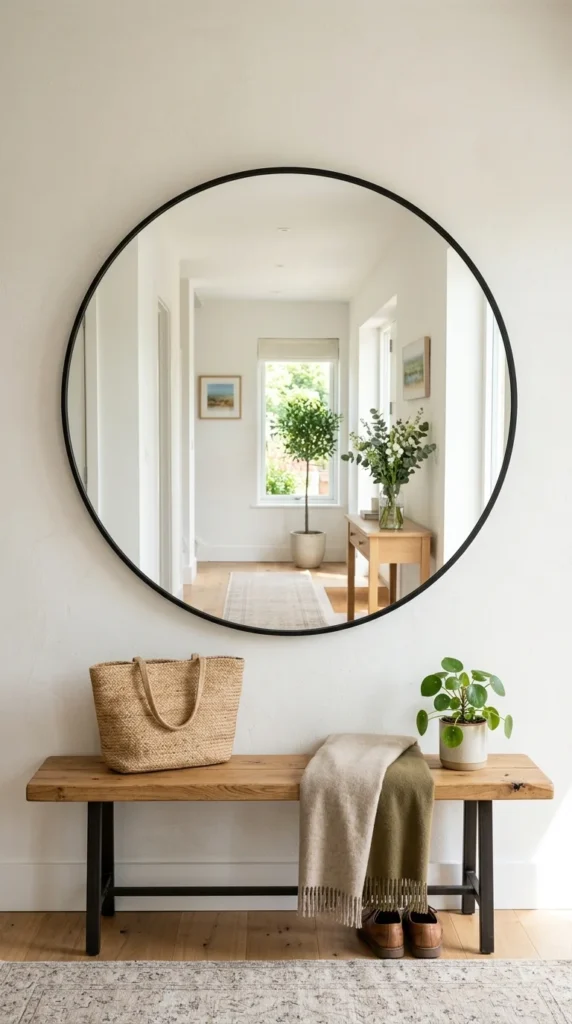
A mirror is a functional necessity in an entryway for last-minute checks before leaving, but in a minimalist space, it also serves as a primary decorative element. A large, circular mirror can soften the rigid lines often found in minimalist architecture. It reflects light, making a cramped foyer feel double its actual size. Choosing a frame that is either non-existent or incredibly thin ensures that the mirror provides a “window” effect rather than adding bulk to the wall.
3. Bench Seating
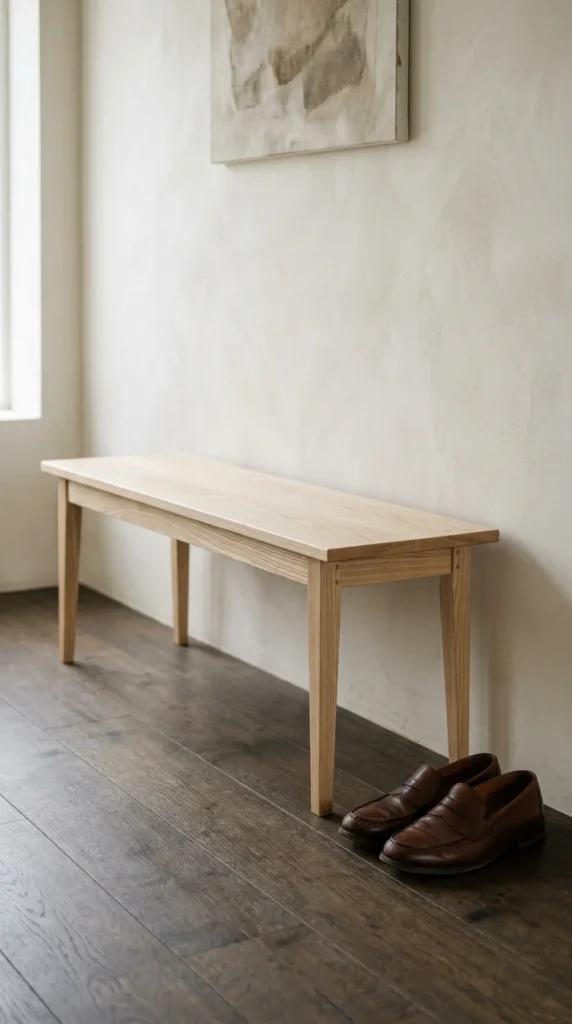
A simple bench provides a practical spot to sit while putting on shoes, yet it maintains a low visual profile. Minimalist benches often feature “Sled” legs or thick, block-like structures that emphasize geometric purity. To keep it from looking cluttered, avoid piling it with pillows. Instead, let the natural grain of the wood or the texture of the material be the focal point. This piece of furniture grounds the entryway, offering a sense of stability and welcome.
4. Monochromatic Palettes
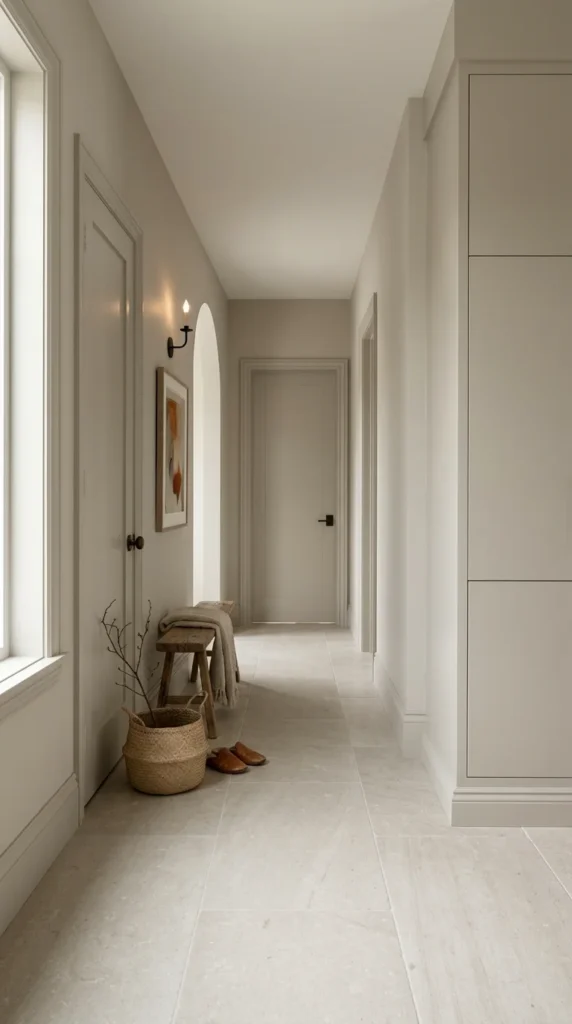
One of the most effective ways to achieve a minimalist look is through a monochromatic color scheme. By using varying shades of a single color—such as warm whites, soft greys, or muted beiges—you eliminate visual noise. This approach allows the architectural details of the home to shine. Texture becomes the “color” in this scenario; think of a matte wall paired with a glossy floor or a woven rug in the same hue. It creates a cohesive, high-end gallery feel that is instantly soothing.
5. Hidden Storage
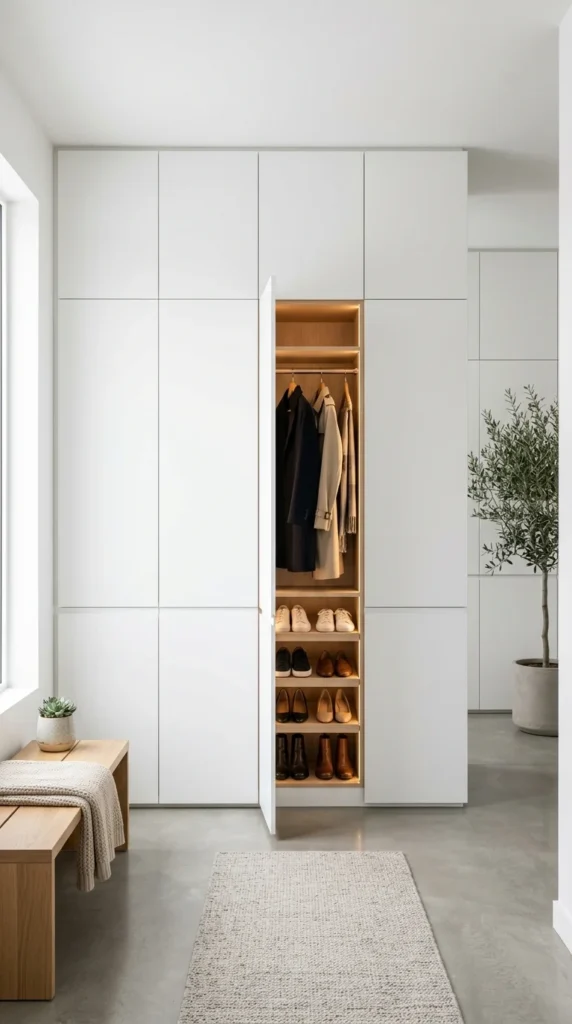
Minimalism is often about what you don’t see. In an entryway, clutter like shoes, umbrellas, and coats can accumulate quickly. Integrated, handle-less cabinetry that blends into the walls allows you to tuck away the mess of daily life. These “invisible” storage solutions keep the entryway looking pristine at all times. When guests arrive, they see a clean, curated space rather than a collection of household utility items.
6. Statement Lighting
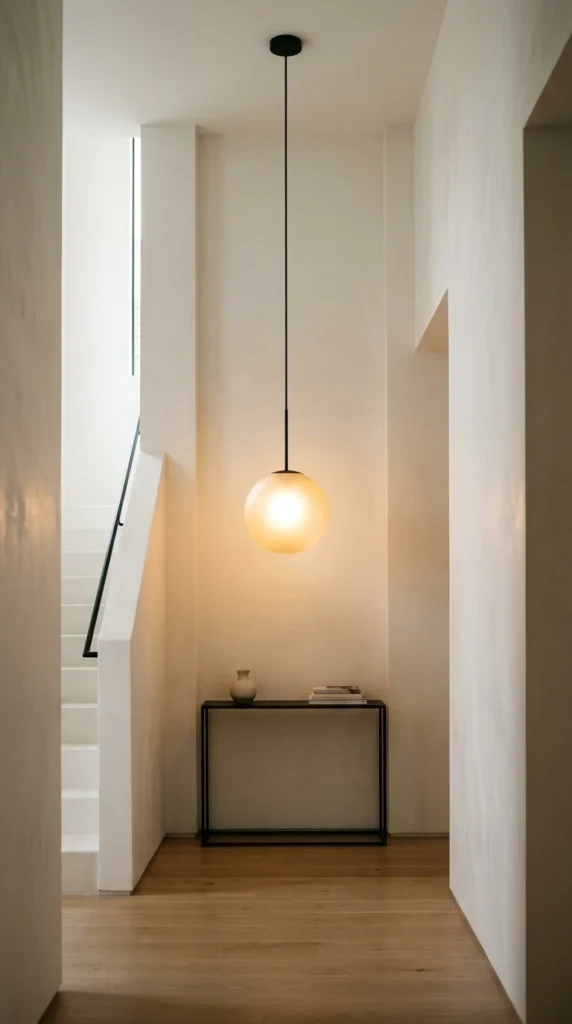
In a space with minimal furniture and decor, lighting becomes the star of the show. A single, well-chosen pendant light or a sculptural chandelier can act as a piece of art. For a minimalist entryway, look for fixtures with clean geometric shapes—spheres, lines, or cones. The goal is to provide a focal point that draws the eye upward without overwhelming the room with excessive detail or ornate crystals.
7. Natural Textures
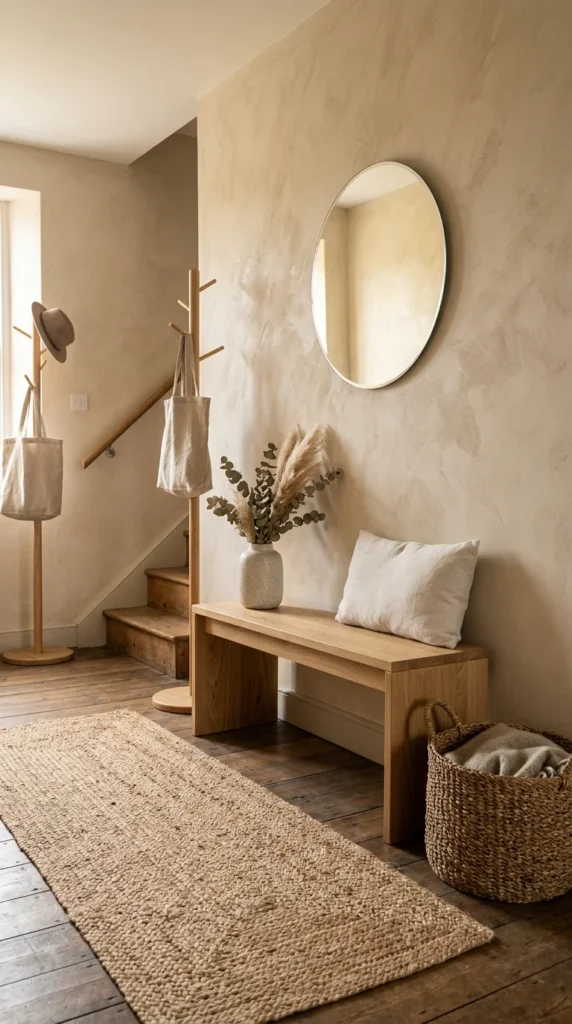
Minimalism doesn’t have to be cold or sterile. By incorporating natural textures like wood, stone, linen, and jute, you add “soul” to the space. A textured jute runner provides a tactile experience underfoot, while a lime-wash wall treatment adds depth without the need for patterned wallpaper. These organic elements bring a sense of the outdoors in, grounding the home in a natural, earthy aesthetic that feels timeless and sophisticated.
8. Single Artwork
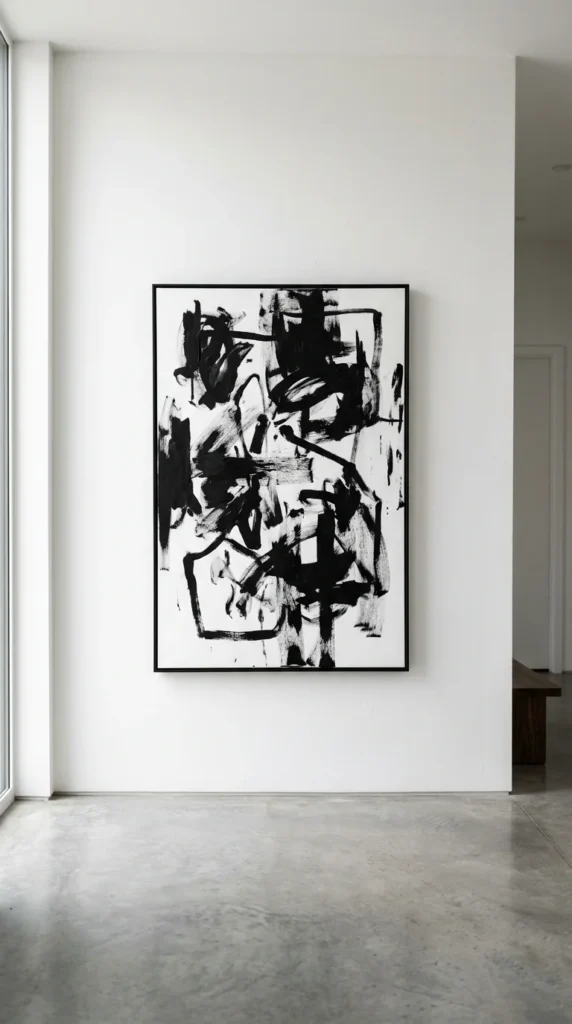
Rather than a gallery wall filled with small frames, choose one large, impactful piece of art. This “less is more” approach creates a sophisticated focal point. Whether it is an abstract painting, a black-and-white photograph, or a textile wall hanging, the key is to give the piece plenty of “breathing room.” The surrounding empty wall space (often called negative space) is just as important as the art itself, as it directs the viewer’s attention and prevents visual fatigue.
9. Indoor Plants
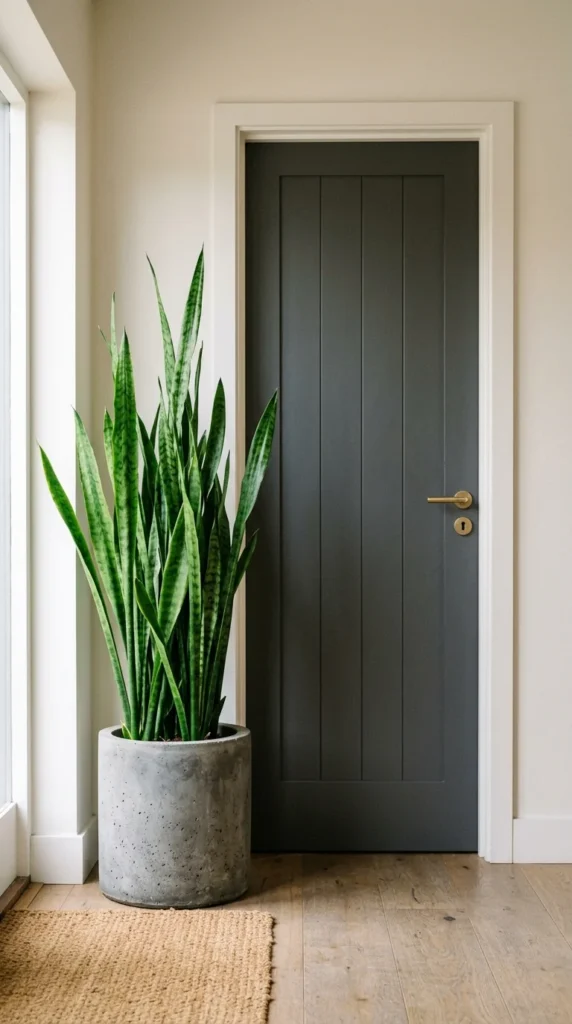
Greenery is the perfect minimalist accessory. It adds life, color, and texture without adding “clutter.” A single, large-scale plant like a Fiddle Leaf Fig or a structural Snake Plant can fill an empty corner beautifully. The key is the planter; choose a pot with a simple shape and a matte finish in a neutral tone like terracotta, charcoal, or white. Plants also help to purify the air, making the first breath you take inside your home feel fresh.
10. Wall Hooks
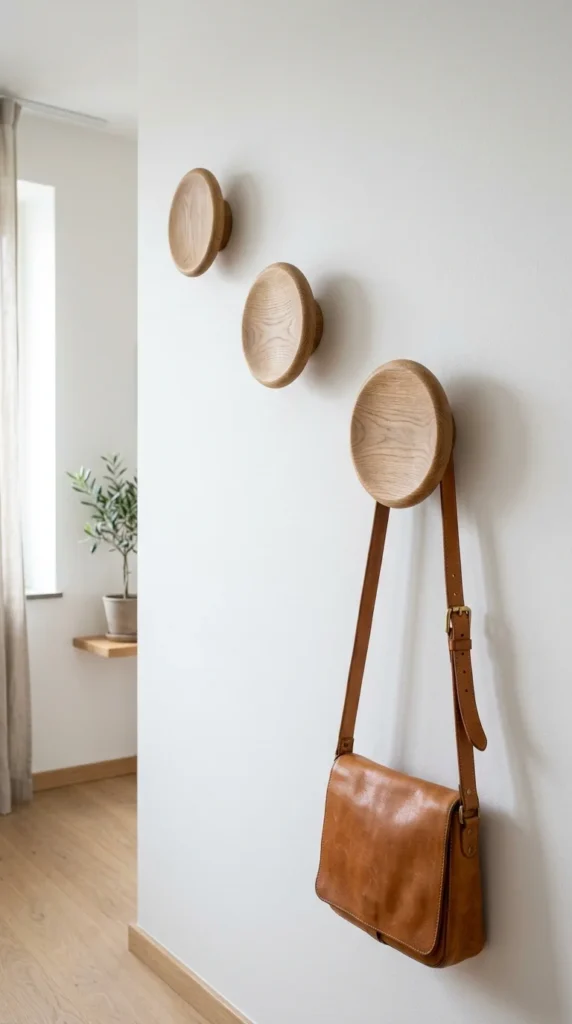
Wall hooks are a minimalist’s best friend when it comes to functionality. Instead of a bulky coat rack, individual wall pegs or hooks offer a streamlined way to hang essentials. When not in use, high-quality hooks—like those made of turned wood or brushed brass—look like small wall sculptures. By staggering them at different heights, you create a functional installation that serves the needs of both children and adults.
11. Narrow Runners
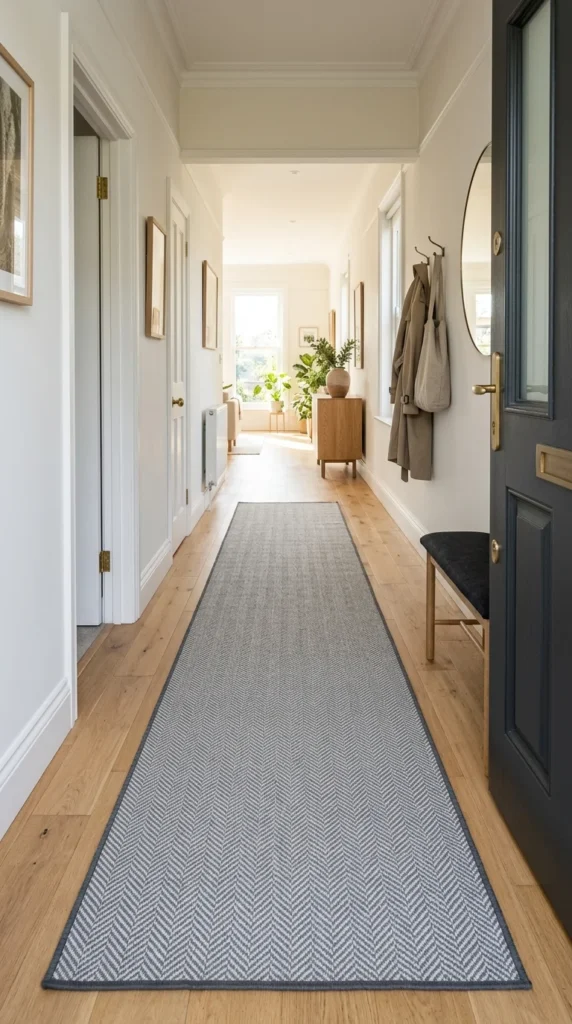
A runner rug serves two purposes: it protects the flooring in high-traffic areas and defines the “path” of the entryway. For a minimalist look, choose rugs with low pile and subtle, geometric patterns or solid colors. Avoid heavy fringes or busy floral designs. A well-placed runner can “stretch” the hallway visually, leading the eye toward the heart of the home and adding a layer of softness to an otherwise hard-surfaced area.
12. Glass Elements
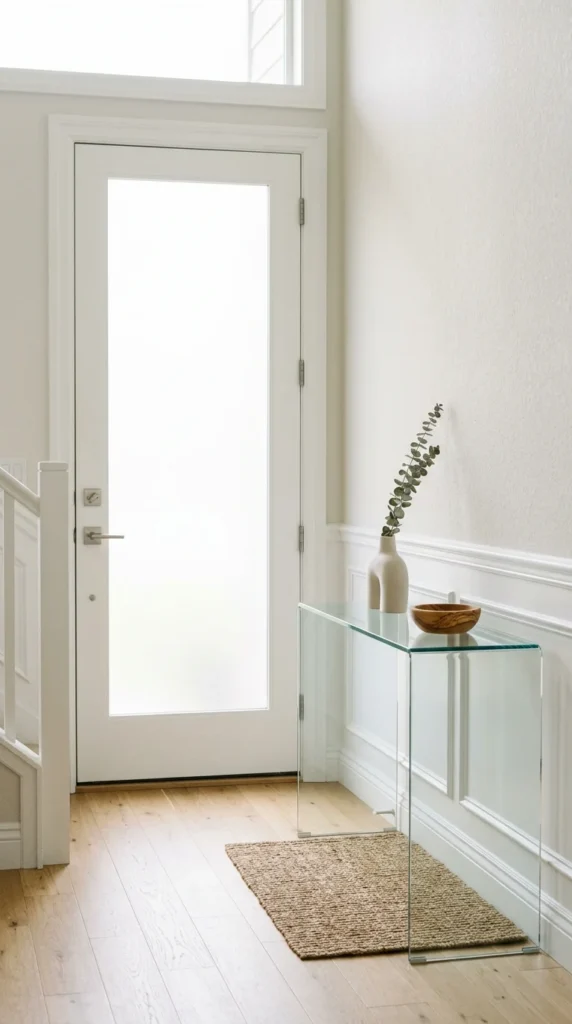
Glass is a favorite material in minimalist design because of its transparency. A glass console table or a door with glass panels allows light to flow freely, maintaining a sense of openness. It creates a “weightless” feel, which is ideal for entryways that are small or lack natural light. Using glass also allows you to showcase other design elements, like a beautiful floor or a unique architectural detail, without blocking them.
13. Integrated Cubbies
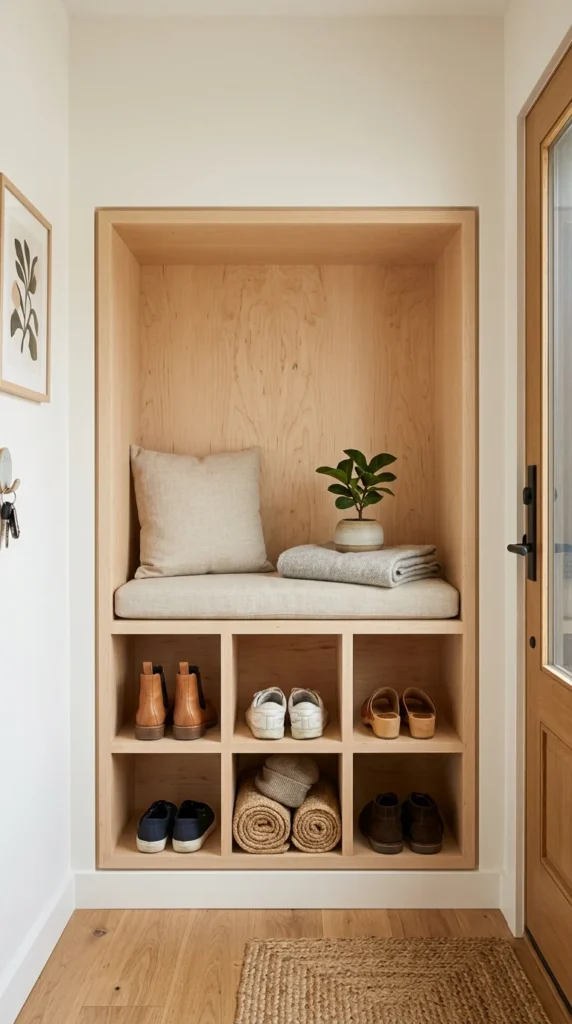
Integrated cubbies offer a way to organize belongings into tidy, geometric compartments. This approach is highly structured and fits perfectly with the minimalist philosophy of “a place for everything.” By building these storage units into the architecture of the home, you avoid the need for standalone furniture that can clutter the hallway. Cubbies can be left open for a rhythmic, repetitive look or fitted with matching baskets for a cleaner, hidden appearance.
14. Symmetrical Decor
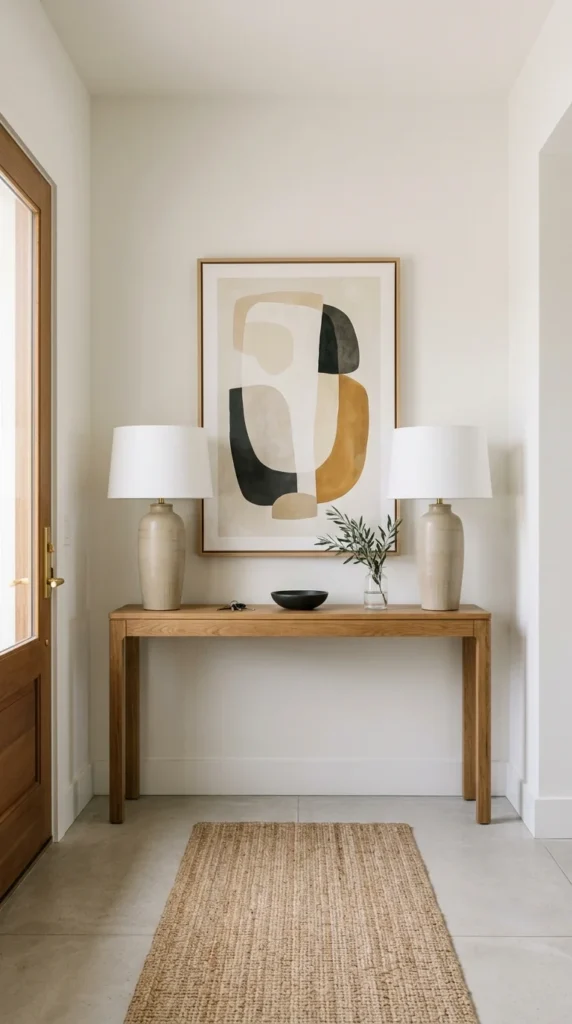
Symmetry is a classic design principle that works exceptionally well in minimalist settings. It creates an immediate sense of order and balance, which the brain perceives as calm. Placing two identical items—such as a pair of lamps, a pair of chairs, or a pair of potted plants—on either side of a central point (like a door or a mirror) creates a formal and polished look. This structured approach ensures that the entryway feels intentional and well-composed.
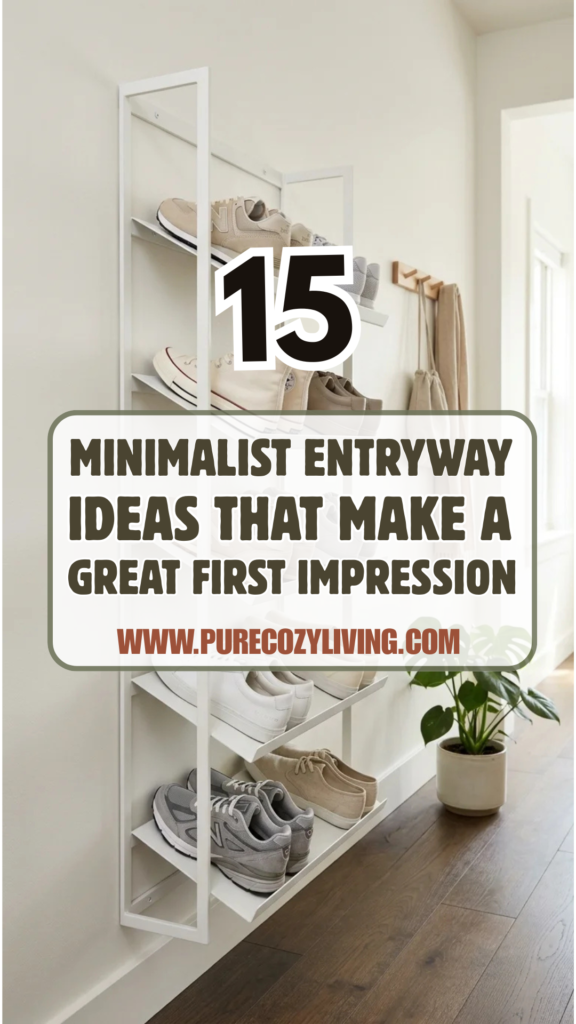
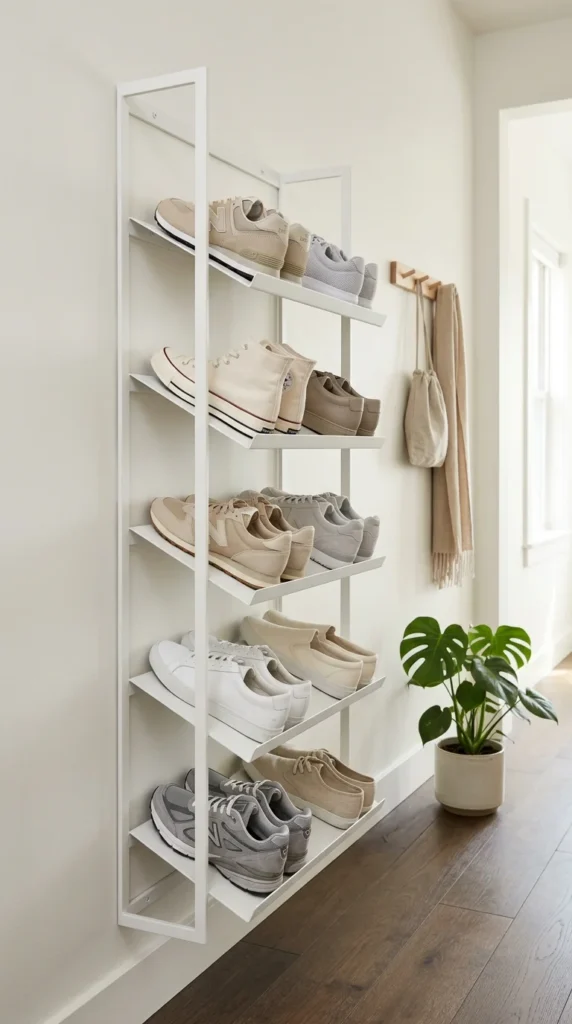
15. Low-Profile Shoe Racks
Shoe storage is often the biggest challenge in an entryway. A low-profile, slim shoe rack allows you to keep footwear organized without the bulk of a traditional cabinet. Modern designs often feature tilting drawers or ultra-slim metal frames that take up minimal footprint. By choosing a rack that matches the color of your walls, you can make the storage unit “disappear,” ensuring that the focus remains on the beauty of your minimalist entryway rather than the shoes themselves.