
The design world has been captivated by “Japandi,” a harmonious fusion of Japanese minimalism and Scandinavian functionality. While these two cultures are geographically distant, they share a core philosophy: a deep respect for nature, a preference for simplicity, and the belief that a home should be a sanctuary of peace. Japandi takes the “Hygge” (coziness) of the North and marries it with “Wabi-sabi” (the beauty of imperfection) from the East. The result is a living space that feels curated but lived-in, modern yet timeless.
1. Low Furniture
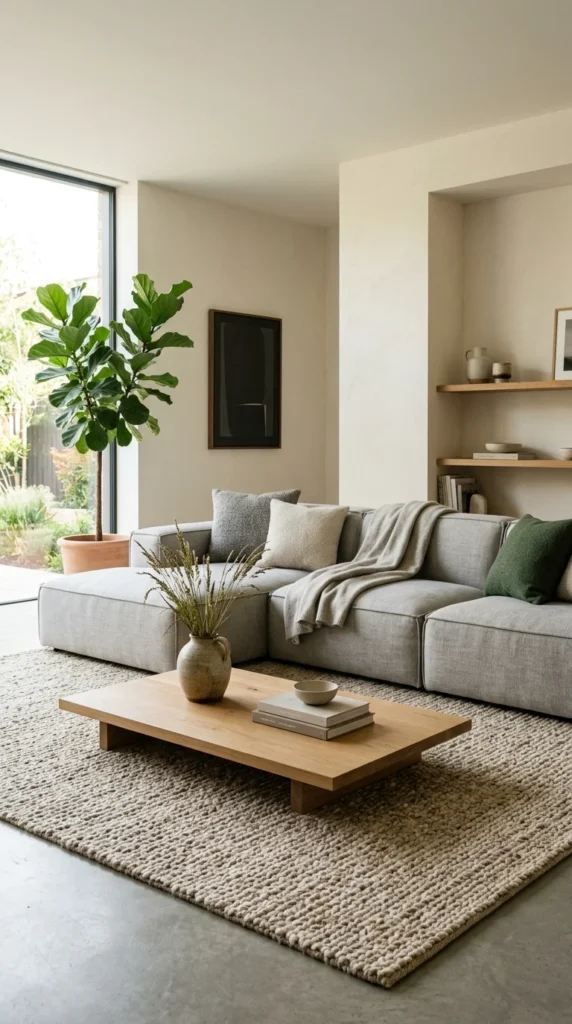
In Japanese interior design, living closer to the floor is a tradition that fosters a sense of groundedness and makes a room feel taller. To achieve this in a Japandi living room, opt for low-profile sofas, armchairs, and coffee tables. This aesthetic choice clears the sightline across the room, making even small spaces feel airy and expansive. Look for furniture with clean, horizontal lines and hidden legs to emphasize this connection to the earth.
2. Neutral Palette
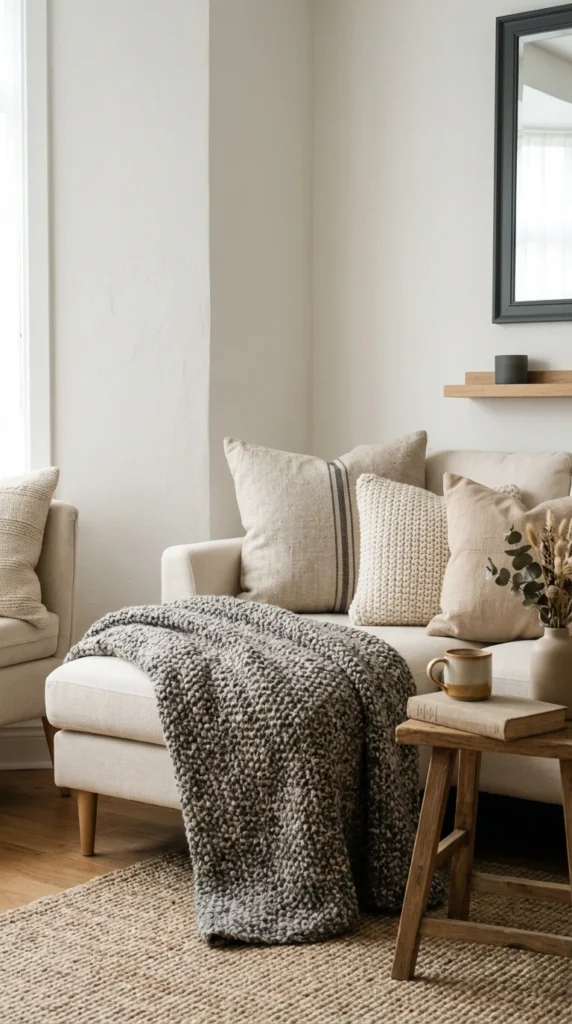
The Japandi color story is rooted in nature. It moves away from the stark, cold whites of traditional modernism and leans into “greige,” cream, and muted earth tones. Think of the colors found in a forest or on a beach: sand, stone, taupe, and moss green. These tones create a calming backdrop that allows the textures of the room to stand out without overstimulating the senses.
3. Natural Wood
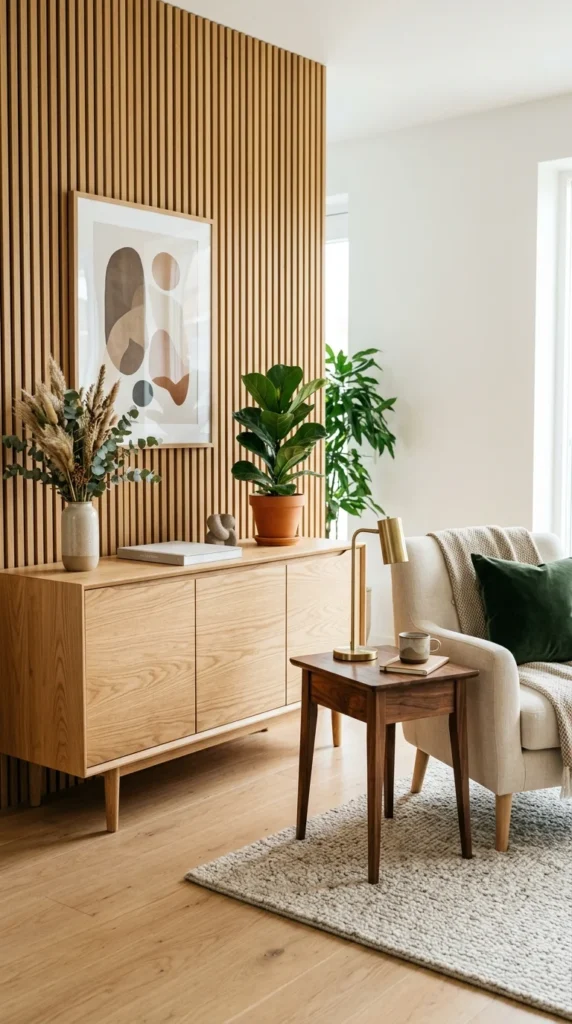
Wood is the soul of Japandi design. While Scandinavian style often favors light woods like pine and ash, Japanese design frequently incorporates darker tones like cedar or cypress. A successful Japandi living room blends these. You might pair a light oak floor with a darker walnut cabinet. The key is to keep the finish matte or oiled rather than glossy, celebrating the organic grain and “imperfections” of the material.
4. Functional Minimalism
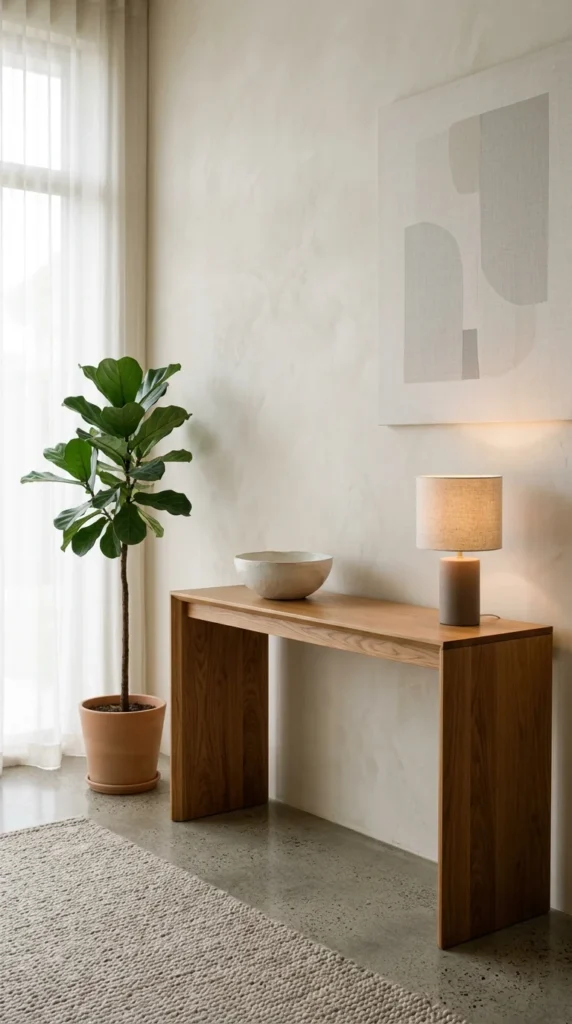
The “less is more” mantra is central to this style. Every piece in a Japandi living room should serve a purpose or bring genuine joy. This doesn’t mean the room should be empty, but rather that it should be intentional. Choose high-quality pieces that are built to last, reducing the need for “fast furniture” and clutter. If a piece doesn’t have a functional use or a strong aesthetic contribution, it likely doesn’t belong.
5. Indoor Greenery
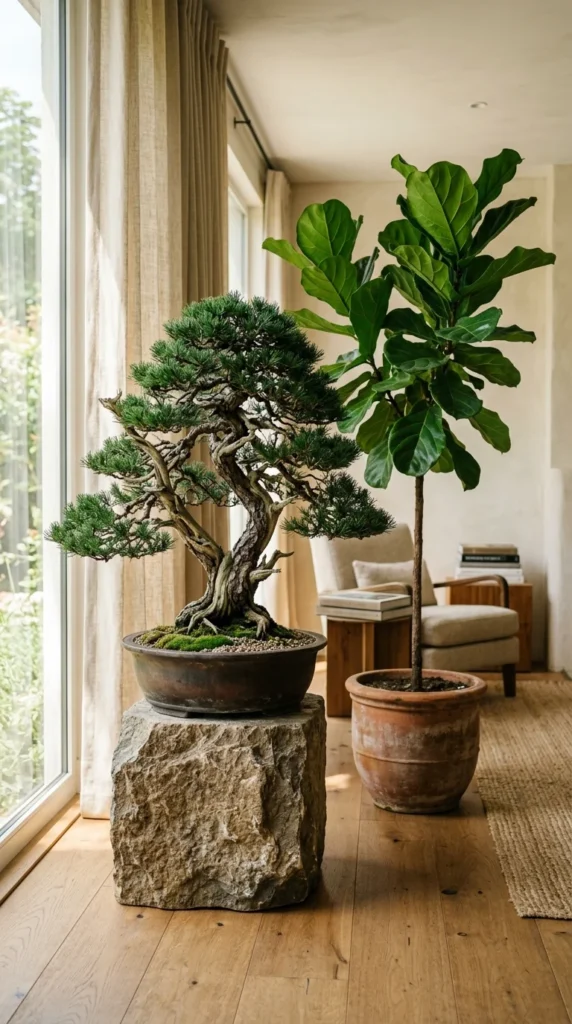
Connecting with nature is essential for well-being. Instead of a jungle of small potted plants, Japandi style prefers a few “statement” plants. A tall, spindly olive tree, a delicate Bonsai, or a single oversized Monstera leaf in a glass vase can act as living art. The greenery adds a pop of organic color to the neutral palette and improves the air quality of the home.
6. Tactile Textiles
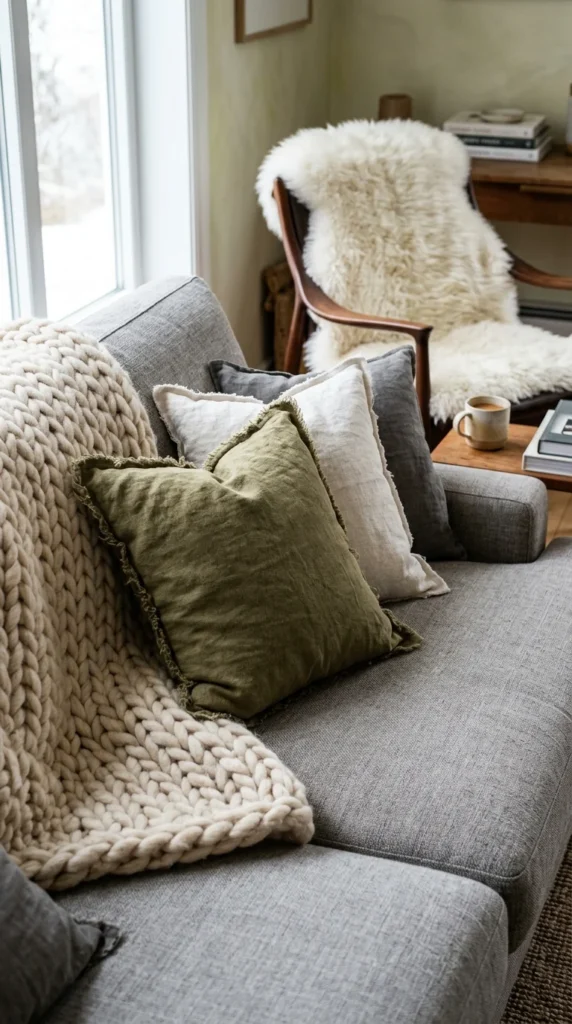
To prevent a minimal room from feeling “cold,” you must introduce texture. This is where the Scandi influence shines. Layering different natural fabrics like linen, wool, cotton, and hemp adds depth and warmth. Mix a smooth leather chair with a chunky knit throw, or place a soft wool rug over a hard jute mat. These tactile elements invite you to touch and relax.
7. Black Accents
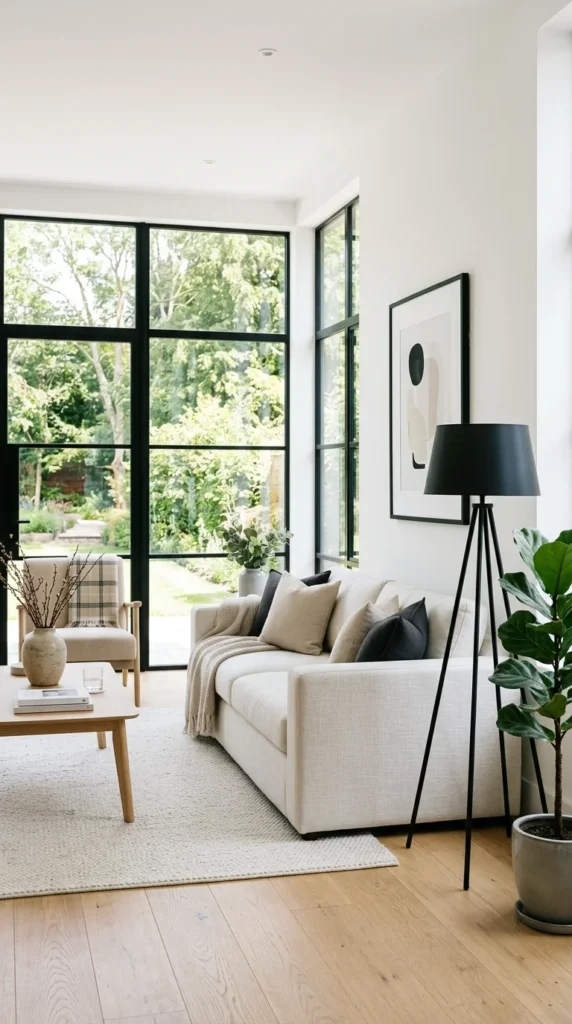
While the base of the room is neutral, black accents are used to provide “ink-like” definition, reminiscent of Japanese calligraphy. Slim black metal legs on a table, a black picture frame, or a matte black light fixture act as an anchor, preventing the light colors from feeling too airy or washed out. Use black sparingly to maintain the serene atmosphere.
8. Shoji Screens
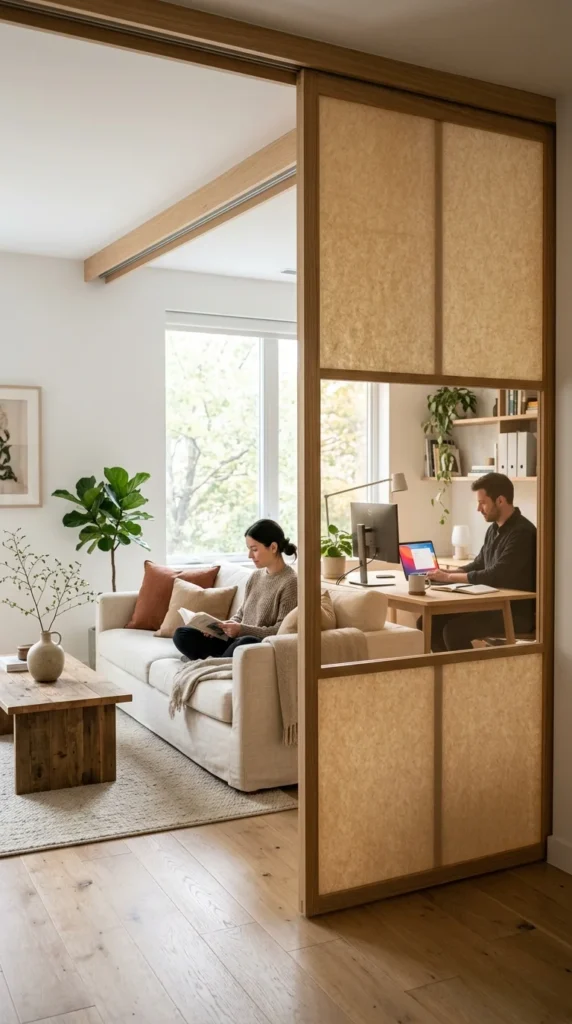
Shoji screens are traditional Japanese room dividers made of translucent paper over a wooden frame. In a modern Japandi living room, you can use contemporary versions of these screens to define areas without blocking light. They add a rhythmic, geometric pattern to the space and provide privacy while maintaining a soft, diffused glow from neighboring windows.
9. Round Shapes
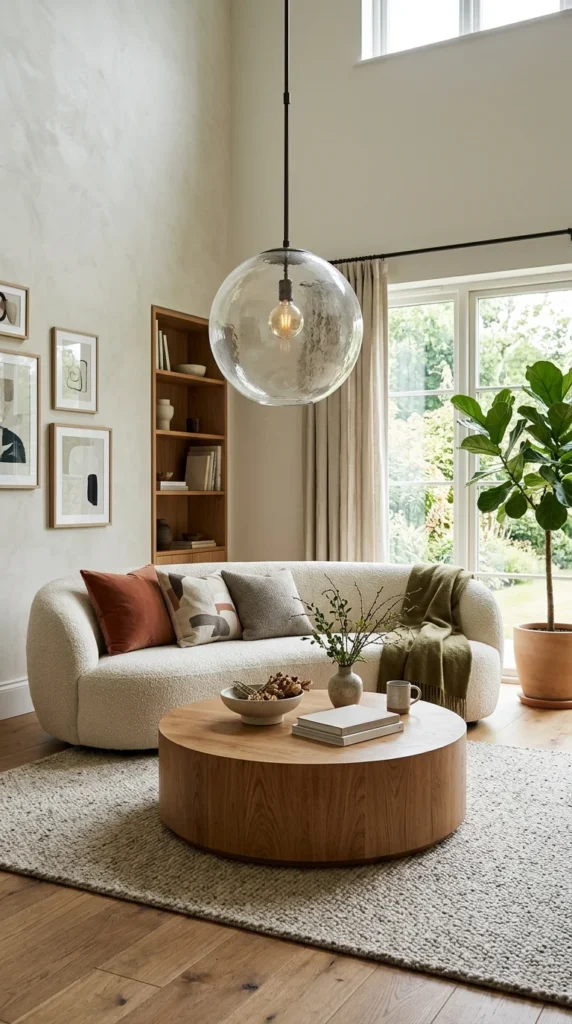
To soften the sharp lines of minimalist architecture, Japandi interiors often incorporate organic, rounded shapes. A circular coffee table, curved armchair backs, or orb-shaped lighting fixtures help the energy of the room flow more freely. These “soft” edges make the environment feel more welcoming and less formal.
10. Slatted Walls
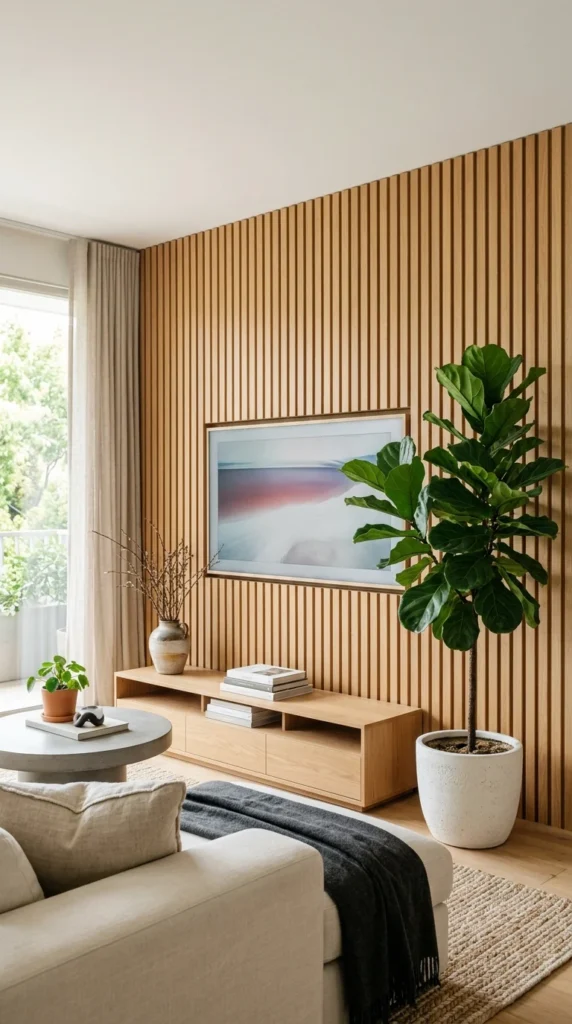
Vertical wood slats, known as lattice or koshi in Japan, are a hallmark of Japandi design. They add architectural interest and texture without the need for wallpaper or paint. A slatted wall can hide storage, act as a backdrop for a TV, or simply serve as a tactile focal point. The gaps between the slats create a play of light and shadow that changes throughout the day.
11. Statement Lighting
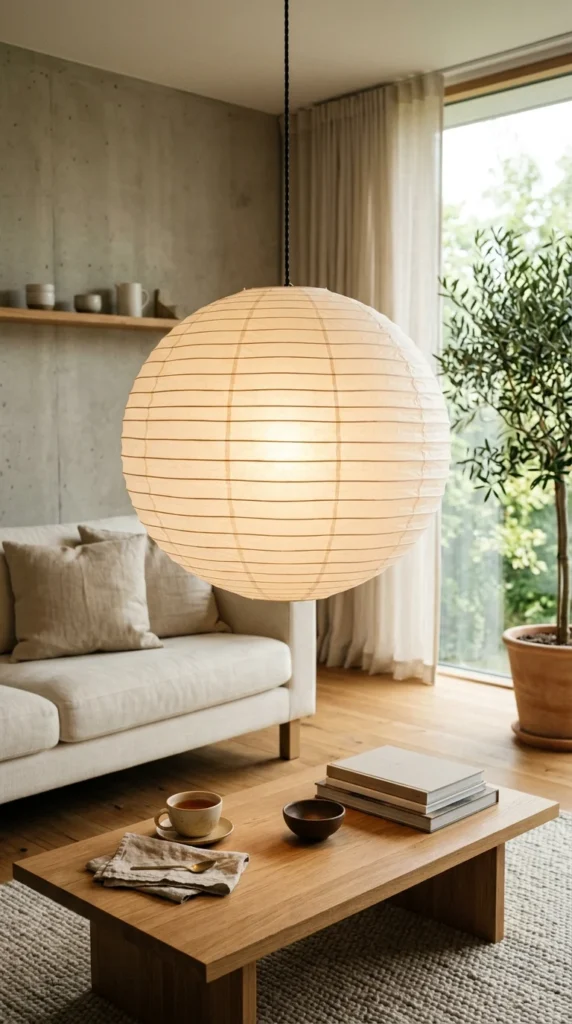
Lighting in a Japandi space should be soft and indirect. Avoid harsh overhead spotlights. Instead, use statement pieces like large Akari-style paper lanterns or sleek, mid-century Scandinavian floor lamps. These fixtures serve as sculptures during the day and provide a cozy, atmospheric “Hygge” glow in the evening.
12. Decluttered Surfaces
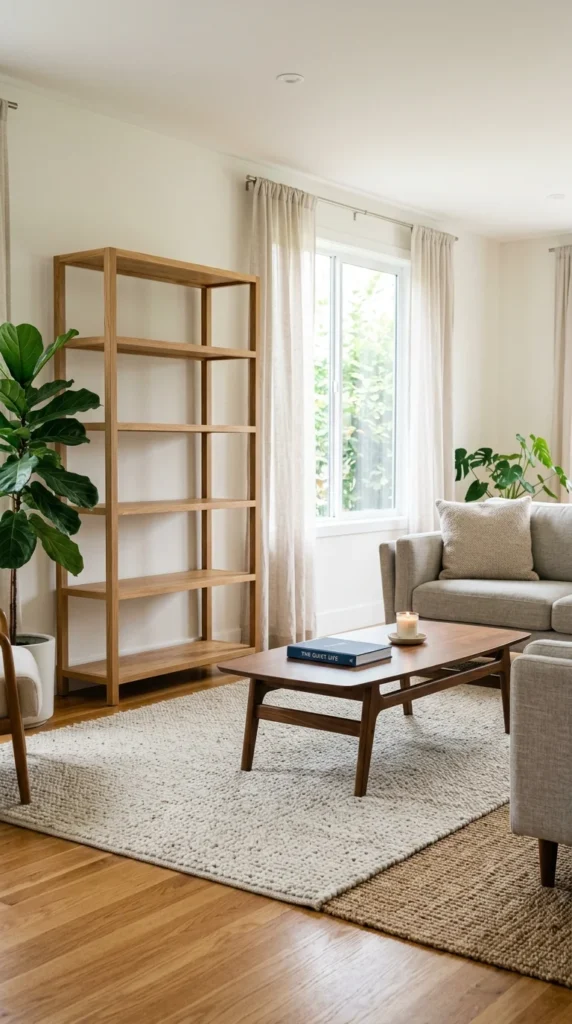
Clutter is the enemy of a peaceful mind. To achieve the Japandi look, keep surfaces as clear as possible. Use hidden storage solutions—like ottomans with lids or cabinets with “push-to-open” doors—to tuck away remote controls, magazines, and electronics. When the eye can rest on clean surfaces, the mind can rest too.
13. Mix of Woods
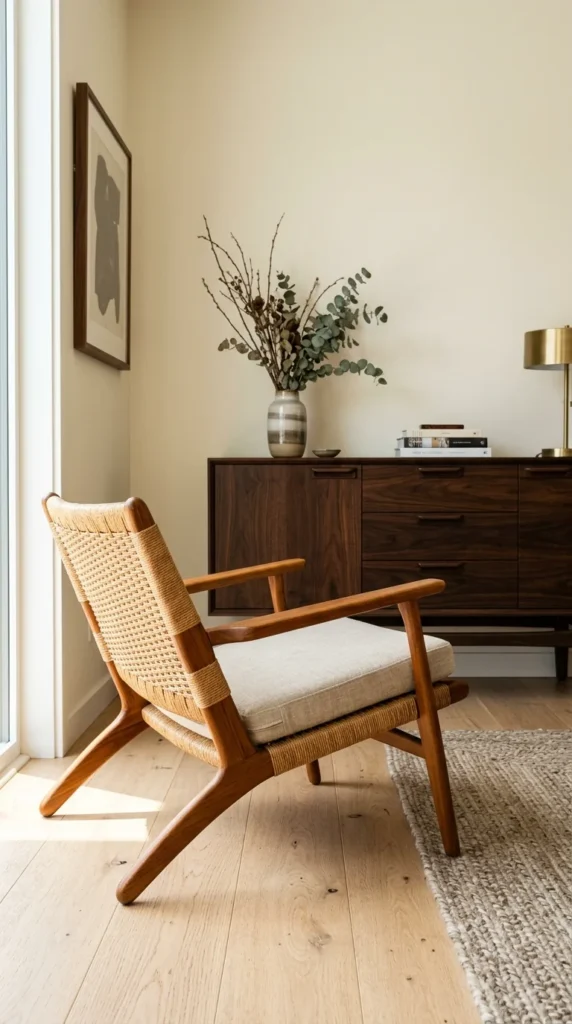
You don’t need to match all your wood finishes. In fact, Japandi encourages a thoughtful mix. The contrast between a light Scandinavian ash and a deep Japanese burnt cedar (Shou Sugi Ban) creates visual interest. As long as the woods have a natural, matte finish, they will complement each other through their shared organic origin.
14. Ceramic Decor
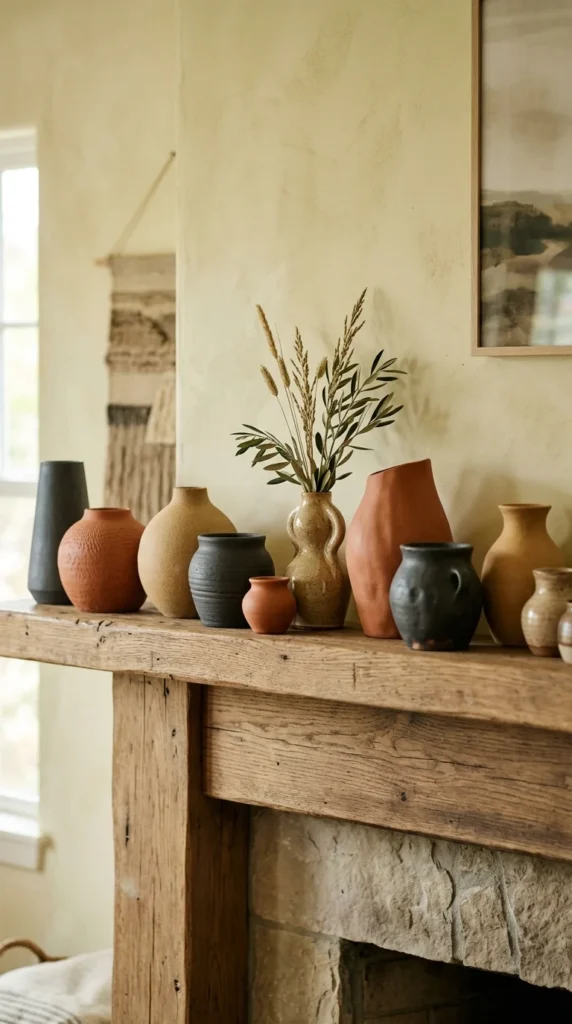
Accessories should be few but meaningful. Handmade ceramics with irregular shapes and visible brushstrokes embody the “Wabi-sabi” philosophy of finding beauty in imperfection. A cluster of three vases in different heights or a single stone bowl can provide a sophisticated touch of craftsmanship to the room.
15. Open Layouts
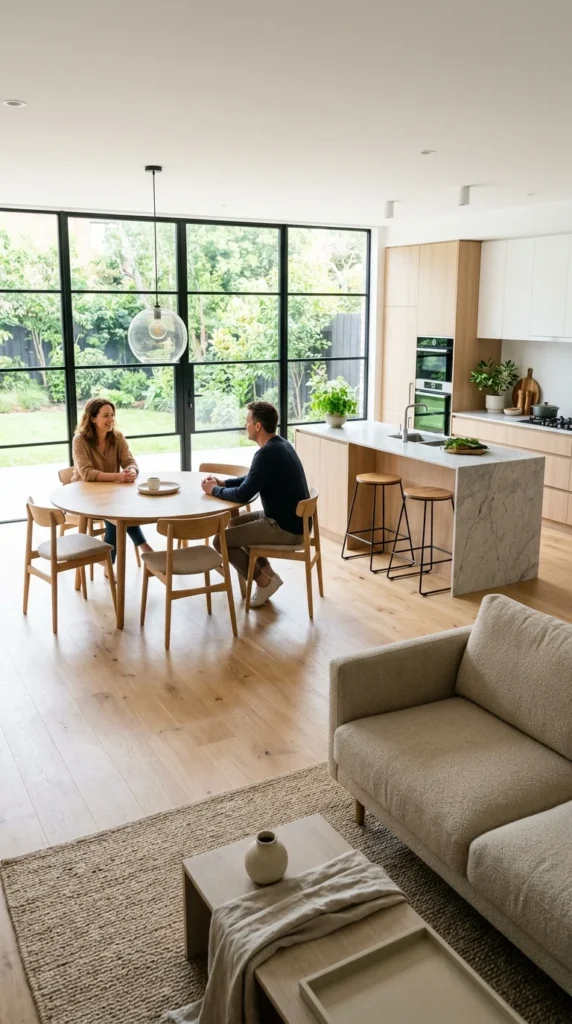
Japandi thrives in open-plan spaces where air and light can move freely. If your home has a traditional layout, you can create the feeling of openness by removing heavy curtains, using low furniture, and keeping the center of the room clear. This “Ma” (the Japanese concept of negative space) is just as important as the furniture itself.
16. Floor Seating
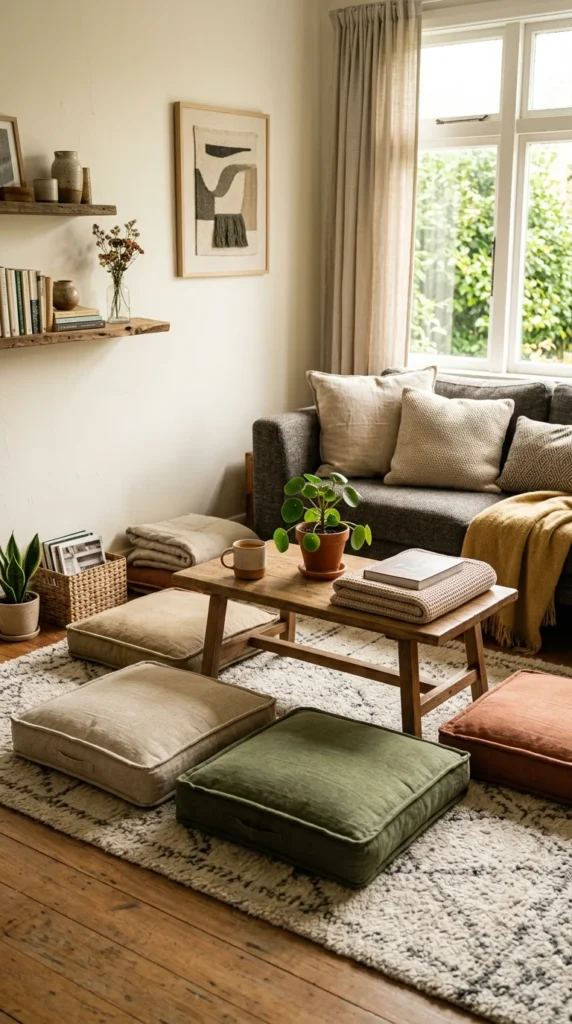
Incorporating floor cushions (Zabuton) or low bean bags adds a relaxed, casual vibe to the living room. It’s an invitation to sit down and be present. This is particularly effective for creating a cozy reading nook or a dedicated meditation corner within the larger living space.
17. Woven Textures
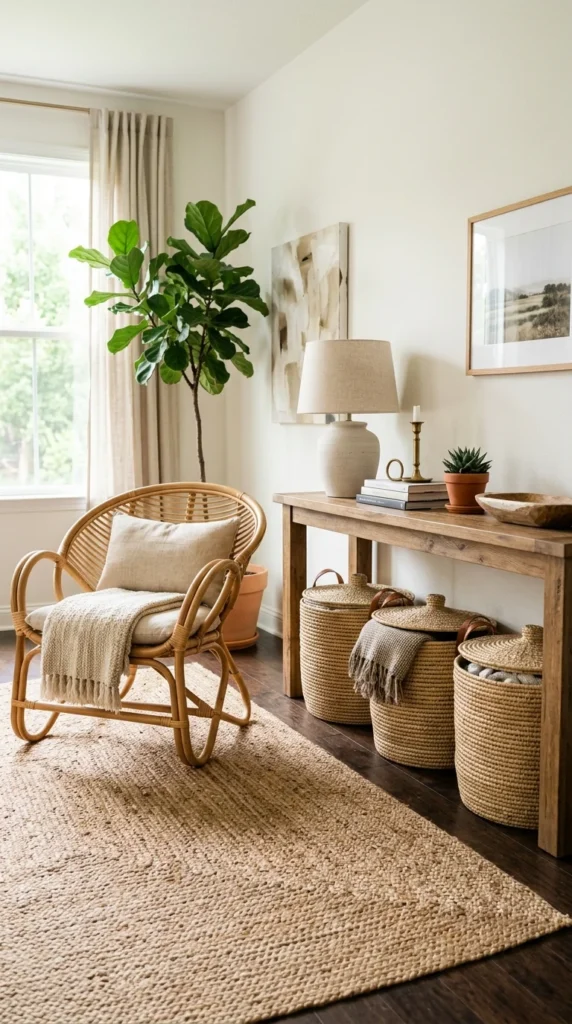
Incorporate materials like rattan, bamboo, jute, and seagrass to add a rustic, artisanal layer to the room. A woven rug provides a sturdy, natural base for the furniture, while a rattan chair adds a lightweight, breathable element. These materials reinforce the connection to the natural world.
18. Subtle Patterns
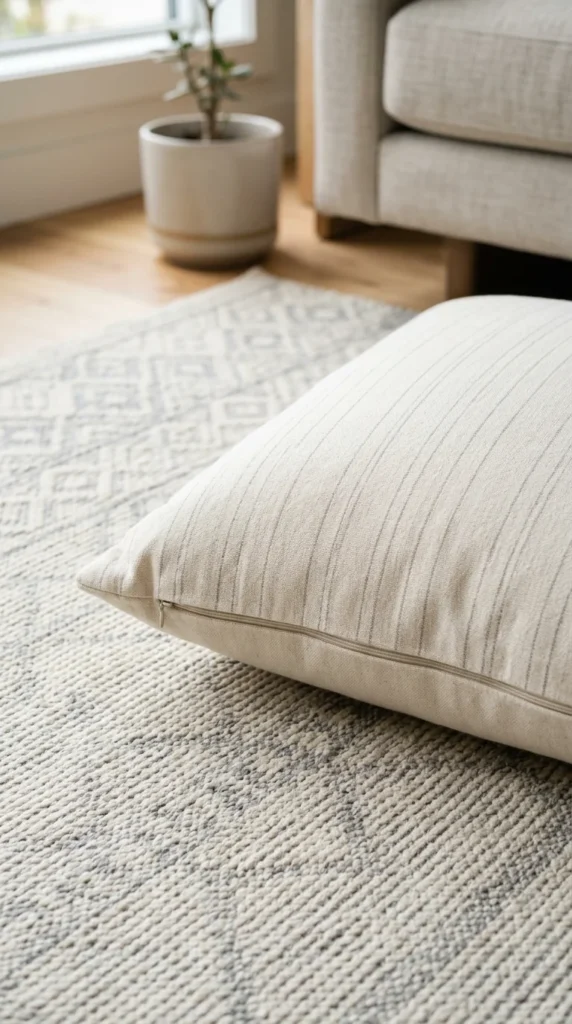
Avoid bold, busy prints. If you want to include patterns, stick to subtle, geometric designs or traditional Japanese motifs like “Asanha” (hemp leaf) in very muted colors. The pattern should be something you notice only upon closer inspection, rather than something that dominates the room.
19. Large Windows
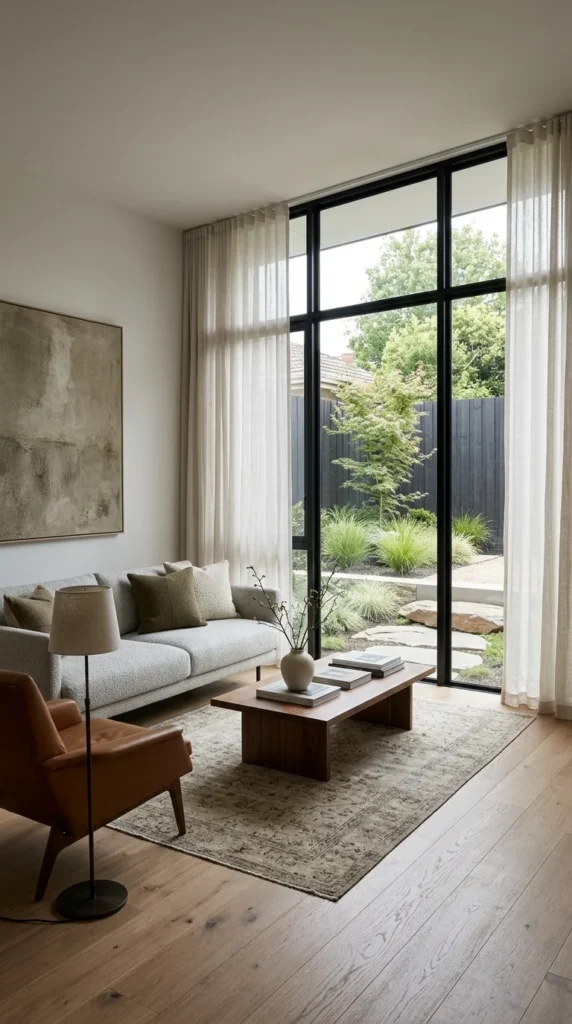
Natural light is a key “material” in Japandi design. Maximize the light entering the room by using sheer curtains or no window treatments at all. If privacy is a concern, use light-filtering blinds made of wood or bamboo. The goal is to blur the line between the indoor living space and the outdoor environment.
20. Art as a Focal Point
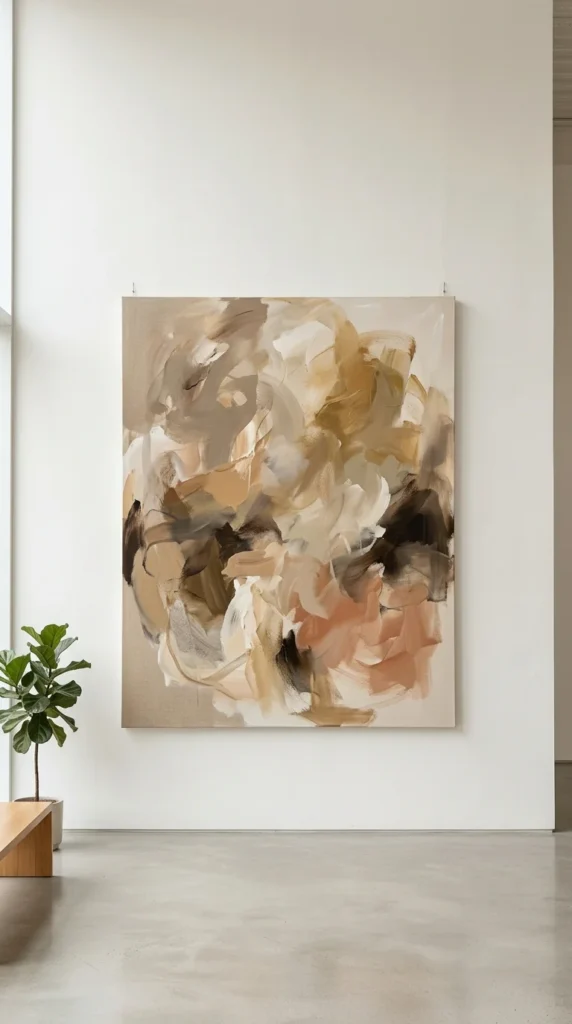
Instead of a gallery wall with many small pictures, choose one or two large pieces of art. The art should reflect the room’s color palette and philosophy—think abstract landscapes, line drawings, or textile wall hangings. By giving the art plenty of “breathing room” on the wall, you allow its impact to be fully felt.