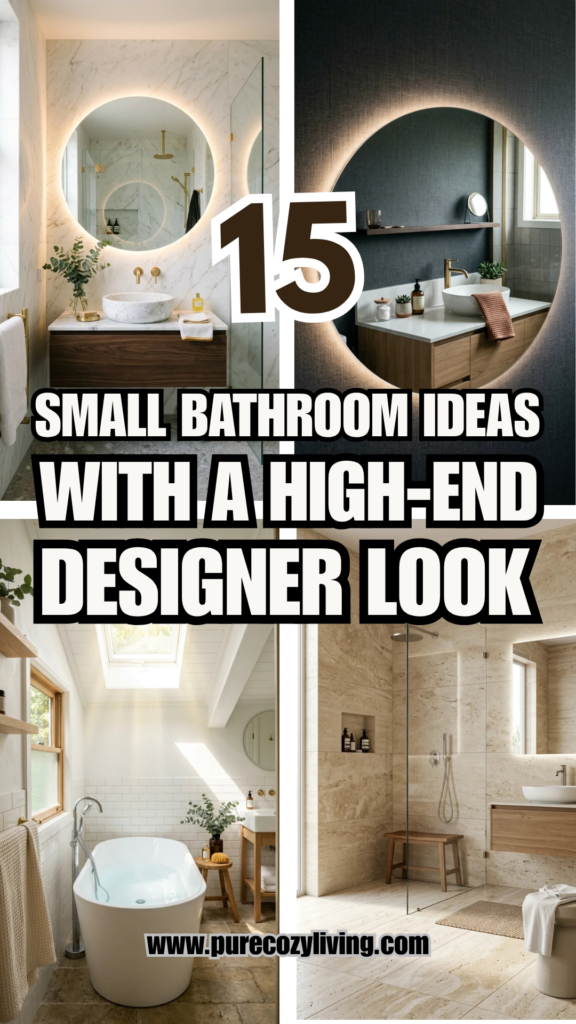

Designing a small bathroom often feels like a puzzle where you have to sacrifice style for functionality. However, high-end interior designers view limited square footage not as a hindrance, but as an opportunity to create a “jewel box” effect—a space that is compact, meticulously detailed, and radiating luxury. By focusing on premium materials, clever spatial layouts, and sophisticated lighting, you can transform a cramped powder room or a tiny master bath into a high-end sanctuary.
Here are 15 designer-approved ideas to elevate your small bathroom to a five-star aesthetic.
1. Floating Vanities
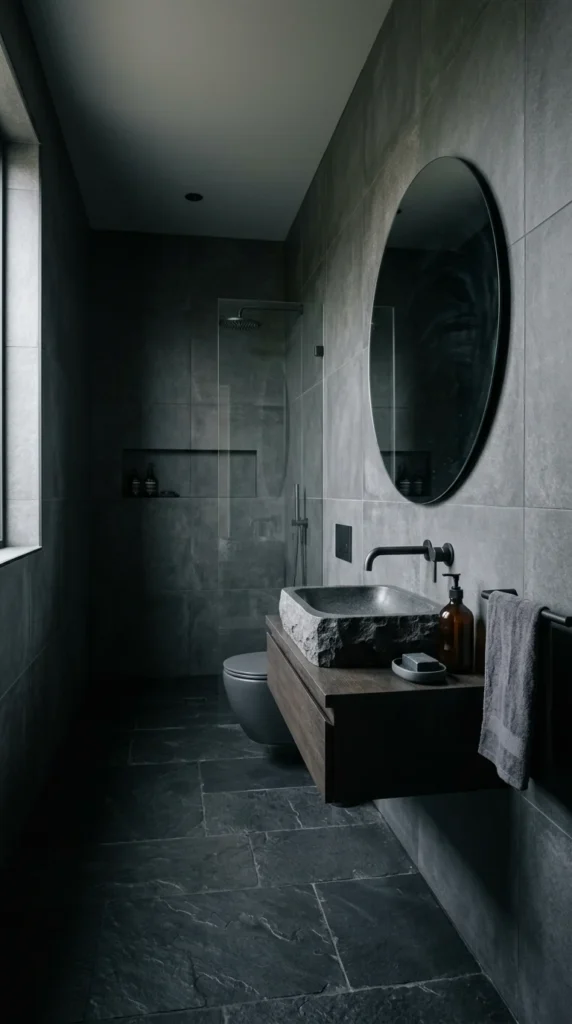
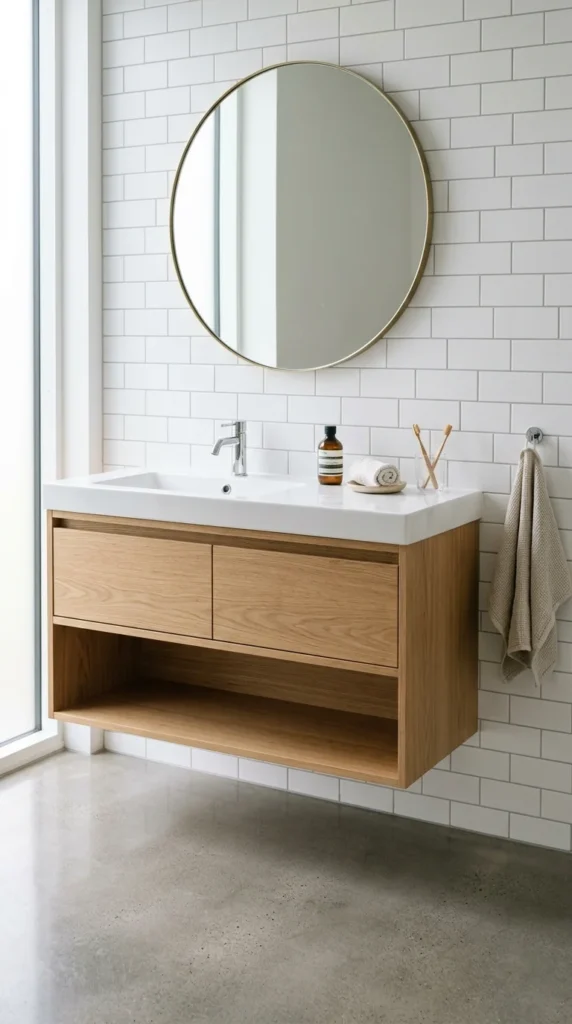
One of the most effective ways to create the illusion of space while maintaining a high-end look is the installation of a floating vanity. By exposing the floor underneath the cabinetry, you extend the visual sightline, making the room feel significantly larger.
- Designer Tip: Choose a vanity with integrated hardware or “push-to-open” drawers for a seamless, minimalist look.
- Materials: Opt for rich wood grains like walnut or rift-sawn oak to add warmth to a modern setting.
2. Monochromatic Schemes
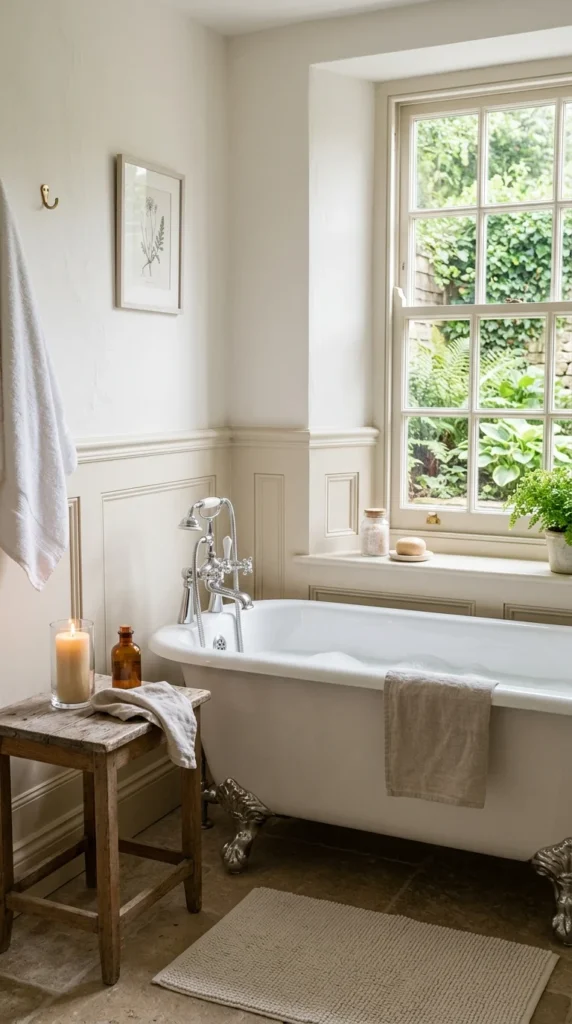
Monochromatic color palettes are a staple in luxury design. When you use the same color for the walls, floors, and even the ceiling, you eliminate visual “stops,” which helps the boundaries of the room disappear.
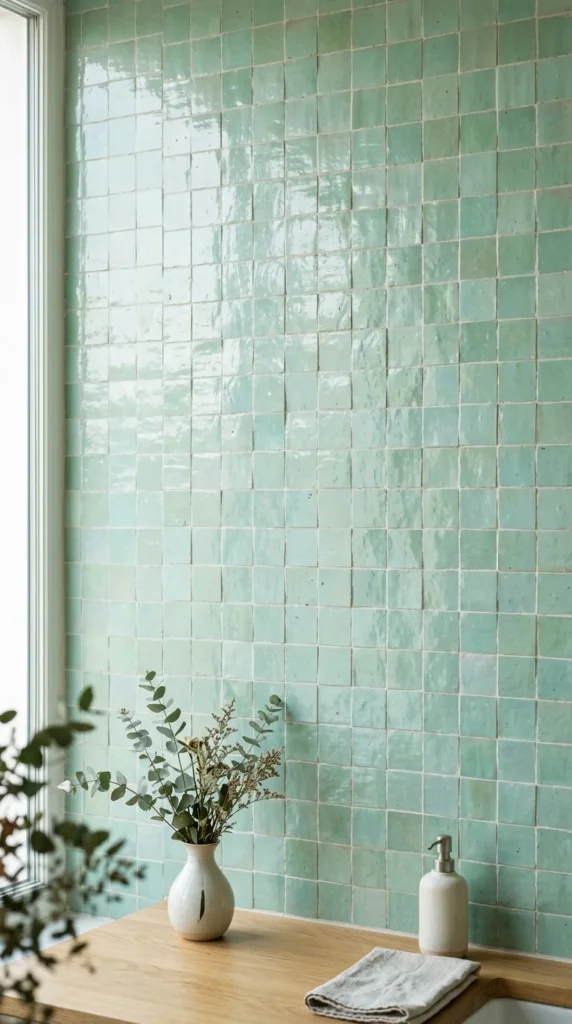
- Texture is Key: To prevent a monochromatic room from feeling flat, vary the textures. Pair matte walls with a glossy tile in the same hue.
- Deep Tones: Don’t be afraid of dark colors like navy, forest green, or charcoal. In small spaces, these colors create a cozy, “enveloping” high-end atmosphere.
3. Large Tiles
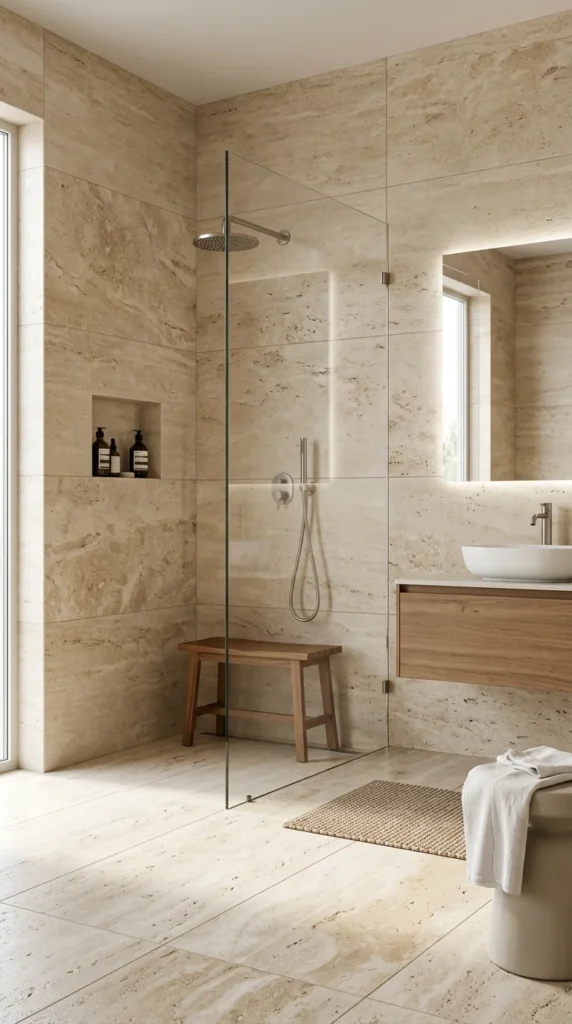
While common logic suggests small tiles for small rooms, designers often do the opposite. Large-format tiles (12×24 inches or larger) result in fewer grout lines. Fewer lines mean less visual clutter, leading to a cleaner and more expansive appearance.
- Grout Matching: Use a grout color that matches the tile exactly to make the seams nearly invisible.
- Vertical Placement: If the ceiling is low, stack rectangular tiles vertically to draw the eye upward.
4. Glass Enclosures
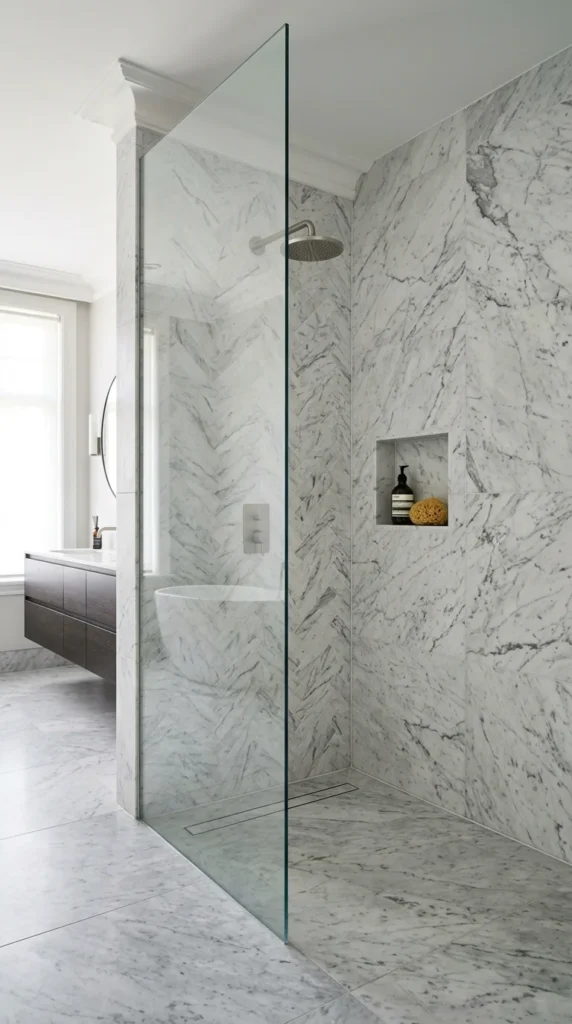
Traditional shower curtains or frosted glass doors can chop up a small bathroom, making it feel half its actual size. A frameless glass enclosure provides an unobstructed view of the entire room, allowing the shower’s interior design to contribute to the overall aesthetic.
- Low-Iron Glass: Request “ultra-clear” or low-iron glass to avoid the green tint often found in standard tempered glass.
- Crittall Style: For a more industrial-luxe look, consider a black-framed “Crittall” style glass partition.
5. Wall-Mounted Faucets
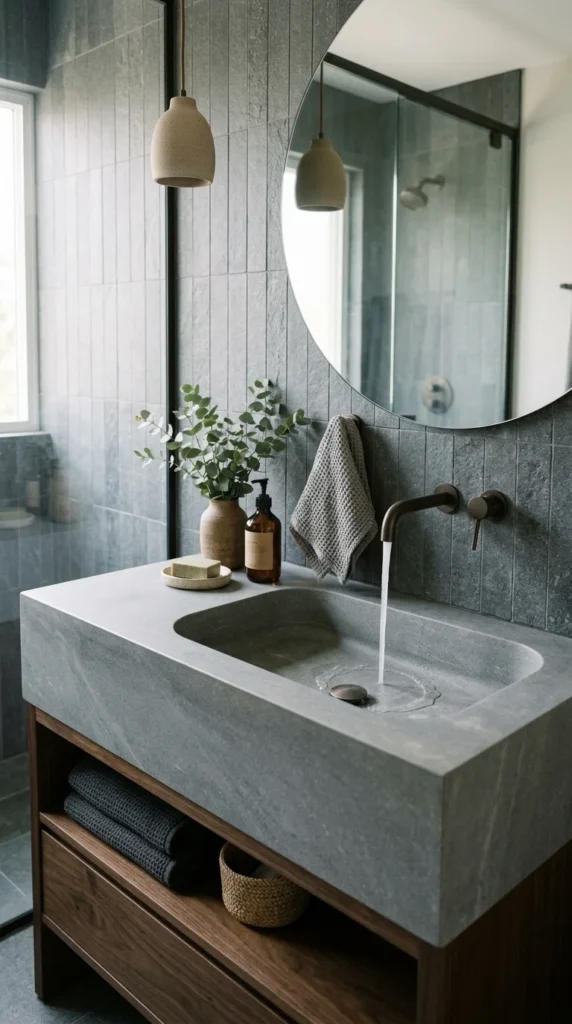
Moving the plumbing from the sink deck to the wall is a classic designer move. This not only saves precious countertop real estate but also creates a clean, custom look reminiscent of high-end boutique hotels.
- Planning: This requires “rough-in” plumbing behind the wall, so it is best suited for full renovations.
- Backsplash: A wall-mounted faucet provides a great opportunity to showcase a beautiful tile or stone backsplash without the interruption of a standard faucet base.
6. Statement Mirrors
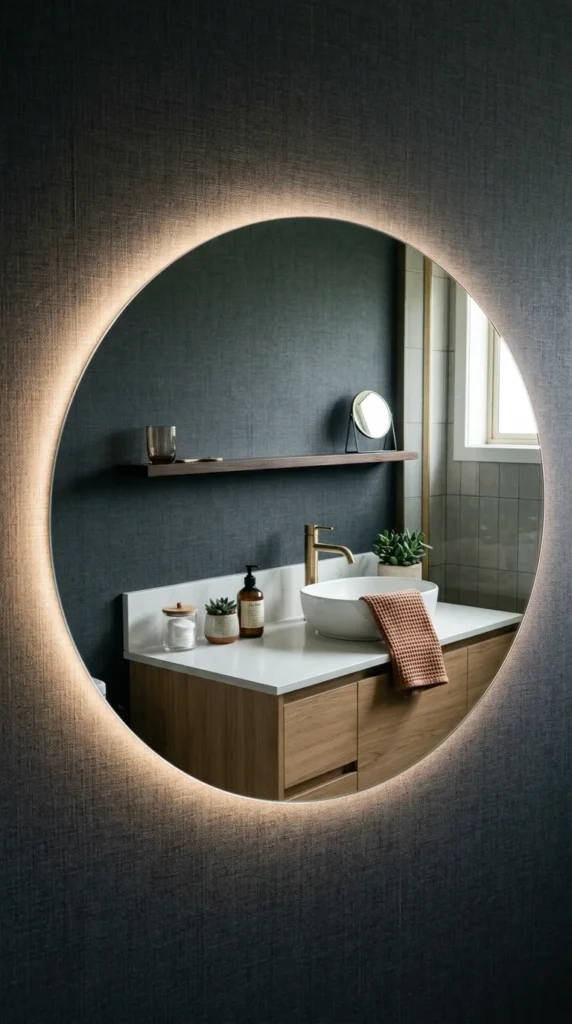
In a small bathroom, the mirror is often the focal point. Instead of a standard frameless builder-grade mirror, choose a piece that functions as art. Large mirrors reflect light and views, doubling the perceived depth of the room.
- Backlighting: Integrated LED backlighting behind a mirror provides a soft, flattering glow and adds a layer of modern luxury.
- Oversized Scales: Don’t be afraid to go large. A mirror that stretches from the vanity all the way to the ceiling can make a tiny room feel grand.
7. Bold Wallpaper
Powder rooms are the perfect place to take risks. High-end designers often use bold, large-scale wallpaper to create a sense of drama that distracts from the room’s small size.
- Themes: Look for botanical prints, geometric textures, or metallic-infused patterns.
- Vinyl Options: If the bathroom has a shower, ensure the wallpaper is high-quality vinyl or treated to withstand moisture.
8. Arched Niches
Storage doesn’t always have to be a protruding shelf. Arched or rectangular niches built directly into the wall provide a sophisticated way to store essentials while adding architectural interest.
- Contrast: Line the interior of the niche with a contrasting tile or a slab of stone to make it “pop.”
- Lighting: Add a small waterproof LED puck light inside the niche to highlight luxury bath products.
9. Integrated Sinks
For a truly custom, high-end look, consider an integrated sink where the basin and the countertop are made from the same material. This eliminates the “rim” found in drop-in or under-mount sinks, creating a sleek, continuous surface.
- Materials: Marble, quartz, and concrete are popular choices for this application.
- Slope: Ensure the design includes a slight slope toward the drain to prevent water pooling on the flat stone surface.
10. Accent Lighting
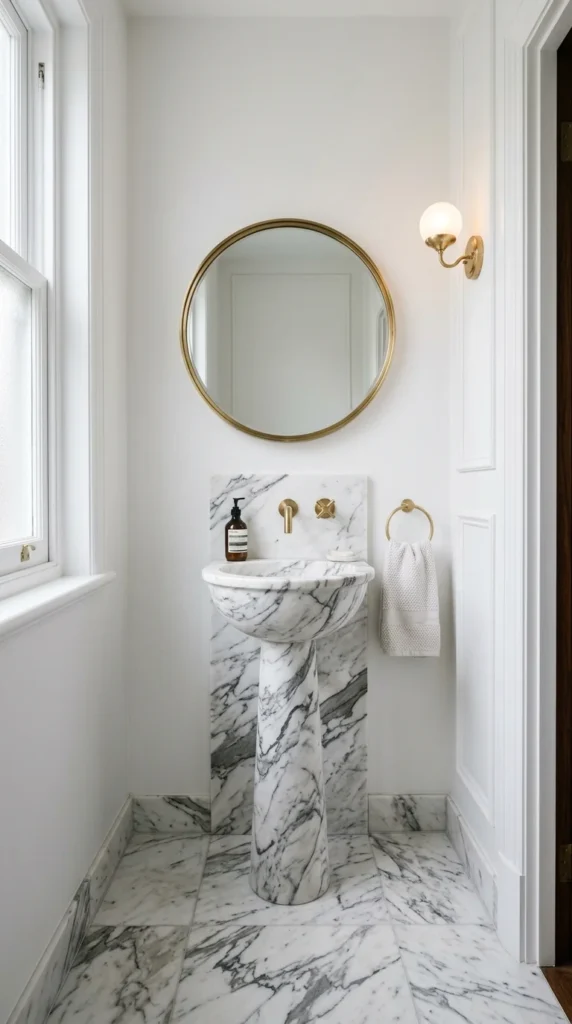
Luxury is often defined by lighting layers. Relying on a single overhead light is a common mistake. Instead, incorporate task, ambient, and accent lighting to create depth.
- Toe-Kick Lighting: Place LED strips at the base of your vanity. It acts as a perfect nightlight and makes the vanity appear to float.
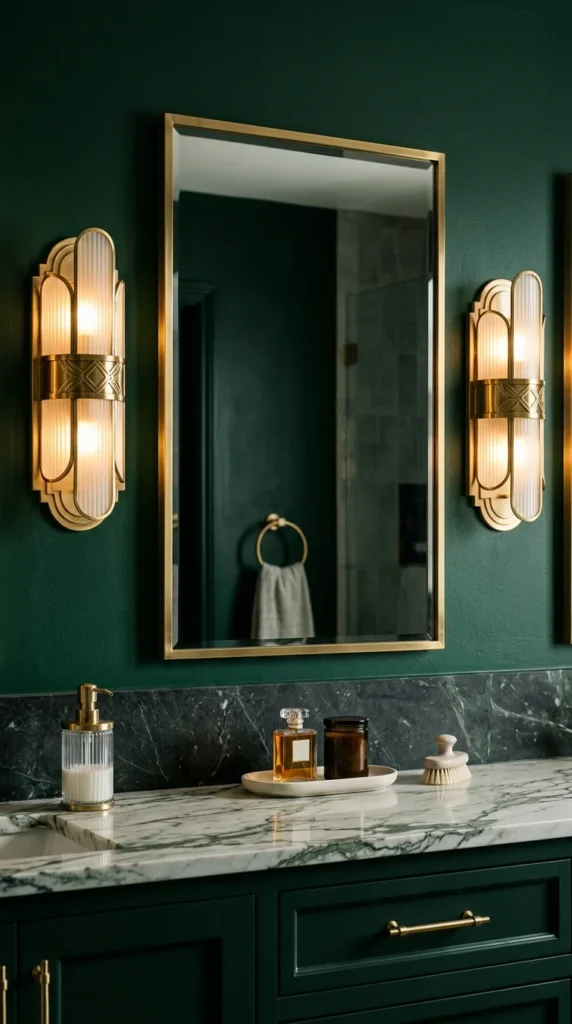
- Sconces: Instead of a light bar above the mirror, place sconces at eye level on either side to minimize shadows on the face.
11. Natural Materials
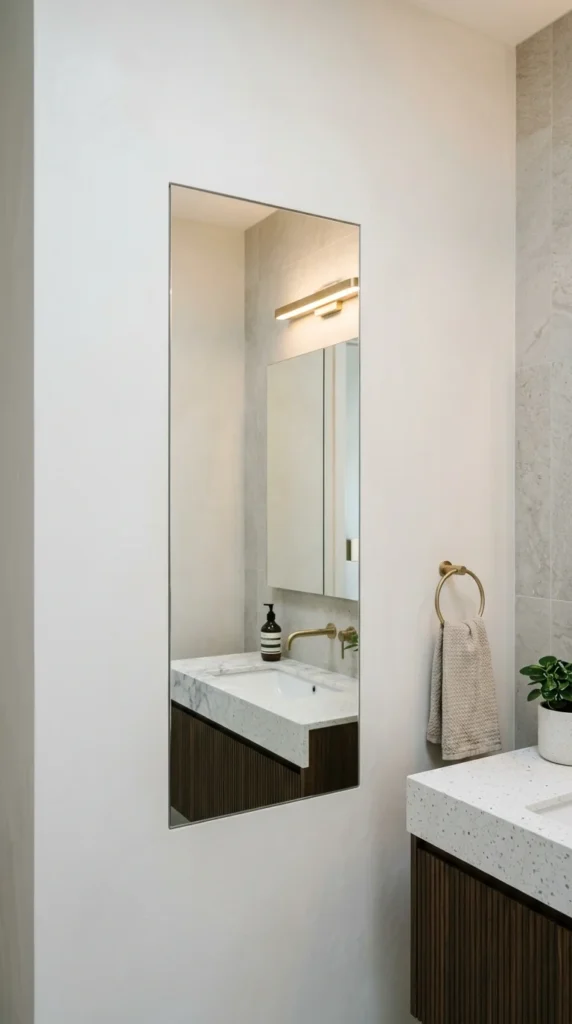
To achieve an organic, high-end “spa” feel, prioritize natural materials over synthetic ones. The tactile quality of real stone and wood adds an unmistakable layer of luxury that plastic or laminate cannot replicate.
- Stone Variety: Travertine, slate, and marble offer unique veining that ensures no two bathrooms look the same.
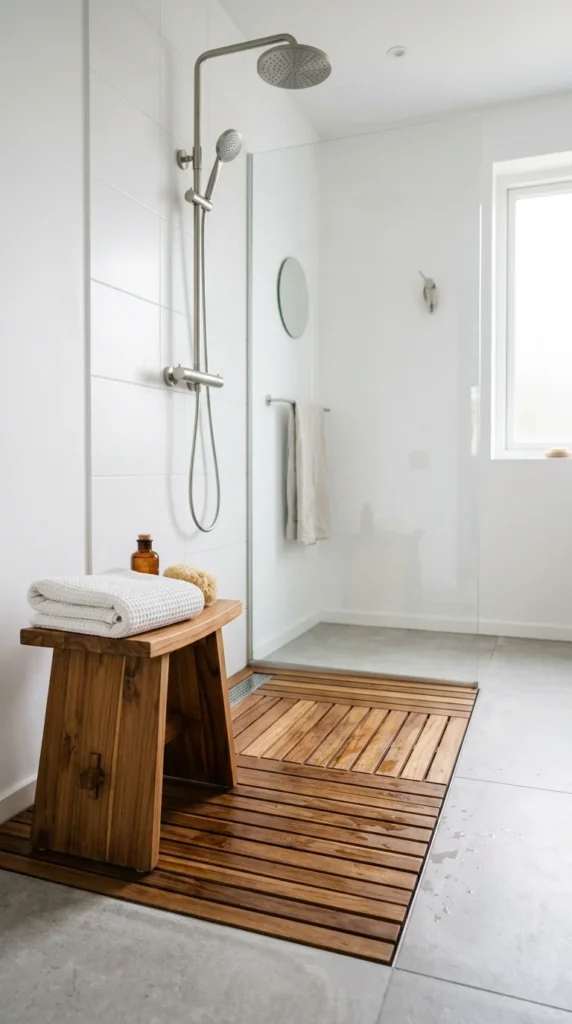
- Wood Accents: Use moisture-resistant woods like teak or cedar for shelving or stool accents to bring warmth to cold tile surfaces.
12. Vertical Storage
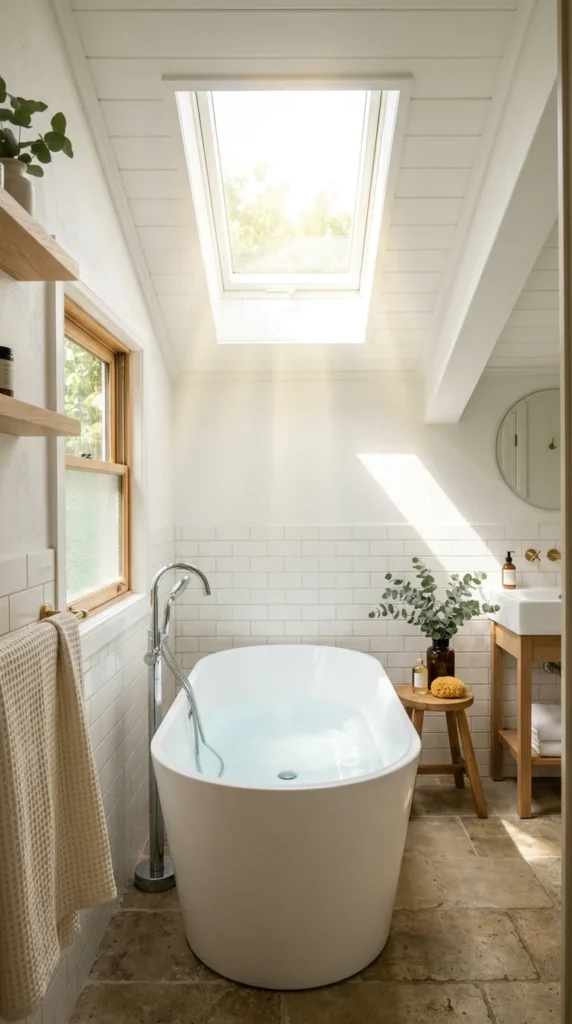
In a small space, every inch of vertical real estate is valuable. Designers use floor-to-ceiling cabinetry to provide ample storage without cluttering the floor area.
- Hidden Storage: Use “phantom” cabinets that sit flush with the wall and are painted the same color to make them nearly invisible.
- Open vs. Closed: Mix open shelving for decorative items with closed cabinetry for toiletries to maintain a tidy appearance.
13. Metallic Finishes
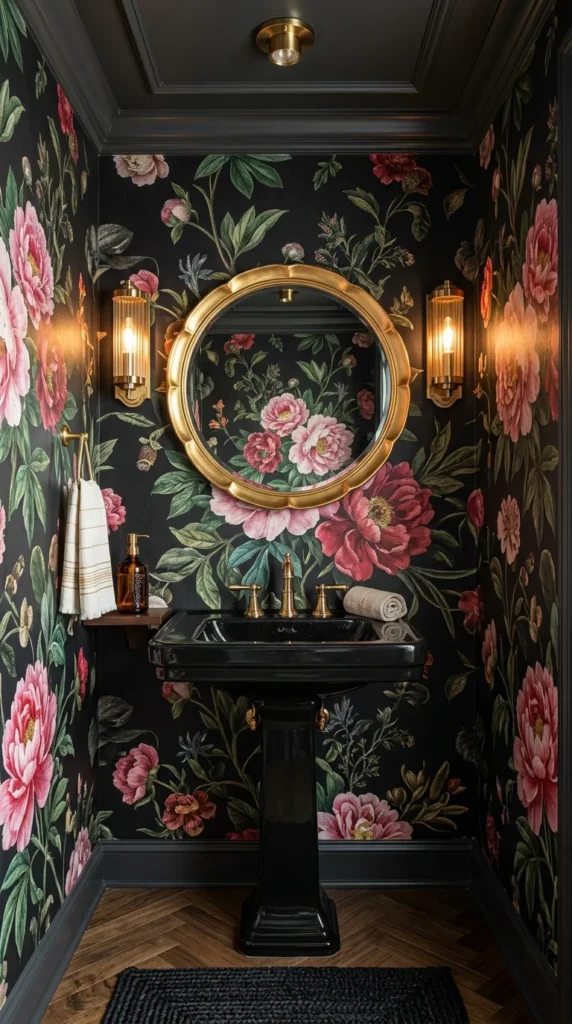
Mixing metals or choosing a unique finish can instantly elevate a bathroom’s designer credentials. Move away from standard chrome and explore more sophisticated options.
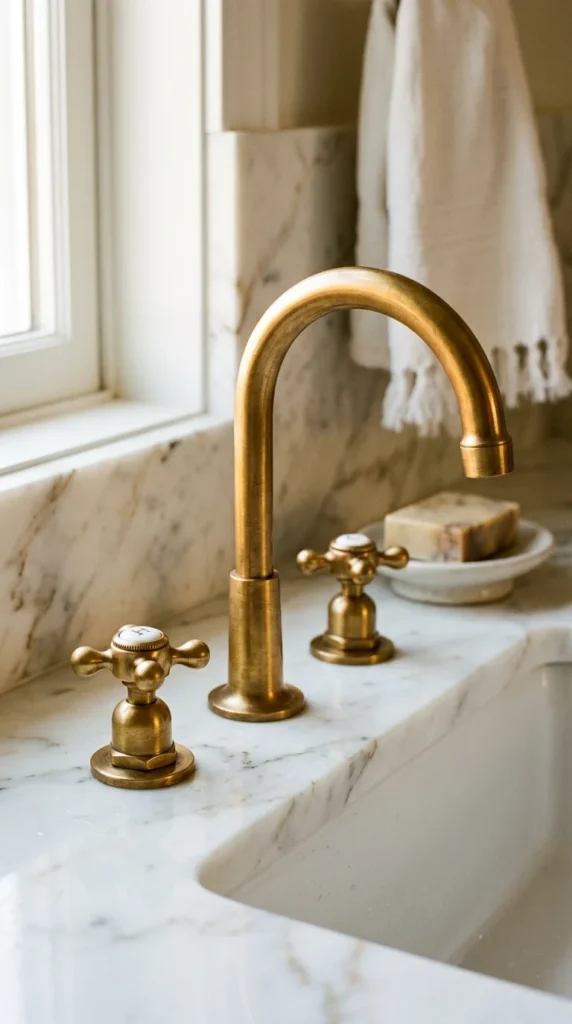
- Popular Finishes: Brushed gold, champagne bronze, and matte black are current favorites in high-end design.
- Consistency: While mixing metals is trendy, keep the “main” fixtures (shower, sink, towel bar) in the same finish to maintain a cohesive look.
14. Skylight Installation
If your small bathroom is an interior room with no windows, it can feel like a cave. A skylight or a “solar tube” brings in natural light, which is the ultimate luxury in interior design.
- Ventilation: Some skylights can be opened via remote, providing essential ventilation in addition to light.
- Privacy: Skylights provide the benefit of natural light without compromising privacy in a dense urban environment.
15. Pocket Doors
Traditional swinging doors require a “clearance arc” that eats up valuable floor space. A pocket door slides directly into the wall, freeing up square footage for a larger vanity or a more spacious shower.
- Hardware: Choose high-quality “soft-close” track hardware to ensure the door slides silently and feels substantial.
- Style: You can match the pocket door to your wall color or choose a glass-paned door to allow light to travel between rooms.