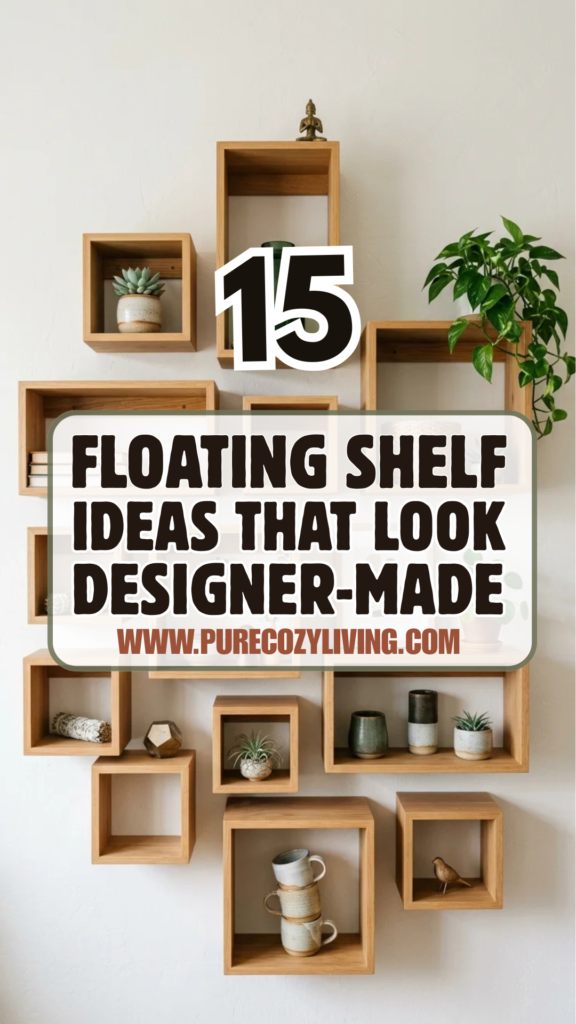

Floating shelves have evolved from simple storage solutions into powerful architectural elements that define the character of a room. When executed with precision, these gravity-defying surfaces offer a clean, streamlined aesthetic that removes the visual “noise” of traditional brackets. To achieve a designer-grade look, one must consider the interplay of materials, proportions, and lighting. Whether you are aiming for organic warmth or industrial sharpness, the following fifteen ideas provide a roadmap to elevating your interior walls.
1. Live Edge
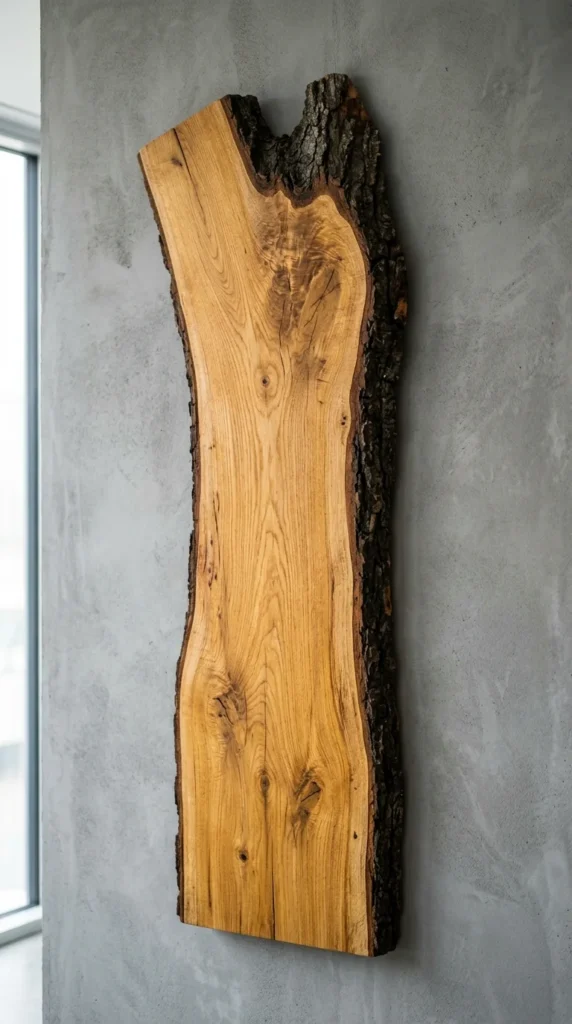
The live edge shelf is the ultimate marriage of nature and modern design. By preserving the natural periphery of the tree, these shelves introduce organic textures that soften the hard lines of a modern room. Designers often use “thick-cut” slabs—usually three to four inches deep—to create a sense of permanence and weight. To keep the look sophisticated rather than “rustic-cabin,” pair live edge wood with a monochromatic wall color like charcoal or soft cream.
2. Marble Slabs
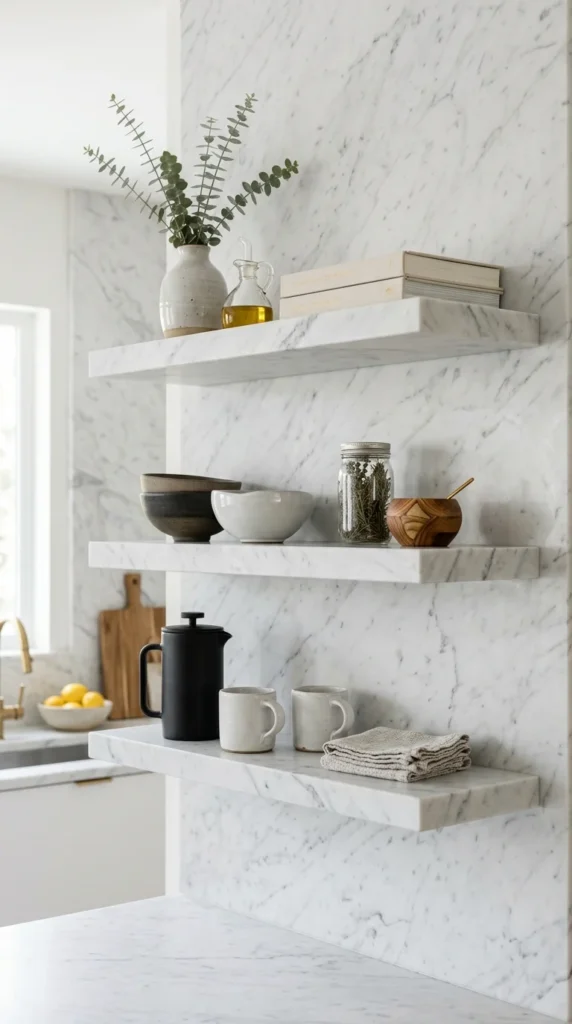
Nothing signals luxury quite like natural stone. Marble floating shelves, especially when they match the backsplash in a kitchen or bathroom, create a seamless, “carved from the earth” appearance. Because marble is heavy, these require heavy-duty internal steel supports. The result is a high-end, waterproof surface that serves as the perfect stage for high-end oils, spices, or luxury apothecary bottles.
3. Integrated Lighting
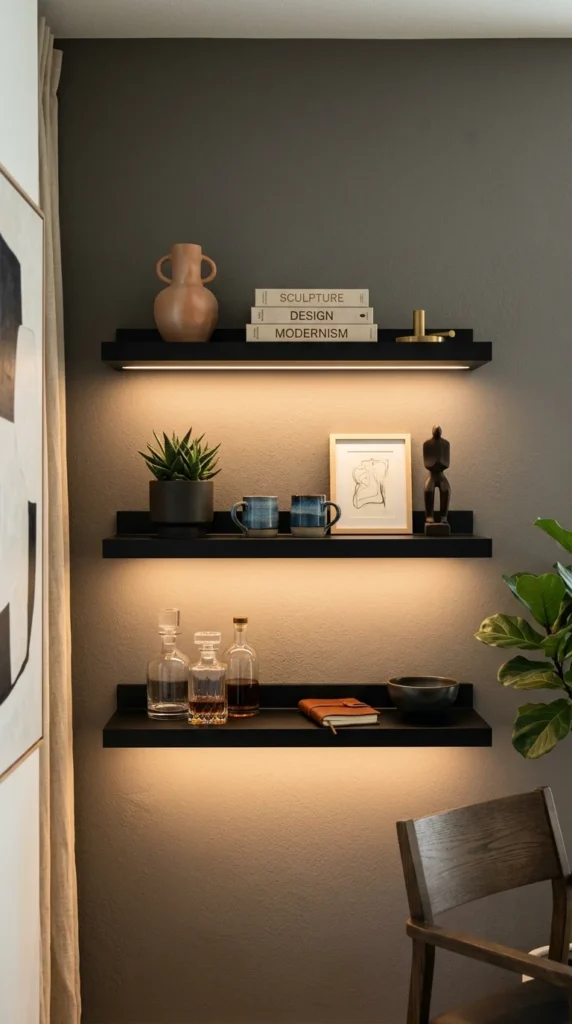
Designer-made shelves often feature “invisible” technology. By routing a channel into the bottom of a thick shelf, you can install LED light strips that illuminate the items below without the source being visible. This technique, known as “task lighting” or “wash lighting,” adds depth to the room and highlights the textures of your decor, making the entire installation look like a custom-built architectural feature.
4. Wrapped Corners
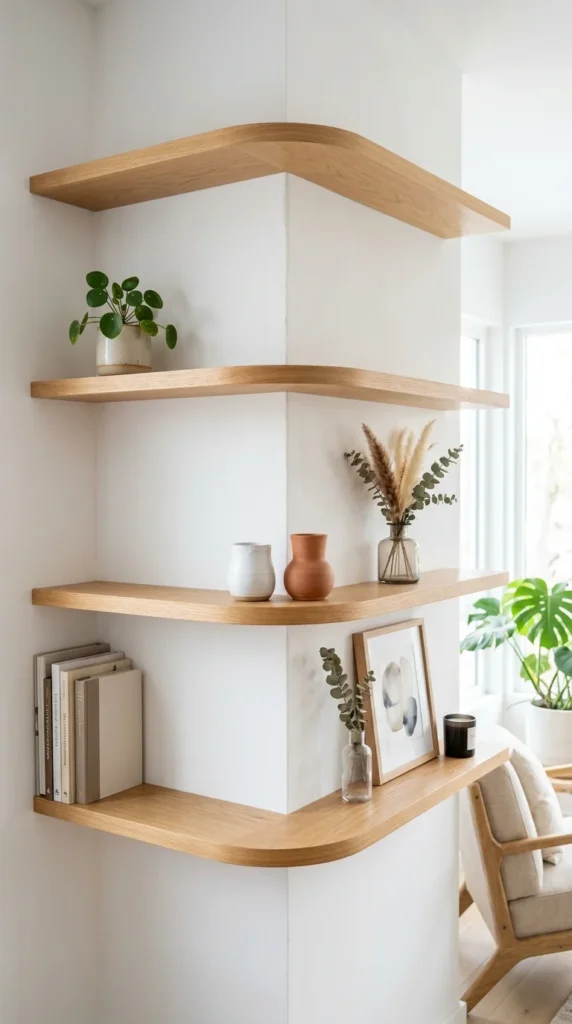
Utilizing corner space is a classic designer trick for making a room feel larger and more cohesive. Instead of stopping a shelf at the end of a wall, have it “wrap” around the corner. This creates a continuous horizontal line that draws the eye and makes the shelving feel like it was built into the home’s original blueprint. It is particularly effective in small apartments where every inch of wall space is a premium.
5. Floor-to-Ceiling Verticality
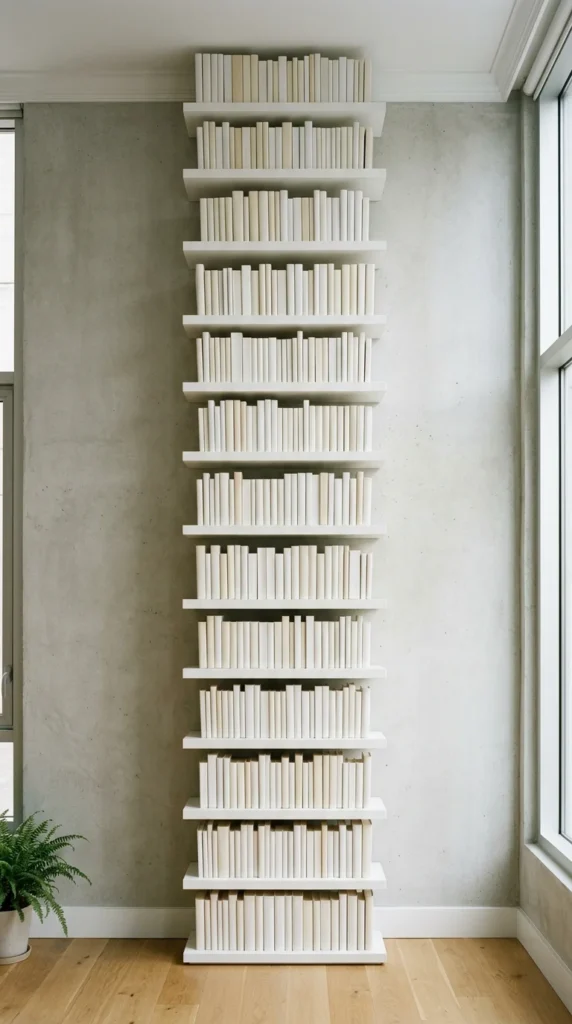
While we often think of floating shelves in horizontal rows, stacking them vertically from the floor all the way to the ceiling creates a dramatic, library-like effect. This “columnar” approach works exceptionally well in narrow nooks or flanking a fireplace. By keeping the shelves the same color as the wall, the objects placed upon them appear to be floating in mid-air, creating a clean and organized visual rhythm.
6. Metallic Finishes
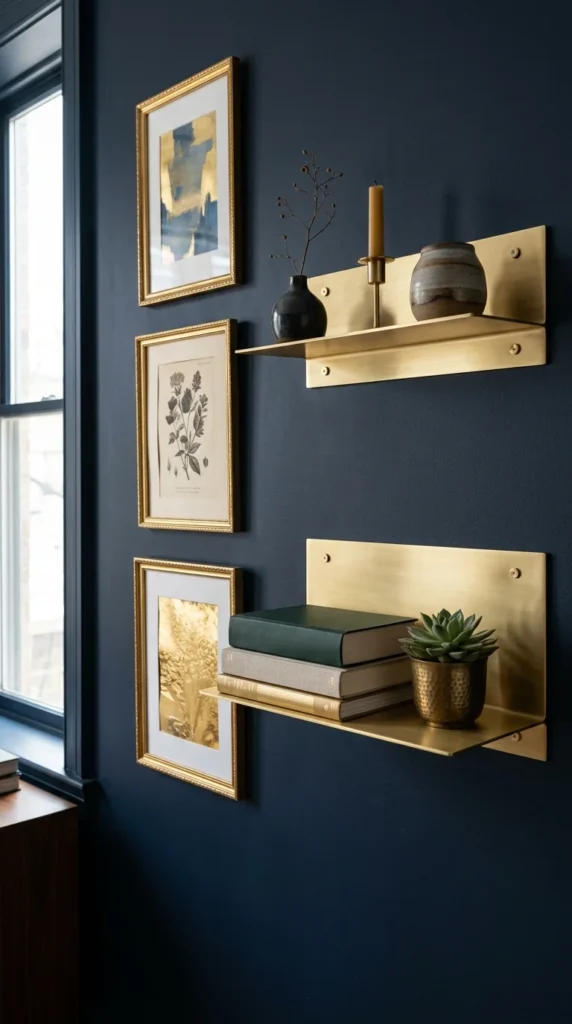
For a touch of “jewelry for the home,” metallic floating shelves are unmatched. Using materials like brushed brass, stainless steel, or copper adds a reflective quality that bounces light around the room. Thin-profile metal shelves (around 1/4 inch thick) offer a sharp, razor-thin silhouette that looks incredibly modern and intentional.
7. Painted Monochrome
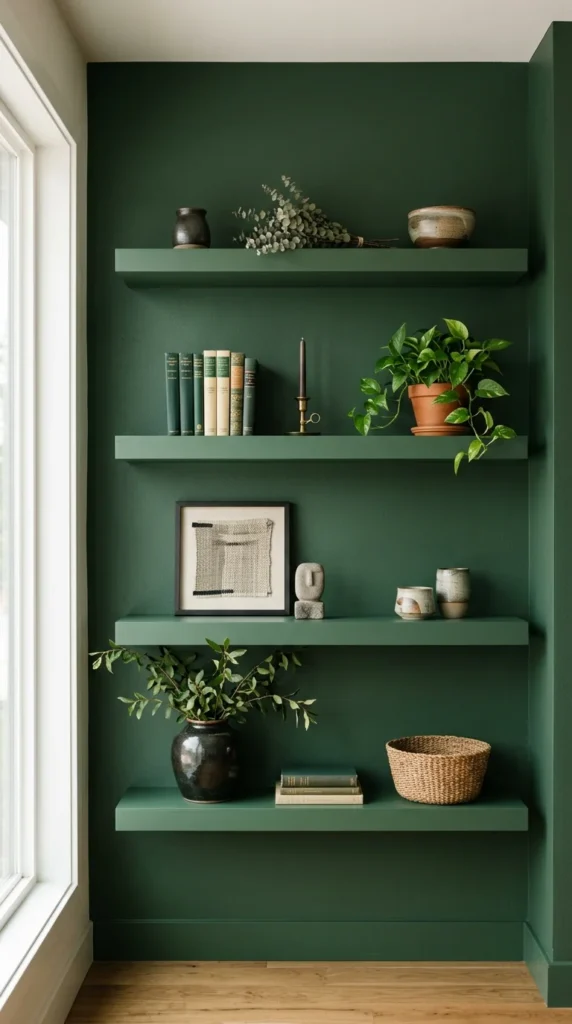
To achieve a true “built-in” designer look on a budget, paint your shelves the exact same color and sheen as your wall. This “color-drenching” technique minimizes visual clutter and allows the silhouette of the shelves to blend into the architecture. It transforms the shelves from “furniture” into “sculpture,” making the items displayed on them—like colorful books or white ceramics—pop with incredible intensity.
8. Chunky Reclaimed Wood
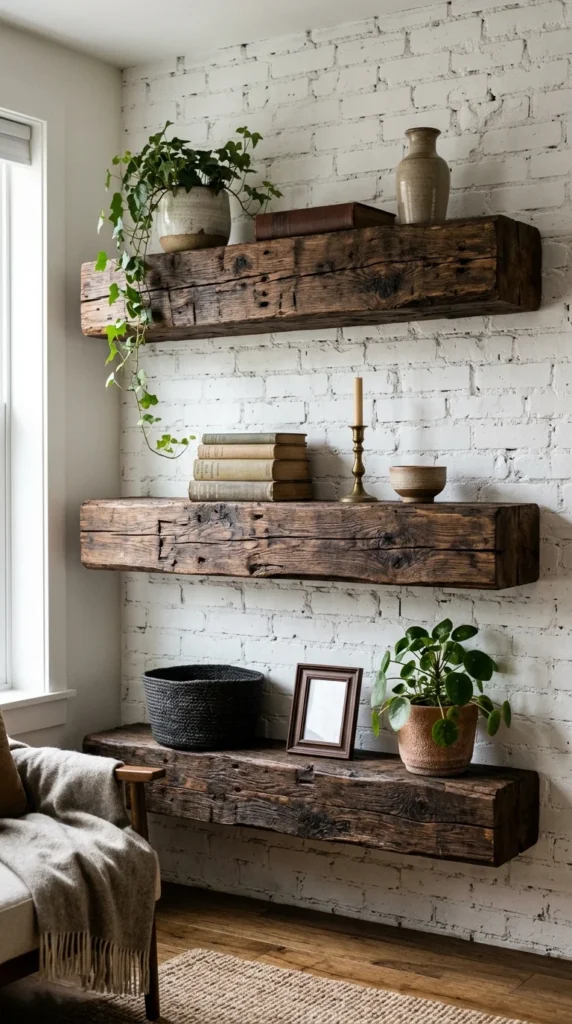
Scale is a major factor in high-end design. Using oversized, reclaimed beams creates a sense of history and “gravity.” These shelves work best in rooms with high ceilings or large open spaces where a thin shelf would look lost. The contrast between the rough, weathered wood and a smooth, modern wall creates a “wabi-sabi” aesthetic that feels both expensive and grounded.
9. Leather Straps
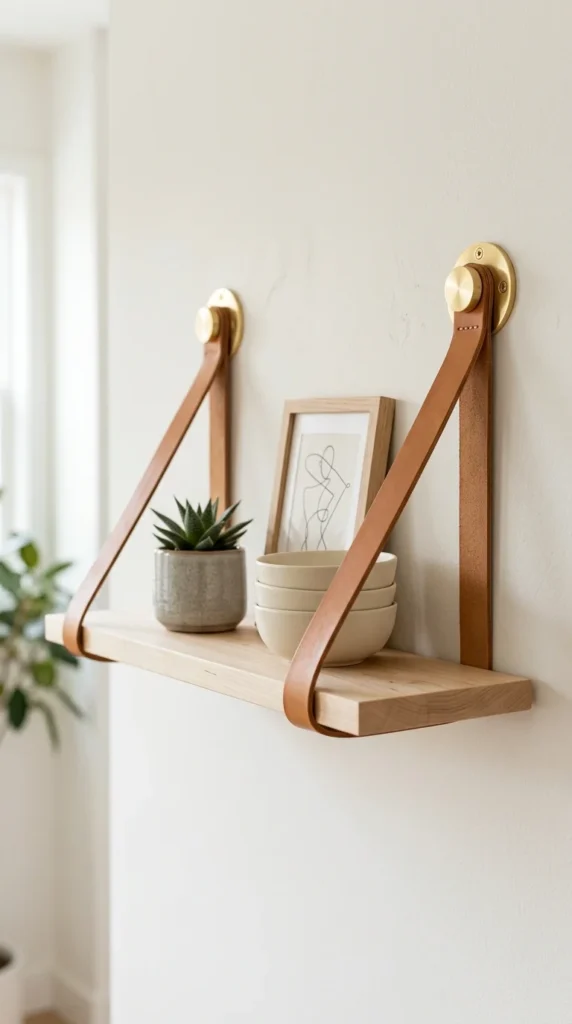
While technically “suspended” rather than purely floating, shelves supported by leather straps are a staple in Scandinavian and Bohemian designer homes. The leather adds a soft, tactile element and a “handmade” quality that rigid brackets cannot provide. This look is perfect for nurseries, bedrooms, or creative studios where a softer, more layered aesthetic is desired.
10. Asymmetrical Layouts
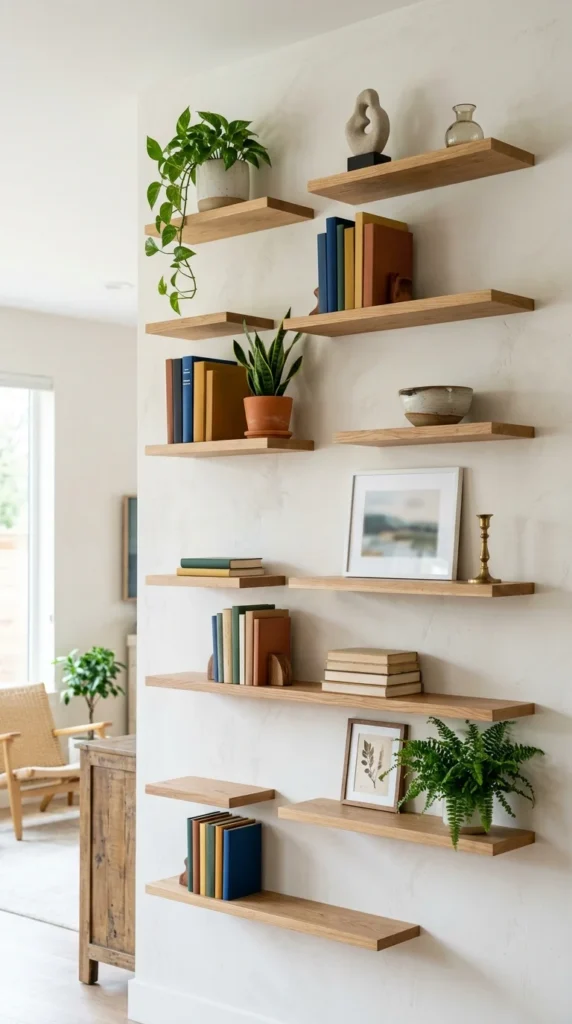
Standard shelving is often symmetrical, but designers frequently use asymmetry to create movement. By staggering shelves of different lengths—shorter on top, longer on the bottom, or vice versa—you create a “gallery” feel. This encourages the viewer’s eye to move across the wall, making the display feel like a curated art installation rather than just a storage unit.
11. Glass and Acrylic
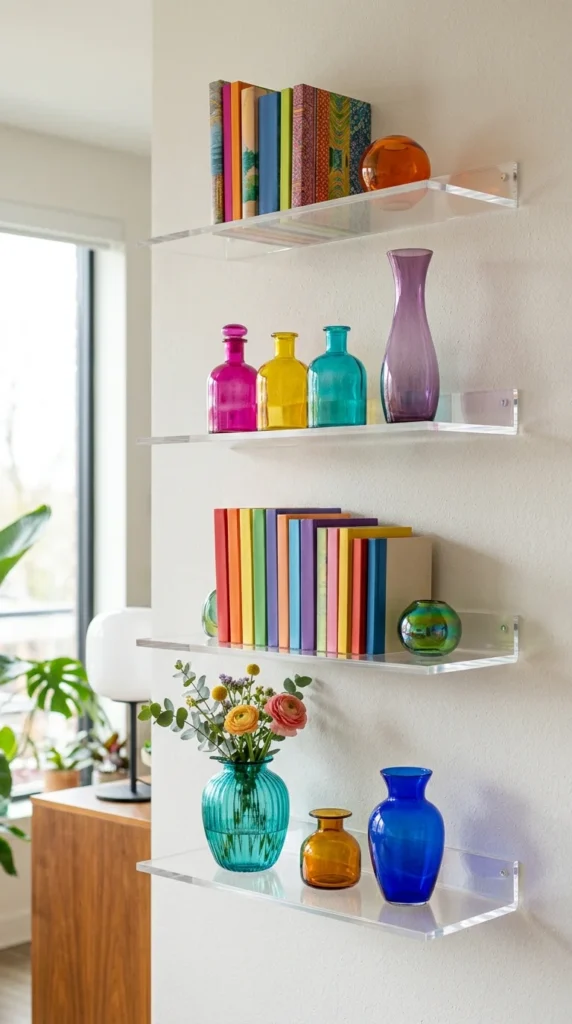
In small or dark rooms, heavy wooden shelves can feel oppressive. Clear acrylic or thick tempered glass shelves are the designer’s secret for adding storage without adding visual weight. These are particularly effective in bathrooms or in front of windows, as they allow light to pass through completely, maintaining the “breathability” of the space.
12. Arched Recesses
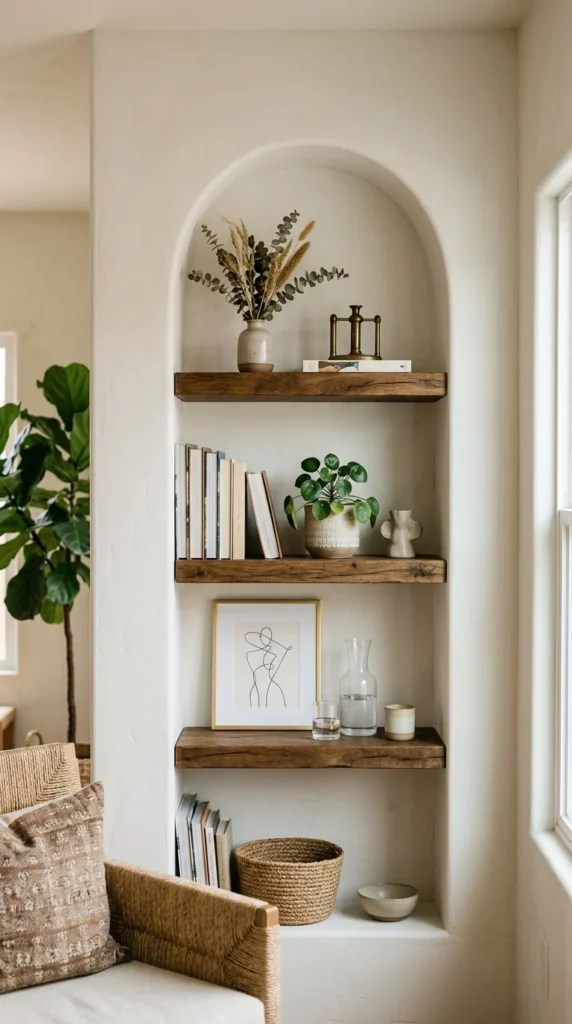
One of the biggest trends in high-end interior design is the arched wall niche. By installing floating shelves inside a recessed, arched cutout, you create a look that feels centuries old yet modern. This “alcove” style provides a frame for your decor, making even the simplest items look like precious artifacts in a museum.
13. Backlit Mirrored Shelves
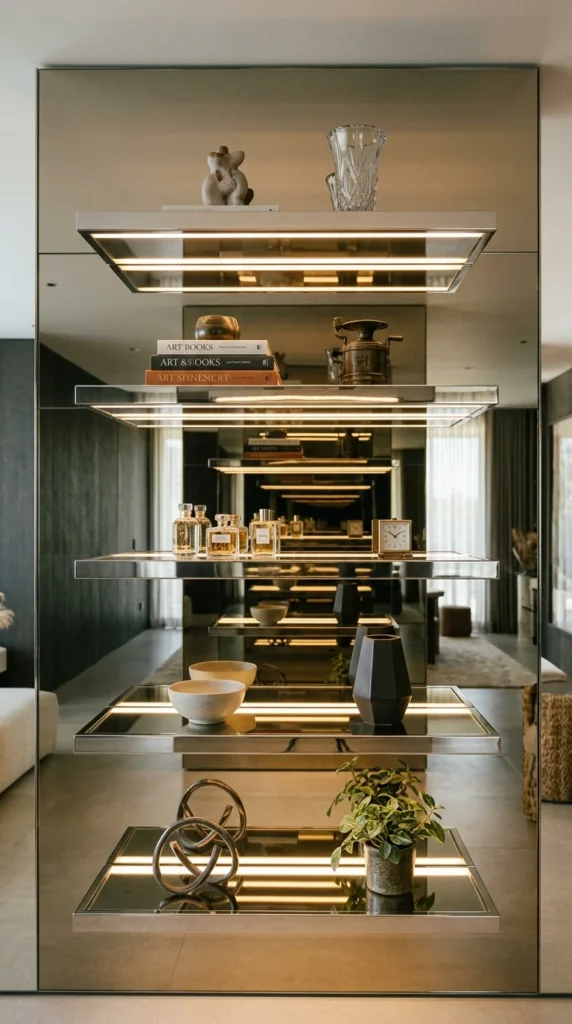
To maximize glamour, designers often combine mirrored surfaces with floating elements. A mirrored shelf against a dark wall creates a “void” effect that is highly sophisticated. When used in a home bar or a dressing room, these shelves amplify the sparkle of glassware and jewelry, providing a 360-degree view of the items on display.
14. Box-Style Floating Cubes
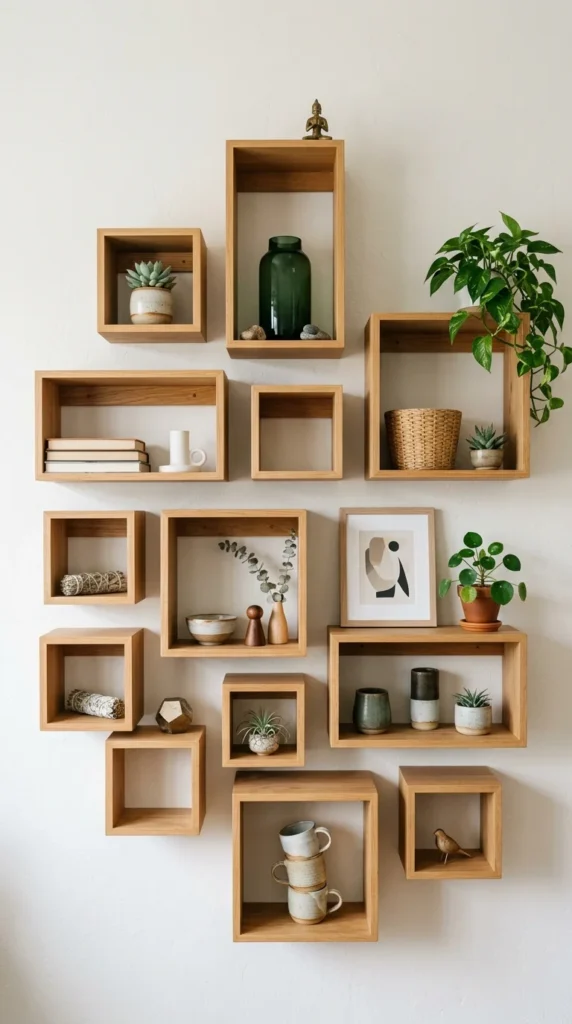
The “box” shelf is a variation of the floating shelf that offers two surfaces: the interior and the exterior top. Designers often mix these with standard flat shelves to create a 3D “grid” on the wall. This look is highly architectural and provides a sense of enclosure for smaller, more delicate items that might feel “lost” on a long, open shelf.
15. The Picture Ledge
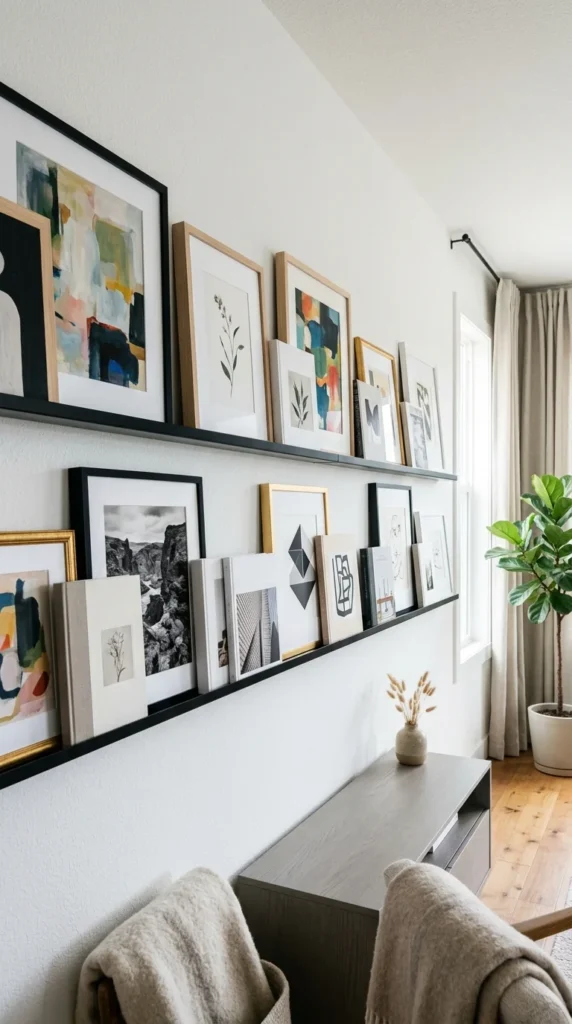
For a look that is ultra-minimalist, the “picture ledge” is a designer favorite. These are very shallow shelves (usually 2-4 inches deep) with a small lip on the front. They are designed specifically for leaning artwork and photographs. Running a single picture ledge across the entire length of a room creates a strong horizontal line that anchors the space and allows for an “ever-changing” gallery that doesn’t require new holes in the wall every time you want to swap your art.