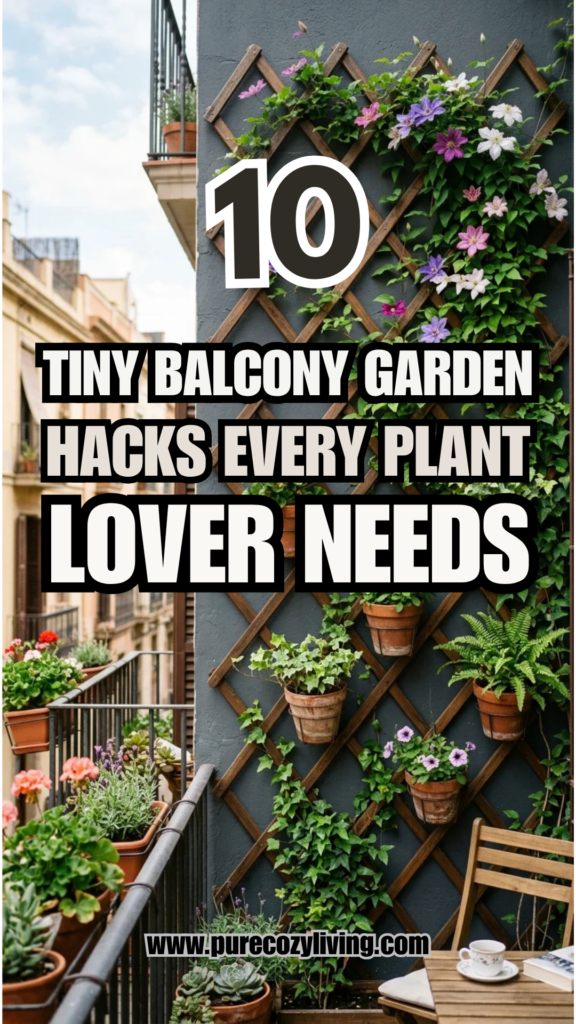

Transforming a cramped urban balcony into a thriving botanical sanctuary is a dream for many apartment dwellers. While space may be limited, creativity is not. With the right strategies, even a few square feet of concrete can become a lush escape that provides fresh herbs, vibrant blooms, and a breath of fresh air. Here are ten essential hacks to maximize your tiny balcony garden.
1. Vertical Trellises
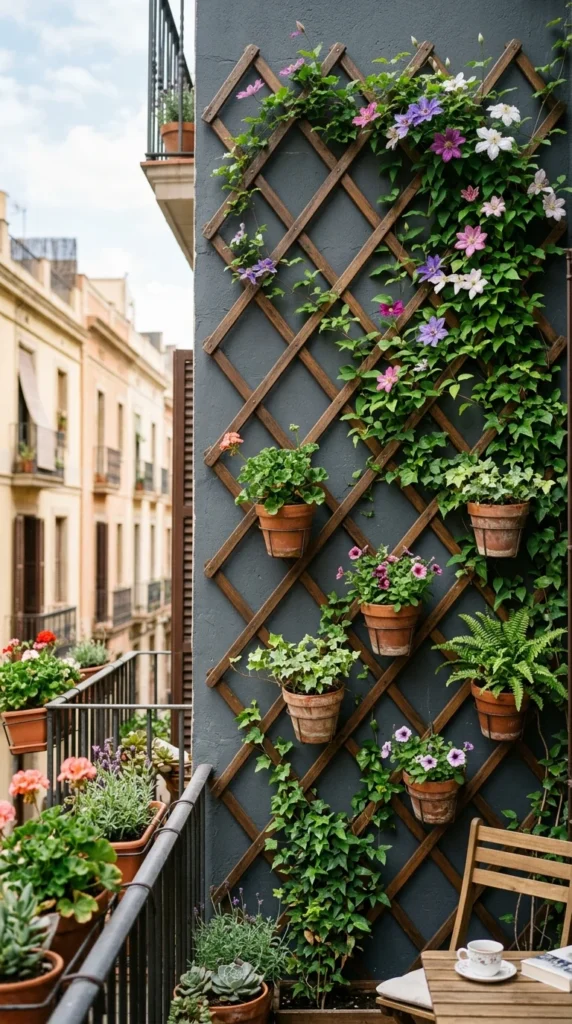
When floor space is at a premium, the only way to go is up. Vertical gardening is the cornerstone of small-space design. By installing a trellis or a wire mesh grid against your balcony wall, you create a living tapestry that doesn’t consume valuable walking space.
- Plant Selection: Choose climbing plants like jasmine, honeysuckle, or even runner beans and snap peas.
- Installation: Ensure the trellis is securely anchored to withstand wind. If you cannot drill into the walls, consider a free-standing trellis leaning against the structure.
- Aesthetic Bonus: A green wall acts as natural insulation, cooling your balcony during hot summer months and providing a private screen from neighbors.
2. Railing Boxes
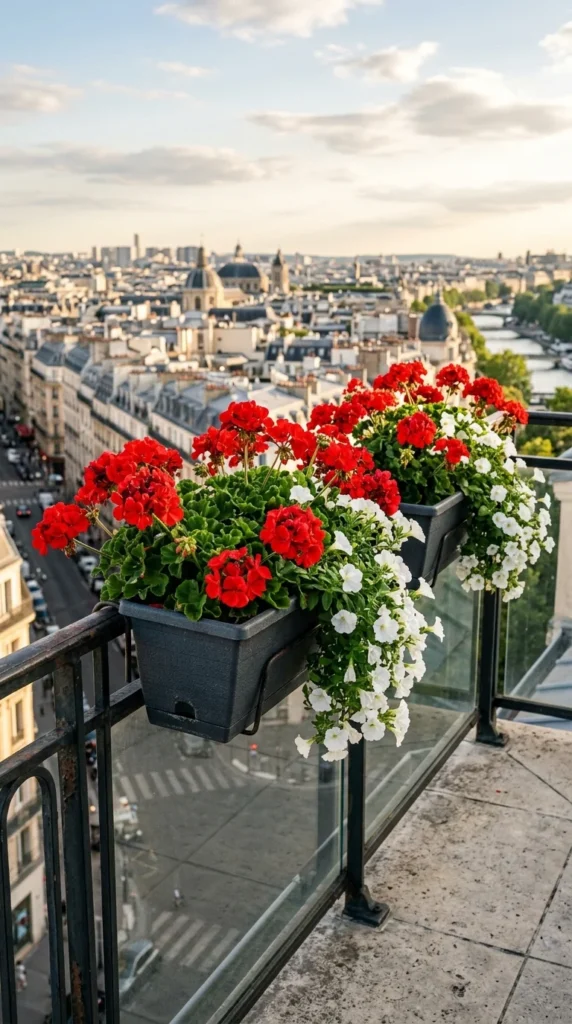
The perimeter of your balcony is prime real estate. Railing planters allow you to garden “outside” the footprint of your floor. These containers hook directly onto the metal or glass balustrade, drawing the eye outward and making the space feel larger.
- Weight Matters: Always check the weight capacity of your railing and choose lightweight potting mixes (usually peat or coco-coir based) rather than heavy topsoil.
- Safety First: Ensure the brackets are tight and have a secondary safety wire to prevent the pots from falling during storms.
- Drainage: Look for models with built-in water reservoirs to prevent dirty water from dripping onto the balconies or sidewalks below.
3. Tiered Racks
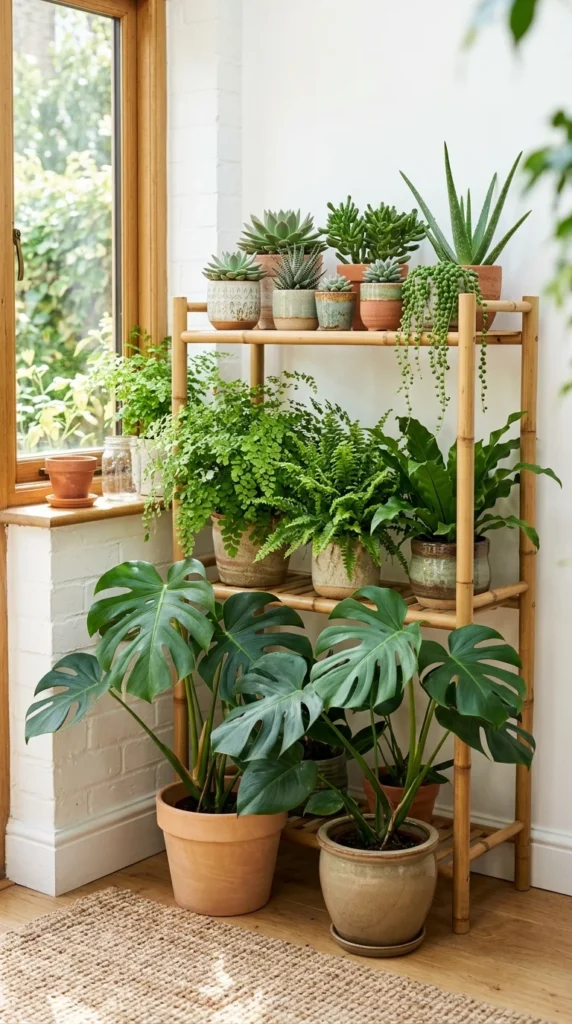
Layering is an interior design trick that works wonders outdoors. A tiered plant stand or a simple ladder shelf allows you to organize plants according to their light requirements while tripling your growing surface.
- Light Optimization: Place sun-loving succulents and cacti on the top tier where they get unobstructed light. Use the lower, shaded tiers for ferns, calatheas, or hostas.
- Visual Depth: Staggering heights creates a more “wild” and natural look, mimicking the canopy layers of a forest.
- Portability: Many tiered racks are lightweight or foldable, making it easy to rearrange your garden as the seasons change.
4. Self-Watering Pots
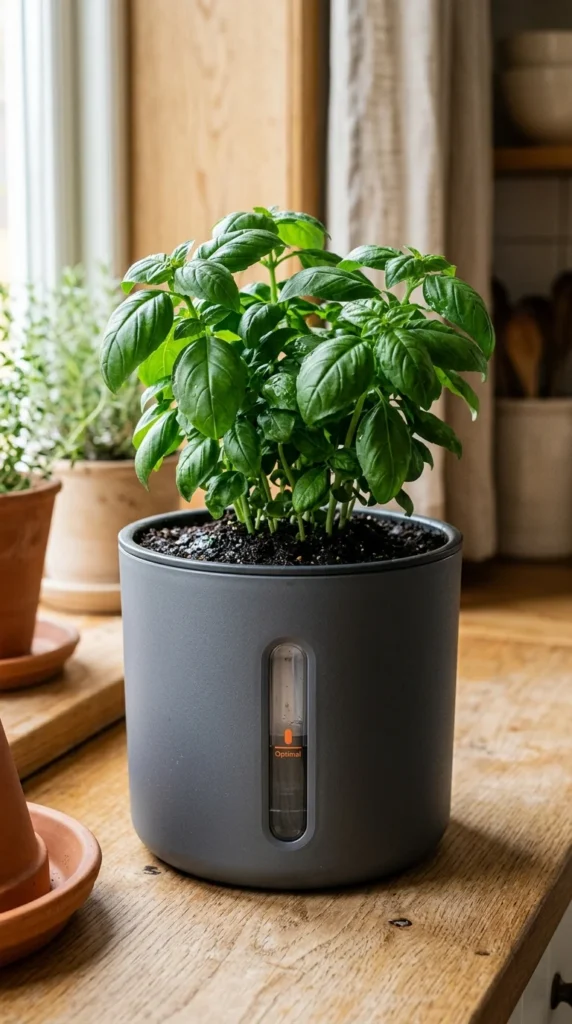
Small containers dry out much faster than garden beds, especially on windy balconies. Self-watering pots are a game-changer for the busy plant parent. These pots feature a reservoir at the bottom that allows plants to “bottom-water” themselves through capillary action.
- Consistency: These systems provide a steady moisture level, which is crucial for sensitive herbs like cilantro or moisture-loving tropicals.
- Vacation Friendly: A large enough reservoir can keep your plants hydrated for up to a week, allowing you to travel without worrying about a withered garden.
- Prevents Root Rot: Most high-quality self-watering pots include an overflow hole, ensuring the roots never sit in stagnant water.
5. Caster Bases
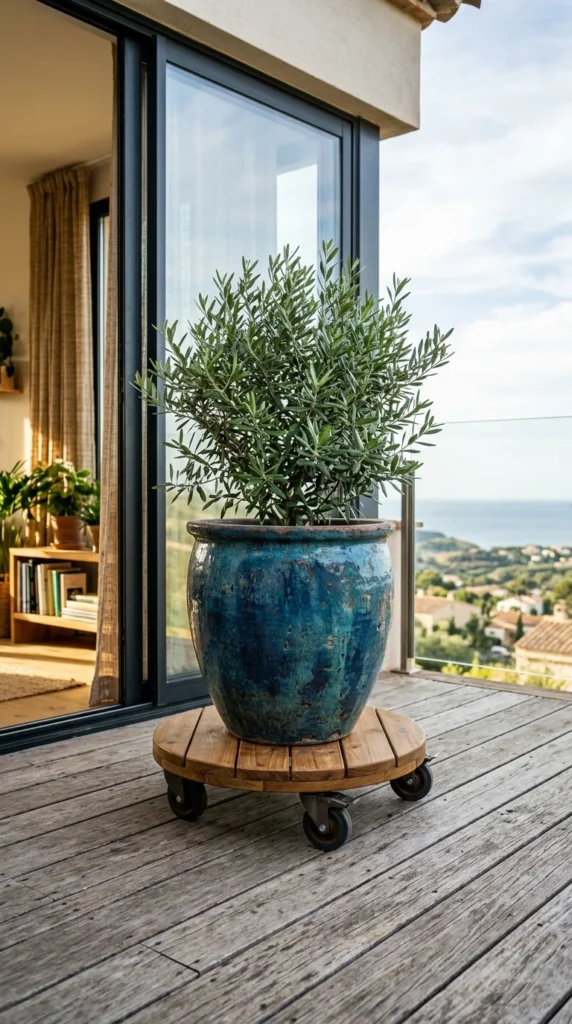
Mobility is often overlooked in balcony gardening. Placing your heaviest pots on wheeled caddies or caster bases allows you to follow the sun or clear the floor for social gatherings.
- Sun Tracking: As the seasons shift, the angle of the sun changes. Wheels allow you to move a sun-hungry tomato plant into a bright patch without straining your back.
- Easy Cleaning: Dirt and fallen leaves inevitably accumulate under pots. Being able to roll them away makes sweeping and hosing down the balcony a breeze.
- Versatility: You can change the layout of your “outdoor room” in minutes, moving plants to the edges when you need more seating.
6. Foldable Tables
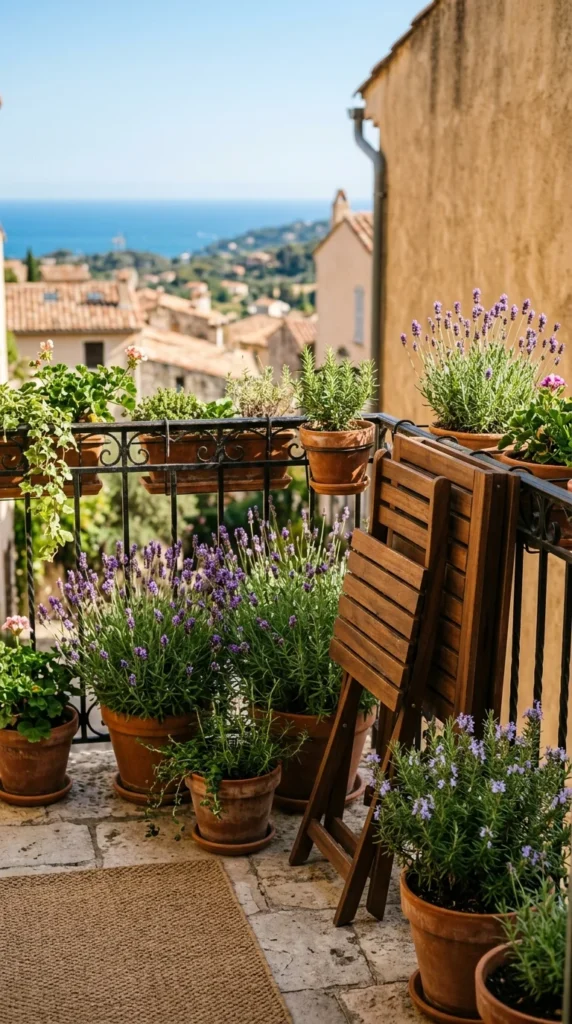
In a tiny garden, every piece of furniture must earn its keep. Opting for foldable or “drop-leaf” furniture ensures that you have a place to sit and enjoy your coffee without sacrificing space that could be used for more plants.
- Wall-Mounted Desks: Consider a table that hinges directly onto the railing or wall and folds down when not in use.
- Dual Purpose: Use your folded table as a potting station when it’s time to transplant, then wipe it down for an evening dinner.
- Weather Resistance: Choose materials like powder-coated steel or treated teak that can withstand the elements while folded.
7. Corner Units
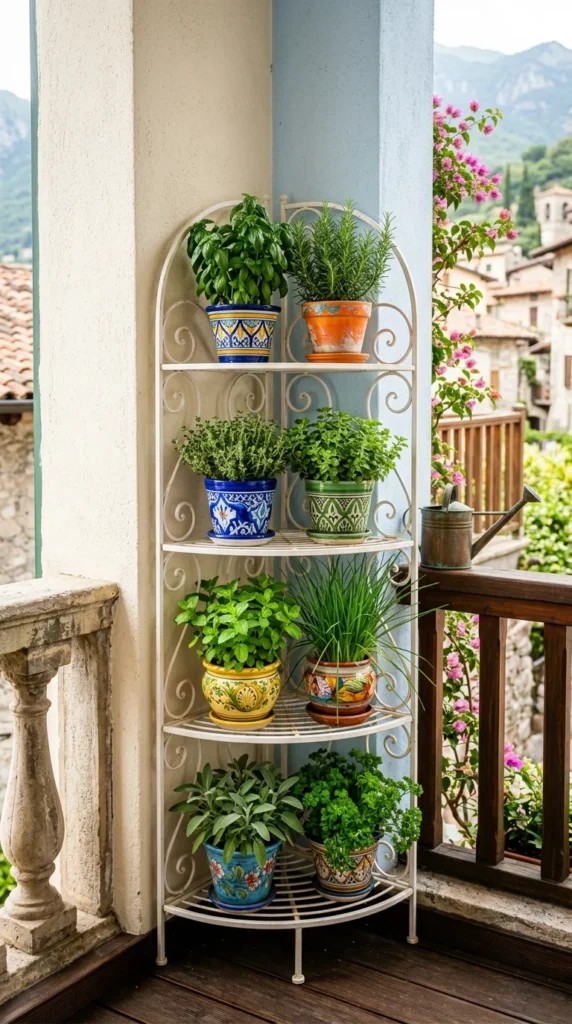
Corners are frequently wasted space. In a small balcony, every inch counts. A dedicated corner shelving unit utilizes the “dead zones” where two railings or walls meet, providing a sturdy home for your collection.
- Maximizing Square Footage: Corner units have a small footprint but offer significant vertical storage.
- Wind Protection: Corners are often the most sheltered spots on a balcony, making them ideal for delicate plants that might get battered by high-altitude winds.
- Framing the View: Placing tall plants in the corners helps frame the view of the city or landscape beyond, creating a cozy, “sunken garden” feel.
8. Hanging Pots
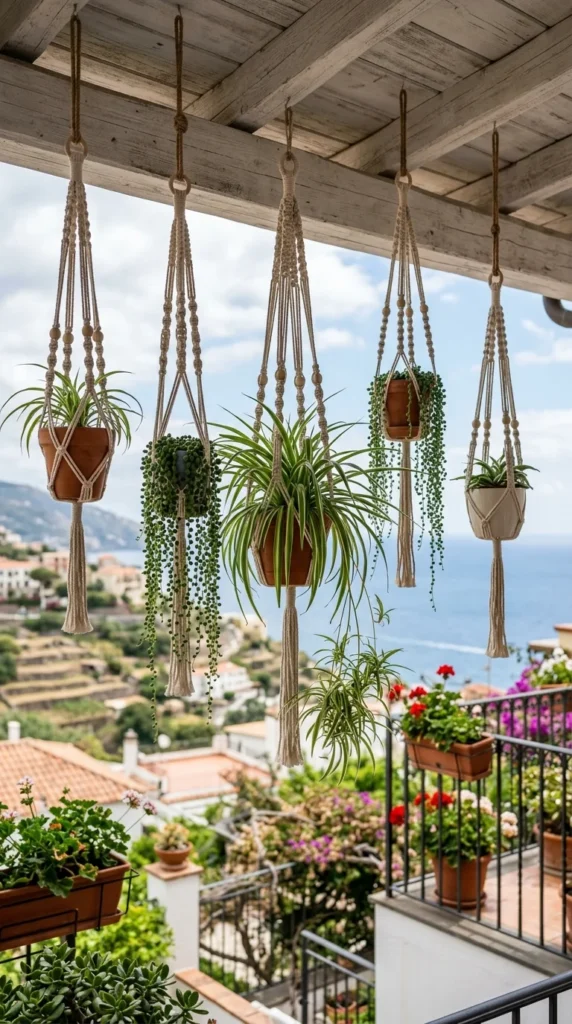
If you have a balcony ceiling or an overhanging roof, don’t ignore the overhead space. Hanging baskets and macrame holders draw the eye upward and add a layer of lushness that floor-bound pots cannot match.
- Trailing Varieties: Plants like Creeping Jenny, Pothos, or Trailing Lobelia look spectacular when allowed to spill over the sides of a suspended container.
- S-Hooks: Use heavy-duty S-hooks to hang pots from the structural beams of the balcony above (with permission, of course).
- Pulley Systems: For very high ceilings, consider a small pulley system that allows you to lower the pots for easy watering and maintenance.
9. Garden Mirrors
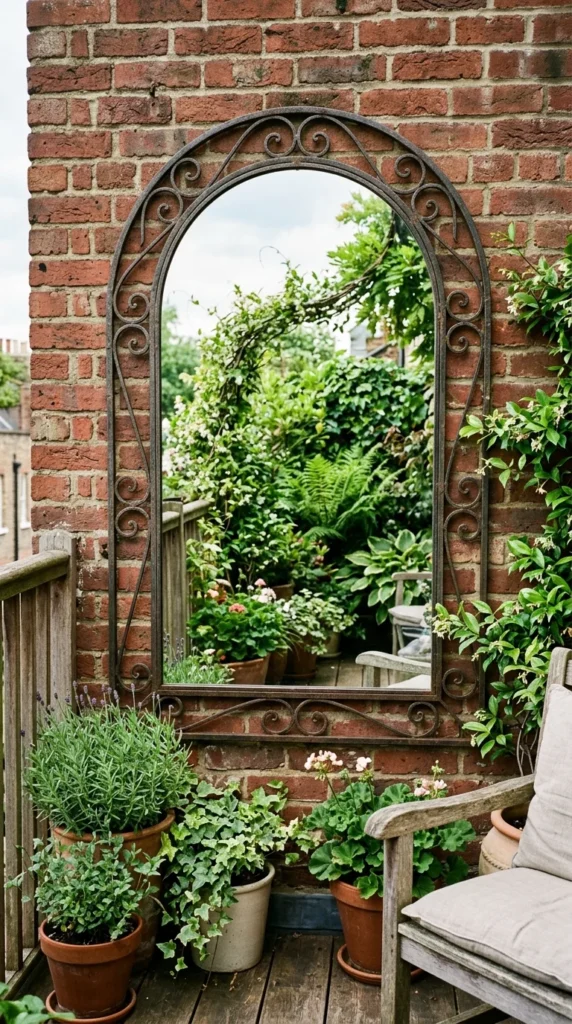
Mirrors are a classic interior design hack to make rooms feel larger, and they work just as effectively outdoors. A strategically placed mirror can bounce light into dark corners and create the illusion of a much deeper garden.
- Light Reflection: If your balcony is north-facing or shaded, a mirror can help redirect precious sunlight toward your plants.
- Visual Expansion: Placing a mirror behind a cluster of plants makes it look like your garden continues forever.
- Safety Note: Ensure the mirror is placed where it won’t reflect intense heat onto flammable materials or confuse birds. Use “distressed” or framed mirrors to make them more visible to wildlife.
10. Dwarf Plants
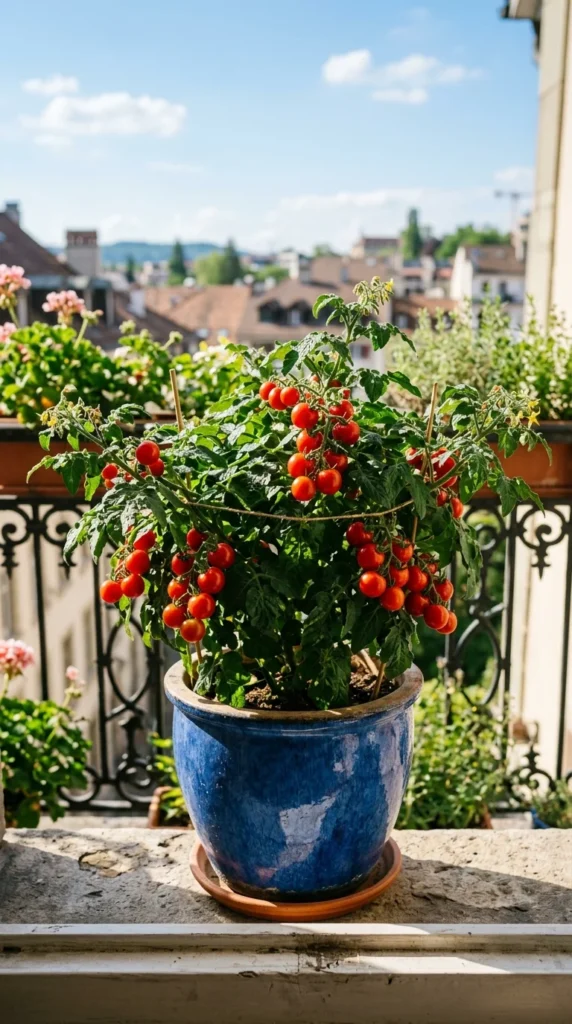
Not all plants are suited for life in a container on a balcony. To succeed in a small space, look for “dwarf,” “columnar,” or “patio” varieties specifically bred for pot culture.
- Edibles: Look for “Tiny Tim” tomatoes, “Pot-a-peño” peppers, or columnar apple trees that grow vertically rather than spreading wide.
- Ornamentals: Choose dwarf conifers, miniature roses, or compact hydrangeas that won’t outgrow their containers in a single season.
- Root Management: Dwarf varieties typically have smaller root systems, meaning they can thrive in smaller pots for longer periods without becoming root-bound.