
The television is no longer just an appliance; it is the centerpiece of the modern living room. As open-concept floor plans continue to dominate interior design, the “TV wall” has evolved into a high-impact architectural feature that defines the aesthetic of the entire home. From the rise of “Japandi” minimalism to the resurgence of bold, dark textures, homeowners are looking for ways to integrate technology seamlessly into their decor.
Social media platforms like Pinterest and Instagram are currently flooded with innovative ways to frame the screen. Whether you want to hide the TV, make it a work of art, or use it to anchor a room full of textures, these ten stunning TV wall designs represent the pinnacle of current interior trends.
1. Fluted Panels
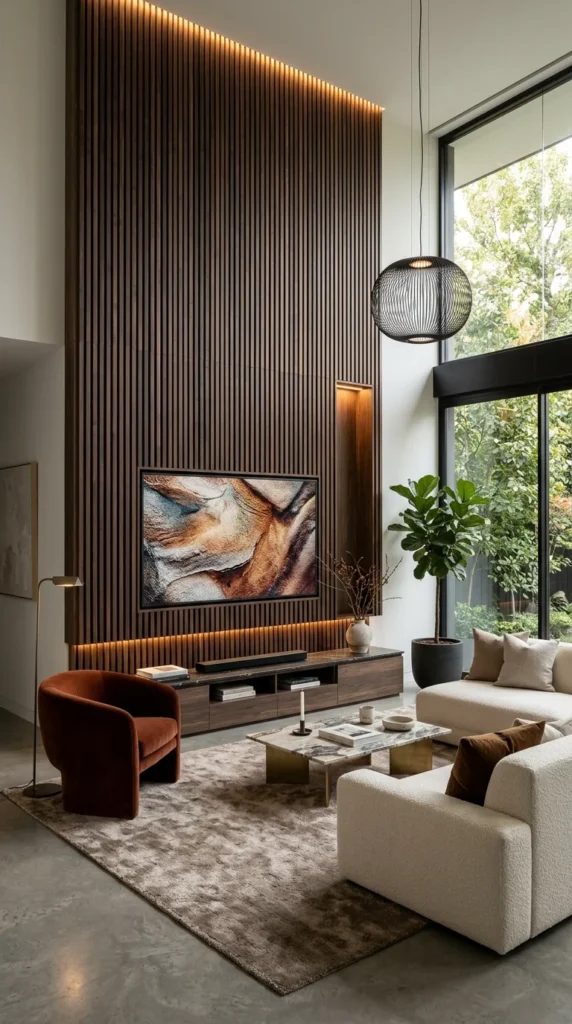
Fluted wood panels, also known as tambour or ribbed panels, have become the gold standard for contemporary TV walls. The vertical lines add height to a room while providing a tactile quality that flat paint simply cannot achieve. These panels work exceptionally well because they play with light and shadow, creating a dynamic backdrop that changes throughout the day.
When opting for fluted panels, many designers choose to use them as a partial accent—wrapping just the center section of the wall or creating an asymmetrical feature. This design is particularly popular in light oak or walnut finishes, bringing a touch of nature indoors. To elevate the look, consider adding hidden LED strips behind the edges of the panels to create a soft, ambient glow that reduces eye strain during movie nights.
2. Marble Slabs
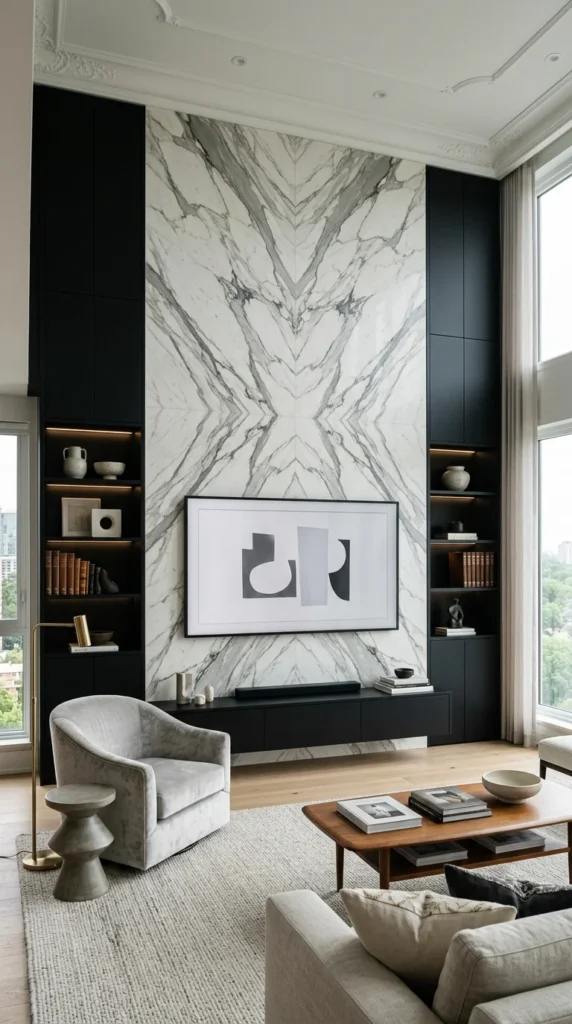
For those seeking ultimate luxury, nothing compares to the grandeur of a large-format marble slab. Using a single, continuous piece of stone (or high-quality porcelain look-alikes) creates a seamless, high-end hotel aesthetic. The natural veining of the marble acts as a piece of abstract art, ensuring that the wall looks stunning even when the television is turned off.
To execute this design effectively, “book-matching” is key. This is the practice of mirroring two marble slabs so that the veins line up perfectly, creating a symmetrical pattern. While white marble with gray or gold veining remains a classic choice, darker stones like Nero Marquina or green Tundra marble are gaining popularity for a more dramatic, moody atmosphere.
3. Built-in Shelving
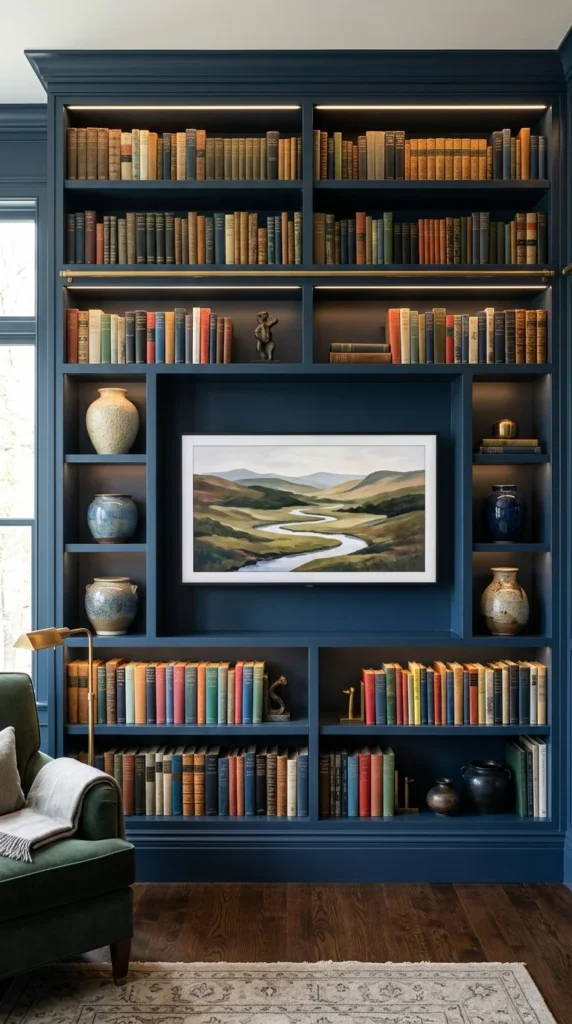
The “library look” is a timeless design choice that balances technology with personal style. By surrounding the TV with built-in shelving, you transform a cold electronic device into part of a curated collection. This design is perfect for those who want to display their favorite books, travel souvenirs, and sculptural pieces.
The secret to a Pinterest-worthy built-in wall is the arrangement of the items. Avoid cluttering every inch; instead, use a mix of horizontal and vertical book stacks, and leave some “white space” to let the eye rest. Painting the back of the shelves a contrasting color or adding small spotlights can add depth and make the television feel like an intentional part of the display rather than an afterthought.
4. Floating Consoles
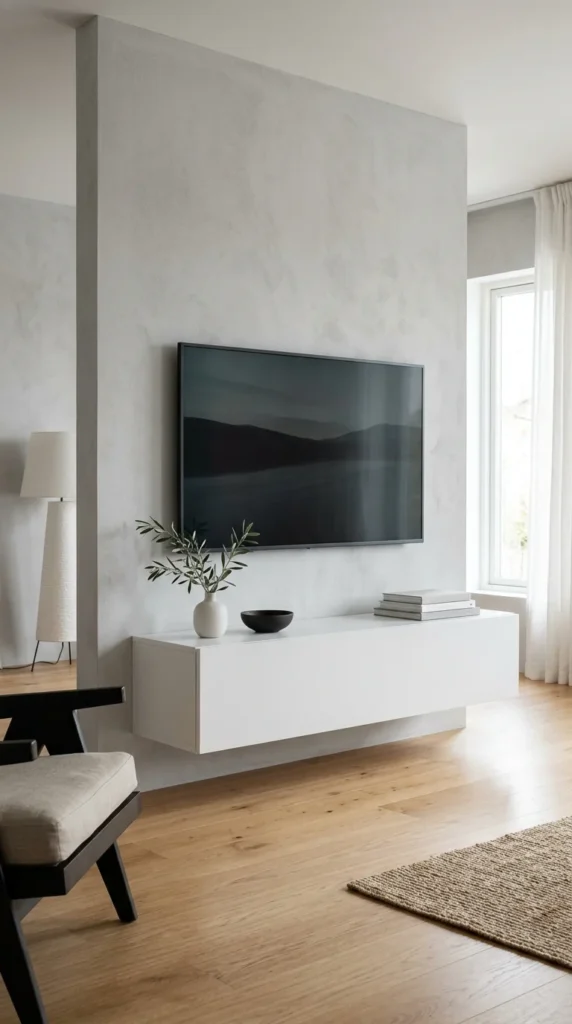
Minimalism continues to reign supreme, and the floating console is its hallmark. By mounting the media unit to the wall and leaving the floor space clear beneath it, you create an illusion of more space. This makes the room feel airier and less cluttered, which is especially beneficial in smaller apartments or modern homes.
A floating console allows for a clean, streamlined look that hides all the messy cables and peripheral devices like gaming consoles and routers. Many homeowners pair a floating wood or lacquer unit with a textured wall treatment, such as Venetian plaster or concrete finish, to create a sophisticated “industrial-chic” vibe.
5. Stone Cladding
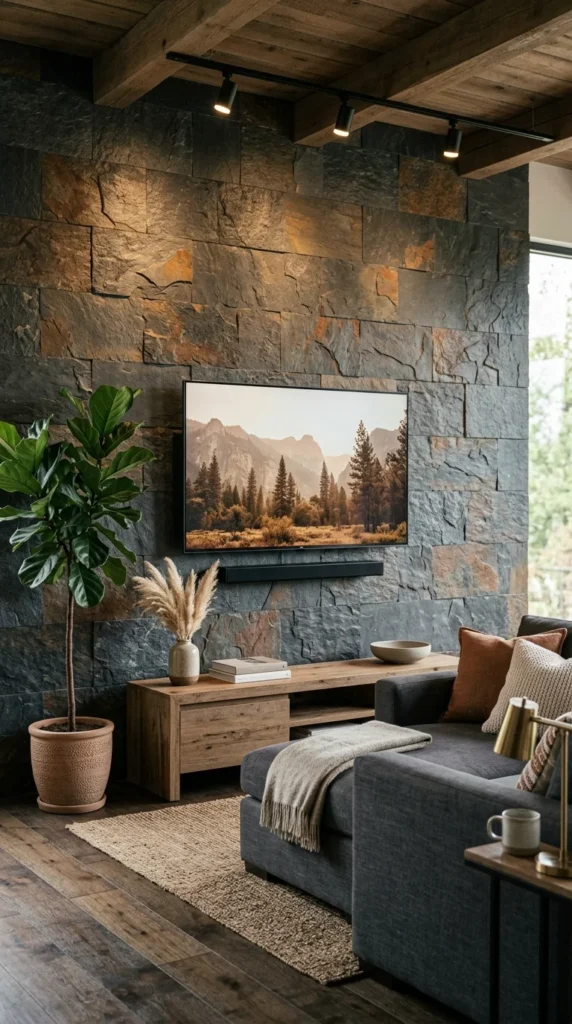
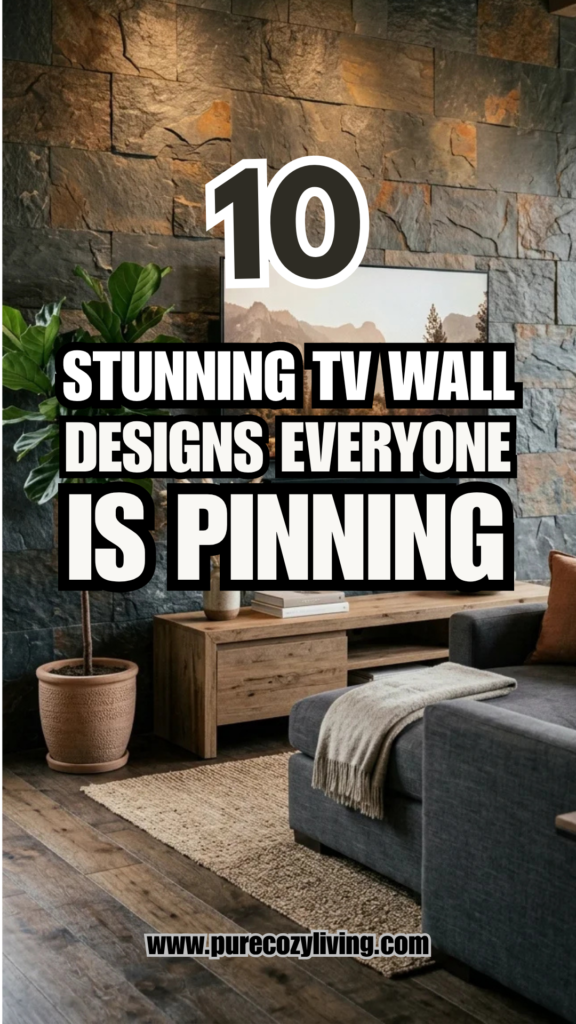
Texture is the primary focus of stone cladding designs. Using stacked stone, ledger stone, or slate tiles creates a rugged, earthy focal point that contrasts beautifully with the smooth glass of a TV screen. This design choice is excellent for adding warmth and a sense of permanence to a room.
Stone cladding works particularly well in homes with a “Modern Farmhouse” or “Mountain Modern” aesthetic. To prevent the stone from feeling too heavy, it is often paired with warm wood flooring and soft, neutral furniture. Highlighting the texture with recessed ceiling lights (wall washing) will emphasize the natural crags and peaks of the stone, creating a dramatic visual effect at night.
6. Moody Paint
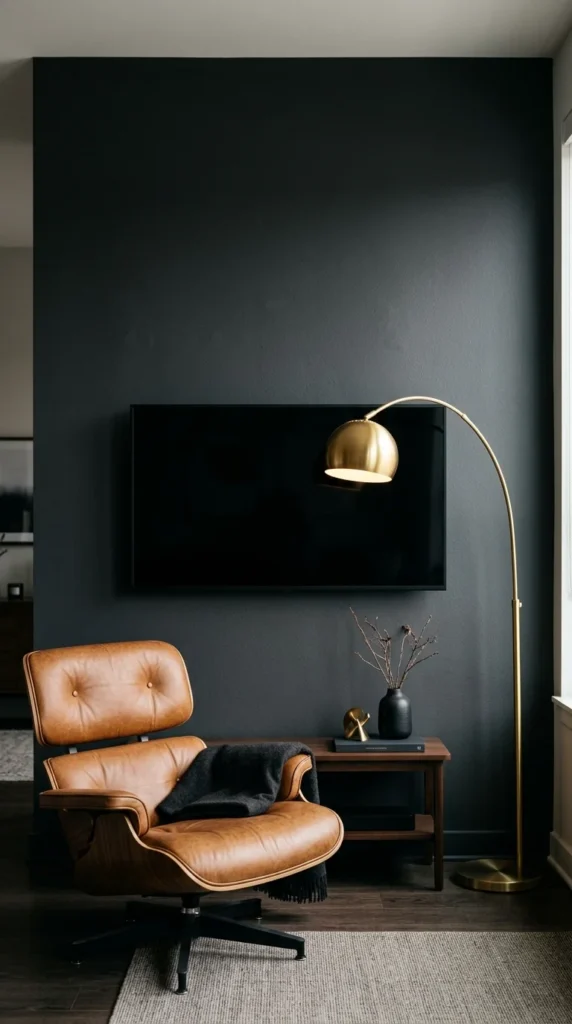
One of the simplest yet most effective trends is the “color-drench” or “moody wall.” By painting the TV wall a very dark color—such as charcoal, navy, or forest green—the television virtually disappears when it is turned off. This “blackout” effect is a favorite among cinephiles because it mimics the environment of a professional movie theater, minimizing distractions around the screen.
When using dark colors, texture is vital to prevent the wall from looking flat. Using a matte or eggshell finish helps absorb light, while adding a few metallic accents or light-colored wooden furniture provides the necessary contrast to keep the room from feeling too dark or oppressive.
7. Slatted Dividers
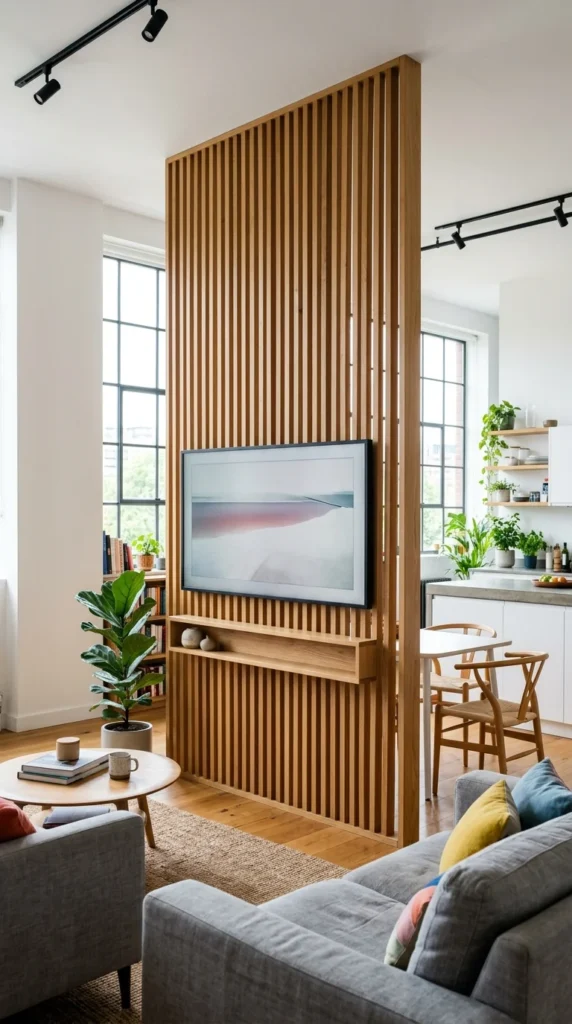
In open-concept homes, defining different “zones” can be a challenge. Enter the slatted divider. This architectural feature serves two purposes: it acts as a semi-transparent wall that separates the living area from the dining room or entryway, and it provides a sturdy structure for mounting a television.
Slatted dividers are a staple of “Japandi” design, which blends Japanese minimalism with Scandinavian functionality. They allow light to flow through the space while providing a sense of privacy. This design is highly functional for those who want a TV focal point without building a solid, heavy wall that could make the home feel smaller.
8. Integrated Fireplace
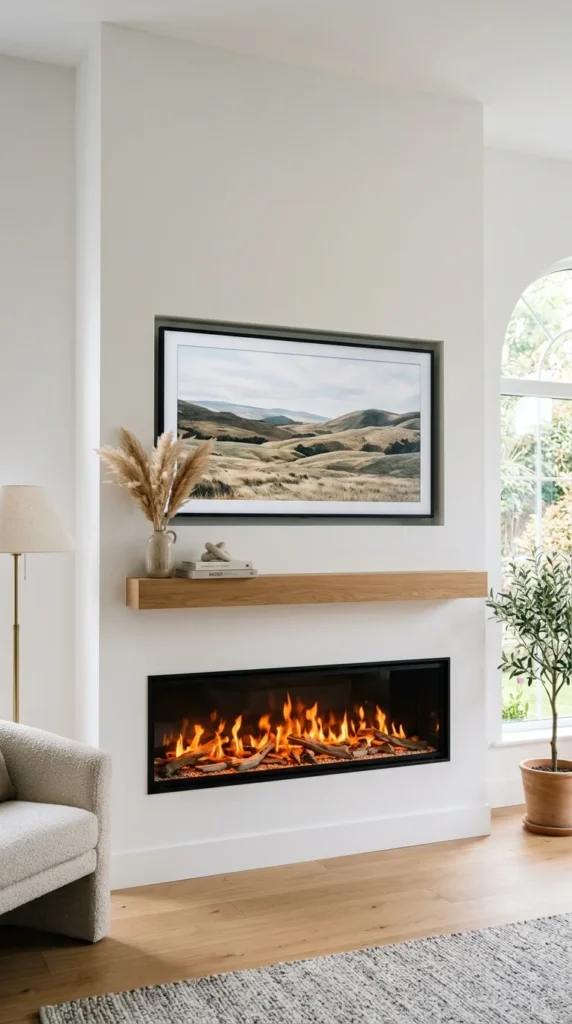
The “TV over the fireplace” debate has been settled by modern technology. With the advent of ultra-slim electric fireplaces and heat-shielding construction materials, the combination of fire and film has become the ultimate cozy centerpiece. This design creates a singular focal point for the room, making furniture arrangement much simpler.
For a modern look, designers are opting for long, linear “ribbon” fireplaces that stretch horizontally beneath the TV. This echoes the shape of the screen and creates a balanced, symmetrical composition. Framing the entire unit in a material like micro-cement or large-format porcelain tiles creates a clean, architectural look that defines the “heart of the home.”
9. Hidden Cabinets
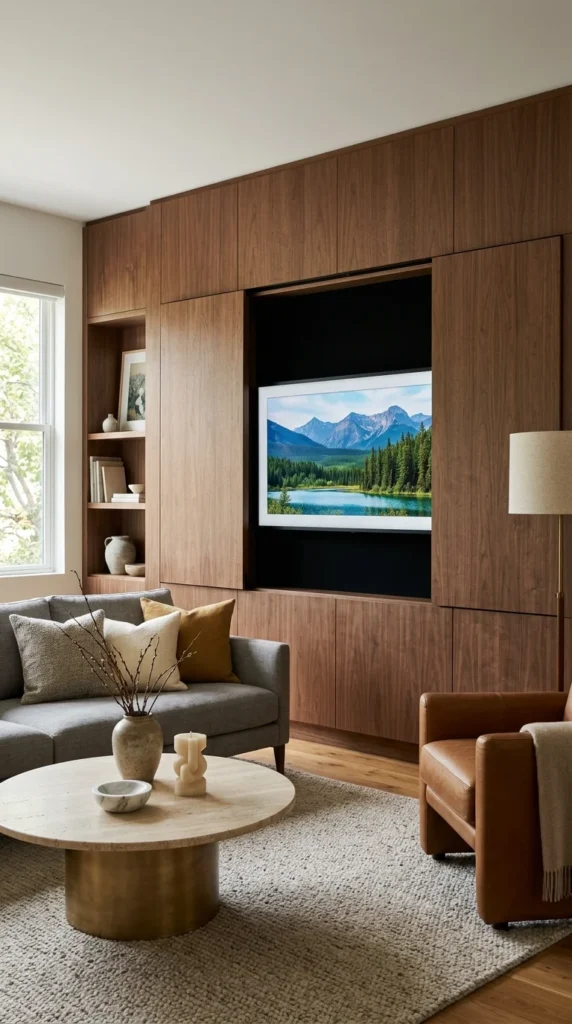
For those who believe the television is an eyesore, the hidden cabinet design is the perfect solution. This trend involves building custom cabinetry or using sliding “barn-style” doors to completely conceal the screen when it is not in use. It allows a room to transform from a high-tech media hub into a formal parlor or reading room in seconds.
Modern iterations of this design use motorized panels or “pocket doors” that slide back into the wall, ensuring they don’t take up extra space when the TV is on. This is an ideal choice for formal living rooms or bedrooms where you want to maintain a serene, technology-free atmosphere during the day.
10. Gallery Wall
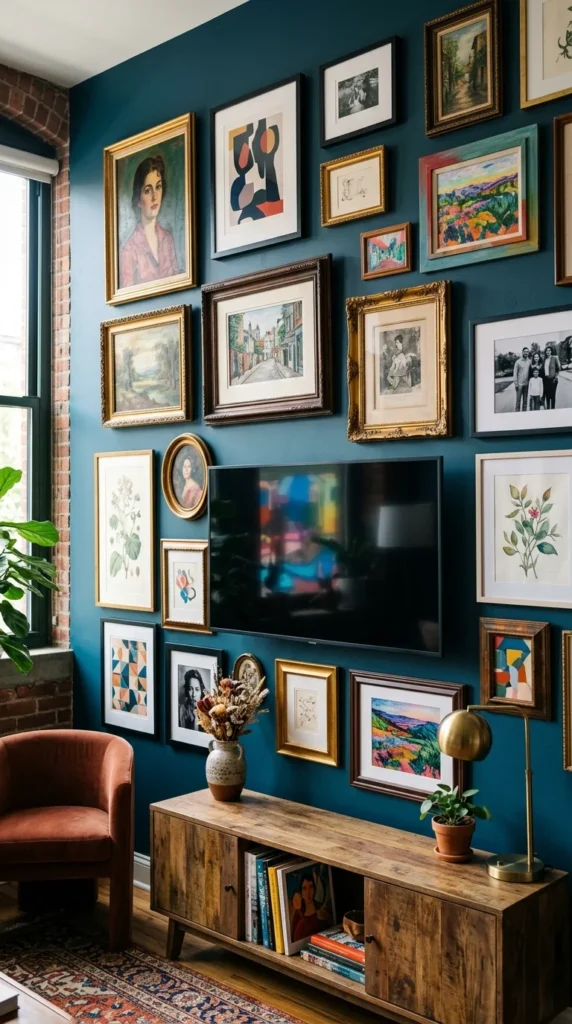
If you can’t hide the TV, make it part of the art. The gallery wall approach treats the television as just another frame in a larger collection of artwork. This is a favorite among those with an eclectic or maximalist style, as it softens the “black box” look of the TV by surrounding it with color and personality.
To master this look, mix different frame sizes, colors, and textures. You can even use a “Frame TV” that displays high-resolution art when the power is off, making it indistinguishable from the surrounding paintings. The key is to maintain a cohesive color palette or theme across the artwork so the wall feels intentional rather than cluttered.