
The entryway is the first impression your home makes. In small apartments or compact houses, this transition zone often becomes a cluttered catch-all for shoes, mail, and keys. However, applying minimalist principles—focusing on “less is more”—can transform even the tightest foyer into a functional and breathtaking introduction to your living space. Minimalism isn’t just about removing items; it is about intentionality, ensuring that every piece serves a purpose while maintaining a sense of visual calm.
1. Floating Console
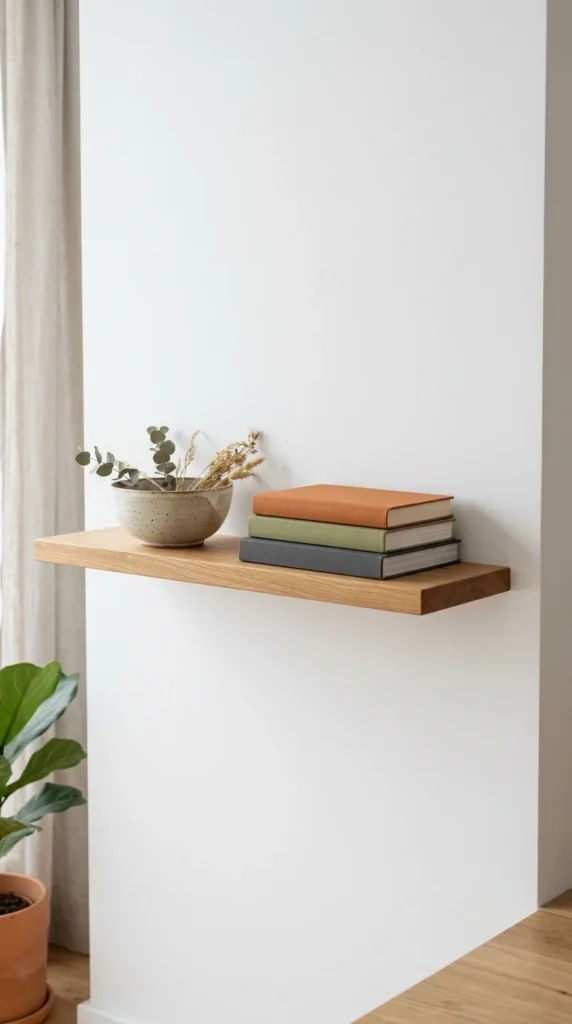
A floating console is the ultimate space-saver for narrow hallways. By mounting a slim shelf or drawer directly to the wall, you leave the floor space clear, which creates the illusion of a larger room. This design choice eliminates the “visual weight” that traditional furniture carries.
- Functionality: Use the surface for essentials like keys or sunglasses.
- Styling Tip: Keep the top uncluttered. A single decorative object or a small tray is sufficient to maintain the minimalist aesthetic.
- Installation: Ensure the console is mounted at a height that feels natural for dropping keys as you walk in, typically between 30 and 34 inches.
2. Mirror Magic
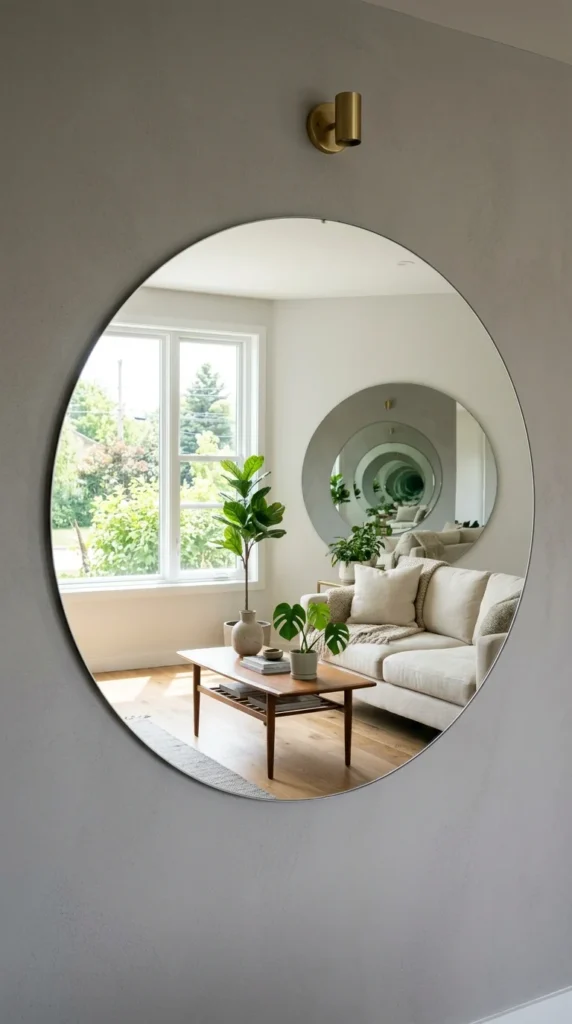
Mirrors are a classic tool in the interior designer’s arsenal for small spaces. In a minimalist entryway, a large mirror serves two purposes: it allows for a quick appearance check before leaving the house and, more importantly, it bounces light around the room.
- Shape Matters: Round mirrors soften the sharp angles often found in hallways, while tall rectangular mirrors can make low ceilings feel higher.
- Placement: Position the mirror opposite a light source or an open doorway to maximize the reflective quality.
- Frame Choice: Opt for a thin metal frame or a frameless design to keep the look streamlined.
3. Hidden Storage
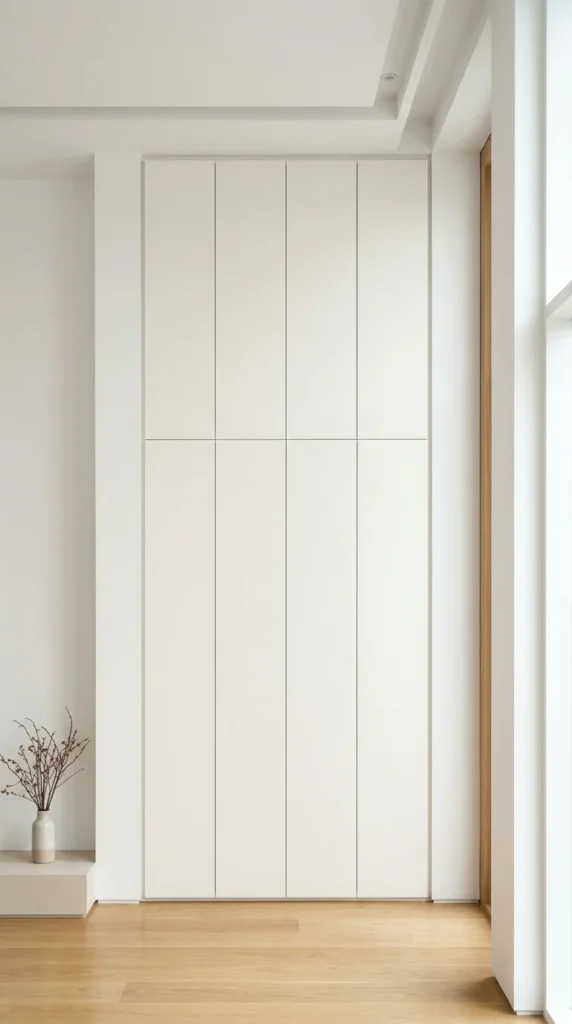
The biggest enemy of minimalism is clutter. In a small space, shoes and coats can quickly overwhelm the area. Hidden storage, such as built-in cabinets that match the wall color, allows you to tuck away the chaos behind a clean facade.
- Integrated Design: If possible, use “push-to-open” hardware to eliminate the need for knobs or pulls, furthering the seamless look.
- Internal Organization: Use adjustable shelving inside to accommodate everything from tall boots to small umbrellas.
- Color Matching: Paint the cabinetry the exact same shade as your walls to make the storage virtually invisible.
4. Vertical Hooks
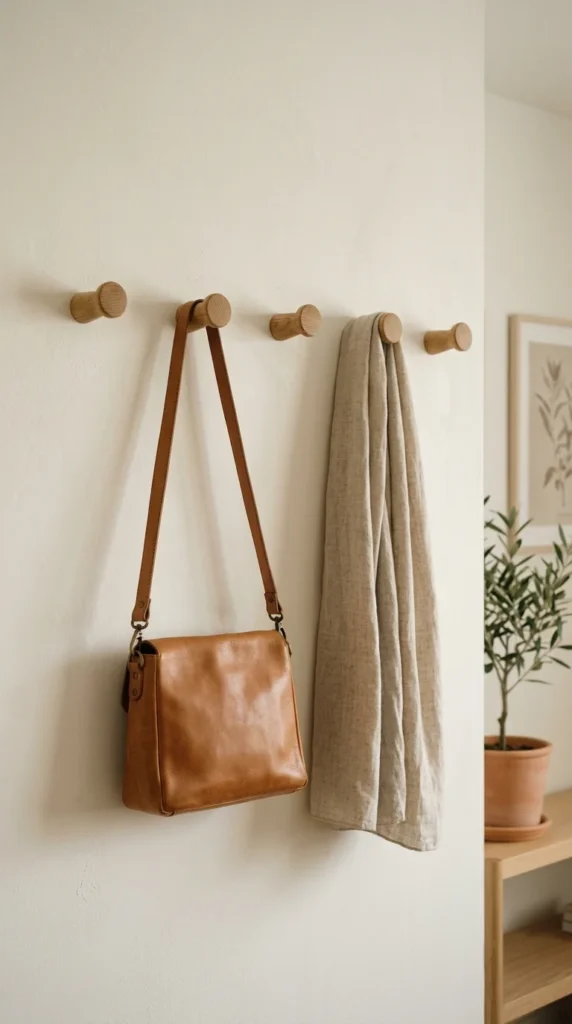
When floor space is at a premium, look to your walls. Instead of a bulky coat rack, a series of minimalist wall hooks provides a place for outerwear without occupying any square footage.
- Arrangement: You can install hooks in a perfect grid for a disciplined look or in a staggered, “staircase” pattern for a bit of visual interest.
- Material: Choose materials that complement your home’s palette—matte black metal for industrial vibes or warm oak for a Scandinavian feel.
- Limitation: The key to minimalism here is not to overstuff the hooks. Limit each hook to one item to prevent a “pile-up” effect.
5. Slim Benches
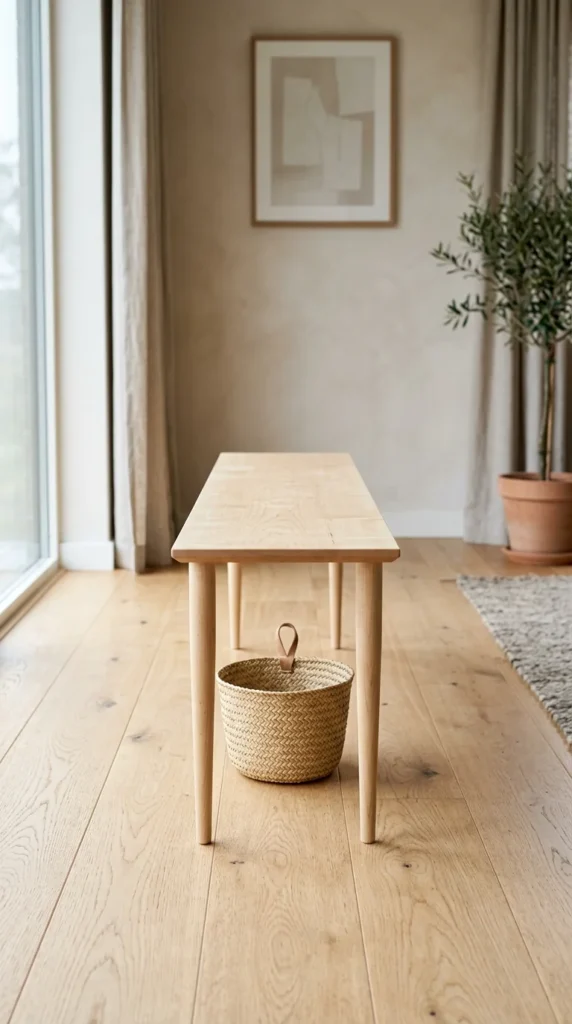
Even the smallest entryway can usually accommodate a slim bench if chosen wisely. A bench provides a dedicated spot to sit while putting on shoes, which adds a layer of comfort and hospitality to the home’s entrance.
- Proportions: Look for “hallway benches” specifically, as they are designed with a shallower depth (often 10–12 inches).
- Multi-purpose: Choose a bench with a slatted bottom or open space beneath to store a few pairs of frequently used shoes.
- Texture: A simple wooden bench adds warmth to a minimalist space without needing extra decor.
6. Monochromatic Palette
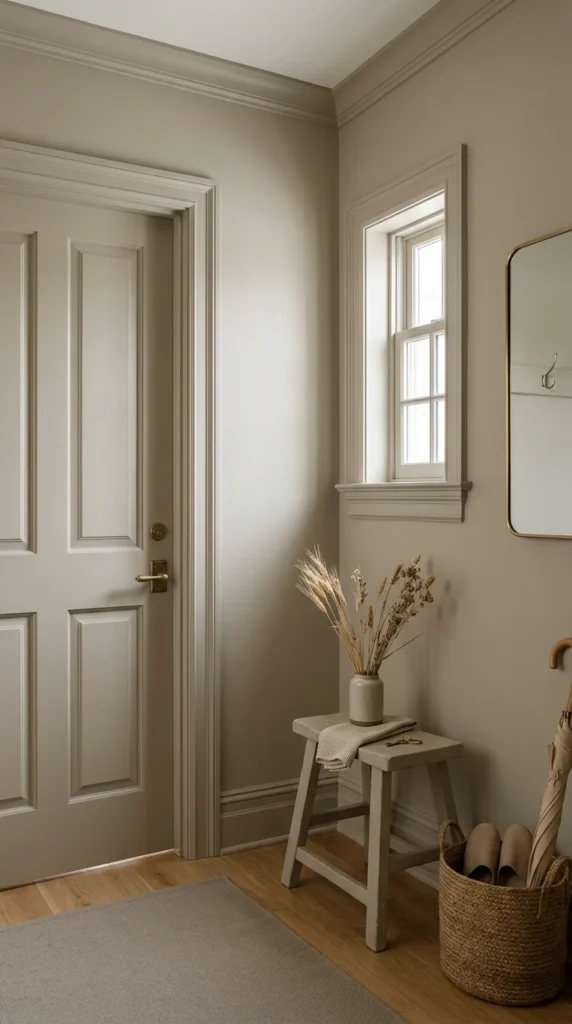
Using a monochromatic color scheme is a powerful way to make a small space feel expansive. By painting the walls, trim, and even the furniture in the same or very similar shades, you remove visual boundaries.
- Neutral Tones: Whites, creams, and light greys are the traditional choices, as they reflect the most light.
- Depth through Texture: To prevent the space from feeling flat, use different textures—a matte wall, a glossy door, and a wool rug in the same color.
- Focus: This approach allows the architectural lines of the home to take center stage.
7. Natural Elements
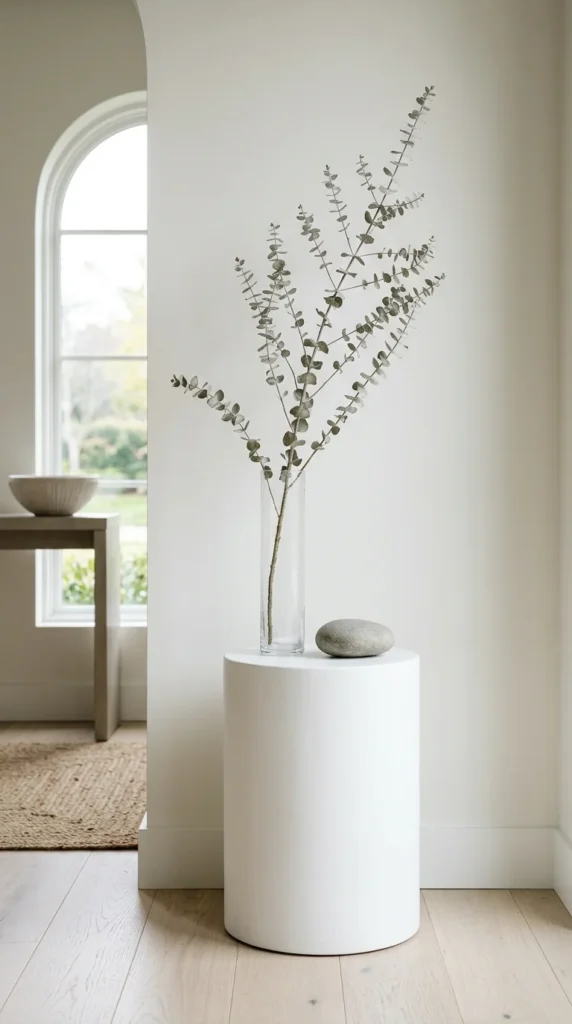
Minimalism can sometimes feel cold or clinical. Incorporating natural elements—often referred to as “warm minimalism”—brings life and organic shapes into the entryway.
- Greenery: A single, low-maintenance plant like a Snake Plant or a Zamioculcas (ZZ plant) can thrive in the lower light conditions often found in foyers.
- Organic Materials: Use a jute rug, a stone tray, or a wooden bowl to introduce earthiness.
- Simplicity: The goal is not an indoor jungle, but a single, well-placed organic focal point.
8. Statement Lighting
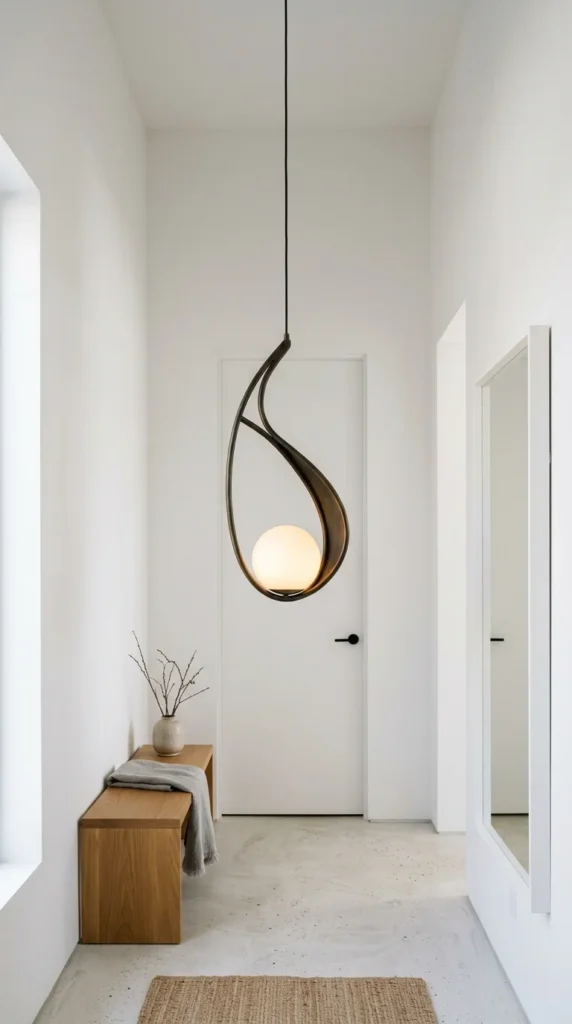
In a small space where you cannot fit much furniture, lighting becomes a key design element. A single, high-quality light fixture can act as a piece of art.
- Pendant Lights: A hanging pendant draws the eye upward, highlighting the height of the room rather than the narrowness of the floor.
- Scale: Choose a fixture that is bold in design but appropriately scaled for the space—nothing too oversized that it feels oppressive.
- Warmth: Use bulbs with a warm color temperature (2700K-3000K) to create an inviting atmosphere the moment the door opens.
9. Niche Utility
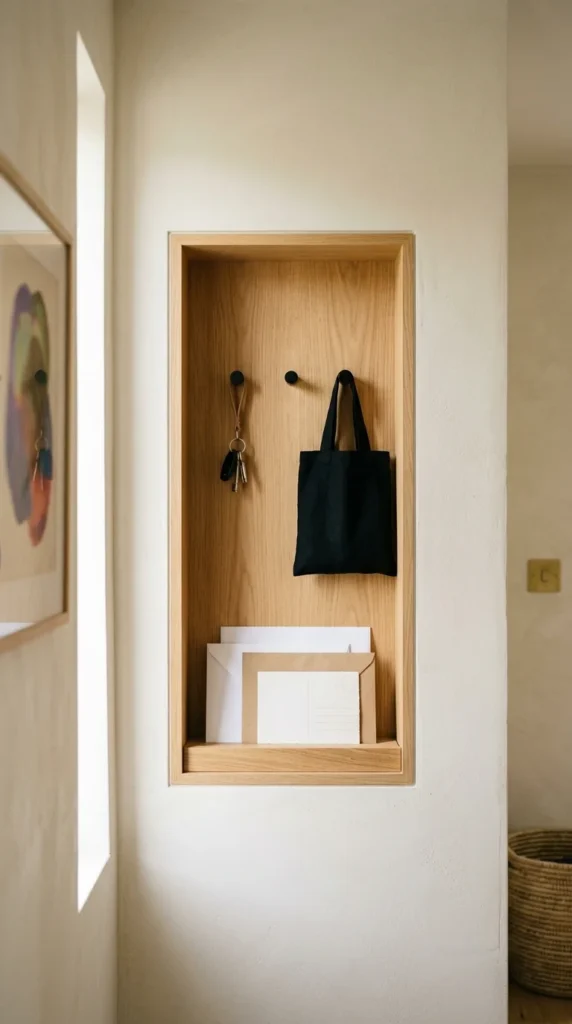
If your entryway has an awkward alcove or a recessed “niche,” don’t ignore it—embrace it. These architectural quirks are perfect for “built-in” minimalism.
- Custom Shelving: Install custom-cut shelves into the niche to create a seamless storage area that doesn’t protrude into the walking path.
- Contrasting Backing: Paint the inside of the niche a slightly darker shade than the surrounding wall to create a sense of depth.
- Spotlight: If the niche is deep enough, add a small puck light at the top to highlight a single piece of art or a decorative bowl.
10. Clear Furniture
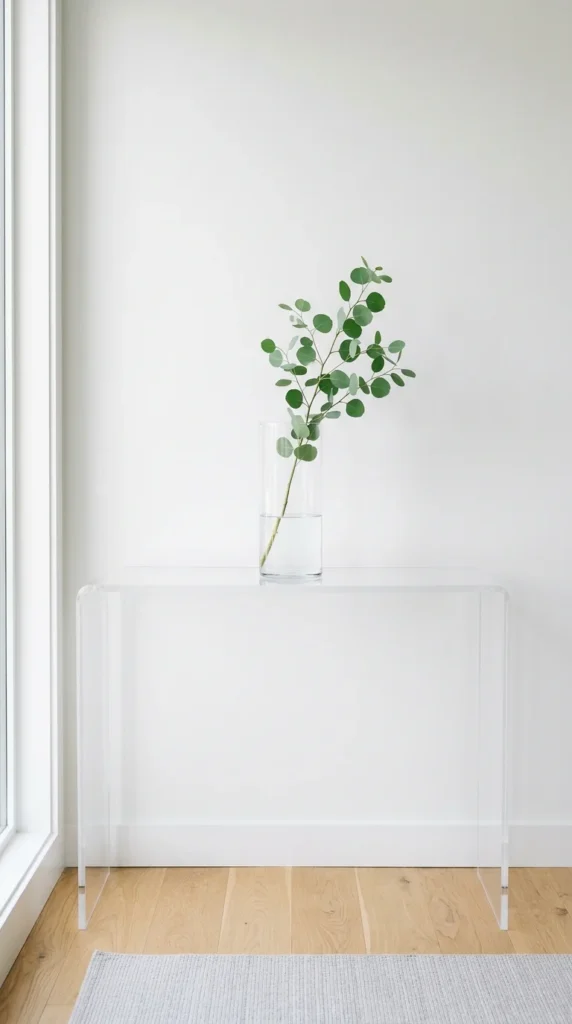
For the ultimate “now you see it, now you don’t” look, use acrylic or glass furniture. Often called “ghost” furniture, these pieces provide the utility of a table or stool without taking up any visual space.
- Transparency: Because you can see right through the furniture to the floor and wall behind it, the entryway remains open and airy.
- Modern Edge: Clear furniture adds an instant contemporary feel to the home.
- Maintenance: Keep a microfiber cloth handy, as fingerprints are more visible on clear surfaces.
11. Wall-Mounted Organizers
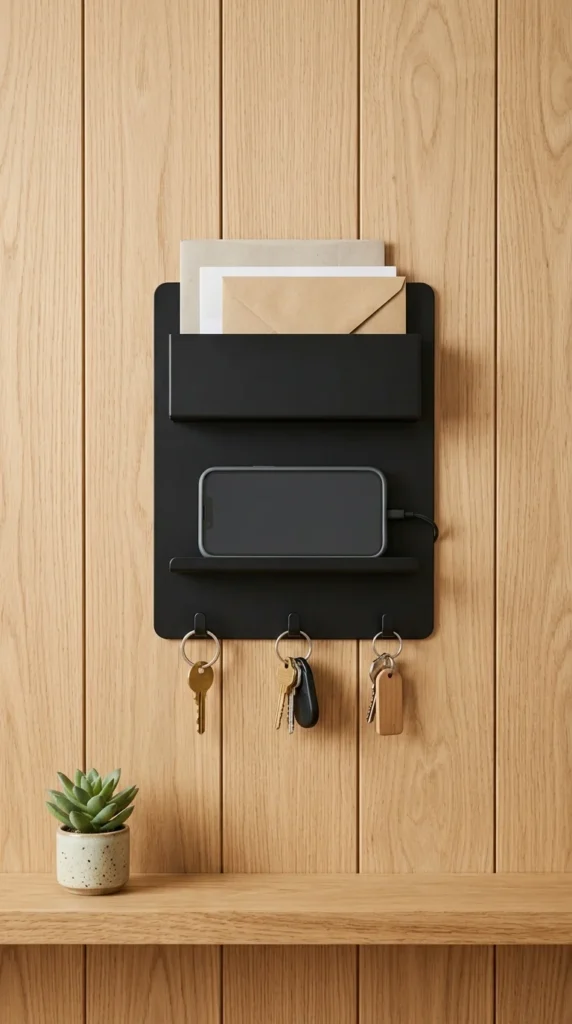
Instead of a catch-all bowl that can look messy, a dedicated wall-mounted organizer keeps daily essentials vertically aligned and orderly.
- All-in-One: Look for designs that combine a mail slot, key hooks, and a small ledge for a phone or wallet.
- Symmetry: Mount the organizer in line with other elements, like a mirror or a light switch, to maintain a clean geometric flow.
- Color Coordination: Match the metal or wood of the organizer to other hardware in the entryway (like the doorknob) for a cohesive look.
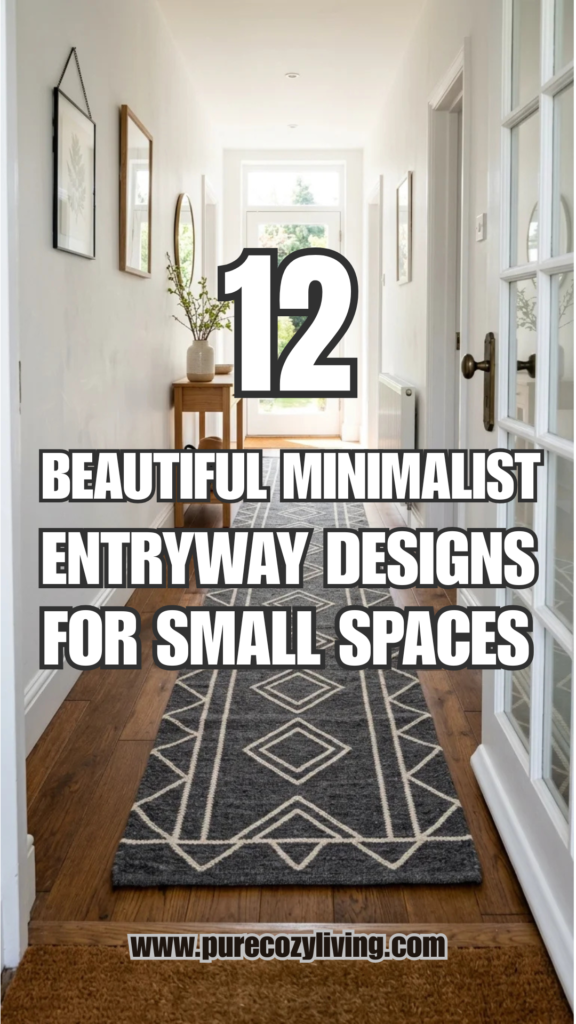
12. Rug Runners
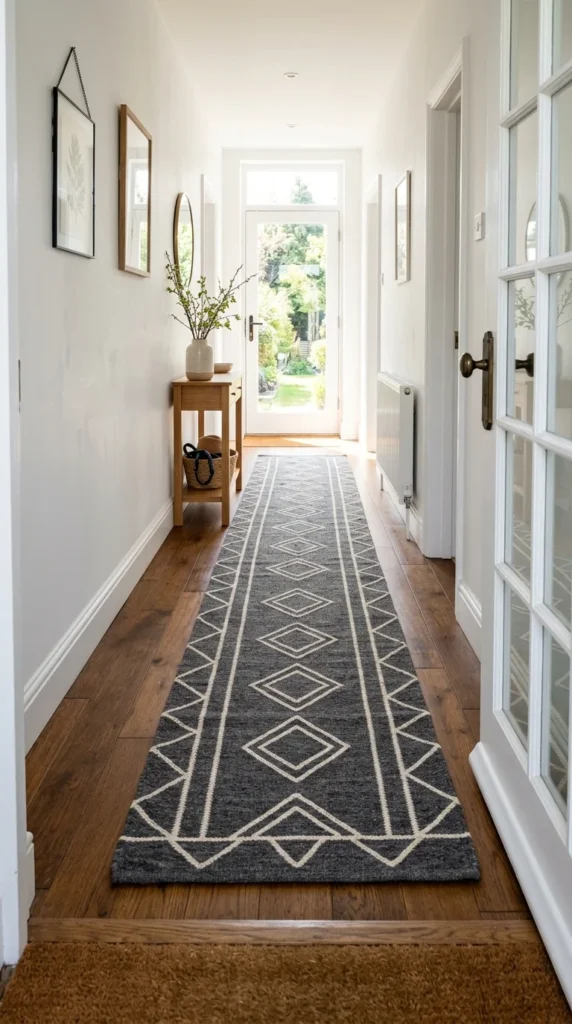
In a minimalist small space, the floor is often the largest uninterrupted surface. A high-quality rug runner can define the entryway area and add comfort underfoot.
- Linear Perspective: A long runner draws the eye forward, making a short entryway feel like a grander passage.
- Material Choice: Choose low-pile or flat-weave rugs like jute, sisal, or wool. These are easier to clean and won’t interfere with the door’s swing.
- Pattern: Stick to solid colors or very subtle geometric patterns. Busy, colorful rugs can clutter the visual field in a small minimalist space.