

The design world has been captivated by a hybrid style that perfectly balances the rusticity of Scandinavian “hygge” with the refined minimalism of Japanese “wabi-sabi.” Known as Japandi, this interior design trend focuses on creating spaces that are functional, intentional, and profoundly calming. By stripping away the excess and focusing on quality over quantity, Japandi transforms a standard living room into a sanctuary of peace.
If you are looking to refresh your home with a look that feels both modern and timeless, these twelve Japandi living room ideas provide the perfect blueprint.
1. Neutral Palettes
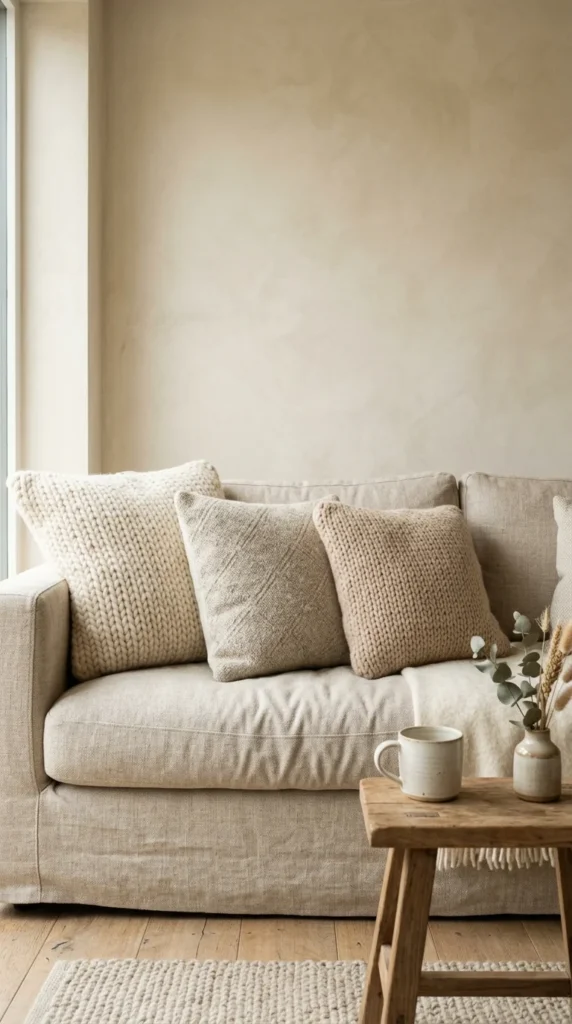
The foundation of any Japandi space is its color palette. Unlike the stark whites often found in pure minimalism, Japandi favors “warm” neutrals. Think of colors inspired by nature: oatmeal, stone, sand, and cream. These tones provide a soft backdrop that makes the room feel expansive yet cozy. The goal is to create a monochromatic look that relies on subtle shifts in shade rather than bold color contrasts, ensuring the eye can rest as it moves across the room.
2. Natural Wood
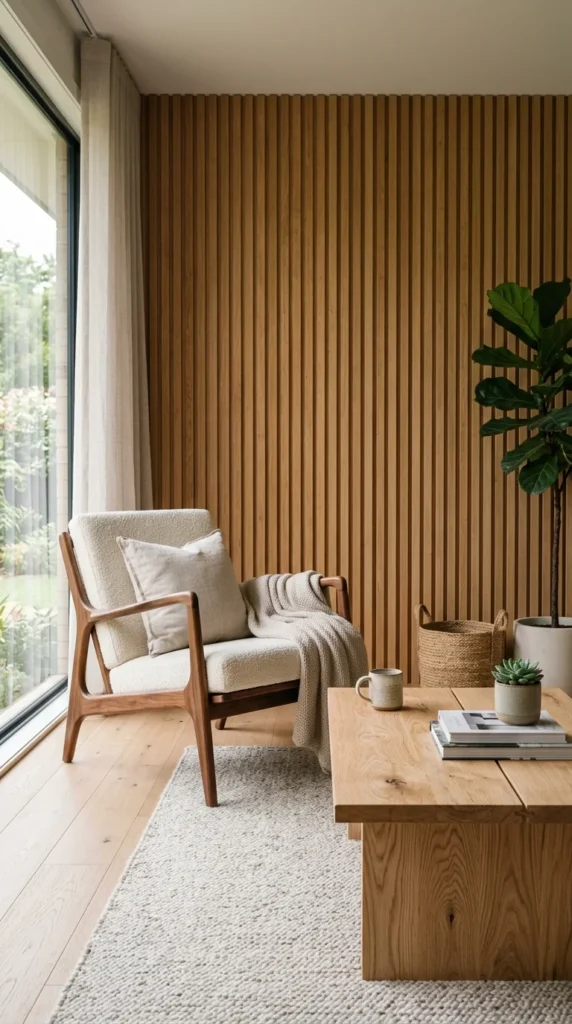
Wood is the soul of Japandi design. While Scandinavian style often favors light woods like ash and pine, Japanese design frequently incorporates darker, richer tones like walnut. Japandi elegantly mixes both. Incorporating raw, untreated wood surfaces—whether through flooring, wall paneling, or furniture—brings a sense of the outdoors inside. The focus should be on the texture and grain of the wood, celebrating its natural imperfections.
3. Low-Profile Furniture
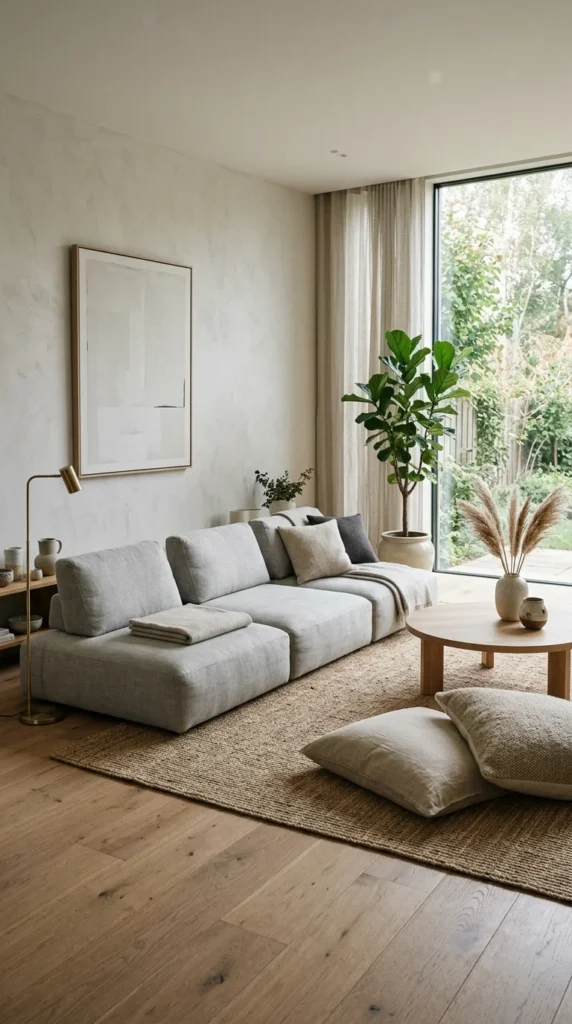
Japanese interior philosophy often emphasizes a physical connection to the earth. In the living room, this is achieved through low-profile furniture. Opting for sofas that sit close to the floor, low coffee tables, and even floor cushions creates a sense of groundedness. This approach also helps to make ceilings feel higher and rooms feel more spacious, contributing to the airy atmosphere essential to the Japandi aesthetic.
4. Functional Minimalism
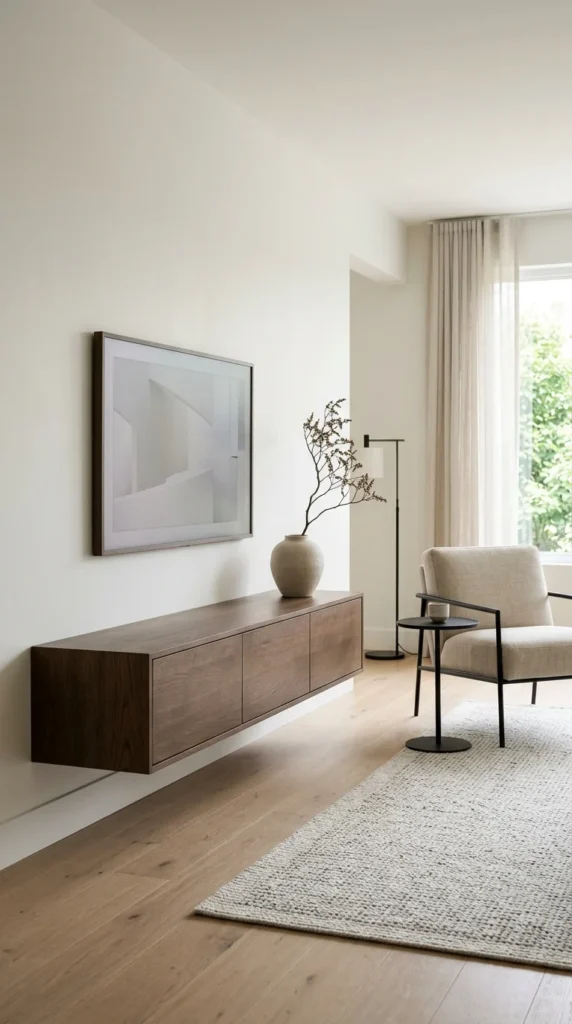
Japandi is not just about how a room looks; it is about how it functions. Every piece of furniture and decor should have a purpose. This “intentional living” approach means getting rid of clutter and choosing items that are as useful as they are beautiful. Built-in storage solutions that blend into the walls are popular in Japandi homes, as they allow for a clean environment where the mind can focus on relaxation rather than tidying.
5. Statement Greenery
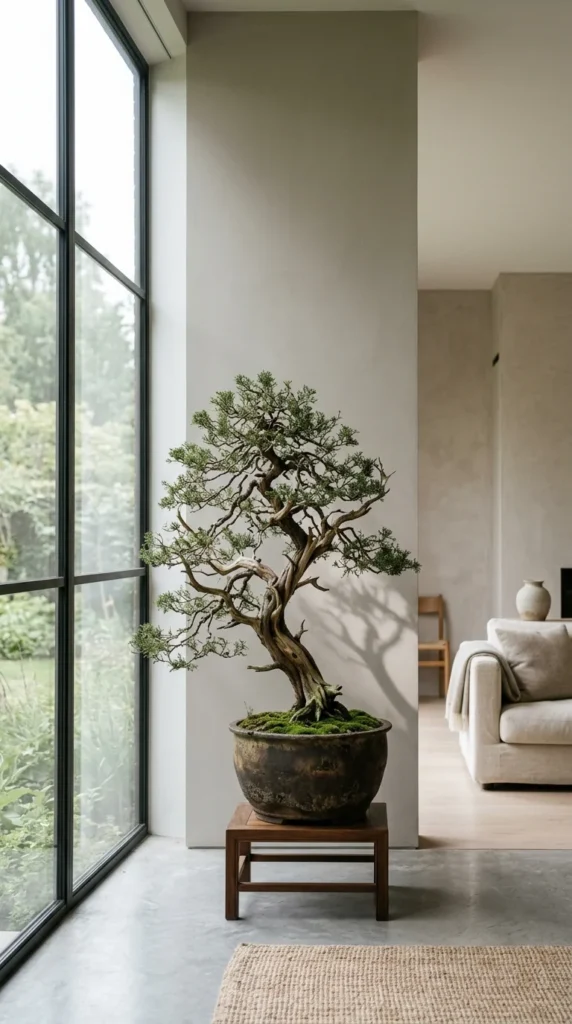
While Japandi leans into minimalism, it is never cold. Living plants are used to breathe life into the space. Instead of a jungle-like abundance of small plants, Japandi favor “statement greenery.” A single, large olive tree, a tall fiddle leaf fig, or a meticulously pruned bonsai tree serves as a living sculpture. The greenery adds a pop of natural color and reinforces the connection to nature that defines both Scandi and Japanese cultures.
6. Textural Contrast
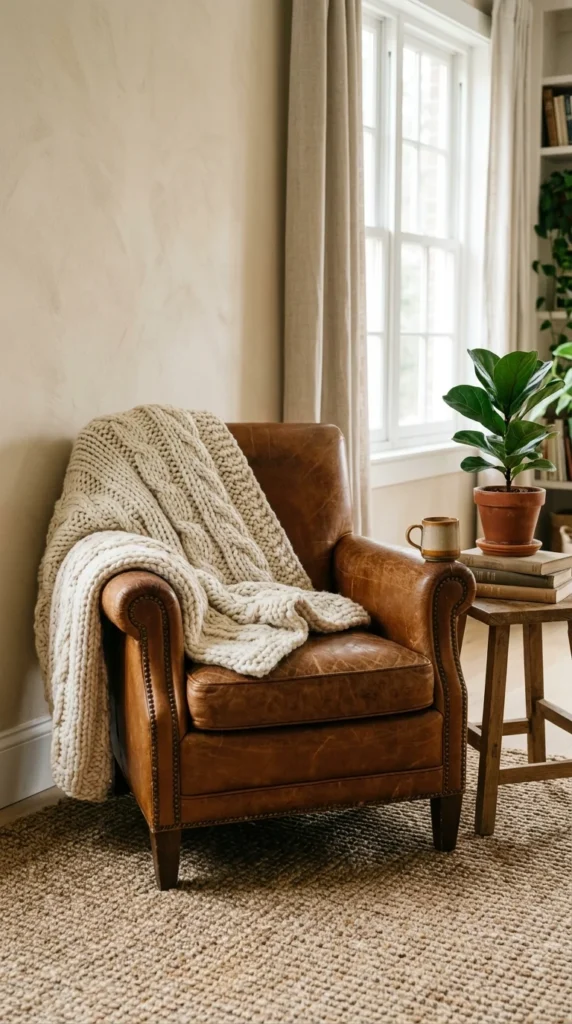
In the absence of bright colors, texture becomes the primary tool for adding visual interest. Japandi living rooms masterfully layer different materials. You might see a smooth, polished stone side table next to a soft, boucle-covered armchair, or a silk cushion resting on a rough jute rug. These tactile differences create a “cozy-minimalist” vibe that feels sophisticated and layered without being busy.
7. Soft Lighting
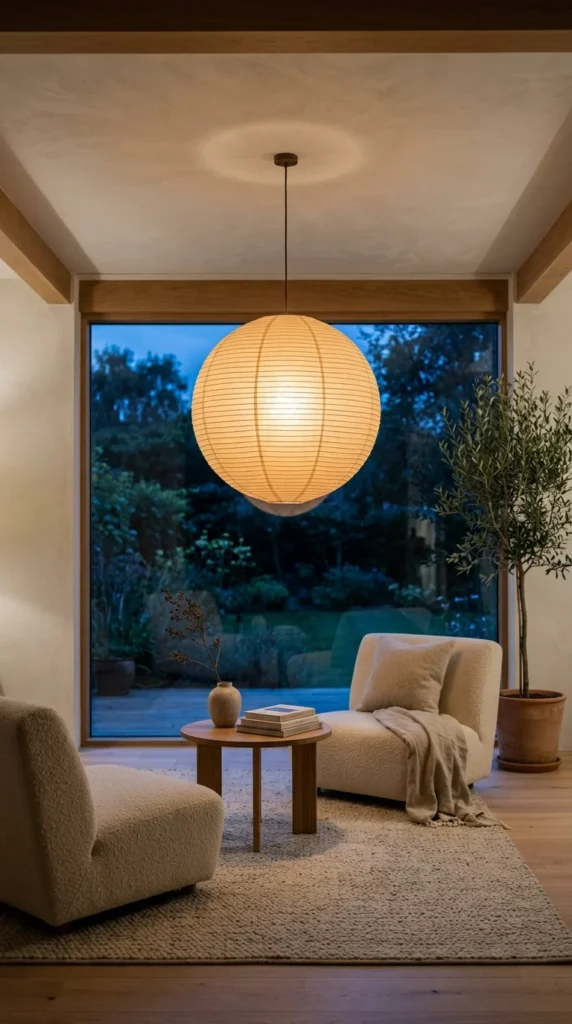
Lighting in a Japandi room is never harsh or clinical. Inspired by traditional Japanese paper lanterns (Akari), soft, diffused lighting is a must. Large paper pendants, frosted glass globes, and hidden LED strips that wash the walls with light help create a tranquil evening atmosphere. During the day, maximize natural light with sheer linen curtains that allow the sun to filter through gently.
8. Artisanal Pottery
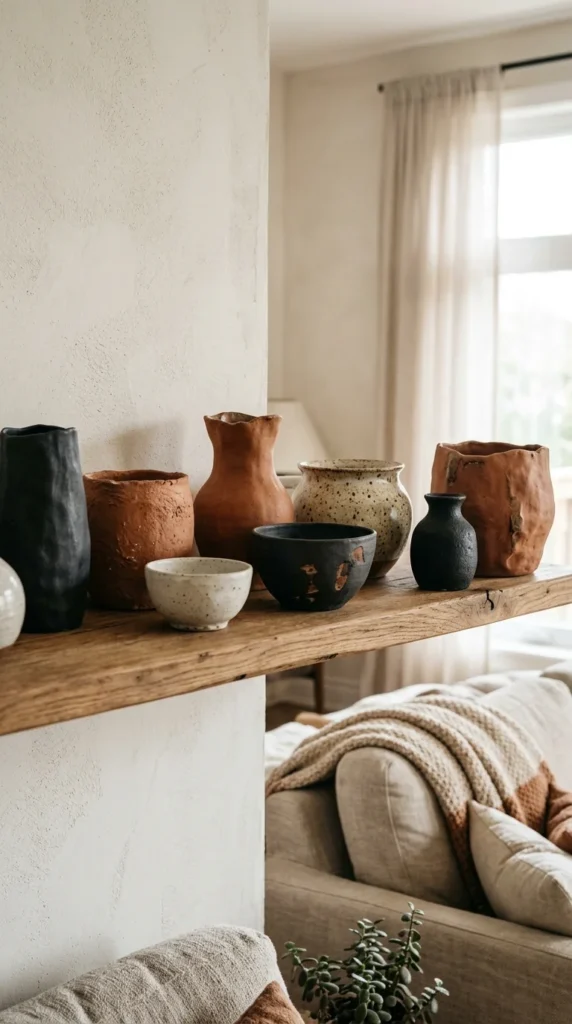
Japandi celebrates the hand-made. Mass-produced plastic decor has no place here. Instead, look for artisanal ceramics and pottery that showcase the “wabi-sabi” philosophy—finding beauty in imperfection. A collection of hand-thrown vases with slight irregularities or a textured clay bowl makes for the perfect coffee table centerpiece. These items tell a story of craftsmanship and human touch.
9. Open Spaces
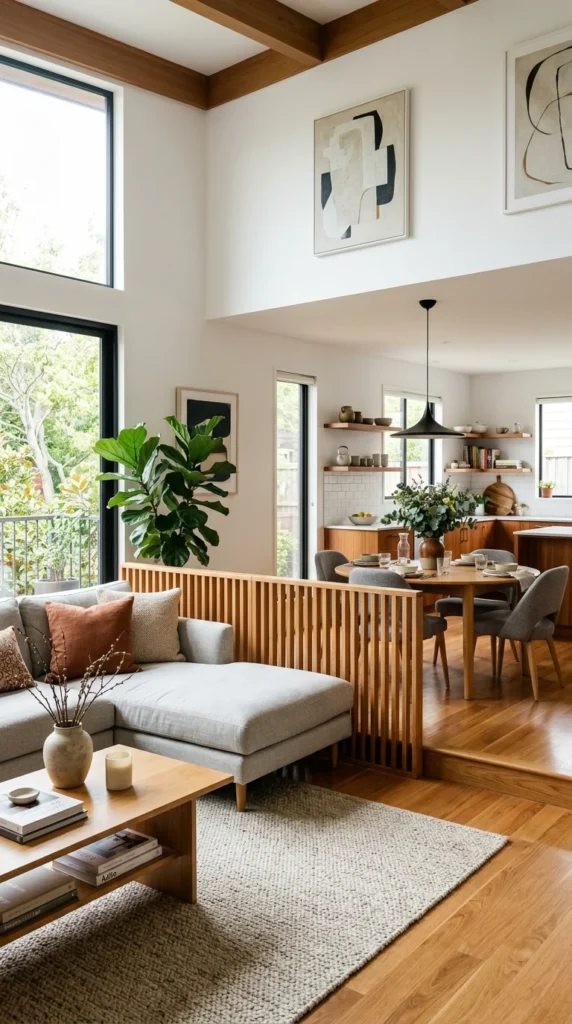
Space itself is a design element in Japandi. The concept of “Ma” (the space between things) is vital in Japanese design. By leaving plenty of floor space open and avoiding the urge to fill every corner, you create a sense of flow and energy. This openness reduces visual noise and creates a physical environment that encourages slow movement and mindful living.
10. Sustainable Materials
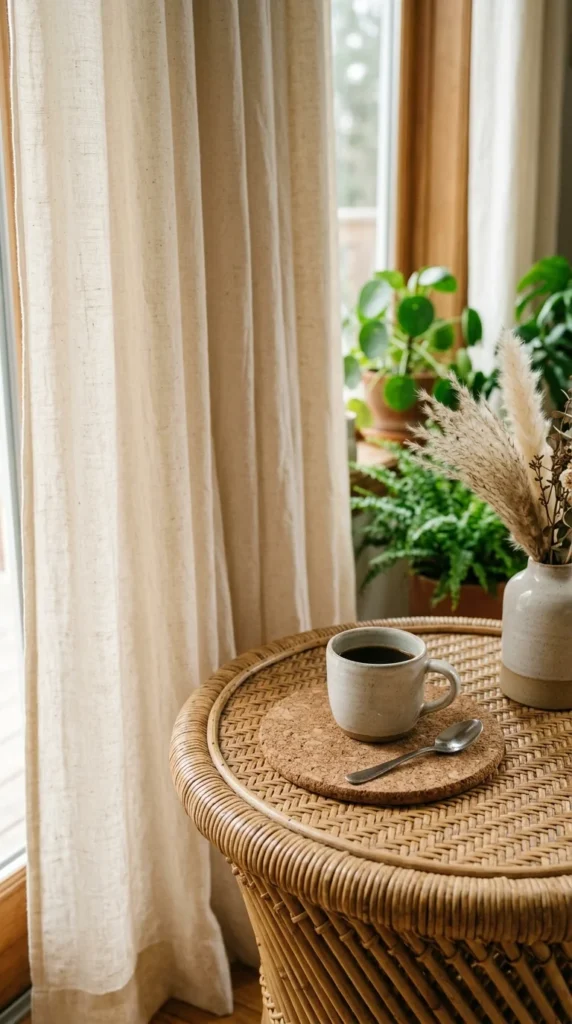
Both Scandinavian and Japanese cultures have a deep respect for the environment. Consequently, Japandi design prioritizes sustainability. Furniture made from reclaimed wood, rugs woven from seagrass or hemp, and textiles crafted from organic linen or bamboo are all staples. Choosing high-quality, eco-friendly materials ensures that your living room is not only beautiful but also built to last for generations.
11. Black Accents
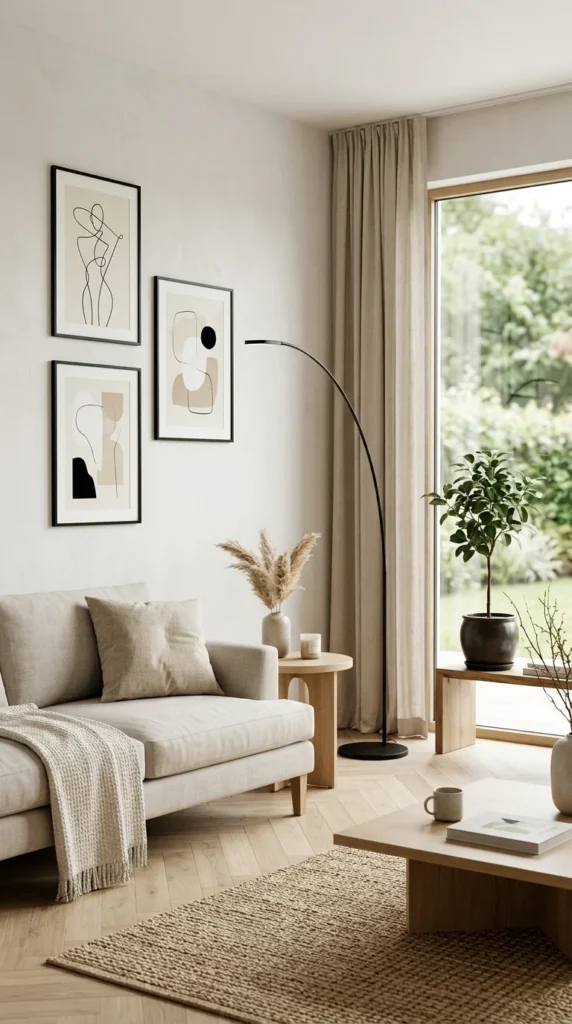
To prevent a neutral room from looking “washed out,” Japandi designers often use black as a grounding accent color. This isn’t about large black walls, but rather thin, delicate lines. Think black metal window frames, a slim floor lamp, or black hardware on a wooden cabinet. These “ink-like” strokes provide a sophisticated edge and help define the different zones of the room.
12. Wabi-Sabi Art
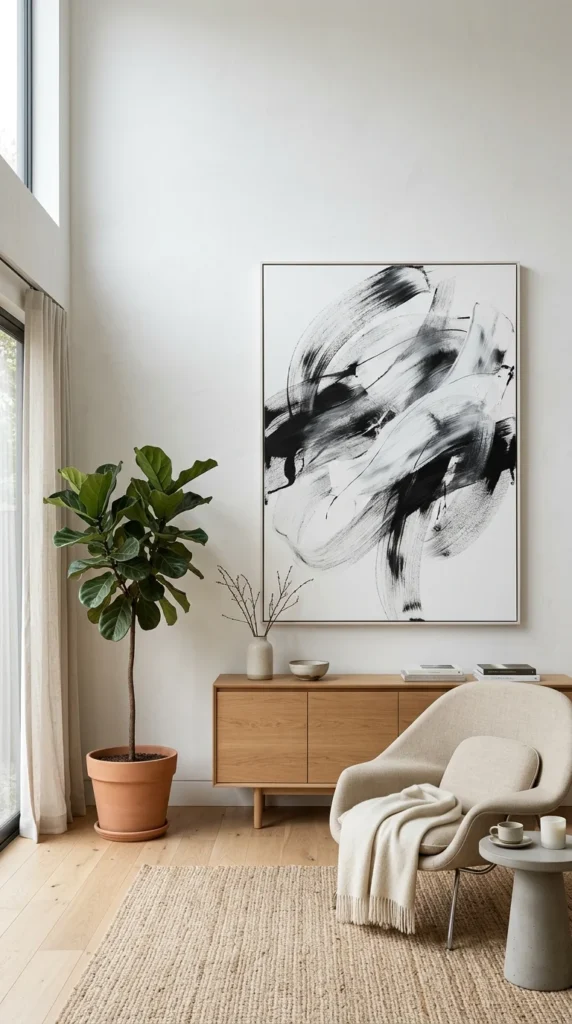
The art in a Japandi living room should be understated and evocative. Instead of colorful galleries, consider a single piece of abstract art that emphasizes negative space. Ink wash paintings, textured plaster canvases, or even framed botanical prints work beautifully. The goal is to choose art that inspires reflection and complements the quiet, meditative quality of the rest of the room.