

Creating a reading nook is more than just an interior design project; it is an investment in your mental well-being. In a world characterized by digital noise and constant connectivity, having a dedicated physical space for quiet contemplation and literary immersion is essential. A truly cozy reading nook appeals to all the senses—the softness of a blanket, the warm glow of a lamp, the scent of old paper, and the visual peace of a curated corner. Whether you have an entire spare room or just a forgotten corner behind a door, there is always potential to craft a sanctuary.
1. Window Seat
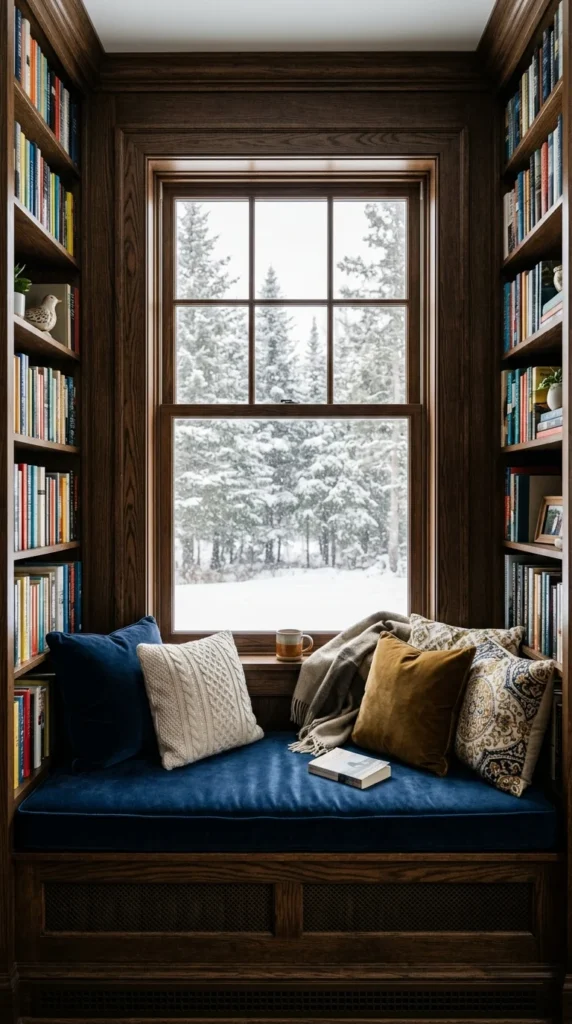
The window seat is the gold standard of reading nooks for a reason. It bridges the gap between the comfort of the indoors and the natural beauty of the outdoors. By utilizing the “dead space” beneath a window, you create a scenic retreat that benefits from natural light during the day. To make it incredibly cozy, opt for extra-deep cushions—at least 4 inches thick—and use performance fabrics that feel soft but can withstand sunlight. Incorporating built-in drawers beneath the seat allows for easy storage of extra quilts, making the transition from “reading” to “napping” seamless.
2. Attic Hideaway
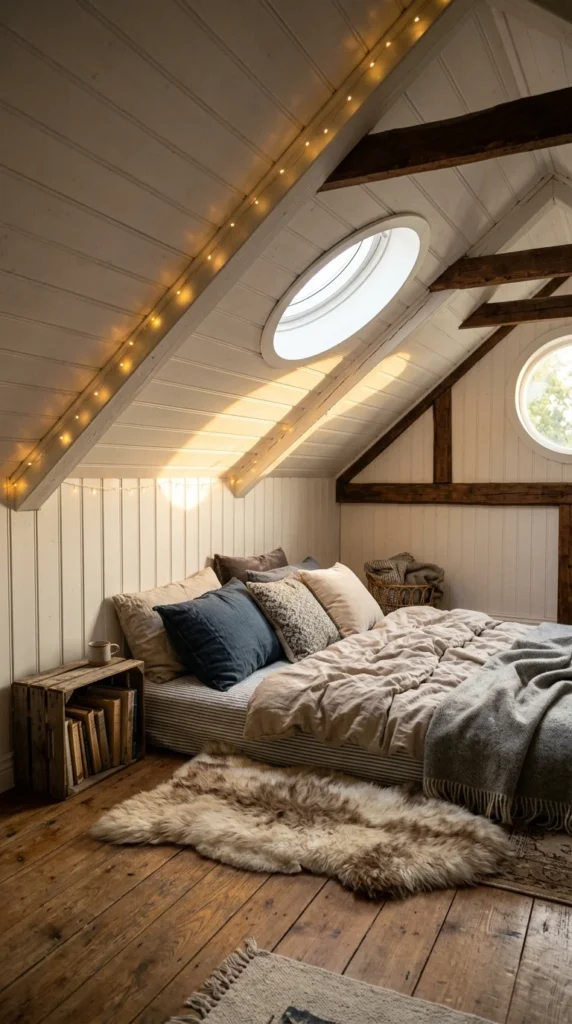
There is something inherently nostalgic and secretive about an attic. The sloped ceilings and secluded location make it the perfect spot for an “escapist” reading nook. Because the ceiling height is often limited, this is the perfect place for floor-based lounging. Use a high-quality foam mattress or a thick tufted floor cushion as your base. Focus on warm lighting; since attics can feel dark, use warm-toned LED strips or fairy lights to accentuate the unique architectural angles of the roof, creating a “cocoon” effect.
3. Under-Stairs Alcove
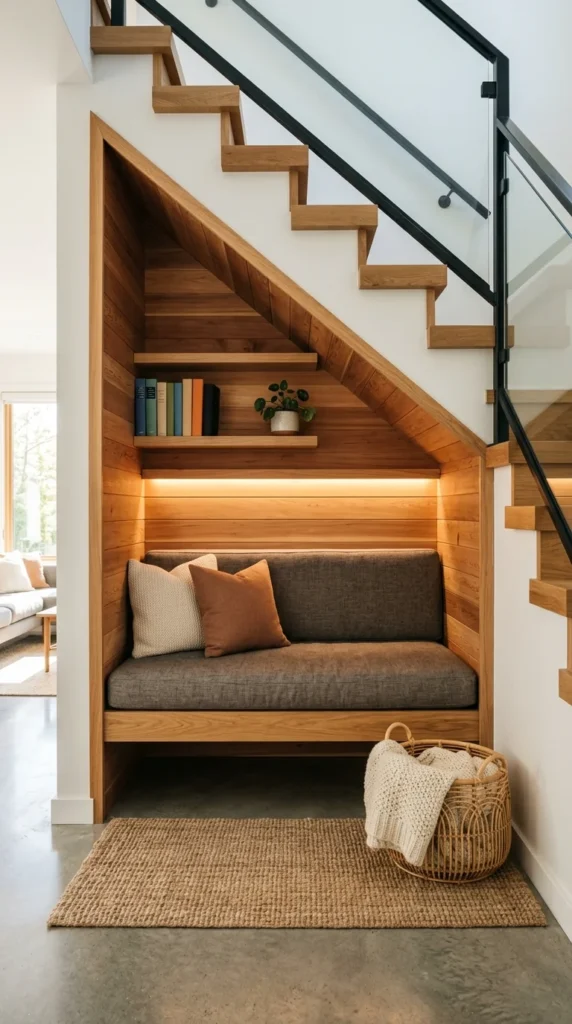
Often overlooked, the space under the stairs can be transformed into a magical “Harry Potter-esque” retreat. This architectural quirk provides a natural sense of enclosure, which triggers a psychological feeling of safety and focus. To maximize this small footprint, install a recessed light or a wall-mounted sconce to save on floor space. Paint the interior a dark, moody color like forest green or charcoal to lean into the “den” vibe, or keep it bright with white shiplap for a farmhouse aesthetic.
4. Floor Pillows
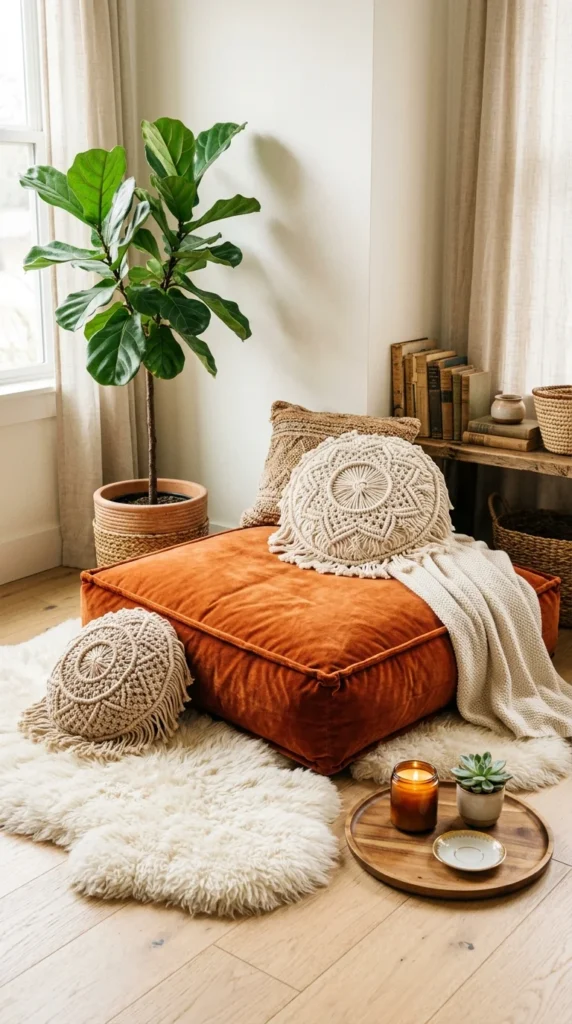
Not every nook requires furniture. A bohemian-inspired floor nook is flexible, affordable, and incredibly inviting. The key to making this work is layering textures to ensure the ground doesn’t feel hard. Start with a plush area rug, add a sheepskin or faux-fur layer, and then stack oversized floor pillows and poufs. This setup encourages a more relaxed posture and can be easily moved or reconfigured. It’s an excellent option for children’s rooms or for those who prefer a grounded, earthy atmosphere.
5. Hanging Chair
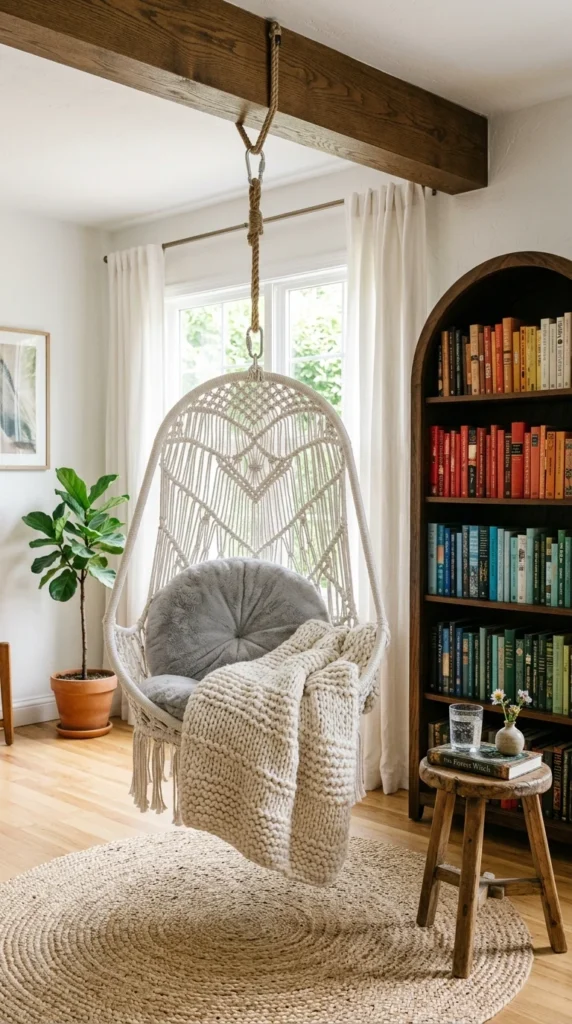
A hanging chair adds a whimsical, weightless quality to your reading experience. The gentle swaying motion can be incredibly soothing, helping to lower stress levels while you dive into a story. Whether it’s a wicker egg chair or a soft fabric hammock chair, ensure it is anchored securely into a ceiling joist. Pair it with a small, circular rug beneath to “ground” the piece visually in the room. This setup works particularly well in corners with high ceilings, drawing the eye upward and making the space feel more dynamic.
6. Library Corner
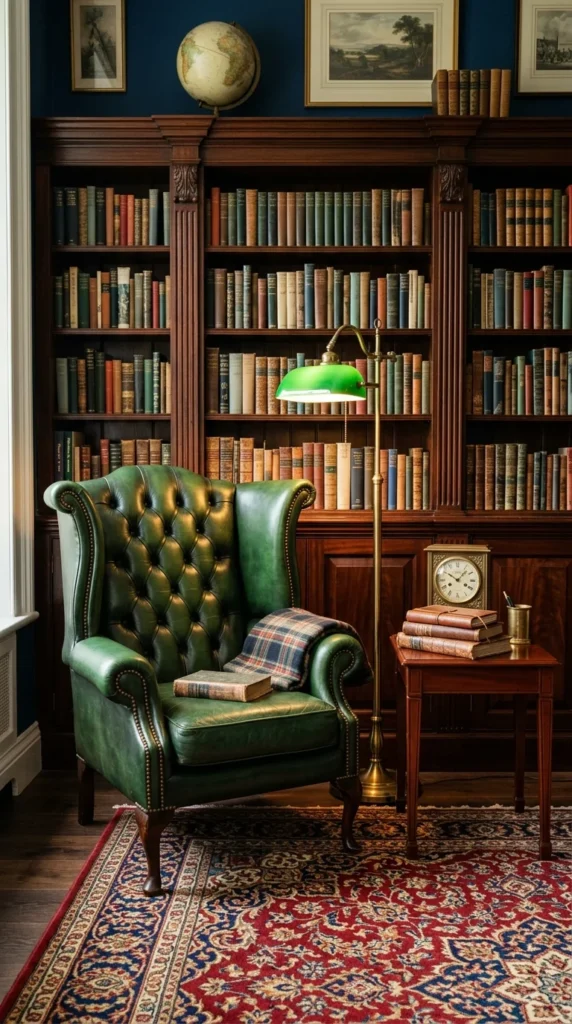
For the traditionalist, nothing beats a classic library corner. This nook is defined by its proximity to the books themselves. The smell of paper and the visual texture of thousands of book spines create an unrivaled atmosphere for a bibliophile. Choose a supportive wingback chair that allows you to rest your head against the “wings” while reading. A dedicated task light, like a pharmacy lamp or a swing-arm sconce, is essential here to provide focused illumination without reflecting off the book pages.
7. Canopy Nook
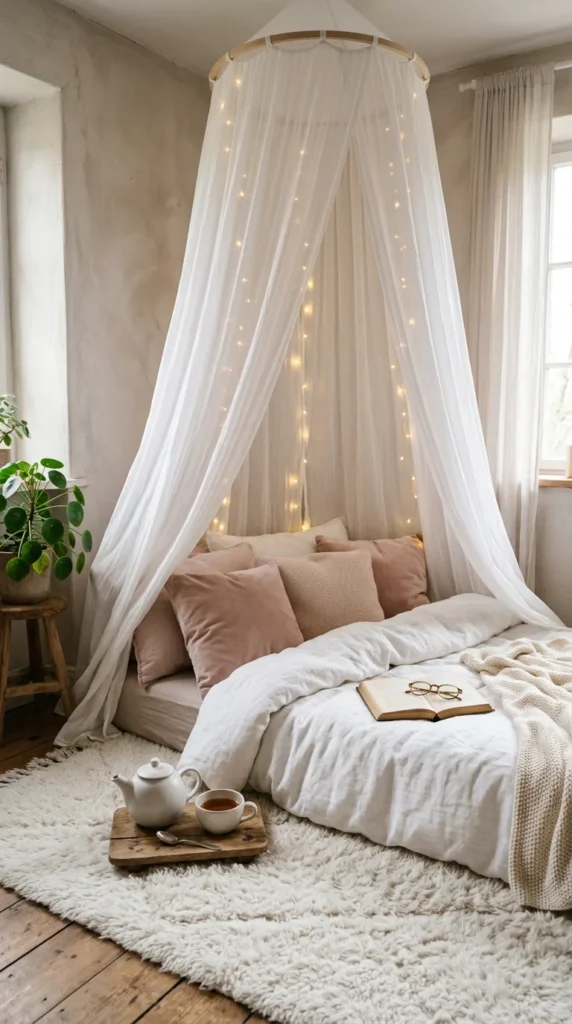
A canopy nook is all about creating a “room within a room.” Using fabric to enclose your reading space provides a physical barrier from the rest of the house, signaling to your brain that it is time to relax. You can use sheer voile for a light, ethereal look, or heavy velvet for a more dramatic, sound-dampening effect. This is a particularly effective strategy for studio apartments or open-concept homes where you need to define a private zone without building permanent walls.
8. Outdoor Daybed

If you enjoy the sound of birds and the feeling of a breeze, an outdoor reading nook is a luxury worth pursuing. A weather-resistant daybed or a deep porch swing provides the perfect platform for summer reading. Ensure the space is shaded, either by a porch roof, a pergola, or a large umbrella. Use outdoor-grade fabrics that are UV-resistant to prevent fading. Adding a small outdoor side table for your iced tea and a basket for your sunscreen and sunglasses makes this the ultimate seasonal retreat.
9. Minimalist Alcove
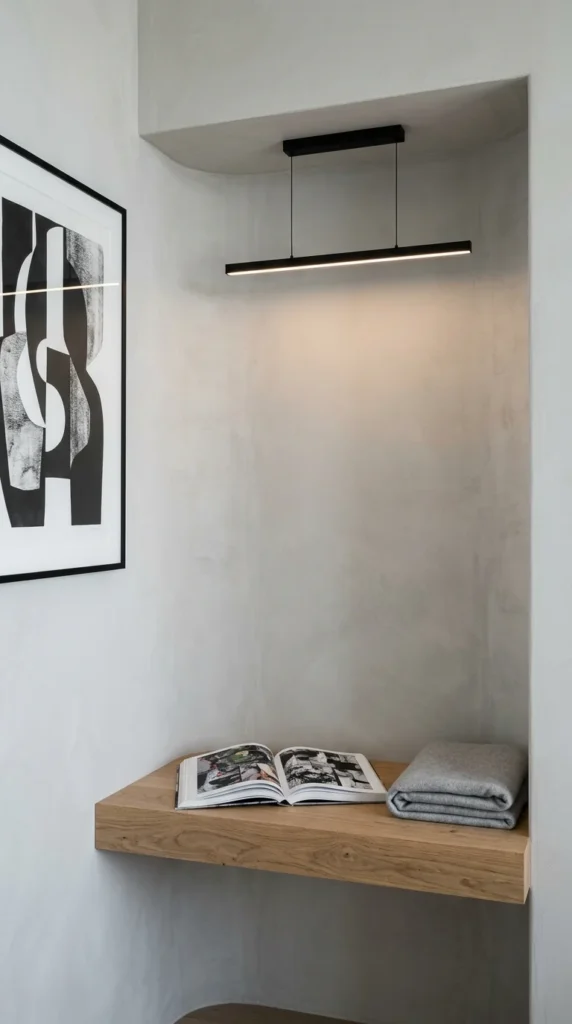
For those who find clutter distracting, a minimalist nook provides a “blank slate” for the mind. This style focuses on clean lines, a limited color palette, and high-quality materials. Instead of pillows, focus on the architectural beauty of the space. A floating bench made of high-quality wood like white oak or walnut provides a sturdy, beautiful place to sit. The “coziness” here comes from the silence and the lack of visual “noise,” allowing the reader to fully inhabit the world of the book.
10. Oversized Armchair
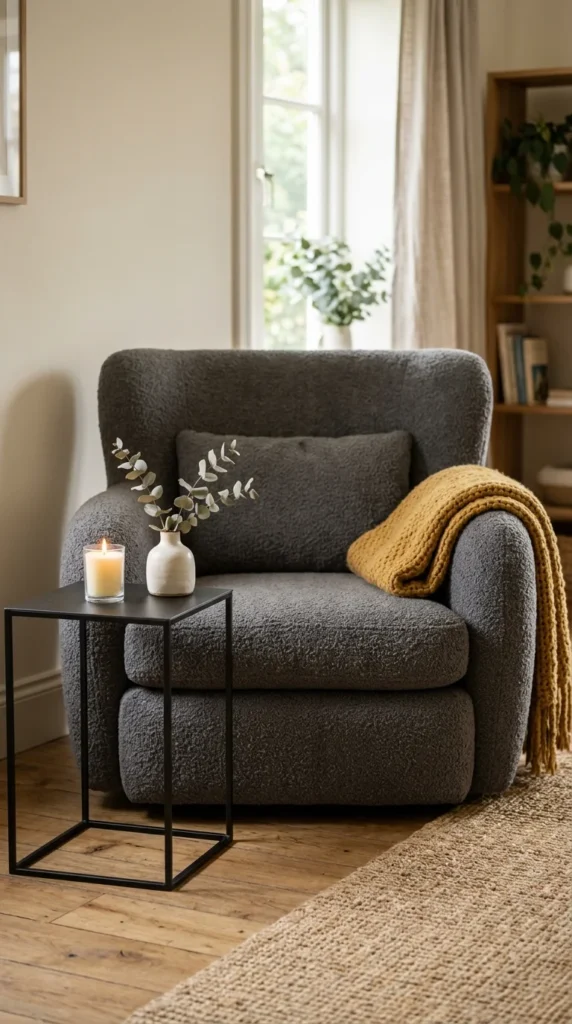
Sometimes the nook is the chair. An oversized armchair (often called a “chair and a half”) offers enough room to curl up, sit sideways, or even share the space with a pet or a child. When choosing a chair for a reading nook, depth is more important than width. You want to be able to pull your feet up onto the cushion. Look for fabrics with a “hand”—materials like bouclé, velvet, or washed linen—that feel good against the skin.
11. Fireplace Hearth
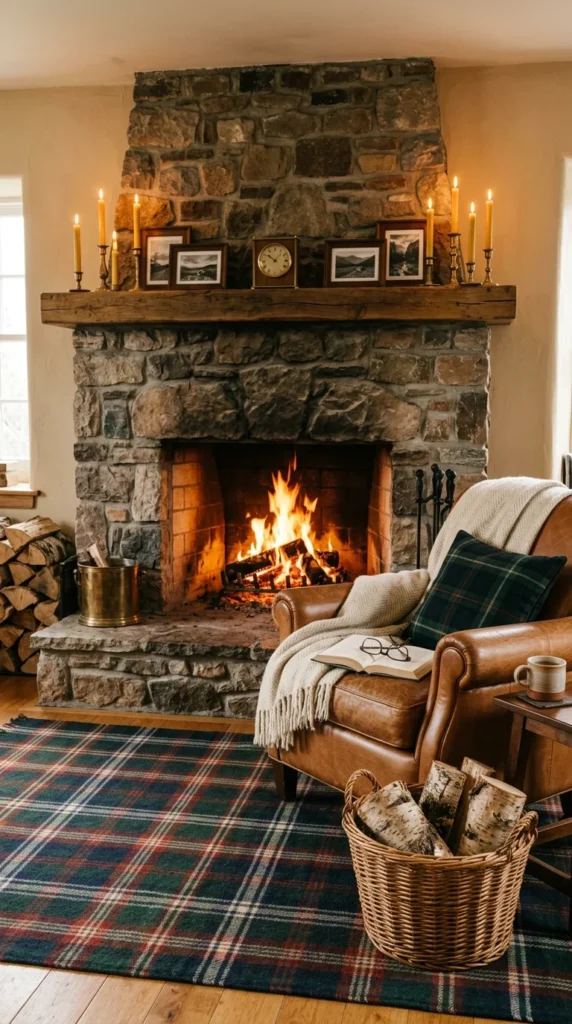
The warmth of a fire and the rhythmic sound of crackling wood create a multisensory reading environment that is hard to beat. Position your favorite chair at a 45-degree angle to the fireplace so you can enjoy both the warmth and the light of the fire while you read. This setup is particularly effective during the winter months. If you don’t have a wood-burning fireplace, an electric insert or even a collection of large pillar candles inside a non-functional hearth can provide a similar visual warmth.
12. Closet Conversion
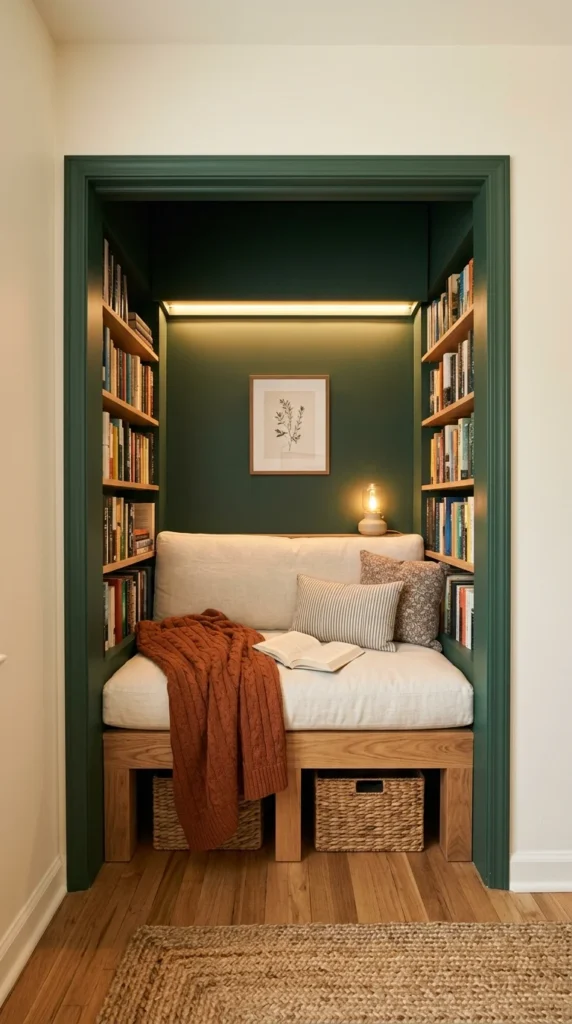
Commonly known as a “clozet” nook, this is a brilliant solution for small-space living. By removing the doors of a standard reach-in closet, you gain enough square footage for a built-in bench. This creates an “enclosed” feeling that is very comforting. You can customize the interior with wallpaper, paint, or even fabric paneling to make it feel like a distinct room. This is a great way to give an underutilized guest room or hallway a functional and charming purpose.
13. Velvet Chaise
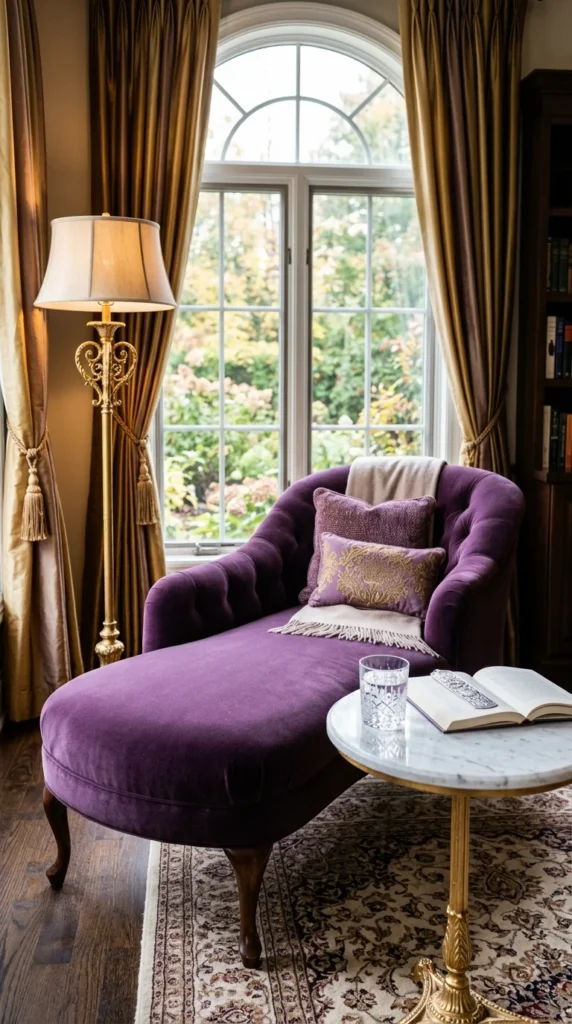
A chaise lounge is the epitome of reading luxury. It is designed specifically for reclining, providing full-body support that a standard chair cannot. Velvet is the ideal fabric choice here because of its depth of color and tactile softness. This type of nook feels sophisticated and “grown-up,” making it a perfect addition to a primary bedroom. Pair it with a high-end floor lamp and a small table for a glass of wine or a cup of tea to complete the indulgent atmosphere.
14. Plant-Filled Sunroom

Reading among plants has been shown to reduce stress and improve air quality. A sunroom or a well-lit corner filled with greenery creates a “secret garden” vibe indoors. The key to this nook is variety—mix tall floor plants with hanging planters and smaller succulents on shelves. The organic shapes of the plants soften the lines of the furniture, making the space feel more fluid and natural. Choose breathable fabrics like cotton or linen to match the airy, organic aesthetic.
15. Built-in Bookshelves
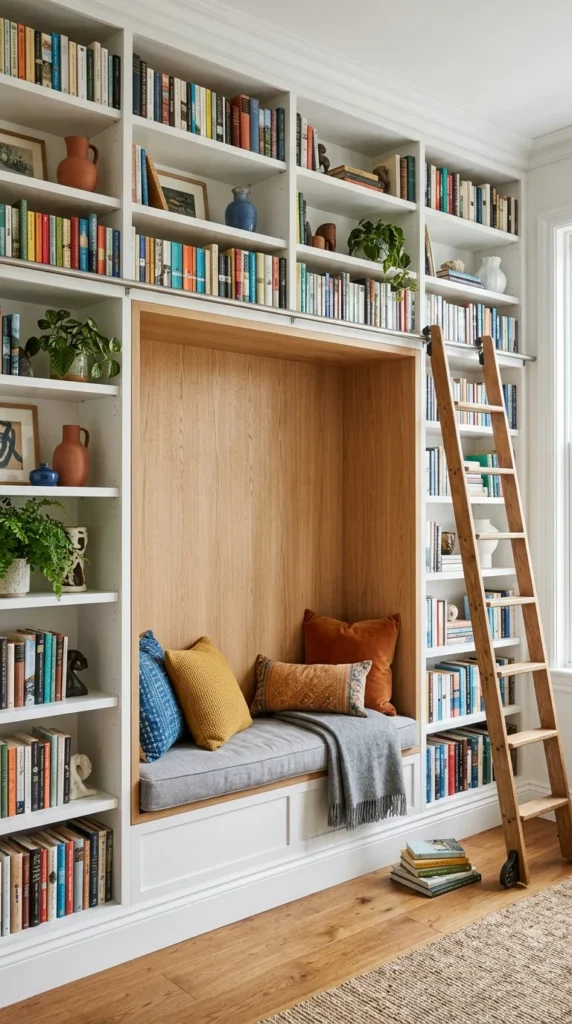
When the seating is integrated directly into the shelving, it creates a sense of architectural harmony. This design makes the books feel like they are “hugging” the reader. It is a highly efficient use of space, as it combines storage and seating into one footprint. To make this feel cozy rather than clinical, use warm wood accents for the lining of the nook and include plenty of soft elements like pillows and a throw. This approach turns a functional storage unit into a stunning focal point for any room.