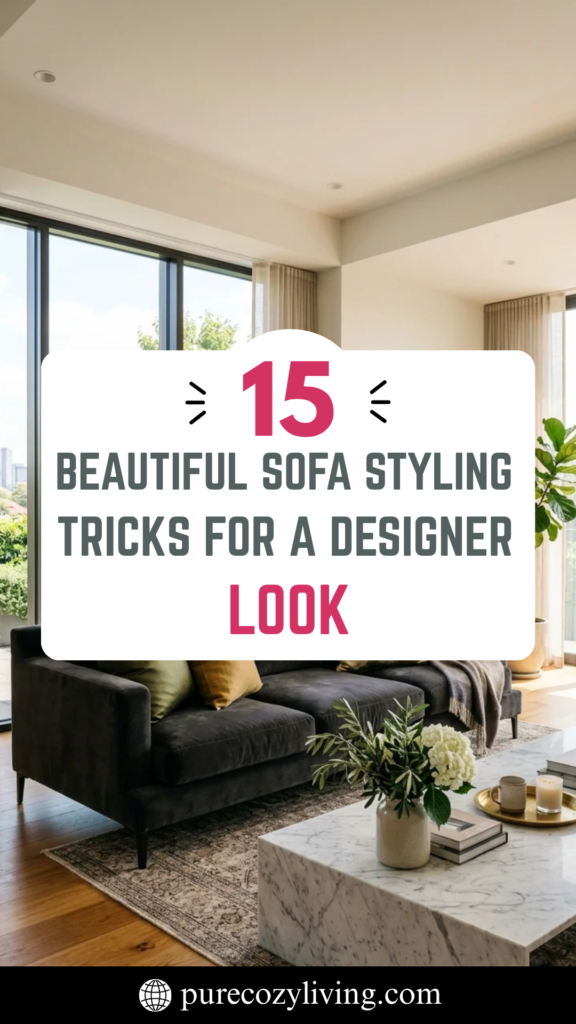

The sofa is the undisputed heart of the living room. It is the primary focal point, the largest piece of furniture, and the place where comfort meets style. However, even the most expensive sofa can look flat or uninspired if it isn’t styled with intention. Achieving that “magazine-ready” look isn’t about spending a fortune on accessories; it is about understanding the principles of balance, texture, and layering. By applying professional interior design techniques, you can transform a standard seating area into a sophisticated centerpiece.
1. Rule of Three
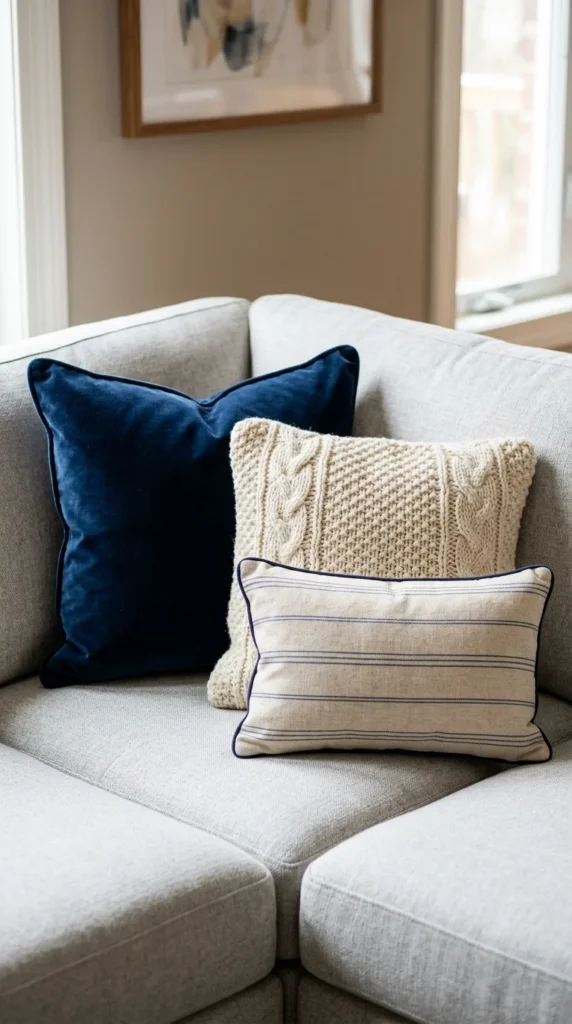
The “Rule of Three” is a fundamental principle in interior design. The human eye tends to find odd numbers more visually appealing and balanced than even ones. When styling your sofa, group pillows in threes rather than pairs. This creates a more dynamic and less rigid look. To master this, vary the sizes within the trio. Start with a large base pillow (around 22-24 inches), add a medium square pillow in front of it, and finish with a smaller rectangular lumbar pillow. This stacking technique creates depth and ensures that every piece is visible.
2. Textural Contrast
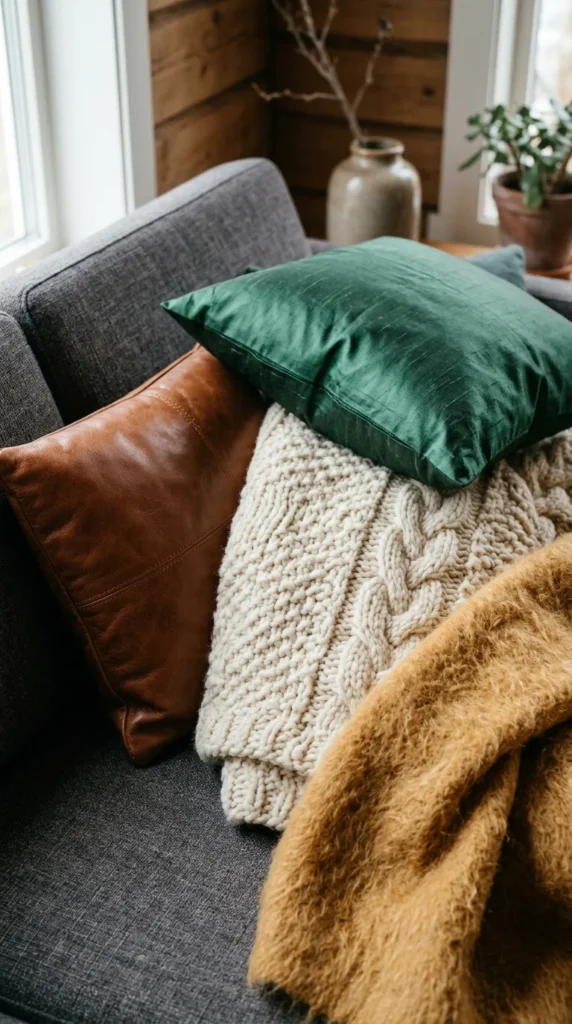
Texture is the secret ingredient that prevents a monochromatic or neutral sofa from looking boring. A designer look relies on mixing different materials to create tactile interest. If you have a smooth leather sofa, pair it with “rougher” textures like chunky wool knits, linen, or faux fur. Conversely, if your sofa is upholstered in a textured fabric like bouclé or tweed, balance it with smooth velvets or sleek silks. This contrast engages the senses and makes the arrangement feel rich and curated rather than flat and one-dimensional.
3. Draped Throws
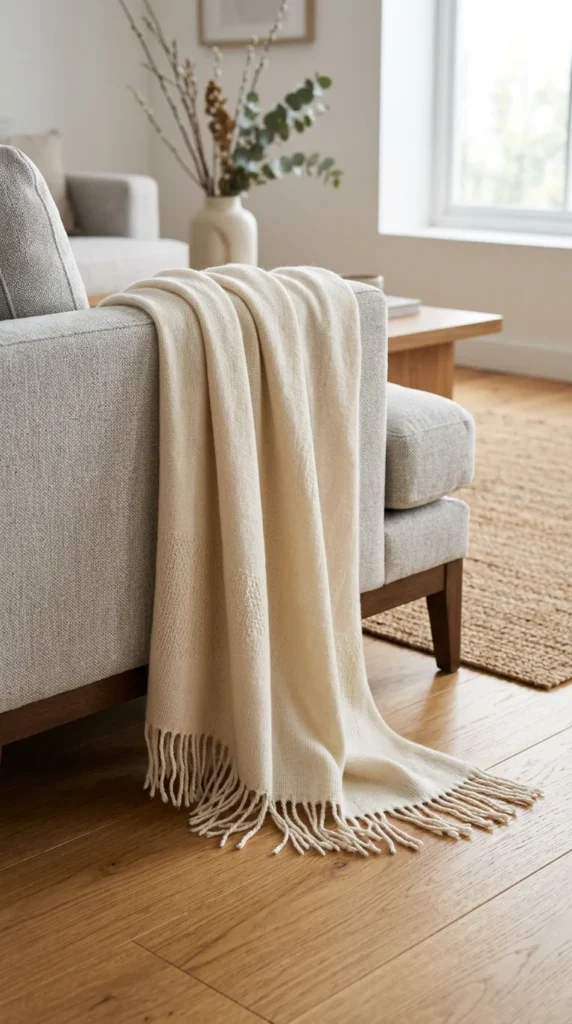
A throw blanket should never look like an afterthought. Designers use throws to soften the sharp lines of a sofa and add a layer of warmth. There are two primary ways to style a throw: the “neat fold” and the “casual drape.” For a formal look, fold the throw into a long rectangle and drape it vertically over the back cushion and down onto the seat. For a more lived-in, cozy aesthetic, pinch the throw in the center and let it fall naturally over the armrest. Ensure the throw has interesting details like tassels, fringe, or a contrasting underside to maximize its visual impact.
4. Color Palette
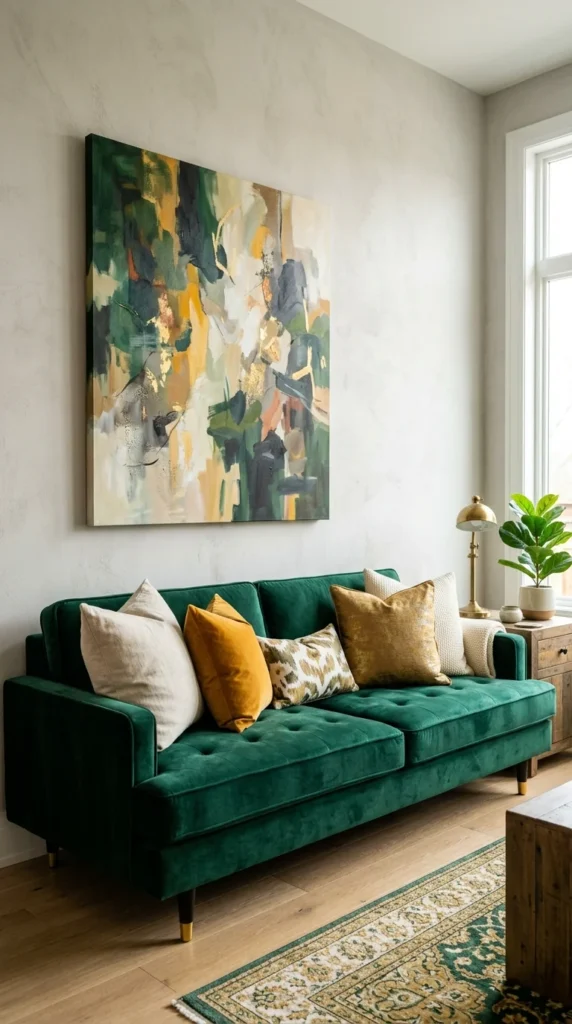
To achieve a cohesive look, your sofa styling must speak to the rest of the room. Choose a color palette that includes at least one color from your existing decor—perhaps a hue found in your rug, wall art, or curtains. A popular designer trick is the 60-30-10 rule: 60% of the palette is a dominant neutral, 30% is a secondary color, and 10% is a bold accent. If your sofa is neutral, use the pillows and throws to introduce your accent colors. This creates a visual thread that pulls the entire room together.
5. Symmetrical Arrangement
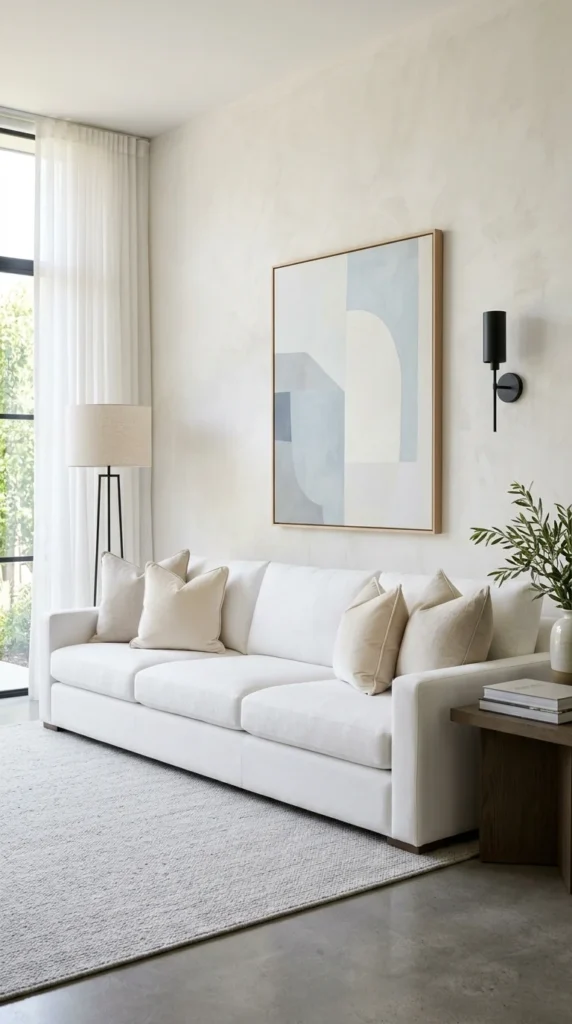
Symmetry is the hallmark of traditional and formal interior design. It creates a sense of order and calm. To achieve this, mirror the pillow arrangement on both sides of the sofa. For example, place two large navy pillows at the outer corners, followed by two smaller patterned pillows. This look works best on sofas with clean lines and in rooms where the layout is centered. It is a foolproof method for making a space feel “expensive” and well-organized.
6. Asymmetrical Flow
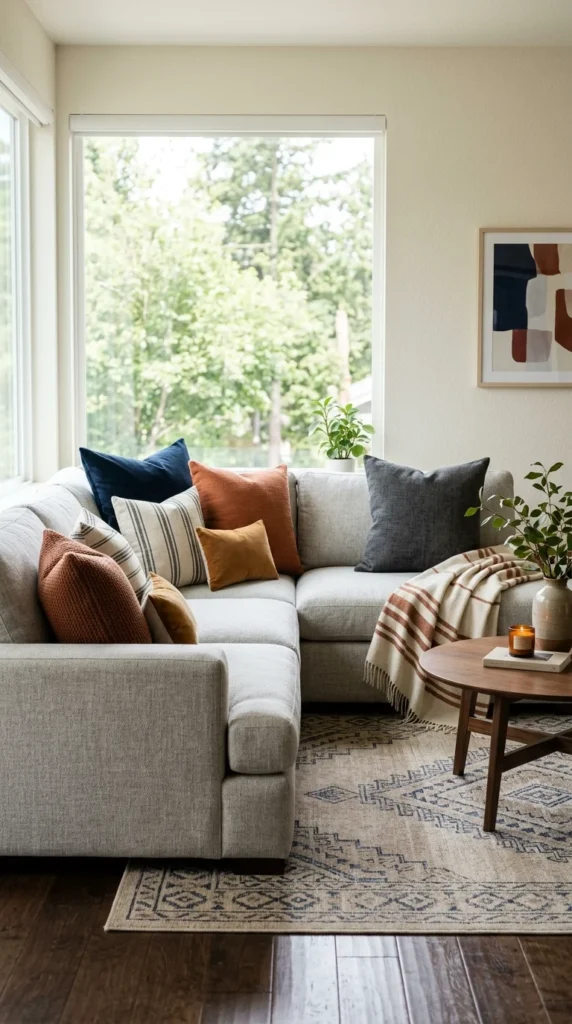
Asymmetry is perfect for modern, bohemian, or eclectic spaces. It feels more relaxed and organic than a symmetrical setup. Instead of mirroring both sides, create a “weighted” side with a cluster of three to five pillows, and leave the other side more minimal with just one pillow or a throw blanket. The key to successful asymmetry is balance; the side with fewer items should have a “heavier” visual element, such as a bolder color or a larger scale, to compensate for the lack of quantity.
7. Scale Variation
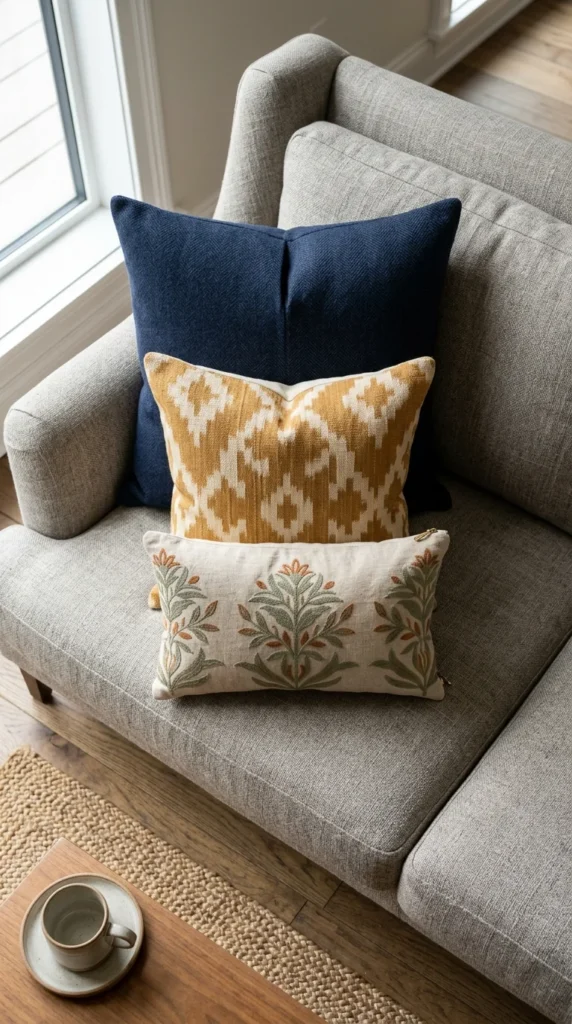
Common mistakes in sofa styling often involve using pillows that are all the same size. This creates a flat “wall” of cushions. Designers play with scale to create a three-dimensional effect. Always start with the largest pillows at the back corners (the “anchors”) and work your way down in size as you move toward the center. This creates a “nesting” effect that looks inviting. Additionally, consider the scale of the sofa itself; a massive sectional needs larger pillows (24-26 inches) to avoid looking dwarfed, while a petite loveseat is better suited for 18-20 inch cushions.
8. The “Karate Chop”

If you want your sofa to look like it belongs in a high-end showroom, the “karate chop” is essential. This involves using your hand to create a slight indentation in the top center of the pillow. This technique only works with high-quality inserts, specifically those filled with down or a high-end down-alternative. Foam or polyester inserts are too stiff and will bounce back. The “chop” makes the pillows look soft, lived-in, and premium, suggesting they are filled with luxurious materials.
9. Pattern Mixing
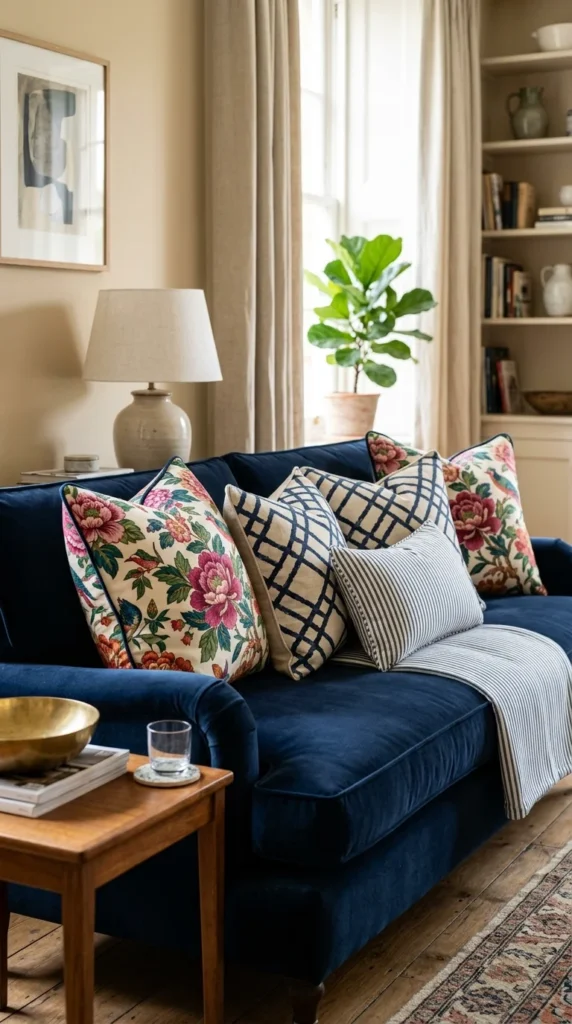
Mixing patterns can be intimidating, but it is a sure-fire way to get a designer look. The secret is to vary the scale of the patterns. Pair one large-scale print (like a bold floral or wide stripe) with a medium-scale pattern (like a geometric print) and a small-scale pattern (like a solid with a subtle weave or a tiny dot). As long as they share a common color thread, the different patterns will complement rather than clash. This variety adds personality and depth to the seating arrangement.
10. Anchor with a Rug
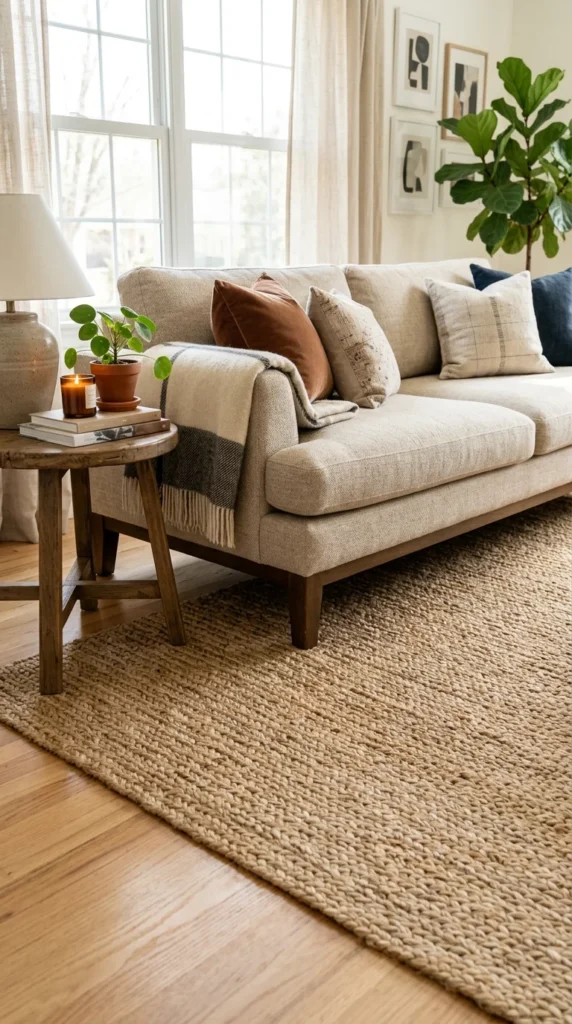
A sofa doesn’t exist in a vacuum; it is part of a larger composition. To make your sofa look professionally styled, it needs to be anchored by a rug. The rug should be large enough that at least the front legs of the sofa rest on it. This creates a defined “zone” in the room. A rug that is too small (the “floating rug” mistake) will make the sofa look disconnected and the room feel disjointed. Choose a rug that contrasts slightly with the sofa fabric to help the furniture “pop.”
11. Side Table Accents
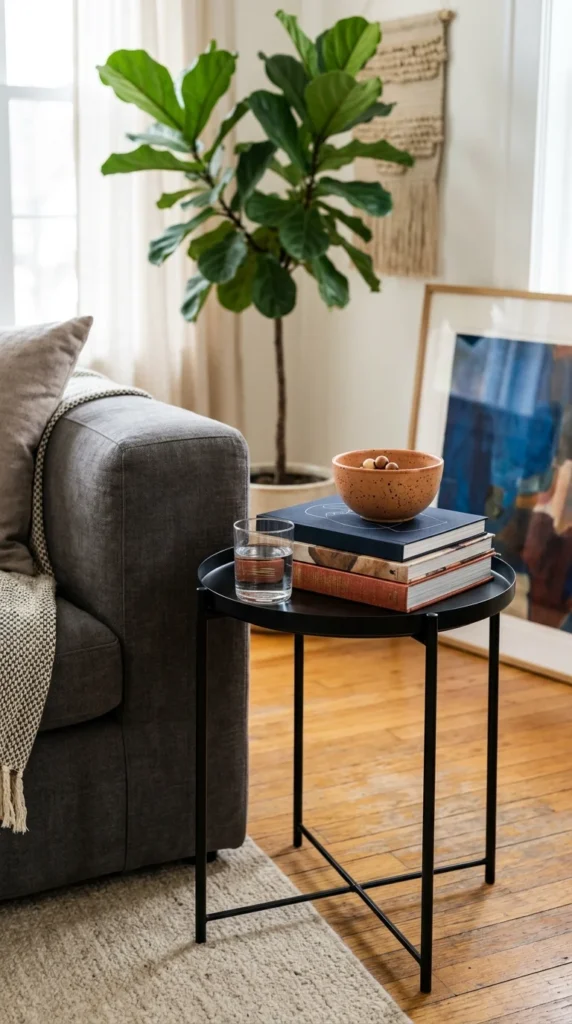
The styling of the area immediately surrounding the sofa is just as important as the cushions on it. A side table provides an opportunity to add height and personality. Use the “triangle method” for styling the tabletop: place one tall item (like a lamp or a vase of branches), one medium item (like a stack of books), and one low item (like a decorative tray or a candle). This creates a pleasing visual pyramid that leads the eye toward the sofa.
12. Lumbar Presence
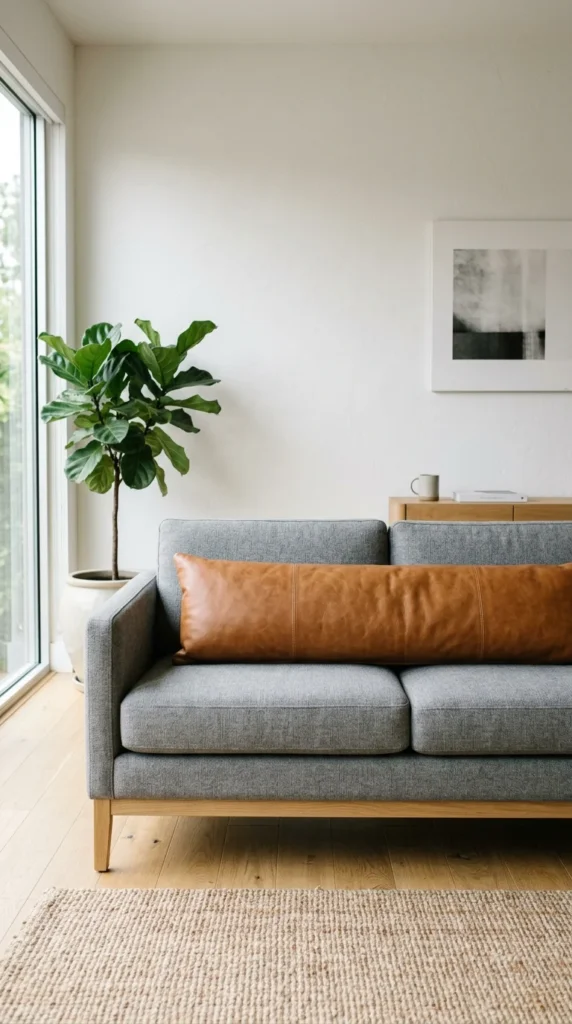
While square pillows are the standard, the lumbar pillow is the designer’s secret weapon for adding architectural interest. An extra-long lumbar pillow (sometimes spanning half the length of the sofa) can act as a single statement piece, replacing the need for multiple smaller cushions. This look is particularly effective on mid-century modern or minimalist sofas. It provides a clean, horizontal line that emphasizes the length of the furniture and offers excellent back support.
13. Above-Sofa Art
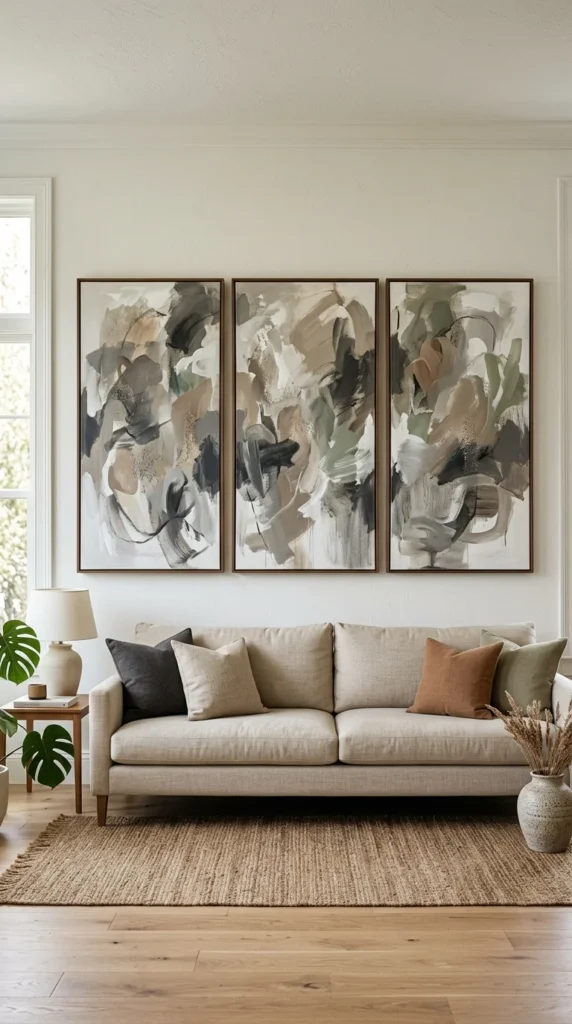
The wall space above the sofa is prime real estate. To achieve a designer look, art should be hung at the correct height and scale. A common mistake is hanging art too high or choosing a piece that is too small. Ideally, the artwork should be roughly two-thirds the width of the sofa and hung about 6 to 10 inches above the back of the sofa. This creates a visual connection between the furniture and the wall decor, making them feel like one cohesive unit rather than two separate elements.
14. Living Elements
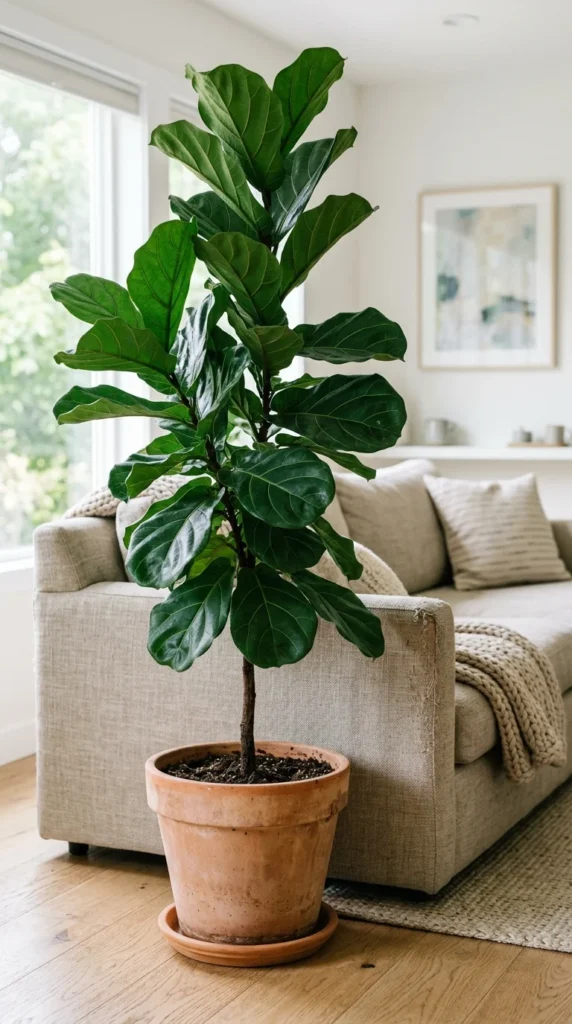
No designer space is complete without a touch of greenery. Placing a large floor plant or a vase of fresh flowers near the sofa adds life and movement to the styling. The organic shapes of leaves and petals contrast beautifully with the straight lines and structured forms of the sofa. If you have a corner sofa or sectional, a tall plant in the “dead space” behind the corner can add height and soften the transition between the furniture and the walls.
15. Seasonal Swaps
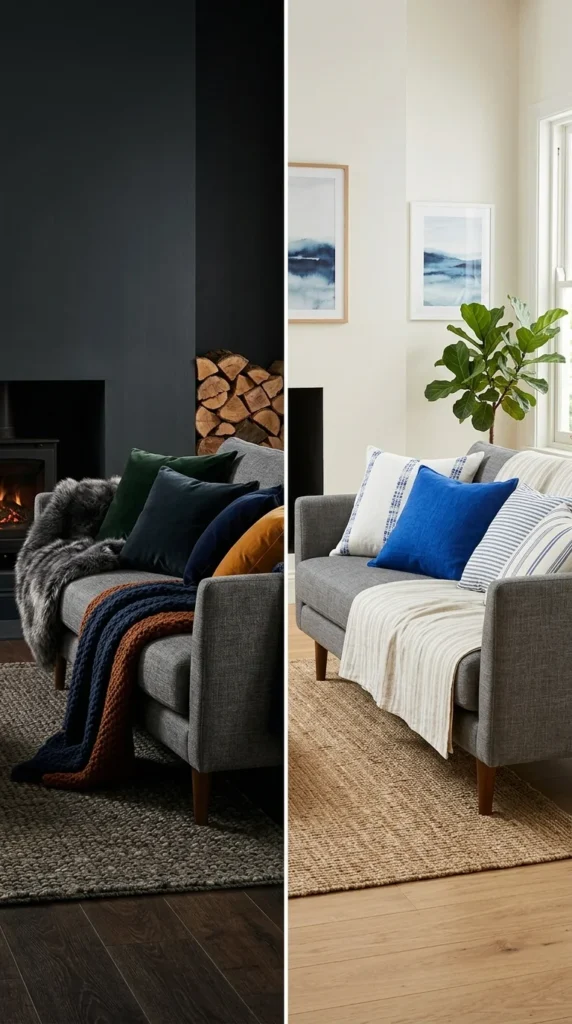
A designer-styled sofa is never static. Professionals often swap out accessories to reflect the changing seasons. In the winter, focus on “heavy” styling: use velvet, faux fur, and dark, moody colors to create a sense of enclosure and warmth. In the spring and summer, transition to “light” styling: use breathable linens, lighter cottons, and a brighter, airier color palette. These small changes keep the living room feeling fresh and ensure that the sofa remains the stylish heartbeat of the home year-round.