
Scandinavian design is more than just a trend; it is a philosophy born out of the need for light, warmth, and functionality in the face of long, dark Northern winters. For those living in small urban apartments, the “Scandi” aesthetic is a lifeline. By prioritizing minimalism, natural materials, and clever spatial planning, you can transform a cramped dwelling into a sanctuary that feels twice its actual size.
The core of this style revolves around two concepts: Hygge (coziness) and Lagom (just the right amount). When applied to interior design, these principles help eliminate visual noise and maximize the flow of light. Here are 12 essential Scandinavian ideas to make your small apartment feel bigger, brighter, and more inviting.
1. White Walls
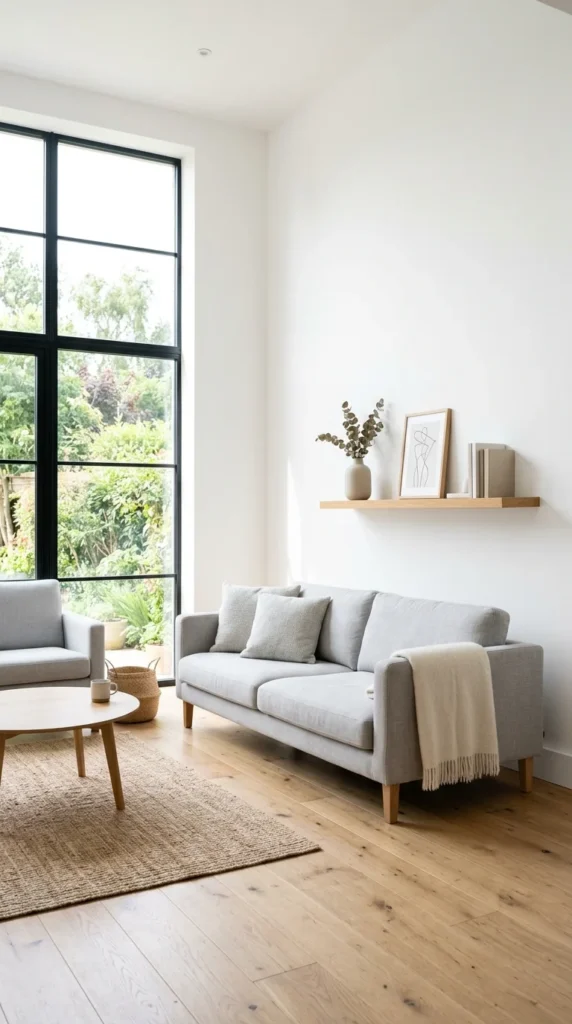
The most fundamental rule of Scandinavian design is the use of white or very light neutral tones on the walls. White acts as a canvas that reflects every bit of available natural light, bouncing it into the dark corners of a room. This “brightening” effect erases the visual boundaries of the walls, making the space feel endless rather than enclosed.
When choosing a white, Scandinavians often opt for “cool” whites to maintain a crisp look or “warm” whites (with a tiny hint of yellow or grey) to ensure the space doesn’t feel clinical. By painting the walls, ceilings, and even the trim in the same shade, you eliminate the visual “breaks” that usually tell the eye where a room ends, thereby tricking the brain into perceiving more volume.
2. Leggy Furniture
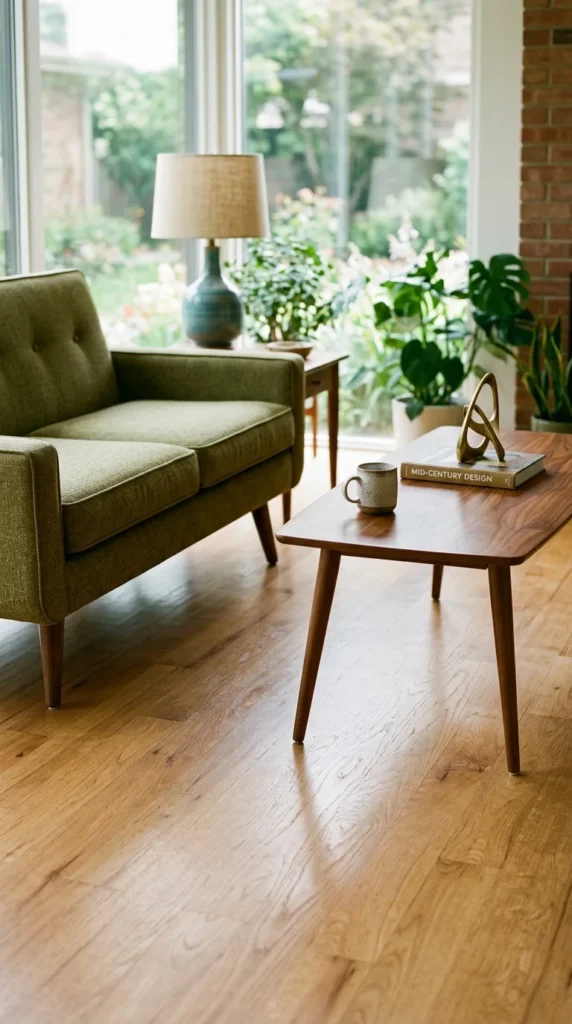
In a small apartment, bulky furniture that sits directly on the floor acts like a roadblock for the eye. Scandinavian designers favor “leggy” furniture—sofas, chairs, and sideboards that are elevated on slim, tapered wooden or metal legs.
When you can see the floor extending all the way to the wall beneath a piece of furniture, the room feels significantly more spacious. This “floating” effect prevents the floor plan from looking crowded and allows light to circulate underneath the objects, contributing to an overall sense of weightlessness in the decor.
3. Strategic Mirrors
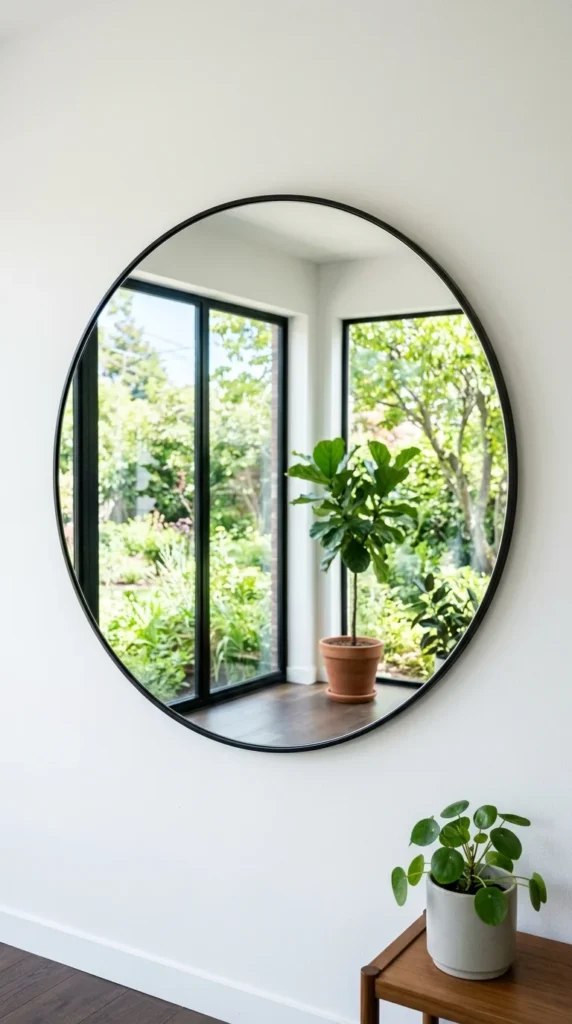
Mirrors are the oldest trick in the book for a reason: they work. In Scandinavian homes, mirrors are placed strategically to mimic the appearance of windows. By hanging a large mirror opposite a light source, you double the amount of brightness in the room.
Beyond just adding light, mirrors create a “window into another room” illusion. A floor-to-ceiling mirror or a gallery of smaller mirrors can break up a solid wall and provide a sense of depth that a painting or a blank wall simply cannot offer. For a true Scandi look, choose mirrors with thin, minimalist frames in black, gold, or light wood.
4. Hidden Storage
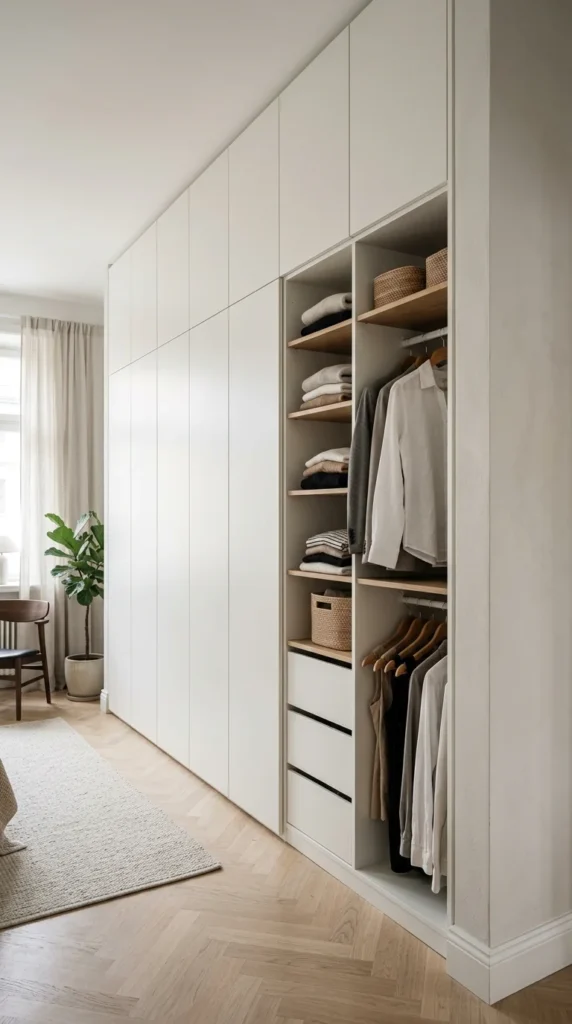
Clutter is the ultimate enemy of a small space. Scandinavian design handles this through “hidden” or “integrated” storage. Rather than having multiple small chests and cabinets that take up floor space, Scandi apartments often utilize floor-to-ceiling cabinetry that blends into the walls.
Using handle-less, push-to-open doors in the same color as the walls makes the storage almost invisible. This allows you to tuck away seasonal clothes, cleaning supplies, and miscellaneous items without adding visual weight to the room. The goal is to keep the “public” surfaces of the home—the tables and countertops—as clear as possible.
5. Light Textiles
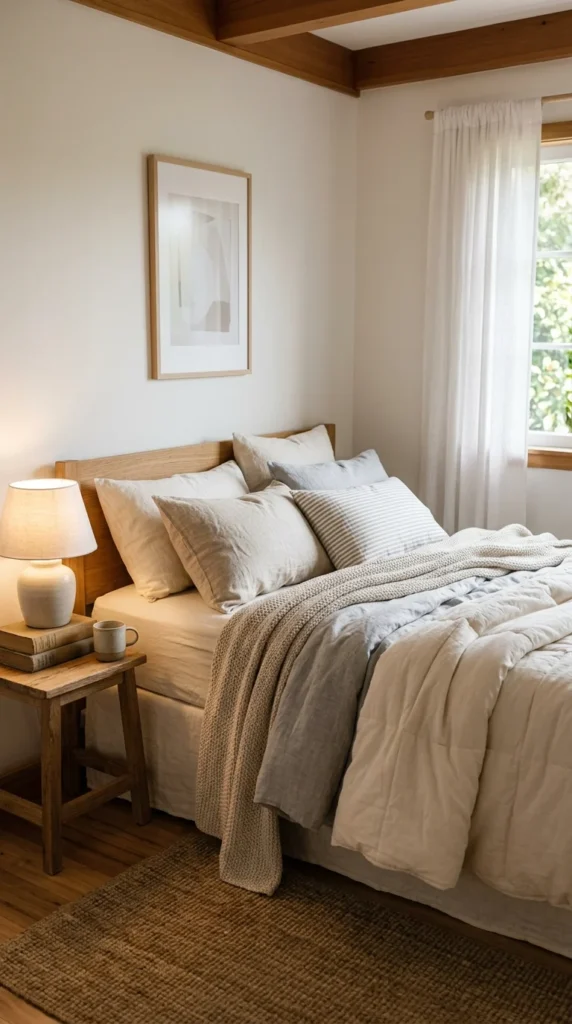
While Scandinavians love their textures, they rarely use heavy, dark fabrics like velvet or brocade in small spaces. Instead, they opt for light, breathable textiles such as linen, cotton, and light wool.
Choosing rugs, curtains, and throw pillows in pale tones—such as oatmeal, light grey, or sage green—adds warmth and “Hygge” without absorbing too much light. Sheer linen curtains are particularly popular because they provide privacy while still allowing sunlight to filter through, keeping the room connected to the outside world.
6. Vertical Shelving
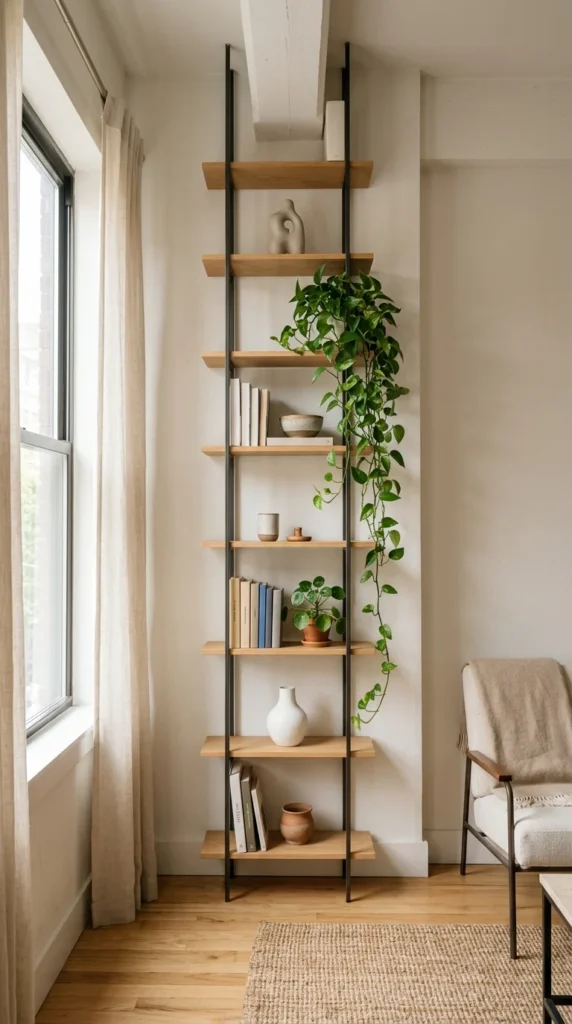
When floor space is at a premium, look up. Scandinavian design excels at utilizing vertical space. Tall, narrow shelving units or wall-mounted “string” shelves allow you to store books and decor without occupying much square footage.
By drawing the eye upward, vertical elements emphasize the height of the ceiling rather than the narrowness of the floor. This technique is especially effective in entryways or kitchens where every inch of storage counts. Keeping the top shelves slightly less crowded prevents the room from feeling top-heavy or claustrophobic.
7. Transparent Elements
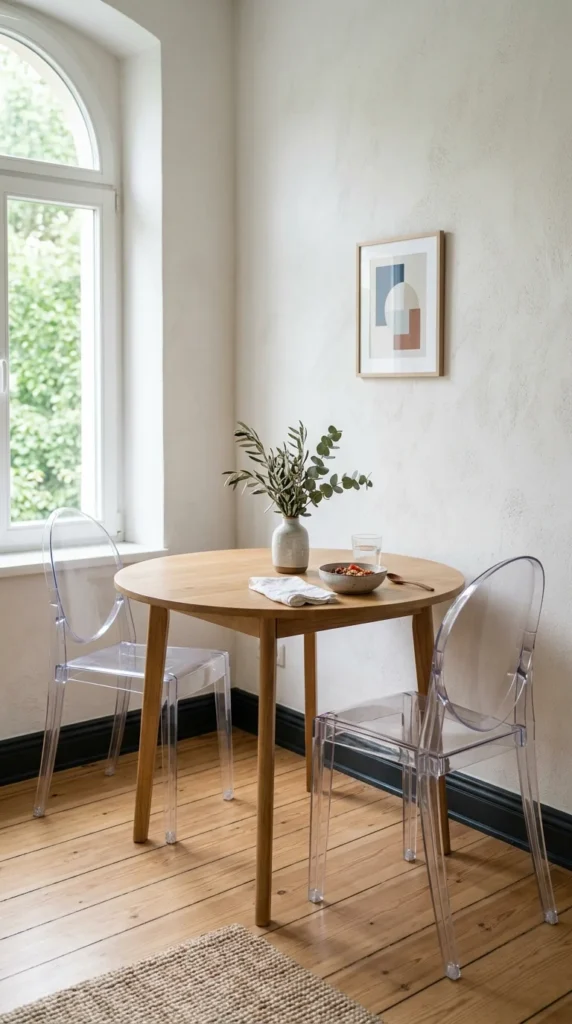
Transparent furniture is a masterclass in spatial efficiency. Pieces made of glass, acrylic, or Lucite serve their functional purpose without taking up any “visual” space. In a Scandinavian apartment, you might see a glass coffee table or clear dining chairs paired with a wooden table.
Because these items are see-through, they don’t interrupt the sightline across a room. This keeps the apartment feeling open and airy. It is a perfect solution for those who need a full-sized dining setup or a desk but don’t want the room to look “full.”
8. Natural Wood
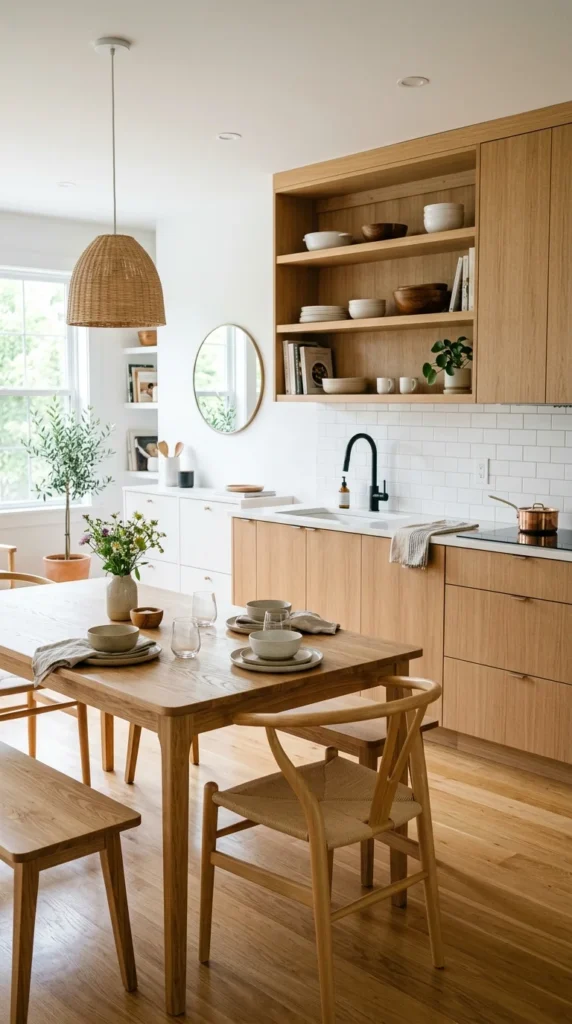
To prevent a white-walled apartment from feeling cold or sterile, Scandinavians use natural wood liberally. Pale woods like ash, beech, and pine are preferred because they add warmth and organic texture while maintaining a light color palette.
Using wood for flooring, furniture, or even small accents like picture frames brings a piece of the outdoors inside. The texture of the wood grain provides visual interest that replaces the need for heavy patterns or bright colors, keeping the design sophisticated and calm.
9. Open Floor
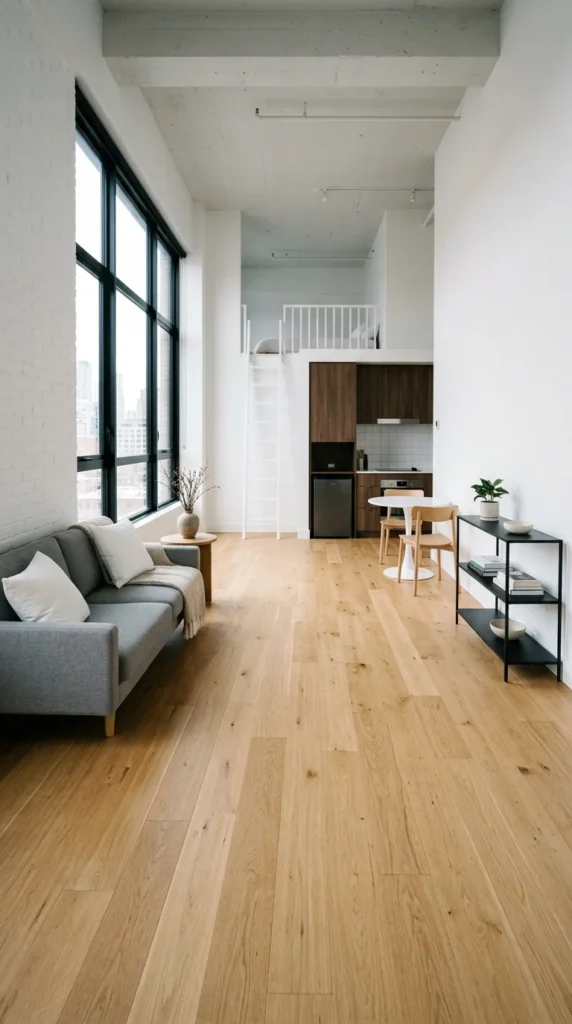
One of the secrets to a “bigger” feeling home is maintaining an open floor plan, even in a studio. This means avoiding the temptation to fill every corner with “stuff.” Scandinavian homes often have clear pathways and “dead space” that is intentionally left empty.
By leaving the center of a room or the area around a doorway clear, you create a sense of flow. This “negative space” is essential for the eyes to rest and gives the impression that the apartment has more room than it actually does. If you can walk through your home without dodging furniture, it will automatically feel larger.
10. Botanical Accents
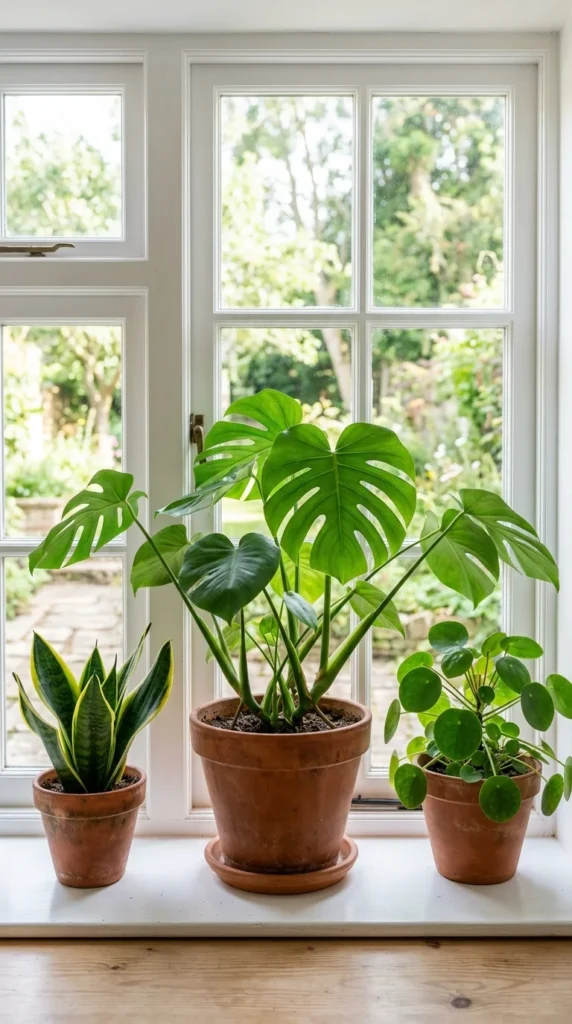
Plants are a staple of Scandinavian interiors. They provide a pop of color that feels natural rather than artificial. In a small apartment, plants can be used to “soften” the corners of a room, making the sharp boundaries of the walls feel less rigid.
Trailing plants like Pothos can be placed on high shelves to draw the eye up, while larger leafy plants like a Fiddle Leaf Fig can fill an empty corner without the bulk of a piece of furniture. Plants also improve air quality and mood, making a small space feel more like a living, breathing sanctuary.
11. Multi-functional Zones
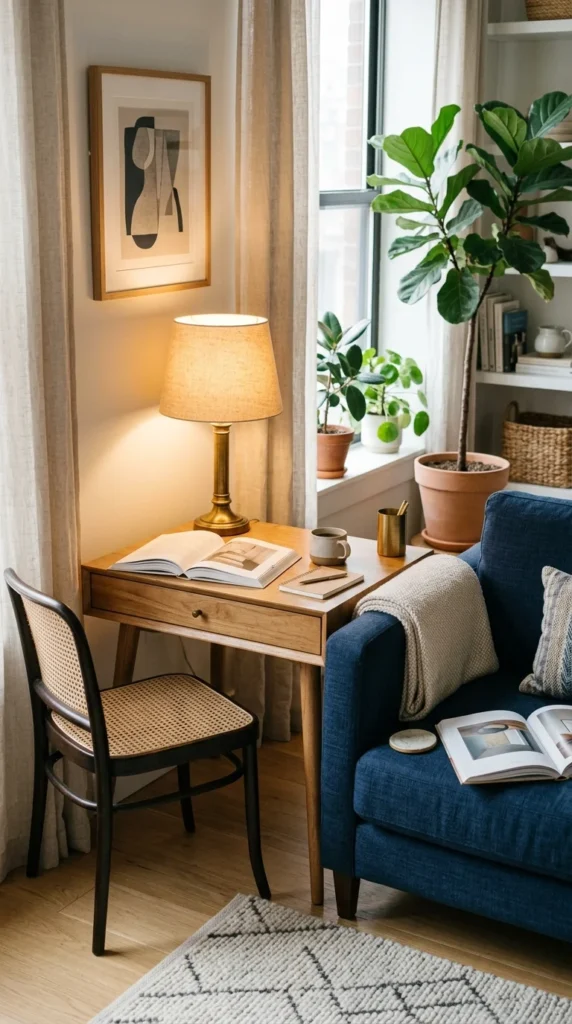
Scandinavian design is inherently practical. In a small apartment, every area must often serve multiple purposes. Instead of trying to cram a separate office, dining room, and living room into one space, Scandinavians create “zones” that overlap.
A dining table might double as a workspace during the day, or a window sill might be widened to act as a reading nook. By using rugs or lighting to define these zones rather than physical walls or dividers, the apartment retains its open-concept feel while still functioning as a multi-room home.
12. Low Profile
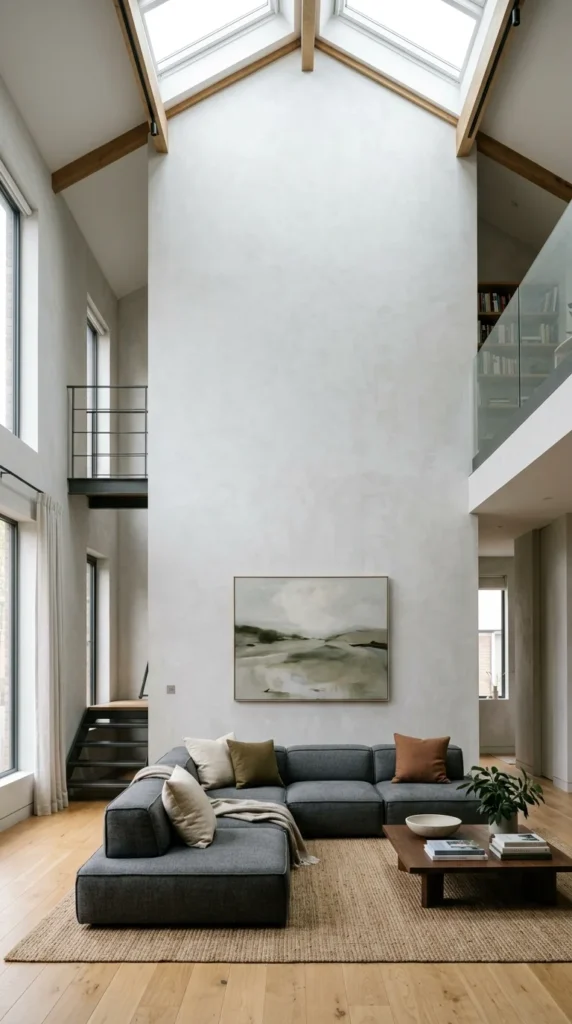
Using low-profile furniture is a clever way to manipulate the proportions of a room. When the sofa, bed frame, and tables are lower to the ground, there is more “air” above them. This increases the distance between the furniture and the ceiling, making the ceilings appear much higher.
This vertical “breathing room” is crucial in small apartments with standard or low ceilings. A low-slung, modular sofa provides just as much comfort as a traditional one but leaves the upper half of the room completely open, contributing to a sense of architectural grandeur even in a modest square footage.