
Floating shelves are more than just storage solutions; they are architectural elements that can define the character of a room. When executed correctly, they eliminate the visual clutter of bulky furniture and create a streamlined, “custom-built” appearance that is synonymous with high-end interior design. To achieve an expensive look, one must balance material quality, strategic placement, and intentional styling.
Whether you are looking to transform a neglected corner into a focal point or want to display a curated collection of art, these twelve floating shelf ideas will elevate your home’s aesthetic from ordinary to extraordinary.
1. Marble Slabs
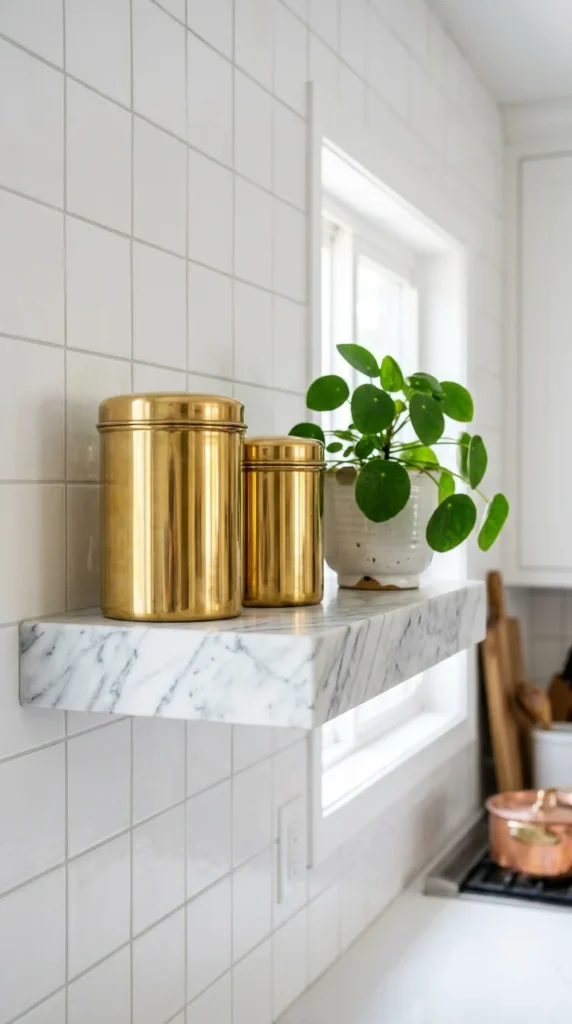
Marble has long been the gold standard for luxury materials. Using solid marble or high-quality marble-clad slabs for floating shelves adds an immediate sense of weight and permanence to a room. In a kitchen, a single marble shelf replacing upper cabinets creates an airy, Mediterranean villa vibe. In a bathroom, it serves as a sophisticated perch for high-end apothecary jars. The key to making marble look expensive is the thickness; a “chunky” profile (at least 2 to 3 inches) suggests custom masonry rather than a DIY project.
2. Live Edge
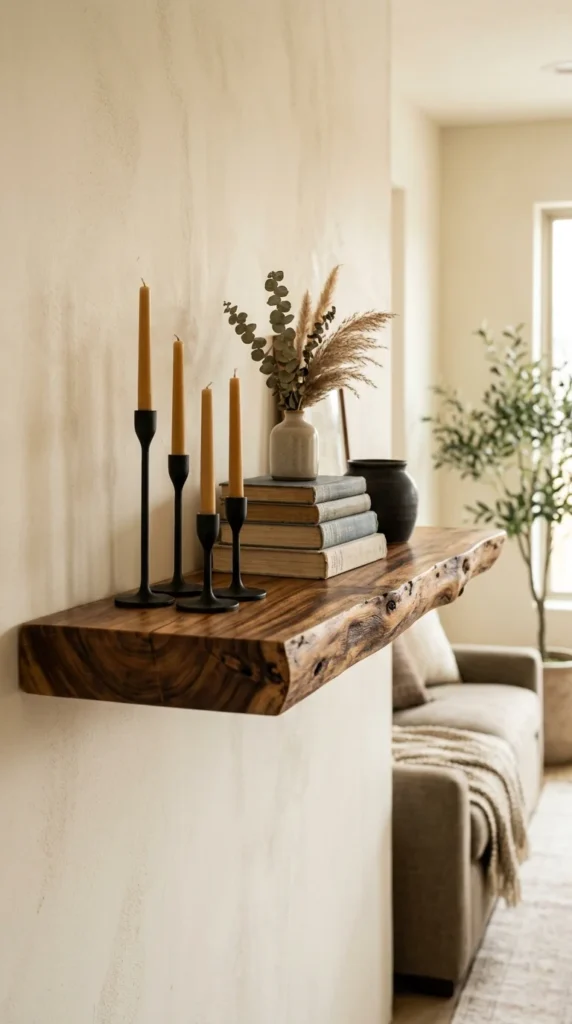
The juxtaposition of raw nature with clean, modern architecture is a hallmark of “Quiet Luxury” and “Organic Modernism.” Live edge floating shelves—where the natural contour of the tree is preserved on the outer edge—bring warmth and a one-of-a-kind artisanal quality to a space. To keep this look from feeling too rustic or “cabin-like,” pair the wood with high-contrast elements like matte black hardware or a smooth, light-colored wall.
3. Integrated Lighting
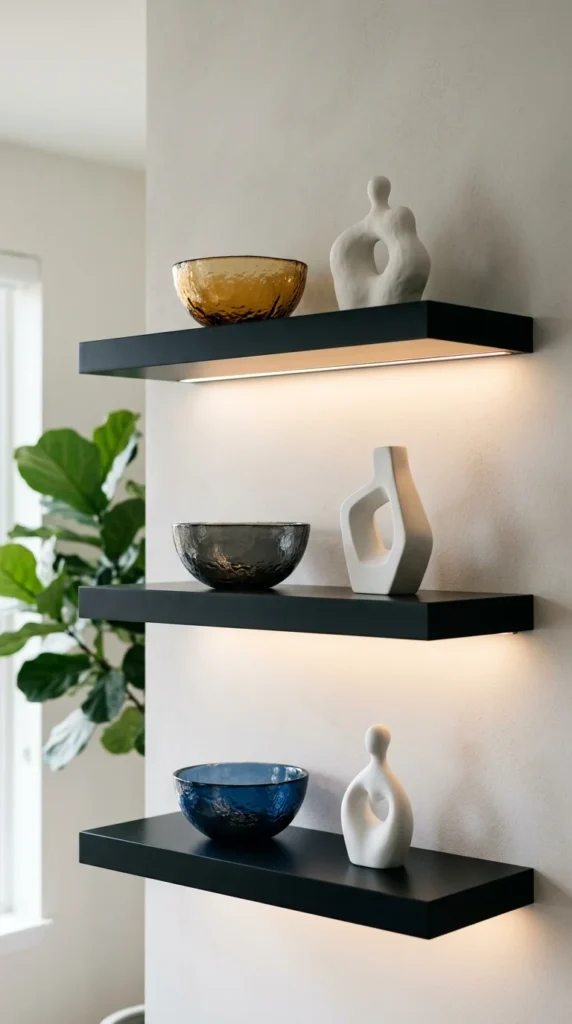
Nothing screams “custom designer home” like integrated LED lighting. By routing a channel into the bottom or back of a floating shelf to hide a light strip, you create a museum-like display. This technique, known as “wash lighting,” highlights the textures of your decor and provides ambient mood lighting for the room. It is particularly effective in dining rooms or home libraries where you want to draw the eye to a curated collection of glassware or first-edition books.
4. Floor-to-Ceiling
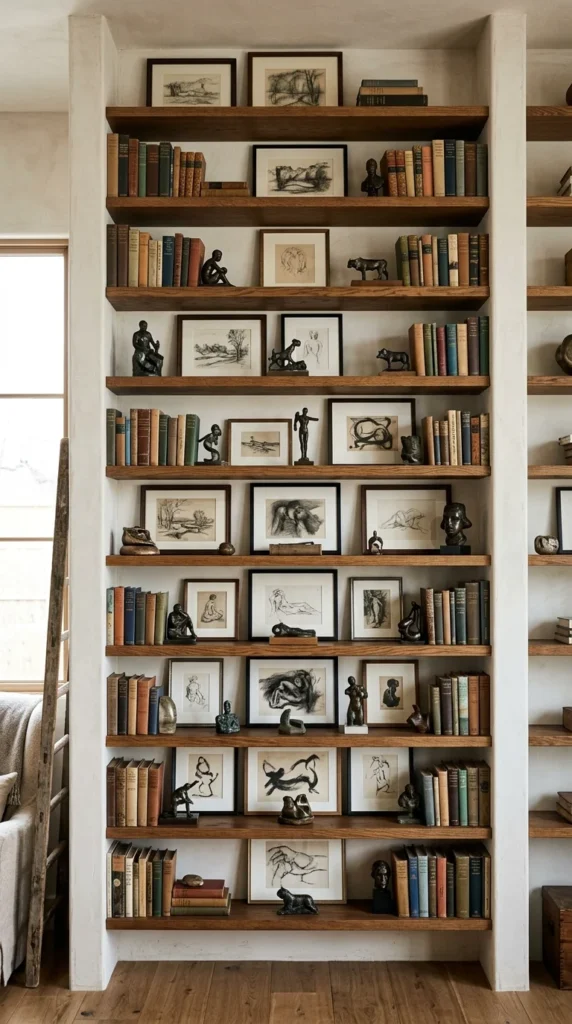
To achieve a grand, architectural look, skip the single shelf and opt for a floor-to-ceiling installation. When shelves span the entire height of a wall, they mimic the appearance of expensive built-in cabinetry without the heavy footprint of a traditional bookcase. This verticality draws the eye upward, making the ceilings feel higher and the room more expansive. Using the same wood tone as your flooring can further unify the space and enhance the luxury feel.
5. Mirrored Glass
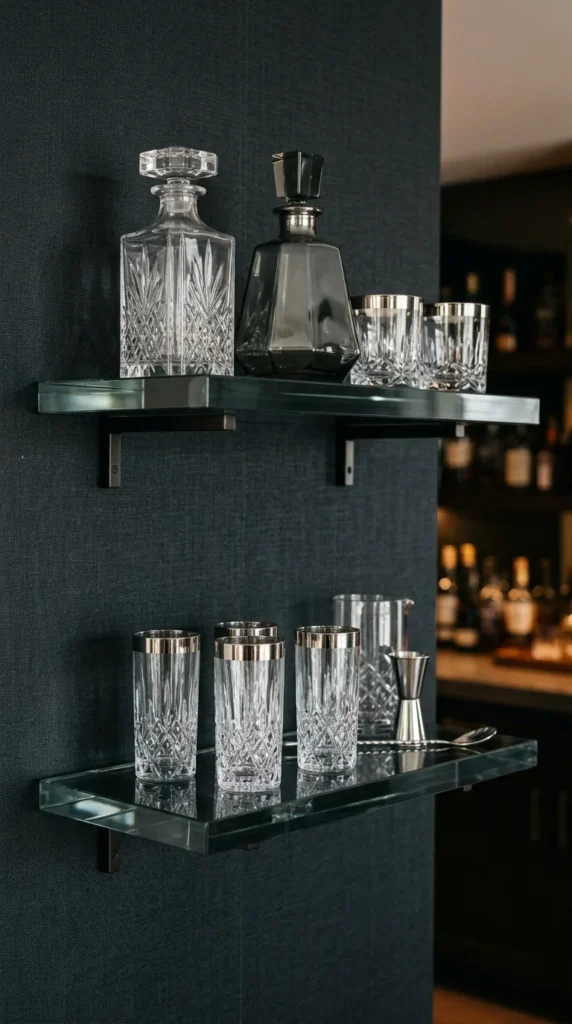
For a touch of Hollywood Regency or ultra-modern glam, mirrored or thick glass floating shelves are unmatched. Glass shelves are nearly invisible, allowing the objects placed upon them to appear as if they are hovering in mid-air. This is a brilliant tactic for small, high-end apartments where you want to maintain a sense of openness. To make them look expensive, ensure the glass is “starphire” or low-iron glass to avoid the green tint of standard glass, and opt for a thickness of at least 1/2 inch.
6. Dark Charcoal
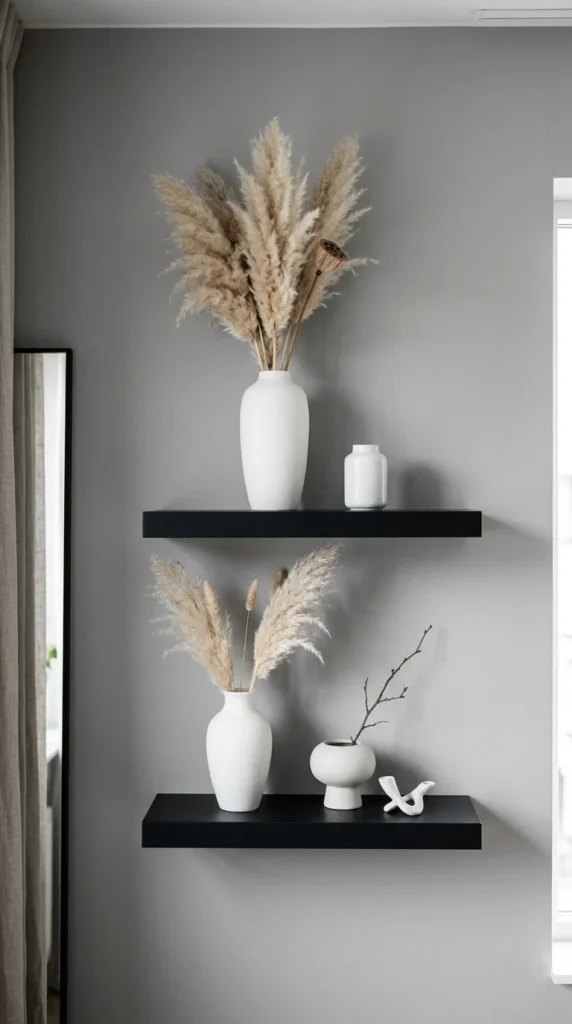
Moody, dark interiors are a staple of contemporary luxury design. Painting your floating shelves in a deep charcoal, navy, or matte black allows them to blend into a dark wall or stand out as a bold statement against a light one. This “tonal” approach—where the shelf color matches the wall color exactly—creates a sophisticated, sculptural look. It emphasizes the silhouette of the items on display rather than the shelf itself.
7. Corner Wraps
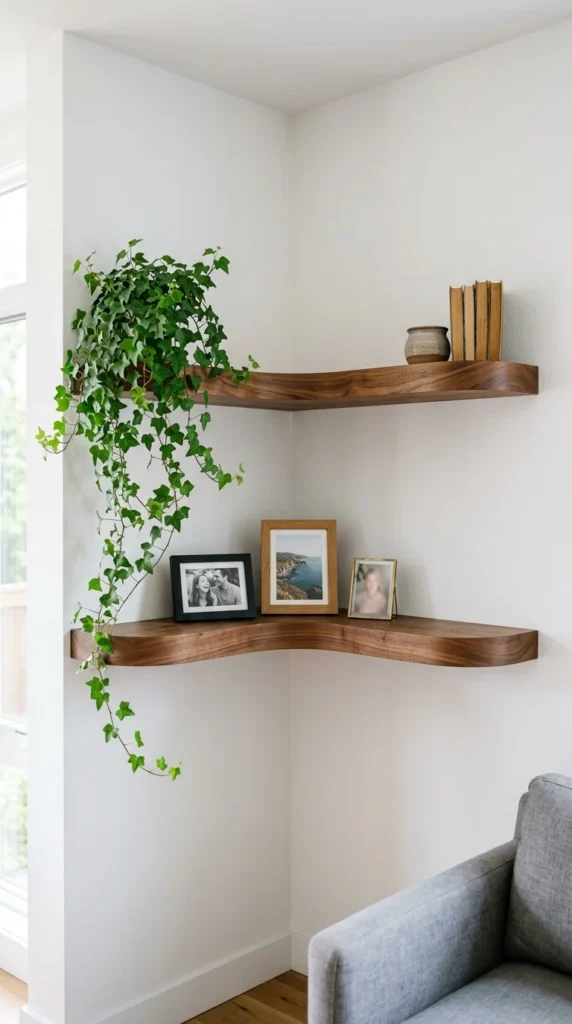
Custom carpentry is one of the most visible indicators of an expensive home. Corner-wrapped floating shelves utilize “dead space” and transform it into a functional design feature. This requires precision cutting and installation, which gives the impression of a bespoke architectural intervention. It’s an excellent way to connect two different zones of a room, such as a transition from a living area to a hallway.
8. Metallic Finishes
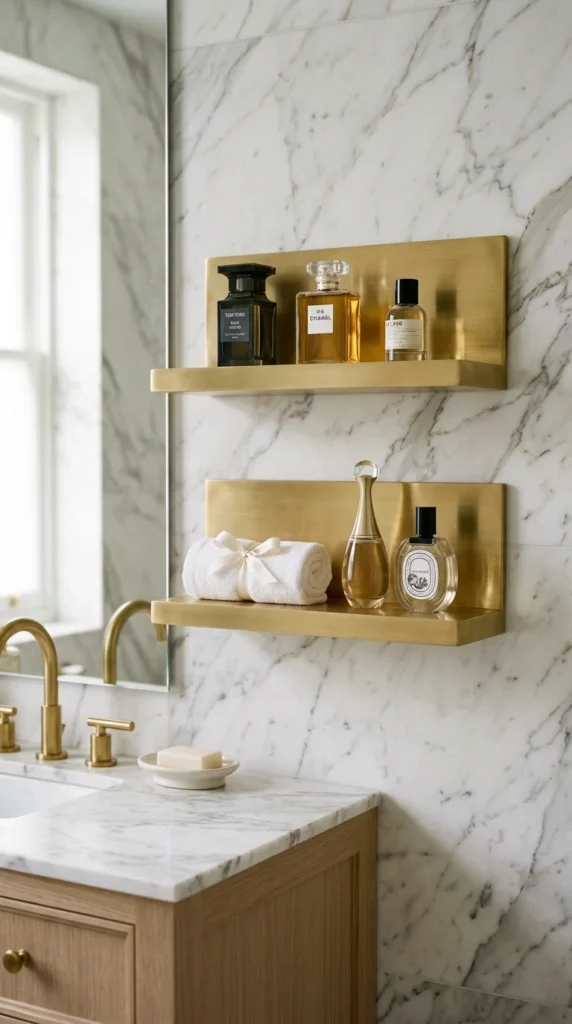
Metallic accents—specifically brass, copper, or brushed steel—add a jewelry-like finish to a room. While solid metal shelves can be incredibly heavy and expensive, wood shelves finished in a high-quality metallic leaf or metallic paint can achieve the same effect. Brass shelves paired with dark woods or white marble create a “Parisian Apartment” aesthetic that feels timeless and curated.
9. Alcove Filling
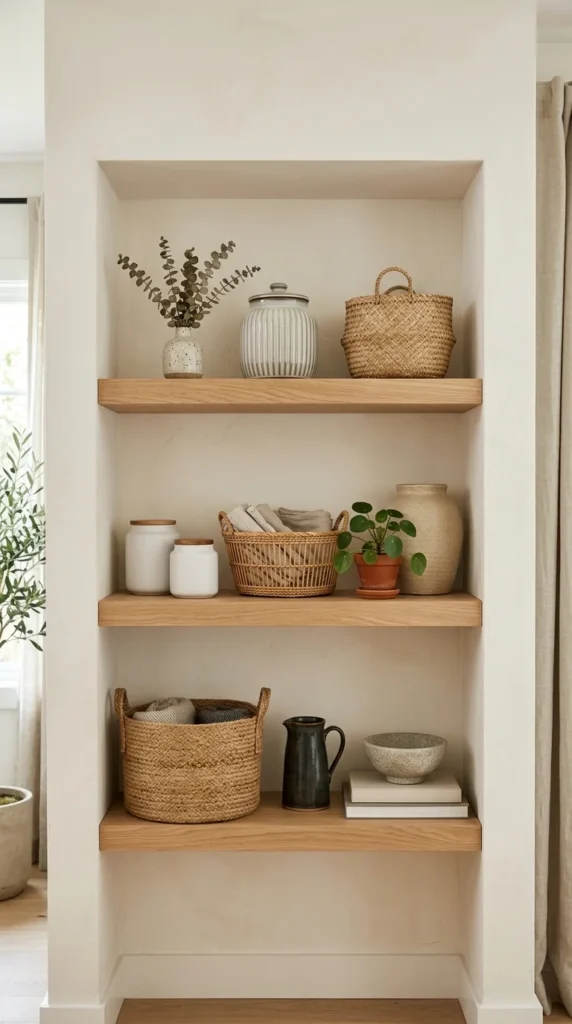
If your home has natural architectural recesses or alcoves, filling them with floating shelves is a way to make the space look intentional rather than accidental. By fitting the shelves precisely to the width of the alcove, you create a “built-in” look for a fraction of the cost of a full renovation. This is a favorite trick of interior designers to add character to fireplace surrounds or awkward hallways.
10. Monochromatic Minimalist
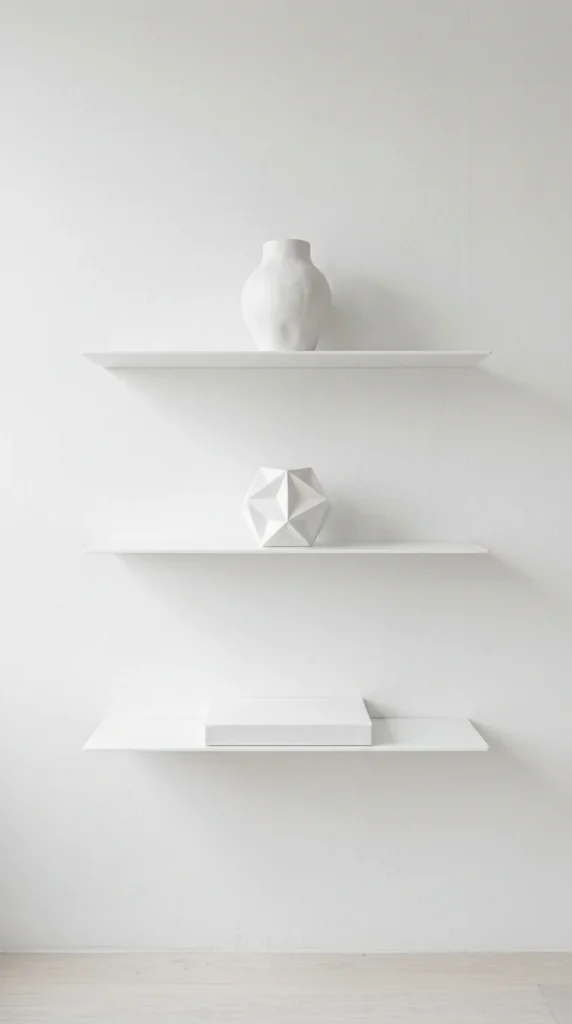
The “all-white” or monochromatic aesthetic is frequently used in high-end art galleries to keep the focus on the form. By using white shelves on a white wall, you eliminate visual noise. This minimalist approach requires a high level of discipline in styling; only the most beautiful, curated objects should be placed here. The result is a clean, sophisticated look that feels expensive because it prioritizes quality over quantity.
11. Extra Thick
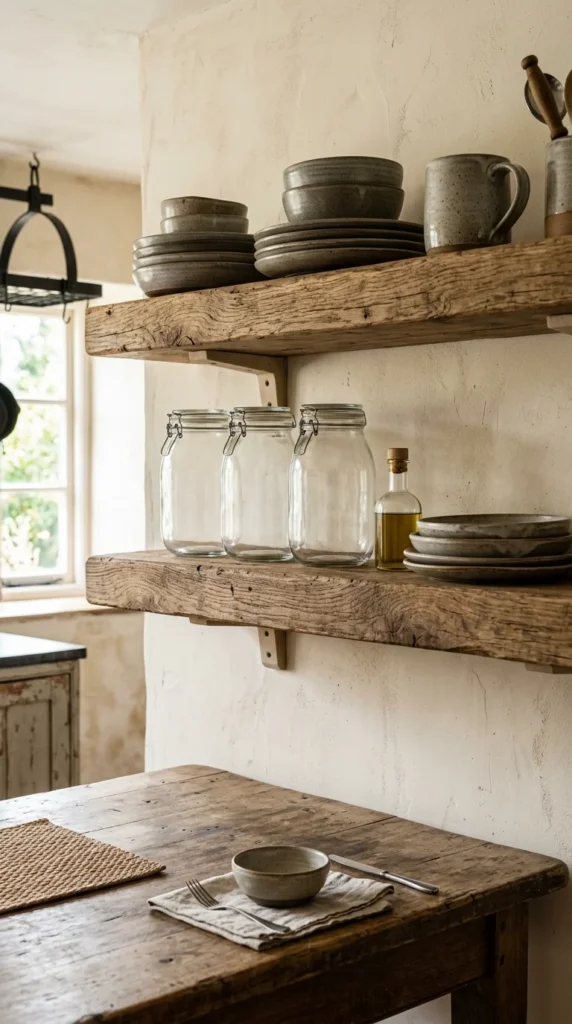
Thin, flimsy shelves can look cheap and temporary. To make floating shelves look expensive, increase the “heft.” A shelf that is 3 to 5 inches thick suggests structural integrity and luxury. These “chunky” shelves work particularly well in large rooms with high ceilings, as they have the visual weight necessary to ground the space. They are often seen in high-end farmhouse or industrial-loft designs.
12. Asymmetrical Staggering
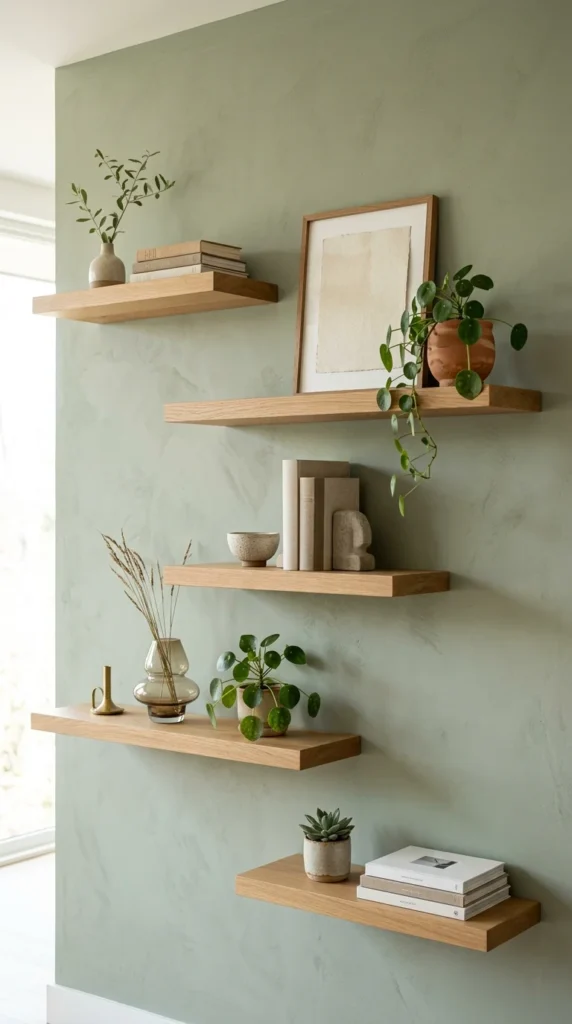
Uniformity can sometimes feel predictable. For a more dynamic, “designer” feel, arrange your floating shelves in an asymmetrical or staggered pattern. This creates a sense of movement and allows you to display objects of varying heights—like tall vases alongside short books—without being constrained by even spacing. An asymmetrical layout feels like a conscious artistic choice, which is a hallmark of high-end custom interiors.