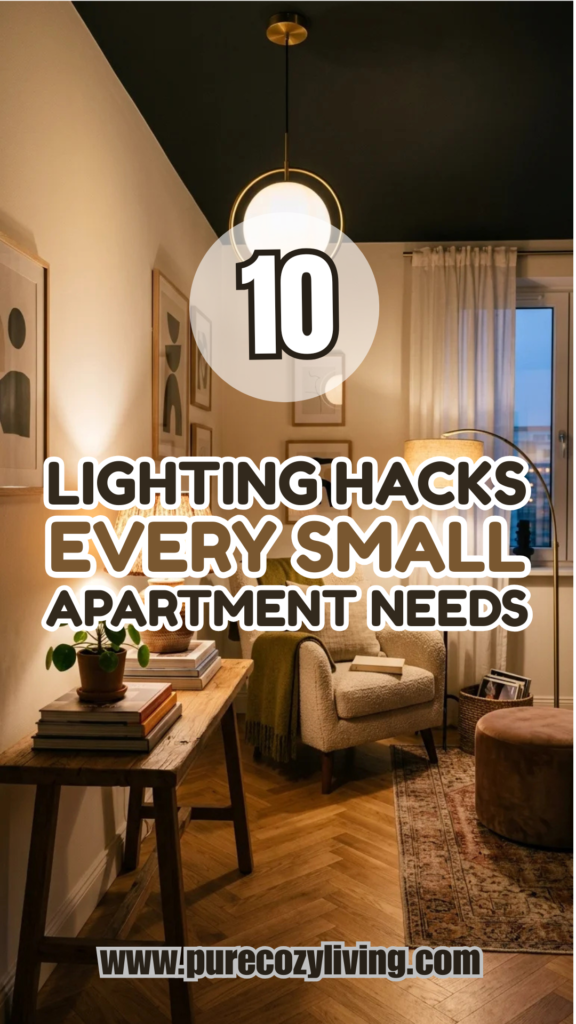

Living in a small apartment presents a unique set of design challenges. When square footage is at a premium, every design choice—from the color of your rug to the size of your sofa—matters. However, the most overlooked element in small-space design is often lighting. Proper lighting can transform a cramped, dim studio into an airy, inviting sanctuary. It has the power to shift the perceived boundaries of a room, highlight architectural features, and improve your overall mood.
For those navigating the constraints of a rental or a compact floor plan, traditional overhead lighting often falls short. It can be harsh, cast unflattering shadows, or leave corners in total darkness. To truly master your space, you need to think beyond the “boob light” on the ceiling. Here are ten lighting hacks that will help you maximize your small apartment’s potential.
1. Mirror Placement
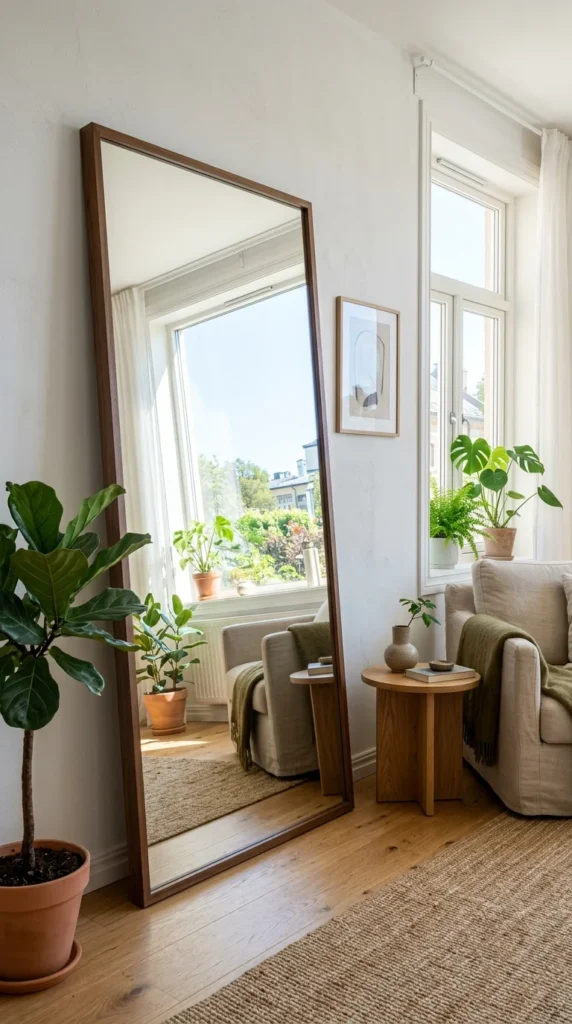
One of the oldest tricks in the interior design handbook is also the most effective for small spaces: using mirrors to double your light. Mirrors don’t just create the illusion of more space; they act as passive light sources by reflecting both natural and artificial light back into the room.
To maximize this effect, place a large mirror directly opposite your primary window. This “bounces” the outdoor light deep into the interior of the apartment, brightening even the furthest corners. If you don’t have a large window, place a mirror behind a table lamp. The reflection will amplify the bulb’s glow, creating a much brighter atmosphere than the lamp could achieve on its own.
2. Plug-in Sconces
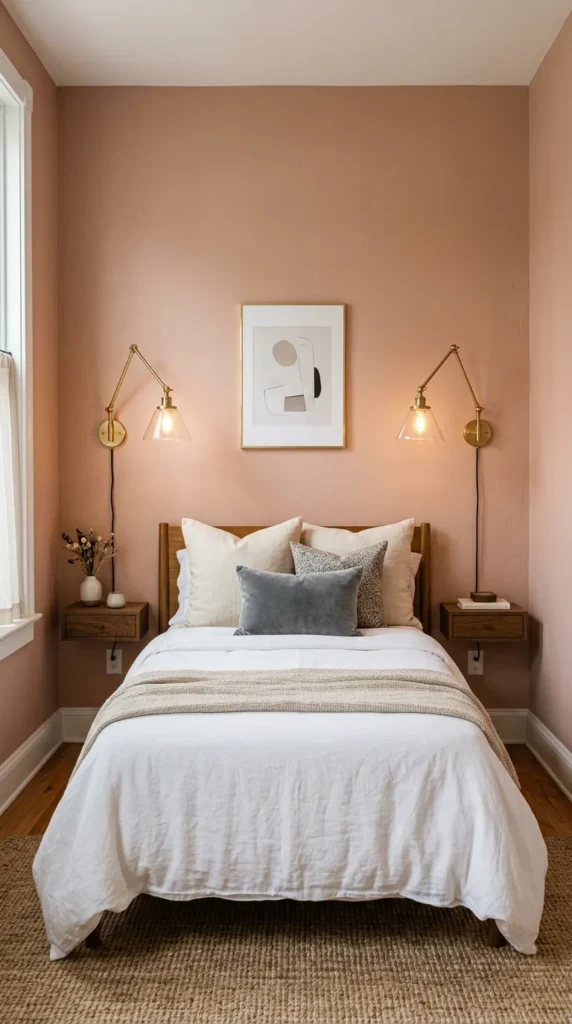
In a small apartment, floor and surface space are precious commodities. Large floor lamps or bulky table lamps can clutter your limited real estate. This is where plug-in wall sconces become a game-changer. They provide the sophisticated look of hardwired lighting without the need for an electrician or cutting into your walls—a major plus for renters.
By mounting light sources on the wall, you keep your nightstands and side tables clear for essentials. For the best results, look for “swing-arm” designs. These allow you to redirect the light wherever you need it, whether you’re reading in bed or need extra task lighting over a small desk.
3. LED Strips
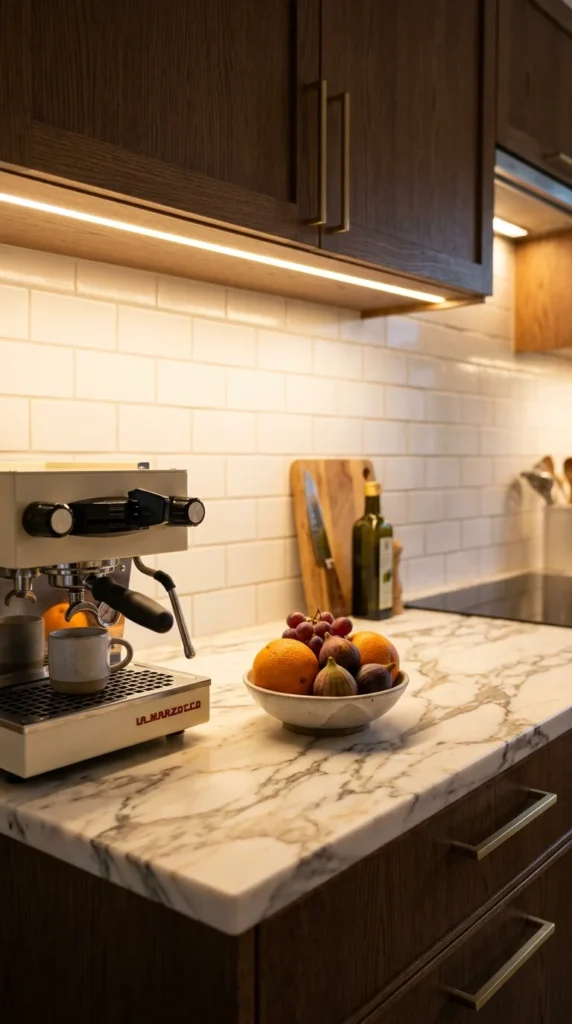
Standard overhead lighting often creates “dead zones” under cabinets, inside closets, or beneath shelving. LED light strips are an inexpensive, peel-and-stick solution that adds a layer of professional-grade accent lighting to your home.
Installing these strips under kitchen cabinets not only makes food prep easier but also adds a sense of depth to the kitchen, making it feel larger. You can also use them behind a television (bias lighting) to reduce eye strain or along the underside of a bed frame for a high-end “floating” effect. Stick to “warm white” LEDs to keep the ambiance cozy rather than clinical.
4. Layered Lighting
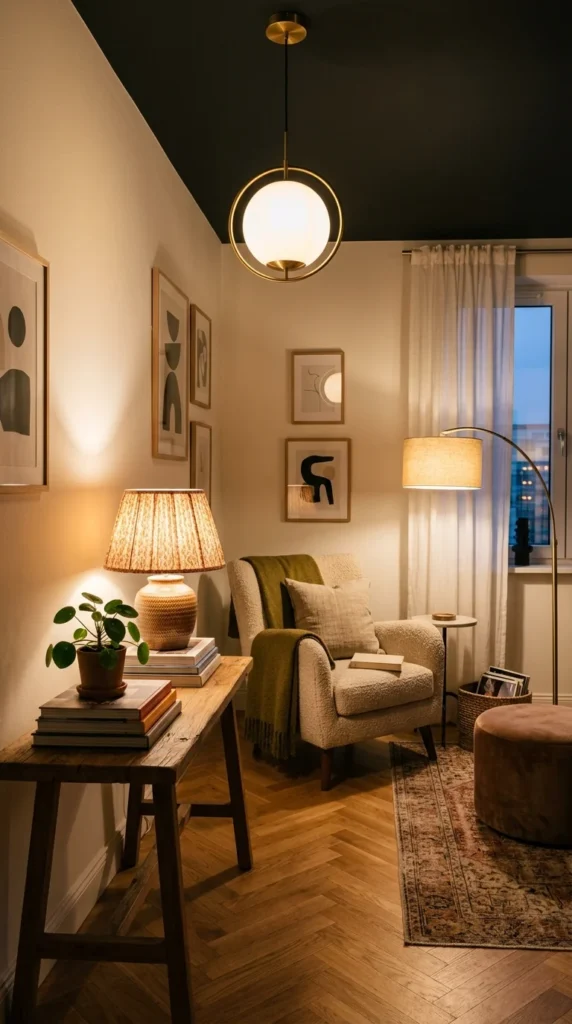
A common mistake in small apartments is relying on a single, powerful light source. This usually results in a room that feels flat and industrial. Expert designers use “layering” to create dimension. This involves using three types of light: ambient (general overhead), task (focused for work), and accent (for mood and highlighting).
In a small living room, you might have a dimmable ceiling fixture for ambient light, a small desk lamp for task work, and a battery-powered puck light highlighting a piece of art as an accent. By spreading light across different heights and locations, you draw the eye around the entire room, which makes the space feel more expansive and thoughtfully designed.
5. Floor Lamps
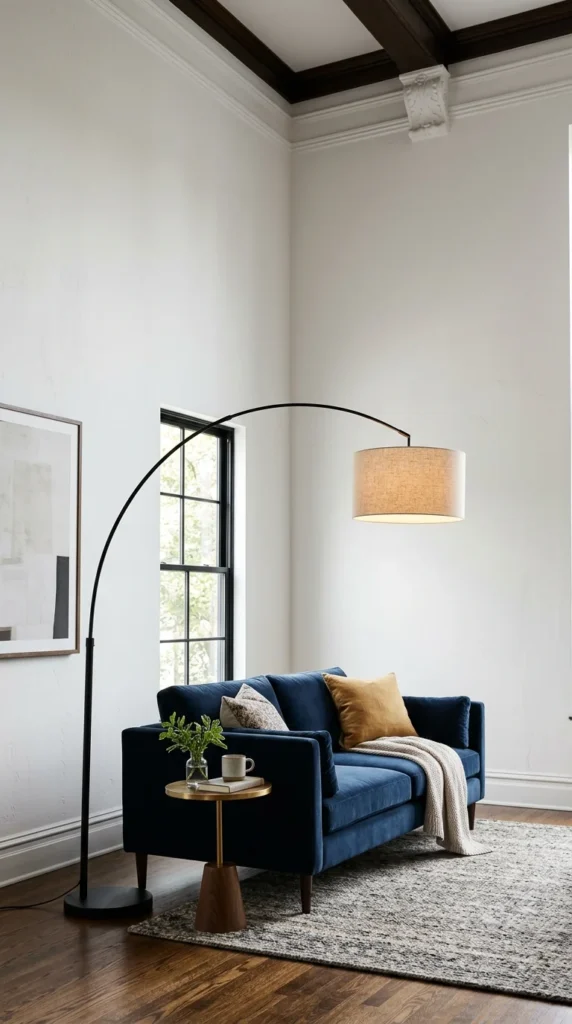
When you can’t expand outward, expand upward. Using tall, vertical lighting elements draws the eye toward the ceiling, emphasizing the height of the room rather than the narrowness of the floor.
Arc lamps are particularly useful in small layouts. They have a heavy base that can sit tucked away in a corner or behind a chair, while the long neck reaches over to provide light exactly where it’s needed, like over a coffee table. This “overhead” effect can be achieved without ever having to touch a drill or mess with ceiling wiring.
6. Smart Bulbs
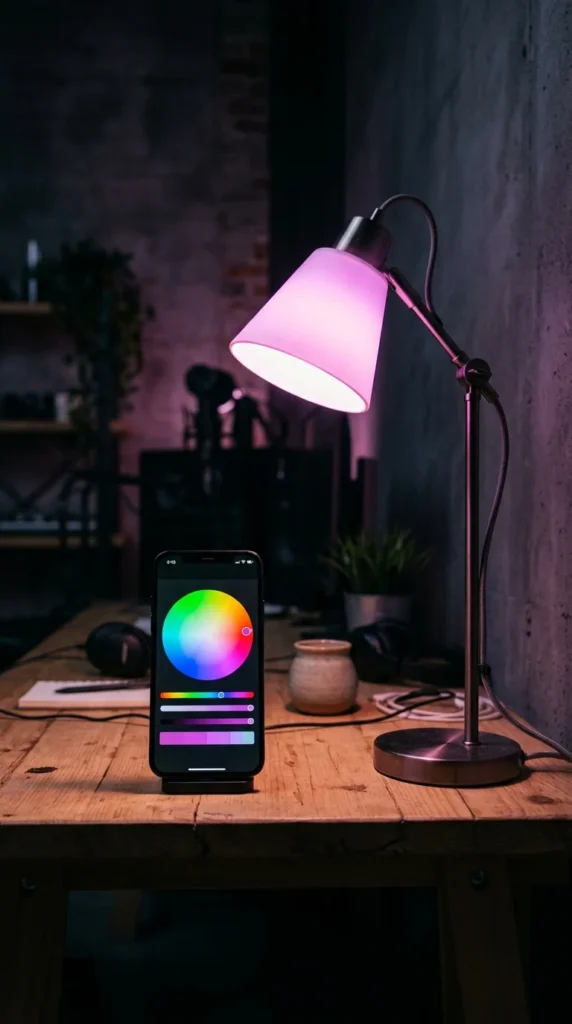
Small apartments often serve multiple purposes: your living room might also be your office, gym, and dining area. Smart bulbs allow you to change the “function” of a room simply by changing the light’s temperature and brightness.
During the work day, you can set your bulbs to a “cool white” (around 5000K) to mimic daylight and boost productivity. In the evening, you can transition them to a “warm amber” (around 2700K) to help your body wind down. Being able to dim your lights via an app or voice command is a luxury that adds a layer of sophistication to a small home without taking up a single inch of physical space.
7. Light Shades
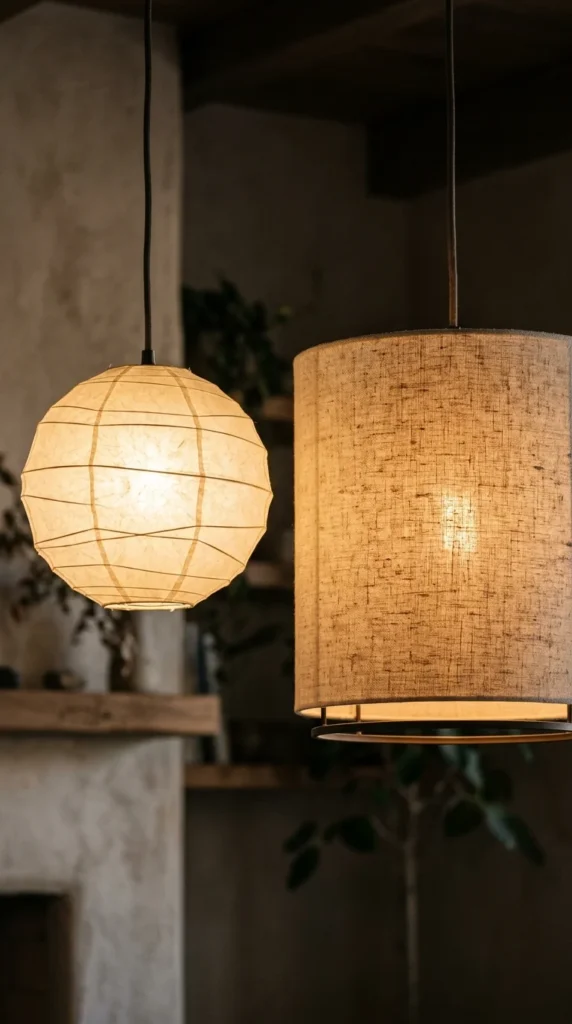
The material of your lampshade dictates how light is distributed throughout your apartment. In a large house, dark or heavy shades can be used for dramatic effect. In a small apartment, however, you generally want shades that are translucent.
Materials like linen, rice paper, or frosted glass allow light to glow through the sides of the shade as well as the top and bottom. This diffuses the light more evenly, softening the edges of the room and preventing the “spotlight” effect that can make a small room feel claustrophobic. If your apartment feels gloomy, swap out dark shades for white or cream fabric ones.
8. Acrylic Accents
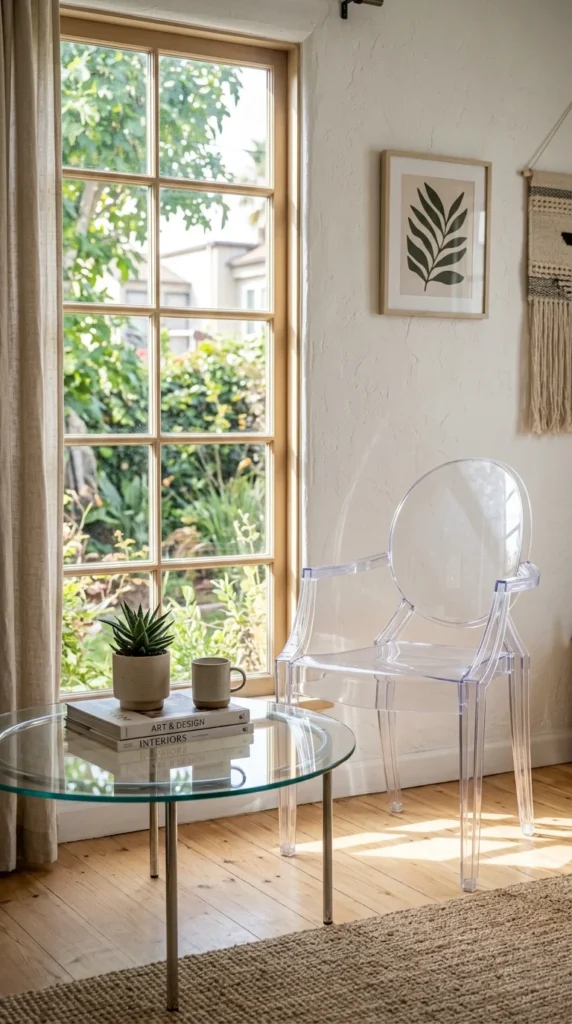
While not a light fixture itself, using “disappearing” furniture is a lighting hack that influences how light moves through your space. Solid wooden or metal furniture blocks light, creating heavy shadows that can make a small floor plan feel cluttered and dark.
Acrylic (or “ghost”) furniture, glass-topped tables, and open-framed shelving allow light to pass right through them. This eliminates harsh shadows on the floor and keeps the visual line of the room open. When light can reach every corner of the floor unobstructed, the entire apartment feels significantly brighter and more “breathable.”
9. Task Lamps
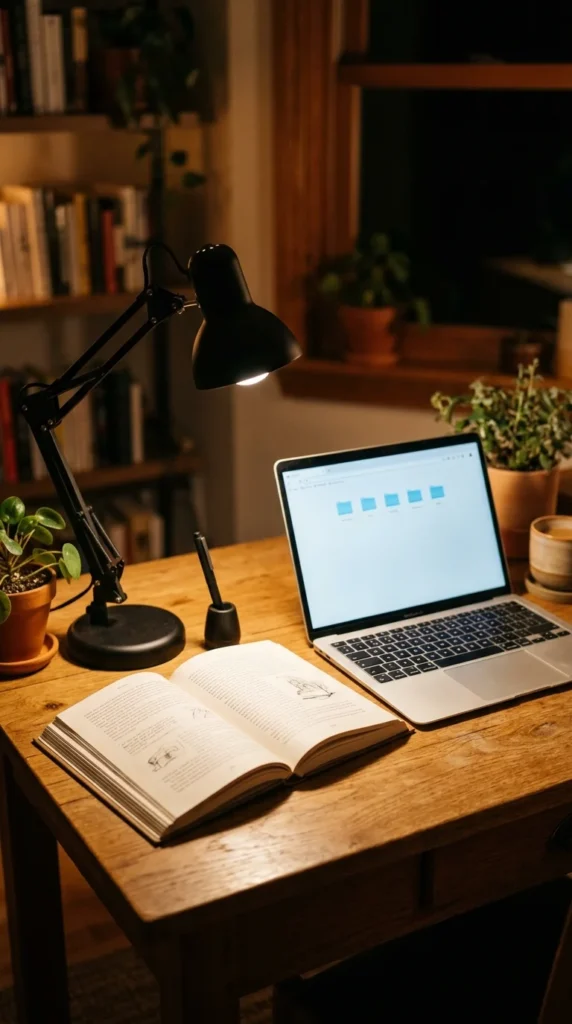
In a small apartment, you often find yourself doing everything at one table. Without proper task lighting, you’ll likely find yourself working in your own shadow. Task lamps provide a concentrated beam of light that is essential for reading, cooking, or working.
The hack here is to choose “directional” task lamps. These are lamps with adjustable heads or necks. Instead of lighting the whole room, you can focus the light purely on your workspace. This creates a “zone” within a multi-purpose room, mentally separating your “work space” from your “relaxing space” through lighting alone.
10. Sheer Curtains
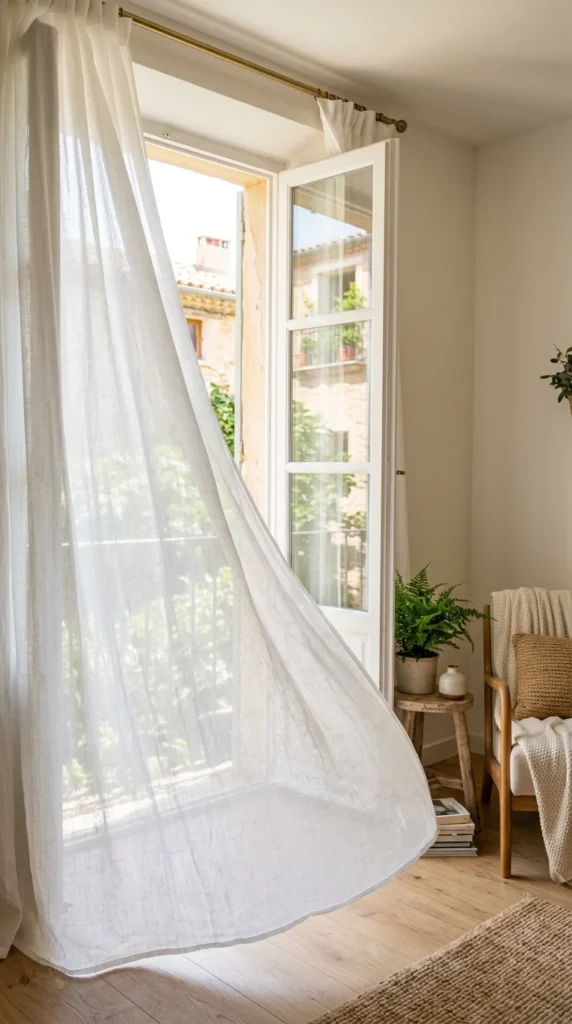
The best light source you have is the sun, but many apartment dwellers kill their natural light by using heavy, dark curtains for privacy. To make a small apartment feel its best, you need to harvest as much natural light as possible.
Replace heavy drapes with sheer or semi-sheer panels. These provide enough privacy to block the view from the street but allow sunlight to filter through and fill the room. If you need total darkness for sleeping, use a “double rod” system: place sheers on the inner rod for daytime use and blackout curtains on the outer rod to be pulled shut only at night. This ensures that during the day, your apartment is as bright as it can possibly be.