
Living in a small apartment often means compromising on square footage, and nowhere is this felt more acutely than in the kitchen. For those who love to cook, a cramped kitchen can feel like a direct challenge to their culinary creativity. However, a lack of space doesn’t have to mean a lack of functionality. With the right design strategies, even the tiniest kitchenette can become a high-performance workspace.
The secret lies in “micro-optimization”—finding value in every inch of vertical space, every hidden corner, and even the air above your head. By rethinking traditional storage and embracing multi-functional furniture, you can transform a cluttered galley into a “genius” kitchen. Here are ten transformative ideas to help you reclaim your cooking space.
1. Pegboard Walls
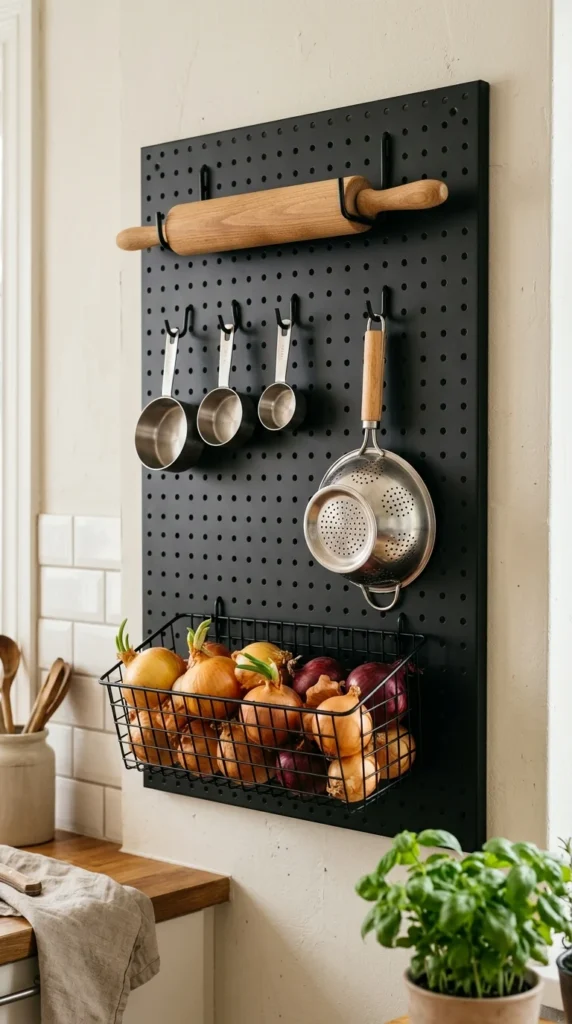
The pegboard is the ultimate “chameleon” of kitchen storage. Originally a staple of workshops and garages, it has transitioned into the modern kitchen as a chic, industrial-inspired solution for vertical organization. The beauty of a pegboard lies in its infinite customizability; as your collection of kitchen tools grows or changes, you can simply move the hooks and baskets to accommodate them.
Instead of cramming bulky pots, pans, and utensils into deep, disorganized drawers, you can hang them within arm’s reach. This not only frees up precious cabinet space for pantry staples but also turns your cookware into a visual element of the room. For a cohesive look, try painting the pegboard the same color as your walls to make it blend in, or choose a contrasting wood finish to add warmth to the space.
2. Magnetic Strips
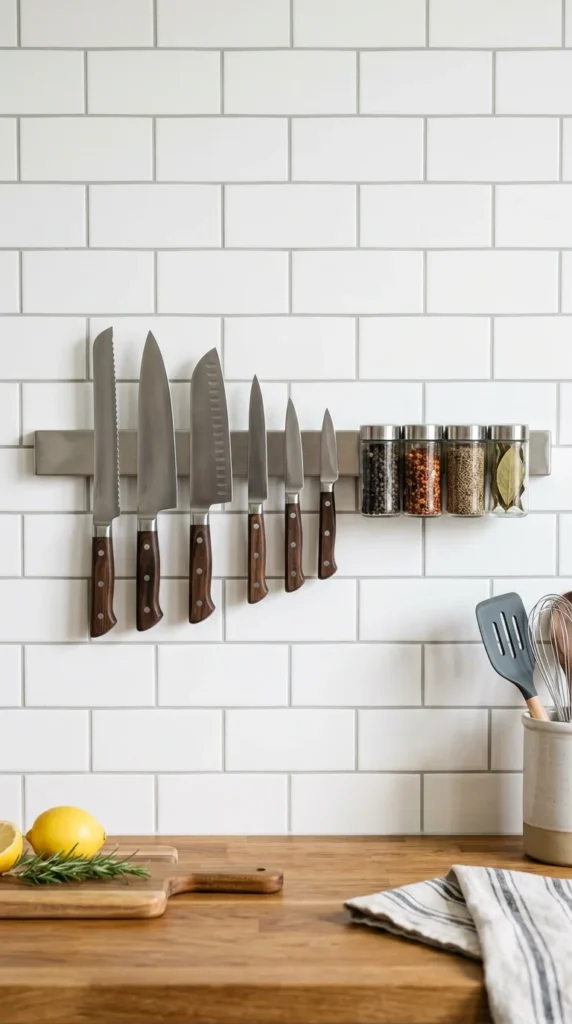
Counter space is the most valuable real estate in a small kitchen. A traditional knife block can take up a significant chunk of that space, and often becomes a magnet for dust and crumbs. Replacing the block with a heavy-duty magnetic strip mounted to the backsplash or the side of a cabinet is a game-changer.
Beyond just knives, these strips are incredibly versatile. You can use them to hold metal spice tins, whisks, or even small metal canisters for tasting spoons. By moving these frequently used items onto the wall, you clear the “work zone” on your countertops, making the kitchen feel larger and significantly easier to clean.
3. Rolling Carts
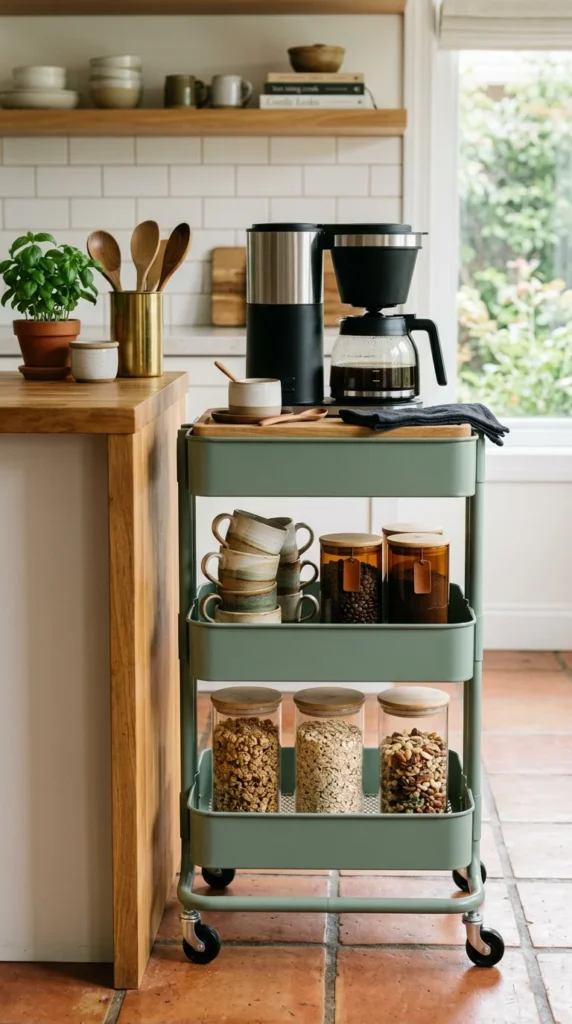
In a small apartment, the layout is often fixed, but your storage doesn’t have to be. A rolling utility cart acts as a mobile island that can be moved wherever it is needed most. If you need extra prep space while chopping vegetables, wheel it next to the stove. If you’re hosting a small dinner party, it can transition into a bar cart or a serving station in the living area.
These carts are particularly effective for creating “zones.” For example, you can create a dedicated coffee station on the top tier, with beans, filters, and mugs stored below. When not in use, many of these carts are slim enough to be tucked into a corner or a closet, keeping the main floor area clear.
4. Floating Shelves
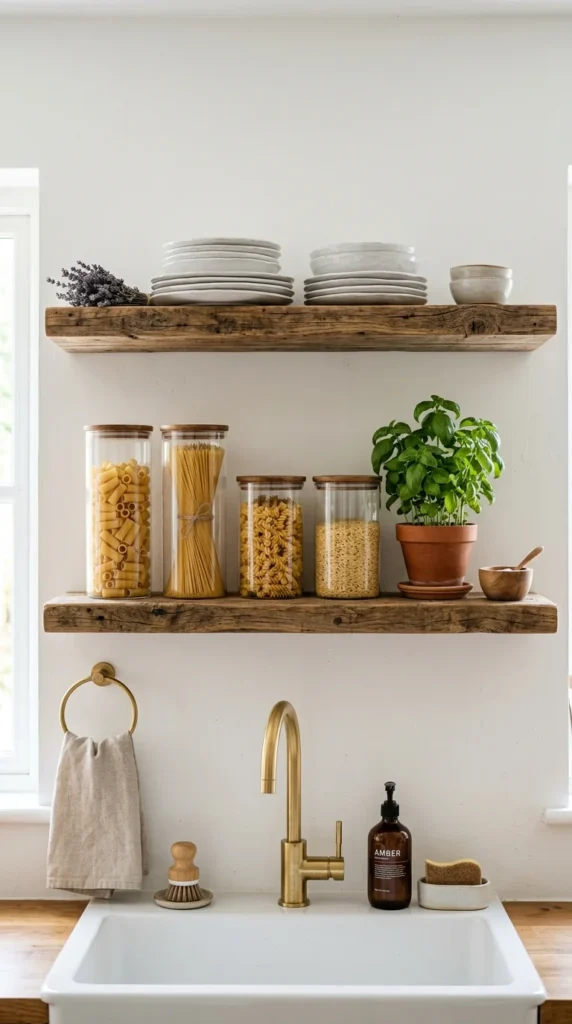
Upper cabinets can sometimes make a small kitchen feel boxed-in and dark. Replacing one or two of those heavy cabinets with open floating shelves creates a sense of “airiness” and visual depth. This design choice forces you to be intentional about what you display, which naturally leads to a more organized and aesthetically pleasing space.
Floating shelves are perfect for items you use daily—like your favorite mugs, plates, or cereal bowls—because it eliminates the need to open and close cabinet doors repeatedly. To keep the look clean, stick to a limited color palette for the items on display. This turns your everyday essentials into functional decor.
5. Sink Overlays
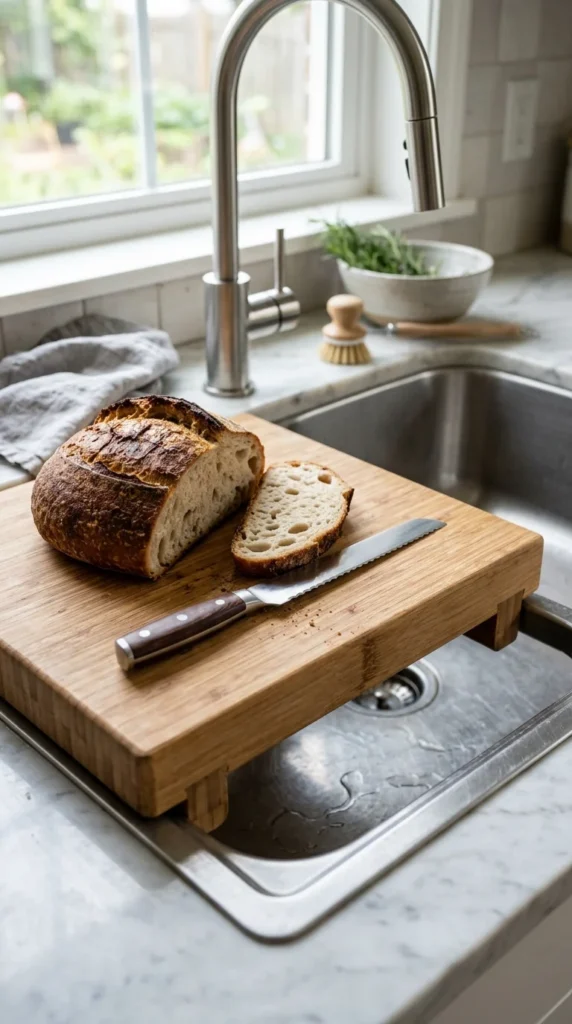
When you have only a few inches of counter space between the stove and the sink, meal prep becomes a logistical nightmare. A sink overlay—essentially a large cutting board or drying rack designed to sit over the basin—instantly expands your usable workspace.
This “hidden” counter space allows you to chop vegetables or dry dishes directly over the sink, keeping the actual countertops clear for other tasks. Some models even come with integrated colanders, allowing you to wash and prep produce in one continuous motion. It’s a simple, low-cost investment that effectively doubles your prep area in seconds.
6. Fridge Side
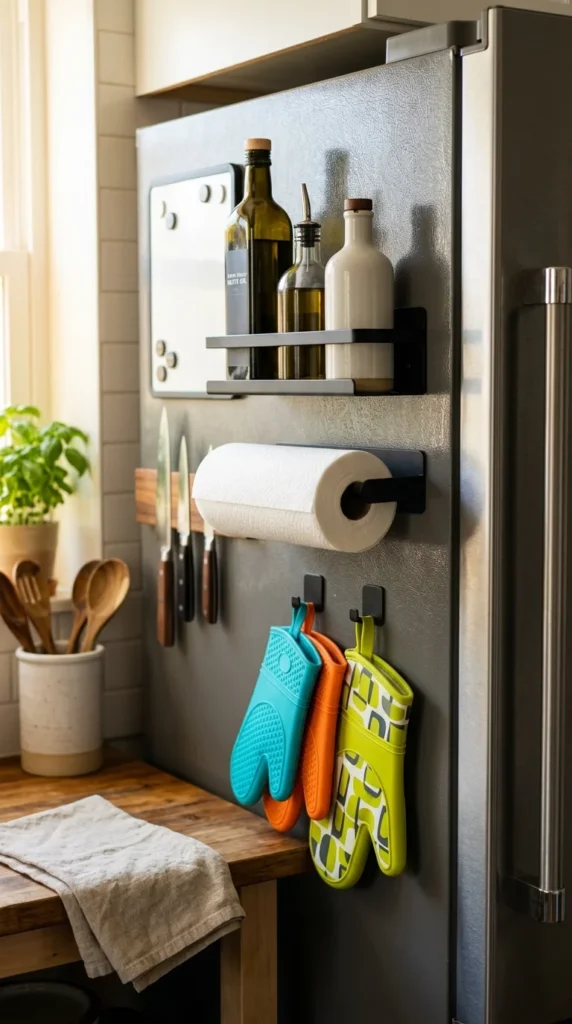
The side of the refrigerator is often treated as a place for magnets and photos, but it is actually one of the most underutilized storage areas in the kitchen. Because most refrigerators are made of metal, they are the perfect surface for heavy-duty magnetic organizers.
You can find magnetic racks that are strong enough to hold heavy glass jars, oils, and vinegars. By utilizing this vertical plane, you take pressure off your pantry and spice cabinets. It’s an ideal spot for items that you need quick access to while cooking at the stove, such as salt, pepper, and cooking sprays.
7. Shelf Risers
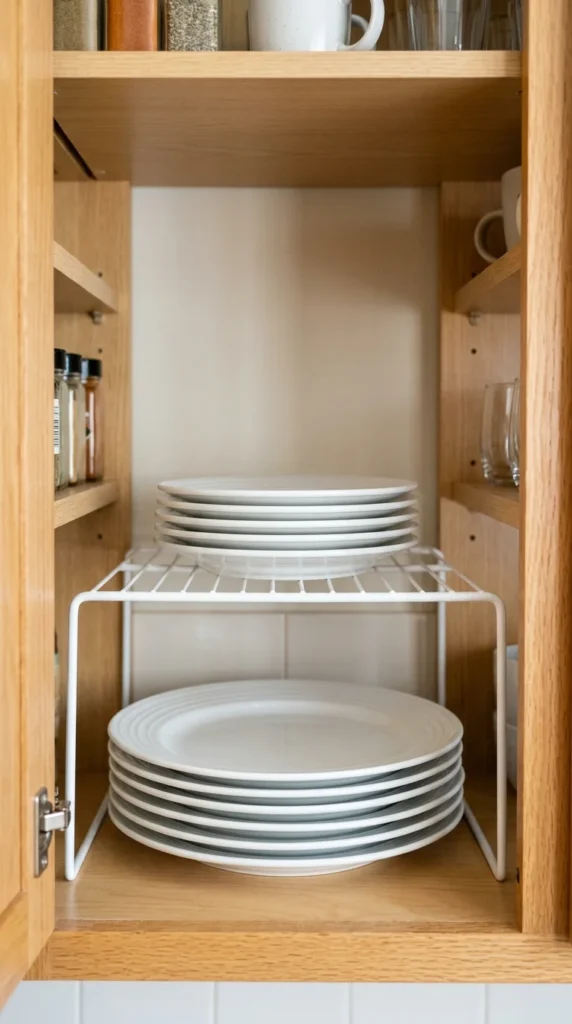
The problem with standard kitchen cabinets is that they are often too tall, leading to a lot of “dead air” above your stacks of plates or bowls. Shelf risers are a simple internal organizational tool that allows you to stack items without creating a precarious leaning tower of porcelain.
By adding a “second story” to your cabinet shelves, you can separate items by size or type. This prevents the frustration of having to lift a heavy stack of dinner plates just to reach the bowls at the bottom. It effectively doubles the capacity of your existing cabinetry without requiring any permanent renovations.
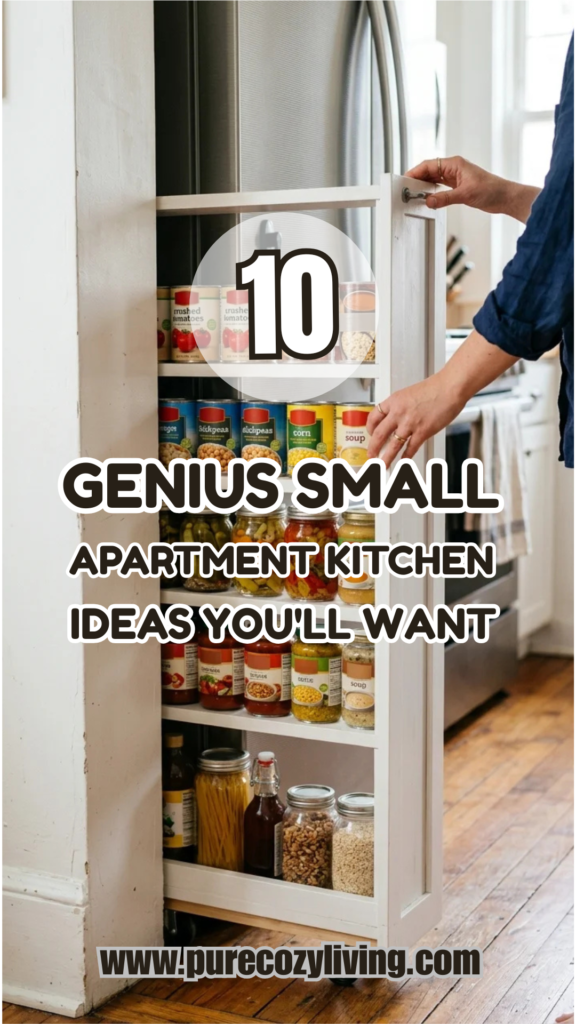
8. Slim Pantries
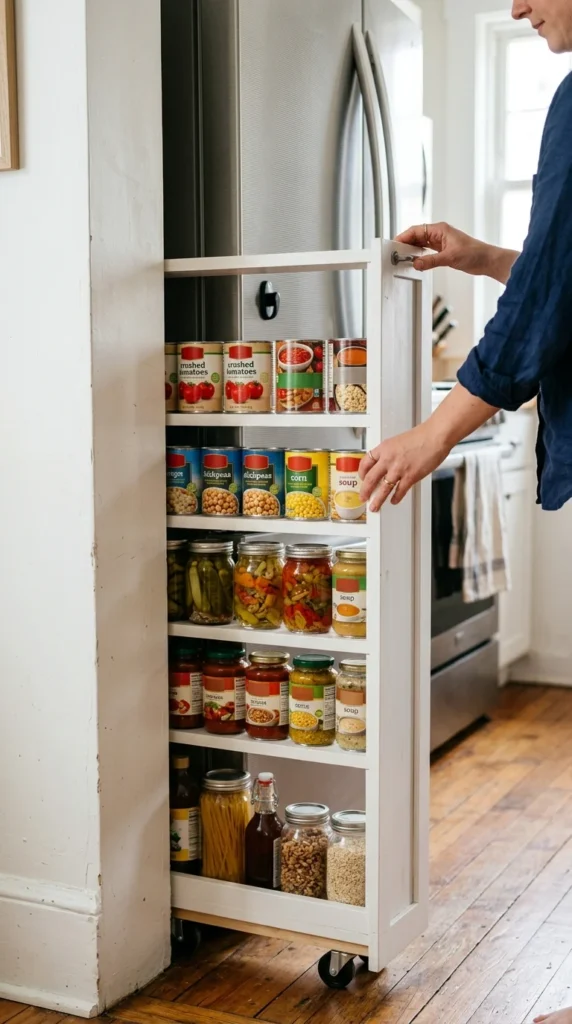
Most kitchens have small gaps—between the fridge and the wall, or between the stove and the lower cabinets—that are too narrow for standard furniture. These “nooks and crannies” are the perfect home for a slim, pull-out pantry.
These narrow shelving units are typically only 4 to 6 inches wide but are deep enough to hold a surprising amount of canned goods, spices, and jars. Because they are on wheels, they can be hidden completely out of sight when not in use. It is the ultimate “secret” storage solution for a high-density kitchen.
9. Toe-Kick Drawers
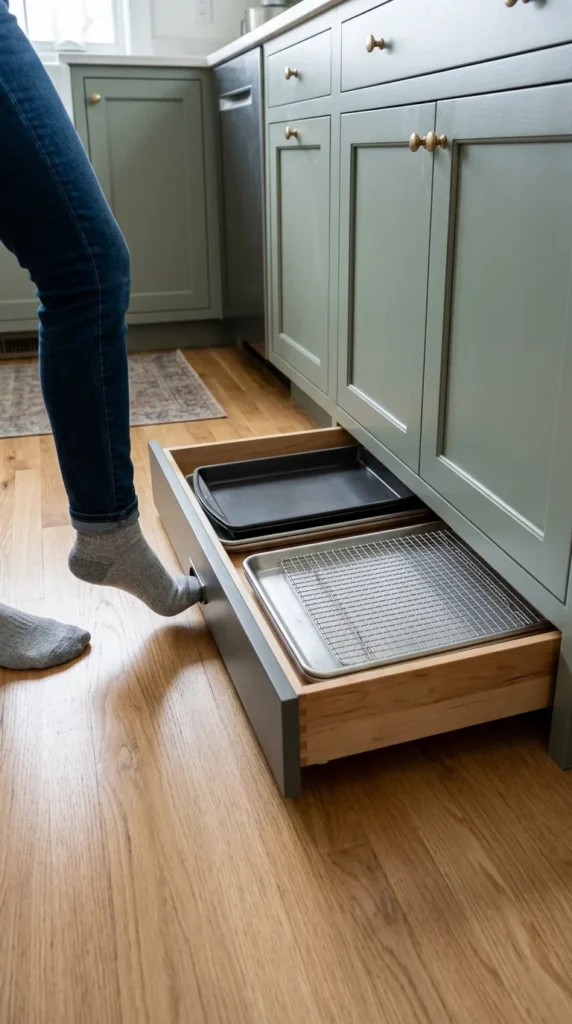
The “toe-kick” is the recessed area between the bottom of your cabinets and the floor. In most kitchens, this is simply empty, wasted space. Installing toe-kick drawers is a genius way to find storage in a place no one ever thinks to look.
These drawers are very shallow, making them perfect for flat items that are difficult to store elsewhere, such as baking sheets, muffin tins, pizza stones, or even a folded step stool. Because they are located at floor level, they are often designed with “touch-to-open” mechanisms, allowing you to pop them open with your foot when your hands are full.
10. Fold-Down Surfaces
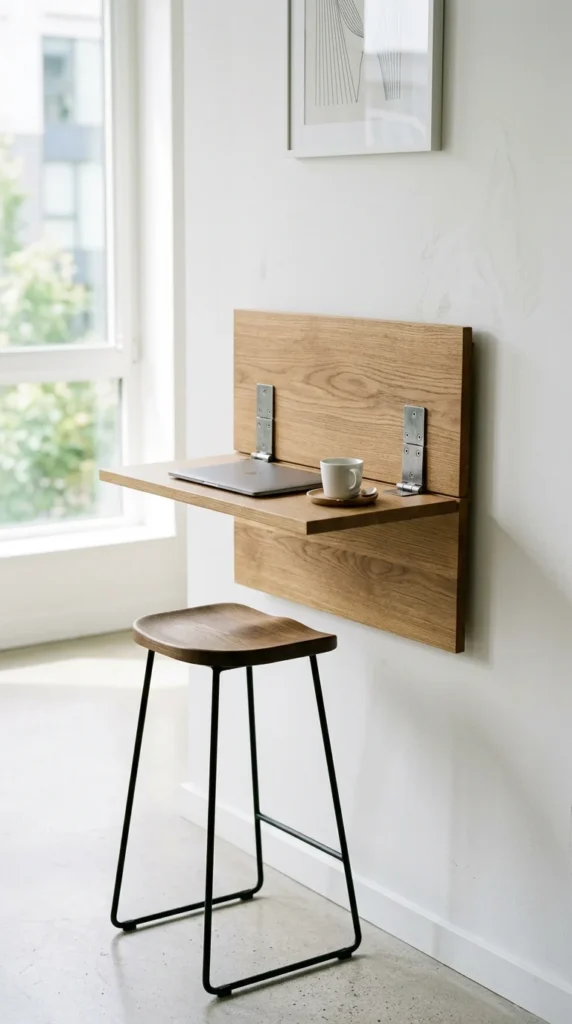
If your apartment is too small for a traditional dining table, a wall-mounted fold-down table (sometimes called a Murphy table) provides a solution that doesn’t eat up floor space. When you’re cooking, the table stays folded flat against the wall, providing maximum clearance for movement.
When it’s time to eat or if you need an extra surface for a complicated recipe, you simply flip it up. This versatile piece can serve as a breakfast nook, a prep station, or even a home office. Pair it with folding stools that can be hung on the wall, and you have a full dining setup that disappears the moment the meal is over.