
The neutral bedroom aesthetic has transcended being a mere trend to become a timeless standard in interior design. At its core, a neutral bedroom is about more than just “beige”; it is about creating a sanctuary that promotes rest, clarity, and sophistication. By stripping away jarring colors, you allow the architecture, textures, and subtle nuances of light to take center stage. Whether you are a fan of sleek minimalism or cozy bohemian vibes, neutral tones provide the perfect canvas to express your style while maintaining a peaceful atmosphere.
Here are 10 dreamy neutral bedroom aesthetic ideas to help you transform your sleeping space into a high-end retreat.
1. Layered Textures
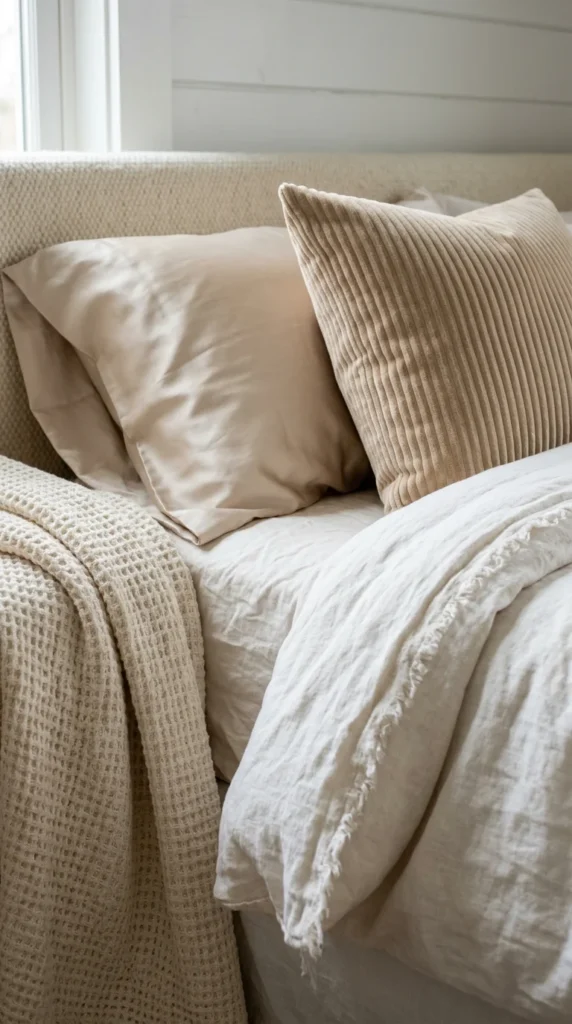
The secret to preventing a neutral room from looking flat or “boring” is the strategic layering of textures. When you remove color as a point of interest, touch becomes the primary sensory experience. This approach involves mixing and matching different fabric weights and finishes to create visual depth and a sense of “tactile richness.”
- How to achieve it: Start with a base of crisp cotton or breathable linen sheets. Layer a heavy, textured duvet on top, and finish with a chunky wool or cashmere throw at the foot of the bed.
- The Mix: Incorporate different materials such as a bouclé accent chair, a jute rug under the bed, and velvet throw pillows. The contrast between the roughness of natural fibers and the softness of luxury fabrics creates a sophisticated, “lived-in” feel.
- Visual Interest: Use a mix of “hard” and “soft” neutrals. For instance, pair a smooth marble nightstand with a soft, pleated fabric lampshade.
2. Warm Minimalism
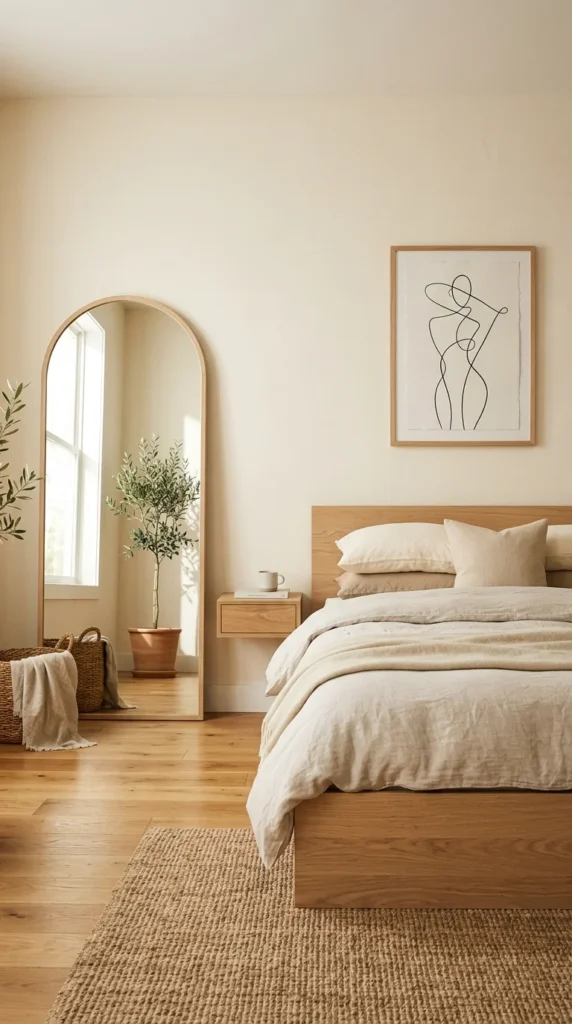
Warm minimalism is a departure from the cold, clinical feel often associated with minimalist design. Instead of stark whites and sharp metal, this aesthetic focuses on “warm” neutrals—like biscuit, tan, and taupe—combined with natural materials. It’s about having fewer things, but making sure those things are beautiful and functional.
- The Palette: Focus on “greige” (a mix of gray and beige) and warm wood tones like oak or ash.
- Clutter-Free Surfaces: Keep nightstands nearly empty, save for one or two high-quality items, such as a sculptural ceramic vase or a favorite book.
- Statement Furniture: Choose furniture with clean, organic shapes. A curved headboard or a rounded wooden bench can soften the straight lines of the room without adding unnecessary clutter.
3. Earthy Tones
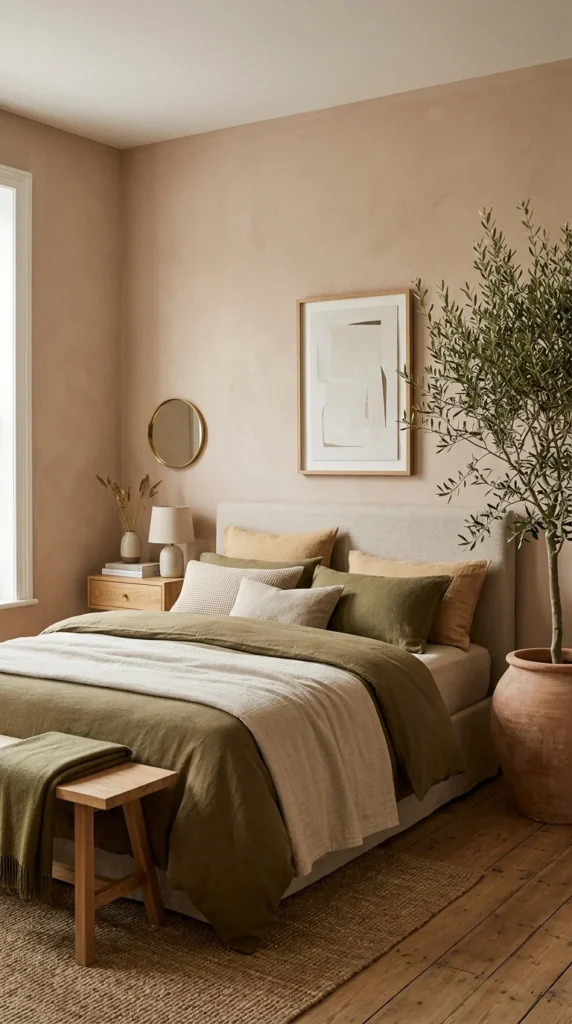
Neutral doesn’t have to mean white. Earthy neutrals pull inspiration from the natural world, incorporating colors like sage green, muted terracotta, clay, and sandy brown. This aesthetic feels grounded and organic, bringing the calming essence of the outdoors inside.
- Natural Materials: Use unrefined materials like terracotta pots, stone coasters, and unfinished wooden frames.
- The Greenery Factor: Plants are the perfect accompaniment to an earthy neutral room. A large fiddle leaf fig or a simple olive tree adds a “living” element that complements the muted tones perfectly.
- Wall Treatments: Consider using lime wash or clay-based paints. These provide a matte, chalky texture to the walls that changes beautifully with the shifting light of the day.
4. Parisian Chic
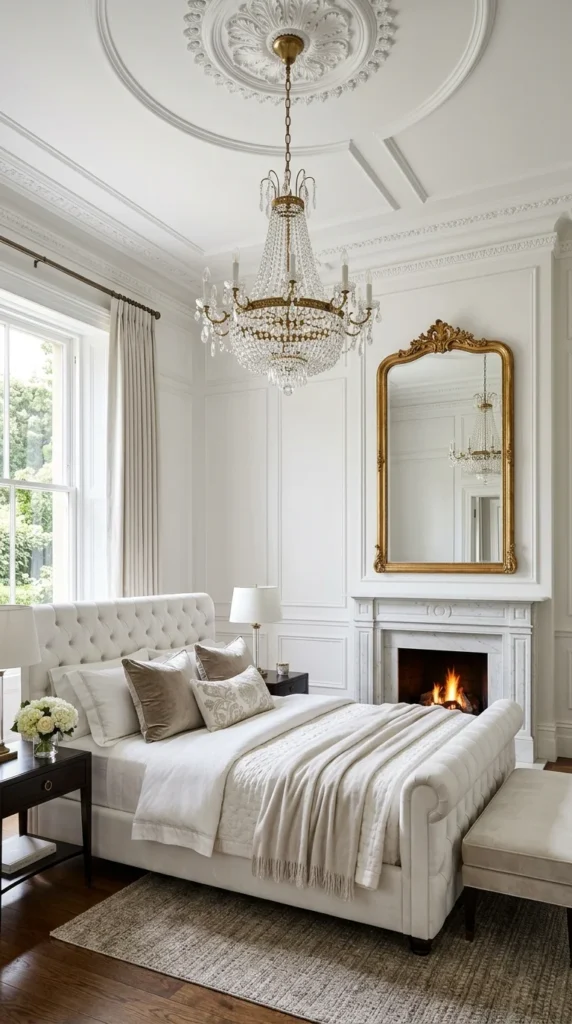
The Parisian neutral aesthetic is all about effortless elegance and architectural character. It combines historical details—like crown molding and herringbone floors—with a restrained, mostly-white color palette. The result is a room that feels both grand and incredibly airy.
- Architectural Interest: If your room doesn’t have molding, you can add “picture frame” molding to the walls for a DIY touch of French sophistication.
- Antique Accents: Mix modern furniture with one or two antique-inspired pieces. A vintage gold mirror or a weathered wooden dresser provides a beautiful contrast to clean white bedding.
- Lighting: Swap a standard ceiling light for a vintage-style chandelier or a modern oversized pendant to create a focal point that screams luxury.
5. Modern Farmhouse
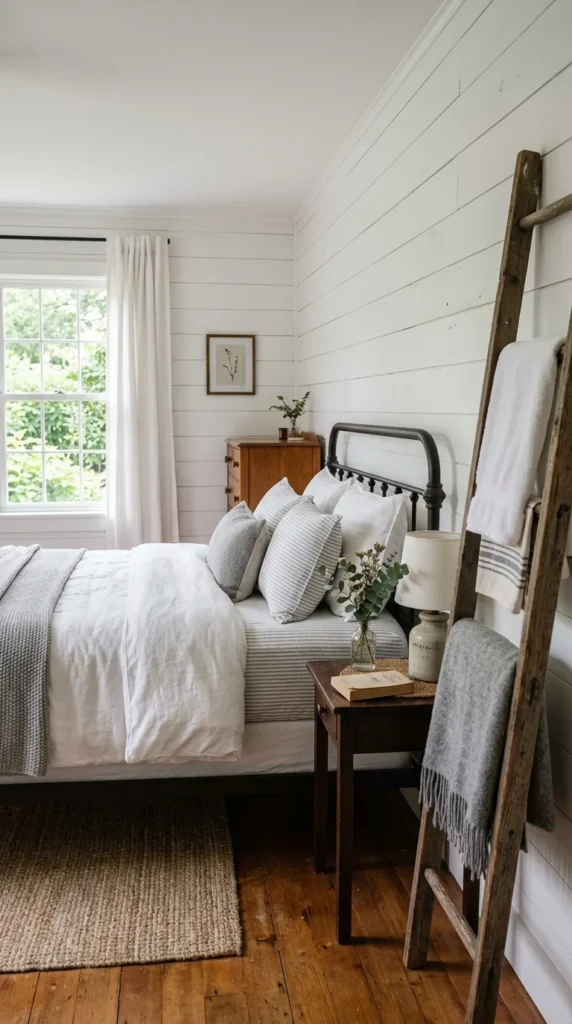
The modern farmhouse aesthetic has evolved into a more refined, neutral-heavy style. It balances the ruggedness of country living with the sleekness of modern design. The key here is the contrast between bright whites and dark, rustic accents like wrought iron or reclaimed wood.
- High Contrast: Use a primary palette of white and cream, but accent it with matte black hardware, such as curtain rods, picture frames, or light fixtures.
- Reclaimed Elements: Introduce a piece of reclaimed wood, whether it’s a floating shelf or a chunky wooden headboard. The imperfections in the wood add character to the neutral space.
- Classic Patterns: Subtle patterns like ticking stripes or light buffalo check in neutral colors can add a farmhouse feel without being overwhelming.
6. Coastal Serenity
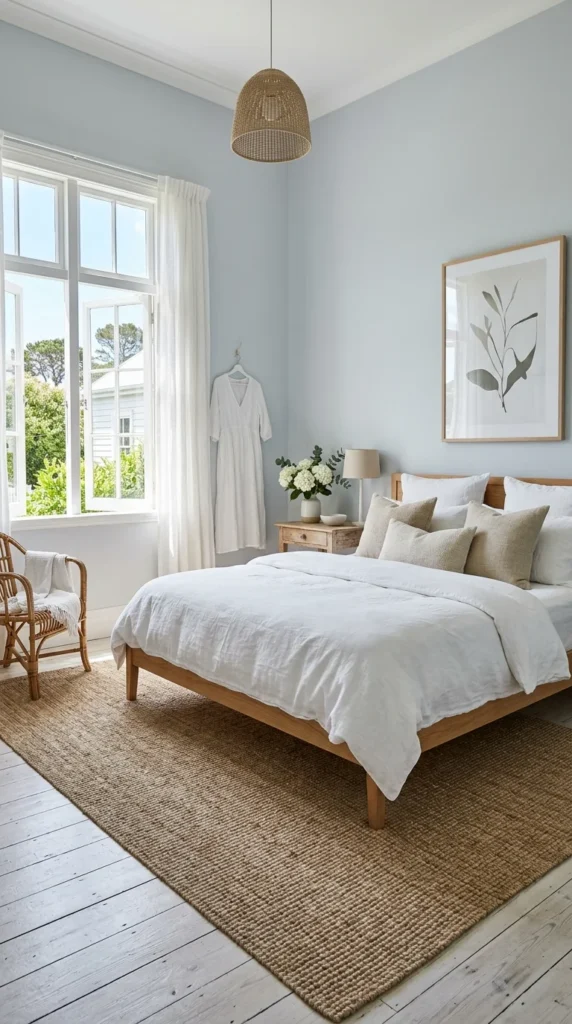
Inspired by the beach but without the “nautical” clichés, neutral coastal design focuses on light, air, and natural sea-side textures. Think of the colors of driftwood, sea salt, and pale sand. This aesthetic is perfect for creating a bedroom that feels like a permanent vacation.
- Sheer Fabrics: Use sheer, breezy curtains that catch the wind and let in maximum natural light.
- Natural Weaves: Incorporate seagrass, rattan, or jute through rugs, baskets, or even headboards. These materials add a “beachy” texture while staying within the neutral family.
- Soft Blues and Grays: While the base should be white or sand, very pale “misty” blues or soft sea-foam grays can act as neutrals in this aesthetic.
7. Monochromatic Luxury
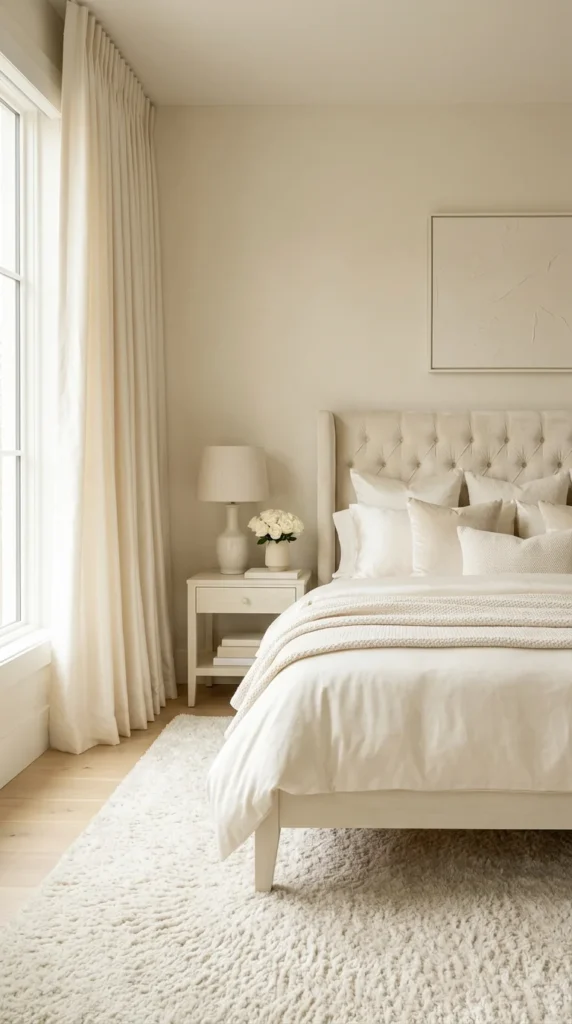
A monochromatic neutral room uses varying shades and tints of a single color to create a seamless, high-end look. This is perhaps the most difficult aesthetic to master but the most rewarding. It requires a keen eye for “undertones”—ensuring that all your creams are either “warm” or “cool” so they don’t clash.
- Undertones Matter: Before buying furniture, check if your white paint has a yellow (warm) or blue (cool) base. Stick to one temperature for the entire room to ensure a cohesive look.
- Focus on Shapes: When the color is the same, the shape of your furniture becomes more prominent. Look for interesting silhouettes, like a scalloped headboard or a fluted nightstand.
- Metallic Accents: Break up the monochrome slightly with metallics. Champagne gold or brushed brass works beautifully with warm whites, while silver or chrome complements cool grays.
8. Boho Neutral
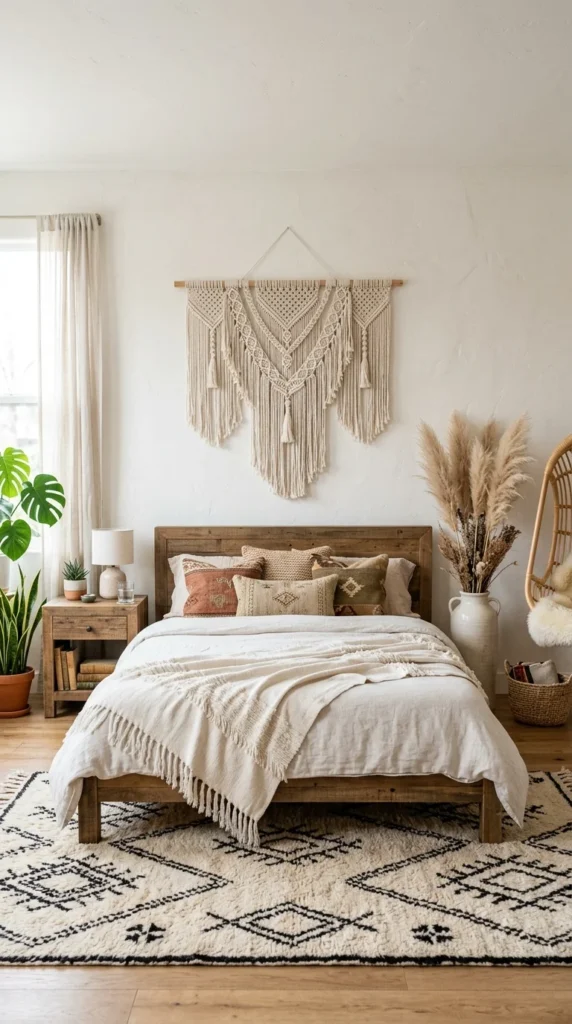
The neutral bohemian (boho) aesthetic is for those who love the “collected” look but want to avoid the “rainbow” of traditional boho styles. It relies heavily on natural fibers, artisanal crafts, and a relaxed, slightly messy vibe that feels incredibly inviting.
- Botanicals: Instead of fresh flowers, use dried elements like pampas grass, palm leaves, or bunny tails. They provide a structural, neutral beauty that lasts forever.
- Woven Art: Use the walls to display texture. A large macramé hanging or a collection of woven seagrass baskets can act as a neutral alternative to traditional paintings.
- Low Seating: Incorporate floor poufs or a low-slung wooden bench to create a relaxed, casual atmosphere.
9. Japandi Fusion
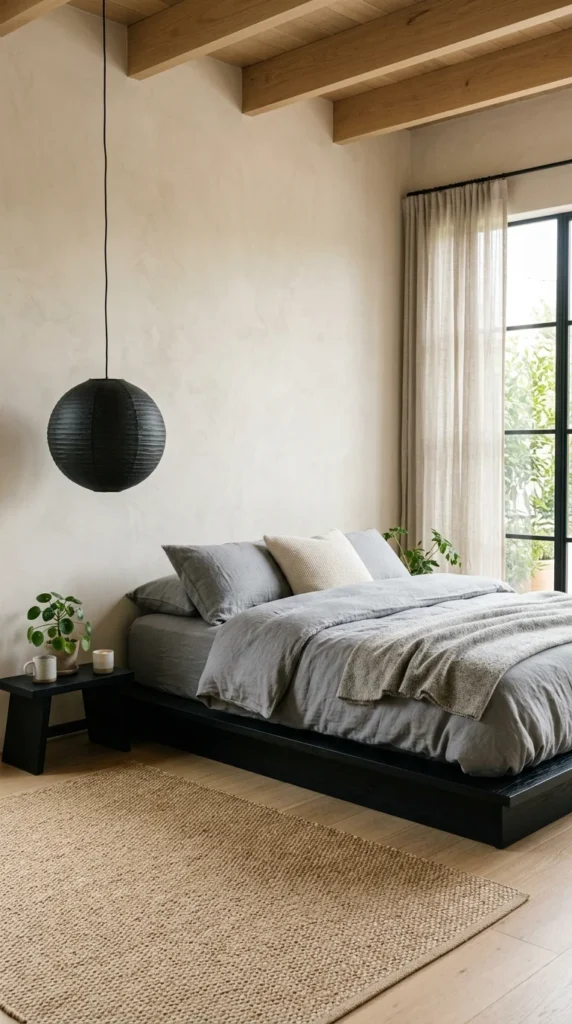
Japandi is the perfect marriage of Japanese functionalism and Scandinavian “hygge” (comfort). It is a highly curated aesthetic that values simplicity and high-quality craftsmanship. The neutral palette is usually quite muted, favoring pale woods and soft charcoals.
- Functional Minimalism: Every item in a Japandi bedroom should have a purpose. Avoid “filler” decor.
- Contrast of Light and Dark: While the room should be primarily neutral, Japandi often uses black as an accent color to provide a “grounding” effect. This could be black metal chair legs or a black paper lantern light.
- Low to the Ground: Japanese design often favors lower furniture. A low-profile platform bed can make a room feel taller and more spacious.
10. Moody Neutrals
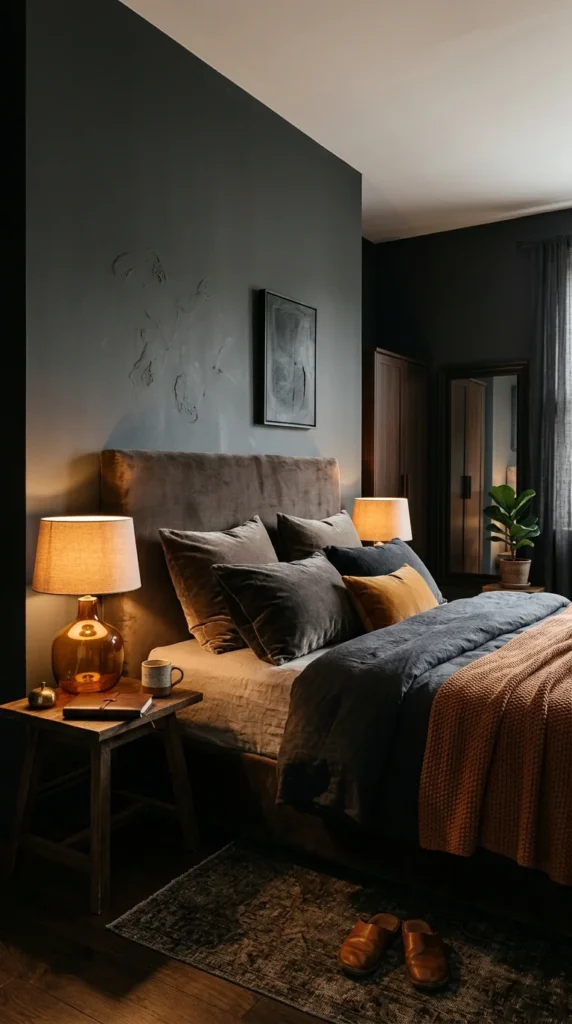
Neutral doesn’t always have to be “bright.” Moody neutrals involve using the darker end of the neutral spectrum—charcoal, deep taupe, mushroom, and chocolate brown. This creates a “cocoon” effect that is exceptionally conducive to deep sleep and relaxation.
- Lighting is Key: In a darker room, lighting becomes the most important design element. Use multiple light sources (lamps, sconces, candles) to create a warm, layered glow rather than one harsh overhead light.
- Luxe Fabrics: Darker neutrals look stunning in high-sheen or high-texture fabrics like velvet, silk, or heavy brocade. These materials reflect light even in a dark room, preventing the space from feeling “muddy.”
- Metallic Highlights: Use warm metals like copper or bronze to “pop” against the dark walls and bedding, adding a touch of elegance.