
The hallway is often the most neglected part of a home. Regarded merely as a transitional space, it frequently becomes a dumping ground for shoes, mail, and coats. However, interior designers view the hallway as the “spine” of the house—it sets the tone for every room it connects. Transforming this narrow, often dark corridor into a stylish and functional passage doesn’t require a massive renovation. With a few strategic design choices, you can turn a cramped entryway into a grand introduction to your living space.
From psychological color tricks to vertical storage solutions, these ten clever hacks will help you maximize every square inch of your hallway.
1. Oversized Mirrors
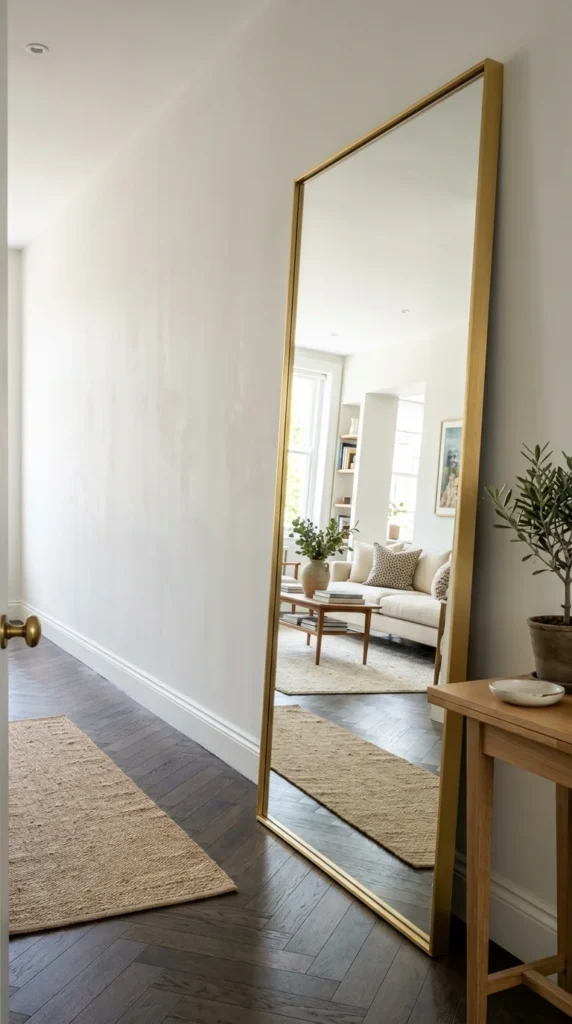
The oldest trick in the interior design book remains the most effective: mirrors. In a narrow hallway, light is your best friend, and mirrors are the primary tool for manipulating it. By placing a large-scale mirror on one of the side walls, you effectively “break” the wall, creating the illusion of a window or an opening into another room.
To maximize this effect, position the mirror opposite a doorway or a window. This allows the mirror to catch natural light and bounce it into the darker corners of the corridor. If you have a particularly long, narrow hall, consider a series of smaller, identical mirrors lined up horizontally. This creates a rhythmic, architectural feel that distracts the eye from the tight dimensions of the space.
2. Statement Runners
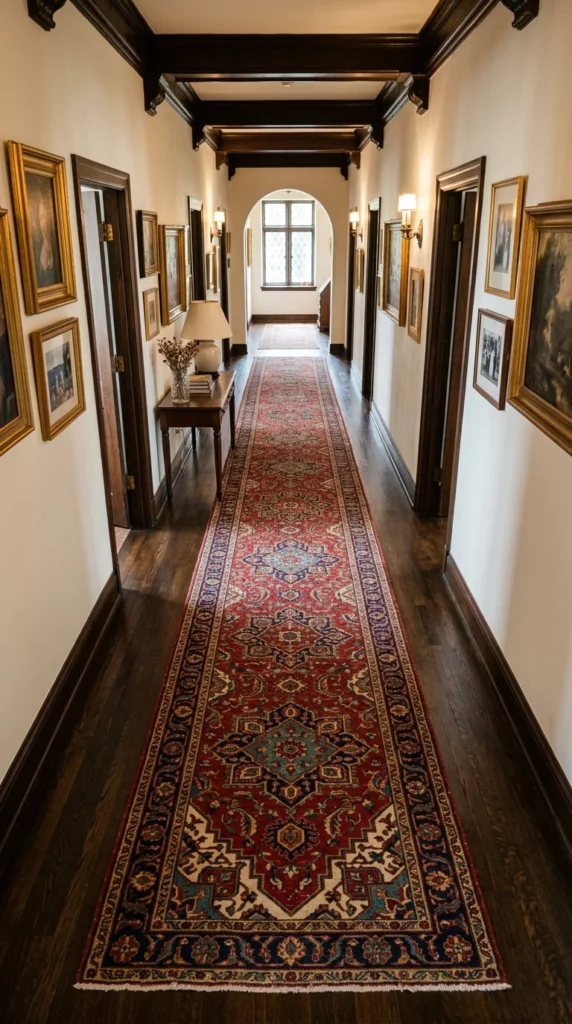
Flooring is often the most overlooked surface in a hallway, yet it has the most significant impact on the “feel” of the walk. A runner rug does more than just protect your floors; it provides a visual “pathway” that draws the eye toward the end of the hall, making the journey feel intentional rather than cramped.
When choosing a runner, consider texture and durability. Low-pile rugs are ideal for high-traffic areas as they are easier to clean and won’t trip up guests. For a modern look, choose a geometric pattern with high contrast. For a cozy, farmhouse aesthetic, a natural jute or sisal runner adds warmth and organic texture. Remember to use a non-slip pad underneath to keep the rug perfectly centered.
3. Floating Shelves
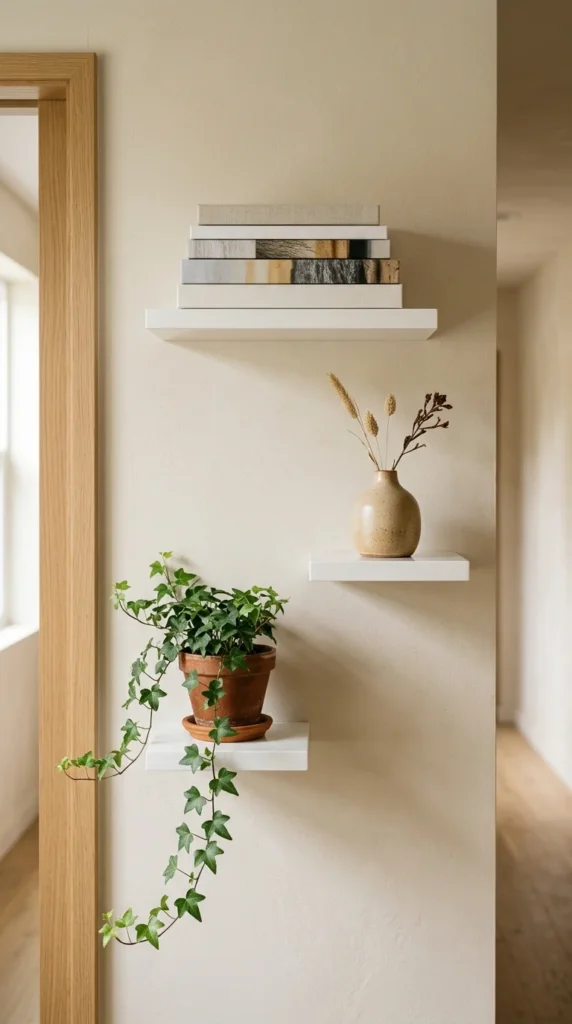
In a narrow hallway, every inch of floor space is precious. Traditional console tables can often be too wide, obstructing the flow of traffic. The solution? Floating shelves. By mounting a slim ledge at waist height, you gain a surface for keys, mail, and decorative items without the bulky legs of a table.
Floating shelves also allow you to utilize the “vertical real estate” of your walls. You can install a high shelf just below the ceiling to store books or decorative baskets, keeping the floor clear and the eye moving upward. This creates a sense of height and prevents the hallway from feeling “boxed in.”
4. Layered Lighting
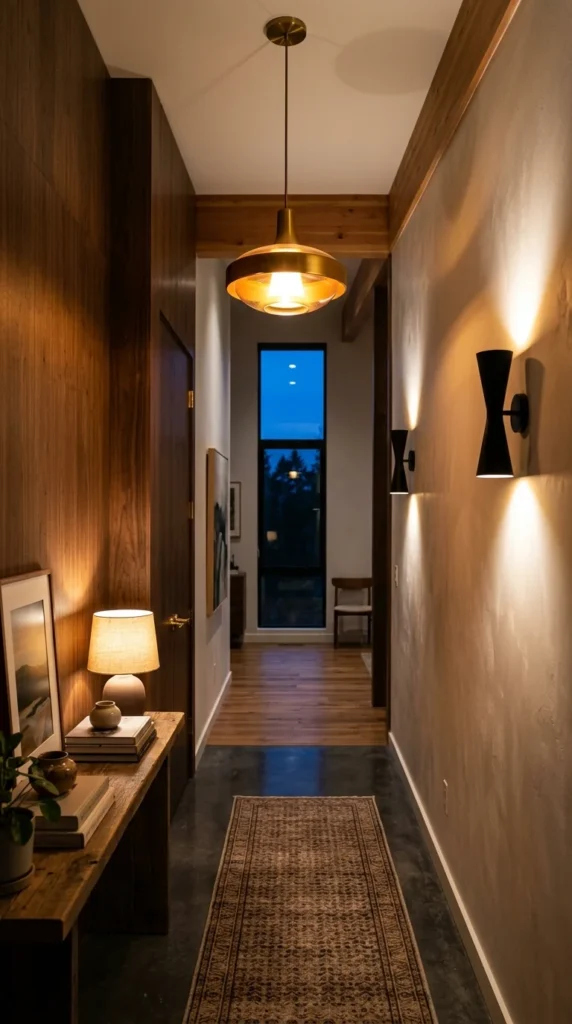
Most hallways suffer from “boob light” syndrome—a single, flush-mount ceiling fixture that casts harsh, unflattering shadows. To make a hallway feel like a curated gallery, you must layer your lighting. This means combining ambient, task, and accent lighting.
Wall sconces are particularly effective in hallways because they provide a soft, lateral glow that washes the walls in light, making them feel further apart. If you cannot hardwire new fixtures, consider battery-operated LED picture lights or plug-in sconces with cord covers. Adding a small lamp on a console or shelf provides a “destination” of warmth that makes the transition between rooms feel more inviting.
5. Vertical Galleries
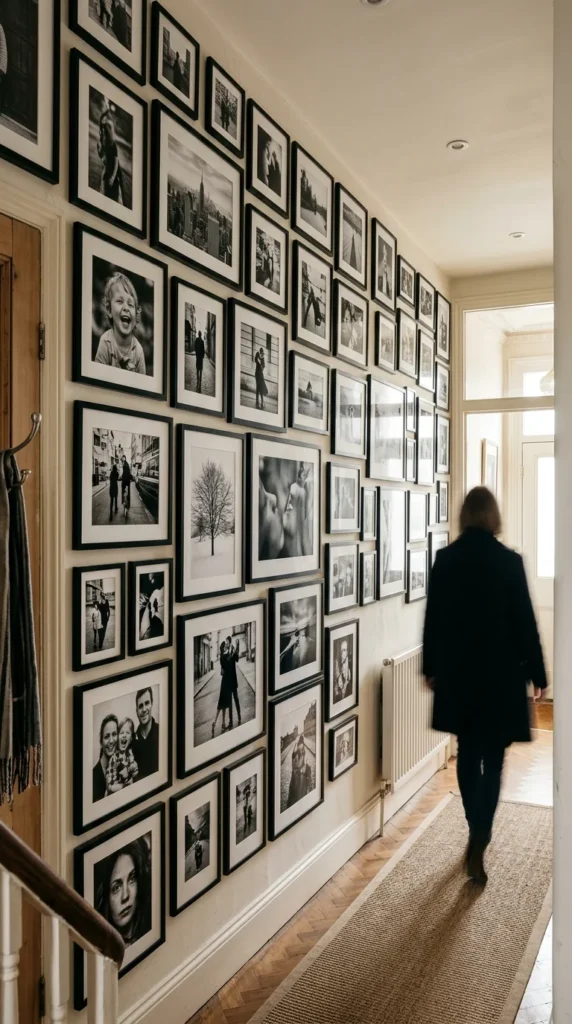
A long hallway wall is a blank canvas. Instead of one large piece of art, which can feel overwhelming in a tight space, opt for a vertical or linear gallery wall. This encourages people to slow down and engage with the space as they move through it.
To keep a gallery wall from looking cluttered, choose a unifying element. This could be a consistent frame color, a specific color palette in the artwork, or a uniform theme (like family travel photos). Arrange the frames in a straight horizontal line to emphasize the length of the hall, or staggered them for a more casual, lived-in vibe.
6. Concealed Storage
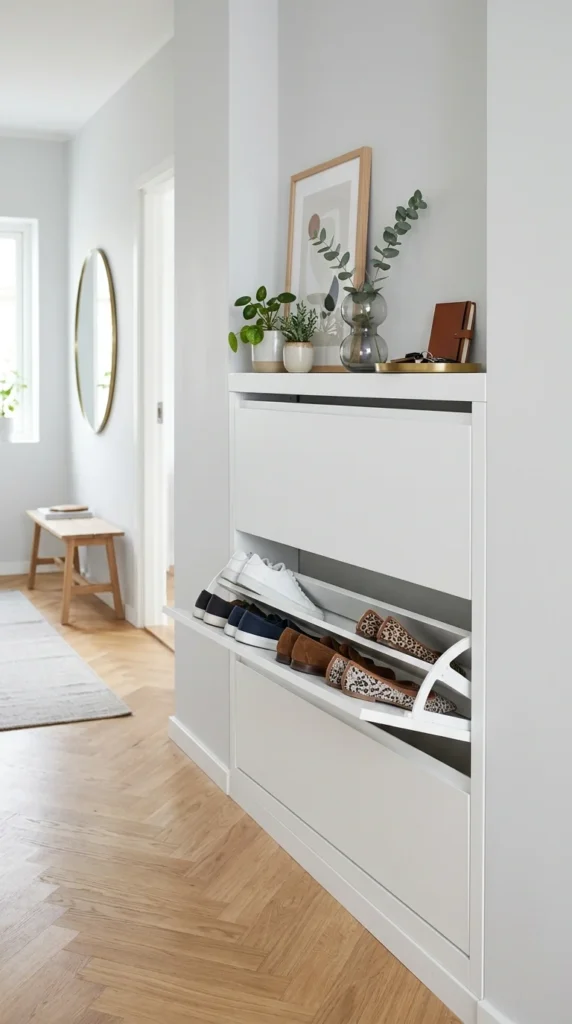
Clutter is the enemy of a beautiful hallway. The “cleverest” hack for any entryway is functional storage that doesn’t look like storage. Slim-profile shoe cabinets are a game-changer; they are often only 6 to 8 inches deep, meaning they can fit behind doors or in the narrowest of passages.
Baskets are another essential tool. Placing a row of uniform wicker or felt baskets underneath a floating shelf or a bench provides a designated spot for umbrellas, dog leashes, and winter accessories. By hiding the “stuff” of daily life, you allow the design elements of the hallway to shine.
7. High-Contrast Paint
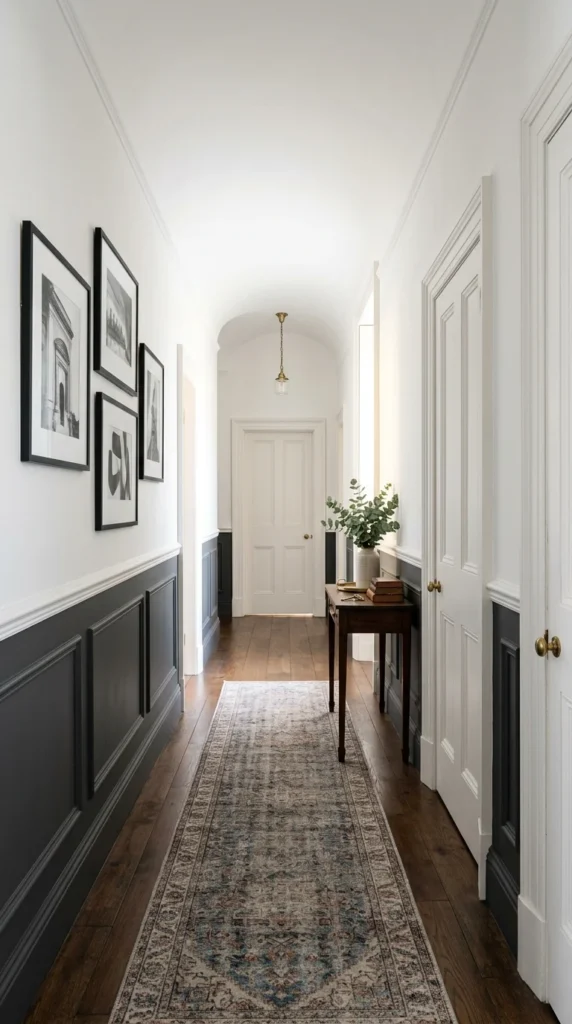
Color psychology plays a massive role in how we perceive space. Many people default to all-white hallways to make them feel “bigger,” but this can often result in a space that feels cold and clinical. High-contrast paint jobs can actually add depth and architectural interest.
One popular technique is the “half-wall” or wainscoting effect. Painting the lower third of the wall a darker color (like navy, forest green, or slate) and the upper portion a light neutral creates a grounding effect. Alternatively, painting the “end wall” of a hallway a bold, dark color can create a focal point that makes the hallway feel shorter and more proportional.
8. Indoor Greenery
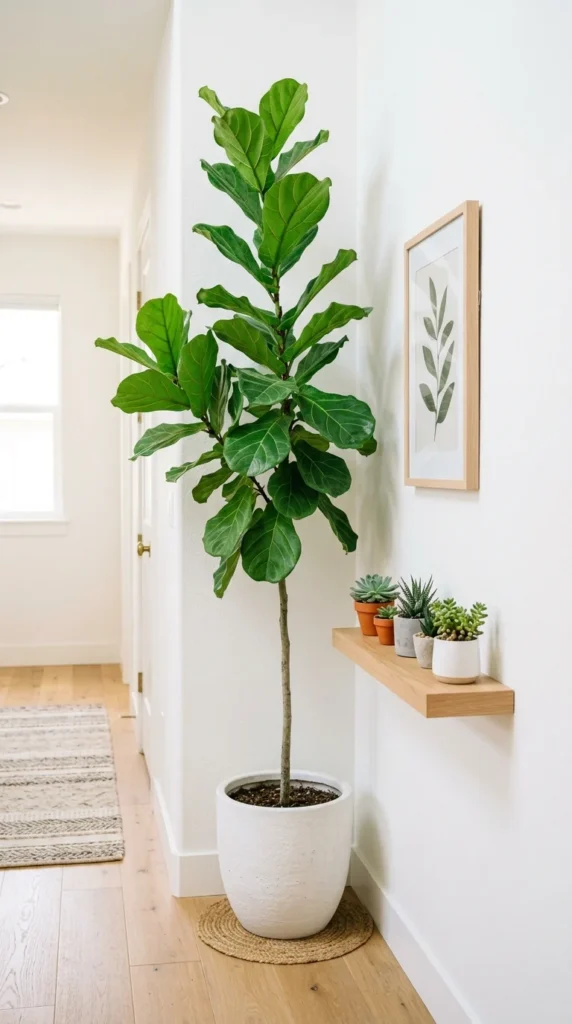
Nature has a way of breathing life into stagnant spaces. Because hallways often lack windows, many homeowners assume they can’t have plants there. However, several species thrive in low-light, transitional environments.
Snake plants (Sansevieria) and ZZ plants are nearly indestructible and have a vertical growth habit that fits perfectly in tight corners. For a more dramatic look, use a hanging planter to suspend a Pothos or Heartleaf Philodendron from the ceiling. The trailing vines soften the hard lines of the hallway and add a much-needed pop of organic color.
9. Multi-purpose Benches
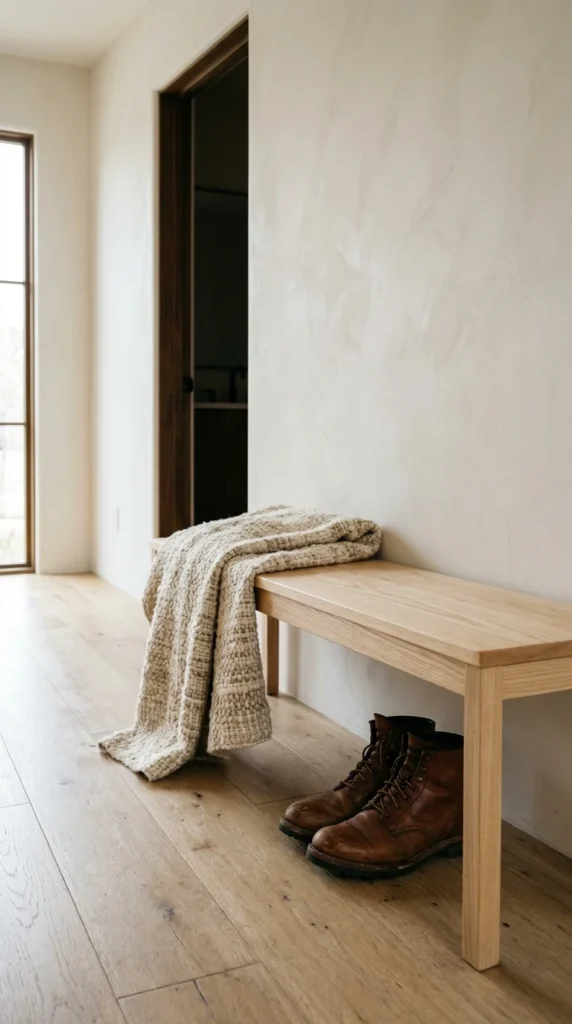
If your hallway is wide enough, a bench is the ultimate functional addition. It provides a place to sit while putting on shoes, a surface to set down grocery bags, and an opportunity for styling.
For very narrow halls, look for “backless” benches or slat benches that have a “see-through” quality. This prevents the furniture from feeling like a visual blockade. A bench also offers an opportunity to introduce textiles; a few throw pillows or a folded sheepskin rug can instantly make a cold hallway feel like a cozy part of the home.
10. Scent Layering
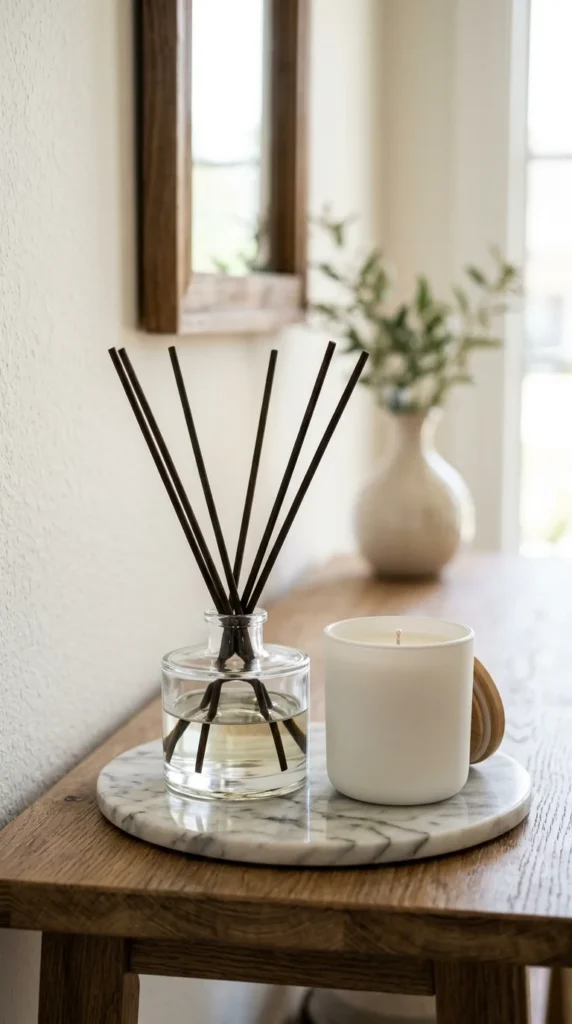
Decor isn’t just about what you see; it’s about what you experience. As the entry point to your home, the hallway should smell welcoming. Because air circulates through hallways to reach other rooms, the scent you place here will often carry throughout the house.
Reed diffusers are ideal for hallways because they provide a constant, subtle fragrance without the need for a flame. Choose “clean” scents like linen, citrus, or white tea for a refreshing morning vibe, or deeper scents like sandalwood and amber for an evening glow. This final sensory layer ties the entire decor together, making the hallway feel like a truly curated part of your living environment.