
Narrow hallways are often the most overlooked areas of a home. Viewed primarily as functional thoroughfares rather than living spaces, they frequently suffer from a lack of light, cramped quarters, and a general lack of personality. However, the entryway is the first thing guests see when they enter your home, and it sets the tone for the rest of your interior design.
Transforming a constricted corridor requires a strategic blend of light, color, furniture selection, and architectural tricks. By focusing on vertical space, reflective surfaces, and “smart” storage, you can turn a dark tunnel into a stylish, welcoming transition zone. Here are 20 expert-approved ideas to maximize every square inch of your narrow hallway.
1. Large Mirrors
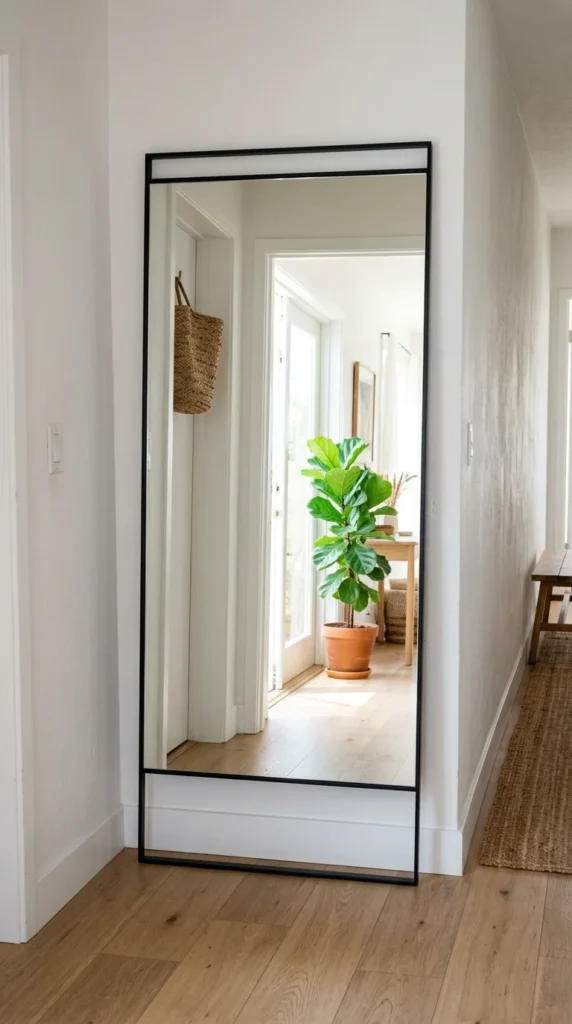
One of the oldest tricks in the interior design handbook is the use of mirrors. In a narrow hallway, a large mirror acts as a secondary window, reflecting light and creating the illusion of a much wider space. If you have a wall at the end of the hallway, a mirror placed there can make the corridor feel like it extends indefinitely. Alternatively, a series of smaller mirrors along the side walls can break up a long, monotonous expanse while bouncing light into darker corners.
2. Runner Rugs
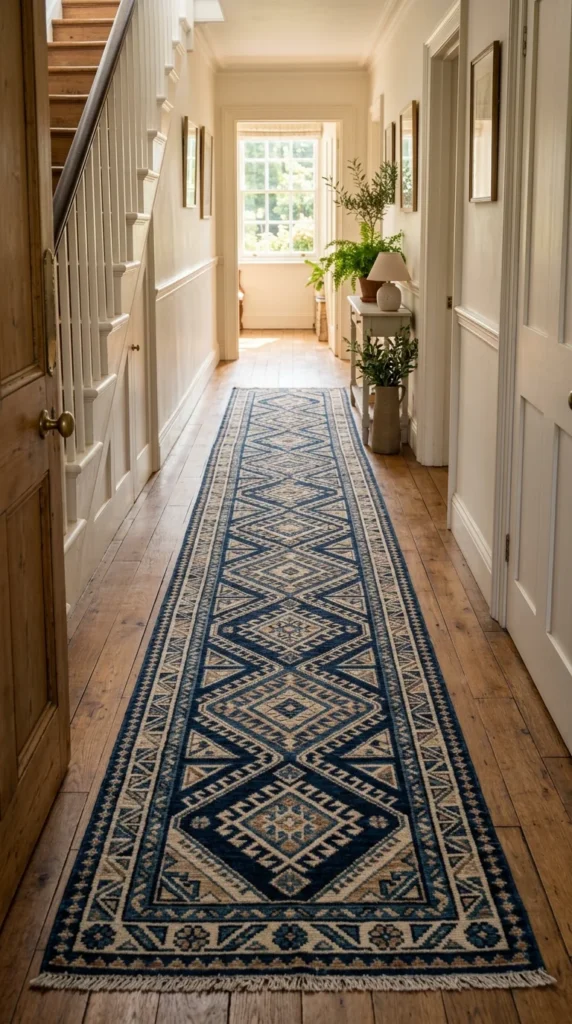
A long runner rug serves two main purposes: it protects your high-traffic flooring and provides a visual “path” that guides the eye through the house. For narrow spaces, look for rugs with horizontal stripes to help “push” the walls out visually, or choose a bold pattern to add character to an otherwise plain area. Ensure the rug is slightly narrower than the hallway itself to leave a border of flooring on either side, which prevents the space from feeling “carpeted in” and cramped.
3. Floating Shelves
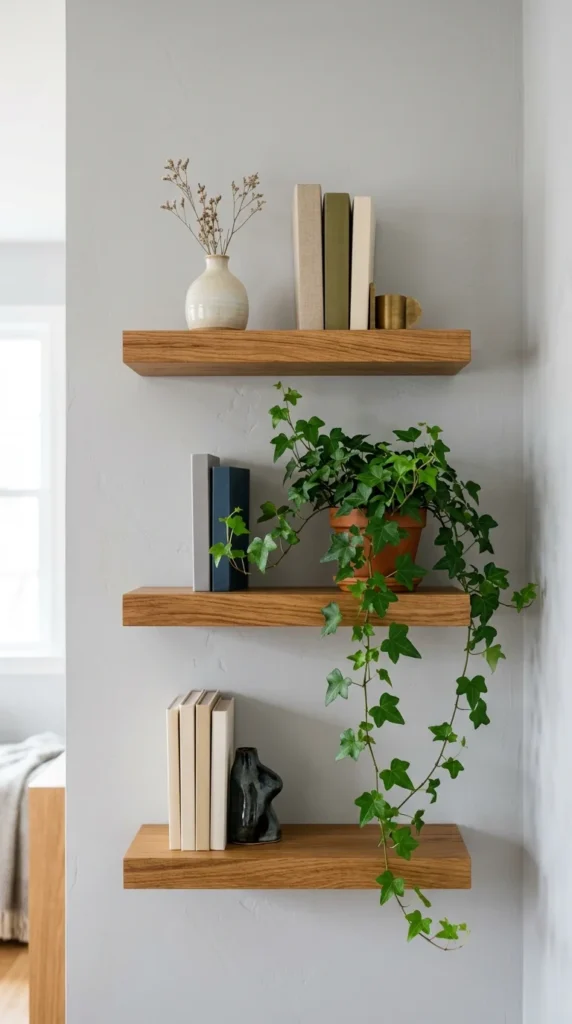
When floor space is at a premium, look to the walls. Floating shelves are an excellent alternative to bulky consoles or bookcases. They provide a surface for keys, mail, and decorative items without obstructing the walkway at floor level. Staggering them at different heights can create a dynamic visual effect, or placing a single long shelf can emphasize the length of the hallway in a sleek, modern way.
4. Statement Lighting
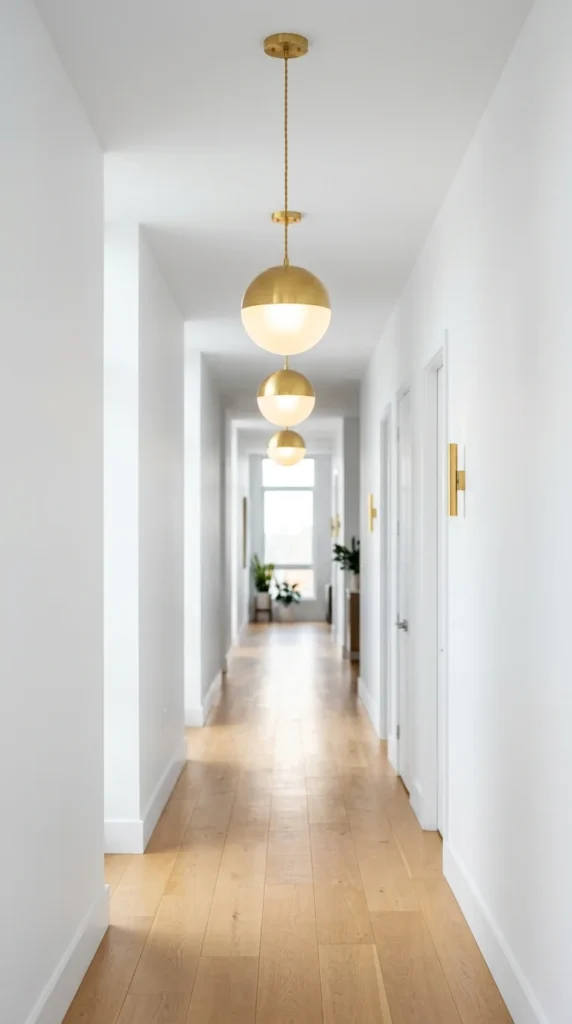
Lighting is critical in windowless hallways. Instead of basic flush-mount fixtures, opt for statement lighting that draws the eye upward. Pendant lights, chandeliers, or even stylish track lighting can turn the ceiling into a focal point. Using multiple fixtures along the length of the hall ensures there are no dark spots, making the space feel safer and more expansive.
5. Vertical Gallery
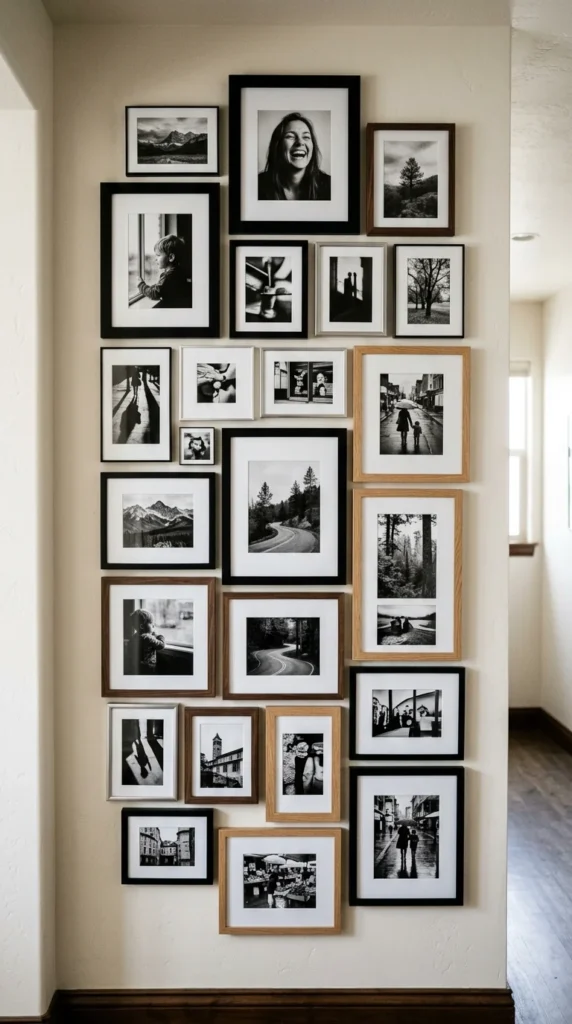
A narrow hallway is the perfect location for a gallery wall. To keep the space from feeling cluttered, use uniform frames for a clean, cohesive look, or mix and match for an eclectic vibe. The key for narrow passages is to keep the frames relatively shallow so they don’t protrude too far into the walking path. Focus on vertical arrangements to lead the eye up toward the ceiling, which helps the space feel taller.
6. Neutral Tones
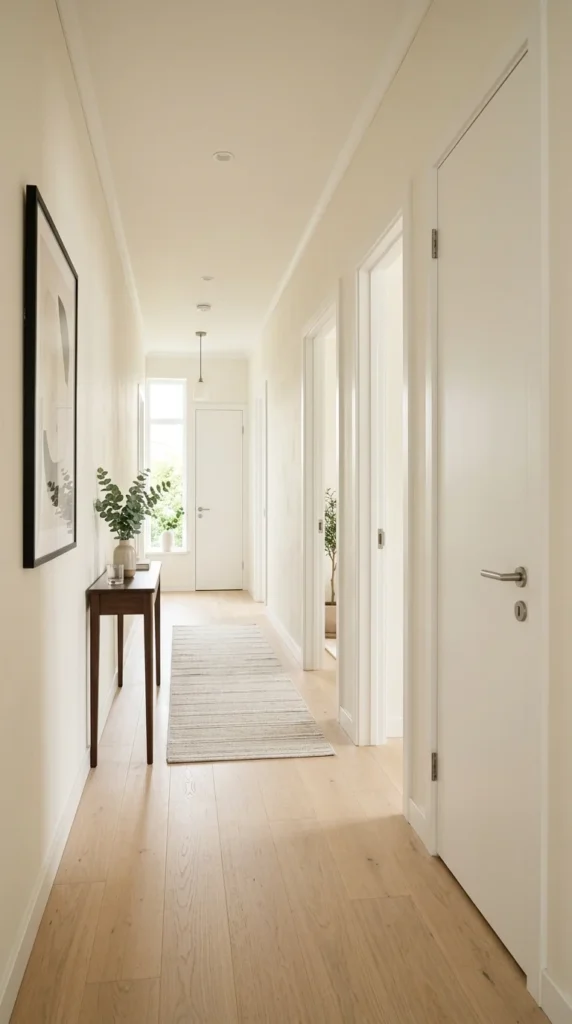
Color choice significantly impacts the perception of size. Cool whites, soft grays, and pale pastels reflect more light than darker hues, making a narrow hallway feel airy and open. If you want to add a bit of depth without losing the sense of space, consider painting the doors or the trim a slightly darker shade of the same color family to provide subtle contrast.
7. Slim Consoles
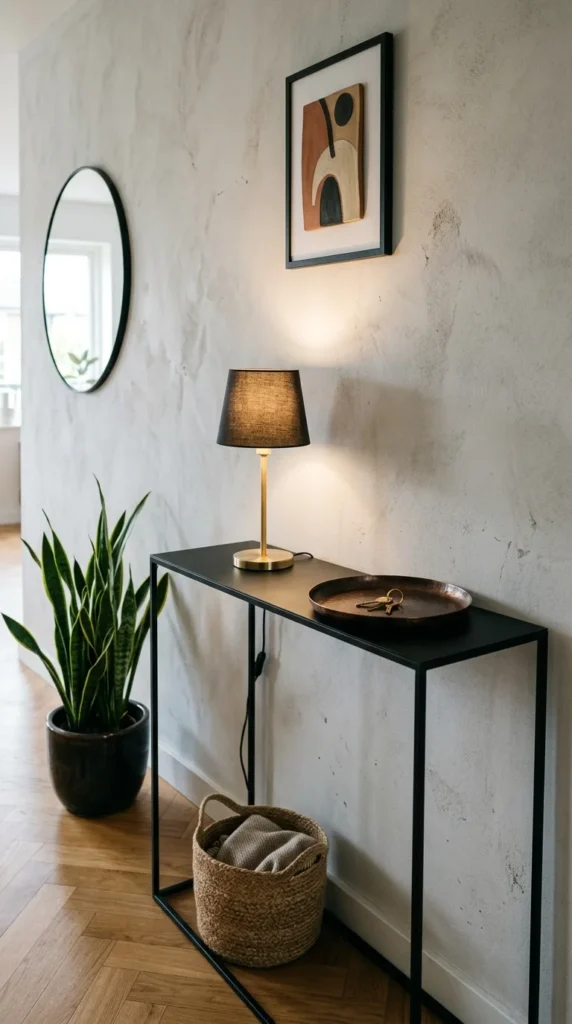
If you need a surface for organization, look for “slimline” or “skinny” console tables. Many modern designs are less than 10 inches deep, specifically tailored for tight entryways. These pieces provide a landing strip for daily essentials while maintaining a clear path for foot traffic. Look for designs with open legs rather than solid sides to maintain a sense of visual “flow” across the floor.
8. Accent Wallpaper
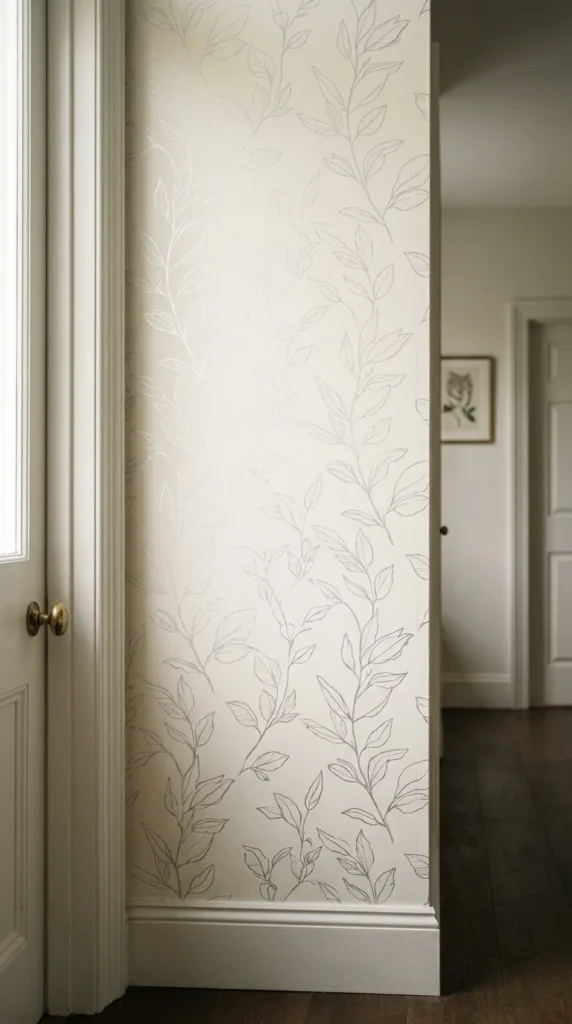
While it might seem counterintuitive to put a busy pattern in a small space, a well-chosen wallpaper can add immense depth. A feature wall at the end of a hallway can create a focal point that draws you in, while a subtle, textured wallpaper along the sides can add a layer of sophistication that paint alone cannot achieve. Grasscloth or light-colored geometric prints work exceptionally well to add interest without overwhelming the senses.
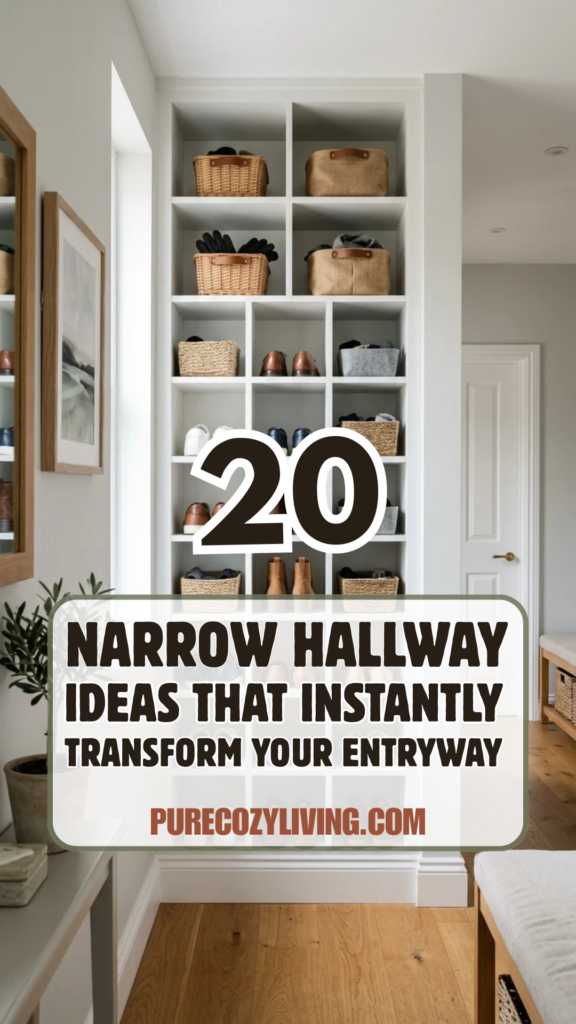
9. Built-in Cubbies
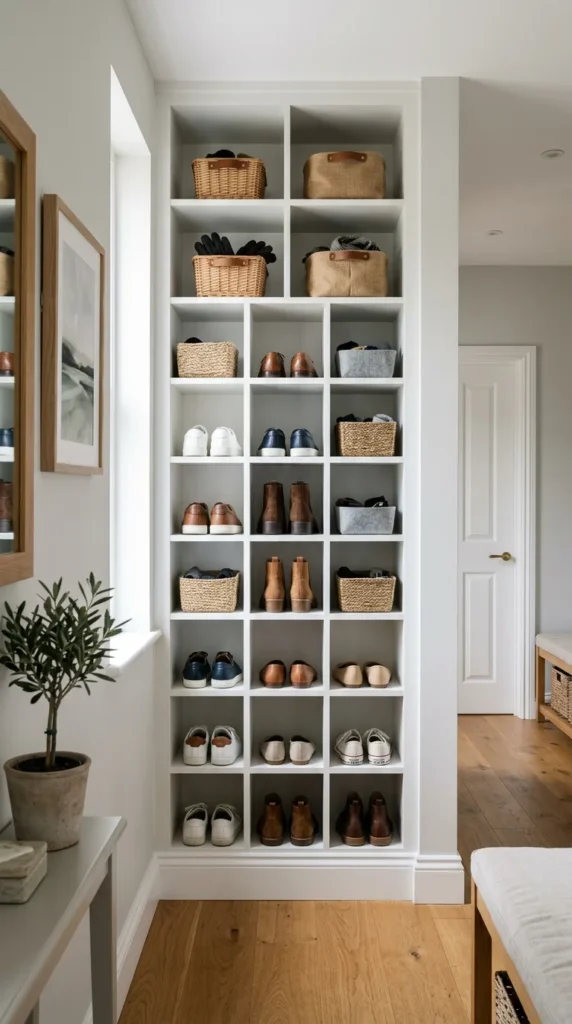
If your budget and architecture allow, recessed or built-in storage is the ultimate solution for narrow hallways. By carving out space between the wall studs, you can create shelving or “mudroom” cubbies that don’t take up any of the actual hallway width. This is an ideal way to manage shoes, bags, and coats in a household with children or many residents.
10. Indoor Greenery
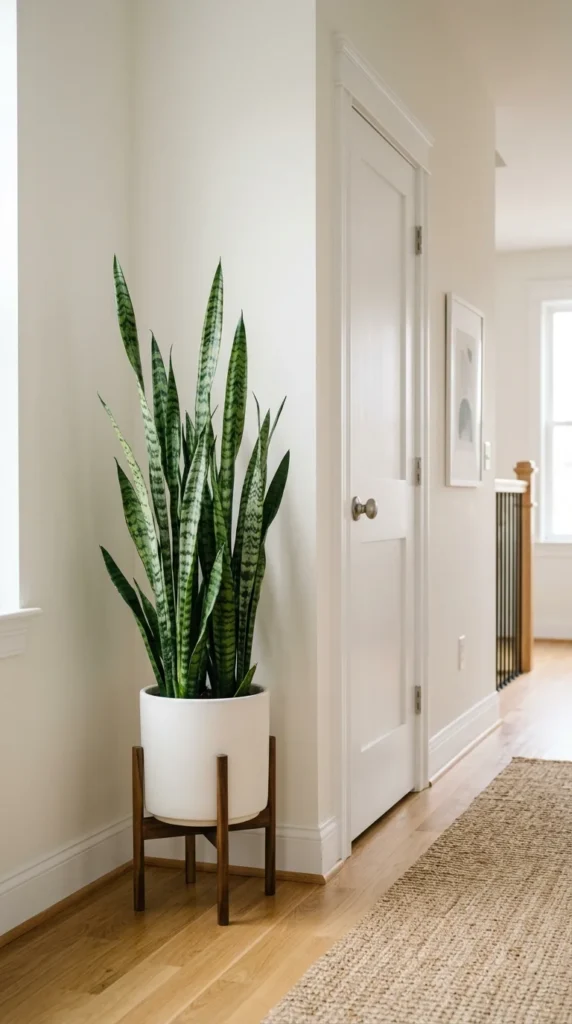
Plants breathe life into stagnant spaces. For narrow hallways, choose plants with a vertical growth habit, such as Snake Plants (Sansevieria) or a tall Fiddle Leaf Fig. If natural light is low, opt for realistic artificial plants or low-light varieties like ZZ plants. Placing greenery at the end of a hallway creates a “destination” and adds a pop of natural color that breaks up the architectural lines.
11. Wall Sconces
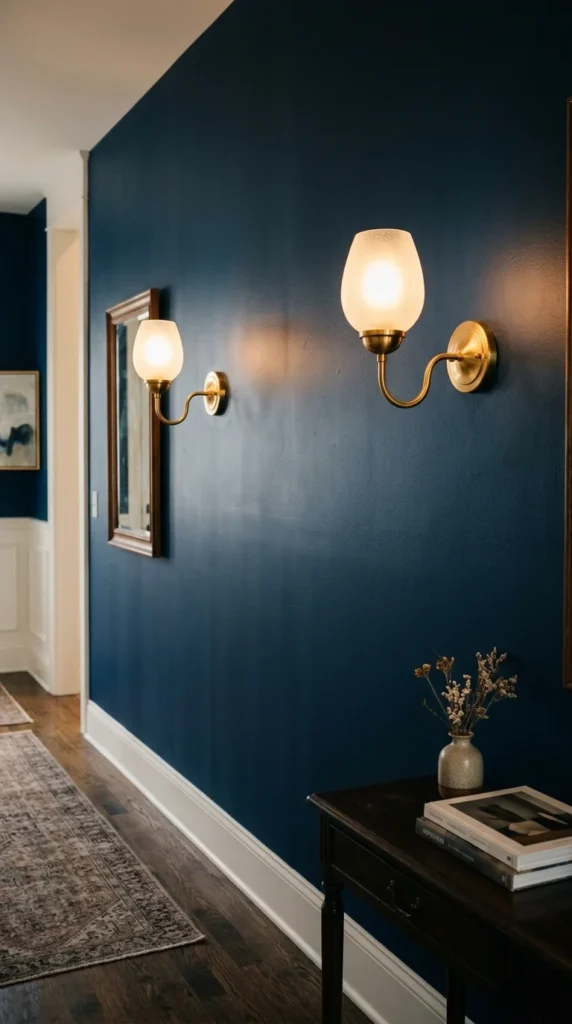
Lamps take up valuable table space, and overhead lights can sometimes feel harsh. Wall sconces provide a sophisticated middle ground. They offer “layered” lighting that creates a warm, cozy atmosphere. In a long hallway, placing sconces at regular intervals creates a rhythm that makes the journey through the space feel intentional rather than utilitarian.
12. Ceiling Interest
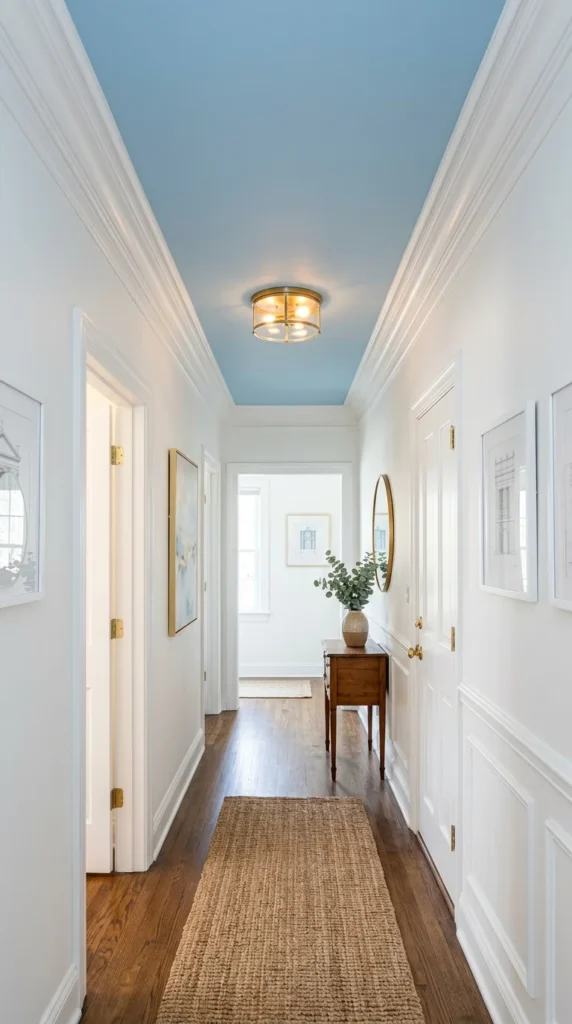
Don’t forget the “fifth wall.” Painting your ceiling a contrasting color or adding architectural details like coffering or shiplap can distract from the narrowness of the walls. A light-colored ceiling can make the room feel taller, while a darker, glossy finish can create a high-end, reflective look that adds a sense of luxury and height through reflection.
13. Glass Doors
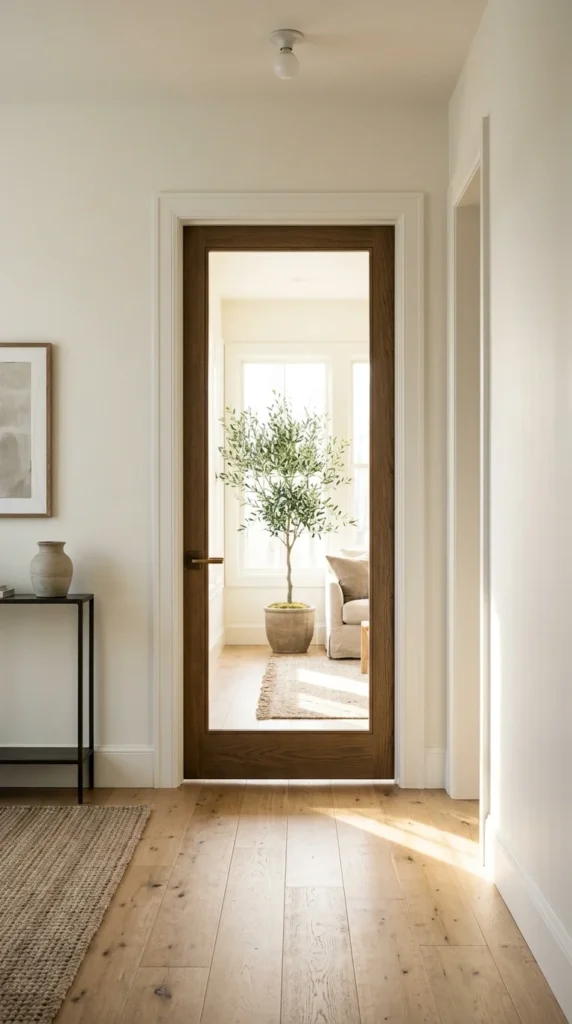
If your hallway feels like a dark tunnel, consider replacing solid interior doors with those featuring glass panels. This allows “borrowed light” from adjacent rooms with windows to filter into the hallway. Frosted or reeded glass provides privacy while still maintaining the flow of light, significantly brightening the space during daylight hours.
14. Two-Tone Walls
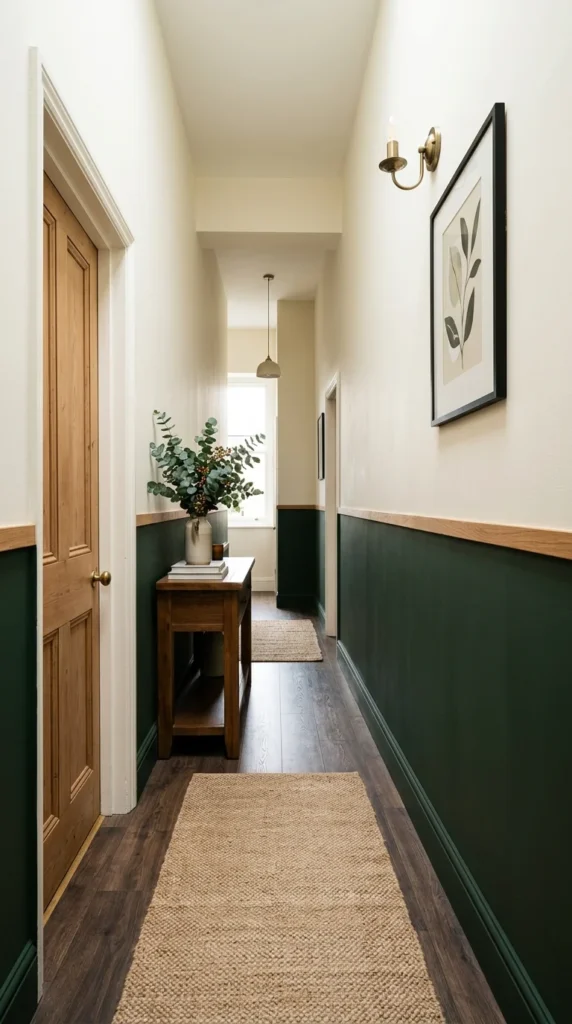
Painting the bottom third of your walls a darker color (a technique often paired with wainscoting) and the top portion a lighter color can visually widen the space. This horizontal line breaks up the vertical height of the wall, making the hallway feel less like a canyon and more like a structured room. It also provides a practical benefit, as darker colors on the lower half hide scuffs and fingerprints better in high-traffic areas.
15. Fold-Down Seating
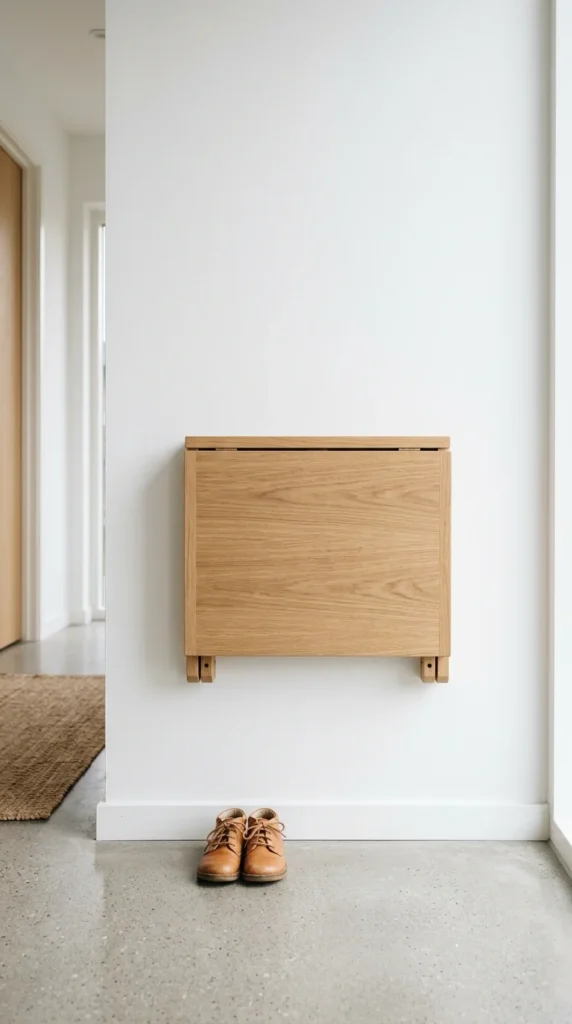
Every entryway benefits from a place to sit and put on shoes, but a traditional bench is often too wide for a narrow hall. A wall-mounted, fold-down seat is the perfect compromise. These units can be tucked away when not in use, keeping the walkway clear, and flipped down only when needed. It’s a functional, space-saving hack that adds a “custom” feel to your home.
16. Decorative Hooks
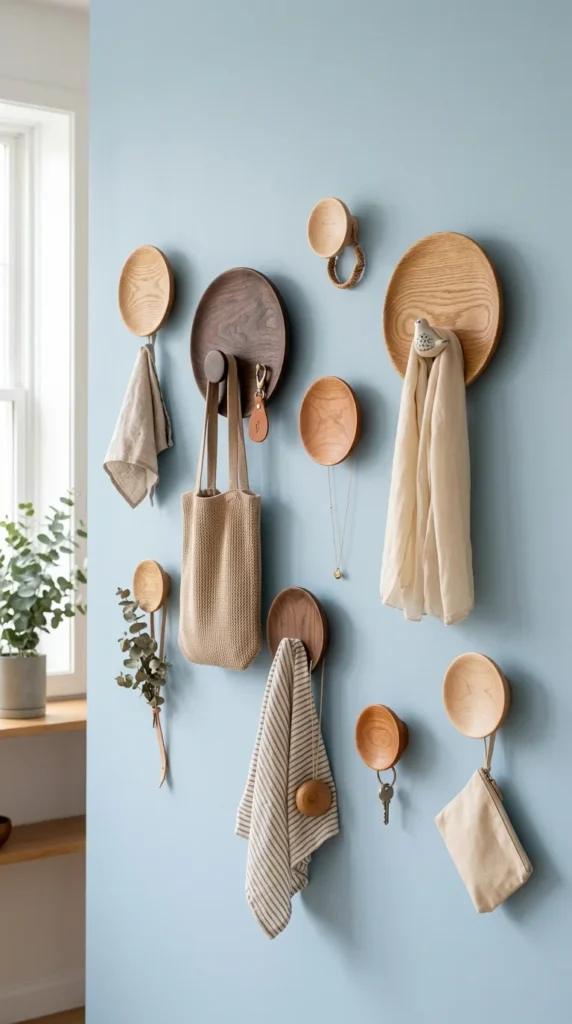
Ditch the bulky coat rack and opt for individual wall hooks. By scattering them at different heights, you turn storage into a decorative element. This is particularly effective for hanging light bags, hats, or scarves. Using high-quality materials like brass, turned wood, or matte black steel turns these functional items into small pieces of wall art.
17. Patterned Tile
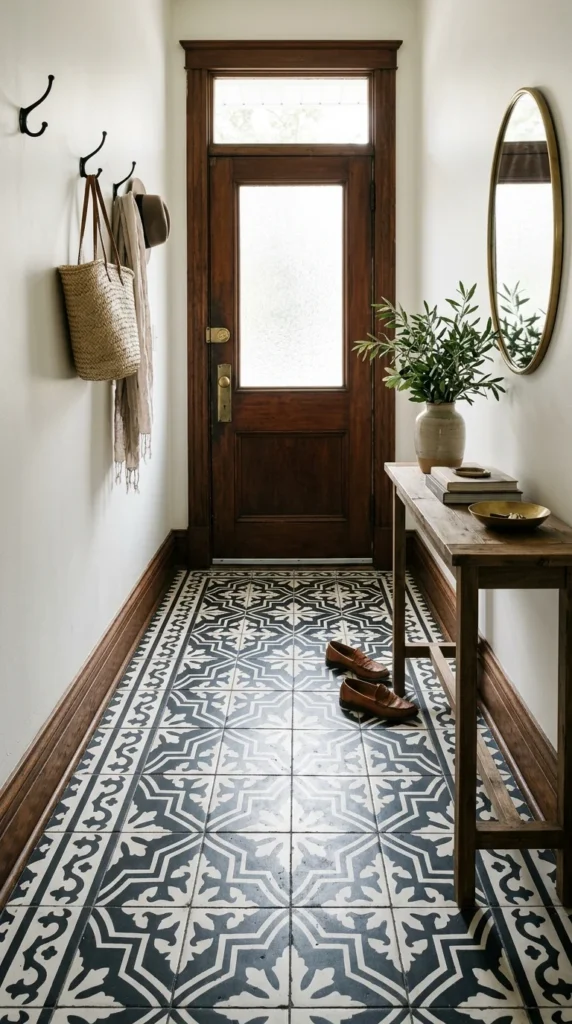
If you are renovating, consider using bold floor tiles. A strong pattern on the floor draws the eye downward and creates a sense of “grounding.” Because the square footage of a hallway is typically small, you can often afford a more expensive or daring tile than you could in a larger room. This turns the floor into the “star” of the space, making the narrowness of the walls feel like a secondary detail.
18. High Shelving
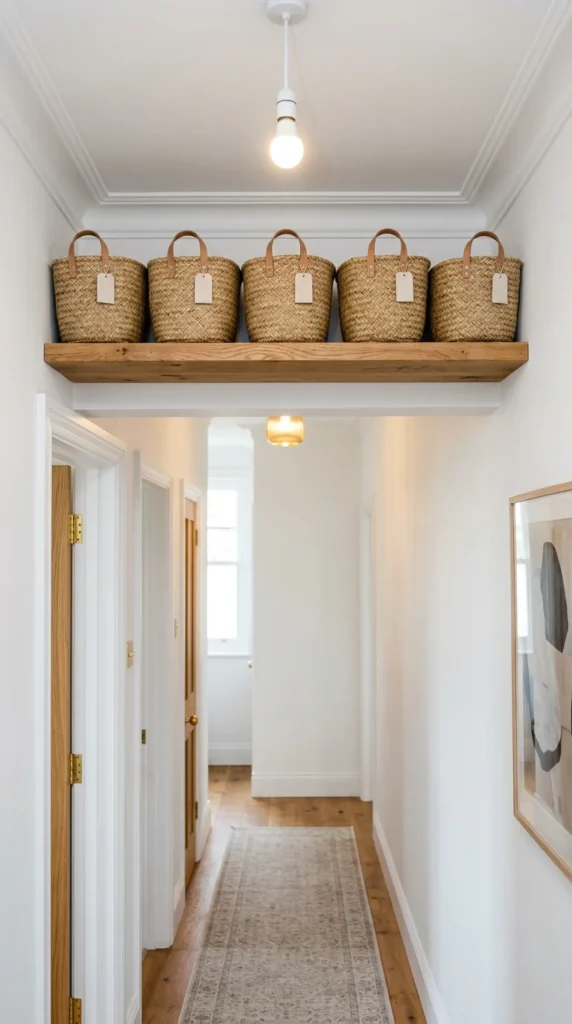
Utilize the often-wasted space above the doorframes. A high-level shelf running the length of the hallway is a great place to store items you don’t need every day, such as seasonal decor or books. By keeping the storage high, the floor area remains clear, and the eye is drawn upward, which emphasizes the height of the ceiling rather than the proximity of the walls.
19. Oversized Art
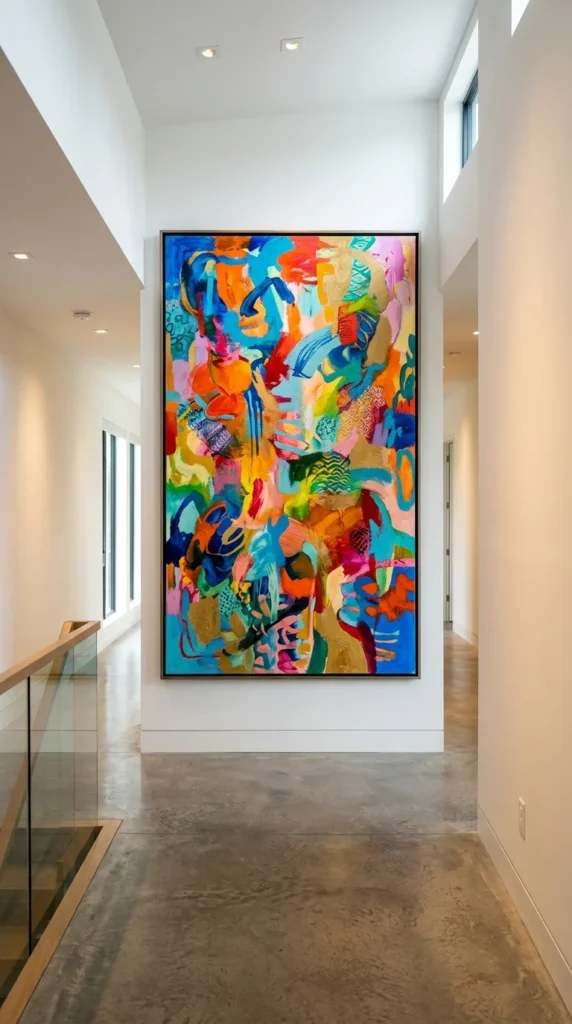
While many people opt for several small pieces of art, one large, oversized piece can actually make a small space feel bigger. A single focal point simplifies the visual landscape and prevents the hallway from looking “bitty” or cluttered. Choose a piece with depth—such as a landscape or an abstract with a sense of perspective—to help “open up” the wall it’s hanging on.
20. Coordinated Hardware
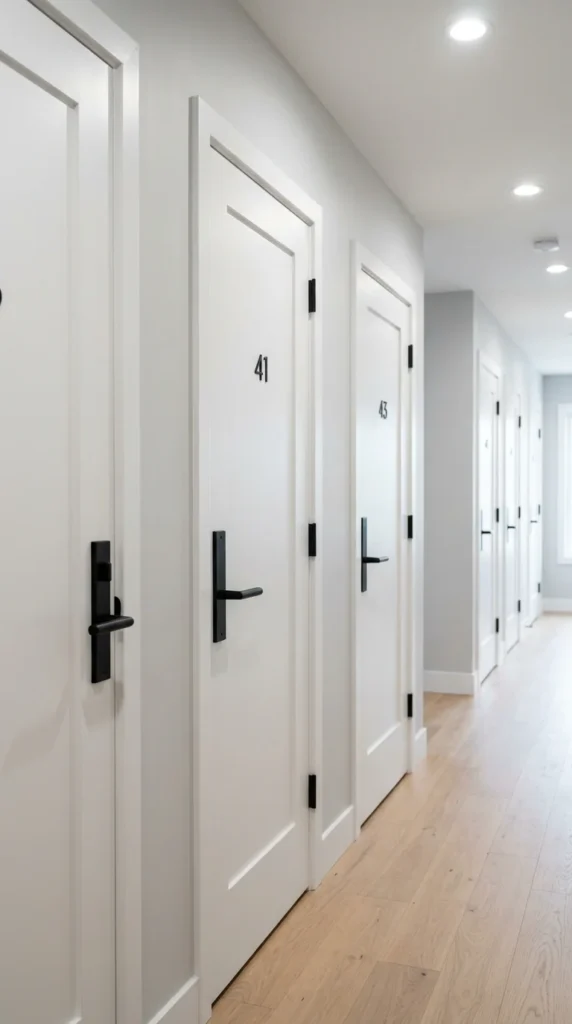
Consistency is key in small spaces. By ensuring all door handles, hinges, light switches, and hooks share the same finish (such as brushed gold or matte black), you create a sense of order. This visual harmony prevents the hallway from feeling chaotic and gives it a polished, professionally designed look that distracts from its narrow dimensions.