
Living in a bustling metropolitan area often means sacrificing a backyard for the convenience of high-rise living. However, a lack of square footage doesn’t mean you have to give up your green thumb. A balcony, no matter how small, represents a unique opportunity to create a personal sanctuary—a threshold between the frantic pace of the city and the peace of your home.
Creating a balcony garden is about more than just aesthetics; it is about psychological well-being. Studies have shown that even small amounts of interaction with nature can lower cortisol levels and improve mood. By thoughtfully selecting plants, furniture, and lighting, you can turn a few square feet of concrete into a thriving ecosystem that feels miles away from the nearest traffic jam.
1. Vertical Greenery
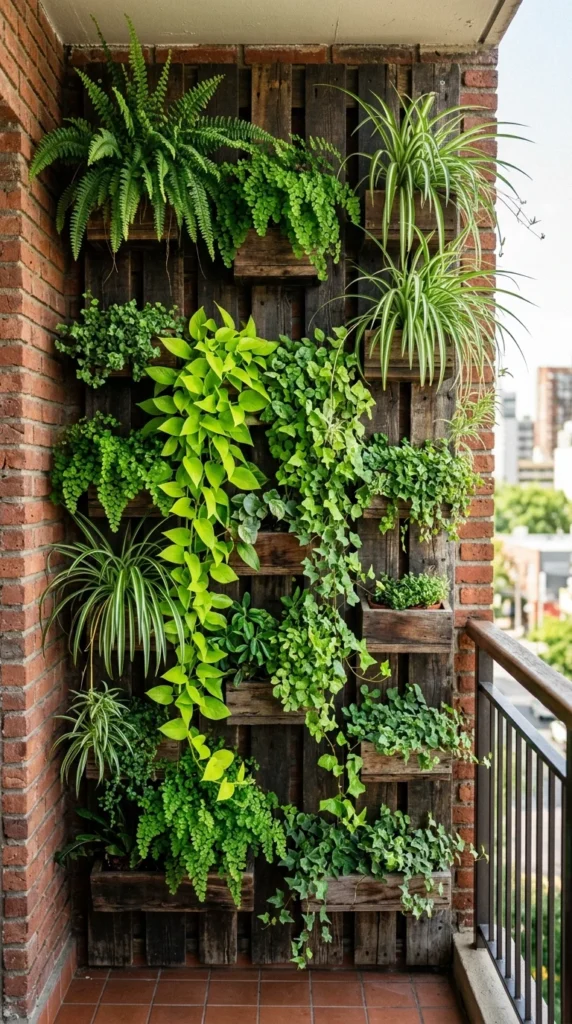
When floor space is at a premium, the only way to go is up. Vertical gardening is the ultimate solution for narrow balconies. By utilizing wall-mounted planters, trellises, or even repurposed wooden pallets, you can create a “living wall” that provides privacy from neighbors while maximizing your plant collection.
To achieve this look, choose trailing plants like English Ivy, Creeping Jenny, or Pothos that will spill over the edges of the containers, creating a waterfall of green. For structural interest, intersperse these with upright ferns or bromeliads. Not only does this save room for a chair or small table, but it also acts as a natural sound barrier, muffling the ambient noise of the street below.
2. Jungle Retreat
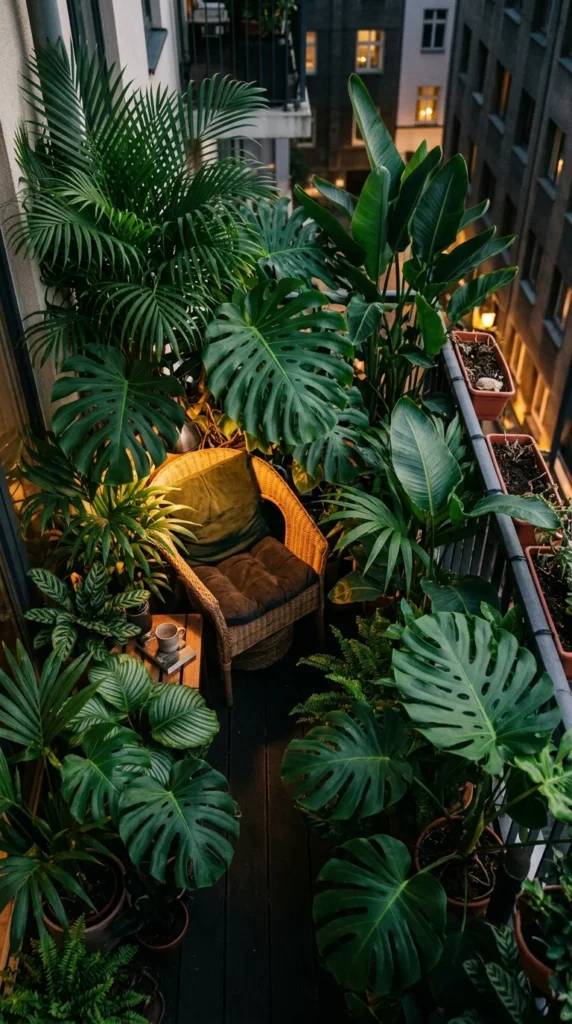
The “Urban Jungle” aesthetic is perfect for those who want to feel completely immersed in nature. This style relies on high-density planting and varied heights. By layering large-leafed tropicals like Monstera Deliciosa, Fiddle Leaf Figs, and Bird of Paradise, you create a sense of depth that makes the space feel larger and more secluded.
The key to a successful jungle balcony is humidity and light management. Many tropical plants thrive in filtered light, making them ideal for balconies with overhangs or north-facing orientations. To maintain the lushness, consider a small, hidden mister or grouping plants together to create a microclimate that retains moisture.
3. Bohemian Nook
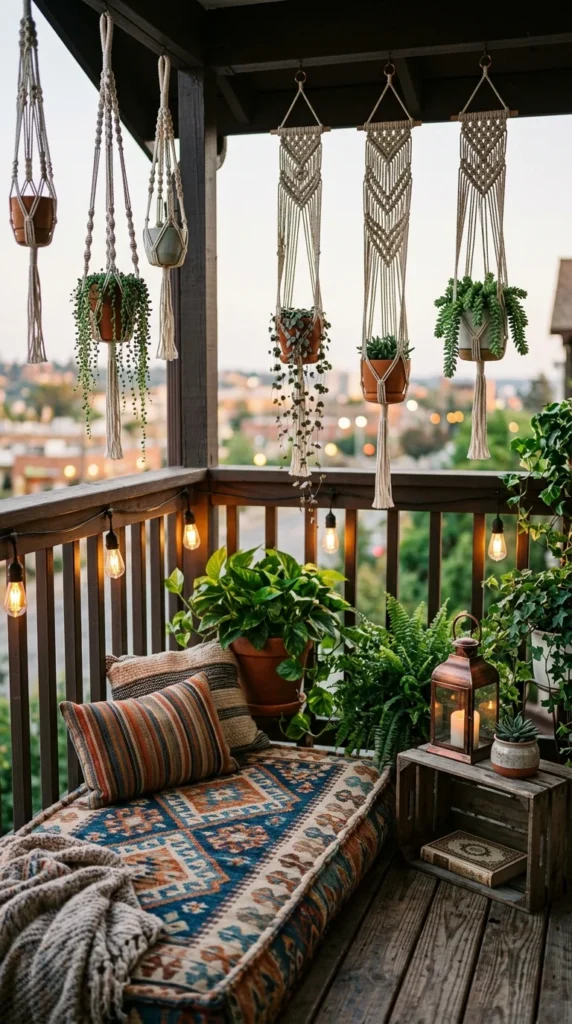
A Bohemian balcony is less about manicured rows and more about comfort, texture, and eclectic charm. This style prioritizes “hygge”—the Danish concept of coziness. Incorporate textiles like outdoor rugs, weather-resistant throw pillows, and woven tapestries to soften the hard lines of the balcony structure.
For the garden aspect, use a mix-and-match approach to containers. Use vintage tins, ceramic pots with colorful glazes, and macrame hangers. Plants like String of Pearls, Aloe Vera, and air plants (Tillandsia) fit this aesthetic perfectly. The goal is to create a space that feels lived-in and deeply personal, where you can lounge with a book for hours.
4. Edible Patch
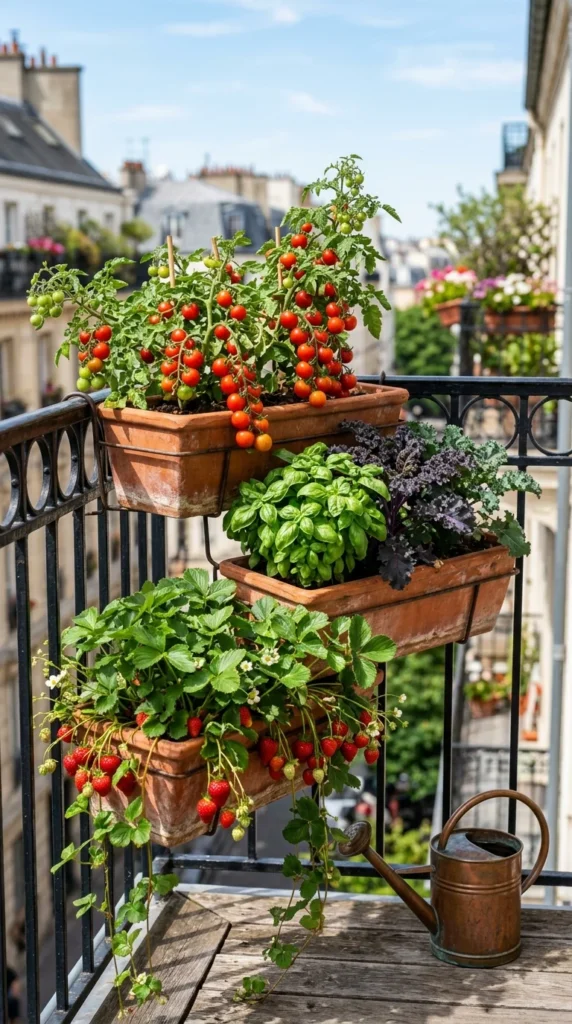
Your balcony can be both beautiful and functional by serving as a mini-farm. Many vegetables and herbs thrive in containers, provided they receive at least six hours of sunlight. A culinary balcony garden allows you to harvest fresh ingredients just steps from your kitchen.
Focus on “cut-and-come-again” crops like loose-leaf lettuce, spinach, and a wide variety of herbs such as rosemary, mint, and thyme. Dwarf varieties of tomatoes, peppers, and even blueberries are specifically bred for pot culture. Not only do these plants provide a visual feast of textures and colors, but the scent of fresh basil or lavender also adds an olfactory layer to your private oasis.
5. Zen Sanctuary
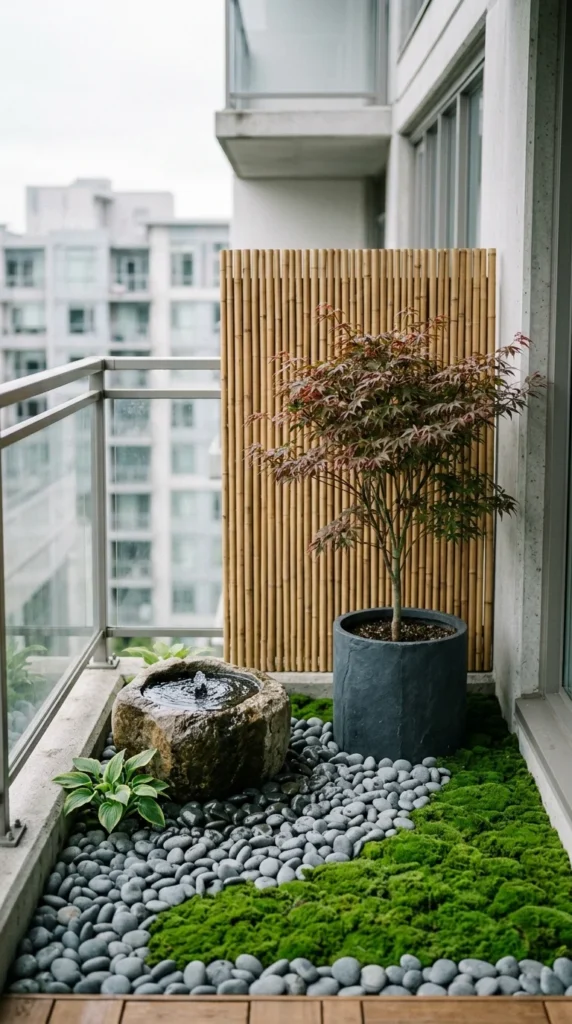
For those seeking a space for meditation and reflection, a Zen-inspired balcony garden provides a minimalist and calming environment. This style emphasizes balance, natural materials, and the element of water. Instead of a riot of color, the Zen garden uses a restrained palette of greens, greys, and browns.
Incorporate a small tabletop fountain to introduce the soothing sound of running water, which helps drown out city distractions. Use stones or gravel as a mulch to create a clean, grounded look. Plants should be chosen for their structural beauty—think Bonsai trees, ornamental grasses, or a single, well-placed bamboo plant. The simplicity of the design allows the mind to rest.
6. Modern Minimal
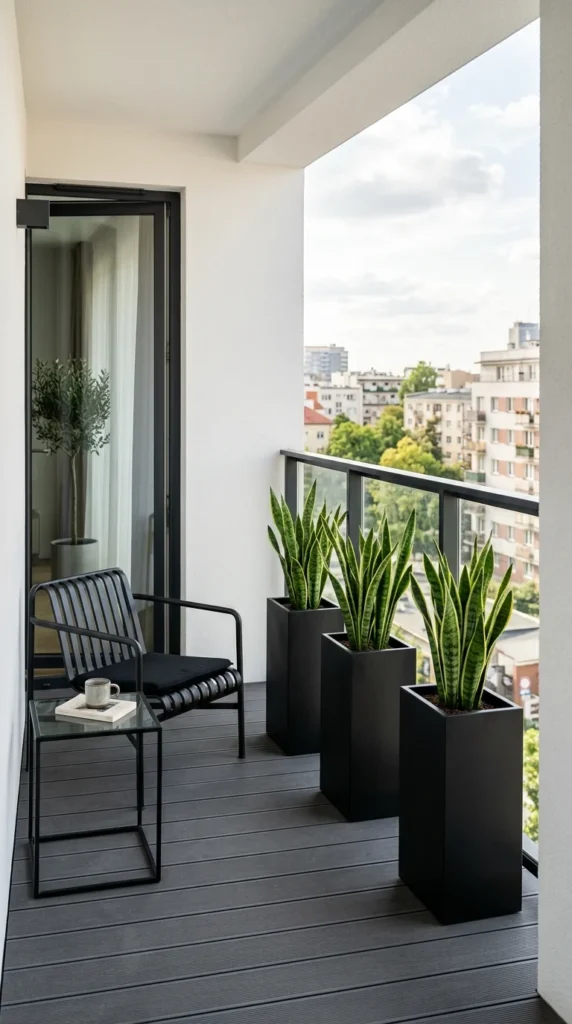
Modern minimalism is ideal for small balconies because it avoids clutter and emphasizes clean lines. This style works best with a monochromatic color scheme—blacks, whites, and greys—which allows the vibrant green of the plants to become the focal point.
Select plants with strong, architectural shapes. Snake plants (Sansevieria), ZZ plants, and Agave are excellent choices because they require very little maintenance and look striking against a neutral backdrop. By using identical pots and spacing them evenly, you create a sense of rhythm and order that makes the tiny space feel intentional and sophisticated.
7. Mediterranean Corner
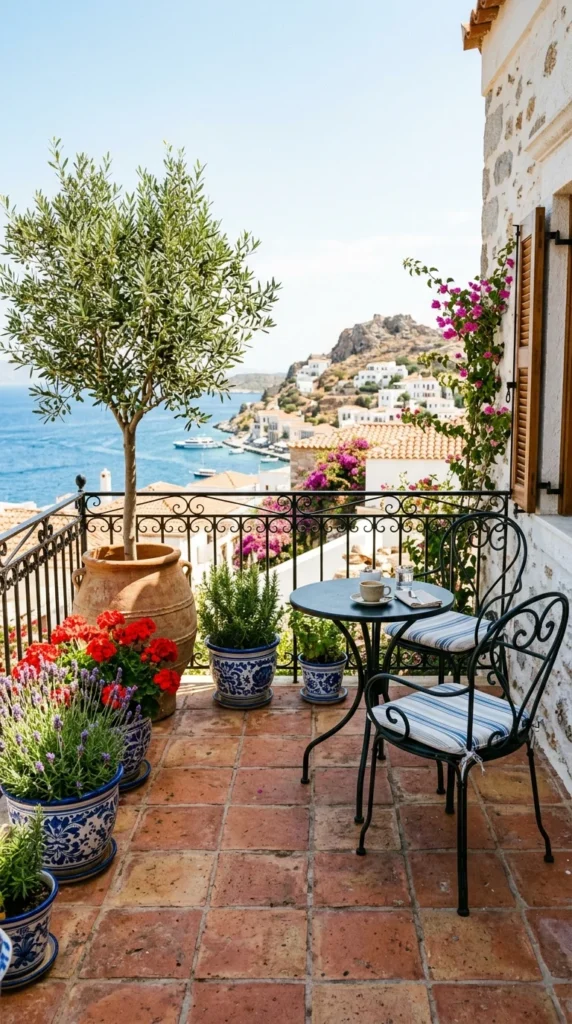
Transport yourself to the coast of Italy or Greece by embracing Mediterranean design. This style is characterized by warm earth tones, vibrant pops of primary colors (especially blue and red), and sun-loving plants. It is a perfect choice for balconies that receive intense afternoon sun.
Citrus trees, like dwarf lemons or calamondins, are quintessential to this look and provide a wonderful fragrance when in bloom. Lavender and rosemary not only tolerate the heat but also bring a touch of the countryside to the city. Use terracotta pots, which are porous and allow plant roots to breathe, and consider adding a small mosaic side table to reinforce the coastal theme.
8. English Cottage
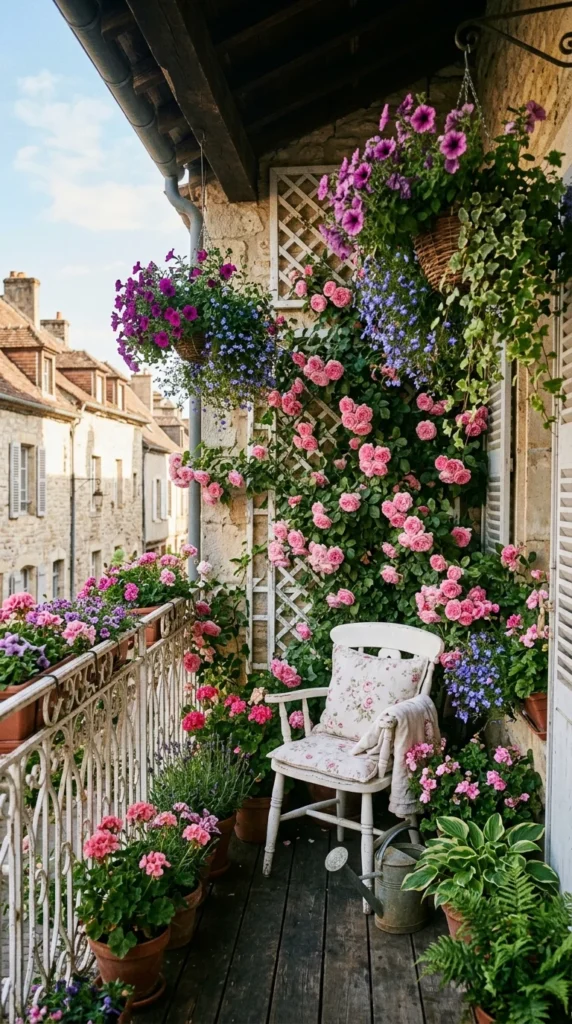
Even on the tenth floor, you can capture the romantic, wild essence of an English country garden. This style is all about abundance and “controlled chaos.” Instead of keeping plants in separate corners, let them mingle and overflow.
Climbing roses or Clematis can be grown in large pots and trained up a trellis to create a floral backdrop. Fill every available inch with flowering annuals like pansies, snapdragons, and sweet alyssum. The variety of colors and the soft, billowing shapes of the flowers create a soft, feminine space that feels like a hidden getaway from the concrete world.
9. Bistro Charm
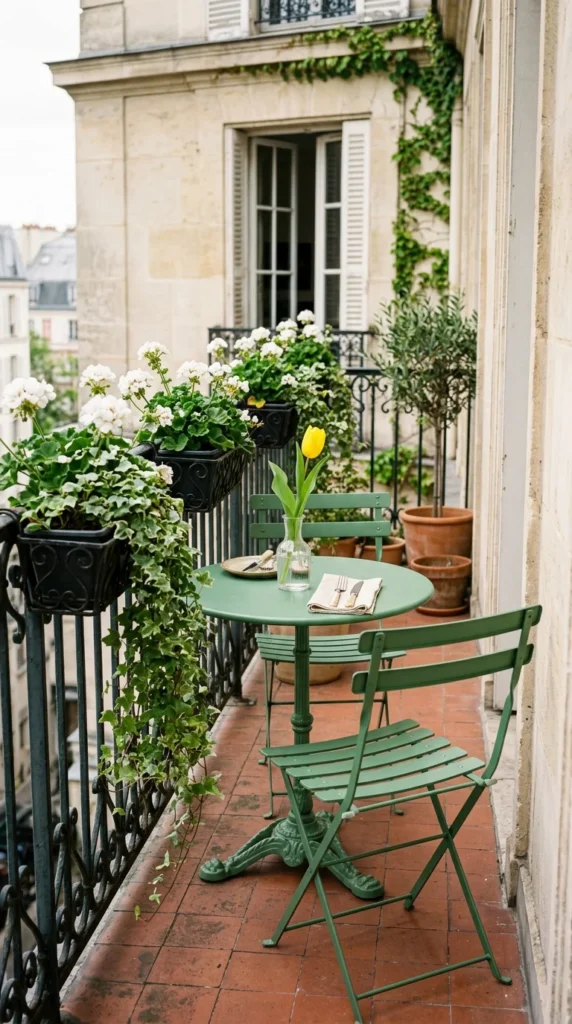
If you enjoy your morning coffee or an evening glass of wine outdoors, the Bistro style focuses on making the balcony a functional extension of your dining area. The garden elements here serve to frame the seating area rather than dominate it.
Use railing planters to keep the floor clear for furniture. Hanging baskets at different levels add vertical interest without taking up any footprint. Choose plants that are “neat”—those that don’t drop too many leaves or petals—to keep your dining area clean. Boxwood globes or small bay laurel trees in neat pots add a touch of formal elegance to the arrangement.
10. Desert Escape
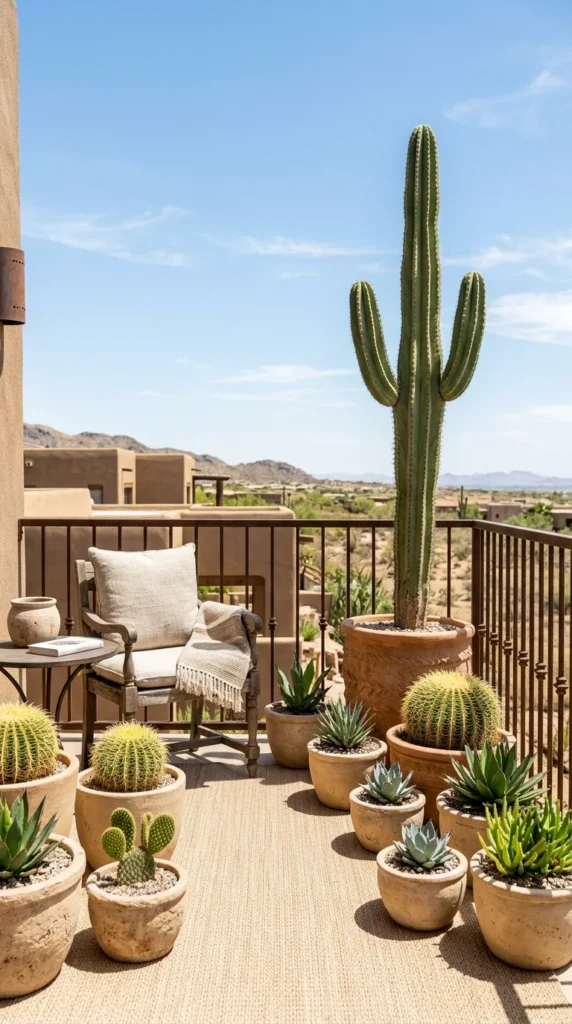
For those who live in hot climates or simply want a low-maintenance garden, a desert-themed balcony is both stylish and resilient. Cacti and succulents are incredibly water-efficient and come in an astonishing array of shapes, colors, and textures.
Group different types of succulents, such as Echeveria, Jade, and Haworthia, in a large “succulent bowl” for a centerpiece. Larger cacti can stand alone as sculptural elements. To enhance the desert vibe, use a palette of desert tones—terracotta, sand, and sage green. These plants are slow-growing, meaning they won’t outgrow their containers quickly, making them perfect for long-term balcony displays.
11. Moonlight Garden
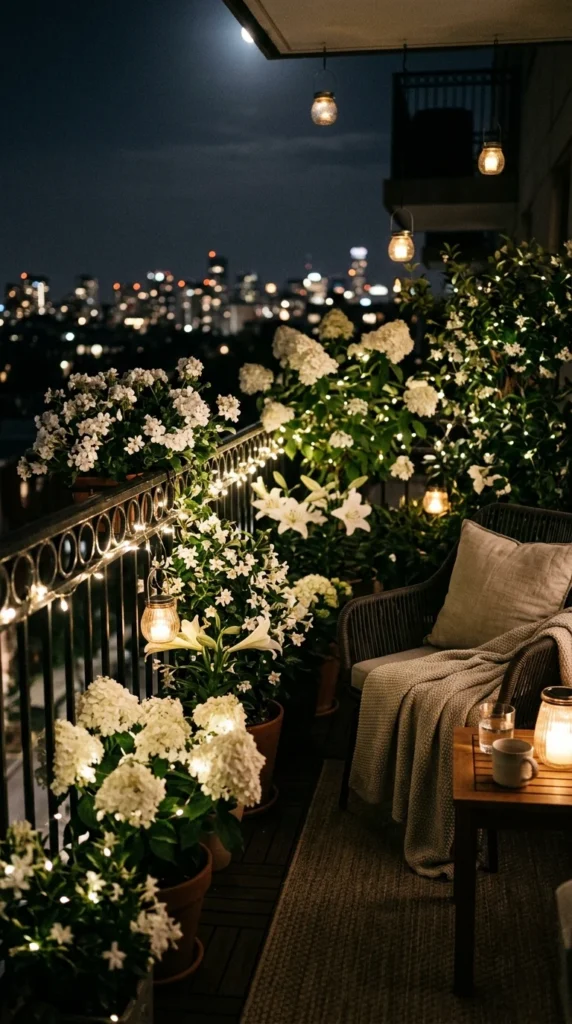
Many urban dwellers only get to enjoy their balconies after work. A “Moonlight Garden” is specifically designed to be viewed at night. By choosing plants with white flowers or silvery foliage, you create a space that “glows” under the moon and artificial light.
Fragrance is a key component here. Night-blooming Jasmine, Moonflower, and Nicotiana release their scent after the sun goes down, creating a multi-sensory experience. Silver-leafed plants like Dusty Miller or Lamb’s Ear reflect the light and provide a ghostly, beautiful contrast to the dark shadows. Integrated low-voltage lighting or solar stakes can highlight specific plants and paths.
12. Scandi Style
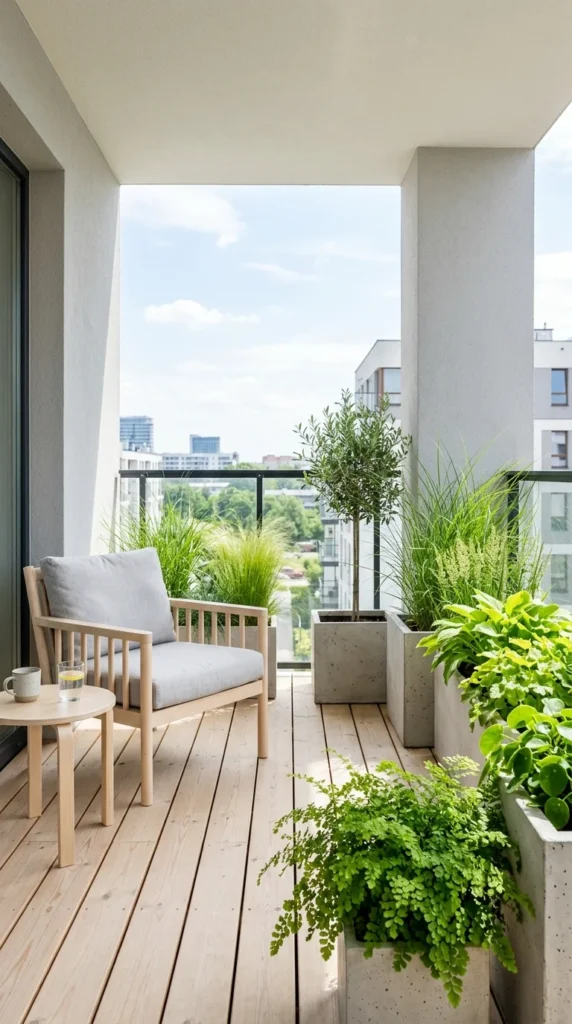
Scandinavian design is famous for its functionality, light colors, and connection to nature. A Scandi balcony feels bright, airy, and uncluttered. It often utilizes light-colored woods like pine or ash for decking and furniture, which helps bounce light around a small space.
For the greenery, choose “airy” plants that don’t feel heavy or dense. Ornamental grasses like Feather Reed Grass or Blue Fescue add movement as they sway in the breeze. Ferns and Eucalyptus also fit the Scandi aesthetic perfectly. The focus is on quality over quantity—a few well-placed, healthy plants in beautiful, high-quality containers will have a greater impact than a crowded space.