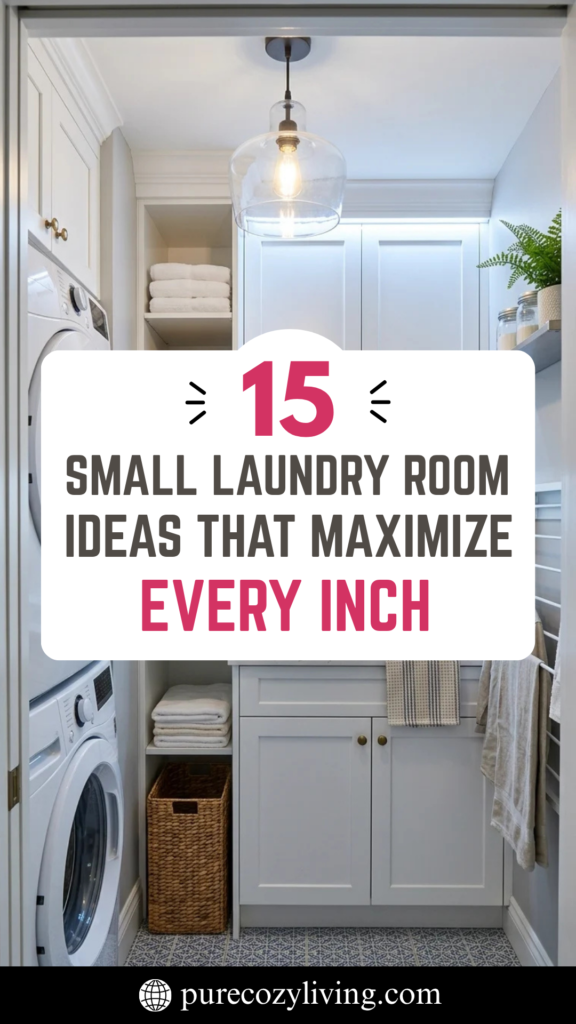

A laundry room is often one of the smallest spaces in a home, yet it is tasked with one of the biggest domestic burdens. When square footage is at a premium, the difference between a chaotic closet and a streamlined workstation lies in smart design and vertical thinking. Maximizing a small laundry room requires a blend of ergonomic placement, multifunctional furniture, and clever storage solutions that utilize often-overlooked areas like the backs of doors, the ceiling, and the narrow gaps between appliances. By rethinking the layout and incorporating high-efficiency organization, you can transform even the tightest corner into a high-functioning laundry suite.
1. Stacked Units
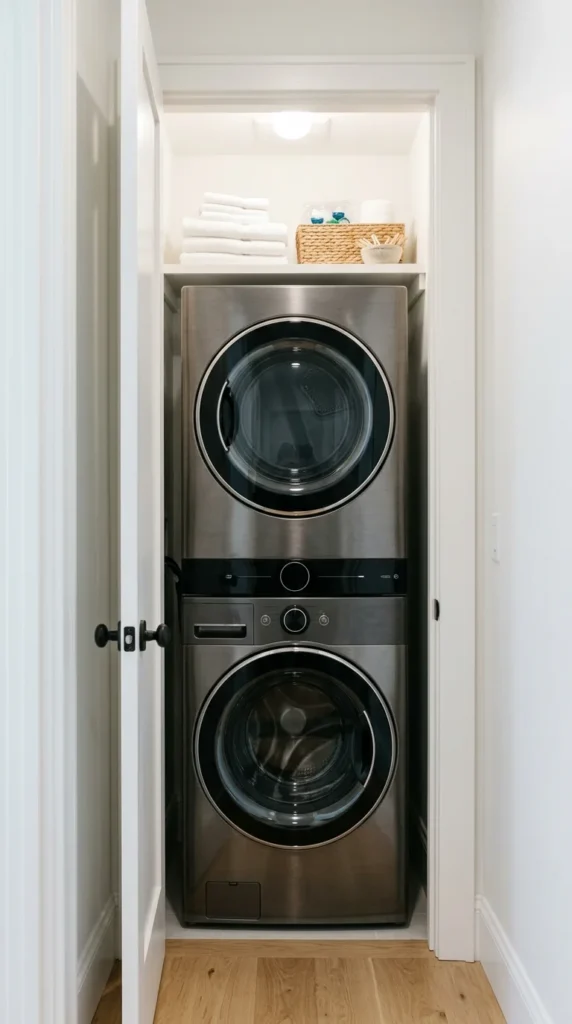
The most effective way to reclaim floor space in a cramped laundry room is to go vertical. By stacking a front-loading washer and dryer, you effectively halve the footprint of your appliances. This leaves room for a tall utility cabinet, a hanging rod, or even a small sink next to the units. Modern stacking kits ensure stability and safety, allowing you to utilize the full height of your room. For those with very limited width, look for “laundry centers” which are designed as a single, integrated vertical unit.
2. Over-Appliance Countertops
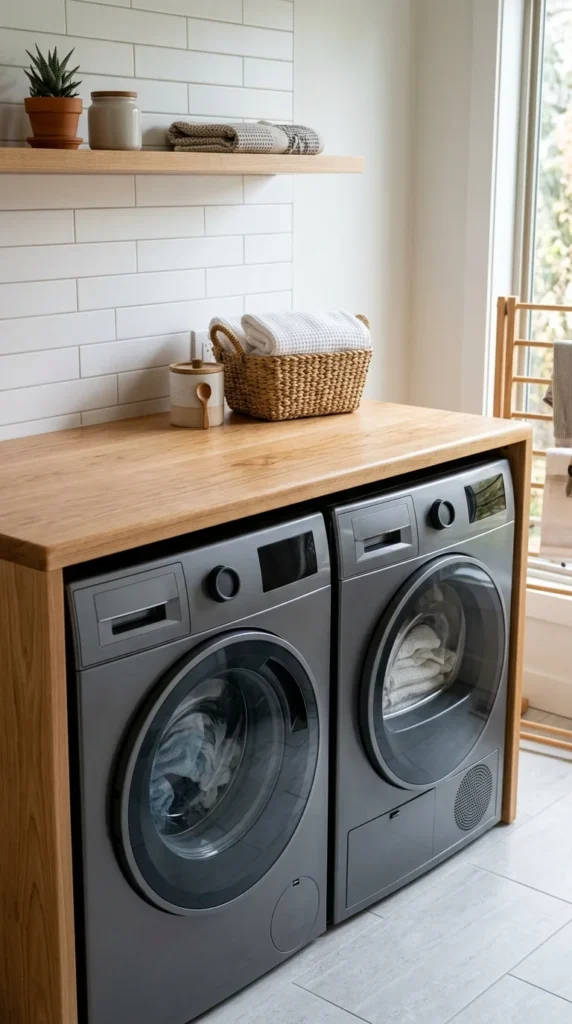
If you have side-by-side front-loading machines, the space directly above them is prime real estate. Installing a continuous countertop across the top of both units creates a massive, flat surface for folding clothes, sorting garments, or holding detergent dispensers. This prevents items from falling behind the machines and gives the room a custom, built-in look. Materials like butcher block, laminate, or even a simple painted plywood board can turn the “dead space” above your machines into the most useful part of the room.
3. Floating Shelves
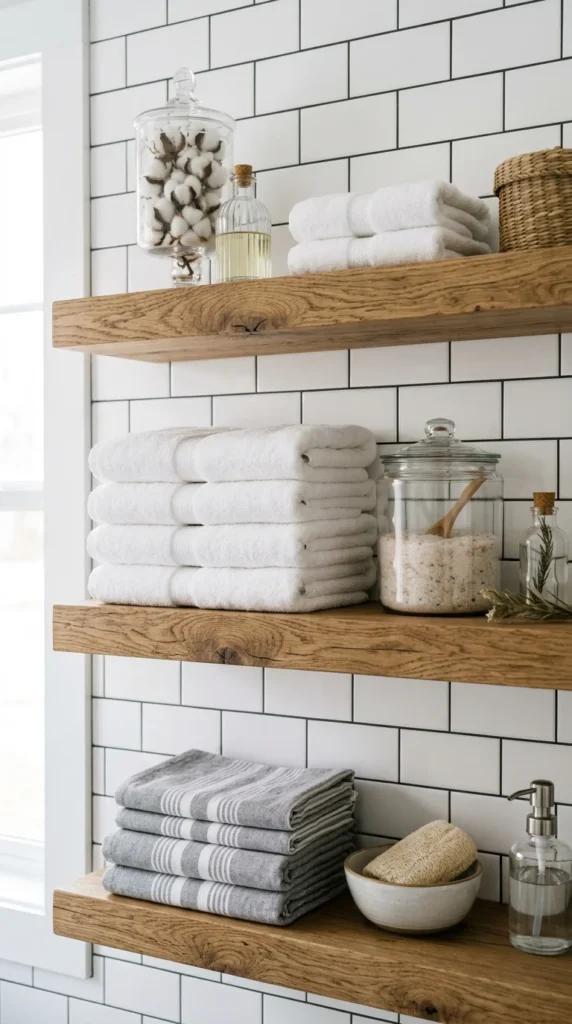
In a small room, bulky cabinets can sometimes feel oppressive and make the space feel smaller than it actually is. Floating shelves provide a lighter, more airy alternative while still offering ample storage for essentials. Use the lower shelves for frequently used items like detergent and dryer balls, and reserve the higher shelves for seasonal items or decor. To keep the look tidy, use uniform containers like glass jars or matching baskets to hide the visual clutter of mismatched cleaning product labels.
4. Wall-Mounted Boards
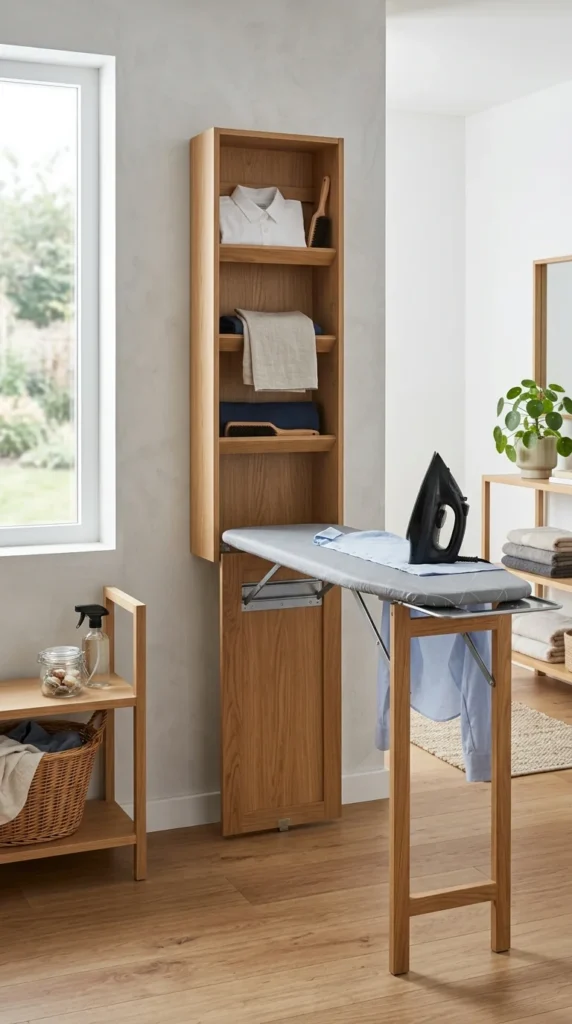
Ironing boards are notorious for being awkward to store and difficult to set up in tight quarters. A wall-mounted, fold-down ironing board is a game-changer for small laundry rooms. These units can be recessed into the wall between studs or mounted directly onto the surface. When not in use, they fold up flat against the wall, often hidden behind a mirror or a decorative cabinet door. This ensures you always have a pressing station ready without the hassle of dragging out a heavy, floor-standing board.
5. Pull-Out Racks
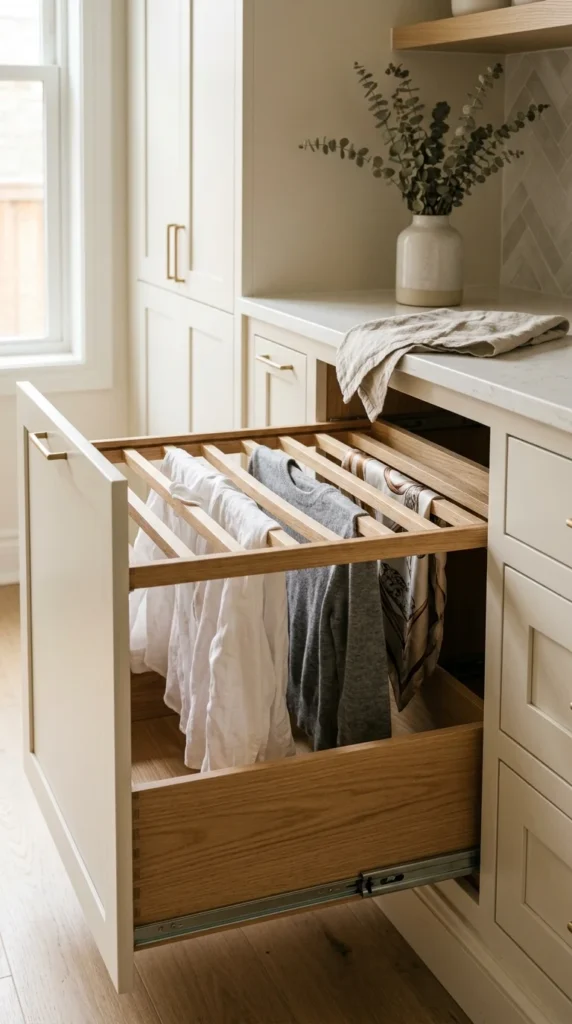
Air-drying delicates is a necessity, but floor-standing drying racks can block walkways and make the room impassable. Integrated pull-out drying racks are built directly into the cabinetry. When closed, they look like a standard drawer front; when opened, they reveal a series of rungs or a mesh screen where you can flat-dry sweaters or hang intimates. This “hideaway” feature keeps the floor clear while providing a dedicated spot for air-drying that doesn’t disrupt the flow of the room.
6. Slim Carts
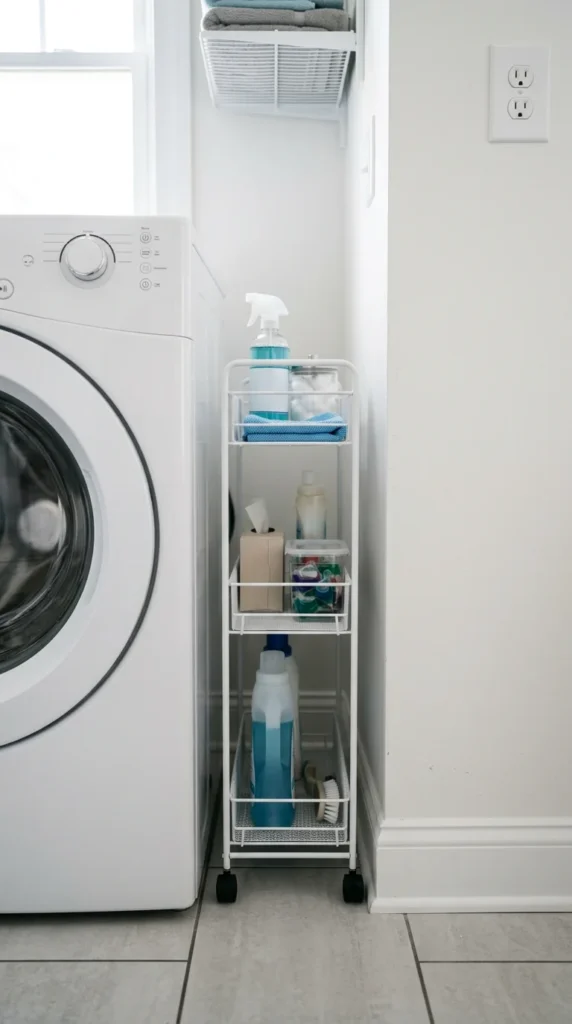
Many laundry rooms have a few inches of wasted space between the washing machine and the wall or between the two appliances. A slim, slide-out rolling cart is the perfect solution for this gap. These narrow units are designed to hold laundry detergent, fabric softener, and stain removers in a vertical stack. Because they are on wheels, they can be pulled out when needed and tucked away completely out of sight when the job is done, making use of every single inch of available width.
7. Over-the-Door Storage
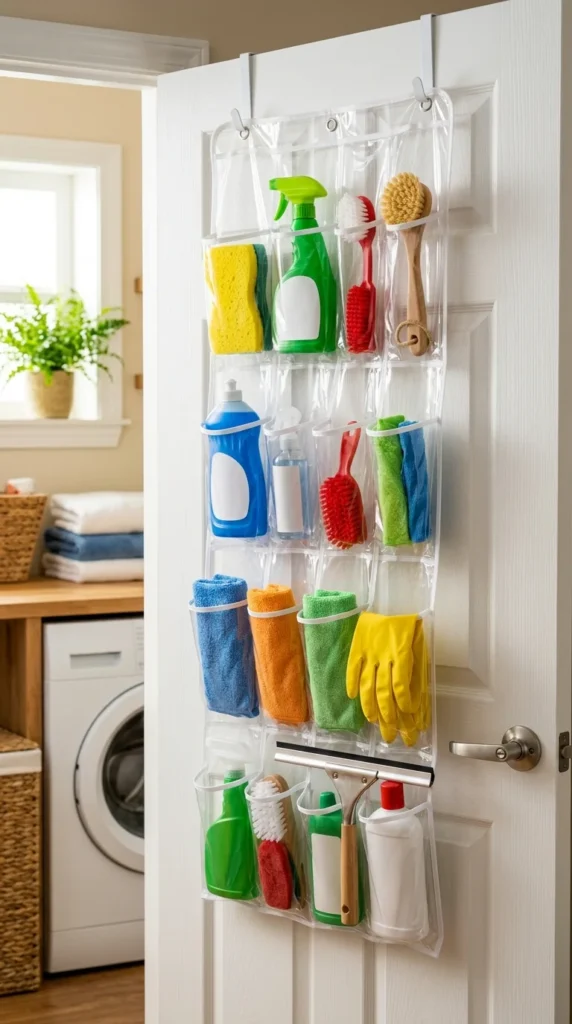
The back of the door is often the most underutilized surface in any room. In a small laundry area, an over-the-door organizer can hold a surprising amount of gear. From mesh pockets for sponges and lint rollers to heavy-duty metal racks for spray bottles and boxes of dryer sheets, this solution keeps small items off the counters and shelves. If you have a solid-core door, you can even mount a more permanent shelving system to provide sturdy storage for heavier jugs of detergent.
8. Hanging Rods
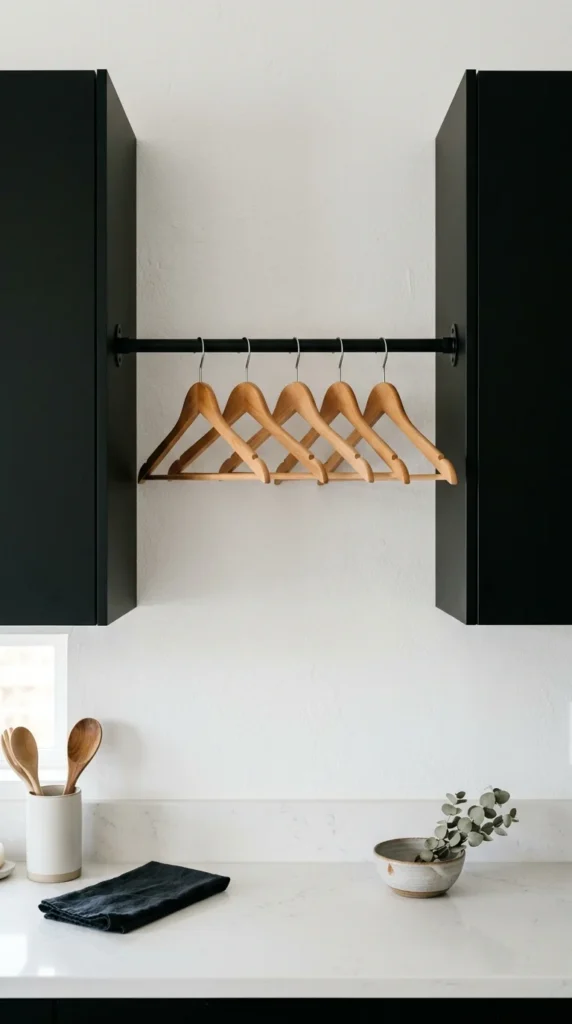
Installing a simple tension rod or a permanent hanging bar between two cabinets or walls provides a space to hang clothes directly out of the dryer. This helps prevent wrinkles and reduces the amount of ironing needed later. If you don’t have space for a long rod, consider a valet hook—a small, foldable arm that extends from the wall when you need to hang a few shirts and folds back flat when you’re finished.
9. Hidden Hampers
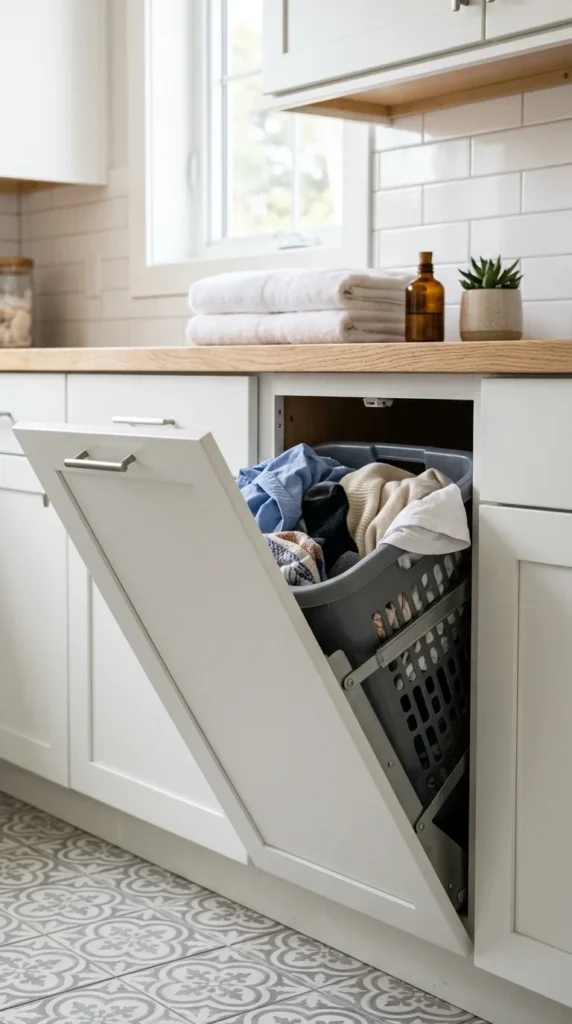
Traditional laundry baskets take up significant floor space and often look messy. Built-in, tilt-out, or pull-out hampers integrate the sorting process into your cabinetry. By dedicating a cabinet to one or two hampers, you can sort lights and darks as you go, keeping the mess contained and the floor clear. This also creates a more cohesive aesthetic, as the “dirty work” of the laundry room remains hidden behind stylish cabinet doors.
10. Pegboard Organization
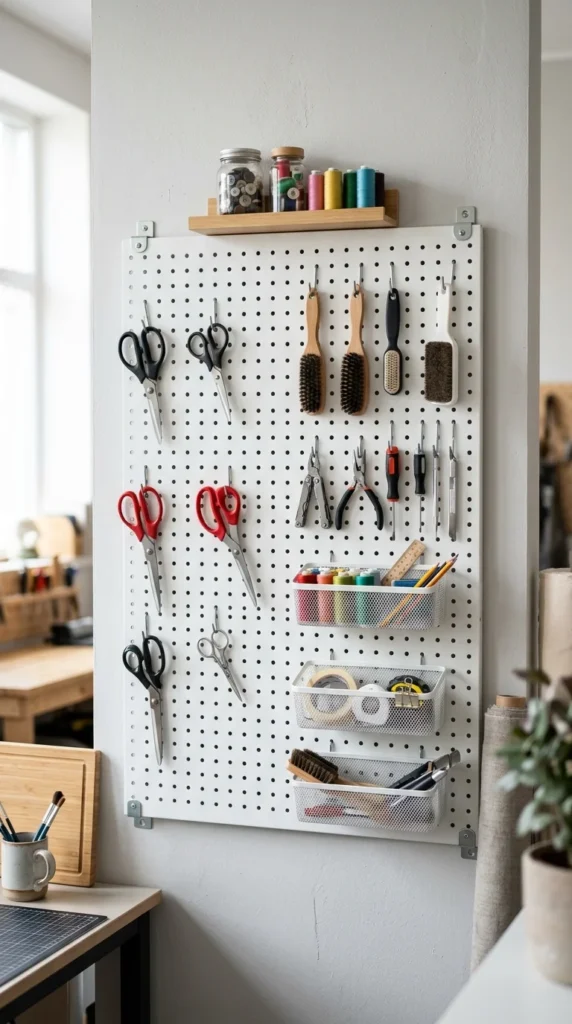
Pegboards are the ultimate customizable storage solution. By mounting a pegboard on a vacant wall, you create a flexible grid where you can hang everything from scissors and measuring cups to dustpans and small ironing sleeves. The beauty of a pegboard is that it can evolve with your needs; as you acquire new tools or change your routine, you can simply move the hooks around. Painting the pegboard the same color as the wall can help it blend in, or a contrasting color can make it a focal point.
11. Ceiling Racks
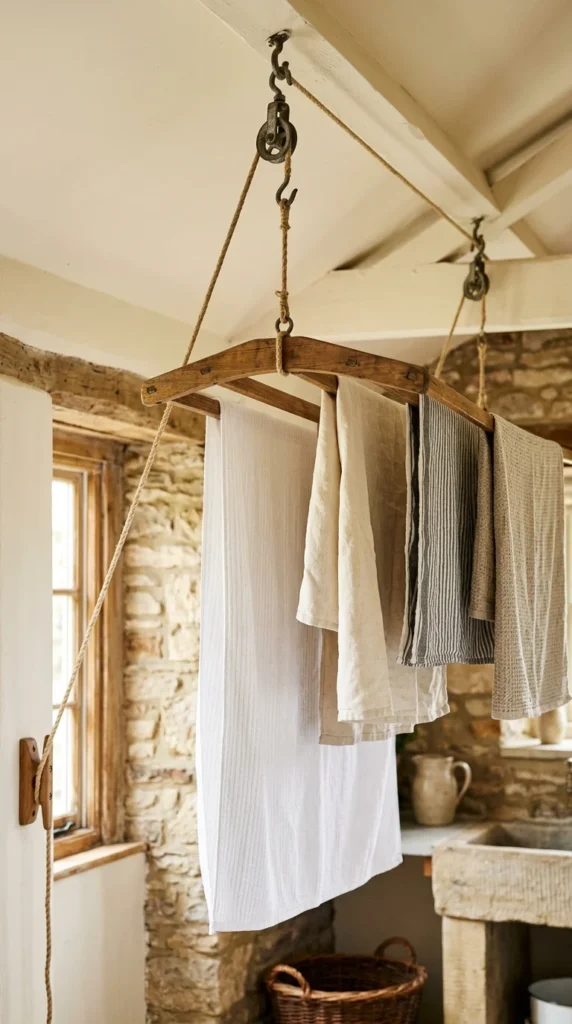
When the walls and floors are full, look up. Pulley-operated ceiling racks—often called “creel” or “sheila maid” dryers—utilize the warm air that naturally rises to the top of the room to dry clothes faster. These racks can be lowered to waist height for loading and then hoisted up to the ceiling so they are completely out of the way. This is an excellent solution for drying large items like bedsheets or heavy towels that would otherwise occupy a lot of space.
12. Pedestal Drawers
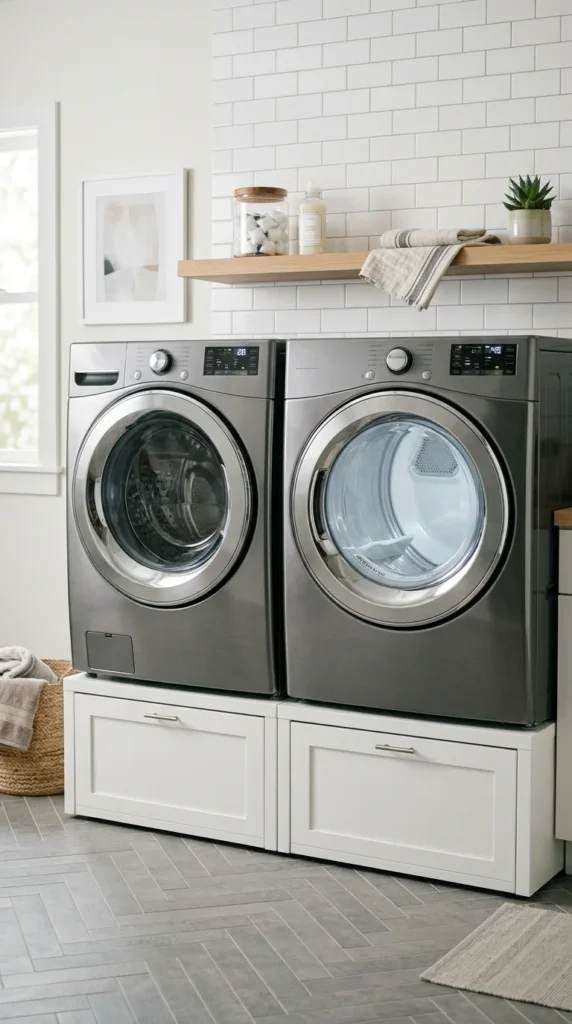
If you aren’t stacking your machines, consider placing them on pedestals. Most appliance manufacturers offer matching pedestals that raise the machines by about 12 to 15 inches. Not only does this make loading and unloading more ergonomic by reducing bending, but it also provides two massive drawers for storing extra-large detergent tubs, jugs of bleach, or backup cleaning supplies. If you’re feeling crafty, you can even build a custom wooden platform with cubbies to achieve the same effect on a budget.
13. Fold-Down Tables
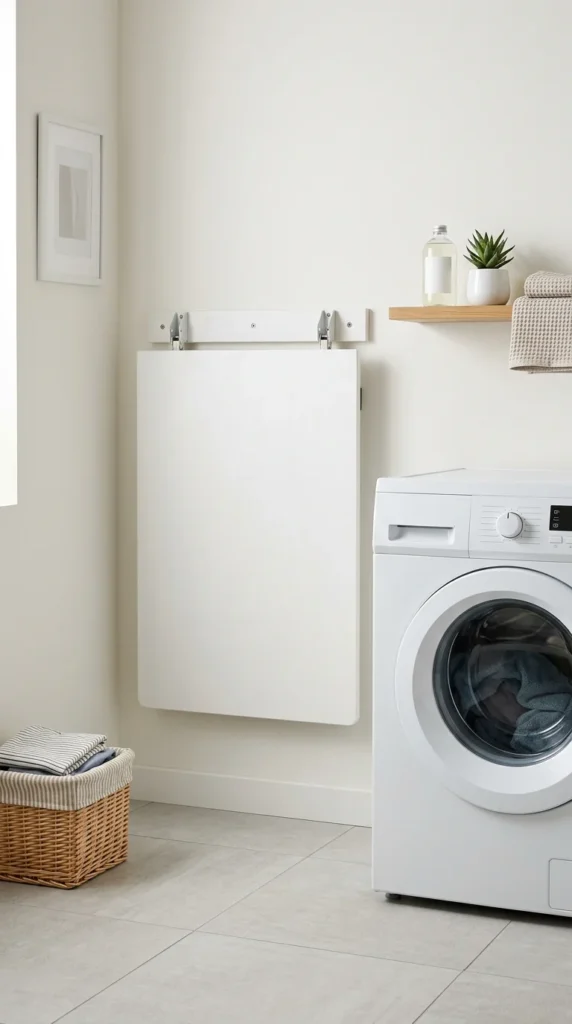
If your laundry room is too small for a permanent folding station, a wall-mounted fold-down table is the answer. Similar to a Murphy bed, these tables are hinged to the wall and can be flipped up when you need a surface for folding clothes or treating stains. Once the task is finished, the table folds back down, sitting flush against the wall and restoring the room’s footprint. This is particularly useful in narrow “galley” style laundry rooms where every inch of walkway is precious.
14. Under-Shelf Baskets
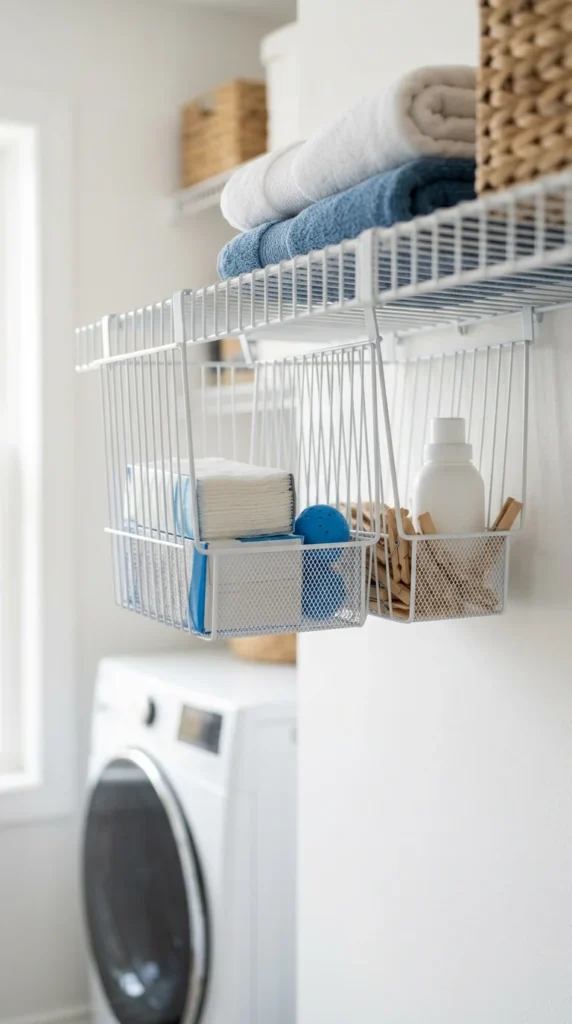
Maximize the vertical gaps between your shelves by using “under-shelf” baskets. These wire baskets slide onto the existing shelf boards, creating a secondary “floating” storage layer. They are perfect for small, lightweight items that often get lost in larger bins, such as mesh laundry bags, delicate wash detergents, or stray socks waiting for their partners. It’s a low-cost way to increase your storage capacity without drilling any new holes or installing new furniture.
15. Bright Lighting
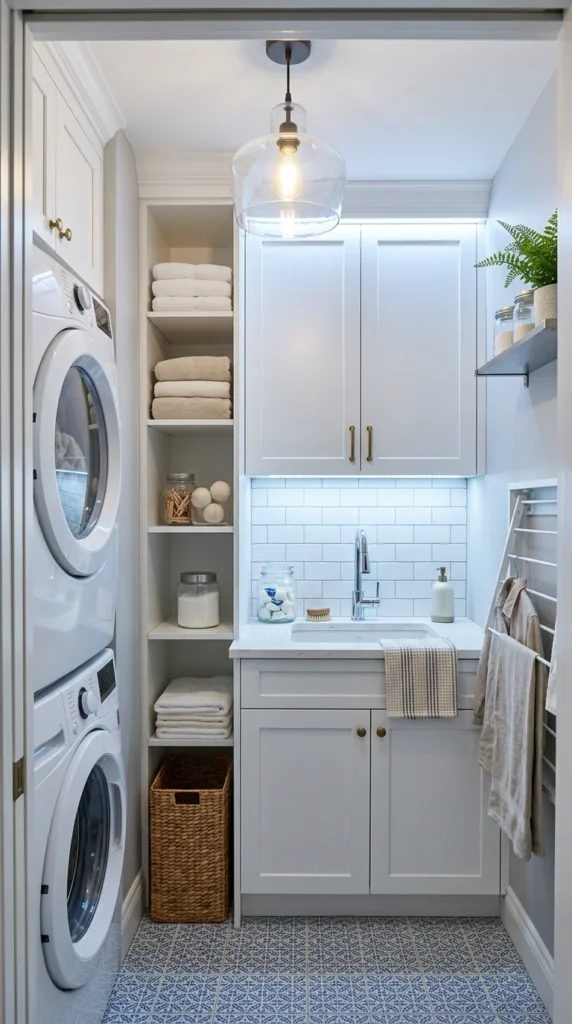
While not a physical storage solution, lighting is a critical “space-making” tool. Small laundry rooms are often windowless and can feel cave-like. By installing bright, layered lighting—such as a strong overhead light combined with under-cabinet LED strips—you eliminate shadows and make the space feel much larger than it is. Good lighting also serves a functional purpose, helping you spot stains more easily and ensuring you don’t miss a stray sock in the back of the dryer. High-gloss paint and mirrors can further help bounce light around, creating an illusion of depth and openness.