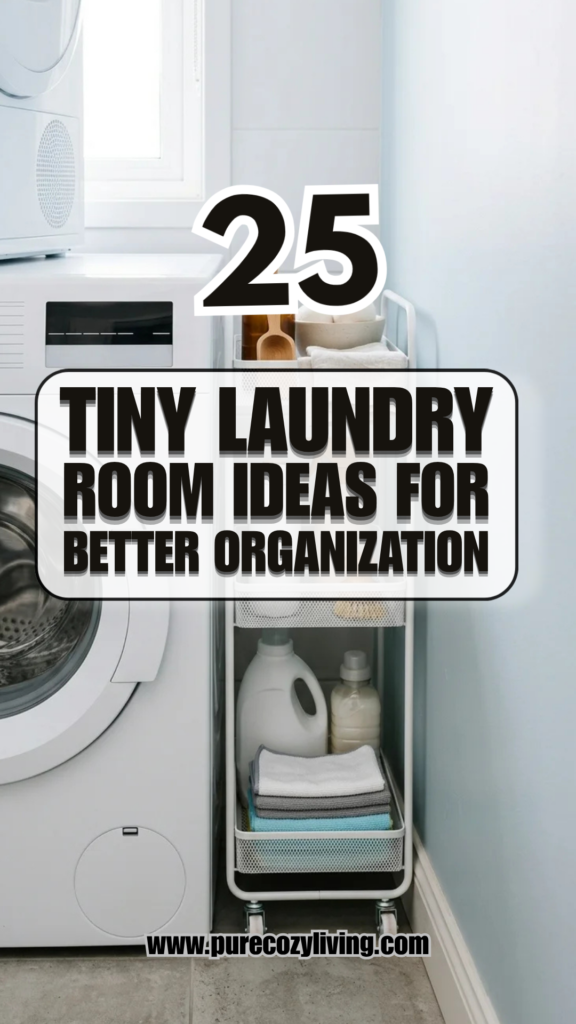

Maximizing a tiny laundry room is an exercise in vertical thinking and strategic placement. When square footage is at a premium, every inch must serve a purpose, from the space behind the door to the area above the machines. By integrating clever storage solutions and streamlined design, you can transform a cramped closet into a highly efficient workspace.
1. Stacked Units
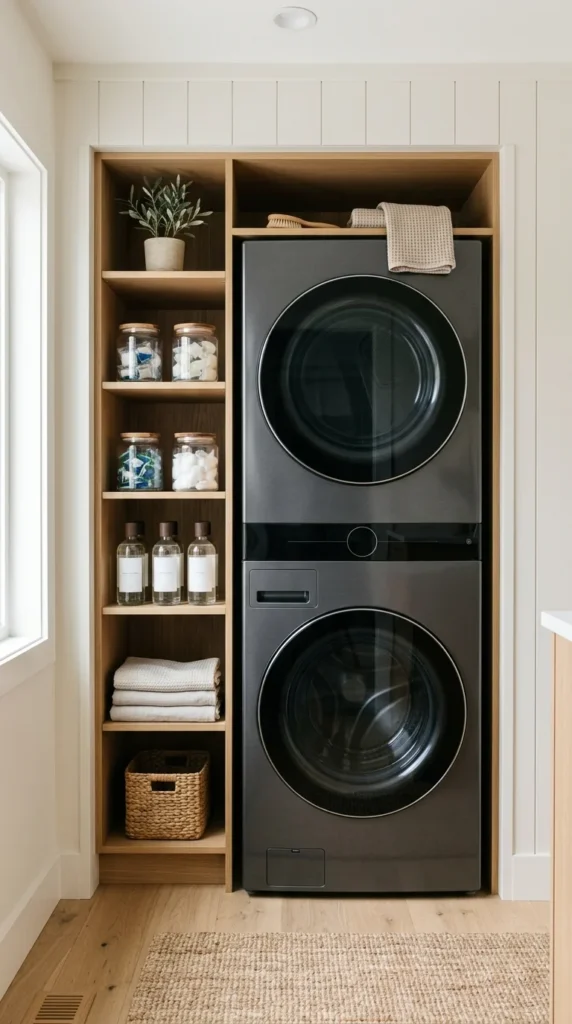
One of the most effective ways to reclaim floor space in a small laundry room is to stack your washer and dryer. By moving the dryer on top of the washing machine, you cut the footprint of your appliances in half. This opens up valuable real estate for a slim utility cabinet, a folding station, or even a small sink. Ensure you use a certified stacking kit to maintain stability and dampen vibrations during high-speed spin cycles.
2. Pedestal Drawers
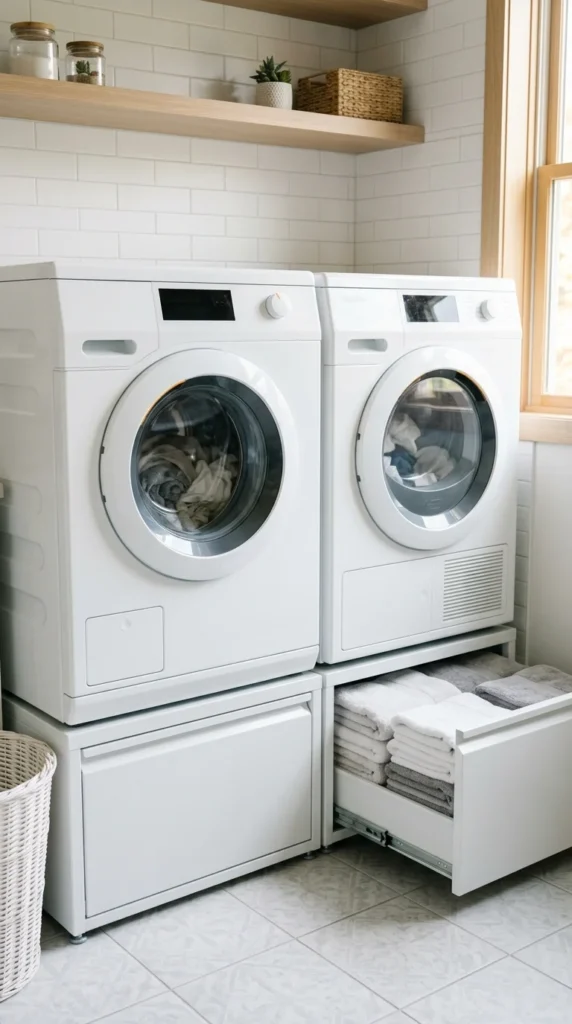
If stacking isn’t an option due to height restrictions, pedestal drawers are a game-changer. These units lift your appliances about 12 to 15 inches off the ground, making it easier on your back to load and unload laundry. More importantly, they provide deep drawers perfect for storing heavy detergent bottles, fabric softeners, and cleaning rags that would otherwise clutter your countertops.
3. Wall-Mounted Drying Rack
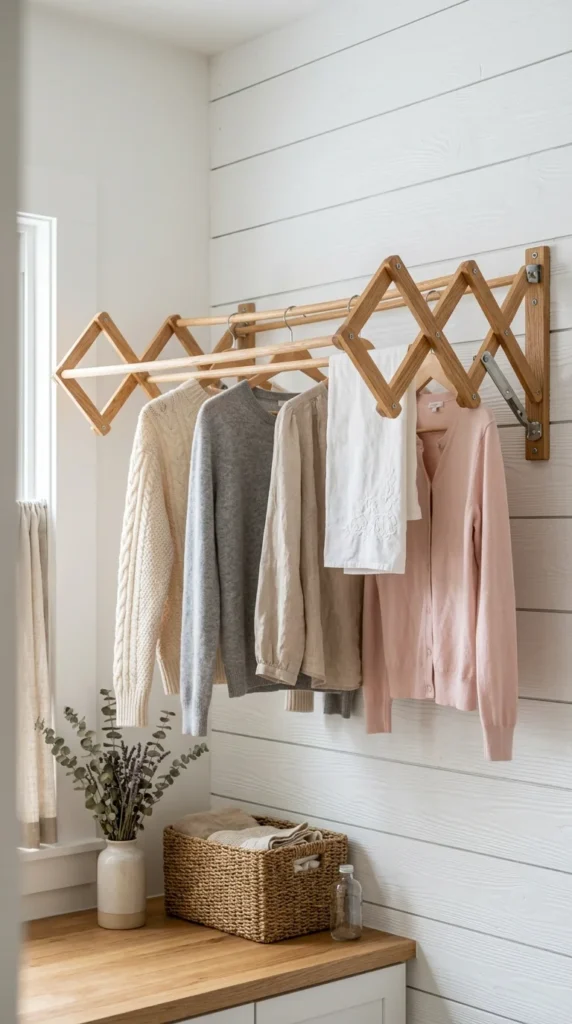
Floor-standing drying racks are notorious for consuming space and creating obstacles. A wall-mounted version can be folded flat against the wall when not in use. These racks are ideal for air-drying delicates or “lay flat to dry” items. Look for designs made of moisture-resistant materials like bamboo or powder-coated steel to ensure longevity in a humid environment.
4. Over-the-Door Organizer
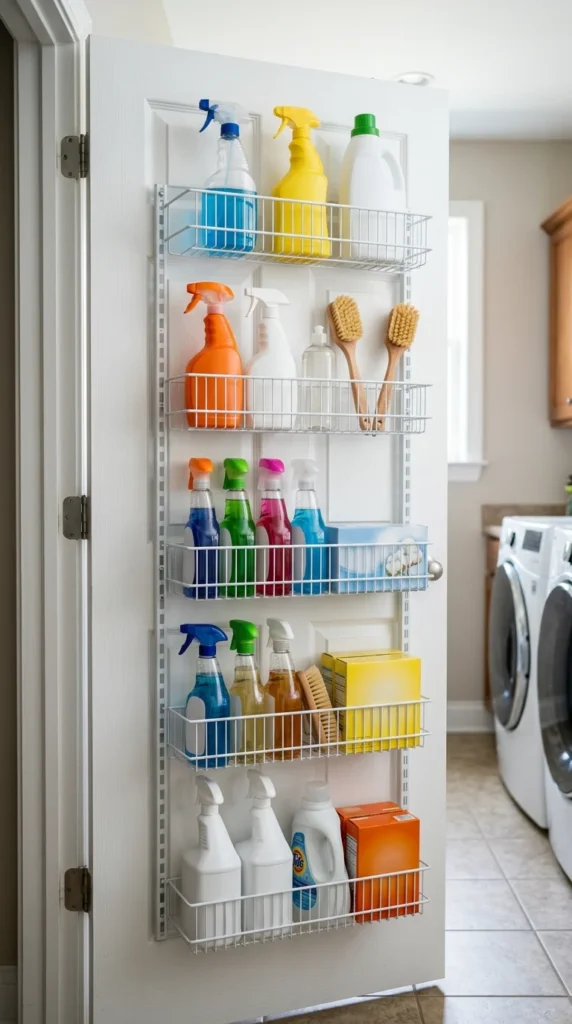
The back of the laundry room door is often overlooked. Installing a heavy-duty over-the-door organizer allows you to store cleaning supplies, lint rollers, and stain removers in clear view. This keeps small items from getting lost in the back of deep cabinets and frees up shelf space for larger essentials like laundry hampers or bulk-sized products.
5. Floating Shelves
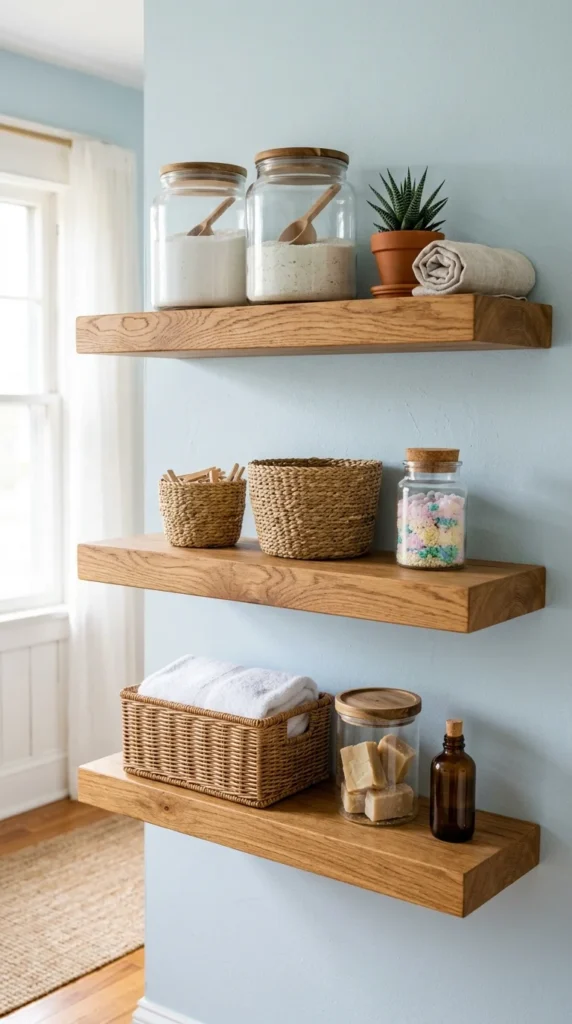
Floating shelves provide a sense of openness that traditional cabinetry lacks. By installing them above the washer and dryer, you create a dedicated spot for frequently used items. They are also an excellent place to add aesthetic touches, such as small plants or decorative jars, which can make the chores feel less like a burden and more like a pleasant routine.
6. Slim Rolling Cart
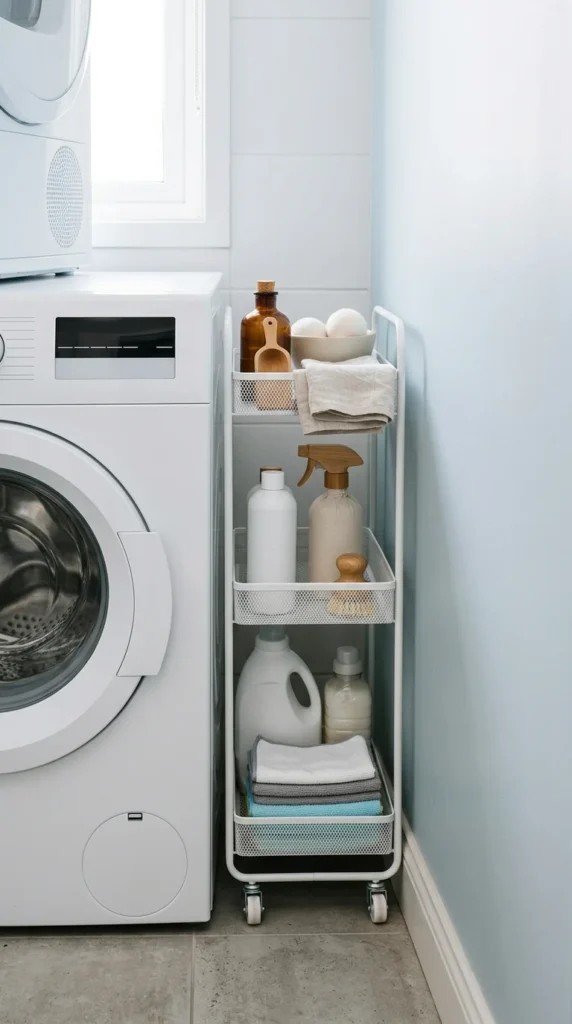
In many laundry rooms, there is a “dead zone” of three to six inches between the appliances and the wall. A slim rolling cart is designed specifically to slide into these gaps. It provides multiple tiers of storage for tall bottles and can be pulled out easily when you need to reach for the bleach or stain-fighting spray.
7. Cabinet Lighting
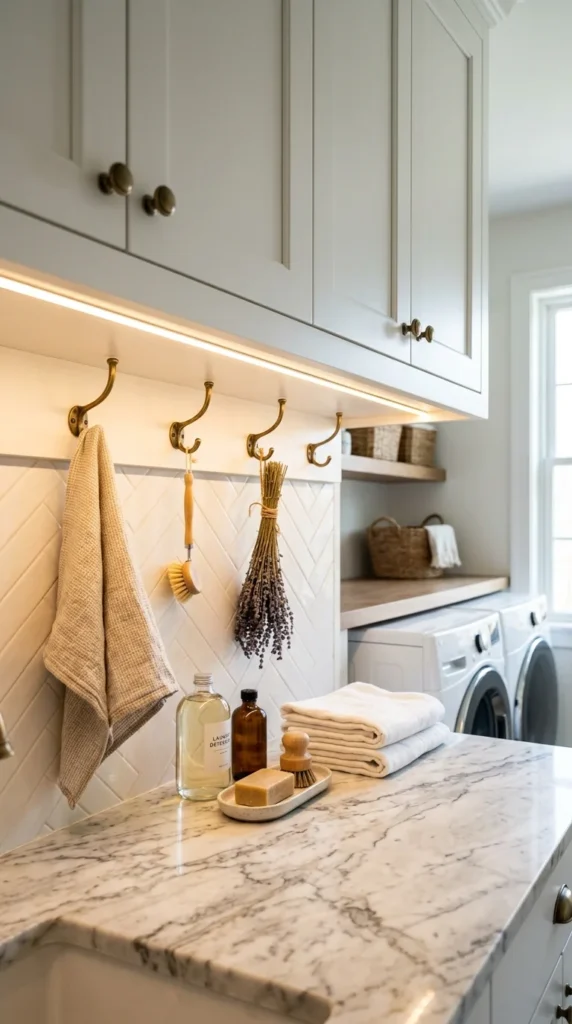
Dark corners make a small space feel even smaller. Under-cabinet LED strips or puck lights illuminate your workspace, making it easier to spot stains and read labels. High-quality lighting is a simple upgrade that improves both the functionality and the perceived size of the room, creating a bright, professional atmosphere.
8. Retractable Clothesline
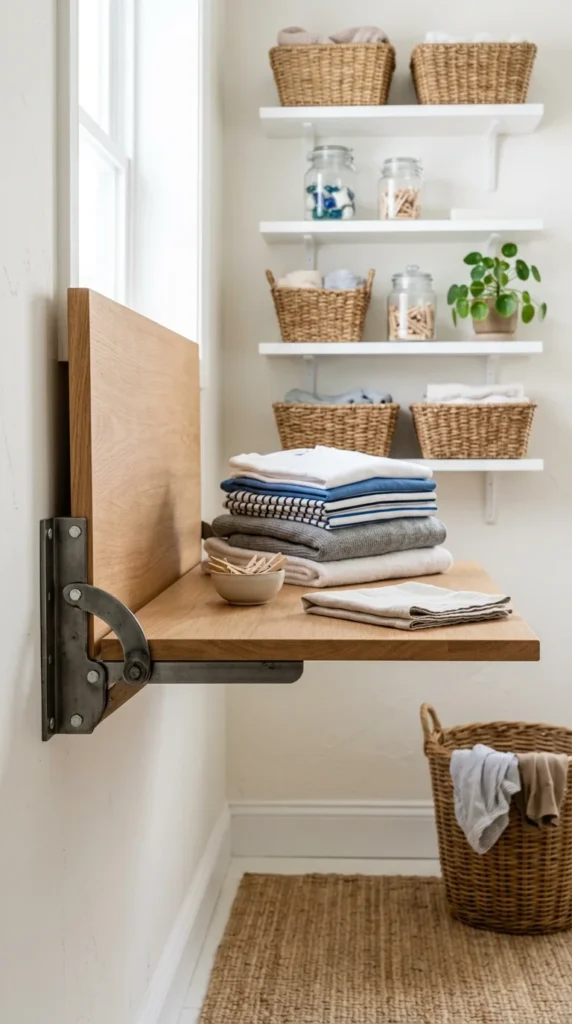
For those who only occasionally need to hang-dry large items like bedsheets, a retractable clothesline is the ultimate space-saver. It remains hidden in a small wall-mounted housing until needed. Once the laundry is dry, the line zips back into its base, leaving the room completely clear of obstructions.
9. Countertop Over Washer
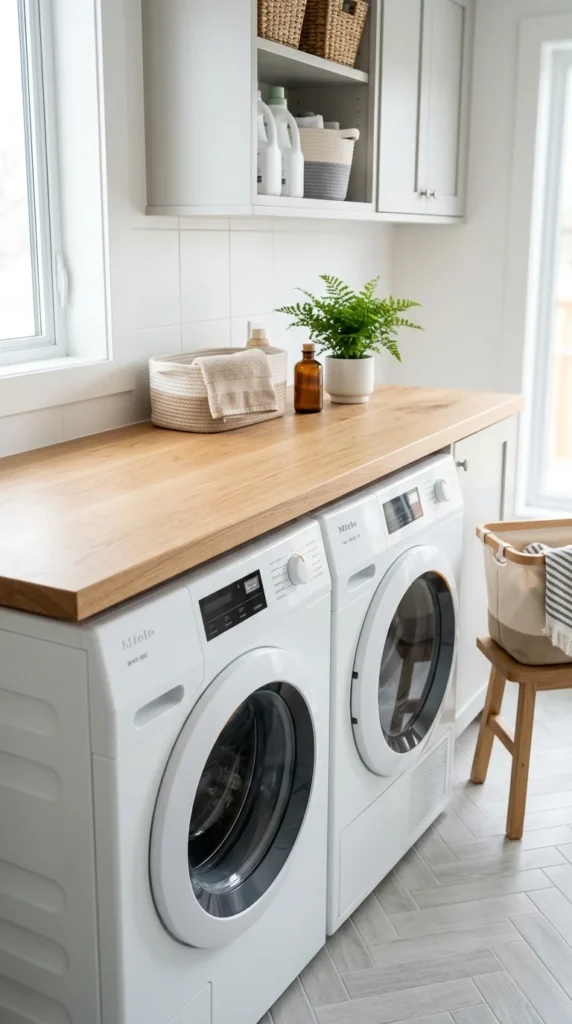
If you have front-loading machines, installing a countertop directly over them is one of the best ways to gain usable space. This provides a large, flat surface for sorting and folding clothes right out of the dryer. It also prevents small items like socks from falling behind the machines, a common frustration in tight quarters.
10. Folding Station
In a truly tiny room, even a fixed countertop might be too much. A wall-mounted folding station acts like a Murphy bed for your laundry. You can flip it up when you have a mountain of clothes to fold and drop it back down against the wall once the task is complete, keeping the floor area clear for movement.
11. Pull-Out Ironing Board
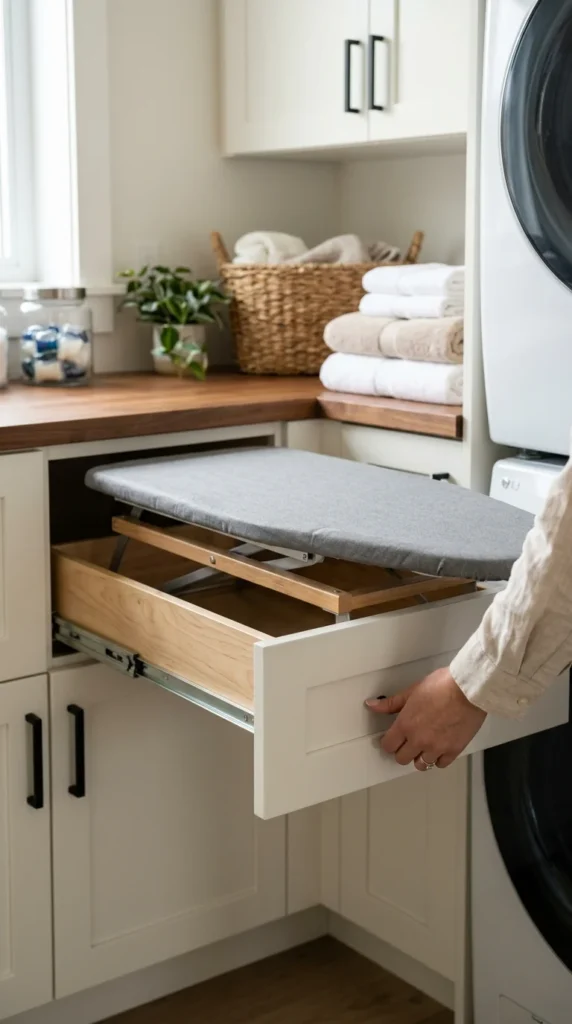
Full-sized ironing boards are bulky and difficult to store. A pull-out or “stow-away” ironing board can be integrated into a drawer or a shallow wall cabinet. This ensures that you always have a pressing surface ready to go without the hassle of wrestling with a traditional folding board and finding a place to hide it afterward.
12. Magnetic Lint Bin
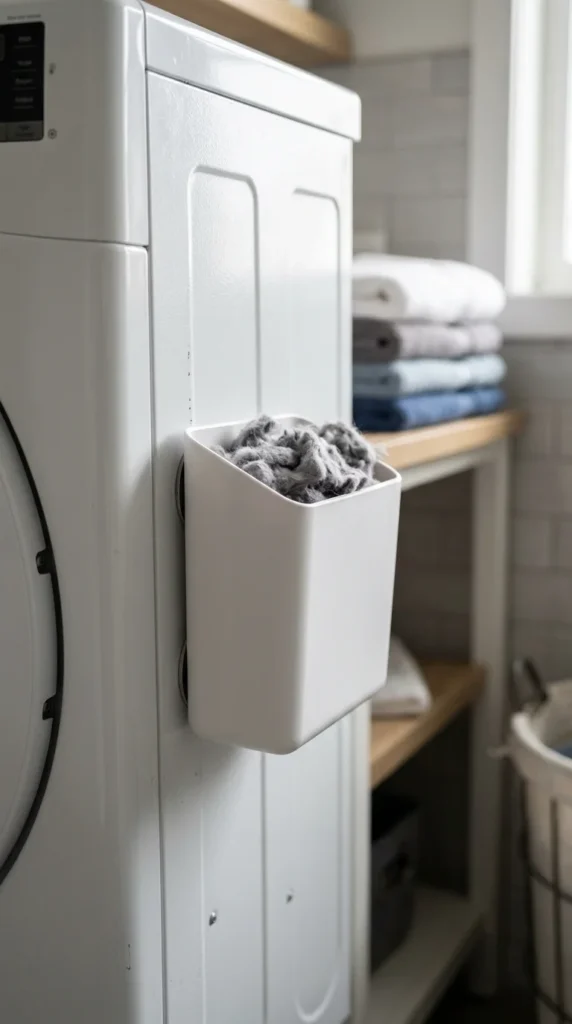
Instead of taking up floor space with a large trash can, use a magnetic lint bin that sticks directly to the side of your dryer. It serves as a convenient reminder to clear the lint trap after every load and keeps the floor clear. Some versions even come with a mount for a small brush to help clean the lint filter.
13. Corner Shelving
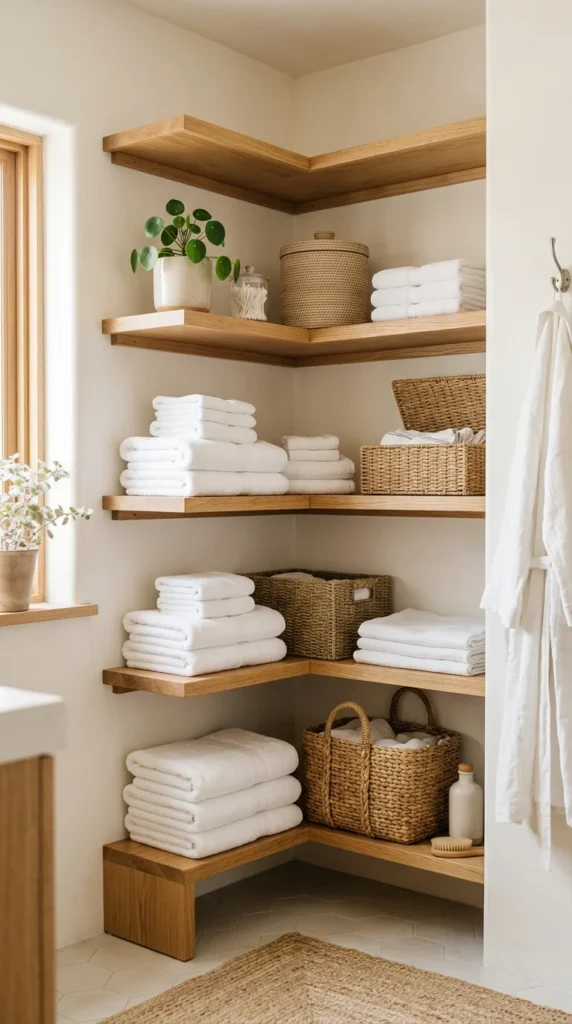
Corners are often underutilized in small rooms. Custom corner shelving allows you to wrap your storage around the perimeter of the room, maximizing every available inch. This is a great spot for items you don’t use every day, such as extra light bulbs, specialized fabric dyes, or seasonal cleaning supplies.
14. Vertical Storage
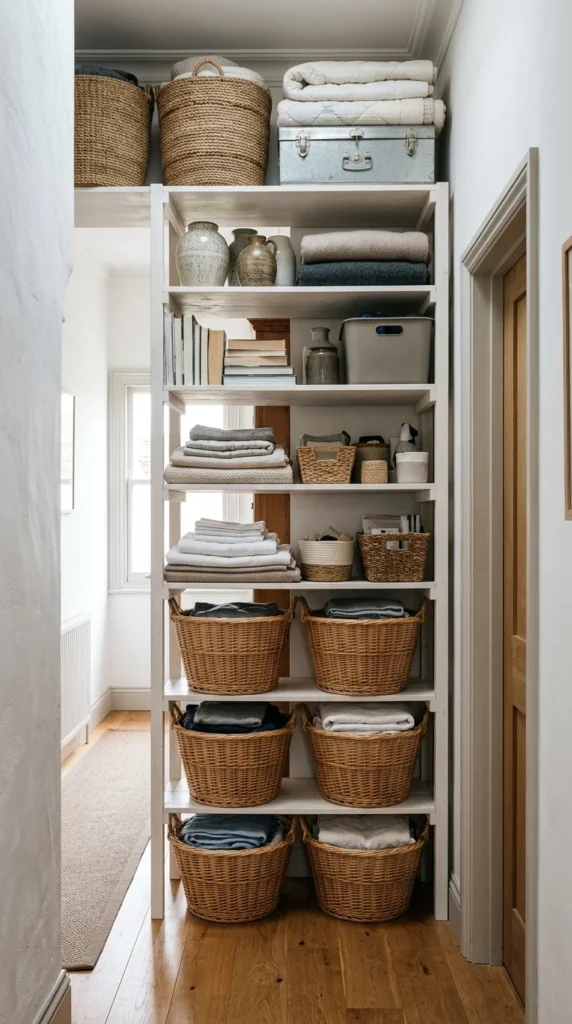
When you can’t go wide, go high. Floor-to-ceiling shelving units take advantage of the vertical volume of the room. Use the highest shelves for items used infrequently, like holiday-themed linens or bulk paper towels, and keep daily essentials at eye level for easy access.
15. Clear Containers

Decanting your laundry supplies into clear glass or plastic containers serves two purposes: it creates a unified, organized look and allows you to see exactly when you are running low on supplies. This eliminates the visual clutter of mismatched cardboard boxes and plastic jugs, making the room feel more serene.
16. Hanging Rod
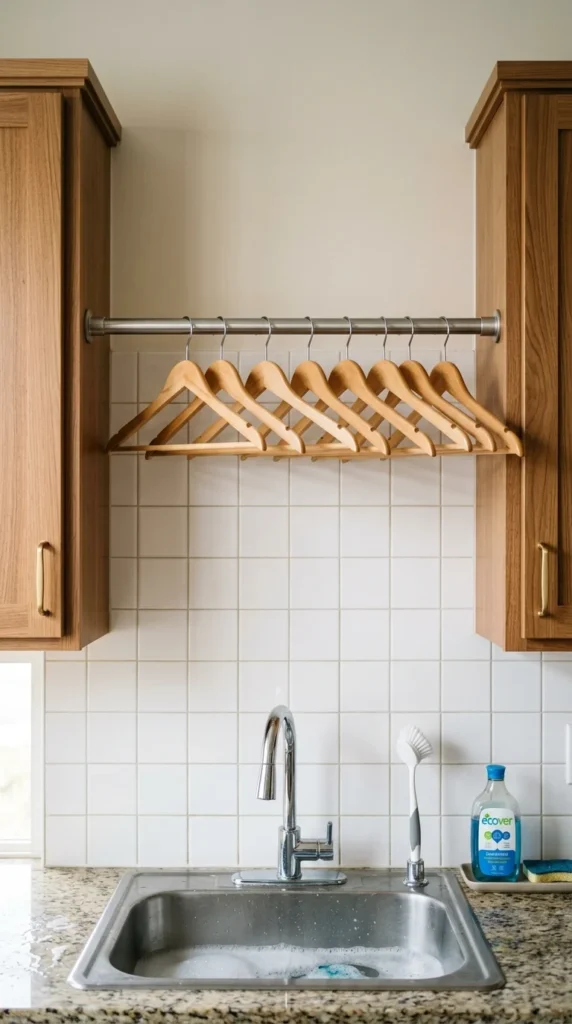
A simple tension rod or a fixed closet rod installed between two cabinets or walls provides a place to hang clothes directly out of the dryer. This helps prevent wrinkles in dress shirts and slacks, reducing the amount of ironing required. It’s a low-cost addition that offers high functional value.
17. Woven Baskets
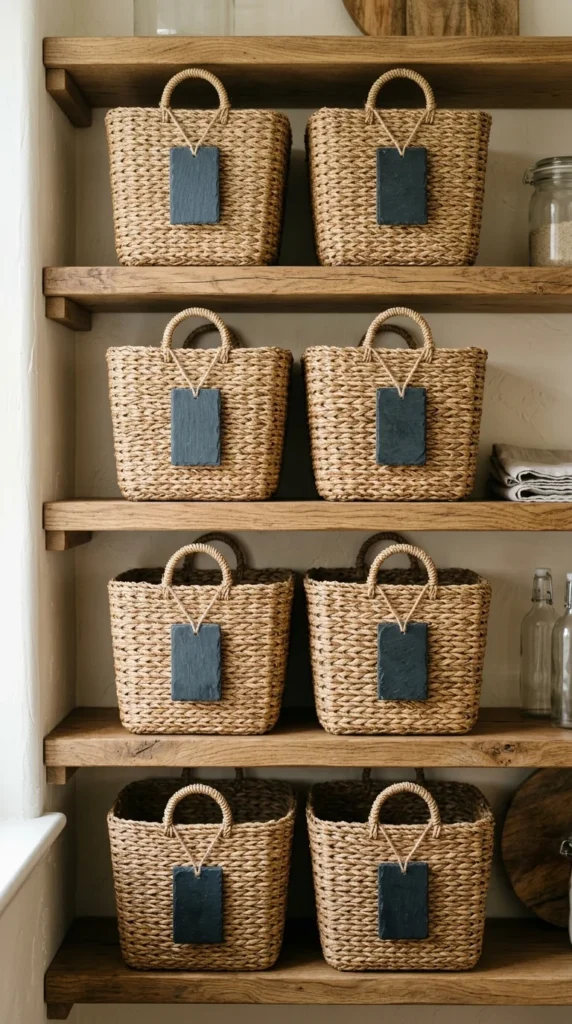
Baskets are the secret weapon of organization. They hide “visual noise” and keep similar items grouped together. Use woven baskets to categorize your supplies—one for stain treatments, one for delicate wash bags, and another for cleaning tools. The natural texture also adds warmth to the often-sterile environment of a laundry room.
18. Pegboard Wall
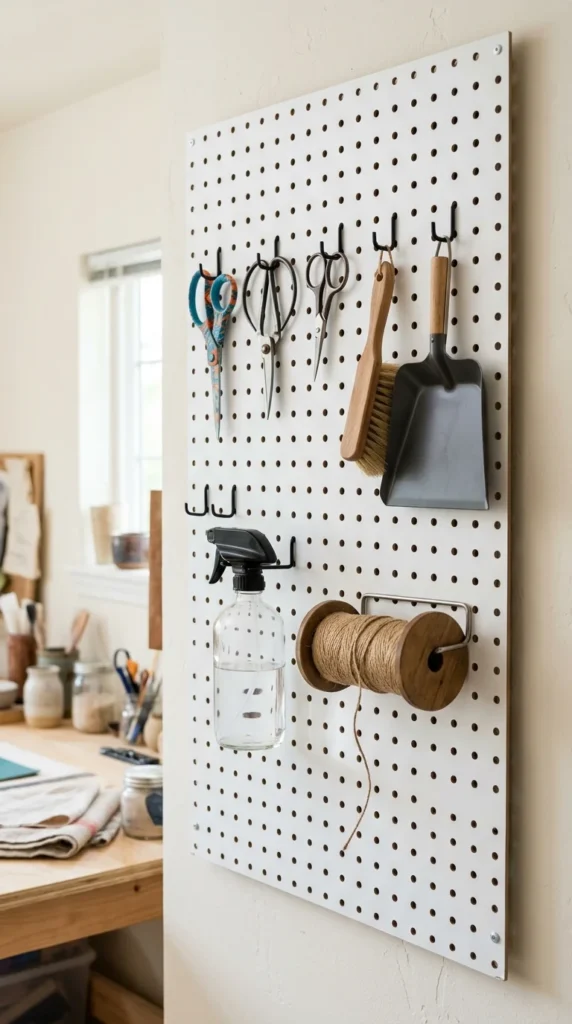
A pegboard is the ultimate customizable storage solution. You can move hooks, shelves, and bins around as your needs change. It’s particularly useful for hanging awkward items like scrubbing brushes, spray bottles, and even small baskets for clothespins. It keeps everything off the counters and within arm’s reach.
19. Back-of-Door Hamper
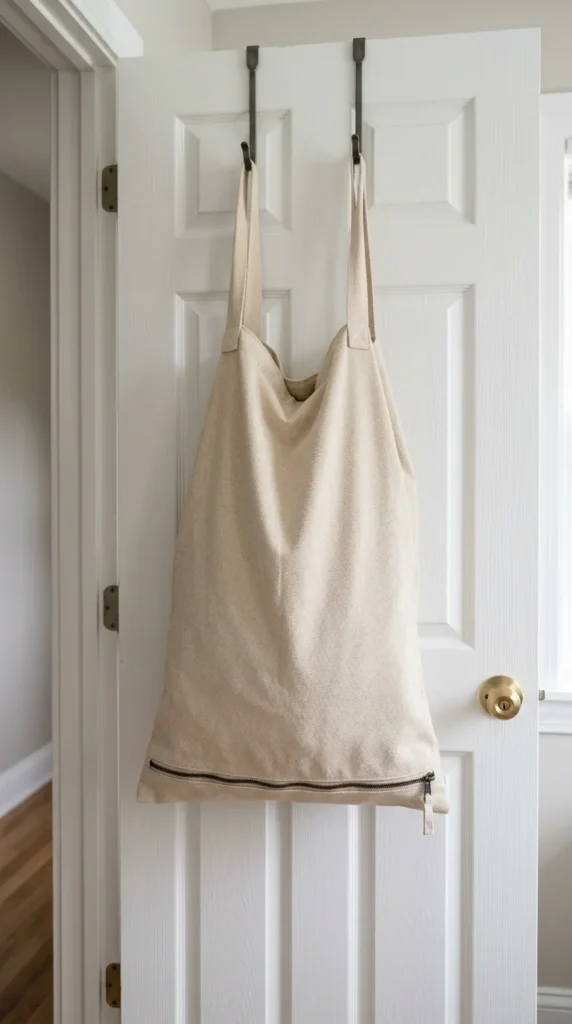
If you don’t have floor space for a traditional hamper, a hanging laundry bag is a brilliant alternative. These can be mounted on the back of the door or on a side wall. Many designs feature a zippered bottom, allowing you to position the bag over the washer and drop the clothes directly in without having to unhook the bag.
20. Hidden Cabinets
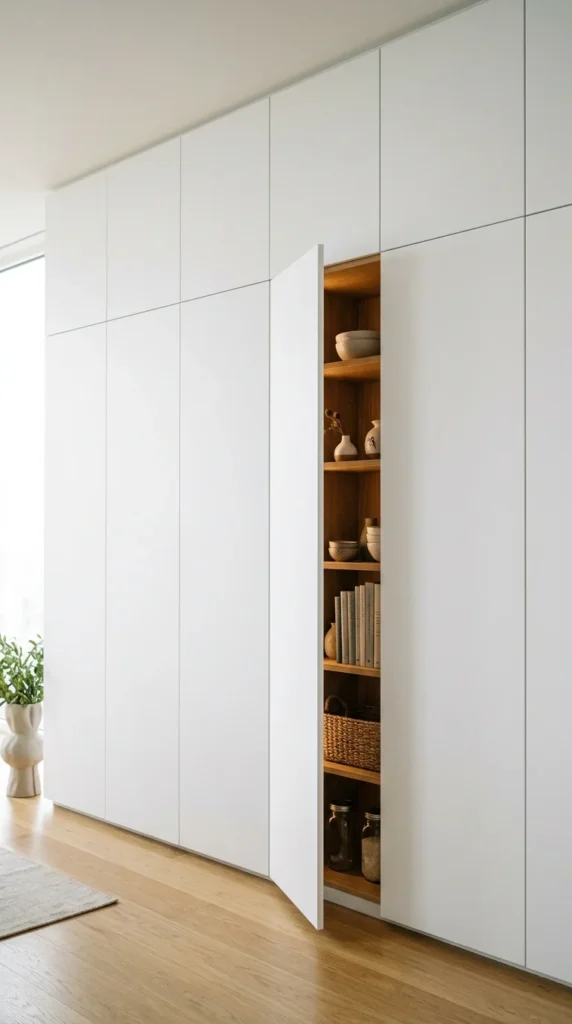
For a minimalist look, consider handle-less, “push-to-open” cabinets that blend into the walls. By hiding the “work” part of the laundry room behind sleek doors, you create a space that feels less utilitarian and more integrated with the rest of your home’s design. This is especially effective if your laundry area is located in a hallway or kitchen.
21. Tiled Backsplash
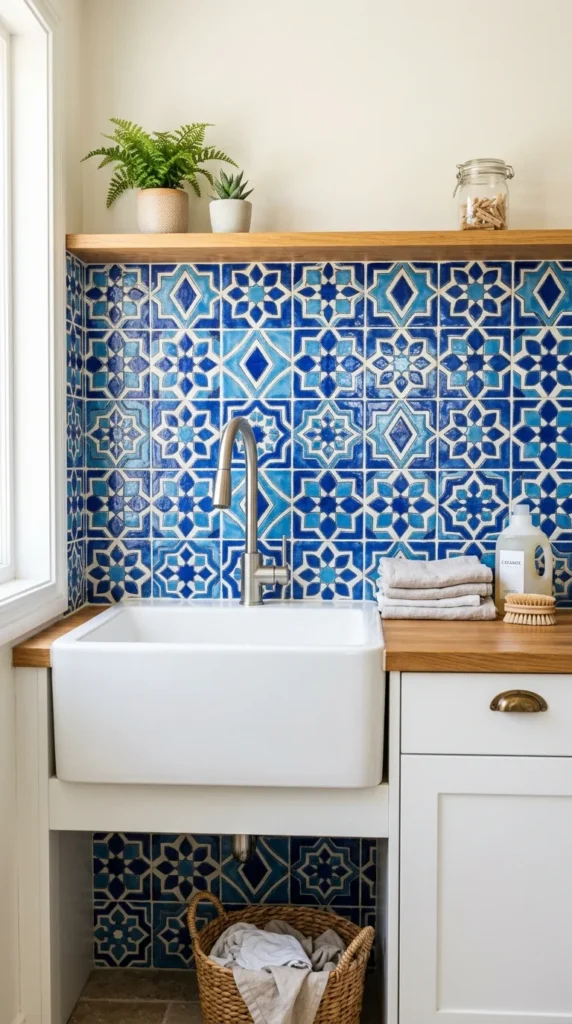
While primarily aesthetic, a tiled backsplash makes a small laundry room feel like a designed space rather than an afterthought. Tiles are also easy to wipe down, which is important in a room where bleach and detergents are frequently handled. A bright or patterned tile can provide a focal point that distracts from the room’s small size.
22. Under-Shelf Baskets
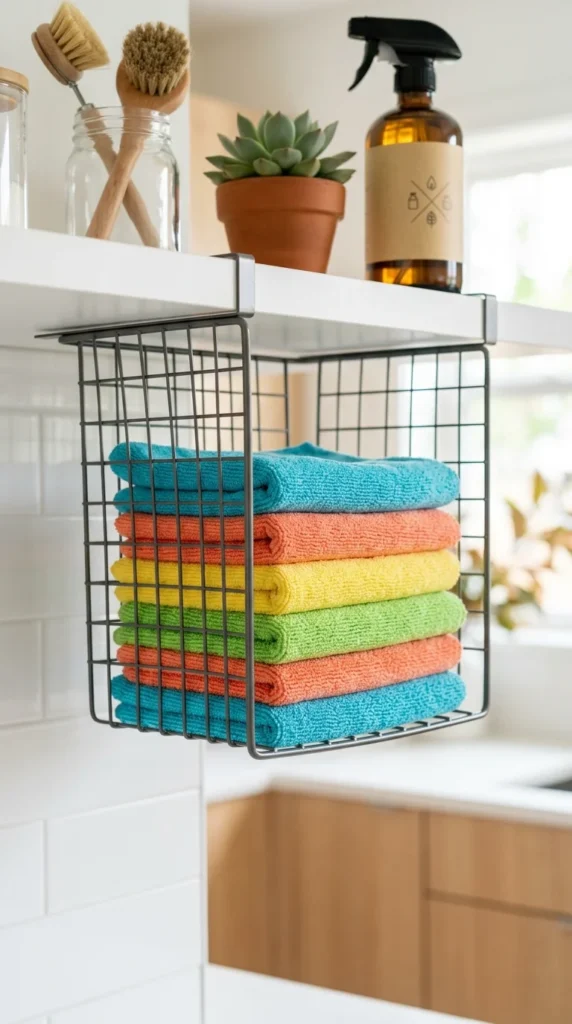
Under-shelf baskets utilize the “air space” beneath your existing shelves. They are perfect for storing flat items like dryer sheets, cleaning cloths, or mesh laundry bags. They require no drilling or installation—simply slide them onto the shelf and you’ve instantly doubled your storage capacity in that specific spot.
23. Labeling System
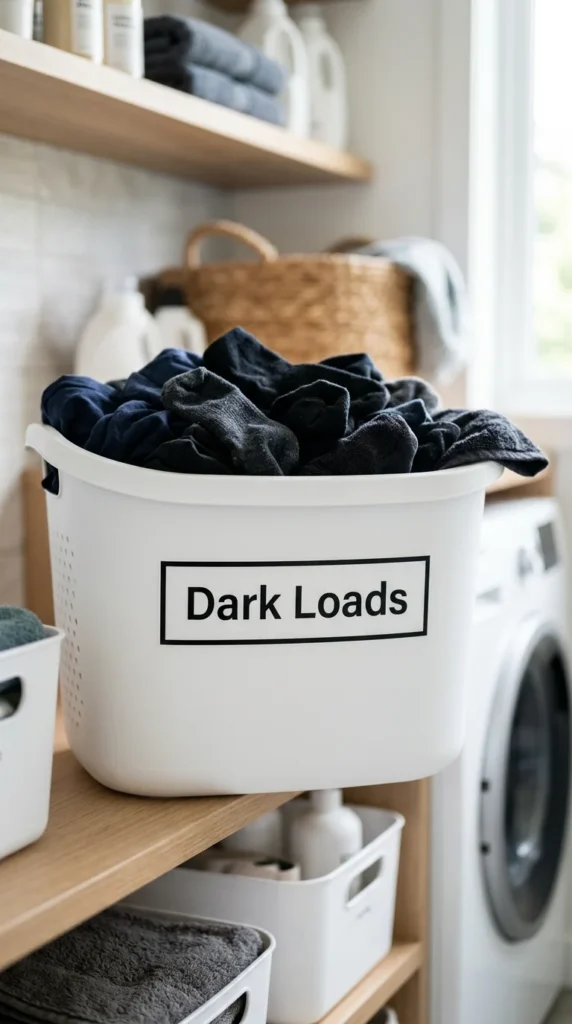
In a small space, items must be returned to their designated spots to maintain order. A consistent labeling system ensures that everyone in the household knows where things go. Whether you use a label maker, chalkboard tags, or vinyl stickers, clear communication is key to preventing the “clutter creep” that often plagues small rooms.
24. Ceiling Racks

If your walls are already full, look to the ceiling. A pulley-operated drying rack can be lowered to load clothes and then hoisted up toward the ceiling, where the warmest air in the room circulates. This keeps your laundry out of the way and uses the most underutilized space in any house.
25. Foldable Table
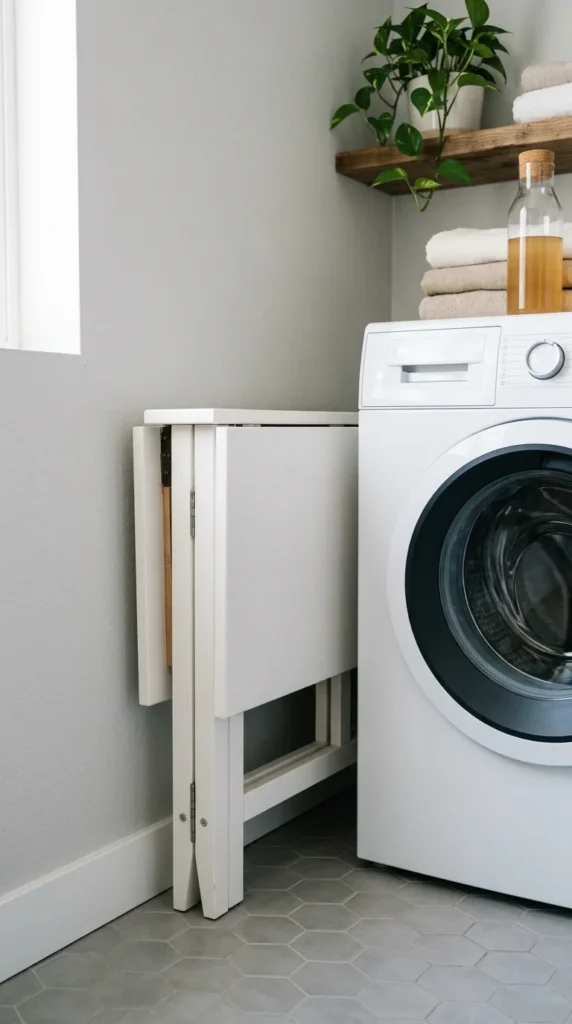
When you need an extra surface for sorting or pretreating stains, a small folding table can be brought in and then tucked away behind a door or the machines when the work is done. This flexibility is essential for tiny rooms where a permanent table would block the flow of traffic.
By implementing these ideas, you can turn a cramped, chaotic laundry area into a streamlined and organized hub. The key is to look for multi-functional tools, utilize vertical space, and ensure that every item has a specific home. With a bit of planning, even the smallest laundry room can become one of the most efficient rooms in your home.