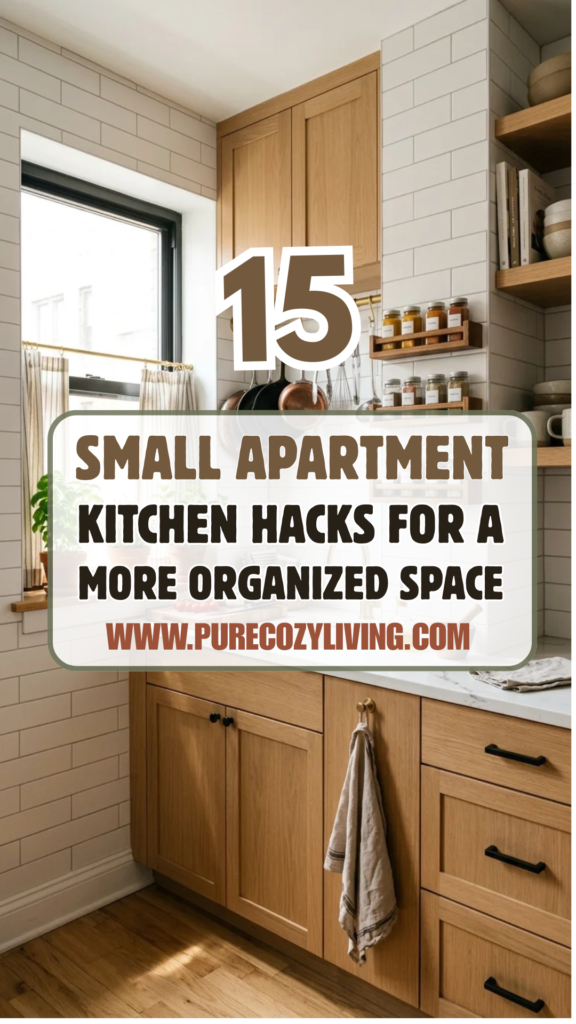

Living in a small apartment often means making significant compromises, and the kitchen is usually the first place to feel the squeeze. When counter space is non-existent and cabinet real estate is at a premium, preparing even a simple meal can feel like a high-stakes puzzle. However, a lack of square footage doesn’t have to mean a lack of functionality. By thinking vertically and utilizing every hidden nook, you can transform a cramped kitchenette into a chef-worthy workspace.
The key to mastering a small kitchen is optimization. It is about shifting your perspective from “how much space do I have?” to “how can I use this space more efficiently?” From the backs of doors to the undersides of shelves, every surface is a potential storage opportunity. Here are 15 small apartment kitchen hacks designed to maximize your space and bring order to the culinary chaos.
1. Magnetic Strips
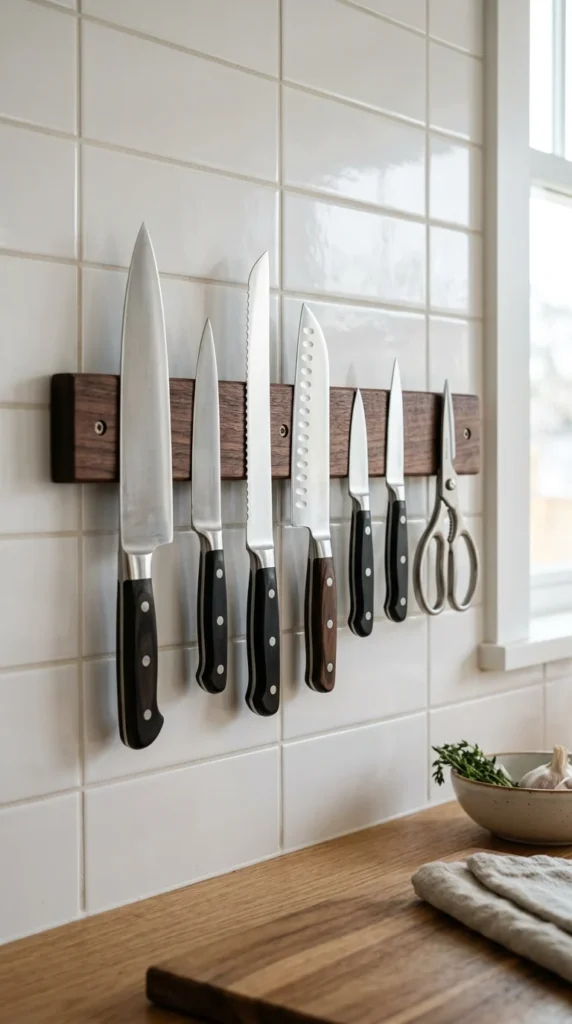
One of the quickest ways to clutter a small countertop is with a bulky knife block. Not only do these blocks take up valuable prep space, but they also tend to collect dust and crumbs. Replacing your knife block with a wall-mounted magnetic strip is a game-changer. These strips can be installed directly onto your backsplash, keeping your most-used tools within arm’s reach while freeing up several square inches of counter space. Beyond knives, these strips are excellent for holding metal measuring spoons, jar lids, or even small metal spice tins.
2. Pegboards
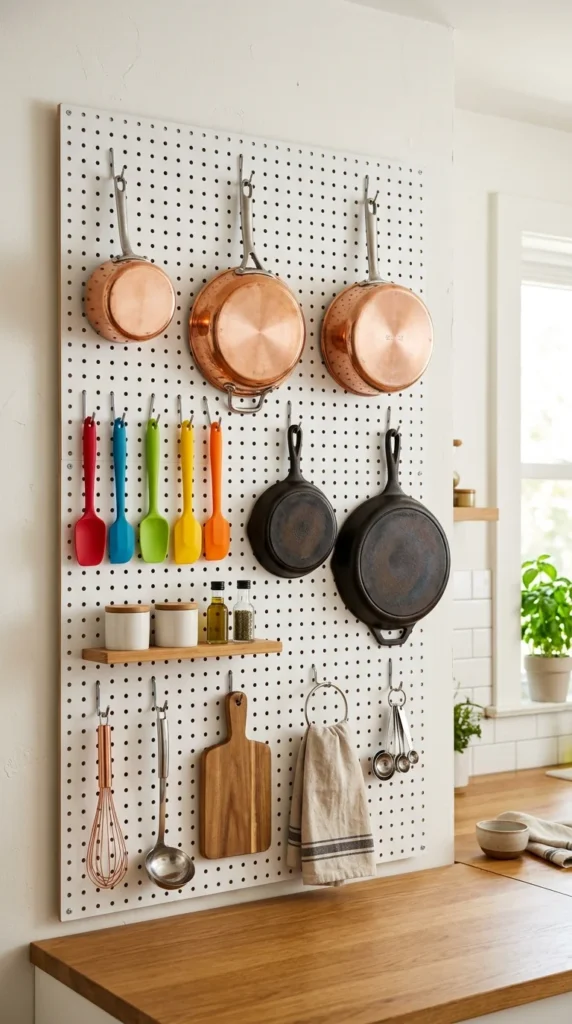
Pegboards are the ultimate versatile storage solution, popularized by culinary icons like Julia Child. In a small kitchen, wall space is often underutilized. By installing a pegboard, you create a customizable storage gallery that can evolve with your needs. You can hang heavy pots, lightweight strainers, and even small baskets for holding sponges or cleaning supplies. The visual nature of a pegboard also makes it incredibly easy to find exactly what you need without rummaging through deep, dark cabinets.
3. Sink Boards
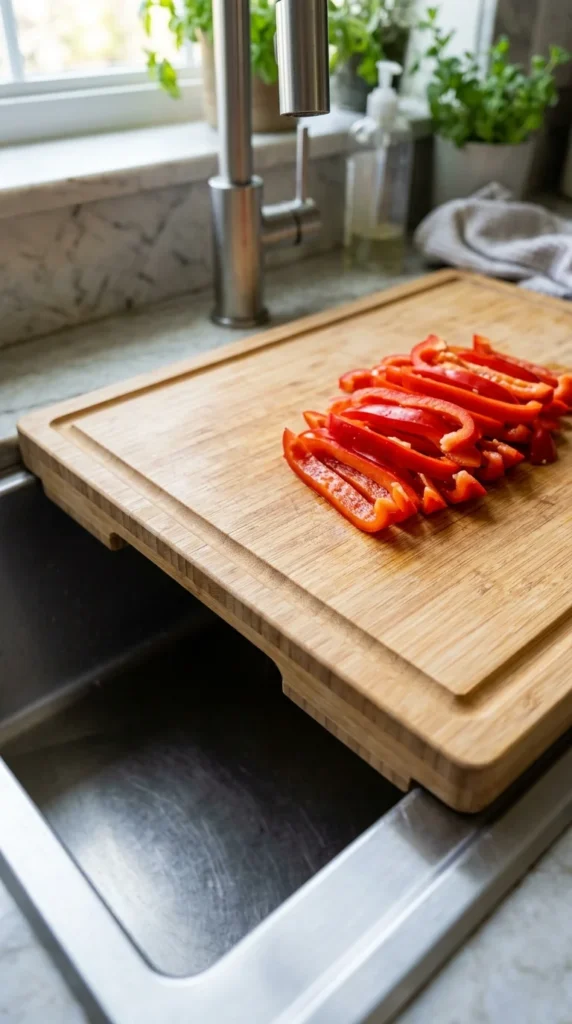
When counter space is at a minimum, the sink represents a significant “dead zone” during food preparation. Over-the-sink cutting boards effectively double your workspace. These boards are designed to rest securely over the basin, allowing you to chop vegetables or prep meat right over the drain. Many modern versions even come with integrated collapsible colanders, allowing you to wash and chop in one seamless motion without ever needing to touch your limited countertop area.
4. Command Hooks
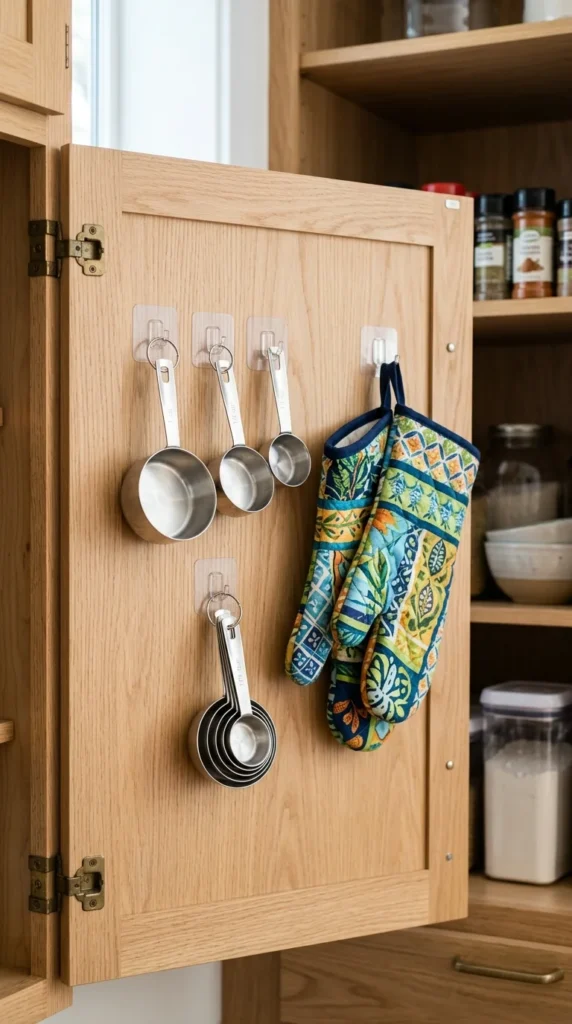
The backs of cabinet doors are often forgotten real estate. Heavy-duty adhesive hooks, like Command hooks, allow you to utilize this hidden space without drilling permanent holes—a must for renters. Use them to hang measuring cups, spoons, pot holders, or even the lids of your trash cans. This keeps these small, frequently used items organized and prevents them from getting lost in the “junk drawer” or taking up space in your primary utensil holders.
5. Shelf Risers
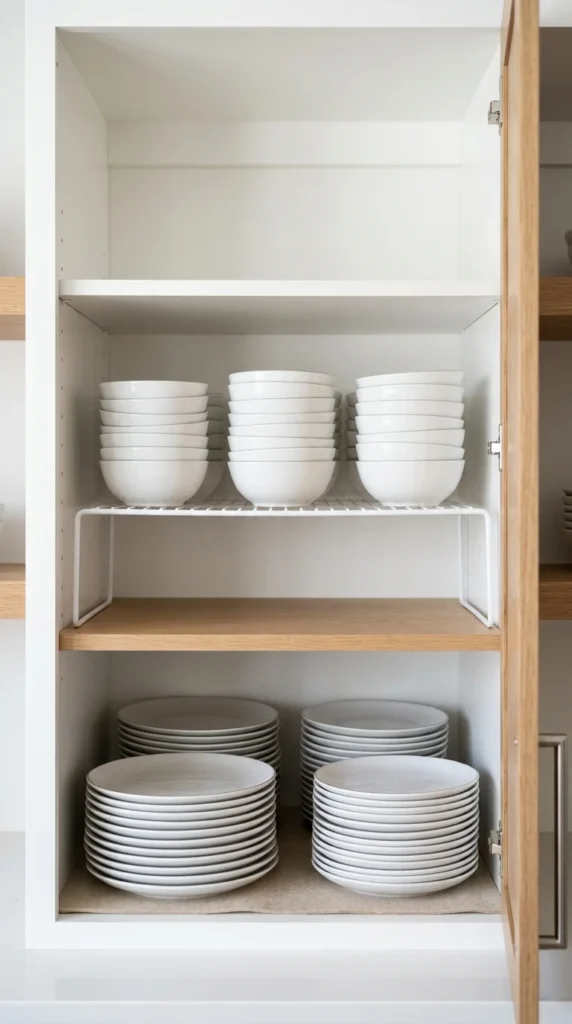
Most kitchen cabinets are designed with wide gaps between shelves, leading to a lot of wasted vertical space. Shelf risers—essentially “mini shelves” that sit on top of your existing shelves—allow you to stack items without creating a precarious tower of porcelain. They are perfect for separating plates from bowls or mugs from saucers. By utilizing the upper half of your cabinet height, you can effectively double the storage capacity of a single shelf.
6. Magnetic Jars
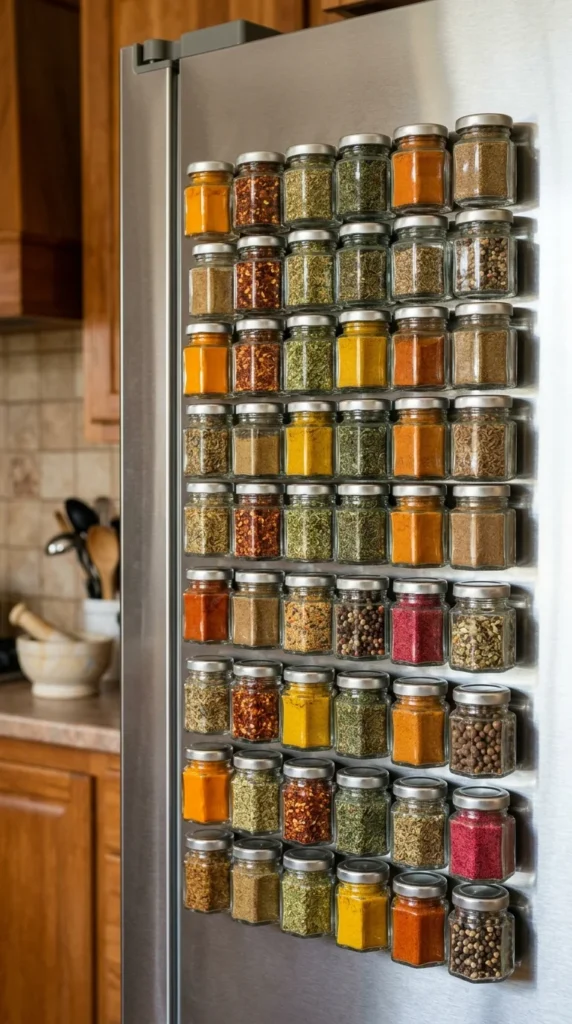
Spices are notorious for creating clutter. They come in mismatched bottles and often get pushed to the back of a pantry where they expire unnoticed. Magnetic spice jars solve this by moving the entire collection to the side of your refrigerator. This keeps your spices visible, accessible, and completely off your shelves. It also adds a decorative, colorful element to your kitchen while ensuring you never buy a second jar of cumin because you couldn’t find the first one.
7. Rolling Carts
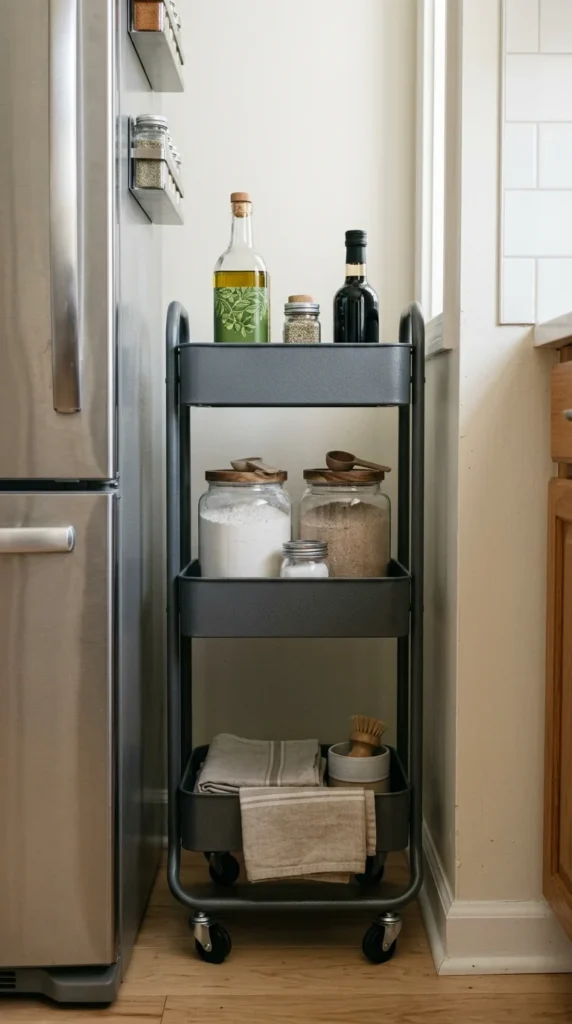
If your kitchen lacks a kitchen island or sufficient cabinetry, a rolling utility cart is the perfect mobile solution. These carts are usually narrow enough to fit into tight corners or gaps between appliances. You can use the top tier as an extra prep surface or a coffee station, while the lower tiers hold heavy items like stand mixers, bags of flour, or canned goods. The best part is that you can wheel it into the center of the room when you’re cooking and tuck it away when you’re finished.
8. Lid Organizers
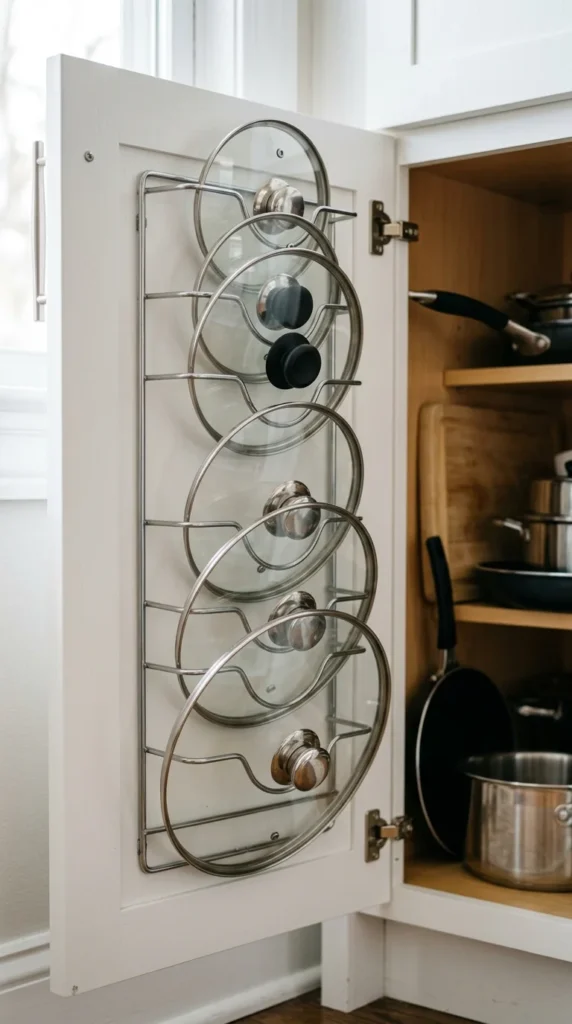
Pot lids are perhaps the most awkward items to store. They are bulky, they don’t stack well, and they often cause a clattering mess when you try to reach for a pan. A door-mounted lid organizer keeps them vertical and separated. This not only saves space inside the cabinet for the pots themselves but also makes it much easier to grab the specific lid you need for your Dutch oven or sauté pan.
9. Under-Cabinet Racks
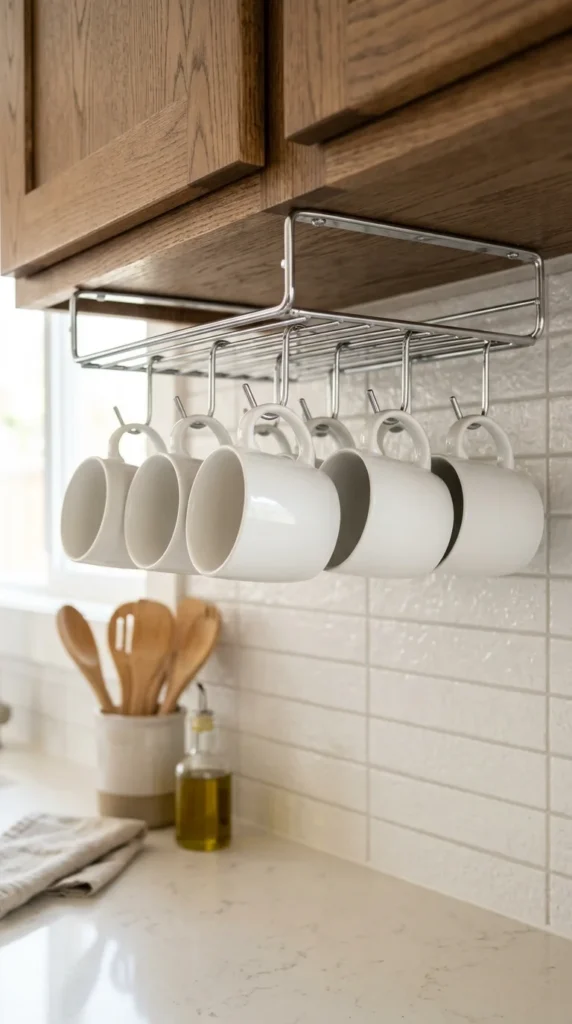
The space directly beneath your upper cabinets is often left empty. Under-cabinet racks can be used to hang coffee mugs, wine glasses, or even rolls of paper towels. By suspending these items, you free up the shelf space they would otherwise occupy. This is particularly useful for glassware, as it protects the delicate rims of wine glasses from chipping while keeping them displayed in a neat, organized fashion.
10. Stackable Bins
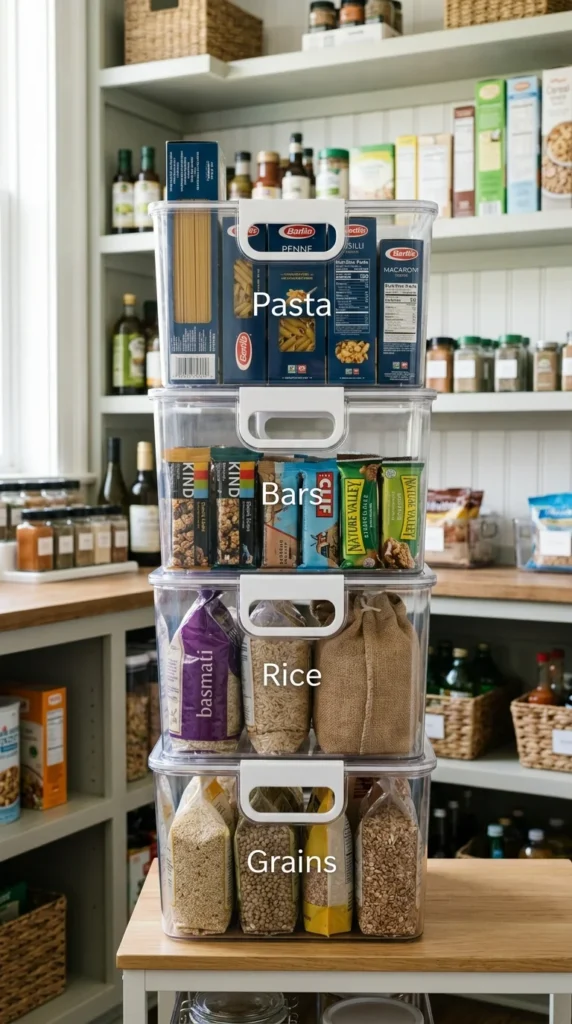
Deep cabinets or pantries often become “black holes” where items are forgotten. Stackable, clear bins allow you to categorize your groceries and see exactly what you have at a glance. By grouping similar items—such as baking supplies, snacks, or grains—into individual bins, you can pull out the entire container to find what you need rather than digging through layers of boxes. The stacking feature ensures you are maximizing the height of your pantry shelves.
11. Pull-Out Drawers
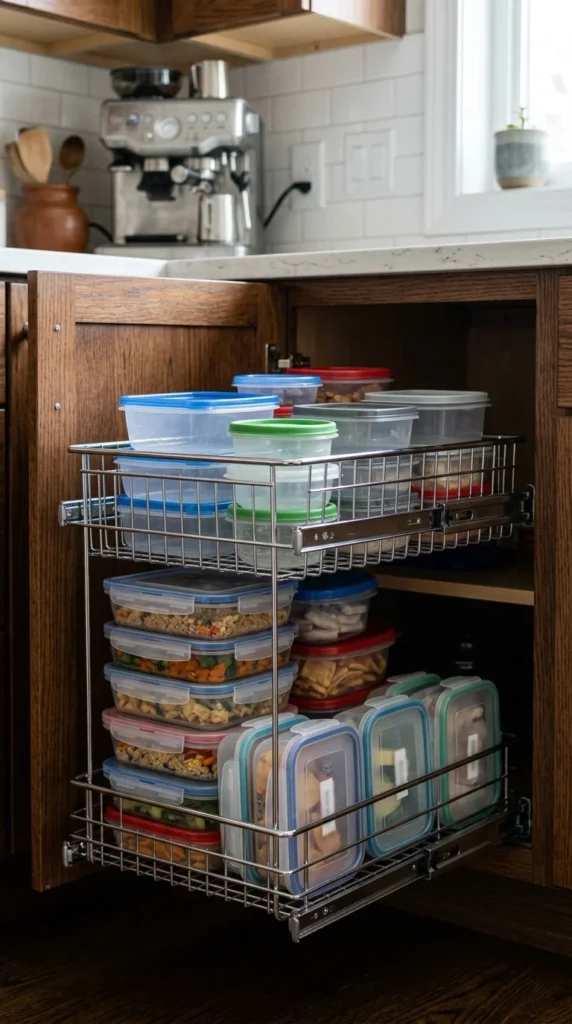
Deep lower cabinets are difficult to navigate, often requiring you to get on your hands and knees to find a pot at the back. Retrofitting these cabinets with pull-out wire drawers transforms them into functional storage. These sliding tracks bring everything at the back of the cabinet right to your fingertips. This is an excellent way to organize heavy appliances or nested mixing bowls that would otherwise be difficult to access.
12. Lazy Susans
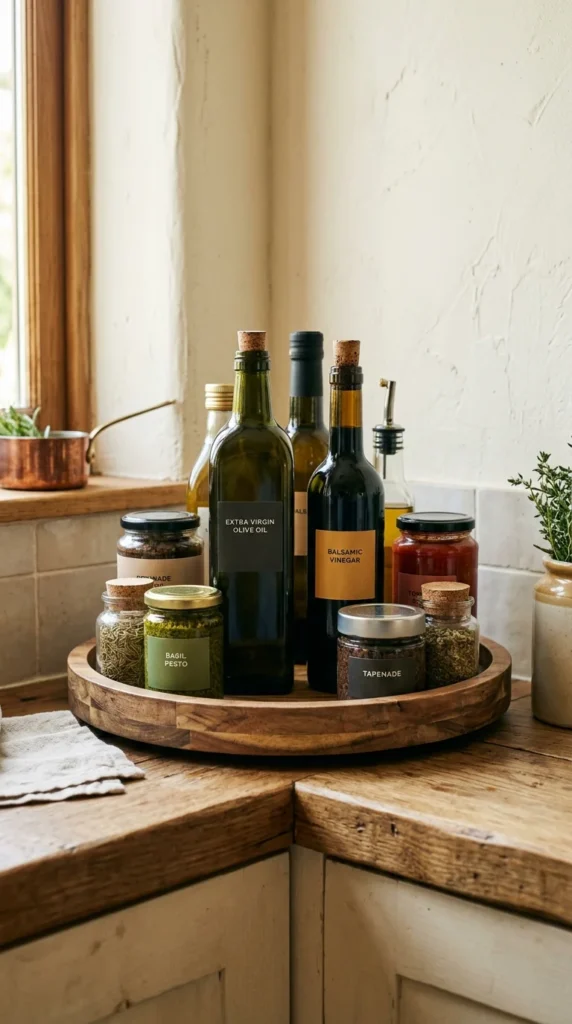
Corner cabinets are famous for being “dead space” because the back corners are so hard to reach. A Lazy Susan—a rotating turntable—eliminates this problem. By placing your oils, vinegars, or spices on a turntable, you can simply spin the tray to bring the item you need to the front. This prevents items from getting lost in the back and allows you to utilize the full depth of circular or corner shelving units.
13. Tension Rods
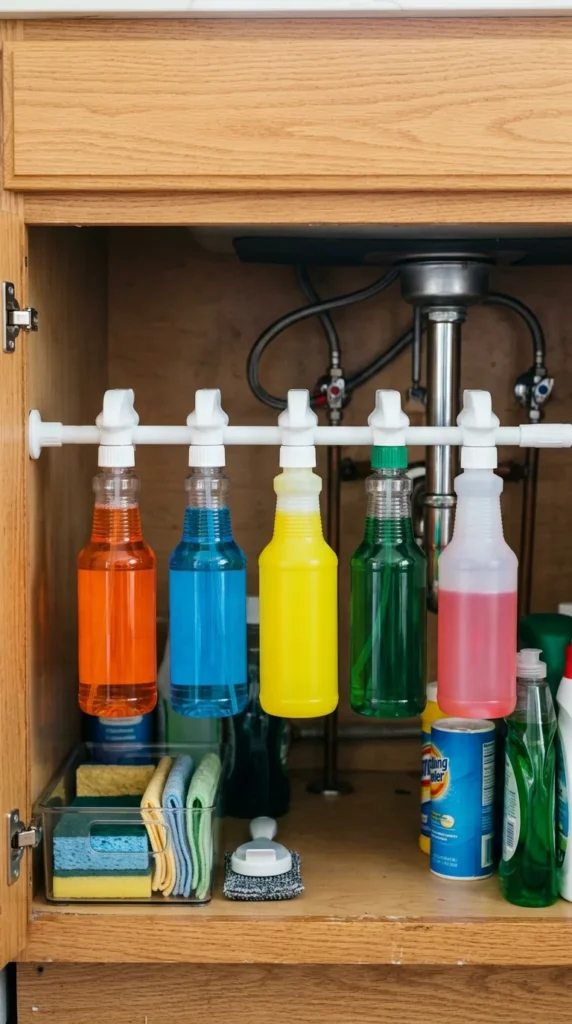
The area under the sink is often a chaotic jumble of cleaning supplies. A simple tension rod installed across the width of the cabinet can provide a place to hang spray bottles by their triggers. This lifts the bottles off the floor of the cabinet, leaving room underneath for sponges, dish soap, or trash bags. Tension rods can also be used vertically in cabinets to create dividers for baking sheets and cutting boards.
14. Door Racks
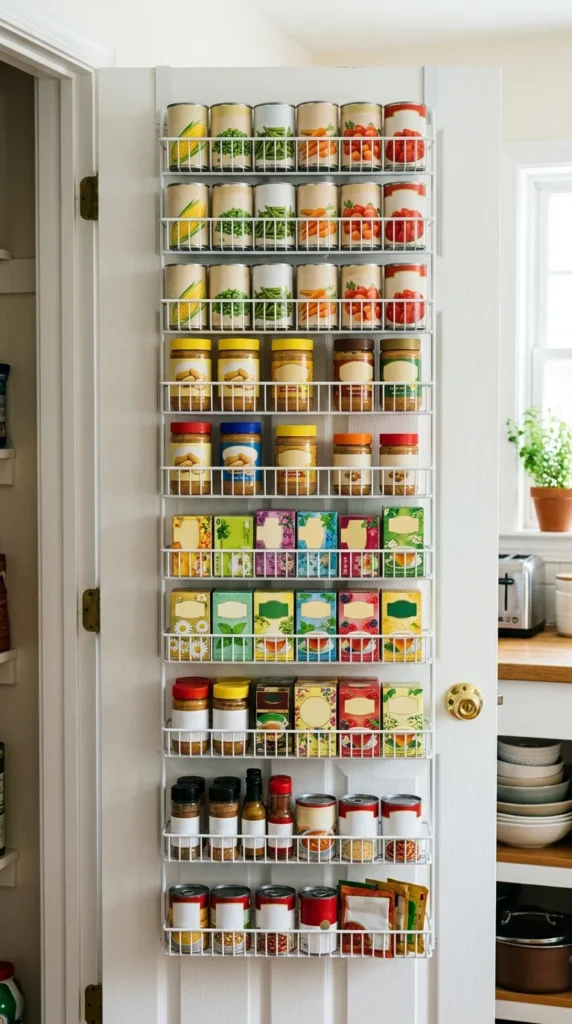
If you have a pantry door or even a door leading into the kitchen, an over-the-door rack can provide a massive amount of additional storage. These racks often feature multiple tiers of baskets that are perfect for holding canned goods, jars, or spices. Because the rack is thin, it doesn’t interfere with the door’s function, but it effectively adds a whole new shelving unit to a room that previously had no space for one.
15. Hanging Baskets
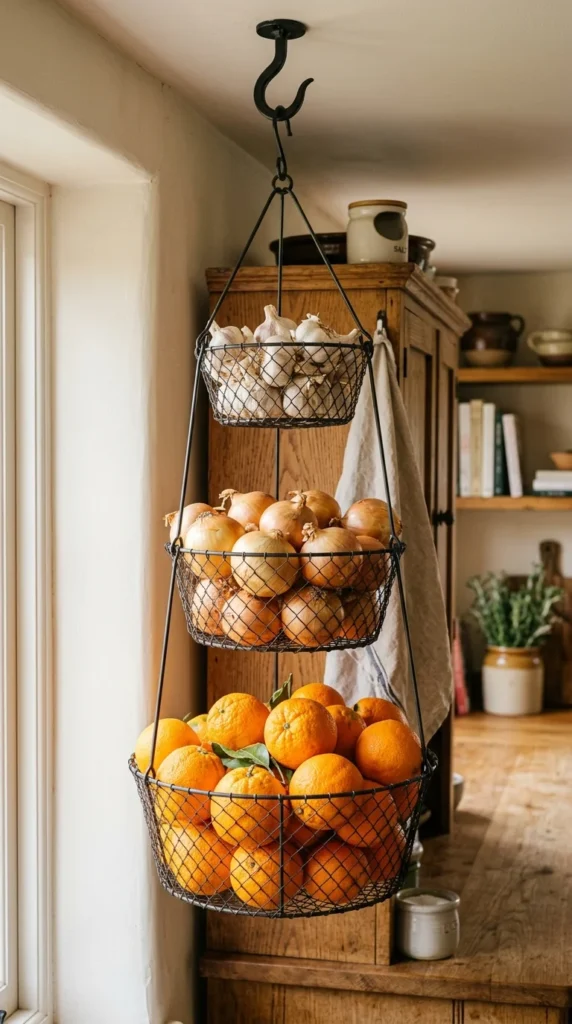
Fresh produce like onions, potatoes, and fruit can take up a lot of counter space in bowls. A tiered hanging basket utilizes the vertical space in a corner or above a breakfast nook. Not only does this keep your counters clear, but it also provides better airflow for your produce, helping it stay fresh longer. Plus, it adds a rustic, charming aesthetic to the kitchen, making it feel more like a lived-in, curated space.