1. Floating Vanity Powder Room
4
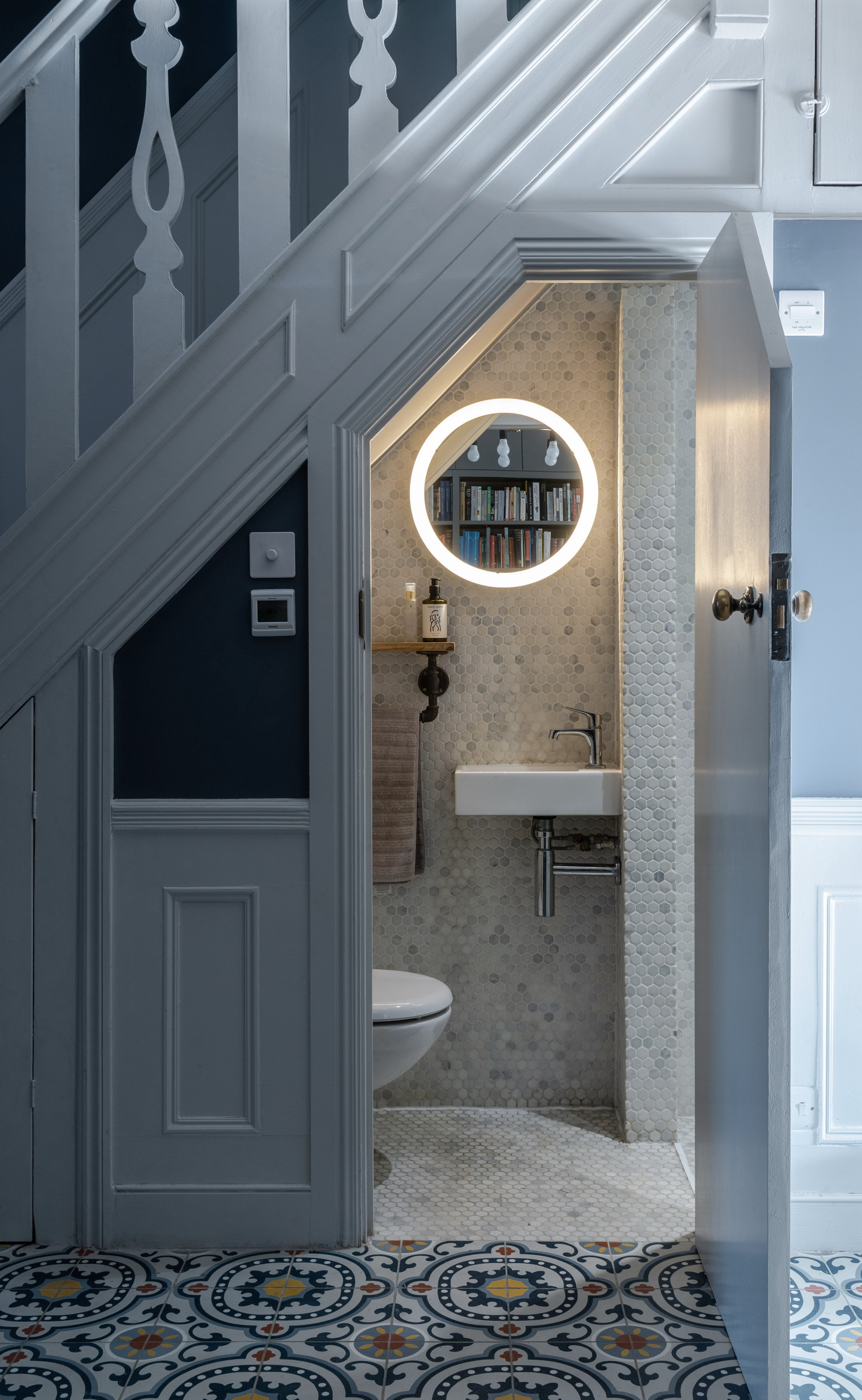
A floating vanity is one of the smartest choices for an under-stairs bathroom because it instantly creates a sense of openness. Since space beneath the staircase often has an unusual slope, wall-mounted fixtures help free up valuable floor area and make cleaning easier. Choose a slim ceramic or stone basin paired with a wall-hung toilet to maintain a seamless look. Add a large frameless mirror above the vanity to visually double the space and reflect natural or artificial light. Soft LED strip lighting underneath the vanity can create a subtle glow that enhances the floating effect and makes the room feel more luxurious than cramped. Neutral tones such as beige, warm white, or light grey work beautifully here, especially in smaller homes where brightness matters. With thoughtful storage built into the vanity drawer, you can maintain a clutter-free appearance while still having room for essentials.
2. Bold Wallpaper Statement Bathroom

4
If the space is tiny, don’t shy away from drama—embrace it. A bold wallpaper can transform an ordinary under-stairs bathroom into a design highlight of your home. Because powder rooms are used briefly, they’re the perfect place to experiment with vibrant florals, geometric prints, or even tropical themes. The angled ceiling adds architectural interest, and wallpaper can emphasize that uniqueness rather than hide it. Pair patterned walls with simple white fixtures to keep balance and prevent visual overload. Brass or matte black accessories add sophistication and contrast beautifully against rich backgrounds. Good ventilation is essential to preserve wallpaper quality, so ensure proper exhaust installation. Add a small statement mirror and compact wall-mounted lighting to maintain harmony. This idea surprises guests the moment they step inside, turning what could have been a forgotten corner into a bold and memorable design feature.
3. Minimalist White & Wood Design

4
A white and wood palette brings Scandinavian simplicity into your under-stairs bathroom. This approach works exceptionally well in compact spaces because light colors reflect brightness while wood adds warmth. Install white subway tiles or smooth matte walls to keep the area airy. Combine them with a natural wood vanity or wooden floating shelves to introduce texture. Since under-stairs bathrooms often lack windows, incorporate warm LED lighting to avoid a clinical look. A round mirror softens the sharp angles of the staircase ceiling and adds visual balance. Keep accessories minimal—think a small indoor plant, woven basket, or wooden soap tray. The simplicity ensures that the space feels calm and uncluttered. Even with limited square footage, the bathroom can look thoughtfully designed rather than improvised. This style suits modern homes, apartments, and even traditional interiors seeking a contemporary refresh.
4. Luxurious Marble Accent Bathroom

4
Marble instantly elevates even the smallest bathroom into a luxurious retreat. Instead of covering every wall, choose one accent wall—preferably the tallest section under the staircase—to highlight natural marble veining. This focal point draws the eye upward and distracts from the compact layout. Pair marble with gold or brushed brass fixtures for a hotel-inspired finish. A slim pedestal sink can maintain openness, while concealed storage keeps surfaces tidy. To enhance the elegance, use warm recessed lighting that softly reflects off the marble surface. Even marble-look porcelain tiles can achieve this effect without the higher cost. Because under-stairs bathrooms are often guest spaces, this glamorous touch leaves a strong impression. Keep the rest of the décor simple to let the stone speak for itself. The contrast between the staircase structure and polished marble creates a surprisingly sophisticated atmosphere in a small footprint.
5. Dark & Moody Powder Room

Going dark in a small under-stairs bathroom may sound risky, but it can create a dramatic, cozy ambiance. Deep navy, charcoal, or matte black walls make the space feel intimate and stylish. Since these rooms are usually windowless, layered lighting becomes crucial—combine overhead lights with wall sconces or backlit mirrors. The contrast between dark walls and white fixtures keeps the room from feeling too heavy. Adding metallic accents like brass taps or gold mirror frames introduces warmth and prevents monotony. A textured wall finish such as shiplap or subtle paneling enhances depth. Keep the flooring lighter or patterned to balance the darker upper surfaces. This design surprises visitors because it feels intentional and bold rather than purely functional. When done thoughtfully, a dark under-stairs bathroom becomes a chic jewel box within your home.
6. Compact Shower Addition

If space allows, consider installing a compact shower in your under-stairs bathroom. While many homeowners opt for a simple toilet and sink, a carefully planned shower can increase functionality—especially in smaller homes. Position the shower at the tallest part of the staircase slope to ensure comfortable headroom. A frameless glass partition keeps the room visually open and prevents it from feeling boxed in. Light-colored tiles and built-in wall niches for toiletries help maintain a streamlined appearance. To maximize efficiency, use sliding shower doors instead of hinged ones. Proper waterproofing and ventilation are essential due to the unusual ceiling angles. This setup works wonderfully for guest rooms or for quick daily use when upstairs bathrooms are occupied. The addition of a shower transforms an under-stairs area from basic powder room to fully practical mini bathroom.
7. Rustic Farmhouse Style

4
A rustic farmhouse design can make your under-stairs bathroom feel cozy and inviting. Use reclaimed wood vanities, shiplap walls, or distressed finishes to bring character into the small space. The angled ceiling adds charm when paired with exposed textures. Install a vintage-inspired mirror and black iron hardware to complete the farmhouse look. Earthy tones such as cream, taupe, and soft brown create warmth. To avoid overwhelming the area, balance rustic elements with clean white fixtures. Woven baskets can serve as practical storage solutions, keeping towels and essentials neatly organized. Soft, warm lighting enhances the comforting ambiance. Even a small decorative ladder or framed countryside artwork can add personality. This style works beautifully in country homes but can also add contrast in modern houses seeking a touch of homely charm.
8. Mirror Illusion Design

4
Mirrors are powerful design tools, especially in small under-stairs bathrooms. Installing a large wall-to-wall mirror can visually double the space and reflect light into darker corners. You can even experiment with mirrored panels on the sloped ceiling to enhance brightness. Pair the mirror with minimal décor to maintain clarity and avoid cluttered reflections. A floating vanity complements this idea by keeping the lower half open and airy. Neutral wall colors allow the mirror to perform its illusion effectively. Integrated LED backlighting around the mirror adds a soft halo effect that elevates the overall design. This approach is particularly useful in homes where natural light is limited. The result is a surprisingly spacious feel in a very compact footprint, making guests wonder how the area appears larger than expected.
9. Nature-Inspired Oasis

4
Bring freshness to your under-stairs bathroom by incorporating natural elements. Small indoor plants like pothos or snake plants thrive in low light and add vibrancy to compact areas. Pair greenery with earthy textures such as stone basins or pebble flooring accents. Soft green or muted sage wall colors enhance the organic vibe. Since moisture levels can vary, choose plants suited to bathroom environments and ensure ventilation is adequate. Wooden accessories and woven décor pieces strengthen the nature-inspired theme. Even a small vertical plant wall or hanging planter can transform the area into a mini oasis. The contrast between the structured staircase and organic greenery feels refreshing and unexpected. This idea is perfect for homeowners who want a calming retreat rather than a purely functional washroom.
10. Industrial Chic Look

4
Industrial style works surprisingly well in under-stairs bathrooms due to the structural nature of the space. Exposed brick or concrete-look tiles can highlight the raw architecture. Combine these with matte black fixtures, metal pipe shelving, and a simple rectangular mirror. The sloped ceiling adds an edgy, urban feel when paired with industrial lighting such as cage sconces. To prevent the design from feeling cold, introduce warm lighting and subtle wooden elements. Keep the color palette limited—think grey, black, and natural wood tones. Because industrial design embraces simplicity, it naturally suits smaller footprints. The result is a bold, contemporary bathroom that feels intentionally designed rather than squeezed into leftover space. Guests often admire how cohesive and stylish such a compact room can look.
11. Hidden Storage Genius
4
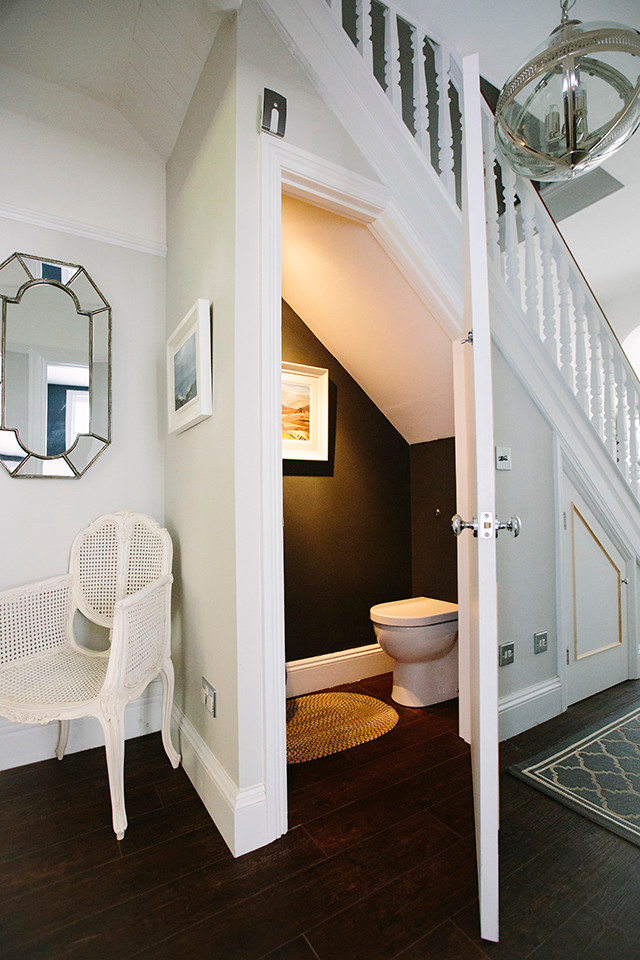
Under-stairs bathrooms often suffer from limited storage, but smart built-in solutions can solve this challenge elegantly. Utilize the sloped wall for custom cabinets that follow the staircase angle. Open shelves can display neatly folded towels or decorative items, while concealed cabinets hide cleaning supplies. A recessed medicine cabinet behind the mirror adds functionality without taking extra space. Wall-mounted organizers keep essentials accessible while maintaining a tidy appearance. Consider using vertical storage from floor to ceiling in the tallest section of the room. Light colors and minimal hardware ensure that storage blends seamlessly with the overall design. This approach turns a potentially awkward layout into a practical and efficient space. With thoughtful planning, even the smallest under-stairs bathroom can feel highly organized and spacious.
12. Elegant Guest Powder Room
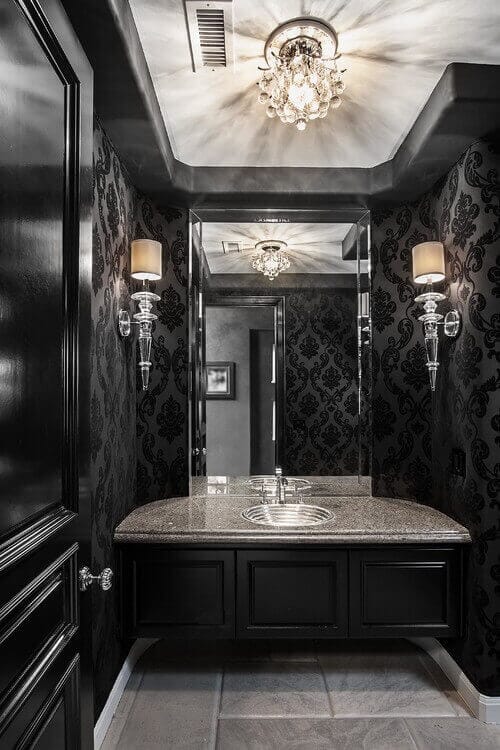
Transform your under-stairs bathroom into a stylish guest powder room that leaves a lasting impression. Focus on refined details such as a decorative mirror, elegant lighting fixture, or even a mini chandelier if ceiling height allows. Choose a cohesive color palette—soft neutrals with metallic accents often create a polished look. Add high-quality hand towels, a scented candle, and tasteful artwork to elevate the atmosphere. Since guests typically use this bathroom, prioritize cleanliness and thoughtful design over heavy storage. A compact console-style vanity can add character without crowding the space. Use textured wall finishes or subtle paneling to create depth. Despite its small footprint, this room can feel like a boutique hotel powder room. With careful styling, your under-stairs bathroom becomes a charming and surprising highlight of your home.